The Pacific Islander conflict between the individual and the collective

Slideshow and story by ANTHONY SCOMA

In 2017, the United States had the highest GDP (gross domestic product) in the world at $19.42 trillion, based on information gathered by the International Monetary Fund. But that wealth has not been felt across the board by the American population.

According to a survey conducted by the Federal Reserve Board in 2016, wealth disparities between upper-income families and lower- and middle-income families are at the highest levels ever recorded.

This unprecedented gap between the wealth of the richest and poorest in America is paralleled by a national sense of division. The Pew Research Center has reported that across political and racial lines, there is growing disagreement over what the U.S. should be and do.

Inequality of wealth and political polarization may reflect something foundational to the ethos of the U.S., which is the placement of the individual interest over the collective good and the resulting interpersonal conflict. This elevating of individual interests may be especially glaring to Pacific Islanders and other immigrants, whose cultural practices emphasize the collective over the individual.

Te Anu Tonga, a U.S. immigrant with Tongan and Maori parents, grew up in Utah and is well aware of the clashes between the worldviews that define U.S. and Pacific Island cultures.

“The biggest thing that I see between the two worlds is — there is no ‘I’ in communal/tribal cultures … there is only ‘we,’” she said. “I was always brought up to think and care about others before myself, to always take care of others before myself.”

These rival lessons are instilled at an early age. The importance of sharing is taught to nearly every child through examples of toys and food, but what and how much must be shared differs significantly across cultures. Tonga recalled times as a child when the obligations of Pacific Islander culture felt like a burden.

“Growing up when I went to school … some of my cousins were there too,” she said. “And if I had food in my bag, I’d always watch out for my cousins because if I saw them, I knew I would have to share. … If we have one cookie and seven people, we are going to split it seven ways.”

These childhood lessons have important applications in adulthood. Maryann Tukuafu, the manager of Pacific Seas Restaurant, shared a story over a phone interview about the good that mutual aid can achieve.

“I’ve got a first cousin of mine that lives with us. I took her in about a year and a half ago,” she said. “She was pretty much destitute, just barely graduated from high school. Just with my husband and I’s support, she’s now a sophomore at SLCC (Salt Lake Community College) and getting ready to go to the [University of Utah] in the fall and doing well.”

However, this readiness to provide aid to family and friends can be an obstacle to achieving success in the individualistic world of U.S. business. Susi Feltch-Malohifo’ou is executive director of Pacific Island Knowledge 2 Action Resources (PIK2AR), a community organization that provides business education, networking and other resources to prospective Pacific Islander businesses. She spoke about how the Pacific Islander collective mentality has to be deferred to run a successful business.

In meetings, she said in a phone interview, the goal of PIK2AR is just to educate the participants on “the systems of America and … the business-owner understanding that if you want to be successful, that means you can’t just give away your products for free or services for free to all your family members.” She added, “We have to change that idea within our community that we need to pay for these services if we want to help those businesses grow and stay around.”

Feltch-Malohifo’ou also recognizes the problems that can arise from prizing individual interests over all else. She spoke about how cultural individualism drives the mass accumulation of money for its own sake, causing the wealth disparity that we see reflected in the U.S. economy. In contrast, she pointed out how Pacific Islanders view money as a means to address the needs of family and friends at the moment. But that can lead to giving too much away. She attributes these cultural differences to what motivates our actions in society.

“The motivation in America is money, the motivation for Pacific Islander homes are God, church and family,” she said. “So I think that both can learn from each other. Pacific Islanders need to learn about financial literacy and … the line between enabling and helping.”

Feltch-Malohifo’ou also said that this line, and the larger Pacific Islander question of whether to embrace the collectivism or individualism, comes down to the individual and their family and what works best for them.

Lani Taholo, director and owner of Child and Family Empowerment Services, agreed that the individual and collective perspective are not absolutes within the Pacific Islander community.

“I believe that it works on a continuum between co-dependence, interdependence and then independence,” she said. “I think that when the Pacific Islanders work on an interdependent fashion, that is when we are at our best.”

Taholo went on to explain that at both ends, codependence and independence, there can be a loss of identity. Codependence leads to a loss of individual expression and creativity when the individual is lost in living solely for others or relying on others. On the other end, complete independence leads to a loss of the part of identity that is formed out of being a part of a greater whole or community.

Taholo says that to achieve interdependence, one must have a sense of individual identity and goals but also acknowledge how one is connected to others economically, socially and spiritually.

This acknowledgment that there is danger in extremes of both the American and Pacific perspectives was echoed by Te Anu Tonga, who is currently working on a film that documents traditional Maori dances and seeks to start a conversation on how to preserve these practices for the future.

“Being a collective is beautiful and wonderful, but there needs to be order in it as well,” she said. “Being able to help your community but … sacrificing your family to do that.” She expressed her dismissal of this idea with a simple, “No.”

“On the other extreme,” she said, “not sharing at all because you’re taking care of yourself to me is so sad because it reflects this fear or philosophy of scarcity.”

While Tonga acknowledges the fault of each extreme, she believes that there is a middle path that can be found between the two mindsets when it comes to new generations.

“I don’t believe we are meant to move forward in our lanes,” she said. “Because that’s not fair to the younger generations, because [traditions] are meeting in every way and form from school to social media. … And that blending is powerful, it has the potential for a new culture that none of the nations have ever seen before.”

This slideshow requires JavaScript.


Moki’s Hawaiian Grill offers a taste of Hawaiian and Pacific Islander food in Salt Lake City

Story and slideshow by GEORGE W. KOUNALIS

Moki’s Hawaiian Grill brings the food and atmosphere of Hawaii to Taylorsville, Utah, from the 808 to the 801. Located right next to an Indian market and a True Value hardware store, the restaurant’s bright yellow sign sticks out as one drives by on Redwood Road.

The atmosphere of the restaurant is laid back and family-oriented. Family is a cornerstone of many Pacific Islander cultures, and Moki’s is able to make many customers feel like they’re part of the family.

Bele Tukuafu, 19, has been working at Moki’s for six months.

“My uncle owns the restaurant,” she said. “My uncle’s sister started the restaurant in 2002, and he took it over.”

Tukuafu said the Moki’s in Utah is the first of two locations, with the second restaurant located in Mesa, Arizona.

“We try to make simple, good Hawaiian food,” she said.

The food is simple and basic, but explosive with flavor. It is a tour of the Hawaiian Islands and many other Pacific Islander cultures.

Each plate comes with a choice of meat; two mounds of white rice; a Hawaiian salad consisting of chicken, cabbage and rice noodles with a house dressing. The flavors of each respective item had a story.

Kristian Naone of Honolulu was at the restaurant with Ted Camper, a University of Utah student from Chicago. Growing up in Honolulu with Hawaiian cuisine, Naone had a lot to say about the food.

Naone ordered the chicken katsu plate. Katsu is very similar to the fried chicken many Chinese restaurants make prior to coating it with a sweet sauce.

“It’s a dish that one could eat a lot of without getting full too fast and is complemented by the macaroni salad that Moki’s makes,” he said.

“That’d be good on a sandwich, it’s real crispy,” Camper said about Naone’s order. Both diners offered the writer a piece of each respective dish.

Camper ordered the teriyaki beef. Moki’s dish is more authentic than anything one can get at Rumbi Island Grill, Naone said. The teriyaki beef at Moki’s is marinated prior to being cooked, unlike many other restaurants’ interpretation of teriyaki where a sauce is coated on the meat after cooking.

The marinade reminds one of Korean bulgogi, a dish that consists of thin sliced marinated beef that’s been grilled.

“Modern Hawaiian food is a culmination of multiple ethnic foods,” Naone said.

“It’s because of the sugar plantations back in the day,” he said. “There were a lot of different cultures from Asia that were living with each other, but had no way to communicate with each other, except using food.”

“Prior to colonization,” he added, “Hawaiian food was simple. Taro was the big starch for people. It was the potato for the islands.” Colonization had brought problems with it, such as the overthrow of the Hawaiian monarchy in 1893, but also created a fusion of food.

The Spam musubi is an example of this. The dish is comprised of a piece of cooked Spam covered in teriyaki sauce, put in rice that was pressed with a musubi press, then wrapped in seaweed.

“Spam is a big part of Hawaiian cuisine,” Naone said. World War II “created a lot of meat shortages on the islands, but Spam was abundant and easy to access and quickly became part of the cuisine.”

Lokomokos are also a popular Hawaiian dish, he said. “We call it surfer food because it’s simple to make, but hearty and gives you the energy to go out and surf all day.” Lokomokos consist of rice, brown gravy, hamburger patty and egg. The meal is served with a side of macaroni salad.

The theme of this fusion of cultures is very apparent with the kalua pork and kalbi ribs. Hawaii’s history can be told by its cuisine.

Naone said, “Kalua pork is made in a slow cooker. You put your pork and cabbage in and let it cook. The cabbage absorbs the juices and turns almost translucent, but is filled with the pork flavor.”

One bite into the kalua pork shows the flavor of the seasoning salt used. The pork has the consistency of almost melting in one’s mouth.

“The cabbage in this dish almost acts like noodles,” Naone said. While eating the pork, one has to mix it with the cabbage at the same time to make sure that all the juice is eaten.

The kalbi ribs are a dish very similar to Korean BBQ short ribs. “You have to make sure to eat all the meat around the bone,” Naone instructed. “Be sure to bite around the bone to get the sinew as well.”

The kalbi ribs at Moki’s explode with the flavor of the marinade and the cooking technique used. The smell of the marinade prior to taking a bite builds the flavor as one takes a bite of it. The flavor is a rich experience of sweet and smoke along with the fat melting in one’s mouth. It is similar to eating meat candy.

“There was a place across the street of my high school that offered comfy memories,” Naone said. “They’d serve kalua pork, rice, chicken katsu, all the comfort foods were there. This was the food we would have served in school as well. Katsu, rice, kalua pork. This is local food to me.” 

The Hawaiian salad offered a mix of sweet and salty flavors that pair well. The sweetness of the vinaigrette against the crunch and saltiness of the rice noodles offered an equilibrium that made the dish a good go-to in between the kalua pork and kalbi ribs.

The rice at Moki’s is served in two big mounds, topped with black sesame seeds, and can be mixed with the restaurant’s own rice sauce. The sauce offers a flavor similar to the Filipino condiment toyomansi, which is a mix of soy sauce with lime juice.

To finish the massive lunch, the two placed an order for malasadas, mango otai and a pineapple split.

The malasadas are very similar to a donut, but not as dense. “This is food you would get at a carnival,” Naone said. Malasadas are covered in semi-wet granulated sugar with a very crunchy outside, but a warm doughy inside.

Camper said, “The best part about the malasadas is they’re not as floury and you don’t have to drink a sip of something after every bite.”

Naone pointed out, “It’s very important that they use granulated sugar to coat the malasadas.” He also said that the way the granules stick to the outside surface of the malasada creates the texture necessary when one eats malasadas. “Usually when you order these back home, they give it to you in a brown paper bag and you just eat it straight out of the bag.”

For the pineapple split, a pineapple is cut in half and served with Dole Whip, whipped cream, and strawberries on top. The quality of Moki’s Dole Whip, a soft serve pineapple-flavored frozen dessert, is very similar to the Dole Whip served at Disneyland.

“When my family came to California for the first time, we went to Disneyland,” Naone said. “We saw the line for the Dole Whip and I was just thinking to myself that I can get this anytime I want at the Dole Plantation.”

The mango otai is one of Moki’s non-Hawaiian dishes that shows the Tongan roots of the Tukuafu family. Naone said, “Otai isn’t necessarily a Hawaiian drink, but it’s still present in Hawaii.” The otai consists of shredded mango, coconut cream, sugar and mango juice. Naone pointed out that the use of a boba tea straw is important for this drink because of the shredded mango.

Camper said, “There’s nothing like this in the Chicagoland area. Pacific Islander culture feels like it’s missing in Chicago.”

Salt Lake City’s Pacific Islander community is big. According to the Salt Lake Tribune, Utah is home to one out of every four Tongans who live in the United States.  

Moki’s also offers a Polynesian plate. “The plate has samples of Tongan, Fijian and Samoan food,” Tukuafu said. The restaurant’s mixing of Pacific Islander cuisine offers Utahns a unique chance to get an authentic taste of these cultures. “We just try to make it as close to home as we can,” she said.

Hawaii’s history is marked by colonialism, the sugar plantations and the impact of World War II. The islands’ story is not only told through what’s been recorded but also through its cuisine. The use of Spam, teriyaki and lokomokos tell Hawaii’s post-colonial history through food. Moki’s is a testament to that history by serving its cuisine.

[Editor’s Note: Salt Lake City’s growing demand for Hawaiian and Polynesian food was the subject of a recent New York Times article. Reporter Priya Krishna focused on one local chain, Mo’ Bettahs, owned by brothers Kalani and Kimo Mack.]

This slideshow requires JavaScript.

Use of haka as pre-game ritual may be appropriation

Story and pictures by SHAELYN BARBER


This slideshow requires JavaScript.

The haka dance, originally performed by the indigenous Maori people of New Zealand, has become a staple of world wide rugby culture, often performed before important games by sports teams across the globe.

“Haka can be a war dance, but it can also be a way to show love and a way to show support,” Te Anu Tonga said. She was born in New Zealand, but moved to the U.S. with her family when she was a young child.

“To be Maori is to connect, to connect with the people around you, connect with your environment,” Tonga said. Maori value spirituality, family and genealogy, and that is reflected in their haka dances.

In addition to a war dance, hakas are often performed at weddings, graduations or other celebrations. The dance is a way to show love.

“One of the things that does bother Maori is that haka is being used without permission and without knowledge of the stories behind it, the meaning behind it, what tribe it comes from,” Tonga said. “They’re mimicking things that they don’t understand.”

The haka was first brought into rugby by the New Zealand All Blacks, the country’s national rugby team.

“They were kind of the epitome of the rugby culture, still are,” said Nate Fairbanks, assistant coach for the Highland rugby club. “If you know about rugby, you know about the New Zealand All Blacks.”

Fairbanks, a former Highland rugby player himself, recently began his position as assistant coach of the team. While Highland once performed a haka before every game, Fairbanks said that during his time as a player the team reserved it for special or important occasions.

“You know, a bunch of high school kids, everyone was joking, making light of everything, but that was something that it was never appropriate to joke about,” Fairbanks said.

Larry Gelwix, the first coach of the Highland rugby team, introduced the dance as a pre-game ritual.

“He [Gelwix] had a lot of respect for the Polynesian culture, he had a lot of love for the people and wanted to make sure that his love for it didn’t become irreverent,” Fairbanks said.

“We don’t do the haka because we want to be cute or different … We did the haka because we believed it,” Gelwix said in a phone interview.

“It wasn’t that we just took it. We had the tribes and the tribal elders’ blessing and permission to do the haka on certain occasions,” Gelwix said. The team was given permission by one Maori tribe, who even wrote them a haka to perform.

“Larry [Gelwix] was really the one who drove the use of the haka,” coach Dan Berg said. Berg and his two older brothers were former players on the team under Gelwix.

Berg later became an assistant coach and, when Gelwix retired, took on his position as head coach.

As more sports teams picked up the traditional haka dance as their pre-game challenge, Berg began to feel that they weren’t doing it for the right reasons.

Berg said he doesn’t question other teams’ uses of the haka, because each team is doing it for a different reason.

“Under the right circumstances we would consider doing it again,” Berg said. “The boys ask about it all the time.”

The Highland rugby team consists of about 45 players ranging from eighth grade to 12th grade.

Michael Pakofe is currently a senior at Highland High School and one of the team’s starter players. He grew up in Hawaii, where the performance of the haka is a common practice before most sports games.

“When I started this program I thought they did the haka and when I found out they didn’t I was just hurt,” Pakofe said. ““I feel like it just starts with us players. We got to get together and just learn it.”

Highland Rugby player Kaufusa Pakofe said, “It gets you, like, pumped up and kind of intimidating or scared our opponents.”

However, not all the players feel the same.

“It’s very cultural so I would want to make sure it’s a certain group, does that make sense? Let’s put it this way, Italian teams should not do the haka,” Highland rugby player Alexander Whitmore said, voicing his concerns about the appropriation of the dance.

“I’m not really convinced that most teams who perform haka here in the United States understand sort of the deep spiritual and cultural significance of the haka,” said Toanui Tawa, lecturer of English at Southern Utah University, in a phone interview. “I think they view it simply as something that’s ‘cool.’”

Tawa was born and raised in New Zealand and moved to Hawaii to pursue an education at Brigham Young University, Hawaii. He completed his degree in English education at Southern Utah University.

“It’s more than just a form of entertainment, it is a way in which we are able to keep the stories and legends of our communities alive,” Tawa said. “It’s a way to honor the memory and lives of ancestors who have since passed on. It’s a medium through which we are able to communicate our belief systems and attitudes.”

Tawa is hesitant about the use of the haka in the world of sports.

“I believe there’s only a place for haka in sports only if the people who are performing it truly understand it,” Tawa said.

It Takes a Village: how a culturally responsive public health program is improving birth outcomes for Utah Pacific Islanders

Story and news graphics by ALLISON OLIGSCHLAEGER

Before the Christian fervor to “multiply and replenish the earth” reached Hawaii, most women waited 18 to 24 months between pregnancies (the time period now recommended by medical professionals). Birth spacing was determined by a simple test: after bearing a child, a woman would wait to have sexual relations with her husband until that child could pick up a stone and throw it out of the house.

But according to Jacob Fitisemanu Jr. of the Utah Department of Health, in today’s Pacific Islander communities, the intervals between births are much shorter. According to a 2013 study by the department, 37.4 percent of Utah Pacific Islander mothers waited twelve months or less between pregnancies, compared to 15.9 percent of Non-Hispanic White mothers.

In addition to shorter pregnancy intervals, the health department’s first targeted study on ethnic disparities in birth outcomes found that Pacific Islander mothers had disproportionately high rates of obesity, hypertension and gestational diabetes, and were significantly less likely to access prenatal care in their first trimester of pregnancy.

“Less than half of Pacific Islander women even got screened or treated in their first trimester, which is horrific,” said Fitisemanu, who chairs the Utah Pacific Islander Health Coalition.

These factors lead to disproportionately poor birth outcomes for both mother and child. When compared to Utah’s state averages, Pacific Islander infants are significantly more likely to be born prematurely and about twice as likely to die within their first year.

In response to these findings, the health department reached out to The Queen Center and Moana Nui Utah, two local 501(c)(3) nonprofit organizations devoted to promoting health and wellness among Utah’s Pacific Islanders. Together, they ran focus groups and conducted surveys of about 60 Pacific Islander women and couples.

“We wanted to look at, if you’ve had a baby, did you have prenatal care or not? If so, where? If not, why?” Fitisemanu said in an interview at the University of Utah.

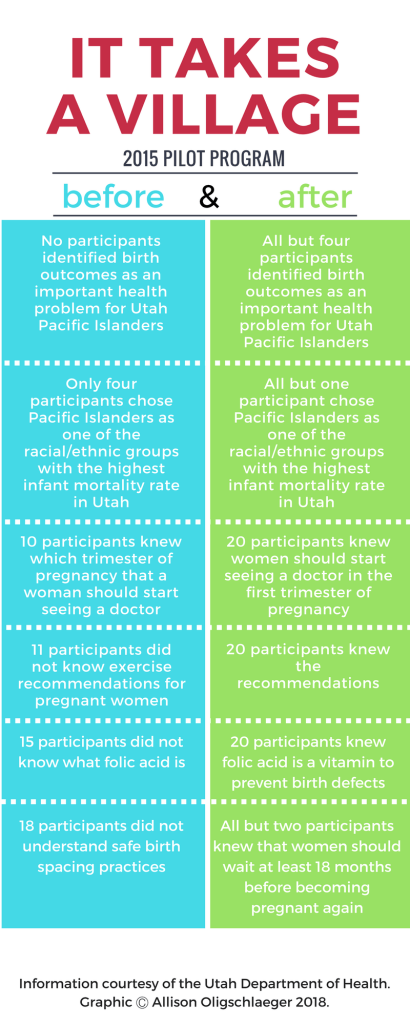
Alongside lack of insurance, researchers identified a lack of knowledge/understanding as the primary barrier to accessing prenatal care. In later focus group results published by the health department, no participants identified birth outcomes as an issue in the Pacific Islander community and most seemed unsure of what prenatal care was.

Looking for insight into this knowledge gap, Fitisemanu and Lita Sagato, who worked for The Queen Center at the time, began conducting individual interviews with Pacific Islander mothers.

“Our biggest concerns were making sure [the research] was an honest reflection of the community, meaning we actually went out to homes and met with different mothers and different women that had experienced losses,” Sagato said in a phone interview.

They found that for Pacific Islander women — even those who were born in Utah, spoke English as a first language, and/or had a college degree — the primary source of information about pregnancy and childbirth was older women in their families.

“So if you think about it, you ask your grandma … who delivered a baby in a village in a hut,” Fitisemanu said. “She doesn’t know what folic acid is, she doesn’t believe in ultrasounds — she had five healthy kids under a mango tree!”

Perhaps as a result of this, only 48 percent of Utah Pacific Islander mothers receive any sort of prenatal care within their first trimester, compared to the state average of 78 percent. Even among those who do receive professional care, the advice of family and community members is often valued above doctors’ recommendations.

“If no one in the family has experience with what you’re saying, they may go with what auntie said or what grandma said or what sister-in-law said over the advice of an MD or OBGYN,” Fitisemanu said.

Armed with insight and funding, the health department’s Office of Health Disparities established the MAHINA Task Force, a network of Pacific Islander public health professionals, educators and activists. MAHINA, a loose acronym for “maternal health and infant advocates,” is also the word for “moon” in Hawaiian and Tongan and the name of the moon goddess in many pre-colonial Polynesian religions.

“The health department said, ‘Hey, we want to help you with this. We see these statistics are really bad — one preventable death is too many — so what can we do?’” Fitisemanu said. “These women looked at the curricula and the different things the health department had and said, ‘Yeah, this stuff is not going to work in our community.’ It targets the mother, but if less than 50 percent of these mothers are even getting in in the first trimester, we’re missing all of those women.”

Working together with The Queen Center and the MAHINA network, Fitisemanu and Sagato set about adapting the health department’s approaches to maternal and prenatal health to better suit the needs of their community. This meant shifting the focus from the individual woman’s choices to the entire family’s lifestyle, in keeping with Pacific cultures’ emphasis on collective well-being.

“Everything important to us really is the family, the village,” Sagato said. “If everyone’s on board, it’s much easier for the women to take care of themselves.”

Fitisemanu also emphasized the practical necessity of involving the family.

“If we tell the mom, ‘You’ve got to take folic acid, you’ve got to eat this, you’ve got to exercise,’ but everybody in the house is eating a full pig for dinner, that doesn’t help,” Fitisemanu said.

Story continues below graphic.

beforeandafter

MAHINA’s community-oriented curriculum, titled “It Takes A Village,” was first debuted in a Salt Lake City focus group in 2015. The program spanned six weekly sessions, held in a Polynesian church building, and focused on teaching expectant mothers and their families what they can all do to promote healthy pregnancies and positive birth outcomes. Discussion topics included things like folic acid, diet and exercise, and birth spacing. The health department report on this pilot program notes that while participants were initially skeptical of advice on birth intervals, they were more receptive after learning that their ancestors practiced birth spacing.

“The pre-colonial constructs regarding that and customs regarding that are actually exactly the same,” Fitisemanu said. “We insert them into this curriculum to remind them, and these old ladies are like, ‘Oh yeah! That’s what my mom taught me.’”

Joyce Ah You, founder and director of The Queen Center, said the importance of culturally relevant resources cannot be overstated.

“It is everything,” Ah You said in a telephone conversation. “Having the program tailored to Pacific Islanders, making sure it’s culturally appropriate, we spoke to them. We didn’t speak about what was going on with Hispanics or African Americans, this is what’s happening in our homes.”

Even adjustments as simple as using photos of Pacific Islander women and families in slideshows make a difference, Sagato said.

“If they see Caucasian women on there or other ethnicities, they’re going to think, ‘Well, that’s not us,’” Sagato said. “When they see themselves on there, it kind of gives them a reminder that it affects all of us.”

confidence

The pilot program was “wildly successful,” Fitisemanu said, and is the only study in Utah’s health department history to have negative attrition, meaning it ended with more participants than it began with.

“That never happens when you do public health studies!” Fitisemanu said. “It’s a pretty neat program.”

Since its rollout in 2015, “It Takes a Village” has been through several rounds of testing and revision. About 200 Pacific Islander women and couples have completed the program to date, according to program manager Brittney Okada of the Office of Health Disparities.

“We are very proud of this curriculum,” Okada said in a phone interview. “To see the response — to see how they are taking pride in their culture and to see how it relates to maternal and child health, to see this light bulb go on when you mix in the cultural wisdom, it’s quite beautiful.”

Okada and her colleagues are in the final stages of preparing to release the curriculum to the public in April 2018. It will be available for free on the health department’s website, along with facilitator manuals and participant workbooks, for noncommercial public use. Okada hopes local Pacific Islander communities throughout the state will take advantage of the curriculum and implement it in ways that make sense for their populations.

“We are excited to see what might happen and to see how the community can take this program and make it theirs,” she said.

The health department has also been approached by public health organizations in Hawaii and California hoping to adapt the curriculum for their own Pacific Islander populations.

Ah You, who founded the Queen Center with her husband Sale Ah You “to help our people and give back to the community,” said her experience with the MAHINA Task Force was deeply fulfilling.

“I realized how much work needs to be done, but I realized also how much our community, my community, is like a sponge,” Ah You said. “They’re so willing. It just needs to be brought to their attention.”

This slideshow requires JavaScript.

Cultural awareness through dance among Pacific Islanders in Salt Lake City

Story and photos by SHEHERAZADA HAMEED

Traditional Tongan dances are stories sung by the singers and acted out by the dancers, says travel writer David Stanley, author of Tonga Travel Guide. He explains that in a dance the words are represented by the movements of the hands and feet, not the hips.

But you don’t need to travel to the Pacific Islands to admire Polynesian performing arts.

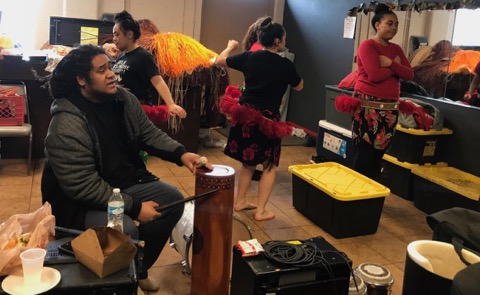
On a cold February afternoon, Haviar Tuitama Hafoka, Malialole‘s leader and drummer, was teaching children from East High School in Salt Lake City. The dance they were practicing was to be performed at an event just a few weeks later.

Malialole 8

Haviar Tuitama Hafoka with a toere drum.

Haviar was teaching three boys the steps of their part of the choreography. Barefooted, they were slamming their feet against the cold concrete where a small heater was working in an attempt to heat up the large space. While the boys were repeating the steps under the sound of the drums, Haviar’s sister, Singa Fonua, was helping three girls to dress in traditional dresses that she was pulling out of large plastic bins. Behind a screen wall, the girls put on black skirts and colorful belts as decoration.

Malialole 1

Haviar Hafoka is teaching boys from East High School the steps of Otai dance.

Fonua is not only the person in charge of the costumes and appearance. She is also the contact person who manages the calendar of events and practices. For her, Haviar said laughing, “She is like the drill sergeant.”

Malialole (mah-lee-yah-low-lay) is a Salt Lake City-based music, dance and art performing group, promoting cultural awareness among Pacific Islanders. The group performs music and dance from the islands of Samoa, Tonga, Hawaii, Tahiti, Tokelau, Niue, Aotearoa (New Zealand) and the Cook Islands. In their dance studio at 1133 Glendale Drive, rehearsal and lessons are held daily.

The group was named for Haviar’s niece, who was the first to be born in Salt Lake City after the family relocated from Kansas City, Missouri. His mother, Merine Vida Tuitama Hafoka, who is Samoan, founded the dance ensemble. Haviar says Malialole is a symbol of something new, innovative and innocent, which is the beat of the group.

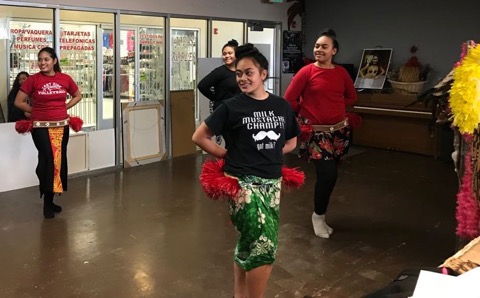
The next part of the practice in the studio is to merge the boys’ dance and the girls’ dance into a choreography. Haviar was directing them while drumming on a large wooden drum. “Keep your arms up higher. Girls, your fingertips should match up to your nose. Try it again. Ready?” The drum was loud and the students danced in the rhythm. The boys’ moves reminded a visitor of martial arts while the girls’ moves were feminine. Fonua reminded the dancers a few times to smile.

Malialole 2

The girls dress while the boys rehearse.

Haviar is strongly connected to the art of drumming. Drums are used to call for attention; to announce a town meeting or prayer; or warn of war. Haviar added, “In Tahitian culture, they [drums] are actually representative of the male and female counterparts.” He also said the stick and the drum represent the mother and the father replenishing the earth. Haviar explained the different types of drums. “The big ones are called lalis, these ones from Tahiti are called toere and the ones from the Cook Island are called pate, the big roller ones are takiruas, but they all serve the same purpose.”

Haviar explained the dance they were practicing is called Otea and is traditionally used to appease the gods in a request to make the land plentiful. “That’s why you see a lot of sensual moves and lots of hip shaking.” He said this particular dance tells the story of the ocean hitting the land.

Haviar gave a break to the dancers and while munching on warm fried chicken and pizza, they prepared for the next dance. Fonua said she makes sure all kids are fed before they leave the practice. She added some of them come from single-parent families or others leave home early for a practice.

For their second dance, they played a song on a large speaker. It filled the room with the sound of a soft and sensual island melody in a native language. The moves are feminine and are performed by girls only. Haviar explained the dance is Aparima and literally means “the kiss of your hands.” It is an interpretive dance and the song is about love and keeping someone close to yourself.

Malialole 9

Girls from East High School dancing Aparima.

Haviar explained that every aspect of dancing in Polynesian culture is about telling a story. The dance is interpretive and lyrical. Meaning that if the dancer’s hands are up, the movements relate to the sky, sun or moon. If the hands are down, they relate to the earth and the ocean.

Haviar said every part of the costume must be made of materials from the land. The colors are meaningful as well. For example, the yellow and red represent fire.

For the parts of the costume, especially the titi skirt, Haviar said, “It is used to enhance the dancer and represents the land wrapped around the individual and is developing the spirit of Tahiti.”

Malialole 7

From left: Singa Fonua, Selu Hafoka and Simi “Jimbo” Hafoka.

Merine Vida said, “Every different island has its meaning and we dance from our soul out to our hands and tell a story about our generations that have past and generations that are in the future for us.”

Malialole 4

Merine Vida Tuitama Hafoka, the founder and director of Malialole Dance Group.

By Pacific Islanders’ tradition, the first and second cousins are considered brothers and sisters. Haviar said the family members in the group number about 70 people. They all participate in Malialole. There are about 30 additional performers from Salt Lake City schools.

The whole family is involved with the dance group. They all have full-time jobs, but when it is time to teach and perform, they are available for the community. The main performing art group is broken into smaller groups by age, starting at 5 years old up to 40 years old. They also have a smaller performing group that goes out and performs at events and weddings.

The Hafoka family and the Malialole dance group are involved in a few different projects. In December 2017, they performed for the Mundi Project. It is a campaign that helps disadvantaged children to have access and play musical instruments and learn music. Haviar’s sister, Selu Hafoka, was the highlighted artist focusing on storytelling through music. She is also one of the choreographers for the ensemble.

Malialole participated in a workshop for the People in the Pacific at Utah Valley University in March 2017. At the annual event, the group teaches students about dance, music and cultural arts in the islands.

Maliaole also manages Talk2Me, an organization reaching out to families and creating a platform to speak about bullying, depression, suicide and family law in Pacific communities around Salt Lake City. About the program and the Pacific youth, Merine Vida said, “The kids understand that they will have bad days, but there is something brighter at the end.”

Another project developed by the Hafoka family is WhoGotRoots. It is a Polynesian high school competition that occurs in April between schools in Salt Lake City. The performers must focus on three island groups. They have 20 minutes to perform three dances or songs and the winners receive a prize of $1,000.

Haviar said students are judged on executing the culture correctly and properly. He thinks the competition gives the kids a platform to present their knowledge of Polynesian music and dance.

Malialole’s involvement in Salt Lake City schools helps to keep Polynesian youth occupied after class. Spending afternoons at practice prevents the young dancers from taking drugs and joining gangs, which are threatening the new generations of Pacific Islanders.

Haviar remembered, “There was a time when my life fell away. And it was our culture. And it was our music. And our dance, that brought us back to reality; to realize that there is something better out there we can be doing. We don’t want our kids to fall into that same sort of habit.”

Haviar said there are more dance groups in town that serve the same purpose. “In our culture, especially, the parents are really grounded, they are really good, they teach us respect, but when kids come out to the society, the kids don’t translate it so well.”

The newest event among the Pacific Islanders in Salt Lake City is the Pasifika First Fridays. It is a Salt Lake City-based initiative dedicated to celebrating Pacific Islander artists and art every first Friday of the month.

Malialole 5

Selu Hafoka singing at the Pasifika First Fridays evening with Nia Haunga and Simi “Jimbo” Hafoka. Haviar Hafoka is on the drums.

Heritage and belonging are essential for the Pacific Islanders and the tradition of celebrating their uniqueness through dance, music and art, every first Friday of the month. This is one more event that will unite the community.

At the EMBER venue in downtown on March 2, 2018, Haviar and his brother Simi “Jumbo” Hafoka opened the evening with some traditional drumming. While the room was filling with guests, Merine Vida sang a song with Selu Hafoka, the lead singer and her daughter, and the vocalists Lavinia Haunga and Nephi Moe. Nana Utai, who is also a choreographer and dance teacher, performed a solo dance.

Haviar wishes the Islanders can be more connected to locals and other communities, but he still puts family first. “Family is the core of everything,” Haviar said.

“What I wish to do more,“ Haviar said, “is to reach out to more individuals to recognize us. We can recognize ourselves within our community, but we are not validated without other communities.”


Image courtesy of Nicole Aguirre and Siva Pasefika, a Polynesian dance company based in southern Utah that performs and teaches children and families about Pacific Islands dances and traditions. 

Business group leads minority members of the Utah community

Slideshow and story by WOO SANG KIM

Salt Lake City Pacific Island Business Alliance (SLCPIBA) opens the door for minorities by giving people networking and mentorship chances.

Tracy Altman, manager of government programs at the University of Utah Health Plans, said the business alliance connect Pacific Islanders and the rest of minority members to this community. In short, SLCPIBA bridges communities in finance, business, retail, service, real estate, mortgage, nonprofits, government entities, healthcare, insurance and food service.

Altman also said training, learning, podcasting and profiting are the goals of this group. The members exchange employment chances, startup ideas and interviewing tricks with each other. Altman said mentoring happens too.

“Companies get together to help new organizations become popular and stronger and to access the mayor of Salt Lake City and Salt Lake County. They teach skills for small business owners and find jobs for refugee groups,” Altman said.

Pioneer Rugby 7s, a rugby tournament for men, women, and youths of all ages, was sponsored by this group to distribute 600-1,000 T-shirts. “It teaches people how to get along and work as a group. It also helps to build character and teach kids to learn how to follow through an example. It helps the underserved community,” Altman said.

The tournament also hosts an afterschool program. “Children with autism talks to us to play rugby. It’s a success story because we show them that the work can be done. We sponsor more opportunities than just handing out T-shirts,” Altman said.

The group typically meets from 8-9 a.m. on the first Thursday of each month at different locations. One meeting took place at Oish Barbershop at 4300 3500 South in West Valley City. “We plan the event, conduct the meetings and facilitate the business. It is a community locale where people come out to hang out. They have pool tables and a lounge. People go there and just relax,” Altman said.

Susie Feltch-Malohifo’ou, executive director of Pacific Island Knowledge 2 Action Resources (PIK2AR), and Agnes Lomu-Penitani, employer coordinator at the Refugee Services Office and secretary of PIK2AR, created this group in 2016. Lomu-Penitani said it serves to teach blue-and white-collar workers available resources and services of many departments.

Lomu-Penitani connects refugees to possible employers. “I focus specifically on employers willing to partner with us in helping refugees with transportation, culture and English.”

However, this friendship is not for everyone. “We look for something else. We look for employers who give up their time to contribute to the community and people. If not, the business alliance is not for you,” Lomu-Penitani said.

Altman said four types of membership exist: volunteer, emerging, enterprise, and enterprise plus. Emerging is $195, enterprise is $295 and enterprise plus is $495. There are about 30 members.

SLCPIBA is divided into groups. “African-American and Hispanic chambers are focused more on generating profits, but we are focused in education. We look to recruit those who want to give back to the community,” Lomu-Penitani said.

Puanani Mateaki, a substitute teacher at Granite School District and Salt Lake City School District, connects with those in her field. She said she plans to speak to a real estate broker because his team has an opening. She is interested in working in Park City markets, so her appointments are based in that area.

Mateaki also gained a lot through participating. “A conference channeled me to meet Mitt Romney and a wide variety of people. Real estate is all about contacts. Increasing the contact and networking has been a great help,” Mateaki said.

Other members gained, too. “I got connected to businesses through our department. I helped those in power to connect to refugees and to get refugees hired,” Lomu-Penitani said.

SLCPIBA even created an online shopping network. “We connected a woman who sells jewelry to online shopping center. She gathered a lot of customers,” Lomu-Penitani said.

The organization offers free training in many fields. “We offer free photos, business cards, and trainings that cost thousands of dollars. We also offer access to the city council and national entity representatives,” Altman said.

The group, however, is still setting up and has imperfections. “I think that the weakness is getting more memberships and not having an establishment of our own. The problem is all of us work. We have full-time jobs. It’s hard to juggle regular jobs and family lives continually so not having an office is negative. It is something we should work on. Signing up people to be a member is the most difficult part,” Lomu-Penitani said.

Feltch-Malohifo’ou tries to set up a system. “Susie sends out emails inquiring people to work for us. She makes sure that the organization is working by sending out surveys to make sure people get something out from us,” Altman said.

The members are fond of the organization. “This group is unique and positive. It doesn’t matter what else is going on. This is a way for people to get together, no pressure, in the business community. It’s really positive,” Altman said.

Mateaki commented, “I love it so far.”

A strong, interdependent atmosphere creates a synergy overall. “You come in, give hugs, different from handshakes. Culturally we hug or kiss on cheeks when we meet someone for the first time,” Lomu-Penitani said.

This slideshow requires JavaScript.


Strong spirited Islanders strive for freedom in the “land of the free”

Story and photos by HANNAH CHRISTENSEN

Pacific Islanders who leave their homes and villages in search of a better life in Utah often experience culture shock and feel “stuck,” with no idea of what to do next.

merediths

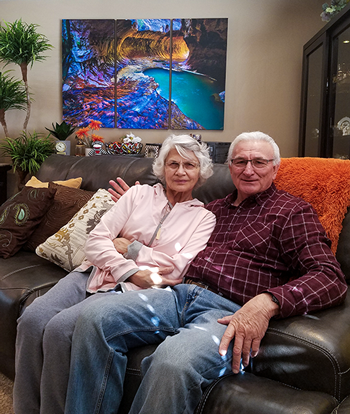
Martha and Mike Meredith at their home in Millcreek, Utah.

Mike and Martha Meredith are Pacific Islanders who have overcome many social barriers in order to be living comfortably in Millcreek, Utah. Martha vividly remembers her father cutting down and cracking coconuts in Tonga and then watching her mother clean them out. Martha was 10 when her family left Tonga and moved to New Zealand.

That’s where she met Mike. Mike was born in American Samoa but grew up in European Samoa until his family moved to New Zealand when he was 13. Martha recalled, “My family went through several migrations, first among the islands, then in New Zealand, and finally to America. My sister came first, then my parents. Mike and I were married and we had two little children and a third on the way when we came. We had no idea what on earth we were getting into.”

These migrations seemed so natural for their families, Martha explained, but when they got to America and it was so vastly different, they felt isolated and trapped. They weren’t sure how to assimilate while remaining true to their cultural practices.

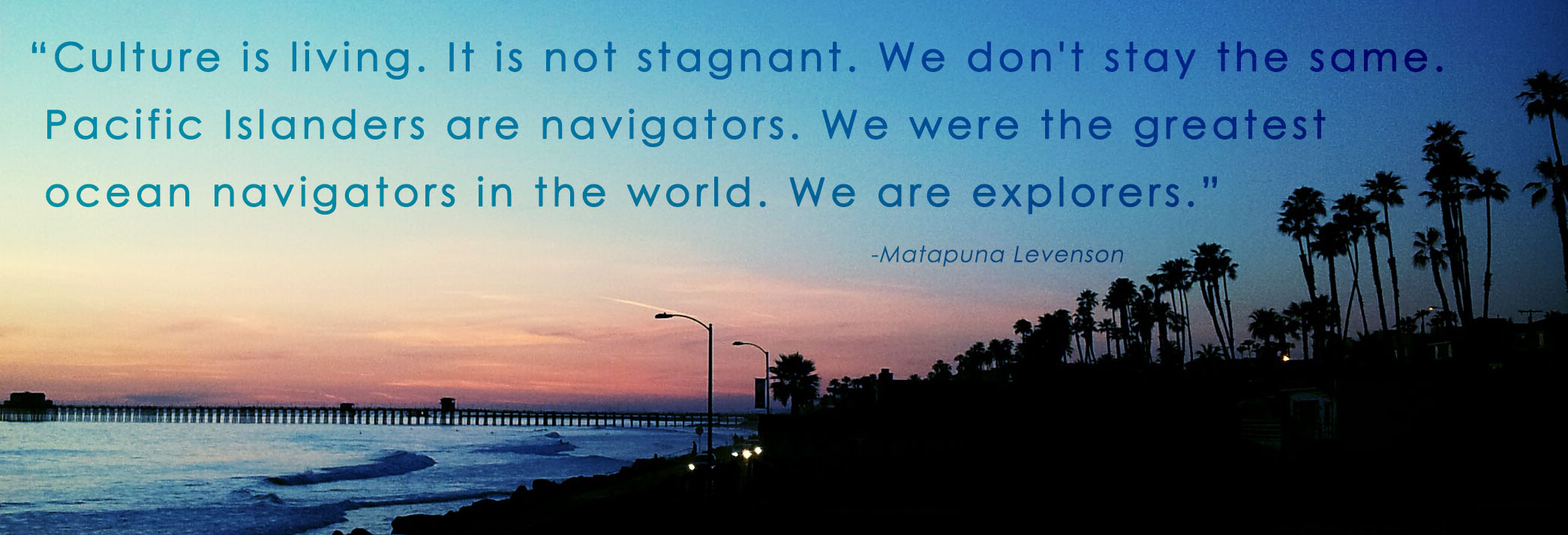
Matapuna Levenson, a lead advocate at the Salt Lake Area Family Justice Center, said, “Culture is living. It is not stagnant. We don’t stay the same. Pacific Islanders are navigators. We were the greatest ocean navigators in the world. We are explorers. So the idea of just staying the same, staying in one place, staying in one mindset, is so contradictory to the values that our culture is perpetuating and encouraging, what our ancestors were hoping for us.”

And now that these navigators are here, pursuing the American dream, what can they do? Where can they turn for help?

Jake Fitisemanu Jr., a clinical manager with Health Clinics of Utah, Utah Department of Health, said it is difficult for Pacific Islanders to navigate a social system that has completely different values because they aren’t sure how to do their part. In a village, everyone has their role and every role contributes to the overall wellness of the village.

According to the Utah Department of Health, “the overall proportion of NHPIs (Native Hawaiian Pacific Islanders) in Salt Lake City is greater than [in] any other city in the continental U.S.” One would assume that having a larger population would mean people have a community, a place to go, individuals who want to help. But what happens when those who came before you still feel adrift and disillusioned?

Fitisemanu wants to empower people who feel misplaced or lost. “I’m interested in mobilizing communities for political power, because this is the United States, that’s how it works here.” Fitisemanu sees the bigger picture after working for the government in the health department and as a city councilman for West Valley City. If the goal is getting Pacific Islanders to feel comfortable utilizing resources, then including them in the governing structure is one good way to do that.

Mike Meredith is another advocate for Pacific Islanders. He served on an advisory board for the Pacific Island community in Utah that focused on ways to improve education and resources for their communities. Because of his service on the board, Mike knows the issues that make it difficult for Pacific Islanders to start looking for resources, even if they are available.

“Especially in Utah, there’s a vast window that is open for them,” Mike said. “But one of the fears is picking up the phone, calling and setting up an appointment or approaching where there is help and seeking that. But it’s not really fear, it’s just something that’s in them, because they’ve lived in villages. You can go from home to the beach and throw in a fishing rod. Where here it’s wide open. They don’t know where to go or who to talk to.”

While it is true that the Pacific Islander population creates a place for tribal identification and emotional resources, Mike said there is confusion about how the American educational system applies. “The old tradition comes into this country and it’s difficult. Folks come in and think ‘you should have your kids finish school and then send them to work.’ That’s what we did back home. But that’s not the case that’s required here. To grow and progress you need education.”

Mike added that Pacific Islander parents lack the understanding of the benefits of graduating from college and entering the professional workforce. The family culture creates alternatives to college graduation and training required for high-level jobs, resulting in economic instability. The impact on families without sufficient financial stability affects all aspects of life — housing, medical care, food security — not to mention future school and work opportunities.

The Merediths are an exception because Mike was able to graduate with a degree in engineering and have a prosperous career. But he says this ethos was not easy to pass along even to his own children. And it is much more difficult for parents who feel at sea here in the high desert of Utah. Yet he still believes that Pacific Islanders can have it both ways — in his case American prosperity, along with a strong commitment to the values, mythologies, rituals and symbols at the heart of his Samoan-Maori culture and Martha’s Tongan culture.

Activists like the Merediths, Levenson, and Fitisemanu lead the way by empowering and educating Pacific Islanders. Fitisemanu said it is important to continue tradition while also moving forward. “We’re walking into the future backwards,” he said. “That’s how Polynesians see time. This is how we stay connected. Even though we’re moving in distance and in time into the future, we’re always facing the past.” Maintaining this connectedness while moving forward propels Pacific Islanders toward their dreams.

Levenson Quote

A quote from Matapuna Levenson, lead advocate at the Salt Lake Area Family & Justice Center.

The University of Utah’s Pacific Islander Student Association

Story and photos by GEORGE W. KOUNALIS

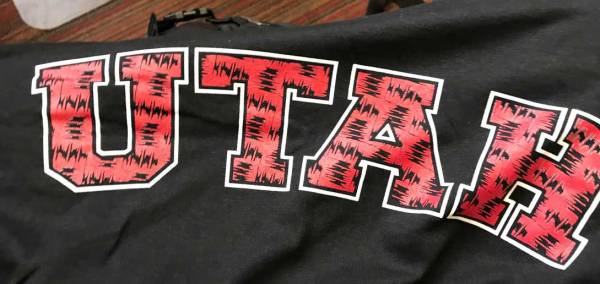
In Tongan culture, fala mats have been a part of the kingdom’s traditions for much of its history. The fala design is created by weaving and hammering strips of trees, which creates a very strong material. The strength of this material represents the strength of the community. The University of Utah’s Pacific Islander Student Association is a strong example of fala.

Story2Pic4

A University of Utah shirt containing the fala weave pattern. Photo by George Kounalis.

“We love our students, we’re proud of them, ” Tevita “Ti” Kinikini said. As the adviser of the U’s Pacific Islander Student Association (PISA), he has many reasons to be proud. The walls of his office are covered in art done by PISA alumni. His office door is covered with newspaper articles about many of the students who went through the organization. “This door represents a lot of our community on this campus,” Kinikini said.

“I came to the University of Utah in 2007,” Kinikini said. “I was a high school counselor and teacher in the Salt Lake School District.” He left that position to help out the Pacific Islander community at the university. Kinikini is an academic adviser with the first-year program and family support coordinator at the Office for Equity and Diversity as well as the adviser for the Pacific Islander Student Association.

tiKinikini

Tevita Kinikini is an academic adviser with the first-year program and family support coordinator at the Office for Equity and Diversity. He also serves as the adviser for PISA. Image courtesy of Kinikini.

PISA offers resources to many Pacific Islander students at the U. The program consists of many first-generation students who are studying music, fine arts, health sciences, social sciences, among other programs. PISA gives them a way to network on as well as off campus. “You can adjust the sails, but not the wind,” Kinikini said.

PISA allows a space to voice cultural advancement as well as improve academic achievement. “It’s been a long-standing club on campus,” said Hannah Makasini, a sophomore attending the University of Utah and member of PISA.

“In the past, we’ve done lots of activities, lots of student involvement, a lot of our students are involved with other things such as being orientation leaders,” Makasini said. “We like to think of our group as a welcome home for anybody, not just Pacific Islanders, but anybody who needs a friend to guide them through college.”

Grace Finau, a freshman attending the University of Utah and member of PISA, said, “In a sense, I feel like our club with our students, there’s a lot of groundbreaking going on. A lot of students venturing into areas that Polynesians aren’t necessarily involved in.” Many of these areas include being involved with Greek Life, New Student Orientation and the Center for Ethnic Student Affairs.

“Our club is very adamant and venturing out and doing groundbreaking stuff, we take our identity and our culture very seriously,” Finau said. “Our culture is very family and values-based.” She said the club doesn’t want to push people away from these values, but rather show that these values can be used to expand horizons.

STory2Pic9

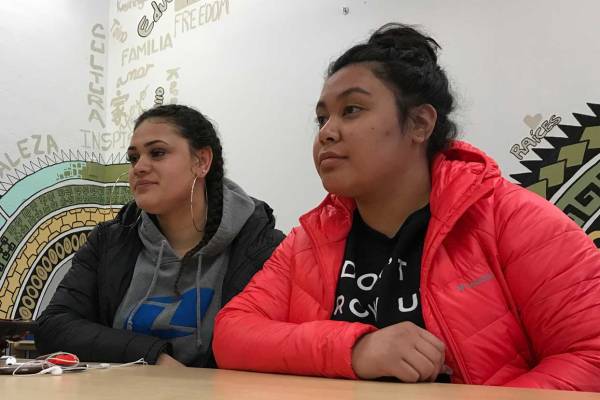
Grace Finau (left) and Hannah Makasini. Photo by George Kounalis.

Kinikini said these resources allow the school and community to connect and grow. “Our students are active in a lot of different areas,” he said of the students involved with PISA.

The group co-hosted a conference for high schoolers with Salt Lake Community College’s Pacific Islander Student Association in March 2018. “That’s our biggest event, probably, on a year-long schedule,” Makasini said.

High schools in six different districts will send their Polynesian students to the conference at SLCC. “We have a lot of hardworking individuals in our group that have worked hard to get to where we’re at,” Makasini said about organizing the event.

The event provides high school students with several workshops. They can learn about college, adversities these students may face, and different ways they can get financial or admissions information for college.

“We want them to realize that higher-ed is doable and important,” Makasini said. “There’s this stigma that college is too expensive and it feels like the only way in is through sports.” The conference seeks to strike that stigma and show Polynesian high school students that there are other ways to get into college that don’t have to be through sports.

“Our conference is really resource based,” Finau said. “We have a lot of successful Pacific Islanders and people of other races that come and show these kids what you can do, and here’s how you do it.” Finau said this year’s theme for the high school conference is, “I can and will create my own tide.”

In addition to the high school conference, PISA does many other activities. “We do food drives, clothing drives, and we even have students involved through the Bennion Center that volunteer on their own,” Makasini said. Even now, PISA is jumping into action.

The Kingdom of Tonga was hit by Cyclone Gita in February 2018. The cyclone devastated the country and PISA is helping with relief efforts. This is currently one of PISA’s biggest projects.

“We’re in the gathering stages of humanitarian supplies and school supplies,” Kinikini said. “We are hoping to send out a crate here within the next three weeks of school supplies, hygiene products, household wares and gardening tools.”

He added, “They’re in the cleaning and rebuilding stage right now. This is what our club does.” PISA’s quick efforts to help the Kingdom of Tonga show that the fala of this community expands beyond just the University of Utah and its surrounding community. “No one cares how much you know, unless someone knows you care,” Kinikini said.

One does not have to be a Pacific Islander to join PISA. All University of Utah students are welcome. The organization hosts Power Talks two to three times a month. The group is also active on Facebook and Twitter.

For those interested in getting involved with the group or wishing to help PISA with their collection for Tonga, Tevita Kinikini can be reached at the Center for Ethnic Student Affairs in Suite 235 in the University of Utah’s A. Ray Olpin University Union Building.

Utah restaurants provide traditional Hawaiian food

Story and photos by SHAELYN BARBER

The traditional Hawaiian plate lunch is a rich fusion of foods from many countries. When Hawaii’s pineapple and sugarcane industry began people came from all over the world to work on the farms, and they brought a variety of cultural foods with them. When workers took their lunch break they shared their food with each other, and the Hawaiian plate was born.

Keni Aikau, the owner of The Hungry Hawaiian, and Masa Tukuafu, the owner of Moki’s Hawaiian Grill, are two men who brought this tradition to Utah with their restaurants.

The Hungry Hawaiian


The Hungry Hawaiian is a hidden gem. Tucked away in an unassuming strip mall at 1492 S. 800 West in Woods Cross, the tiny restaurant packs a punch with its full-flavored meat plate.

“For us, food is the other emotion, you know? You’ve got happy, sad, food,” Aikau says.
He was born in Hawaii and raised in Utah, and his childhood was filled with food.

“At a very young age we started learning and we just cooked. Everything we did was based around food,” Aikau says. He began learning at family luaus and celebrations. The young children in the family would carry out simple tasks, and as they got older they became more involved in the process of making food.

In 1978, Aikau’s father opened the original Hungry Hawaiian restaurant in Provo, Utah. It didn’t last long. Despite the popularity of the restaurant, it ran into financial difficulty and was forced to go out of business. He was never able to re-open his beloved restaurant.

But Aikau’s love for food led him to pursue a culinary education at Western Culinary Institute, now called Le Cordon Bleu, in Portland, Oregon. He brought his traditional food with him.

“You can’t tell me that Spam isn’t a meat!” Aikau exclaimed. Spam, though popular in Hawaiian cuisine, comes with a negative stigma on the mainland. His colleagues at Western Culinary Institute scoffed at the canned meat. That is, until Aikau gave his classmate a Spam and egg sandwich for breakfast. He ate the whole thing, and part of Aikau’s as well.

After his father’s death in 2010, Aikau returned to carry out his father’s dream himself. He modified his father’s original recipes and on June 23, 2017, the restaurant opened once again — this time in Woods Cross, north of Salt Lake City.

His goal was to keep the menu as simple as possible. Each plate comes with two scoops of white rice, a scoop of macaroni salad, and a choice of beef, chicken or pork.

“We just keep hearing how good it is from everyone around us,” Michelle Benedict says. She was drawn to the restaurant for the first time after hearing about the food from her neighbors.

“I just adore Hawaiian food,” Kristin Yee says with a laugh. “I know it’s rich so I have to be careful how much I come.” She has been a regular at the restaurant since its beginning. She was initially interested when she noticed Aikau’s children on the corner holding signs during the first week they were open.

Yee loves local food places but says, “It’s not just support, it’s really good. So, you’re getting the benefit too.”

Moki’s Hawaiian Grill


From the minute you step into Moki’s Hawaiian Grill, the warm smell of Hawaiian barbeque greets your nose. Mellow ukulele music hovers underneath the friendly chatter of customers, and the staff greet you with a smile from behind the counter.

“Food is what brings people together,” Masa Tukuafu says. He started Moki’s in 2002 and now owns two restaurants: one in Mesa, Arizona, and one located at 4836 S. Redwood Road in Taylorsville.

“In the beginning I just wanted to burn the place down,” Tukuafu says. “And, as time goes, you figure things out. So, you learn from your trials and you just keep going at it.”
Despite his trials, Tukuafu says the biggest benefit of owning Moki’s Hawaiian Grill is being able to provide for his children and his family.

“Being a first-generation here and struggling all the way through school and graduating from the University [of Utah], it was a challenge, and I didn’t want my kids to do that,” Tukuafu says.

Tukuafu is half Tongan and half Samoan. Traditional Polynesian food is costly to make, so he chose to run a Hawaiian restaurant instead. The ingredients for that cuisine are much easier and cheaper to find, and far more accessible than those required for Polynesian food.

“We wanted to provide something that was more for the majority instead of the minority,” Tukuafu says. He places an emphasis on health at his restaurant, altering traditional cooking methods to reduce fat and grease by using an open broiler for the restaurant’s meat.

“I heard about Moki’s because they’re one of the only places that sells musubi and I love musubi,” says customer Faitele Afamasaga. Spam musubi consists of a hunk of grilled spam and a block of rice wrapped in seaweed.

Afamasaga is a frequent visitor and usually comes for a cone of Moki’s ever-popular Dole whip ice cream.

“We like the cultural food from Hawai’i,” says Jennifer Selvidge, a first-time customer with her husband. She drives past Moki’s almost every day for work and wanted to try it.
“Everyone that’s had Moki’s or the style seemed to enjoy it and go back,” Selvidge says.

The bottom line: preserving Pacific cultures through language conservation

By ALLISON OLIGSCHLAEGER

Of Utah’s 38,000 Native Hawaiians and Pacific Islanders, 44 percent report speaking a language other than English at home. The figures are even higher in Polynesian families, with 45 percent of Utah Samoans and 68 percent of Utah Tongans reporting use of at least two household languages.

But according to Marianna Di Paolo, a professor of sociolinguistics and anthropology at the University of Utah, most immigrant families will lose their language of national origin within three generations. Although little research has been done on language attrition in Pacific Islanders — Di Paolo and her colleague Adrian Bell are some of the first to research Tongan language use in American immigrant communities — the standard seems to hold as true for Polynesian languages as it does for more researched languages like Spanish and Italian.

“The norm is loss in three generations,” Di Paolo said in a phone interview. “It doesn’t mean it has to be that way, but that’s the norm.”

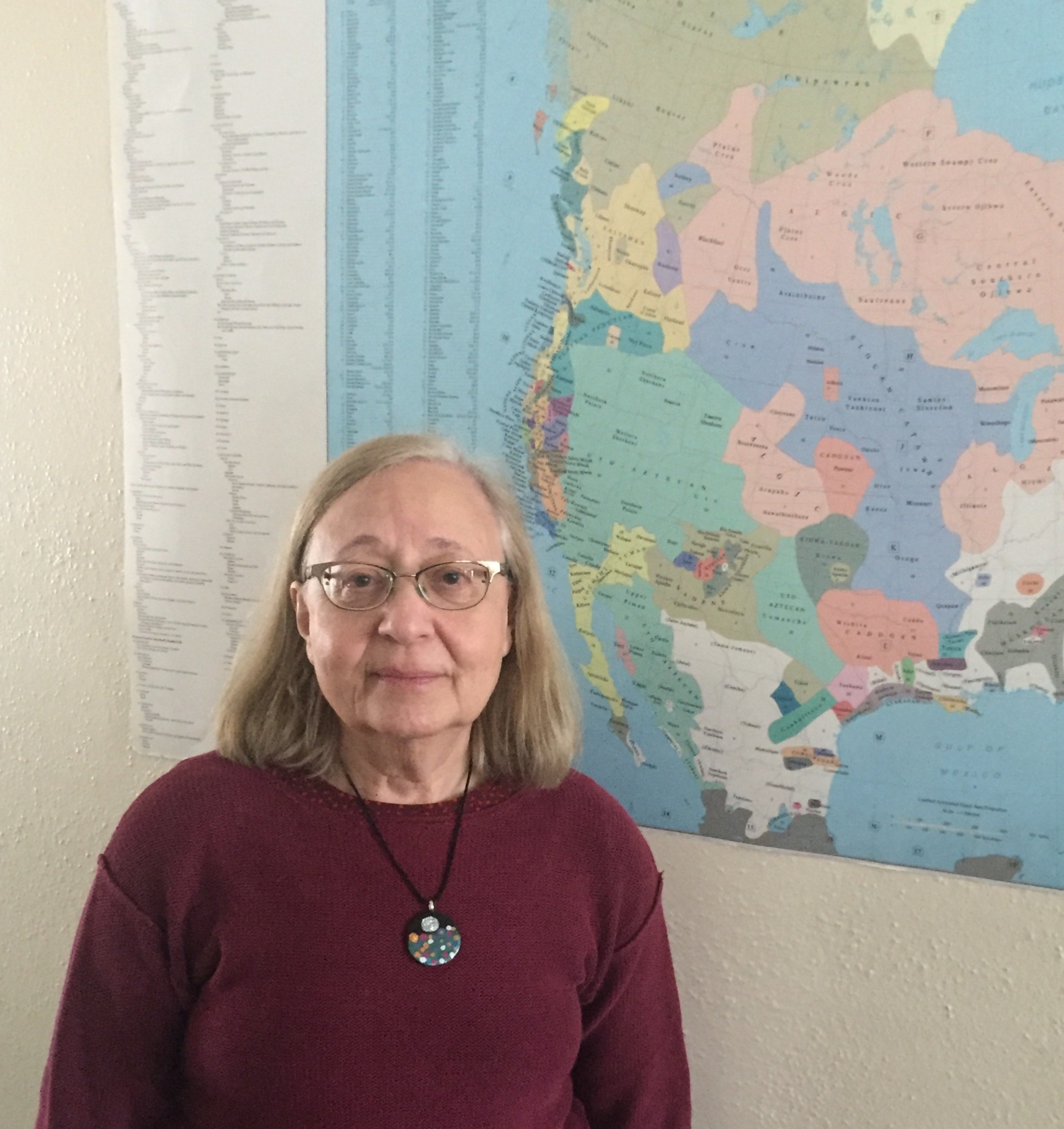
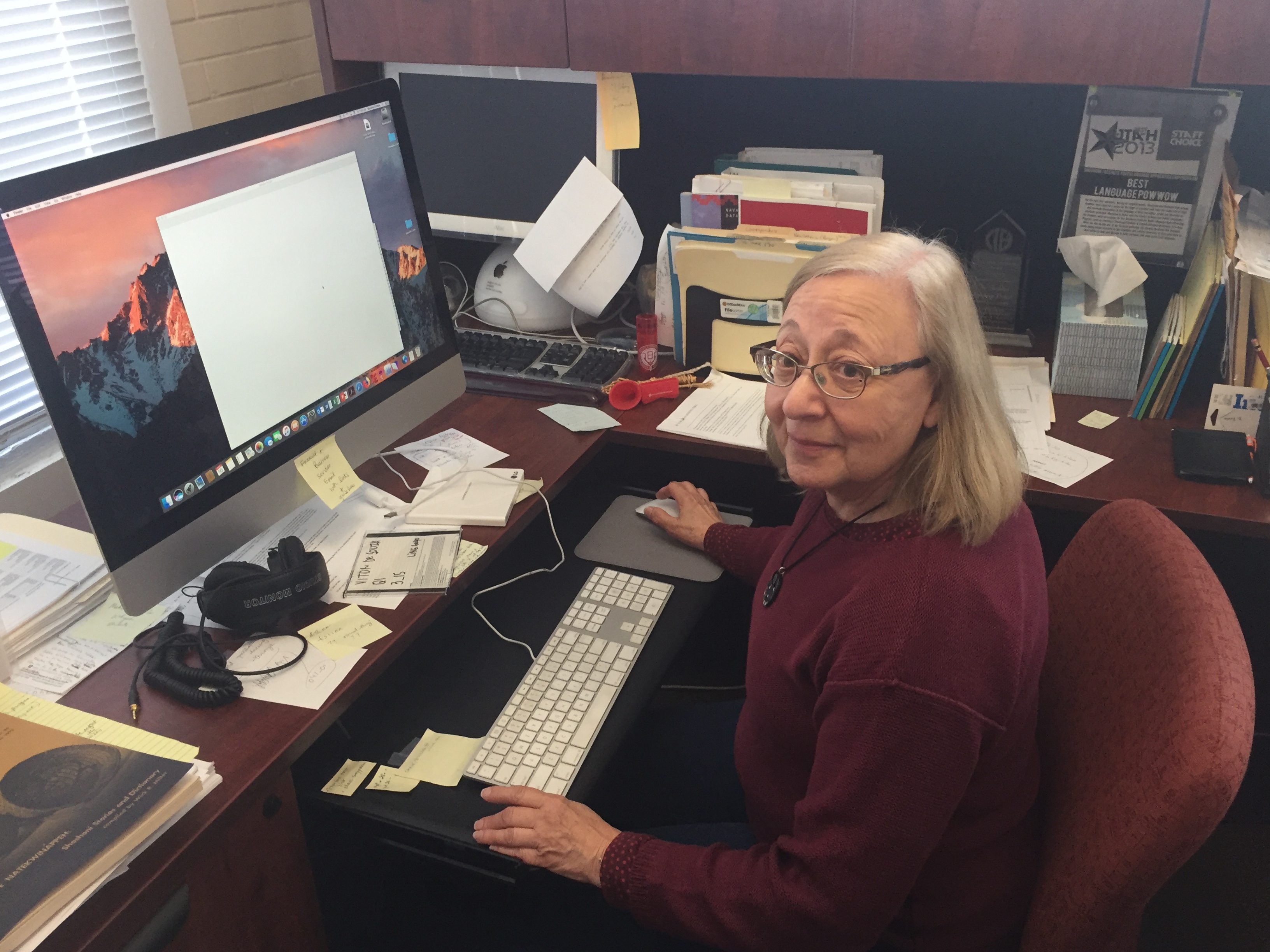
Marianna Di Paolo

Anthropologist Marianna Di Paolo is one of the first researchers to study Tongan language use in the U.S.

Di Paolo explained that language loss frequently occurs as a byproduct of assimilation. First-generation immigrants, who arrive in the United States with varying levels of English proficiency, tend to use their language of national origin in the home, so children born to immigrants often learn their ancestral languages before or alongside English. However, most bilingual children go on to attend primarily English-speaking schools full of primarily English-speaking students.

“The children start using English primarily with their peers, so who are they going to marry? People who are also using English with their peers,” Di Paolo said. “English will become the household language of the second generation, the generation that is born and raised here.”

This means that third-generation Pacific Islanders born into English-speaking households are far less likely to speak and understand their ancestral languages than their older family members.

“If English becomes the language of the home, it is very likely that the grandchildren of immigrants will shift completely to English, or only use Samoan when talking with a grandparent, or understand Samoan but not speak it,” Di Paolo said. “In three generations, you have moved from a nearly-monolingual Samoan-speaking family to a nearly-monolingual English-speaking family.”

Marianna Di Paolo

Much of Di Paolo’s research focuses on recording and revitalizing immigrant and indigenous languages.

Heritage languages are lost even more quickly when first-generation parents use English in the home or choose not to teach their children their ancestral languages. Sisi Muti, who teaches Tongan language at Pacific Heritage Academy in Salt Lake City, said she sees this frequently in her students’ families.

“They moved to America to learn English, not to perpetuate Tongan,” Muti said in a telephone conversation. “That’s why they’re here — they want their kids to learn English well.”

But Muti believes that learning a heritage language can be a valuable experience for Polynesian children, grounding them in their culture of origin and giving them a sense of identity.

“Losing the language is the beginning of losing a culture,” she said. “Even here in America, it is important that they know their identity and know who they are.”

Muti said educating immigrant parents on the link between language and identity development is critical to preserving Polynesian languages in Utah’s Pacific Islander communities.

Di Paolo agreed, noting a long-standing history of misinformation about the harms and benefits of learning two languages as a child.

“Educators have misinformed parents about bilingualism, saying that learning two languages in early childhood actually harms children. It absolutely does not,” Di Paolo said. “It improves a positive sense of identity and it improves cognitive development.”

Di Paolo said families who continue to use their language of national origin in the home stand a much better chance of retaining their language beyond the three-generation average, but may still face other challenges.

“That supports it in the home, but it isn’t probably, in the long run, the only support that the language will need,” she said. “It is incumbent on some other part of society to create some other situation where language can be used.”

These “other situations” are known as domains: sociocultural settings in which languages can be used. Along with home and school, possible domains include work, church and government settings. In a viable domain, the use of any given language is not suppressed; in an optimal domain, it is facilitated and encouraged.

“Keeping the heritage language alive means that there have to be places for people to use the language and have pride as they’re using the language,” Di Paolo said. “The more domains that are possible for the language to be used, the more likely it is that Samoan will persist.”

While not immigrants, the indigenous Polynesians of New Zealand have seen great success in revitalizing their ancestral language, Te Reo Maori, in part due to its recent reintroduction into school and government settings throughout that country. Curleen Pfeiffer, a Utah educator and member of the Navajo Nation, believes the Maori people’s techniques for language preservation may have transpacific significance here in Utah.

To date, Pfeiffer has led four groups of Native Utahns across the ocean to study language preservation in New Zealand. The trips started as general cultural exchanges, but took on a new focus after Pfeiffer was touched by the value the Maori place on their language.

“The importance of language started really hitting me, and I turned my purposes totally around to language specifically,” Pfeiffer said in an interview at the American Indian Resource Center. “I really wanted to help the tribes of Utah see and understand for themselves how language is vitally important for our culture to remain alive.”

Pfeiffer brings Native students, educators and tribal leaders to New Zealand to study Te Ataarangi, a Maori teaching method that claims to have helped more than 50,000 people learn Te Reo. Pfeiffer has adapted Te Ataarangi to teach Dine, the Navajo language, and hopes to emulate the Maoris’ success in her own linguistic community.

Pfeiffer also hopes the students who visit New Zealand with her will understand the cultural significance of their own languages and be inspired to advocate for their preservation.

“Language is the bottom line,” Pfeiffer said. “Just like reading is the bottom line for education, language is the bottom line for culture. And if we want to keep our culture, we’ve got to do something. We can’t just sit back and let it fade away.”