The consequences of COFA for Utah’s Micronesians

Story and photos by MARISSA SITTLER

Sitting in a third-grade classroom, surrounded by miniature sized chairs, bright colors and other seemingly “elementary” things can make what is outside of those four walls seem inconsequential. Yet, the words that Melsihna Folau speaks about the Compact of Free Association, or COFA, inside the classroom are quite the opposite.

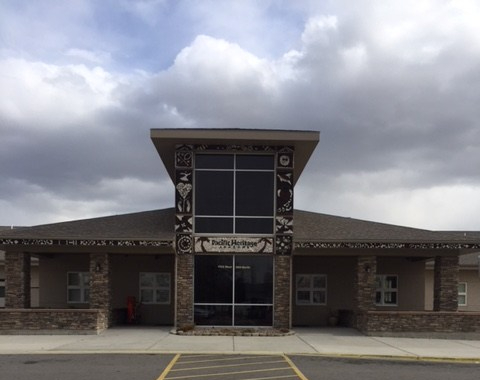
Folau is a third-grade teacher at the Pacific Heritage Academy charter school in Salt Lake City. She is one of some 2,300 Micronesians living in Utah, as reported by the U.S. Census Bureau in 2016. She is Micronesian, born in Pohnpei, but has lived in Utah since 1989 and is married to a U.S. citizen. Folau chose not to become a U.S. citizen, despite being married to one. She says being able to have that connection to her roots holds a sentimental feeling for her. 

Processed with VSCO with hb2 preset

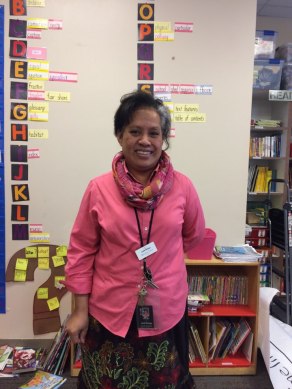
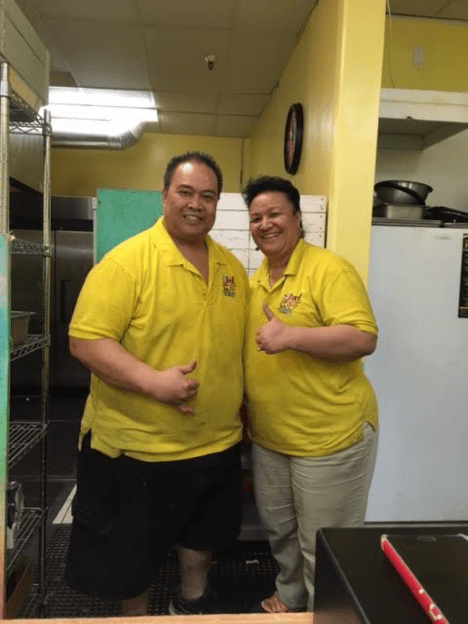
Melsihna Folau continues to work as a third-grade teacher at Pacific Heritage Academy in addition to passionately fighting for Micronesians’ rights.

COFA was signed in 1982 between the Federated States of Micronesia (FSM) and the United States to “provide for U.S. economic assistance (including eligibility for certain U.S. federal programs), defense of the FSM, and other benefits in exchange for U.S. defense and certain other operating rights in the FSM, denial of access to FSM territory by other nations, and other agreements,” according to USCompact.org.

Under the COFA federal law, Micronesians in Utah are not U.S. citizens. This means that they do not hold a permanent ID. They must renew their driver licenses every year, which is a time- consuming process. In a situation like Folau’s, she must take a few hours off from her teaching to wait in line at the DMV for license renewal.

In some cases, she says it can take months for licenses to arrive. For families who do not have relatives already settled in the United States, that waiting period can be harmful to their financial well-being. Folau says, “Anytime you’re new, you know you have to put food on the table, you have to work and with the little money you have, six months of waiting. People don’t understand that six months of waiting, it’s a detrimental thing for a family that is just new.”

 It was not until 2010 that she became aware of the limitations that Micronesians have in Utah. Folau went to renew her driver license at the Utah Division of Motor Vehicles and started getting questioned when an agent told her that she was part of COFA. She was equipped with all the right documentation, but was given a hard time. The DMV agent said, “It’s part of September 11,” and “We need to protect our borders,” referring to the REAL ID Act of 2005. This instance is what sparked Folau’s research into the COFA bill. She heard rumors about the mistreatment of Micronesians in Utah, but did not think much of the gossip at the time. “Stories will be stories until you experience that,” she thought.

The REAL ID Act of 2005 changed everything for Micronesians in Utah. Folau says, “Most of us have been here in the United States for ages, you know, lived, schooled, worked, law-abiding citizens.” The REAL ID Act clumped Micronesians, being under the protection of the United States, as non-citizens who have indefinite stay. “We’re not illegals, we are treated like one. It’s just frustrating for somebody that’s lived here freely all these years,” Folau says about the injustices that COFA has created for Micronesians in Utah.

On Micronesian driver licenses, the word “limited” appears. This draws questioning from state and federal entities. “Banks question you. Any agency that hires you questions you and any cop that catches you wherever you are, questions you,” Folau says. A non-permanent ID can make it difficult for Micronesians to rent or buy a house. “Some people are OK with what we call ‘sardine,’” where families live in very close quarters, but she adds that it can only take a couple years for there to be friction and meltdowns within a household. A recurring question that Folau has is, “Why are these things happening when it’s not necessary?”

Bryan Boaz, who is part of the Marshallese community in Utah, noted in an email interview that COFA negatively impacts Micronesians in more ways than housing alone. Boaz wrote that it affects the Marshallese people in Utah “in employment, school, doctor and all the state and government assistance because of our status.”

Folau and other Micronesians have taken it upon themselves to try to correct the injustices of COFA by working on putting together a bill that is modeled after one that successfully passed in Oregon. Jake Fitisemanu Jr., councilmember for District 4 in West Valley City, Utah, says that their main goals are: 1) to redefine COFA citizens, 2) to obtain permanent state licenses for Micronesians and 3) to extend Medicaid, although he notes that their third goal may be less likely.

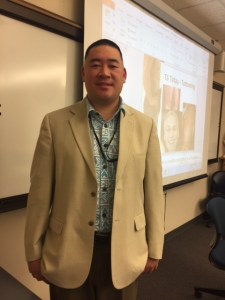
Jake Fitisemanu Jr. after speaking to University of Utah students about the Pacific Islander community.

In addition, Folau also wants the bill to recognize the differences of the Micronesian people, which she adds will require a lot of public education. She says, “Yeah, we’re Micronesians, but we’re not one group. We don’t speak each other’s languages. Even here in Utah with a very highly educated population, people are still calling me Polynesian.”

Folau and the others who are trying to re-work the COFA bill have not been able to find someone in Utah’s senate to sponsor it. With support from community resource groups including Pacific Island Knowledge 2 Action Resources, the Utah Pacific Islander Civic Engagement Coalition, and the American Civil Liberties Union of Utah, and advice from the Oregon group of COFA Alliance National Network, they have encountered great empathy and help. Despite this, Folau says, “We are just not moving forward at this time.”

Their next steps entail resilience and perseverance. Folau says the Micronesian group will keep “being patient and going from there. We’re not going to give up, it’s been eight years, so we’ll keep going until somebody sees this is really an injustice.”

Diabetes is a health risk with Pacific Islanders in Utah

Story and photo by JANICE ARCALAS

IMG_2789

Jake Fitisemanu Jr., chair of the Utah Pacific Islander Health Coalition.

Type 2 diabetes is a health risk among Pacific Islanders in Utah. According to a Pacific Islander report done in 2011 by the Utah Department of Health,  the rate of Utah Pacific Islanders is at 13.7 percent. This is nearly double the statewide rate in Utah, which is at 6.5 percent.“The biggest risk factor for diabetes is being overweight or obesity which is a huge problem in Pacific Islanders,” said Dr. Kalani Raphael, a University of Utah associate professor of internal medicine, in an email interview. “Of course obesity is related to poor diet quality and low physical activity, so these factors contribute.”

According to the 2011 report, 63.6 percent of Pacific Islanders in Utah were considered obese. Researchers  defined obesity to be a body mass index of over 30. Poor diet and sedentary lifestyle are the main factors that contribute to Pacific Islanders getting diabetes, said Jake Fitisemanu Jr., chair of the Utah Pacific Islander Health Coalition, in an email interview.

Rice is a common food that is in a Pacific Islander’s diet. Rice has lots of carbohydrates, which can spike blood sugars. “Rice is a huge one and is an unfortunate staple of the diet,” Raphael said. “Potato or macaroni ‘salad’ is another one and lots of processed foods.  I also suspect that there is a low proportion of fruits and vegetables.”

Many Pacific Islanders think that since their family members have diabetes there is nothing they can do about it. “My experience is that it is one of the toughest things to deal with. There is a lot of fatalism meaning that a lot of Pacific Islanders think that since their family members had diabetes that there is nothing they can do about it when there is a lot that can be done to lower their risk,” Raphael said. “Same thing for the complications like kidney failure. I hear a lot of people say that they don’t think they can prevent kidney failure because their family had it.”

One complication with Pacific Islanders who have diabetes is language barriers. According to the report, those interviewed in English had lower obesity rates than those interviewed in Tongan and Samoan. The Utah Department of Health also found that those interviewed in English were more likely to perceive themselves as overweight compared to Samoan and Tongan speakers. “Language barriers for providers that don’t speak the language or have access to an interpreter are an issue. Also providers who don’t understand the culture make it challenging,” Raphael said.

A traditional Polynesian diet wasn’t always like this. “The traditional Polynesian diet was plant-based, varied, and very healthy. This was a protective factor that was further strengthened by the very active lifestyle the ancestors lived. Fast forward to today, that healthy lifestyle and wholesome diet has been replaced by modern sedentary lifestyles and sugary diets that increase the likelihood of developing diabetes.” Fitisemanu said.

Resources are available to Pacific Islanders in Utah who have diabetes. “The Utah Department of Health’s Office of Health Disparities developed a brief video in English, Samoan, and Tongan languages that mention some overall health tips that can help prevent diabetes and promote overall wellness,” Fitisemanu said. “There is also a diabetes pamphlet in Samoan that the UDOH Diabetes program has published. Local health providers from our Pacific communities are also good resources, including Dr. Kalani Raphael, Dr. Liana Kinikini, Dr. Kawehi Au, Uaisele Panisi, [and] Karen Mulitalo.”

Raphael mentioned community resources such as the National Tongan-American Society, which assists with diagnosing diabetes and counseling. It is located at 3007 S. West Temple, Bldg. H, in Salt Lake City. Another resource is the American Diabetes Association of Utah, located at 986 W. Atherton Drive, Suite 220, in Taylorsville.

The report of the health needs of Pacific Islanders advises limiting sugary drinks to help control obesity, which is a factor that causes diabetes.

“Our communities need to be aware of the risk factors and symptoms of diabetes so that they can try to reduce their risks and be able to identify diabetes early on, before serious complications occur,” Fitisemanu said. “Our families, social groups, and churches need to take more proactive roles in encouraging healthy living while providing support for those who seek treatment, and acknowledge and incentivize those who comply with treatment and make improvements. Apathy and normalization are the two worst enemies in this fight against diabetes. Because it’s so prevalent in some families and communities, it can become normalized and ‘accepted’ as an inevitable fact of life, and that notion is not only false but also incredibly dangerous to us as a community.”

Diabetes can be overwhelming but there is hope. “Diabetes is a complicated disease that requires a lot of self-care, but the motivated and informed patient can be successful,” Raphael said.

Tribal tattoos are more than just a fad

Fred

Fred Frost, owner of Frost City Tattoo. Photo by Diego Romo

Story and photos by DIEGO ROMO

The first thing you notice when walking into Frost City Tattoo is an overwhelming sense of community and inclusiveness. It’s as if the shop were a working and living metaphor for the values that most, if not all, Pacific Islanders stand for: community and tradition.

A warm “hello” greets you as you push open the door, quickly followed by a “make yourself at home” and inviting conversation.

But as you walk around and begin to explore the shop, the work of the artists grabs your attention. The walls are filled with pictures of the beautiful motifs that have ornamented the bodies of generations and generations of Pacific Islanders, which entices your focus and sustains it. The tradition is deep and diverse. The art is unique and beautiful.

Anthropologists agree that the tradition of tattooing has existed in Pacific Islander society for over two millennia. Almost all of the island societies scattered across the Pacific have some form of tattoo culture that permeates their community and helps indicate their place in it.

Although experts disagree on the geographical origin of tattooing — there is evidence of tattoos on the preserved skin of Egyptian mummies and countless other ancient cultures — historians can agree that the linguistic history of the word derives from the Samoan word tatau, which means “to strike.”

Called “kakau” in Hawaiian culture and “moko,” the traditional name for the face tattoos of the Maori in New Zealand, the art has always played an integral role in Pacific Islander society.

“Tattooing is as fundamental to Pacific Islander culture as anything else,” said Fred Frost, owner of Frost City Tattoo, which is located at 7045 State St. in Midvale.

Frost, who has been tattooing for 20 years, never saw the craft as a potential career choice. He got into the art by giving tattoos to friends as party favors when he was a young man living in California.

By the time he was 16, Frost gained an apprenticeship with a shop in California and had begun to discover his passion, which in turn helped him to learn more about himself.

“I actually learned how to speak Samoan through tattooing,” Frost said.

Frost jumped into research and began practicing the ancient motifs that are prevalent in Pacific Island tattooing, becoming a master in the process.

The traditional style of tribal tattoo varies from island to island, but the most common themes seen in the tattoos are strength and the representation of the environment in which they lived.

Many agree that the repeated use of triangles, which are representative of shark teeth, generally symbolizes strength and protection. Another very common pattern seen is the spiral-esque design meant to represent waves.

Because the early societies of the Pacific Islands had no written language, they used tattoos as a means of communication between members of the society.

According to Kealalokahi Losch, an expert in Pacific Islander culture, agrees that tattoos were a way of preserving history and culture, as well as a means of broadcasting one’s individuality.

“For Polynesian people it’s kind of our identity. It’s our thing,” said Lala Ellsworth, a tattoo artist working at Frost City Tattoo.

LaLa

Lala Ellsworth, a tattoo artist at Frost City Tattoo. Photo by Diego Romo

Historically, tattoos contained symbolism that related to the matriarchal and patriarchal lines of the family. They displayed successful hunts and the spoils of war. They also denoted what standing in the society one had, be it king or warrior, and even the origins of their ancestor.

Frost credits these characteristics for his passion and interest in the style. He really liked the fact that he was “able to tell a story using our language.”

Tattoos also played a very personal role in the sense that they shared the story of the bearer to the world. But they were never about the individual, as is the case with most Pacific Islander culture and practices.

“There’s no individual. That doesn’t exist in our style,” Frost said. “You’re all about the family, the clan, and community in a way that makes you whole.”

Historians state that as European cultures began to make contact with the Pacific Island communities, the practices and techniques of Polynesian tattooing began to spread and influence styles all over the world.

“All islanders have always gifted tattoos to foreigners,” Frost added.

And despite many efforts by zealous religious missionaries to curb the practice, it’s still thriving two thousand years later

Frost said that there is a large and growing market of Pacific Islanders who wish to continue the tradition of receiving the tattoos as part of their cultural identity — those who truly understand the deep meaning of the symbolism and the history of the art.

But you do not have to be of Pacific Island descent to appreciate and understand their style of tattooing.

“There’s a lot of non-Polynesians getting Polynesian stuff,” Frost said.

He added that this is a factor in what’s keeping the art alive. The symbols and their meanings are universal. They tell the story of all humans, just through the lens of the Pacific Islander experience.

“The meaning behind it is relatable to anyone in the world,” Frost added. “It’s just done in our style.”

Zay Dela Pena, who has tattooed at Frost City Tatau for three years, was born in Hawaii and grew up in a very religious family. The traditional, Polynesian style tattoos that were inspired by his culture and his spirituality by interweaving symbolism and meaning between the two identities.

tattoo2

Zay Dela Pena tattooing a client at Frost City Tattoo. Photo by Diego Romo

“I had to figure out a way to connect the cultural symbols to spiritual symbols,” he said.

Dela Pena, like many others, was able to see the universal qualities in the symbols and add his own experience and identity to the tattoo, deepening its meaning.

Although the art-form has remained highly unchanged over its two thousand year existence, artists are now beginning to blend styles and create pastiches that contain the influence of many different works and cultures.

“What’s happening now is you’re seeing an evolution,” Fred Frost said. “Because artists are becoming diverse.”

Younger artists like Jroo Winquist are influenced by the tattoos of their older relatives and peers, but are continuing the Pacific Islander tattooing legacy through exploring different and newer styles.

“I love the look of tribal,” Winquist said. “It’s aesthetically so pleasing.”

But Winquist stated his favorite style of tattoo to work on is contemporary, modern and even surrealistic. Still the art is influenced in some way by the traditional Pacific Islander style.

Fred Frost said the traditional style of Polynesian tattooing will not be going away any time soon.

“It has stood the test of time until now, so I’m sure it will last,” he said.

As the buzz of the tattoo guns begins to fade, the conversation builds at Frost City Tatau in Midvale. Those who have just finished receiving their new ink don’t just pay and leave — they stay and talk for a while. Because before anything else, community and family come first in the Pacific Islander tradition.

Pacific Islanders coalesce to preserve their culture

Story and photos by WOO SANG KIM

The Sixth Utah Pacific Island Heritage Month — an annual celebration held to increase the profile of the Pacific Islander communities and raise awareness of the different Pacific Islands — will be held July 28, 2018, from 6-11 p.m. at Sorenson Multicultural Center & Unity Fitness Center at 855 W. California Ave. in Salt Lake City.

Susie Feltch-Malohifo’ou, executive director of Pacific Island Knowledge 2 Action Resources, proposed the observance in 2013 and Gov. Gary J. Herbert declared August as Utah Pacific Island Heritage Month.

Will Unga, career adviser at Salt Lake Community College, has assisted with hosting the annual celebration at the Sorenson center. “The event is like Hawaii. We offer different types of foods and teas. Some people love it. Some people find it interesting. Some of the dishes are lu sipi, palusami, ika, taro and cape. We also have dances like haka, mari, sipi tau and siva tau and arts like tattoos, drawings, ta moko and tatau,” he said.

“We prepare yearlong, working to offer tables for vendors or to let them perform. We want to get to a level of having an application process to elevate the level of quality,” Unga added.

He said the event is extremely short-staffed. Volunteers’ time is limited. More money is needed to hire an overseer. Yet, Feltch-Malohifo’ou’s drive and determination have helped the event to expand exponentially each year.

“The first celebration was a test, the second was going somewhere and the third was phenomenal. The first gathered about 100 people, mostly the families and friends of the event associates. The second had 300 people and the fourth had 600 people,” Unga said.

Micronesia Cultural Booth participated as a vendor at the past celebration. Melsihna Folau, a third-grade teacher at Pacific Heritage Academy who volunteered for the booth, said, “We aim to raise awareness of the current problems of the Micronesian region and educate people about the culture of Caroline Islands, Mariana Islands, Marshall Islands and Kiribati Islands.”

2

Folau helped in hosting the Micronesia Cultural Booth.

Folau said the staff offered food and clothing as samples. Pilolo, tapioca mixed with banana and coconuts, and kemalis, rice mixed with coconuts, are given. The staff also answered questions about the Micronesian region. Most inquired about global warming and what the inhabitants are doing to slow the heating, Folau said.

“It took us six months to prepare. We had to get approved from the Marshallese government, connect to friends in Kiribati Islands, write to tourism management companies and talk to visitors from Guam. Getting the approval was the hard part,” Folau said.

The vendor also increased in size and had to divide. “The Marshallese wanted to have their own things, so they separated last year. They were excited to show their crafts and share things that they were shy about before,” Folau said.

“We are all part of the one history with different perspectives. I was excited to learn from experiences and network with people. I am just happy that I have been a part since the beginning,” Folau said.

The Queen Center, a Pacific Islander nonprofit promoting healthier lifestyles by providing cultural resources, tobacco prevention and advocacy and education, also has participated in the heritage celebration. Tufui Taukeiaho, a health sciences instructor at Granite Technical Institute who served as a committee member to the nonprofit, said, “We helped out by starting a 5K run.”

Taukeiaho said the Queen Center has hosted the run since the first celebration. The 5K started with 80-100 runners but the number surged each year. The funding from the run was given to two families. The husband of one family had a kidney failure and the other family had a 4-year-old boy who had cyclin-dependent kinase-like 5 (CDKL5) disorder — a rare X-linked genetic disorder that results in difficulty controlling seizures and severe neurodevelopmental impairment. Each family received a check of $6,000.

3

Taukeiaho assisted families in need by helping coordinate the 5K run.

“Helping out to host the 5K run as a committee member and handing out the checks to the families was very rewarding to me,” Taukeiaho said.

The celebration increased the cultural awareness even among Pacific Islanders. According to a Salt Lake Tribune article, “One of every four Tongans in the U.S. calls Utah home,” Utah boasts the second largest Tongan population and fourth largest Samoan population in this country. Yet, Unga said, “Second-generation Pacific Islanders have never been home (Pacific Islands). They don’t get any more of the culture, food, and language.”

Second-generation Pacific Islanders responded very positively to the past celebrations. “They can’t get enough. They want more. After the taste, they save up money to go back to the Pacific Islands and see more, especially the language,” Unga said.

They also garnered an opportunity to network with other community members. “I advise and connect students to other Pacific Islanders. I help them get internships and jobs, and refer them to other business contacts,” Unga said. “I help no less than 50 students a year.”

Some students even took part in the fourth celebration by screening a film. Unga said students from Salt Lake Community College made the film incorporating the Pacific Island videotaping techniques learned from the New Zealand filmmakers.

Participants gained novel experiences, too. “When you work with people, you have to learn to compromise. Keeping mind and heart in the right spot answered my question of what I want to accomplish at the UPIHM. Past years have been that way,” Unga said.

“Pacific Islanders are a very small group of minorities,” he said said. “We have challenges because of that, and we have one common goal: To live a happy life. We just want everyone to be successful and try to be good members of the society.”


Pacific Islander cuisine and the impact of colonization

Story and photos by ANTHONY SCOMA

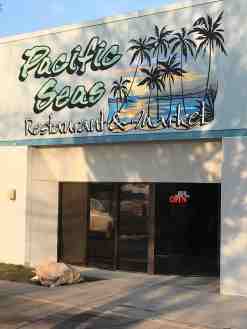
On the corner of Redwood Road and Paxton Avenue in Salt Lake City hangs a sign that reads “Pacific Seas Restaurant and Market” on a background of beaches and palm trees. While the sign is at odds with the landlocked, wintery Utah surroundings, the interior of the building is filled with the enticing scents, sounds and heat of a busy kitchen. Adults and children sit and eat at the tables or stand near the counter and order what is likely the most popular Pacific Islander cuisine in Utah.

IMG-0853

1151 South Redwood Road, Salt Lake City

“A lot of these customers that we receive come to the restaurant because it reminds them of their upbringing and their culture,” Maryann Tukuafu, the manager of Pacific Seas, said in a phone interview. When asked why food is so important she said, “I know for the Polynesian culture, it is a sense of togetherness, a unity. Food brings people together.”

At any celebration, from birthday to baptism to promotion party, food plays a part in recognizing good news. Tukuafu emphasized how these traditional dishes promote feelings of happiness and togetherness among Pacific Islander families and communities.

This shared experience and expression of culture is built on a history that stretches back to the first Pacific Islander communities. However, the diet of those who inhabited the islands originally had a much different makeup than what is seen today.

IMG-0856

A plate from Pacific Seas Restaurant consisting of lu sipi, a dish of lamb, taro leaves, mayonnaise and coconut milk; a lamb chop; fish with coconut milk gravy; and sweet potato.

According to a 1992 study by the Institute of Polynesian Studies, 85 percent of pre-colonial Pacific Islander diet was vegetable-based with 10-15 percent coming from protein largely sourced from the sea. More specifically, the Pacific Islander diet in the pre-colonial era was 60-78 percent carbohydrates, 10-15 percent protein and 7-30 percent fat. In comparison, the modern U.S. diet is 45-65 percent carbohydrates, 10-35 percent protein and 20-35 percent fat.

“Prior to colonization, refined sugars, deep frying, and trash foods like turkey tails and lamb flaps were not part of the diet,” said Jake Fitisemanu Jr., chair of the Utah Pacific Islander Health Coalition, in an email interview. “It reduced the prestige and perceived value of indigenous foods and enhanced the value of introduced and imported foods.”

It wasn’t just changes in diet that European missionaries and colonizers brought. They also introduced technology and economic systems that made the Pacific Islanders’ highly active farming, hunting and fishing lifestyle obsolete. As with most demographics, modern work has continued this shift to more sedentary lives.

“In terms of activity, westernization’s emphasis on cash economy devalued the traditional subsistence, hunting, and fishing lifestyles of [Pacific Islanders],” Fitisemanu said. “Modern transportation, heavy machinery and processed foods have allowed for sedentary lifestyles that are a far cry from traditional lifeways that depended on intensive manual labor, walking, paddling and physical activity to ensure survival on remote islands with limited resources.”

These factors have contributed to the rise in obesity and diabetes in Pacific Islander communities. According to findings shared by the U.S. Department of Health and Human Services Office of Minority Health, Pacific Islanders were “three times more likely to be obese than the overall Asian American population” and “20 percent more likely to be obese than non-Hispanic whites in 2015.” In addition, “native Hawaiians/Pacific Islanders are 2.4 times more likely to be diagnosed with diabetes as the white population.”

This phenomenon is not isolated to just Pacific Islander immigrants. According to a July 2010 bulletin posted by the World Health Organization, the abandonment of traditional diets for imported foods has led to widespread obesity, nutritional deficiencies, heart disease, diabetes, hypertension and premature death throughout the Pacific Islands.

Local groups and events are working to improve the relationship between Pacific Islanders and their diet, exercise and health. The MANA 5K and Aloha 5K promote Pacific Islander health. Utah Pacific Islander Health Coalition chapters in Salt Lake and Washington counties host a Health Week every year. They provide health resources, wellness screenings and demonstrations to promote Pacific Islander families’ physical activity. Weber and Davis counties will also host similar events after the creation of new UPIHC chapters there, Fitisemanu said.

For food and exercise, Fitisemanu recommended Pacific Islanders start with “small, incremental changes that reduce our reliance on processed foods in favor of more fresh foods and more varied diet.”

He also stressed “family-based and group-based efforts that play to our cultural values of social connection and mutual support. We need to learn lessons from the way our ancestors lived and thrived before colonization, and I believe those tenets are easier to integrate into our cultural worldview than new-fangled fad diets and celebrity-endorsed workout routines,” he said.

It must also be noted that health is informed by a culture’s values, history and ideals of beauty. Here again, we see evidence of the clash between pre-colonial and post-colonial ideas. For a Pacific Islander, what communicates health and beauty may be very different than what would be found in the pages of a western magazine.

When asked what the standards are for female beauty among Pacific Islanders, Susi Feltch-Malohifo’ou, executive director of Pacific Island Knowledge 2 Action Resources, said, “For a Tongan, and Samoans, I’d say heavier-set. Our older elders, they love women with big calves.” She also said that being overweight in Pacific Islander culture “signifies that your family has money to feed you. … When you are plump, that is looked as your family having status.”

The role food plays in Pacific Islander culture and health is significant. Food is used to communicate love, togetherness, celebration and community. The traditional food practices of the Pacific Islands are being used as a model for improving diet and overall health of the community in Utah and the Pacific Islands. And the authentic food from Pacific Seas Restaurant has brought Utah Pacific Islanders together since 1991.

Maryann Tukuafu’s father, the founder of Pacific Seas restaurant, “didn’t realize that it would flourish the way it did,” she said. “There were no other Polynesian/Pacific Islander restaurants at the time. [In] 1991, you still had people migrating from the islands to America. So it gave people who didn’t have time … time to swing by and pick up a plate.”

Iosepa is not a ghost town for Hawaiians in Utah

Story and photo by DAYNA BAE

Utah has a long history of migration of Pacific Islanders since the 1800s. Such a long history may lead to today’s large Pacific Islander population in Utah.

Jacob Fitisemanu Jr., a clinical manager with Health Clinics of Utah and associate instructor of ethnic studies at the University of Utah, said that the first settlement of Pacific Islanders in Utah was made in 1873. The first settlement was in Warm Springs, west of Salt Lake City.  It is thought that they settled there because it was a little warmer in the winter and people were able to grow some crops during the cold season. “They had farms up in that area, initially,” Fitisemanu said.

asset

Jacob Fitisemanu Jr. is sharing his idea at the University of Utah.

Pacific Islanders’ migration was caused by a certain trigger, a religion. Pacific Islanders’ migration to the state of Utah has a direct correlation with LDS church and missionary.

Malie Arvin, Ph.D., assistant professor of history and gender studies at the University of Utah, said, “The LDS church missionary played significant roles for the first arrival of Hawaiians.”

Fitisemanu also said, “They came here to help to construct Salt Lake Temple.”

Lots of people wonder how Hawaiians arrived in Utah in the 1800s. Since Utah is located in the middle of the desert and mountains, some people assume that they arrived in Utah by crossing the continent with handcarts. In fact, they came to Utah by trains.

Hawaiians’ arrival by railroad at that time is related to the gold rush in the 1800s and the completion of the transcontinental railroad in 1869.

“Hawaiians took ships to San Francisco and then traveled by train to Utah. The first group of Hawaiians came back with missionaries in the 1880s. By then, travel between Hawaii and California was pretty common and relatively easy,” said Hokulani Aikau, Ph.D., an associate professor of ethnic studies at the University of Utah, in an email interview.

Despite their religious piety in the LDS church, the first Hawaiian settlers in Utah experienced severe discriminations in Utah.

“Hawaiians, one of the first native Pacific Islander groups, came to Utah and faced lots of discriminations in Utah, because of their race,” Arvin said.

Fitisemanu said, “When they came they weren’t allowed to stay in hotels, they were not allowed to eat at restaurants. So they packed their own food and slept in a wagon.”

Iosepa, a ghost town in Skull Valley, Utah, has a direct relation with Hawaiian migrants. In 1889, Hawaiians came to Utah and built up a new town. It was named after Iosepa, which means “Joseph” in Hawaiian.

Arvin said, “At first, they lived in Salt Lake, but then the church moved them out to Iosepa, which took a three-day journey to travel to Salt Lake City, kind of middle of the desert. So they needed to do a lot of work to live there. They had to irrigate the area to grow food.”

According to Utah Stories, Hawaiian Mormons decided to come to Utah to establish their own town in one of the most barren regions in the west desert. Utah Stories reported that they worked hard, many died, but they persevered and survived, and in 1911 the town won an award as “the most progressive town in Utah.”

Still, there is an unsolved mystery of the abandonment of thriving village Iosepa, after successful cultivation. In 1917, six years after becoming the most progressive town in Utah, Hawaiian residents of Iosepa left their village and went back to Hawaii. Many historians and experts in ethnic studies have different views on this.

According to Utah Stories, the residents “decided to return to Hawaii to help build the first Mormon temple in La’ie.”

Aikau believes that they were forced to return to La’ie, Hawaii, to build another temple in the city. According to Aikau, Hawaiian people described the exodus as “our trail of tears” since they did not want to leave Utah and the heart of the church. Yet, they were required to leave due to the paternalism of the leadership and the plans to build the temple in La’ie.

“My understanding is that folks did not want to leave and that the church leadership had to force them to go,” Aikau said.

Pacific Islanders in Utah still visit Iosepa on Memorial Day and commemorate the town of Iosepa and their first settlers.

“Most of the commemoration is on Saturday and begins with a sun rising ceremony and a flag raising ceremony,” Aikau said. For the rest of the day, Pacific Islanders hold various activities, performances, presentations in a pavilion.

During Memorial Day weekend, some people go to the cemetery and clear debris from the graves. They then place leis in the graveyard, a type of Hawaiian wreath that symbolizes affection made by folks at the pavilion. On Saturday evening, they have a potluck style lu’au, a Hawaiian party, followed by a dance until late in the night.

“On Sunday morning, there is a sacrament and testimony meeting held at the pavilion,” Aikau said.

Nobody knows what exactly happened in Iosepa in 1917, yet, the abandoned town became a religious symbol of sacrifice and faith. In spite of many discussions for several years about mysterious history, Iosepa cemetery was placed on the National Register of Historic Places in 1971.

More stories about Pacific Islander’s migration and Iosepa can be found in “Chosen People, a Promised Land: Mormonism and Race in Hawai’I” written by Hokulani Aikau, “Remembering Iosepa: History, Place, and Religion in the American West” written by Matthew Kester, and “A History of Iosepa, The Utah Polynesian Colony” written by Dennis Atkin.


Power of woman: struggle to strength

Story and photo by MCKENZIE YCMAT

We all have a story to tell, all we need is a platform to share it. Two women, Noelle Reeve and Hailee Henson, are both members of the Pacific Islander community and have stories that they believe will inspire people not just within their community, but all women in general.

“I just want to be remembered,” said Reeve, a 23-year-old half Hawaiian woman from Sandy who was recently diagnosed with lupus. “I just want to tell my story like everyone else.”

Lupus is a common disease that causes the immune system to have a hard time telling the difference between good and bad substances going through your body. This forces the body to create an army of antibodies that attack good tissues, which can lead to mild and sometimes life-threatening problems.

Reeve started showing signs of lupus early in her teenage years and decided to visit her doctor after noticing she had become sensitive to light, struggled with fatigue throughout the day and experienced muscle soreness.


28514327_10215218327122531_3995672404635637534_o

Noelle Reeve was diagnosed with lupus at age 20 and now tries to share her story.


“My first appointment was with a rheumatologist I found through Google,” Reeve said. “He looked me up and down and only asked short questions. Every time I would answer he would talk over me. I had hoped I would go in and spend at least an hour doing tests and figuring things out, but I was only with him for 10 minutes.”

After countless appointments with numerous doctors, Reeve felt like she was at a loss and needed to find another route to find the answers she was looking for.

“I realized I wasn’t being taken seriously because of my age, my gender, and possibly even my ethnicity,” Reeve said.

Researchers have found that 50 percent of non-white patients have lupus, compared with 25 percent of whites. Reeve finally discovered a small group of doctors who are aware of these facts and also are members of the Pacific Islander community.

“I felt like I finally found a place where people understood my disease and they also understood my heritage,” Reeve said.

The new group of doctors diagnosed Reeve with lupus and helped her find a treatment that fit her needs. She said she feels like she is managing her disease and living a healthy future.

“I finally feel like I have control of my life and I found it through my own community and my family,” Reeve said. “I hope one day I can help someone else as they have helped me.”

Reeve is trying to get more involved with her community and wants to help others find answers to their health questions by sharing her story with friends and family who struggle with the same things.

“It’s all about family in the Pacific Islander community and that’s the one thing I hope people take away from hearing my story,” Reeve said.

Susi Feltch-Malohifo’ou is the executive director of Pacific Island Knowledge 2 Action Resources, an organization that focuses on violence prevention, economic impact and education within the Pacific Islander community. ““Everything is for the family. That’s why we’re so good at sports, besides our build. It functions the same way as a family. All for one, all for one family,” she said.

Hailee Henson, a 25-year-old from North Salt Lake, grew up in a strong Mormon family but never knew her family heritage. Henson’s mother was born and raised in a white family, but her father was adopted as a child and never knew his ethnic origins.

“I served an LDS mission and spent 18 months with companions who were islanders from Tahiti,” Henson said in an email interview. “I always felt some sort of draw to them and special bond with them, but never knew why. They always joked that I was an honorary Tahitian.”

It wasn’t until early 2018 that her family decided to visit the Polynesian Cultural Center in Hawaii — a trip that pushed her father to get an official DNA test to find out which community he belongs to.

The day after returning home from their Hawaiian trip, the DNA test results had arrived. His father and mother were both Polynesian, making Henson a part of the 56 percent of the Native Hawaiian population to be considered as Polynesian mixed with another race.

“It felt amazing. It felt so right. Honestly, my family was so excited,” Henson said. “But like I said before, I’ve always felt so drawn to the Polynesian culture and this helped that tie make so much sense.”

Henson is currently studying to be a chef at the Culinary Arts Institute in Orem, Utah, and feels like her newfound identity has opened her eyes to a whole new menu.

After learning about her family heritage, Henson wants to understand more about Polynesian cuisine and share her findings with her family.

“I’m obsessed with Island cuisine. It’s such a simple way of life — eating off of the land and appreciating all that you’ve been blessed with,” Henson said. “The islands contain some of the best, fresh produce. They’re so blessed! I’d love to delve further into working with island cuisine and tropical fruits and fresh fish and all the good stuff.”

Reeve and Henson hope to make a change within the Pacific Islander community to show that women have a passion and a story to share that can change many — specifically those in their close communities — for the better.

LoL Hawaiian Grill: Lots of love and laughs in this Sandy restaurant

Story and photos by ALEXANDRA OGILVIE

The restaurant Lol Hawaiian Grill is kind of hard to find, hiding in a strip mall at 9460 S. Union Square in Sandy. The inside is very clean, with bright colors and welcoming music. The smell of slow-cooked pork is enticing as soon as the door is open. There isn’t room for many people with less than a dozen tables, and the kitchen is visible right behind the register.

Seven years ago Lana and Lopi Toleafoa opened their restaurant in American Fork, and about a year ago moved it to Sandy. “When we started out, some of our friends said, ‘Well, you have to find a spot where there are lots of Polynesians,’ but unbelievably, and amazing for us, our clientele, our customer base, is about 70 percent locals from Utah,” she said. “But they love our food.”

And love their food they do: their average on Yelp is four and a half stars out of five. Lana Toleafoa said that’s because “it’s very unique in that all our recipes are made by our family; they’re family recipes and yes there’s a lot of teriyaki barbeque chicken out there, we’ve been known to have the best.”

Of course, Toleafoa said, the most important ingredient used in any mom and pop restaurant is love. “I think it makes a difference that we love what we make.”

Ana, whose family is from Hawaii, loves the authenticity of the food. “A few things they ‘got right’ first of all is flavor. I can tell sauces are scratch made. The overall flavor profile is right on. Second is, the cuts of meat from the short ribs having some fat on them, chicken thigh as opposed to breast and even turkey tails. All cuts you would see used on the island.”

In addition to raving about the food, almost everyone on the first page of Yelp reviews talked about how nice everyone who works at the restaurant is. “You’re treated like family when you come here!” BJ Minson, a regular, said.

Sarah, another regular, wrote, “I love LoL Hawaiian Grill! Friendly staff every time just like being back on the North Shore!” Toleafoa loves learning the story of everyone who comes in, called “talking story” in Hawaii. “We love meeting new customers and getting to know you people every day.”

LoL Hawaiian Grill always offers the basic dishes: barbecue chicken; kalua pork, which is slow cooked until tender; kalbi ribs, a Korean-style dish that is very popular in Hawaii; and garlic shrimp. But if diners want loco moco — rice, a hamburger patty and an egg — they have to come in on a Wednesday. “We find that people look forward to those specials on those days,” Toleafoa said.

“We also make Polynesian dishes, you know, we don’t just focus on Hawaiian,” she said. “What we do have are very popular and people love what we make.” An example of a Polynesian dish they serve is Samoan oka, which comes with traditional Hawaiian poke. Both are made of raw fish, cured with some form of acid, much like Peruvian ceviche.

Lana and Lopi were both born in Tonga and lived in New Zealand before moving to Hawaii and ultimately to Utah when their daughter Juanina was accepted to Brigham Young University-Idaho.

Lana and Lopi Toleafoa, owners of LoL Hawaiian Grill.

“We love our little island, we love the beach, we love the sand, and the ocean, so it’s been a huge, huge adjustment,” Toleafoa said. “But our kids wanted to get off the Rock.”

The LoL in LoL Hawaiian Grill stands for “Lana or Lopi,” but it could also stand for “laughing out loud,” “labor of love,” “love our life,” or “lots of love.” Toleafoa said, “We like to laugh out loud too! It’s catchy; it’s easy for people to remember.”

Despite being in the restaurant almost all day every day, Toleafoa and her husband love being restaurateurs. “It’s a lot of hard work, it gets pretty tiring, but we love what we do, so we hope to grow,” she said. “We work for ourselves, even though it’s really hard work, we’re the first in and the last out kind of thing, so it’s not easy. But just having that option where you don’t have to clock in, clock out, not having anybody to tell you what to do or jump here and jump there.”

They do it to feed their community: “We love that everyone loves to share the spirit of Aloha.”

Pacific Heritage Academy emphasizes heritage in order to succeed

Story and photo by JANICE ARCALAS

IMG_2788 (1)

Pacific Heritage Academy opened in 2013.

“Look for the things in common and celebrate the differences,” said Dirk Matthias, director of the Pacific Heritage Academy. The charter school in Salt Lake City guides its students to success by implementing heritage in their daily school life.

Matthias was the school designer for Pacific Heritage Academy. He was drawn to the vision of the school and to work in a diverse community. When there was an opening for the director’s position five years ago, he applied for it and got the position.

Most of the students at the Pacific Heritage Academy located at 1755 W. 1100 North come from demographic sub-groups who struggle in the public school system. The schools in Utah don’t have a role model for students of color, Matthias said. The school helps their students find their roots and wings. Once their students understand their roots, they can grow wings to fly. This means that when the students understand their heritage they can grow.

Kindergarten to eighth grade students are taught Hawaiian, Tongan, Samoan and Spanish heritage at the Pacific Heritage Academy. For nine weeks a student will learn a specific heritage each year till their seventh and eighth grade. Seventh and eighth grade students have the opportunity to choose a heritage, where they will learn more in-depth about the heritage and develop conversational skills. Students have a heritage learning class, where they will learn their target heritage. It will consist of learning the language and culture.

Sisi Muti teaches the Tongan heritage at the school. She said that the students, when learning the language, will learn the alphabet, body parts, days of the week, conversational phrases and action words. The students are also taught Tongan culture songs, dances and legends. Muti also said that the students’ favorite activities are storytelling, games, writing poetry and stories, and making a book about themselves in Tongan.

The students will learn about heritage in their heritage language class, Matthias said. Every Friday they have a community meeting, where they will sing heritage songs. The community meeting also contains a heritage festival every nine weeks. The festival contains a target heritage and they will do all heritages. In addition to the community meetings on Fridays, every morning the students’ day starts with a circle about how they are doing focusing on the Habits of Crew through a video or a reading. They will set a goal keeping the Habits of Crew in mind.

The Habits of Crew contain six elements: Courage, Compassion, Craftsmanship, Responsibility, Perseverance and Collaboration. These elements have a connection to Polynesian heritage. The Habits of Crew is also the narrative of the voyager, which is the school’s mascot.

“We are Voyagers like ancestors of old. We are strong, inventive, courageous, and filled with wonder. Sailing seas of knowledge, we seek understanding and use it with compassion. Looking forward, we honor the past to better see our future. We will find hope and success in spite of wind and change. With our eyes to the heavens, fixed on guiding lights, we know ourselves, our space, our time. We will seek, we will find, we will know new horizons. We are Mighty Voyagers!” This statement at the bottom of the PHA’s website recognizes the characteristics of a voyager and connects them to the school and student success.

The school is coming up on its fifth year and it is starting to see stability. In the beginning, there was a lot of student turnovers. There are over 400 students and it is difficult to see a student’s growth when they start in the middle. Now the school is able to see the students’ growth, who started at kindergarten, who are now in fifth grade, Matthias said.

The teaching staff is also stabilizing. The teachers who are coming to PHA are interested in teaching, the mission and vision of the school, Matthias said. The teachers take leadership in the school and have a lot of say about making decisions at the school.

Just as how their indigenous heritage community is, at the PHA, they don’t leave students behind, Matthias said. When they make mistakes or get into trouble they are there for the students to get back on their feet and work with them to succeed.

The Pacific Heritage Academy’s students succeed through learning about their heritage; roots, so that that they can fly.  For five years, the academy has implemented Tongan, Spanish, Samoan, Hawaiian heritage learning so that the students can see that not only white students can be protagonists in books, but children of color can also be too, Matthias said .

The website contains this quote on the front page. “Through thoughtful inquiry, challenging curricula, rigorous requirements, and compassionate service students learn who they are and what they can become. We create learning experiences and students find their Roots … and their Wings.”

Image courtesy of Nicole Aguirre and Siva Pasefika, a Polynesian dance company based in southern Utah that performs and teaches children and families about Pacific Islands dances and traditions.

Filipinos confused about where they belong

Story and photo by MCKENZIE YCMAT

Logging into Ancestry.com to view the results of a DNA test, Robert Ycmat wasn’t quite sure what he was going to discover. Once he got the results, they confused him even more.

“The results were interesting,” Ycmat said. “Everything seemed pretty standard, but what confused me the most was how they defined me as South Asian/Pacific Islander. I always just considered myself Asian!”

Story1Asset1

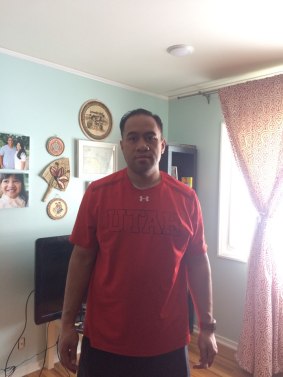
Robert Ycmat at home in his study.

This question is one that many have wondered themselves. Are Filipinos considered Pacific Islanders?

Even when searching for Filipino news on the Pacific Citizen website, hundreds of articles appear talking about politics, food and even Hollywood news in the Philippines.

Rumors have spread that the U.S Census Bureau has officially decided to classify Filipinos from Asian to Pacific Islanders, but according to the Census Bureau’s official website, “The Census Bureau has no current plans to classify Filipinos outside of the Asian race category.”

According to the Bureau, the Philippines are legally concerned to be a part of Asia. So doesn’t that answer the question?

The Philippines consists of 7,000 islands and it was Spain that officially tied them all together into one country in the 16th century. The islands start from the north, by Asia, and slowly slant downward toward the east, closer to the Pacific Islands.

Because of this odd gathering of the islands, many Filipinos from the north classify themselves as Asian, whereas those who live in the southeast islands will sometimes classify themselves as Pacific Islander.

“Although I always considered myself Asian,” Ycmat said, “Filipinos have created a culture that is much closer to the traditions of the Pacific Islanders than Asians.”

Susi Feltch-Malohifo’ou, the executive director of Pacific Island Knowledge 2 Action Resources, said, Pacific Islanders consist of Native Hawaiians, Samoans, Chamorros, Fijians, Marshallese and Tongans.

What really brings all these different nationalities together are the unique cultures of the Pacific Islanders.

“We believe in the tradition of family,” Feltch-Malohifo’ou said. “Sacrifice yourself for the good of the family.”

Ycmat agrees with the fact that family was always a staple in the Philippines growing up. It’s one of the main reasons that he decided to learn more about who he is through the services of Ancestry.com.

Although Ycmat only lived in the Philippines through his childhood, moving to the United States in his teen years, he remembers his mother holding onto family traditions throughout his life.

“She always put herself first for our family,” Ycmat said. “Our father was no longer involved with me and my siblings once we moved to America, so my mother put it on herself to keep us close and to keep the traditions alive.”

Just like with most cultures, Filipinos hold onto their traditions tightly. They can find ties in their traditions with Asian culture but also with the Pacific Islander culture as well.

Ycmat’s oldest daughter, Danielle Jansson, recently lived in a small city within the Philippines called Iloilo City for a religious mission.

Jansson discussed the importance of the Filipino culture through food, family and tradition. After some reflection, she finally came up with an answer regarding her thoughts on how Filipinos would identify themselves.

“Probably Asian,” Jansson said. “But, they don’t care and they don’t ask. They just know that they’re Filipino.”

Jansson said the Philippines have taken a lot from the Pacific Island culture like their belief of family and celebration of food. They’ve also taken values from Asians such as individuality and their sense of independence.

“They care about their family, but they also want to take care of themselves,” Jansson said. “They have a personal dream and they want to accomplish it on their own, not just for their family. They’re known for being hard workers and they have no shame. They’re just Filipino.”

Religion plays a big role in culture for both Filipinos and Pacific Islanders.

“Religion, especially the Mormon and Catholic church, teach values of pride and family,” Feltch-Malohifo’ou said. “We naturally gravitate towards these religions because of the teachings of love and community.”

According to the Harvard Divinity School Religious Literacy Project, “Catholicism has been the cornerstone of Filipino identity for millions in the Philippines. Catholicism rapidly spread during the early years of Spanish colonialism.”

After a bloody war called the Philippine–American War in the late 1800s, Americans migrated to the Philippines and even pushed their way through to the Pacific Islands. Because of this, the teachings of the Catholic Church became a common belief among these two countries.

“I kind of like that there’s no clear answer to this question (about identity),” Ycmat said. “It makes Filipinos even more unique than they already are. It almost describes Filipinos perfectly — we do what we want because we want to do it, not because we belong to either.”

Kirby Araullo, who is the program coordinator for the Asian American Studies undergraduate department at the University of Califonia Davis, discusses this question, “Are Filipinos Asians or Pacific Islanders.”

Originally raised in the Philippines, Araullo found that this question was only asked in America. He answers by saying, “It’s up to you. We the people have the power to define and redefine ourselves, as long as we respect each other. ”