Why Pacific Islanders in Utah have trouble connecting with mental health care

Story and photo by ALEXANDRA OGILVIE

Most Pacific Islanders live in a clan-based family society, where the family unit as a whole is viewed as more important than the individual, said Susi Feltch-Malohifo’ou, the executive director of Pacific Island Knowledge 2 Action Resources (PIK2AR) in Salt Lake City. Family is so important that many Pacific Island languages don’t distinguish between “brother” and “cousin.”

However, this family-based support system often prevents Pacific Islanders from getting professional help with mental illnesses and domestic abuse.

Karson Kinikini, a Pacific Islander and a licensed professional counselor of mental health, said in an email interview, “As a tribal/family based culture, they may more naturally seek support from within their family system in non-clinical ways. Often times, the concept of counseling (going to talk to a stranger about personal things) seems like a foreign concept to a people who have learned to rely on each other. Polynesians are often LDS in Utah, and so they have another support system of the Church, who they will often talk to before reaching out to a stranger.”

While having a strong support system is key to good mental health, family members and clergy often aren’t trained to give mental health advice. This is generally OK when the problems are about having an unrequited crush, but can become problematic when a family member has an undiagnosed serious mental illness, Kinikini said.

One example of mental illness is depression. Depression can present in many ways other than feeling sad all of the time. In men, it can often show itself as aggression. “All types of mental health problems were positively associated with aggression perpetration,” according to a study in the Journal of Family Violence.

This is certainly not unique to the Polynesian community, but the Organisation for Economic Co-operation and Development reports that Polynesian women are at the same risk for spousal abuse as are women in Somalia and Afghanistan.

Line drawing of sad people

A bipolar woman’s visual description of her illness. Used with permission.

One of the programs that PIK2AR offers is an anti-domestic abuse Pacific Island initiative. Feltch-Malohifo’ou said domestic abuse doesn’t end when families leave the islands and come to Utah. She said the family clan system also contributes to women not seeking help. “Women are expected to carry their share of the family burden.”

According to the Office of the Surgeon General, racism is a major barrier when it comes to getting mental health help. “Ethnic and racial minorities in the United States face a social and economic environment of inequality that includes greater exposure to racism and discrimination, violence, and poverty, all of which take a toll on mental health,” it stated. And for good reason, the office reported, “Their concerns are reinforced by evidence, both direct and indirect, of clinician bias and stereotyping.”

Along with overt racism, racial minorities tend to occupy the lower socio-economic echelons. Kaati Tarr, a Pacific Islander who is a licensed clinical social worker in Salt Lake City, said in an email interview, “In my opinion, it’s a combination of culture and socioeconomic status. Having insurance coverage helps, but still, the co-pay might be considered excessive, especially if paid weekly. $25 x 4 visits a month is $100 dollars that could be used to pay for food and higher priority basic needs.”

According to The Utah Health Department, “16.3% of PIs (Pacific Islanders) reported that someone in their household had been unable to receive needed medical care, tests, or treatments during the past year, usually due to financial barriers.”

Kinikini, the counselor of mental health, said money isn’t the only missing resource — mental health professionals often don’t have translators. “Services available in a native Polynesian language is very difficult to find access to. I, for example, am of Tongan descent but I do not speak Tongan. I have struggled to find native language speaking therapists to refer native language speaking clients to. Consequently, often the solution is to have a family member or friend translate. This can limit the effectiveness of the counseling process.”

Studies have been done on bridging this gap for other racial minorities, such as Latino and black communities. But, few data exist on Pacific Islander communities, so many families and mental health professionals are left on their own to determine best practices.

“The overall rates of mental disorder for many smaller racial and ethnic groups, most notably American Indians, Alaska Natives, Asian Americans and Pacific Islanders are not sufficiently studied to permit definitive conclusions,” the NIH reports.

Tarr, the local clinical social worker, said, “Unfortunately, I don’t have any additional resources to provide you with … that’s part of the issue, I think.”

But local Pacific Islanders like Kinikini and Feltch-Malohifo’ou are working toward closing that gap.

Dayna Bae

MY STORIES:

MY BLOG:

Before I take this course, I expected writing about the special topic that I am interested in. I thought I could choose my own subject for beat reporting. Against my expectations, the topic of beat reporting of this course was tied to one specific topic in a community. I never expected that, but I thought working on the same topic with many peers was a tremendous experience since I could witness diverse perspectives on the same subject. Through this, I learned that each person has a different view on perceiving and interpreting the same topic, even if each individual belongs to the same local community.

Processed with MOLDIVAt first, I got many mistakes and errors in formatting and editing. I faced lots of difficulties when I tried to reach people for an interview. Amongst many difficulties, the most difficult part was a language. Since English is not my first language, I was intimidated by lacking English skills and fluency. I was also extremely stressed by the lack of human sources to interview for my article. Contacting and reaching people are still stressful to me like all other journalists think. However, I got used to the stressful pressure. I think practicing language skills and finding resources are the inevitable part of life for journalists.
Since this course is focused on the issues of local community, I was an outsider from the very beginning of the semester. I am a student from the Asia Campus, which is located in South Korea, and this is my first semester in Salt Lake City. Thus, I was not familiar with any local issues or events and geographical information. However, thanks to being an outsider, I could have a more objective point of view on the topic, and I could feel more empathy with the Pacific Islanders in Utah. I cannot say that I was not affected by that since my reporting is related to outsider’s viewpoint. Thanks to the Voices of Utah, I could learn lots of professional skills and utilize every source as a journalist. It was a precious experience of testing my ability and possibility in my field.

ABOUT ME:

I am a senior studying communication and concentrating on journalism at the University of Utah. I studied social work before I changed my major to communication in 2017. Experiences in social work made me have a significant interest in human rights issues as well as humanitarian aid. I am passionate to become a reporter at the United Nations News Center along with my journalism career.

I love arts, music and travel. During my free time, I enjoy taking photographs and capturing everyday lives in still images. I also love to write a novel mostly about love and friendship. I appreciate art and art history, so I am also interested in writing art columns after getting an academic degree in art history in the future. I believe that I am an artistic person. I also believe in the power of writing, regardless of any types of writings. One day, I want to publish my own articles that can make people impressed and think with various perspectives.

Empowering cultures in Pacific Islands community in Utah

Story and photo by DAYNA BAE

Utah has the largest Pacific Islander population in the United States per capita. Approximately 38,000 Pacific Islanders are currently living in the state. However, stereotypes against Pacific Islanders are considered a significant obstacle in constructing their own cultural identities.

Susi Feltch-Malohifo’ou is having an interview at the University of Utah.

“Our first, second and third generation, they are floating around with lost identity,” said Susi Feltch-Malohifo’ou, the executive director of Pacific Island Knowledge 2 Action Resources (PIK2AR). “When they are in their home, they are Americans, when they leave, it’s not how we perceive ourselves, it’s about how you perceive me.”

Pacific Islanders often face stereotypes related to their physical strength. They are commonly thought of as athletes due to their physicality. Consequently, many Pacific Islander figures in mass media and pop culture are typically portrayed as security guards or athletes.

In addition, many Americans tend to view different Pacific Islander cultures as one identical culture. This creates yet another stereotype.

In fact, Pacific Islanders consist of Polynesians, Micronesians and Melanesians divided into three different regions. Polynesia includes Hawaiian Islands, New Zealand, Easter Island and the Samoan Islands. Micronesia incorporates the islands of Kiribati, Nauru, the Marianas such as Guam, Fiji, Norfolk Islands and other small islands. Lastly, Melanesia is comprised of the island of New Guinea, Papua New Guinea, the Solomon Islands, New Caledonia, Fiji and few other smaller islands. Since each region has different geographic, historical and weather conditions, there are obvious differences among the Pacific Islanders.

Jacob Fitisemanu Jr., a clinical manager with the Utah Department of Health and an associate instructor of ethnic studies at the University of Utah, said, “Literally hundreds and hundreds of different languages are spoken throughout the Pacific, accompanied by myriad worldviews, artistic perspectives, governance systems, subsistence patterns, etc.”

Despite diverse Pacific Island cultures, a misconception as perceiving them as one group pervades in everyday life.

“When I went to the hula dance class, the instructor told me that she thought every Polynesian knows how to do a hula dance,” Feltch-Malohifo’ou said.

To correct pervading misunderstandings, PIK2AR focuses on emphasizing dissimilarities and cultures of various Pacific Islands communities. The organization offers educational and cultural programs such as the Utah Pacific Island Heritage Month, an annual festival held in August. Regarding the missions of PIK2AR, Feltch-Malohifo’ou said, “To educate outside of our community of similarity between all of our countries, but also some differences.”

Feltch-Malohifo’ou shared what she had witnessed in East Palo Alto, California. “Pacific Island kids were coming to know how to go to college.” She was helping them with filling out the documents. “There was a missing bridge between culture and resources,” she said.

According to NBC News report, many Pacific Islander students have experienced a lack of academic support and information. Some students were frustrated by filling out Free Application for Federal Student Aid (FAFSA) documents. The others did not feel confident about signing up for scholarships.

Although Pacific Islander students are willing to go to college or university, many of them do not have access to adequate information due to lack of appropriate support. Lack of academic resources leads to unfortunate statistics. Empowering Pacific Islander Communities, a nonprofit organization, announced that only 18 percent of Pacific Islander adults have a bachelor’s degree.

Biased perspectives also hinder Pacific Islander students from building cultural identities.

Feltch-Malohifo’ou said, “It feels like they need to uphold stereotypes and they are pigeonholed by everybody around them that they have to be this way.” One of the common stereotypes is that Pacific Islander students play in a football team at school. “How about if they don’t want to be a football player?” she said.

Putting them into a pigeonhole not only influences their school life but also has negative effects in their life.

Although PIK2AR has not yet quantified the depression rate among Pacific Islander teenagers, the suicide rate has increased in Utah and a 12-year-old committed a suicide in 2017, according to Feltch-Malohifo’ou.

As a response, PIK2AR prioritizes children and young students from Pacific Island communities who are suffering from intertwined identity and stereotypes as primary targets.

“We try to educate and reach out to youngsters,” Feltch-Malohifo’ou said.

One of PIK2AR’s cultural preservation education programs is using cultural objects of Pacific Islands communities. They use the objects to educate young students. Kava bowls and tapa cloth are the examples. “A kava bowl, maybe it’s different, but everybody can recognize that it comes from the Pacific Islands community,” Feltch-Malohifo’ou said. With the objects, PIK2AR tries to find cultural commonalities and builds meaning around it. Teaching about shared culture helps young children to differentiate dissimilarities between Pacific Islands cultures as well as the common features. “We teach the history and teach about the objects. Because it still has value,” she said.

Fitisemanu shared his idea about another effective method of cultural preservation. “Teaching and developing literacy and fluency in heritage languages is another important piece, and this process involves updating language with new words to reflect modern contexts that our ancestors never encountered,” he said.

Fitisemanu also suggested that documenting oral histories and perpetuating ceremonies, customs, language and performing arts are all necessary to preserve culture. “But more importantly, to me, is demonstrating the value of these practices and values for contemporary Pacific Island generations, who will ultimately decide what cultural traits to maintain and transmit to future generations,” he said.

A community can also provide a useful way of preserving culture.

Fitisemanu lives in West Valley City, which has the largest Pacific Islander population in Utah. He said that his daughter is involved in many cultural aspects by attending school, participating in cultural dance classes and speaking Samoan language in the community. He said, “Preserving a sense of Pacific Islands identity and culture is facilitated here, whereas it would be very difficult for my family to maintain cultural and language connections if we lived, say, in Sevier County,” he said.

Young Pacific Islander students are currently living in American multicultural and bilingual settings. Within the mixed Pacific Islands culture and American culture, students need help and support to develop their own unique identity.

Fitisemanu said, “We should encourage children to be versed in English and their heritage languages. That kind of upbringing teaches children to be very observant situational learners who pick up on social cues and learn to code switch and see through different perspective lenses.”

Local universities and colleges also put efforts to work with Pacific Island communities. The University of Utah has the Pacific Islander Student Association (PISA), which is a student-run organization within the Center for Ethnic Student Affairs (CESA). The student group enhances learning experiences and provides off-campus opportunities to serve Pacific Islands communities. In addition, the Pacific Islands Studies Initiative (PISI) is an academic collective that makes the U as a premier institution for Pacific Islands studies.

Utah has the largest population of Pacific Islanders per capita in the nation, and it also has numerous organizations and communities to support them. Pacific Islander organizations such as PIK2AR and PISA aim to provide cultural preservation, economic support, domestic violence education and other useful programs for Pacific Islanders in Utah. 

What happens when brave women make waves in their communities

Story and photos by HANNAH CHRISTENSEN

IMG_20180210_113831

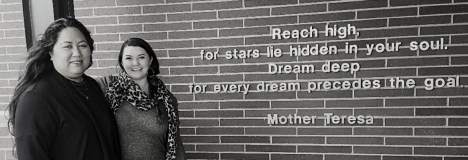
Matapuna Levenson and reporter Hannah Christensen at the SLC Family Justice Center, YWCA.

Pacific Island (PI) women who experience domestic violence often feel powerless, helpless and alone because the American idea of rugged individualism contradicts the ideals of PI collectivism.

Matapuna Levenson, Salt Lake Area Family Justice Center at the YWCA lead guide and advocate, said, “When intimate partner violence occurs, somebody is making you believe that you are not powerful. We need to go back to remembering and believing in ourselves both as individuals and as a people, that we are powerful. We’re resilient, we’re here, we’re alive.” Those of PI descent embody this power and strength through honoring and remembering where they have come from.

Levenson spoke to how this deep connection with their ancestral and cultural roots is sacred to the PI community. They have passed down many traditions, beliefs and ways of living that provide a stark contrast from the colonized white world of America.

Leata Puailoa Hunt is an advocate against domestic abuse. She is a native of Samoa who now lives in Draper, Utah. “In our true culture, high chiefs honor their wives and treat them like queens and then all the daughters in a home are treated like princesses. We keep them in a sacred status,” she said.

Historically, women of the Pacific Islands were in positions of power and held in high regard. Today they are raised to be strong matriarchs. “The good thing about our culture,” Hunt explained, “is we’re trained as girls growing up to be mothers already, we can cook, we can clean, we can solve problems, we can do this. We are independent and we can carry a family, but also at the same time I love that we train our men to respect our women.”

While many PI communities continue to treat women with reverence, something switched when patriarchal systems were introduced to the islands. Levenson, with the YWCA, said, “I’m going to blame patriarchy, because it’s not just white capitalists. Whenever there is an opportunity to have power and control over individual groups or communities, they’re going to do it. And it’s typically men, that’s just history. We have to combat and oppose this historical power.”

Levenson explained how indigenous PI communities did not have these complex power dynamics. A well-known Samoan proverb, “Ó le fogāv’a e tasi,” translates to, “The canoe has one deck.” This is the PI mentality at its best. Everyone is on the same boat, striving toward the same goal, together as equals. It wasn’t until power dynamics were introduced that the canoe became difficult to navigate.

Both Levenson and Hunt spoke about how the hierarchy of power was introduced to PI culture and the result was individualistic thinking. The clash of the collectivist community ideals and the egocentric mentality results in a lot of confusion, cognitive dissonance and anger. This is one underlying reason that domestic violence is happening within PI communities. The contradiction here is that because of the deep-seated beliefs, everyone works together for the greater good of all, and rather than challenge the systemic problem, it is best to ignore or not speak out when there is violence in the home.

Not feeling able to speak out about abuse also stems from the strong PI beliefs in families and family unification, because it is important to protect the family name. Hunt said “a family will hide secrets, like abuse or domestic violence, you know, things that are going on that shouldn’t be going on, that’s actually another key factor because of the family name. They hide it or sweep it under the rug and go forth as a perfect family that has a title.” Hiding these secrets within families is sometimes the only way a family can keep their titles and status in the community.

IMG_20180214_114722

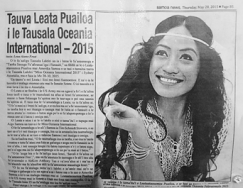
A Samoan newspaper featured Leata Puailoa Hunt in the 2015 Miss Oceana Pageant in Sydney, Australia.

Hunt recalled how there was much less tolerance for abuse in Samoa than there was in American Samoa. “If someone is abusive or commits adultery, they will be fined by the village and if it was really extreme, they would be banished from the village,” she said.

Hunt is an advocate for those who have been abused because she lived through her sister’s domestic violence abuse. “There’s no excuse for it no matter what. I know from my personal upbringing, it is not part of our culture, it is not taught on our homeland.” Hunt advocated for domestic abuse survivors as a contestant in the 2015 Miss Oceana Pageant in Sydney, Australia.

There are many resources in Utah for victims and survivors of domestic violence within the PI community. Pacific Island Knowledge 2 Action Resources (PIK2AR) is one of them. Susi Feltch-Malohifo’ou, co-founder of PIK2AR, started the organization with her husband, Simi Poteki Malohifo’ou. He and other men wanted to get involved with the domestic violence issue in the community. Feltch-Malohifo’ou said of the men who started this group, “They came together because they recognized that there is a problem.” She has been an advocate for women because she herself is a survivor of domestic violence.

Feltch-Malohifo’ou coordinates many programs to provide support for PI women. These programs provide a safe space for them to share their experiences. The YWCA also focuses on empowering women and connecting them with resources. Levenson, who grew up in a domestically abusive home, shared, “I asked a survivor once, ‘What do you need to feel more comfortable in sharing your story?’ And she said very quickly and naturally, ‘I just need to hear other people share theirs.’ And that’s it exactly.”

Additional resources can be found on the Salt Lake Area Family Justice Center’s website, the Utah Domestic Violence Coalition website and the Utah 2-1-1 website. Women also can dial 2-1-1 for help and connection to resources.


Post-incarceration life for the Pacific Islander community in Salt Lake City

Story and infographic by GEORGE W. KOUNALIS

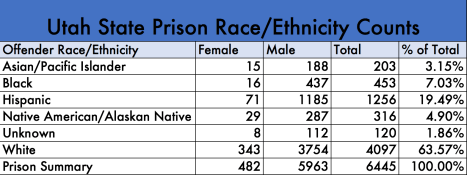
According to the Utah Department of Corrections statistics, Pacific Islanders make up 3 out of every 100 inmates in their population.

Susi Feltch-Malohifo’ou, executive director of Pacific Island Knowledge 2 Action Resources (PIK2AR), said, “Pacific Islanders are 1 percent of the general population in Utah, 4 percent of the prison population, and it’s not getting any better.”

The question arises, what resources are there for those leaving the prison system and what can society do to give former inmates a second chance?

“The color of your skin makes a huge difference. I’m not being racist, I’m speaking from experience,” said Randy Tinoga, 46, in a phone interview about life after prison.

Tinoga came from Hawaii to Utah in 1999. He moved to get away from a meth addiction. In 2002 Tinoga relapsed and went through multiple drug rehabilitation facilities across Salt Lake City. Odyssey House was his last inpatient residential program, and soon after leaving, he began using again in a much bigger manner.

Tinoga received charges in 2005 and was sent to federal prison January 2006 and released in April 2011. Tinoga was put on probation through the federal system until 2014. After getting in trouble, Tinoga has stayed in Utah and has not returned to Hawaii.

When inmates are released they are required to spend six months in a federal halfway house. During that time period, they have to find employment and then they’re expected to contribute back to society.

“The resources are out there, people are afraid to take a chance on a federal felon,” Tinoga said about his post-incarceration life.

“Every person in federal prison feels like you’re starting one to two laps behind everyone else,” Tinoga said. “If you’re a Polynesian convicted felon, you feel like you’re five steps behind everyone else.” These statements speak to what the prison system does to those who go through it and the impact the system has on minorities.

Tinoga said the most important thing needed outside of prison is a telephone and family. “Without a family, you’re playing catch up,” Tinoga said. “Most Polynesians incarcerated come from strong families. They do have a strong support system.”

The concept of family is a significant aspect of Pacific Islander culture. “The collectivist perspective is very important to the Pacific Islander community,” said Oreta M. Tupola, community health worker section coordinator with the Utah Public Health Association.

Tinoga is living in Salt Lake County and involved with PIK2AR’s Kommitment Against Violence Altogether (KAVA) talks, a Pacific Islander male domestic violence advocacy group. “My transition back to public life was easier on my part,” Tinoga said. “If you want to make a change, you have to take a chance! If someone is willing to take a chance on a Polynesian American, take a chance on them.”

Pauliasitolo Vainuku, 39, describes his life after leaving prison. Vainuku went to federal prison for a bank robbery. He was released from prison and had his probation terminated in January 2018.

“A lot of things in our culture, we don’t like to talk about,” Vainuku said in a phone interview. “Abuse is there and it’s not talked about. That’s how a lot of Pacific Islanders join a gang because there’s a cultural understanding there for them.”

Tupola said, “Family is important in Pacific Islander culture. Gangs are from a loss of that identity and trying to look for it again.”

This is where groups like PIK2AR’s KAVA talks come in. They can help those who are struggling with abuse.

Vainuku’s brother, who was involved in a gang, was killed when Vainuku was 12. “After his death I was depressed. I had nobody to talk to,” he said.

Vainuku then turned to robbing at the age of 12. “When you’re depressed you don’t care,” he said. “Certain things you do make you feel alive,” he said, describing how his robbing began.”If you keep doing the same things it becomes normal.”

A couple of months after turning 18, Vainuku was sent to federal prison. “For me it was actually getting away. Getting locked up made me able to escape reality,” he said.

Vainuku said after getting out of prison, there were resources available to him. “There’s a second chance bill that lets small businesses hire us and they bond them for hiring us.” The Second Chance Act of 2007 “was enacted to break the cycle of criminal recidivism; improve public safety; and help state, local, and tribal government agencies and community organizations respond to the rising populations of formerly incarcerated people who return to their communities.”

The bill gives the small business a bond that provides insurance in case a former inmate ends up robbing or doing damage to the business as well as a tax break for the business. Bills like this give former inmates of the federal prison system a second chance.

Vainuku spent six months in a federal halfway house while he worked and saved money to live independently. “The federal halfway house makes you actively look for employment,” Vainuku said.

These programs help federal prisoners when they adjust on the outside, but Utah State prisoners don’t receive many of these resources, according to Vainuku.

According to the Utah Department of Corrections, mental health resources are offered at Utah State Prison for prisoners within the system. “We’re coming out and not getting the help and support with mental health,” Vainuku said. “For the guys in prison, they need to get help in prison and get ready to come out.”

A May 2017 article in the Deseret News backs up what Vainuku said. Many of those in the Utah corrections system are not receiving appropriate care when they leave prison.

Vainuku said the state of Utah could do more to help inmates coming out. “In the state prison, they’re stuck in a cell with their cellie and get a packet. They’re not getting classes or help for life on the outside.” According to Vainuku, this packet is the only resource that state prisoners in Utah receive prior to being discharged.

Racial prejudice within jail is also a factor that makes it difficult for inmates. “Prison is a negative setting, the guards tend to get stuck in a negative mindset with an us versus them mentality,” Vainuku said. “The guards build a prejudice and they do things that upset the prisoners more.”

Tinoga said, “Stereotypes are bad all the way around. A good number of Polynesian men are first-time offenders.” Stereotypes of Pacific Islander men being pushed by society at large creates very negative environments that can hinder the lives of many of these men.

It’s important for society to look beyond stereotypes and give former inmates a second chance. “Just giving someone the opportunity helps,” Vainuku said. “Look at the individual instead.”

Many of these changes that society needs start at a community level. Challenge stereotypes, give individuals a second chance. Community-driven resources are also important.

In a 2016 Seattle Times article, Sarah Stuteville talks about the Formerly Incarcerated Group Healing Together (F.I.G.H.T), a group of former Pacific Islander and Asian inmates who work to provide resources to those leaving the Washington State penal system. The Utah Department of Corrections does offer programs to inmates, however, nothing specifically like the F.I.G.H.T group offered in Washington state.


LGBT Pacific Islanders in Utah face discrimination

Story and photos by SHAELYN BARBER

It takes a village to raise a child, but what happens if that child does not fit into male or female gender identities? In Pacific Islander culture, it is not an issue.

Across the Pacific Island cultures, these individuals are known by many different names. In Samoa, they are Fa’afafine. In Hawai’i, they are Māhū. In Tonga, they are Fakaleiti. These are the people who are not male or female, but somewhere in the middle: a third gender.

The third gender is an integral part of traditional Pacific Island culture, and individuals who fall into this spectrum are highly respected members of society. People who are part of the third gender category do not adhere strictly to stereotypical characteristics of male or female genders, and often display characteristics of both. The Pacific Island third gender category can include people who act or dress in a way that is not associated with the sex they were assigned at birth or people who are sexually attracted to someone of the same gender.

“It’s important to see the similarities between Māhū and transgender identities here in the U.S., but also it’s not just a direct translation,” says Maile Arvin, a native Hawaiian and assistant professor of gender studies and history at the University of Utah. “I think it’s just a little bit different than transgender in the sense that that was a defined role that was honored in Native Hawaiian society, that has its own history.”

Arvin says that traditional gender roles in Pacific Island societies are balanced and are not necessarily matriarchal or patriarchal communities. Within them, masculine and feminine roles are distinctive but receive equal amounts of respect. Men are typically the protectors, workers and financial supporters of their families. Women take on the role of caretakers of the family and the home. People who identify in one of these third-gender identities have a role within traditional Pacific Island societies as well: they are usually the leaders and teachers of spirituality and culture.

“Sometimes it’s hard for non-Hawaiian people to understand what Māhū means,” Arvin says. “So, in some contexts it might just be more convenient to identify as transgender instead of going into explanations about what Māhū is.”

People who identify as a third gender in Pacific Islander societies often find it difficult to explain the meaning to others who are not familiar with it. Despite parallels to LGBT (lesbian, gay, bisexual and transgender) identities, the two are distinct. Someone can identify with both an LGBT identity and an identity in the third-gender spectrum.

“I’m not really picky but I know that I personally identify as feminine pronouns, but then when people see me they’re like, what the heck? I don’t get it,” says Leka Heimuli, who works as a secretary for the Office for Diversity and Multicultural Affairs at the Salt Lake Community College South City Campus. Heimuli is Fakaleiti, the Tongan term for the third gender, and describes herself as a gay man who prefers female pronouns and typically dresses in a masculine way.

Leka

Leka Heimuli, secretary for the Office for Diversity and Multicultural Affairs at the Salt Lake Community College South City Campus

Heimuli is a first-generation Polynesian Tongan American. Her mother and father both emigrated from Tonga searching for opportunities for work, education and a better life. They met in Utah, got married and had six children, a small family by Pacific Island standards, which Heimuli says typically have between 10 and 15 children.

“I feel like when colonialism came, you know, to our shores that’s when you kind of see that drift of, oh, that’s wrong. That’s bad,” Heimuli says. “I think now we kind of use those terms in a derogatory manner.”

The Church of Jesus Christ of Latter-day Saints has raised controversy because of its doctrine concerning the LGBT community. According to church doctrine sexual and marital relationships should only be between one man and one woman, and sex or marriage between two people of the same sex is forbidden. According to the Association of Statisticians of American Religious Bodies, the state of Utah has the highest percentage of constituents in the United States.

“We’re here, you know, like, you can’t control it,” Heimuli says. “There are members [of the Church of Jesus Christ of Latter-day Saints] I feel don’t come out because of like … that stigma that’s maybe placed on them from the church or maybe from the beliefs.”

Heimuli says that while the discrimination against LGBT and third-gender Pacific Islanders within the Church of Jesus Christ of Latter-day Saints is not extreme, these communities do face negative effects, comments and stigmatization from its members.

“Our belief and our history before Christianity came is that we have three genders. So, that’s a norm,” says Susi Feltch-Malohifo’ou, the executive director of Pacific Island Knowledge 2 Action Resources (PIK2AR). “For some reason this plane ride, this 10-hour plane ride to America, changed that.”

Susi

Susi Feltch-Malohifo’ou, the executive director of Pacific Island Knowledge 2 Action Resources

Why mental health services fail Pacific Islanders

Story and photo by ANTHONY SCOMA

You are in a foreign country and you need help with an urgent problem. You may seek help but the stark differences in language, customs and values renders any assistance frustrating and ultimately useless.

That is the reality for many Pacific Islanders seeking mental health services in Utah.

The disconnect between Pacific Islanders and mental health services starts at the fundamental contrast between western culture and Pacific Islander culture. Oreta Tupola, a community health worker coordinator at Utah Public Health Association, said, “The differences in our culture is that individualistic perspective and [the] collectivist perspective.” She continued, “That community and family perspective is everything we’re about, and you can understand … all these issues that we’re facing. It surrounds how it impacts the family and how it impacts my family name and my lineage and my genealogy.”

The conception of the self and its relation to the world outside the self is important to mental health and informs how one deals with conflict. In a collective perspective, several sources said, the actions of the individual reflect the family or group as a whole. This is particularly important for immigrants from the Pacific Islands whose view of family connection extends far beyond the nuclear norm in the U.S.

Within this framework, the accountability to the family makes shame a powerful tool for social control. Lani Taholo, director and owner of Child and Family Empowerment Services, said in a phone interview that these feelings of shame also work as a deterrent to seeking mental health services.

Story1Assetv2

Lani Taholo in her Child and Family Empowerment Services office in the Glendale neighborhood of Salt Lake City.

“When it comes to shame, if we’ve done something wrong to lose face in our community it’s a big deal because we don’t want to bring shame to our family or our family name,” she said. “Then the poor family starts to feel judged and can easily feel … shamed by that so that just pushes it down further — to repress it and suppress it — and unless they have services that they can relate to they just don’t go.”

Taholo is currently working on her Ph.D. in Social Work at the University of Utah. Her research is on the underutilization of mental health services by Pacific Islanders and how to make those services more inclusive of their experiences and culture.

Taholo said that even when Pacific Islanders are required to use mental health services, the cultural differences are still an obstacle. In cases where violent behavior calls for intervention by mental health professionals, the established model does not seem to work for Pacific Islander participants. They either don’t attend or barely participate to avoid punishment. Taholo says that these approaches fail to relate to Pacific Islanders culture.

“There is no change, there is no healing, there is no recognition and acknowledgment of what’s really happening because it’s not even relatable,” she said. Taholo described instances when judges from the West Valley Justice Court called her to help out in cases involving Pacific Islanders because of their shared culture. “They already know they aren’t going to finish the other program,” she said.

The contrasting cultural perspectives also have consequences for communicating thoughts and feelings across generational divides in Pacific Islander communities. In the cases of first-generation immigrants, there is a separation of experience between those raised on the islands and those raised in the U.S.

Those experiences also represent a clash in cultural ideology for the new Americanized generation. They learn a collective perspective from their families, while school and peer interactions instill a more individualistic mentality.

Fisi Moleni, a licensed clinical therapist in Salt Lake City, said in a phone interview that the move to America introduced a lot of mental health issues that were not as prevalent in the islands.

“In that transition to America, the complexity of living here and all the different stimulus and exposure to society … it seems to have been quite a challenge,” he said. “The Polynesian parents, the Pacific Island parents, are trying to utilize to some degree their old methods of parenting, of conditioning … the core values of respect and loyalty and all those things.”

Moleni also links this change in geography and culture to the rise in various forms of addiction and has observed a disconnect between the first generation of immigrant parents and their American-raised children.

“Children are … leaving the home and being influenced by so many other entities that when it comes time to connect, there is a disconnect,” he said. “They don’t feel comfortable … communicating with parents and expressing difficulty with certain challenges at school, with friends, with … the more extreme addictive behavior.”

While this disconnect might lead to children being influenced more by friends and cultural norms, Moleni also acknowledged the potential of the Pacific Islander family to achieve positive mental health. When parents have the tools to communicate and connect with their children, the loyalty to name and family creates a robust, adaptable social network.

“Our people were the greatest navigators, the greatest seafarers that history … has seen,” Moleni said. “They adapted, they were able to use their navigational skills to extend themselves to other islands and to survive and began to thrive. … I thoroughly believe that we can adapt even here and not just survive but thrive within this society.”

Utah advocates to stop domestic violence among Pacific Islanders

Story and photos by WOO SANG KIM

Statistics on domestic violence are appallingly high among Pacific Islanders. But a Utah nonprofit is offering seminars to educate men and women about domestic violence and provide information for disrupting the cycle.

According to a 2017 study, “Domestic Violence and Sexual Assault in the Pacific Islander Community,” “With regard to domestic violence and sexual assault, UN Women estimates that 60-80 percent of Pacific Islander women and girls experience physical or sexual violence by a partner or other in their lifetimes. The rate is higher than any other region in the world. Few countries in the Pacific Islands have laws against violence against women.”

What is the cause? Erin Thomas, a researcher at American University and author of the study, wrote, “The effects of climate change often emphasize gender disparities and result in greater violence against women. Additionally, political turmoil, violence, and poverty in many areas of the Pacific Islands increase the prevalence of gender-based violence.”

Oreta Tupola, community health specialist at the Utah Public Health Association, said, “The culture also prevents women from taking action.” Most Pacific Islander women take care of the household while the men earn income. She said women rely on men for financial support. Victims’ relatives do not meddle in the family business and let the family resolve the issue. The religious orthodoxy does not encourage people to challenge traditional family roles. In short, Tupola said women are left helpless and uneducated on how to stop the abuse.

Tupola 1
Tupola serves as an advocate assisting and advising women in danger to avert domestic violence.

Pacific Island Knowledge 2 Action Resources (PIK2AR), founded in 2015 by Susi Feltch-Malohifo’ou, Simi Poteki and Cencira Te’o, is a group of activists who speak up to inform the community about the domestic violence, cultural preservation, and economic impact. The mission of the organization is to provide resources, opportunities and services to Utah’s Pacific Islanders by bridging communities.

PIK2AR’s domestic violence program focuses on unique messages for men and women. The Pacific Island Women’s Empowerment (PIWE), seminar featuring workshops and group discussions created by PIK2AR for women, hosts two weekly sessions for both Pacific Islanders and non-Pacific Islanders at the Sorenson Unity Center at 1383 S. 900 West in Salt Lake City. The seminar lasts about 90 minutes and has about 17 participants.

Feltch-Malohifo’ou, PIK2AR’s executive director, said, “We teach how to pay the bill, raise the credit score, and what domestic violence is by definition, which starts way before the first punch.”

Susi 1
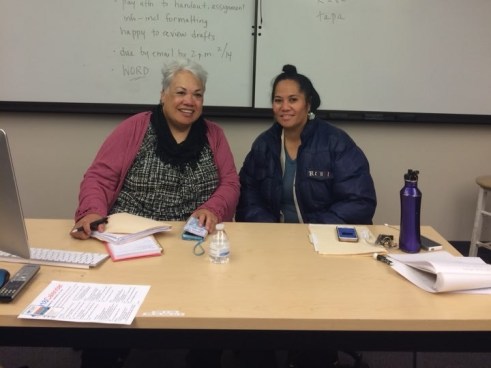
Feltch-Malohifo’ou (left) is executive director of PIK2AR,  which provides safe passageways for women who are victims of domestic violence to liberate from their husbands.

Tupola said the PIWE offers a curriculum that gives therapy, group sessions on empowerment and strength, how to remove children safely, where to find shelter, how to have a safety plan, how to detach emotionally from a spouse, and how to prepare for separation. The PIWE also rotates speakers specialized in social work and behavioral psychology weekly, too. Every seminar, the speaker prepares different topics as requested by the guests and answers questions that are taboo in the Pacific Islander culture. Tupola said such are sex, drugs, and personal lifestyle.

Women at the varying stages of victimization are aided. “They don’t just come because they are just trying to run away. They have not decided if they want to leave but come in for therapies and advices,” said Matapuna Levenson, lead guide at the Salt Lake Area Family Justice Center. “We have a wide range of stages. They generally come to get a civil protective order. The protective order forbids abusers from contacting victims. Upon contact, police arrests them (abusers). Victims are surprised by the vast resources and helps out there,” Levenson said.

Levenson 1
Matapna Levenson provides resources, connections and advice for women who seek aid.

Although the door is always open for all victims, the aim of the PIWE is to teach women to be independent. “We don’t want people keep coming back to us for help,” Feltch-Malohifo’ou said. “We want to empower and teach so that they can help themselves.”

Levenson said, “Those able to sustain themselves and prevent themselves from abuse become advocates in issuing protective order, supporting other victims in healing, and speaking in domestic violence conferences.”

The PIWE shapes women to liberate and take actions from their husbands, Tupola said.

PIK2AR also offers a seminar, Kommitment Against Violence Altogether (KAVA) Talks, for men. The monthly seminar is held at the Oish Barber Shop in 4330 3500 South in West Valley City. It also lasts for 90 minutes and has about 13 participants.

Tupola said men are taught that “everyone has a right to be free of harm, domestic violence is against the law, respecting personal boundary is crucial, and that violence is not a discipline.”

She also said men were often unaware of this country’s culture and laws, and that their actions could result in deportation. Many have family history of domestic violence and have accepted it as a norm.

This upbringing combined with stressors of living in a new environment, not finding a job, comparing their wife to other wives, and not having enough money prompts men to perpetuate the crime,” Tupola said. “The Western influence of spanking to discipline also reshaped men, too.”

What can we do? “Appealing to priests, bishops, and governors, becoming allies, and maximizing faith and family relationships is key to connecting the Pacific Islander community. Violence has nothing to do with culture and race. It crosses socioeconomic groups,” Levenson said.


“Food is love” at the Pacific Seas Restaurant and Market in Salt Lake City

Story and photos by SHEHERAZADA HAMEED

IMG_1613V2

The entrance of the Pacific Seas Restaurant and Market, facing Redwood Road.

According to eua-island-tonga.com, living on the island of Tonga doesn’t mean all the food comes from the sea. The traditional cuisine of the beautiful tropical island consists of two main categories — “food from the sea” and “food from the land.”

The Pacific Seas Restaurant and Market makes it possible to experience Tongan flavors here in Utah. The restaurant is located at 1151 S Redwood Road in Glendale, a neighborhood not far from downtown Salt Lake City.

Family owned and operated for more than 28 years, the restaurant is a popular location for Tongans and other Polynesians to dine. The atmosphere is casual and friendly and pays a large tribute to Tongan athletes. Framed photos of football and rugby players line the walls of the dining room.

The aromas of cooking meat and chicken curry awaken a hunger in the shoppers who come to the market to purchase items such as canned coconut cream, long rice, mackerel fish and corned beef. People often complete their shopping and stay for a meal or a take out.

The kitchen and the counter are run by the family members and overseen by David Lavulo. He is recognizable from the framed newspaper articles that hang on the wall. In one of the articles, David and Leti Lavulo are pictured wearing Mormon missionary badges. In another picture, Lavulo is next to Kalani Sitake, the head coach of Brigham Young University’s football team.

Lavulo left Tonga in 1968 to study in Fiji. A year later he moved to the United States and settled in San Francisco, where he married his wife Leti Lavulo. After five years, they moved to Utah. He said they moved to Salt Lake City because they liked the slower paced lifestyle.

After working in construction and other jobs, he decided it was time to start his own business as a way to serve the local Pacific Islander community.

Lavulo said the restaurant serves almost the same food as in the American cuisine, especially the types of meats. Pork chops, sausage, lamb ribs, chicken curry, fried fish and raw fish are among the menu items. The one thing that distinguishes them is the use of different vegetables.

IMG_1610v2

Lavulo’s open kitchen at the restaurant.

The favorable climate, soil, rainfall and sunshine contributes to the growth of many fruits and vegetables, typical for the Pacific Islands, according to eua-island-tonga.com. 

Taro is a vegetable that grows under the ground. While it is growing, the leaves can be cut and used as greens. Lavulo said they are used instead of spinach.

Another typical root vegetable for the Pacific Islanders is the sweet potato, also called kumara. There are 77 different varieties. “I think you have seen some of those sweet potatoes … not the very soft ones, not the orange ones, but we have kind of white and almost green,” he said.

Another significant item on the menu is the green banana. “It is the remedy to the people in the Pacific that have diabetes,” he said.

IMG_1596v2

David Lavulo shows the green bananas out of his refrigerated walk-in storage.

The animal protein on the menu comes from the variety of fish, chicken, lamb, pork and beef. Although these are relatively lean options, Lavulo reduces calories by healthy cooking. He wraps meats in taro leaves, adds coconut milk and seasoning, then steams the dish. “It is really tasty,” he said.

The signature dish, which is Lavulo’s favorite, is the Rainbow Sushi. It is similar to the Japanese sushi and is prepared with tuna, mahi-mahi, snapper, mixed with coconut milk, tomatoes, onions and cucumber. “All the Polynesian likes to eat fish,” he said, smiling. He opened the walk-in refrigerator and showed boxes of fish from Taiwan.

Lavulo said they cook everything from scratch daily. He took a visitor on a tour of his kitchen. Everything from the ceiling to the floor is spotless. Containers are labeled and vegetables are fresh. He imports his produce (taro, green bananas and yams) from Costa Rica.

“The flavors of the yams from there are different,” he said. He buys his lamb from New Zealand. “We don’t eat the lamb over here, it is not tasty. We also import the taro leaves from Hawaii,” Lavulo added.

To the right of the open kitchen are chafing dishes with steaming side options of taro, yams, yuca and green bananas. The Pacific Seas Restaurant and Market kitchen staff are dedicated to serving fresh meals. The restaurant is open from 11 a.m. to 7 p.m., but at 5 p.m. they stop cooking. “We don’t want the leftovers,” Lavulo said.

Unique beverage options are available. Otai is a beverage made of mango, coconut and sugar; it is a traditional drink made fresh daily at the restaurant.

Lavulo recently visited Tonga and said he was amazed by how much the island has been developed since the last time he was there, 11 years ago. When he first left his homeland, there were still houses made of coconut fronds and today there are modern multistory buildings. ”The [Mormon] Temple was the most beautiful building,” he said.

While Lavulo shares his memories of his trip to Tonga, four family members cook and serve to customers who wait in line to purchase lunch.

On the north wall, there are frames of Tongan beauties and pageant queens. One of Lavulo’s five daughters, Anamarie Lavulo Havea, discussed the female beauty standards in Tonga. The heavier-set women are found to be beautiful. Thin women are considered unattractive. But, she said, when women move to the U.S. they consume a lot of junk food and become even heavier.

Tongan food, however, is particularly wholesome and healthy, because the main ingredients are fruit, vegetables and lean proteins.

Havea is the youngest of Lavulo’s five daughters. She is married and already has children of her own. She has worked in the family business since she was very young. She and her siblings ran the restaurant while their parents served an LDS mission in Papua New Guinea in 2014. Now Havea cooks. On a typical day, she said, 100 to 150 patrons dine at the restaurant. As many as 250 meals are served on a busy day.

IMG_1609v2

Anamarie Lavulo Havea and her nephews work behind the counter, while David Lavulo is overseeing the restaurant.

There is a large poster with an autograph from Will Tukuafu, a Tongan player, from Salt Lake City, who played for the Seattle Seahawks with number 46. His message is “To Pacific Seas, thank you for the great food and continued support for the community.”

Havea added, “This is that food, that you would find in the South Pacific and is what a lot of our NFL players eat.”

According to Susi Feltch-Malohifo’ou, the executive director of Pacific Islanders Knowledge 2 Action Resources (PIK2AR), food in the Pacific Island is related to family prestige and prosperity. She said, “People with more weight, and why we are overweight, signifies that your family has money to feed you. If you are thin that means your family is poor, and there is no food to feed you.”

The Pacific Seas Restaurant and Market is where Pacific Islanders meet for an authentically cooked food and mutual support. Customers seem to be regulars because they know each other and the Lavulo family. The sound from the football game on TV is mixed with lively conversations in the native language. The large pots of steaming taro leaves and cooking meat fill in the dining room with aromas.

For them, the peaceful islanders, Feltch-Malohifo’ou, said, “Food is love in the Pacific Islands culture, and it shows everything with food and service.”


From confusion to confidence: Search for self-acceptance as a transracial adoptee

Story and photo by MARISSA SITTLER

Through childhood, adolescent and adult memories, the first transracial adoptee from Tonga recalls the feeling of never being able to fit in within her Tongan heritage, or the white culture that she was raised in. And, how she was able to turn this insecurity into one of her greatest strengths.  

Susi Feltch-Malohifo’ou turns 55 in 2018. But she was 3 years old when a white couple legally adopted her. She left the staff quarters where she lived with her biological mother and moved into the main house on the plantation estate.

It was the first day that Feltch-Malohifo’ou started living with her adoptive parents that her Tongan grandfather said to her, “So from here on out you don’t speak Tongan. I don’t ever want to hear you speak Tongan again before I cut your tongue out.” Feltch-Malohifo’ou is able to speak a little Tongan, but cites her grandfather’s admonishment as a reason why she has never truly been able to pick up the language.

Before moving to America when she was 12, Feltch-Malohifo’ou lived where there was lots of diversity and was never taught to be aware of skin color. She adds that she never heard the terminology “black” before, or that people had to be different skin colors, or be labeled at all.

Feltch-Malohifo’ou first experienced racial tension in Vernal, a town about 170 miles from Salt Lake City that she described as predominantly white and Mormon. She recalls, “I remember kids said, ‘Where are your parents?’ and I would say, ‘Right there.’ The kids would say, ‘You’re black, and they’re white.’ And I’d be like, ‘I’m black?’”

In high school, Feltch-Malohifo’ou remembers how she never dated, because of the way that the boys at her high school viewed her: as a brown girl. She says, “I was best friends with guys that I played sports with, but I wasn’t someone that they dared asked out, even though I knew they wanted to.” This feeling of being romantically undesired is one of the ways that her self-confidence was negatively impacted.

She also recalls, “I was really a follower. I just wanted to be accepted.” She says she never really felt part of the majority in her high school, partially because she was never able to fit into the same clothes or shoes as other girls in school. She felt “different.”

Growing up with her adoptive white family, Feltch-Malohifo’ou remembers that her brothers and sisters never recognized that she looked differently than they did, other than the variation of their hair colors. She says, “But [my family] never talked about skin color. So I didn’t recognize that I was a different color. I had never thought about being different, because in my family I was the same as my siblings.”

Angela Tucker, a transracial adoptee, creator of the website The Adopted Life and advocate for adoptee rights, believes in the importance of parents talking comfortably to their transracially adopted children about some topics that may be uncomfortable to discuss, such as racism. Tucker said in a phone interview, “It’s hard for a transracial adoptee to have a high intact self-esteem if the parents aren’t able to talk about racism.”

Kathy Searle, Utah director of program for the Adoption Exchange and parent of transracial adoptees, also believes that how parents choose to be involved in resources for their transracially adopted children can further strengthen the relationship between parent and child.

In an email interview, Searle said, “I also think that it’s important for adoptive parents to join communities that are the same race as their children. They need to cultivate relationships that can help them to better understand what their children face.”

It was when Feltch-Malohifo’ou played volleyball at a Northern California community college that she was around a lot of Pacific Islanders for the first time. She says, “My world was so different. So I did a lot of observing, I did a lot of watching, and trying to fit in.” She went from wanting to be accepted in “this white world,” to wanting to be accepted by the people who looked like her. It was only when she attended college that she discovered what the word racism meant.

Despite her desire to belong, she still was not accepted. “I was still different. I didn’t fit here, I didn’t fit there,” she says. Feltch-Malohifo’ou believes it was her upbringing in a white household that truly set her apart from her similarly looking peers.

In a clear moment of self-reflection, Feltch-Malohifo’ou says, “I’ve had problems just, like, figuring out where do I fit in this world. And so I went way this way, way that way, just trying to figure out where it is that I actually I fit in. Till I just started finding my own voice and realizing that everybody has value, everybody has privilege.”

While Feltch-Malohifo’ou says it has taken her many years to be comfortable and confident in herself, she has learned to love her unique “hybrid” background. Her perspective and understanding of white and Pacific Islander culture allows her to successfully be the executive director of Pacific Island Knowledge 2 Action Resources (PIK2AR), a community resource group.

PIK2AR’s mission “is to help Utah’s Pacific Islander communities flourish through providing culturally-relevant resources, opportunities and services to help build alliances, bridge communities, and provide opportunities.”

Feltch-Malohifo’ou believes she has finally found her place with PIK2AR. Before, she felt like an outsider, but “now I have a whole group of people who have been struggling like me trying to figure it out.” She hopes that her work with PIK2AR will be able to create a space for the generations of Pacific Islanders that follow, without facing similar struggles that Feltch-Malohifo’ou did herself.

Processed with VSCO with b1 preset

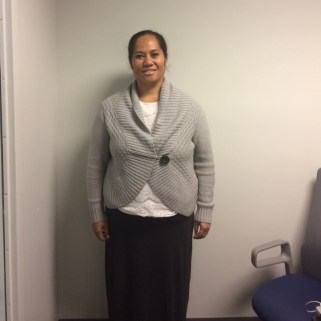
Susi Feltch-Malohifo’ou before meeting with a women’s resource group that is organized by PIK2AR.