Why music matters: cultural anchors in the Polynesian diaspora

Story by ALLISON OLIGSCHLAEGER

To Ogden filmmaker Te Anu Tonga, music is more than a hobby.

“Music is a language to us, and maybe even a first language,” said Tonga, 37, who was born in New Zealand to a Maori mother and Tongan father. “It is our whakapapa.”

So when Tonga felt the need to reconnect with her whakapapa, a Maori concept of heritage, genealogy and identity, she returned to New Zealand to produce a documentary on kapa haka, an indigenous performance art based in music and dance. Kapa haka functions as a key source of cultural celebration and preservation for the Maori people and provided an ideal lens through which to view Tonga’s central questions of identity.

“At its core, kapa haka is, ‘Who are you?’ ‘What are you made of?’ ‘Where do you come from?’ And when you find that out, what are you going to do in the future?” Tonga said in an interview.

Tonga’s forthcoming documentary, “Keepers,” details kapa haka’s impact on the families, communities and identity development of three Maori teenagers from different Auckland high schools. The film follows each school’s kapa haka team through their competition season, a year of competitive performance that culminates in Ngā Kapa Haka Kura Tuarua o Aotearoa, or the National Secondary Schools Kapa Haka Competition.

IMG_6672

Maori teenagers perform at a regional kapa haka competition. This is a still image taken from the trailer for “Keepers,” Te Anu Tonga’s upcoming documentary on “kapa haka, culture, and keepin’ it real.” Courtesy of Te Anu Tonga.

Tonga, who immigrated to Utah as a 5-year-old girl, says the art is a powerful tool in developing a sense of identification with one’s heritage. For her, it seems natural that such a tool would take the form of music.

“Singing is just so natural for them back home,” she said. “They’re all bottle-fed on music.”

Joel Kongaika, a Tongan American who lived in Tonga, Samoa and Hawaii before moving to Utah in 2009, said music is a key feature of cultures throughout the Pacific.

“It’s not as formal — there’s no opera house, there’s no musical theater, it’s not as first world or institutionalized — but you get way more music with it not being that way,” Kongaika said in a conversation in his Centerville home.

Children in Polynesia learn music from a very young age, Kongaika said, beginning with exposure through their parents and churches and later through formal musical instruction in elementary school. Singing is not reserved for the “talented,” “expressive” or “effeminate” — it is considered an activity for everyone.

“As a young person, it’s never something that you’re ashamed to participate in,” Kongaika said.

For first-generation Utahns like Tonga and Kongaika, Pacific music and dance are invaluable links to their home cultures. They foster community, preserve language and articulate cultural history and values.

Kongaika’s daughters Anna and Eryn, who were born in Hawaii, have each taken several years of Polynesian dance classes here in Utah.

“Our hope is that the girls have exposure to their roots,” Kongaika said. “I’d rather they take hula lessons than piano lessons.”

Kongaika also tries to introduce his children to indigenous music. Two of his daughters are taking ukulele lessons from their grandfather, and Anna keeps a playlist of her favorite Hawaiian music for family road trips.

Kongaika’s father, Isileli Kongaika, lives in South Jordan, where he attends a Tongan-speaking congregation of the Church of Jesus Christ of Latter-day Saints. Although Isileli speaks excellent English, he prefers to attend a Tongan-speaking assembly where he can worship in his native tongue and sing the hymns he grew up with in the islands.

Between Salt Lake, Davis and Utah counties, the LDS Church has 42 designated Tongan congregations. But each meeting features a blend of English and Tongan language use, Isileli said – especially the musical numbers.

“One person will sing the English translation, the person next to him will sing the old Tongan language verse,” Isileli said in a phone call. “I find it difficult to do myself because I am used to the old one, so I just sing my own way.”

Isileli said the language chosen by each singer depends largely on their age, with the older congregation members typically opting for the Tongan originals and most second- and third-generation members singing in English. However, as their language skills improve, many young churchgoers find themselves drawn to the original Tongan versions of hymns they once sang in English.

“They’ll pick up some words, some language, and I do see some pick up the Tongan songs and hymns,” Isileli said.

Many second-generation church members cite a desire to learn their heritage language as their primary reason for attending a Tongan-speaking congregation or for joining a Tongan church choir, which typically performs traditional music or Tongan language hymns.

“Everyone who goes to church sings, so these choirs are basically the entire congregation,” Joel Kongaika said. “To see music still helping to care for Tongan language is a big deal.”

As in the islands, the choirs welcome each and every singer.

“With our culture, it’s not about who can sing really well,” Te Anu Tonga said. “You’ll get someone who’s singing and you can just tell they’re going home. It may not sound the best musically, but you can feel that he’s just missing home, and he’s going to go there and take us with him.”

From kapa haka to church choir, polished performances to impromptu a capella – for Polynesian Utahns, the music of the islands is a powerful cultural anchor.

“Wherever we are in the world, we are home,” Tonga said.

Cultural rediscovery in Utah’s Pacific Islander community

Story and photo by DIEGO ROMO

Pacific Islanders have a long history and legacy in the United States that spans multiple generations. In Utah specifically, according to many sources, Pacific Islanders can trace their roots to religious immigrants who arrived shortly after the original Mormon pioneers. The community has left its mark on Utah’s unique cultural heritage and has been shaped by it as well.

Statistics from the Utah Department of Health show that the state is home to 38,000 Pacific Islanders and the average age among the community is 20 years old. Only one-quarter of those who identify themselves as Pacific Islanders are foreign born, meaning that three-quarters of Utah’s Pacific Islander population has no physical tie to the cultural homeland of their ancestors. This leaves many in the community culturally severed from their history and people.

This void leaves many feeling lost, as if they are floating between the two identities that help them to establish their self-image.

“I always felt divided,” said Susi Feltch-Malohifo’ou, executive director of Pacific Island Knowledge 2 Action Resources, a Pacific Islander community resource group based in Salt Lake City.

Unlike many of the younger generations of Pacific Islanders in Utah, Feltch-Malohifo’ou has a direct, physical connection to her homeland. The daughter of a woman who worked as a housekeeper at a Mormon coconut plantation, Feltch-Malohifo’ou was born in Tonga, but was quickly adopted by a pair of Mormon missionaries who oversaw the estate.

She described the plantation as one very similar to the those of America’s deep South: rolling lawns with many trees and the key feature situated in the middle, the plantation manor.

Her life changed when she moved into the manor and began attending church school with the children of fellow Mormon church workers in Tonga.

“In my school picture, I’m the only Tongan,” she said. “I lived in Tonga, but didn’t have the real experience.”

Feltch-Malohifo’ou remembers celebrating American traditions like Halloween and Easter, and always having running hot and cold water, an uncommon luxury in Tonga at the time.

From a very young age she adapted to her new life with its unfamiliar traditions and culture, but began to lose some of her Tongan heritage in the process.

When she finally arrived in Utah after spending some time in Texas, she was eager to get back in touch with the Pacific Islander community. But initially she felt like an outsider among her people.

“When I interact with other Pacific Islanders I have a hard time relating,” she said.

Many who share similar experiences to Susi Feltch-Malohifo’ou express the same sentiment. This may be attributed to the fact that the Pacific Islander community in Utah is very diverse in and of itself.

According to 2010 census data, the community breaks down into four groups: native Hawaiians, Guamanian, Chamorro, Samoan and Other Pacific Islanders. However, the census is not fully representative of how diverse this community truly is.

For those who are second-, third-, even fourth-generation Pacific Islanders born in America or raised in its culture, it can be difficult to pinpoint which cultural identity to relate to.

“I always looked at what made me different from them,” Feltch-Malohifo’ou said, referring to her connection to the Pacific Islander community. “My parents gave me opportunities that other kids of my situation didn’t have.”

Those opportunities and experiences isolated her from the community that she considered family. With no cultural anchor, Feltch-Malohifo’ou began to reach back out to the Pacific Islander community. She was surprised when the welcome wasn’t as warm as she had hoped.

She recalls an early incident when a co-worker at a former Pacific Islander community resource group told her, “If I close my eyes, you think and sound white.”

Hokulani Aikau, a University of Utah professor can relate. “It’s hard to find a way to connect when you feel like an imposter in your community,” she said.

IMG_8322V2

Hokulani Aikau, a University of Utah professor in the Gender Studies department, is collaborating with fellow faculty to launch the Pacific Islander Studies Initiative.

Aikau was born in Hawaii but was raised in Utah for the majority of her life. She shares many of the same cultural dilemmas as Susi Feltch-Malohifo’ou because she was raised in a primarily Anglo society.  Aikau grew up going to schools with white student bodies who were taught by white faculty, about a primarily white history and subject matter.

“How can we claim Hawaiian identities when we were raised here?” Aikau said.

She brings up a major dilemma in the community. How can Pacific Islanders maintain cultural identities when travel back to the islands is sporadic and access to the native language is limited and even nonexistent in some cases?

“Where do we go for that information? Universities are supposed to be a place for that,” she said.

Aikau, along with other professors and staff at the University of Utah, are launching the Pacific Islander Studies Initiative, an enterprise set forth by the university in order to further diversify its faculty and curriculum.

She described it as a hiring initiative that responds to the cultural needs of the community. This initiative would provide Pacific Islander students — who make up about 1 percent of the university’s population — with a culturally relevant education that challenges and critiques the status quo, while at the same time teaching students alternatives that are culturally relevant to their backstories and histories.

“You have to provide students with alternatives,” Aikau said. Especially those that are culturally relevant.

“The most important thing is the building of confidence,” she said, adding that Pacific Islanders “need to know there is a place for them here.”

She also touched on the fact that cultural education needs to address the diversity that exists within the Pacific Islander community.

“To be Hawaiian does not equal dancing hula and working at taro farms. You can express your culture in a variety of ways,” she said.

Feltch-Malohifo’ou’s organization, PIK2AR, provides another avenue for cultural education within the community by empowering parents and families with culturally relevant resources. These resources then help parents take that information back into the home to begin teaching children of all ages about their heritage.

“There needs to be more avenues for diversity within the ethnic communities,”  Feltch-Malohifo’ou said. But ultimately, “It’s about connection. It feels good to be valued,” she added.

Brandon Ragland, whose mother moved to Utah from Hawaii as a young child, seems to agree that implementing cultural education in the home is key to helping children understand their identities.

“Growing up we did lots of things to learn about our heritage and people. Every Sunday the entire family would get together,” Ragland said in a Facebook chat conversation. “We would have endless amounts of amazing food from home and after we ate, my great aunt got all the kids together, she’d teach us some short history lesson as well as a few Hawaiian words for everyday things,” he said.

“And the importance of passing each of those down to through the family to keep the spirit of aloha alive,” he added.

Ragland is now a father and says that he has been and will continue teach his son all that he learned from his great aunt.

“There’s a vast amount of history coming out of the Hawaiian Islands and knowing about it helps keep our ancestors’ memories alive,” Ragland said.

Cultural education is one way to rediscover one’s culture, and it can come in many different forms. But ultimately, it helps to clear the foggy area between cultural intersections and can provide a sense of identity to many who feel lost.

Sheherazada Hameed

MY STORIES: 

MY BLOG: Giving voice to groups that need better recognition in the community

There are many ethnic groups along the Wasatch Front that need to be reintroduced by the media in a different light. We live in an era where humans are often narrow-minded and continue to create stereotypes about people who have a different religion or skin color. Part of the reason is the diluted information or increasing negative content distributed by the media.

My personal and professional goal is to share knowledge and educate my audience about the existence of other cultures near us. About their struggles, life stories and what they do here to make our life different. I wish people can reach out to each other and exchange their life experience so they can work together toward a better tomorrow.

When I started reporting this semester my beat was the Pacific Islanders.

It wasn’t difficult to find the Pacific Islanders who do extraordinary things every day and contribute to their families and communities.

I found that Pacific Islanders were excited to speak to a reporter. They all felt like there is not enough good and positive said about them. They were surprised that someone is interested in their life.

I interviewed David Lavulo and members of his family about their restaurant and the mission to serve fresh and nutritious meals every day, practicing healthy cooking and traditional recipes.

My experience with Haviar Hafoka and the Malialole Dance group was spectacular. I wrote a story about education through dance and music and preservation of good life values for the young generation of Pacific Islanders. I attended an event where I could experience the native music, dance and harmony of their relationships with each other.

The last story I worked on was about dedication and mission to preserve Utah’s historical side. I spoke with William AhQuin and his son Job AhQuin about the Iosepa cemetery. They taught me of how little people need to live but faith and family are the foundation of life.

I realized for myself and my readers that there is so much good to be found around us and is my mission to share it.

ABOUT ME: 

My name is Sheherazada Hameed and I am a student-journalist at the University of Utah majoring in communication with an emphasis in journalism. I am currently working on establishing my name and style and wish to start a career as a reporter in a local newspaper or a magazineIMG_9859 V2

I am passionate about learning and reporting different minority groups in the state of Utah. Refugees and immigrants are my focus of interest and I wish to cover their problems and stories in depth.

My interest is inspired by personal life experience.

I was born in Sofia, Bulgaria, in 1983 in the family of a Bulgarian mother and an Iraqi father. My father taught me that journalists are the free-minded and publicly respected professionals. I started my education at Sofia University. Just after completing my third year at the Department of Journalism and Public Relations, I made the bold decision to come to the United States, leaving my education incomplete.

I arrived in Salt Lake City in 2005 and since then I have worked in many hotels and resorts in Utah. I have worked as a server and a bartender. In 2011 I graduated from National Academy of Medical Aesthetics in Salt Lake City and since then I have worked in spas.

Working and living as an immigrant I was introduced to many people with similar stories who came to America to look for opportunities. In 2009 I married my husband Javier who is an immigrant from Mexico. We have one daughter, Margarita, named after my mother who passed away in 2009. We raise Margarita as a unique individual and we remind her every day of the choices her parents had to make.

In 2017 I decided that I need to complete my education. I knew it is important to set an example for my daughter. My mother’s greatest wish before she died was for me to graduate from a university.

My personal experience and relations with people from a multicultural background is an inspiration to write. The stories of refugees and their survival. The stories of people who came here to seek safer and better life for their children. The undocumented immigrants who live among us. Those are all human stories and I want to tell them.

Today I live in Salt Lake City with my husband and daughter and my four cats. In our busy lives, we still find opportunities to do things we love. We enjoy traveling and learning more about the great country we live in. In my free time, I love cooking, gardening and watching Cold War spy movies. I wish I am not so scared and learn how to ski so I can fully enjoy the unique state we live in.


Diego Romo

MY STORIES: 

MY BLOG:

Writing for Voices of Utah this semester has been a really rewarding experience. I have learned so much about the Pacific Islander community in Utah and I’ve met great people along the way.

I had no idea what to expect when I walked in the doors of room 2840, all I knew was that we were covering Pacific Islanders and that I was excited to hit the ground running.

My initial expectation for this beat was that it was going to be a fun subject to cover over the semester because I was going to be learning a lot. Before Voices, I did not have much exposure to Pacific Islander culture other than the stereotypical way in which their culture is presented in America: hula dancers, luaus, and leis. But, because I know all too well the American tendency to gather groups of very diverse cultures and fit them into a box, I knew that there was absolutely more to this story.

And I was definitely right.

I learned about that hardships that Micronesians face when attempting to secure proper healthcare in the United States. I learned about the long history of Pacific Islanders in Utah, a history that is as old as the state itself, and of the values of community and tradition over which Pacific Islanders value over anything else.

I really enjoyed that this class was a “community engaged” learning experience. It gave me the opportunity to meet people in the community and get to know them on a personal level. It also helped me to better understand the beat as a whole because I was able to experience firsthand the values of community, family and tradition that are most definitely alive within this culture.

A topic that I covered that really resonated with me this semester was the topic of culture. Through my research and interview process for my first and second stories I learned a lot about myself and my identity. A lot of the people I interviewed come from Pacific Island heritage, but grew up in a very Anglo community and were raised on American culture. I found that this left a lot of people feeling lost between the two cultural identities, not really fitting in to either of them. I relate to this experience because I am Hispanic, but grew up going to Catholic school and was raised in a predominately Anglo community. This experience definitely affected the way I felt about my cultural identity. I felt like an imposter among my people.

Going forward I’m happy to take the skills that I learned in Voices of Utah with me to better improve my career as a journalist and I know I will look back on this experience with pride.

ABOUT ME:

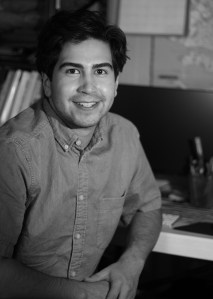
IMG_8321-2Diego Romo is a multimedia journalist based out of Salt Lake City. Born and raised in the desert heat of Albuquerque, New Mexico, Diego found an interest in storytelling very early in life. From the very beginning he was obsessed with the craft of writing and began to author essays for various state level and regional competitions. Through these essay contests, he discovered his passion for journalism and political science.
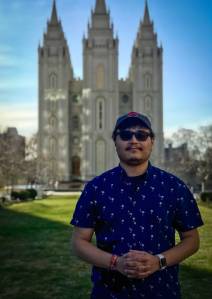
At age 16, Diego moved to Layton, Utah, with his family and it is here where he began to further explore storytelling through the lenses of photography and videography.

More recently, Diego has turned an internship with Deerfield Media into a full-time position as co-host of the “Mountain Morning Show” and news anchor for “PCTV Reports” on Park City Television.  He is wrapping up a Bachelor’s Degree in communication with a minor in political science and is set to graduate from the University of Utah in fall of 2018.

George W. Kounalis

MY STORIES:

MY BLOG:

My initial expectation for covering the Pacific Islander community in Salt Lake City was that it would be a challenge. I knew nobody involved with the Pacific Islander community prior to the start of this semester. From the get-go, I knew I wanted to tackle a tougher topic to start off with.

When Susi Feltch-Malohifo’ou came to our class as our first interview, I began making connections to a few individuals in the state’s Pacific Islander community. From that first interview, I learned a lot about the different cultures across the Pacific Islander community in Utah, and I felt that made it easier for me to come up with story ideas.

My first story tackled the intersectionality of being a prison inmate and a minority in the state of Utah and what resources are provided. By looking at an issue like this, I saw how important a role family plays for many Pacific Islanders.

I struggled remaining objective with this story. Learning about how the corrections system worked and reading some of the information dug up by the Deseret News made it hard to close off the story while remaining objective. By finding out Washington state has a group for Pacific Islander and Asian American males and helping them adjust to life after prison, I was able to report that without injecting my personal opinions about the current state of the corrections system.

After this story, I wanted to look at something local to campus. I covered the Pacific Islander Student Association at the University of Utah and took a look at what it offered the University community and saw the group’s passion for service.

My final story was a topic that is universal but can reveal a culture’s story, food. I covered Moki’s Hawaiian Grill and the dishes served and learned quite a bit about Hawaiian history that can be told through Hawaiian food.

The most important lesson I learned this semester is how family is the cornerstone of the Pacific Islander community and how it has a bigger meaning than the western meaning of the word. Learning this was very important for me and made me able to look at my own local community as my own family.

Reporting on this beat enabled me to learn more about the Pacific Islander community as a whole and the issues that people face as well as the customs and traditions that I did not know about. As stated earlier, family is the cornerstone of many Pacific Islander cultures and getting to learn that and see it in action was something that really hit me on a personal level. In a world that seems to get more chaotic by the minute, getting to cover a beat like this allowed me to take a more humanistic approach on community issues. Covering a local minority group like the Pacific Islander Community taught me a lot while writing these stories.

ABOUT ME:

IMG_1799(Resized)

My past work experience has included the University of Utah Campus Store, K-UTE Radio, Apple, and Kumon. I started working at 14 and have never taken a sick day. I am currently the lead student IT specialist at the Campus Store, as well as the producer for the Crimson Venue, Echoplex, and Sunday Hub at K-UTE radio.

I graduated in May 2018, majoring in communication at the University of Utah. During my time at the U, I learned that I have a love for hearing people’s stories and had a desire to do so. Choosing the major I did let me learn and hone the skills to be an effective storyteller.

When I’m not in class, at work, managing my DJs or doing homework, I like collecting records, playing my guitar, watching movies, watching the Cubs, and collecting geek fandom memorabilia. My passion for geek culture has allowed me to meet Weird Al, Jess Harnell, and Charlie Adler. My passion for music has allowed me to meet King Gizzard and the Lizard Wizard, Kodie Shane, and DJ Nixbeat of Salt Lake City (one of the few DJs who spin just vinyl records in Salt Lake!).

Marissa Sittler

MY STORIES:

MY BLOG: 

As a result of my reporting this semester, I realized the disparity between media coverage of the minority groups and the majority population in Utah. While it should not surprise me (why would Utah have greater coverage of minorities than Hollywood or the mass media?), it still was a little disheartening. The silver lining behind this, is that our class and the following Voices classes have the opportunity to highlight and learn more about the minority groups in Utah. As a person of color, I recognize this project’s importance and the great need we have for it not only at the University of Utah, but the Utah community as a whole.

Another result of my reporting this semester is that I gained more experience in the field of journalism. For previous courses (although some were not strictly journalism courses, more so general writing courses), I was not always required to actually go out and find sources and set up interviews. I would say that I had a pretty firm grasp of the interviewing process prior to this class, but this class really gave me a taste of having to chase after potential sources and following up with them several times, if they did not get back to me. That leads me into some of the disappointments and successes that I experienced this semester.

My first story, which was a profile on Susi Feltch-Malohifo’ou and her journey of self-acceptance as a transracial adoptee, is the story that I am most proud of. As a transracial adoptee, I was able to connect with Susi and the sentiments she expressed, such as sadness, anger and confusion. Susi shared with me that she was grateful “for the opportunity for me to share this part of me that has turned into a strength.” I think this is why I am the most proud of this piece, because I was able to write a story that was close to me and I felt that I did it justice to Susi. While I feel that this story was a huge success, I was also a little disappointed because one of the sources I really wanted to interview, Susi’s longtime friend, did not get back to me until far after the deadline for the story passed. I think that her thoughts and contributions would have made the story even more personal.

Another disappointment was with the lack of depth that my third story on the umbrella organization, Nā HALE, had. Overall, I think that I did the best that I could, since Nā HALE is not a fully formed organization. Several times I was told that this was more “a concept” than a formal organization. I knew of its fairly new beginning when Jake Fitisemanu Jr. came to talk to our class and he said that it did not have a website. Despite this, I still wanted to pursue the story because I thought that it was worthwhile. Because of these factors, this did make for a shorter story than I wanted. Additionally, my photos for this story were not as interesting as my previous ones, which were all portraits.  

On a more personal level, there was a time that I felt like an outsider during my beat reporting this semester. When I met Susi at the Kearns Library, she explained to me that Kearns is one of the poorest cities in Salt Lake County, even below West Valley City. She also said that the library feeds a good amount (I can’t remember the exact number) of kids, which isn’t something that a typical library does. I have felt like an outsider for a lot of my life being an Asian American adoptee, growing up with two white parents and living in predominantly white, upper-middle-class communities. I’ve mainly felt like an outsider in Utah because of my race. There have also been times that I have felt like an insider, which I think is the feeling of belonging and not feeling out of place.

There have been instances where I have felt like I stood out for my socioeconomic status. But when I met with Susi and she explained to me how a lot of the kids at the Kearns library are there alone, without their parents since their parents just dropped them off and/or are there to be fed, I really felt the privilege that I have had throughout my life. Those are things that have never happened to me, that I have never experienced. I thought about my fond memories of going to the library when I was younger with my mom and older sister. And I thought about how my mom would have made food for us before or after the library. What overpowered the feeling of being an outsider was my gratitude for the life that I have, but also guilt for what I have. This did not affect my reporting, mainly because it wasn’t the focus of my story, but I think it affected me more on a larger, more personal scale. And, it might even impact the type of stories that I write in the future.

I am still exploring who I am as a journalist. I still have a lot to learn, a lot of people to listen and talk to. I want to be able to share their stories and mine. The unknown can be really scary. But I am excited to be able to explore the potential that I have and share my voice with the world.

ABOUT ME: 

Processed with VSCO with a5 preset

Marissa Sittler graduated from the University of Utah in May 2018 with her bachelor’s degree in communication with an emphasis in journalism. During her time at the university, she completed two internships. The summer before her junior year, she interned with the nonprofit organization Mali Rising Foundation as its communication intern. She assisted the executive director in energizing a social media campaign, in addition to writing blog posts for the website. During the spring semester of her junior year, she was the internal communication specialist for the Salt Lake County Health Department. As such, she researched, interviewed and wrote employee spotlights for internal use to increase morale within the department.

Her academic achievements include the Dean’s List for the spring and fall semesters of 2016 and 2017, as well as being a member of Kappa Tau Alpha, the national honor society for journalism and mass communication.

She hopes to earn her master’s degree in journalism in the near future.

Some of her guilty pleasures are breakfast food, including pancakes, waffles and hash browns. She also loves being an aunt to her older sister’s dog, Chloe.

Janice Arcalas

MY STORIES: 

MY BLOG:

Honestly, I did not know what to expect when I heard our beat was the Pacific Islander community in Salt Lake City. I was worried at first because I had no idea where to start to look for sources. I had no knowledge about the community in general. As the semester went along, I realized that there are so many sources I could go to about our beat. I learned that Pacific Islanders are not only willing to help their community, but to help everyone they can around them.

Interviewing every one of my sources has been an eye-opening and enlightening experience. I learned a lot about Pacific Islanders in the community, and I realized that their community involvement reflects their family-oriented customs.

I was involved in different community services in high school. Once I entered college and started working, getting involved in the community was difficult for me. After interviewing Havier and Penina from the Talakoula radio show, it reminded me how important it is to help your community. The two are extremely involved in their community, and it was really heartening to speak with them about how Pacific Islanders are involved with their community. It made me want to start getting involved with the community again.

As a result of my reporting this semester, I learned so much about the Pacific Islander community. I knew nothing about this beat at the beginning of the semester. I am glad that I got to do this beat because it was really amazing to see all the different ways  Pacific Islanders are greatly involved with helping others.

ABOUT ME:

IMG_2864

Janice Arcalas is a senior at the University of Utah and expecting to graduate the fall of 2018. She is currently majoring in communication with an emphasis in journalism and minoring in Korean. Janice desires to work in broadcasting in South Korea one day.

Entering college, Janice thought she wanted to pursue a film major. After taking a few film classes, though, she realized that film wasn’t a match for her. She remembered how she enjoyed an in-studio video production communication class and has dedicated her education toward a communication major since then.

Shaelyn Barber

meMY STORIES:

MY BLOG:

Whenever anything happens to me, the first person I call is my mom. So, buzzing off the excitement of my very first interview for Voices of Utah, I dialed her number. It rang once, twice, then three times, and the warm voice of my mother echoed through the speaker.

I chattered into the phone, animatedly spilling the tale. She listened patiently, then laughed.

“You sure chose an interesting job.”

For an introvert with social anxiety, journalism is perhaps a nonsensical career path. As part of my daily life, I am pushing the boundaries of my comfort zone. I have to go outside, search out fascinating stories, approach strangers, and carry out long conversations with people I’ve never met before. By all expectations, it should be terrifying for me. In fact, it is.

Yet, the terror is counterbalanced by something stronger: a deep bubbling passion.

I never wanted to settle for a career that I was not in love with. Fortunately, I stumbled into journalism by pure coincidence. As I searched painstakingly for a life path, I found that journalism just so happened to check off all the criteria I had for a job. I would be able to travel. I could write. And, I would never have to stop learning.

But, beyond that check list, journalism has blossomed into something that means far more to me. For every ounce of fear in my heart, there is just as much love.

Most of all, and again perhaps most bizarrely paradoxical, is the deep fascination I bear for the stories of other people. While I, in all likelihood, should be terrified to go out and have deep conversations with people I have never met, that is truly my favorite part of journalism.

I want to hear about people’s experiences and lives. I want to form connections and emotional bonds. I want to write about them so that other people, too, may learn from them.

That has been my greatest realization while working on my stories for Voices of Utah. I can overcome my fears, because writing gives me strength through my weaknesses.

ABOUT ME:

My first experience with journalism was in first grade. As some sort of career exploration, I shuffled myself into a dimly lit portable classroom and sat down to learn the art of news writing. I loved it. Then, I promptly abandoned it for the world of fiction.

I spent most of my younger days working to be an author. I have stacks of notebooks filled with poetry, story outlines and character sketches. I wrote at least two full-novel-length works during high school.

By the time I reached college in the fall of 2014, my dreams of authorship began to fade and I was left drifting, searching for something to fulfill me in the same way that fantasy had. I wrote lists of possible majors containing everything from astronomy to painting and all that lies in between.

I finally settled on the two majors that seemed to fit the best, political science and journalism and, as I began to learn the art of news writing, I fell in love once again.

I aspire to become a travel writer. I want to be able to see the world and share my experiences and passion with others through my writing.

My work can be found on my personal blog, Shaepable, and in the opinion section for the Daily Utah Chronicle.

Allison Oligschlaeger

MY STORIES: 

MY BLOG: 

Having just returned from a year in the Pacific Islands of New Zealand, I was psyched to learn that I would spend this semester reporting on Utah’s Pacific Islander population. It wasn’t my own community, of course, but it wasn’t completely foreign to me either. This was truly the perfect beat for me to explore the nuances of identity-oriented reporting — new enough to be challenging, but familiar enough to be approachable.

I became especially grateful for that psychological foothold when I ran into reporting issues within my first month on the beat. As a queer person, I wanted to write a story about the third gender identity found in Polynesian cultures and the experiences of LGBTQ Pacific Islanders here in Utah. But finding people willing to share their experiences of gender and sexuality in Utah’s Pacific Islander community proved difficult. After receiving no response to an email I sent a potential source, a gay Polynesian man, I followed up with him on Facebook. I could see that he had read my message, but again did not respond.

This presented me with an ethical question: how hard is it appropriate to push for an interview? Ordinarily, I follow a former editor’s advice to “be a (polite) bulldog,” leaving as many emails and voicemails as it takes to get a response from sources. But this situation felt different. I wasn’t asking this man about an event he was organizing or an area of expertise, I was asking him to discuss intimate details of his identity and experiences as a gay Pacific Islander. Was it appropriate or considerate to continue pressing him across multiple platforms?

Ultimately, I made the call to respect this man’s right to ignore my questions and changed my story topic. I believe identity-oriented reporting should deepen and expand our understandings of people, and I worried that continuing to push this potential source would have made him feel diminished instead. When searching for specific perspectives, especially those of minority populations, it’s important to make sure our sources feel respected as whole individuals and not reduced to the aspects of their identities that are most relevant to the story we’re working on. And while I don’t think it’s inappropriate to ask people about their identities — on the contrary, I think it often produces excellent journalism! — writing about subjects as sensitive as gender, sexuality and race demands a corresponding level of sensitivity from us. This means listening actively, responding empathetically and, contrary to popular journalistic practice, being willing to take “no” for an answer. I’m grateful that reporting this beat gave me opportunities to practice all three!

ABOUT ME:

img_6430Allison Oligschlaeger is a freelance journalist and communication student at the University of Utah.

They began their newswriting career in high school with a weekly column for the “Teen’s Ink” section of The Davis County Clipper.

Allison’s work has since appeared in The Deseret News, Salt Lake City Weekly and The Daily Utah Chronicle. They received a regional Mark of Excellence award from the Society of Professional Journalists for their coverage of the University of Utah fight song debate in 2014. Allison enjoys skiing, traveling and personal nonfiction.

Mckenzie Ycmat

MY STORIES:

MY BLOG:

I’m a writer by instinct but not a journalist. In the past, I naturally would be attracted to writing about communities I’m already familiar with like the LGBT community or fashion community. Reaching out to a new group of people like Pacific Islanders terrified me at first. It meant that I actually had to reach out to people I had no connection to, which made me feel vulnerable.

Even though I was petrified by the idea of reaching out to people I didn’t already have a connection with, I knew I had to do it — not just for the class, but also for myself as a journalist. In the end, I’m so incredibly grateful I took that leap of faith and stepped out of my comfort zone. I got to reconnect with old friends from my past and even learn more about strangers and a community I wasn’t a part of.

Because of this beat and reaching out to people outside of my comfort zone, I realized that I can be a journalist. I realized how easy it is to put myself in a journalistic persona to accomplish what I need to do and to ask the appropriate questions. I learned how to prepare each interview effectively and efficiently to get the answers I’m looking for.

During my interviews, I never felt like an outsider with the community. People always treated me as one of their own and were open to most of my questions. This affected my reporting by making me more comfortable with interviewing and helping the stories naturally fall into place. I didn’t ever feel like I needed to do too much research to fill in the blanks, the answers came naturally and created a conversation through my stories.

Although I hit a few hiccups, specifically with my second story when I had a few key interviews fall through due to timing or about the questions, I was able to quickly gather everything together and find replacements. Covering the local Pacific Islander community taught me not only how to be a better journalist but also the beauty of family and community that I’ve never experienced before. I was honored to be a part of it and share a few of the hidden voices within their community.

ABOUT ME:

20626840_10159151930840634_4985627209511563984_o.jpg

Mckenzie graduated from the University of Utah with a degree in communication and a focus on journalism in Spring 2018. 

Mckenzie created her own magazine company called Salt Roads in 2012 and interviewed multiple musicians, artists, business owners and more for six years. Later in 2016 she started working for Broadway Media, a local radio station, as the content manager and was in charge of managing blogs, social media accounts, and promotions for seven different radio stations.

Mckenzie is from North Salt Lake, Utah, and graduated from Woods Cross High School in 2011. She received her associate degree from LDS Business College in 2015, with an emphasis in business management. She enjoys photography, music, traveling to New York City at least three times a year, and film. Mckenzie hopes to continue her passion for writing in New York City and pursue a career in writing for film.