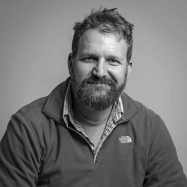
Adam Fondren

MY STORIES:

MY BLOG: 

I tried to come into this semester with an open mind — tried being the operative word. I know how I am and what I want, and I know what I am capable of. With that that in mind I went into this with a relatively clean slate of expectations, but I was once again reminded of who I am and what I do. I am not a writer. I don’t have the necessary tools to be a writer. I am a visual journalist, always have been, always will be. During the course of this semester struggling through this beat, taking notes, remembering exactly what was said and by whom, relying on and waiting on people to call me back, I was painfully reminded of the clear idea that I am a photographer, a photojournalist. I use the visual to tell the story. I see the story in front of me and I document what is happening. I collect facts to enhance my images. I use those images to tell the story.

In reflection on this semester, I have yet again reinforced the certainty of my path, I am a visual journalist. I use the image to tell the story. All of my stories were late and completed post-deadline. This is the result of my history as a photojournalist where I come to the event, whatever the event is, think about what the story is in terms of visuals and use what is right there in front of me to tell the story, I just utilize it to do so.

ABOUT ME:

AdamFondrenHeadshotI have been on the search for a story my entire life. Early that story was my own. I have been on active duty in the United States Marine Corps, I have been an air traffic controller, I have been a paramedic. I have even been a security guard for a big budget movie set. But, more recently I have become interested in the stories of others. I have returned to photojournalism in an effort to both fill my need for adventure and to fill my need for a good story.
Hello, my name is Adam Fondren and I am an angry photojournalist. I am bound and determined to tell visual stories with as much accuracy and heart as humanly possible.

Woo Sang Kim

MY STORIES:

MY BLOG:

Three outside stories done this semester was challenging yet rewarding. I gained insight and depth of how a good writing should be and what makes a good article. I enjoyed the work. I certainly look forward to more of it.

I tried to be as professional as possible to be seen with strong credibility by preparing interview questions before each meeting. I asked interviewees’ roles and contributions beforehand. This paralleled to the core of the Reuter transparency project because I tried to be seen with as much professionalism as possible. In other words, I gained respect and trust of my interviewees in a snap of seconds.

Civic responsibility is actions and attitudes carried out by citizens. My first article was civic because it called for action to stop the domestic violence among Pacific Islanders. It prompted readers to know about the issue and what they can do to assist those in vulnerable position.

Woosang Kim 2012

Media responsibility is the roles mass media have to support the democratic governance and social participation. My second article had a content on Salt Lake Community College students videotaping the culture of Pacific Islanders and streaming it at the Pacific Island Heritage Month. This helped to spread the word about their culture and attract more guests to learn about what their culture offers.

Journalists carry civic and media responsibilities since their work will be calling readers to take certain actions. Although minority members are not often covered in the New York Times, journalists embrace all cultures and try to produce work that promotes diversity. For example, a couple of weeks ago, a book written by Amy Chua was covered in the New York Times. It was about how tribalism exists in this country and how no one group feels dominating anymore. I could tell that the New York Times tries to provide multifaceted articles to its readers.

I did not encounter moral or ethical issue since I followed the guideline given by the instructor. However, I tried to keep the oral tradition of Pacific Islanders just like how we preserved the oral culture of African Americans. However, some Pacific Islanders I interviewed used a form of Pidgin English, so I decided to write down their comments in complete English for readers to understand easily.

Remaining objective was unchallenging because I read a lot of New York Times articles. I know what makes a good article and knew what I had to do to craft one. If I did not read NYT articles in my free time, remaining objective should have been daunting.

As a result of my reporting this semester, I became more diverse, well-rounded, culturally enlightened. In short, I became someone who could put on different hats at different times.

ABOUT ME:

Woo Sang Kim (Ken) is a senior majoring in communication at the University of Utah. He came from the University of Utah Asia Campus in Incheon, South Korea. He would like to go to law school a couple of years after graduation in winter 2018. He is a passionate reader of the New York Times, Financial Times and Wall Street Journal. He also enjoys reading a wide variety of books mostly written by those with JD degrees.

Hannah Christensen

MY STORIES:

MY BLOG:

Writing for Voices of Utah this semester has been eye-opening. I interviewed extraordinary individuals in the local Pacific Islander (PI) community.

One experience that was particularly inspiring was my interview with YWCA lead advocate, Puna Levenson. We discussed domestic violence and sexual assault within the PI community and the barriers, cultural constructs and the available resources.

This interview was personally impactful because I am a survivor of domestic abuse and sexual assault. Hearing about the resources and support available for all women was illuminating because I realized that by relying on the work others have done toward healing and hope, I can overcome my past and become an ally for others.

Being able to report on things that truly matter to me and the larger community, strengthens me personally and professionally. It is very empowering to tell the story of strong women and men who have survived many different traumas and challenges, especially when they use their pain and suffering to make the world a better place for others.

Writing about these people helped me to make my stories more human — more relatable. Sharing their stories reinforces my desire to fight for social justice for everyone. I am grateful that reporting this semester has made me a more empathetic writer.

My examination of and passion for social justice, especially for issues surrounding domestic abuse, made me more aware of other social justice issues, including poverty, limited resources, unawareness, distribution of political power, and equal opportunity for minority groups, especially in the work place.

I met people who are game-changers in the PI community. These players are people who want to make the world better for everyone — not just their immediate friends and families. My wish is that my writing, reporting, and other kinds of advocacy can do the same.

ABOUT ME: 

Hannah17Hannah Christensen wrote for Voices of Utah as a student journalist during spring 2018. Christensen is a marketing professional at the Career & Professional Development Center at the University of Utah, an office dedicated to the success of students during and after college. In her role as marketing coordinator and lead graphic designer, she often writes content for the website and marketing materials.
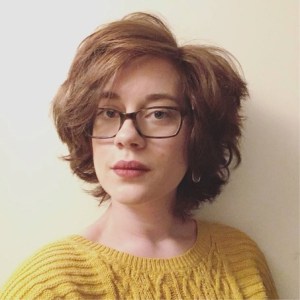
Christensen is a survivor of sexual assault and domestic abuse. This motivates her to be an influential writing professional. Through her writing, she hopes to serve as an ally, voice and beacon for others who have experienced abuse or trauma.

Christensen has her own graphic design business, Oh Hannah Design and will graduate in spring 2019 with a BA in Communication.

Anthony Scoma

MY STORIES:

MY BLOG:

When we began coverage of a Pacific Islander beat, I was genuinely excited to learn more about a community that is rarely highlighted by Utah news sources. However, at the same time, I was also worried that my story ideas and reporting would be severely limited by my lack of expertise and knowledge of Pacific Island culture.

Over the course of interviewing, researching and writing I realized that my worry was based on an egotistical approach to journalism. Any journalist worth their word count doesn’t have to be a cultural expert to find a newsworthy story, listen to those involved and report useful information on a community. To achieve this, a journalist must only approach their beat with an open mind and a critical eye.

The importance of journalism doesn’t come from its difficulty but rather from the significance that sharing stories holds for how humans relate to the world around them and how communities share their culture. The role of the journalist is simply to see that this communication is accurate and fair.

During my own exercise in intercultural communication, I was drawn again and again to the topic of cultural norms, beliefs and customs within the Pacific Islander community. By learning about how others live, I was shown what I take for granted as “normal” from my perspective. By decentering my experiences, I gained greater insight into who I am, what I believe and how I relate to my own community.

I also realized how much connected me and those I interviewed. As the youngest of a family of 11 kids, I could relate to the Pacific Islander emphasis on the importance of family. As a former member of the LDS church, I felt a personal connection to my interviewees’ experience both inside and outside the religious culture of the Mormon church. But, even those experiences that I could not relate to still acted as a prism to view my own life, breaking them apart into the multifaceted aspects that color how I see the world.

All of the insight and enhanced perspective I gained through the process of writing for Voices of Utah was just an added benefit to the simple pleasure of a good conversation with someone new. The way stories connect us all also reminds me of something else I learned while covering our beat.

I was told by several of my interviewees about how important establishing connections between people is for Pacific Islander culture. When there is not a connection through genealogy —  which is often figured out upon first meeting — there is a connection through the shared history of the community and land around you.

This understanding of connection resonated with me as a journalist covering just one community among the many that can be found in Utah. Regardless of how similar or different communities may appear from a distance, by mere physical proximity we share so much. The scenery, weather, air quality, traffic, government, schools, seasons, news and dominant culture — whether you practice it or not — defines the shared experience of what it means to live in Utah. And whether you love or hate those experiences, it is still something that binds us all together.

ABOUT ME:

Me

Anthony is a journalism and political science student at the University of Utah. Specializing in audio journalism, Anthony has worked as the producer of podcasts at the U’s student media radio station, K-UTE, since Spring 2017. In addition to helping produce all of K-UTE’s podcasts, he also hosts the station’s interview podcast, The Rostrum, and has interviewed prominent alumni, professors, students and guests at the University of Utah.

In Fall 2017, Anthony worked as the intern for KUER’s flagship program, RadioWest. He has also worked at KCPW in Salt Lake City as an intern, assistant producer and on-air pledge drive pitcher since 2016. In the Summer of 2018, Anthony will intern with the Global Editors Network in Paris, France.

Anthony is from Mapleton, Utah, and is the youngest of 11 children. He enjoys camping and driving through southern Utah. Anthony hopes to continue to work in audio and print journalism and aspires to work for “This American Life” and eventually host his own radio program.

Alexandra Ogilvie

MY STORIES:

MY BLOG:

I had no idea what to expect when I started this class. I have some experience interviewing people, but before this class, it has usually been over email or by phone. After transcribing a lot of my own interviews, I’ve realized that people speak differently than they write, and it’s important to get the right kind of interview.

OgilvieI’ve realized that being a “nag” goes against every fiber of my being, but I’m learning to quash that. I think a lot of that is being socialized as a woman since I was a kid to be polite and quiet, and to not bother people. I’ve realized that not only do I have to get over that, but also that the catastrophizing I do in my head about people being mad at me is just that, in my head.
We live in an interesting time for community-based journalism. I think that many people, myself included, tend to think that politics are most important and one can only truly make any change on the federal level, not the local level. That’s not true, though. All politics start with local communities. I want to make a change and I want to help people, and I also have fallen into this trap. Learning about small charities and organizations this semester made me realize that change can only happen on a large level if a few committed, caring people are willing to engage on a local level.

There was a meeting I went to where there were only two white people in the room, me being one. The other person seemed extremely uncomfortable, and although it may have been for other reasons, it seemed to me that she wasn’t used to being in the racial minority. When I noticed this, I also felt mostly surprised, because I am very rarely in the minority. It made me realize how much privilege I have as a white girl in Utah.

ABOUT ME:

Alexandra Ogilvie is a science journalist who graduated from the University of Utah in May 2018. She started on her long path as an engineer, but after three years of studying and working in various labs she discovered that she liked talking about science more than actually doing it.

She made the switch in 2016, right in time for the presidential election. That outcome urged her to become meticulous about fact-checking and constantly be up-to-date with policy and governmental goings-on.

She has worked for Student Media during her entire tenure as a communication student, and among other things has:

  • produced a podcast where she interviewed STEM (science, technology, engineering, and math) grad students about their research;
  • written and published an article every week that explained scientific concepts to a lay audience;
  • dived into an investigative reporting piece that is still in progress about the possible exploitation of renewable tax credits in Utah;
  • written op-eds about the importance of science literacy among policymakers and average citizens.


From civil unrest to the crossroads of the West: The young refugee’s journey to Salt Lake City

Story and slideshow by BLAKE HANSEN

 The current worldwide refugee issue continues to grow. In fact, the World Economic Forum reported in June 2017 that one out of every 113 people on the planet is now a refugee. A refugee is made every three seconds due to life-threatening violence and persecution worldwide.

Under United States law, “a refugee is someone who is located outside of the United States, is of special humanitarian concern to the United States, demonstrates that they were persecuted or fear persecution due to race, religion, nationality, political opinion, or membership in a particular social group, is not firmly resettled in another country and is admissible to the United States.”

In order to be granted access to a new life here in Utah, refugees go through an extensive approval process. But do you know what that process is and what it’s like for young refugees to start an education here?

Refugees must first receive a referral to the U.S. Refugee Admissions Program (USRAP) for consideration as a refugee. After receiving a referral for application, refugees must apply and then wait for an interview where a USRAP official will decide whether or not they are eligible to be considered a refugee. Only after that interview, which can sometimes be months to years of waiting, can one be granted official status as a refugee.

Before and after receiving official status, refugees typically live in refugee camps until they are granted access to the U.S. These camps are mostly makeshift communities as there are more people in need of help than the help that is available. Some camps are better equipped than others. A lot of the time, however, people will build or rebuild huts or tents out of the available supplies lying around in the camps.

Refugees who live in these camps are almost always dependent on the local organizations for things like food, water and living supplies. The UN Refugee Agency is a leading organization that provides care for refugees but most camps are managed by the UNHCR as well as other assorted local entities as the needs continue to increase.

The UNHCR gives refugees a stipend of roughly $30 per month, which is never enough to live off of. In fact, most refugees actually do their best to return to their old line of work once living in refugee camps.

The UNHCR estimates that “60 percent of working age refugees are employed to some degree. Even 13 percent of children labor some, a number missing school as a result.”

In Salt Lake City, refugee children are getting help accessing education, but not without a fight. Alexx Goeller is the refugee youth services coordinator at the state Refugee Services Office and she oversees state budget allotments for programs that help young refugees to integrate into life and education here in Utah. “This funding is directly correlated with how many refugees the government allows to enter the U.S.,” Goeller said. The recent cut in refugees allowed into the U.S. directly correlates to the proceedings in her office. “People here are already seeing the effects of the cutting. Less funding not only affects new refugees who are trying to integrate, but it also affects refugees who have been here for five years and are still utilizing these programs,” Goeller said.

Speaking of education, the UNHCR also reported that roughly “3.5 million refugee children did not attend school in 2016. Only 61 percent of refugee children attend primary school, compared with a global average of 91 percent.”

Out of the refugee children who do make it to primary school while in camps or otherwise dislodged from their homes, only 1 percent of those children move on to any form of higher education. This is compared to the rest of the world’s 36 percent average for making it to a form of higher education.

Michelle Love-Day, associate director of educational equity at Granite School District in Salt Lake City, is in charge of the district’s student refugee programs. She manages multiple district-wide programs and they are meant to help integrate these children who haven’t had very many opportunities in terms of education.

The Tumaini Welcome and Transition Center, a Granite school district program managed by Love-Day, helps newcomer students successfully transition into their home schools. Participants receive an intensive two-week instructional program focusing on academic and social skills in English.

The district also has a language academy for the older kids that takes place at Cottonwood High School as well as a summer school for all school ages called Jump Start. These programs are all meant to help refugee children integrate into the American schooling system successfully.

“These refugee students have a lot of resilience, they’re eager to learn. They want more and they come ready. Their resilience is astonishing,” Love-Day said in a telephone interview. “The students coming to us are bringing culture and language that you couldn’t even imagine. I couldn’t imagine being a teacher and not being able to use my skills in a different country.”

Granite School District also has a community center with community integration programs for all refugees. These programs are for parents, students and refugees without kids alike. Everyone can benefit from the community programs that Granite offers. For more on those programs and tools please see “What happens to Refugees who come to Utah?


This slideshow requires JavaScript.

Refugee Services Office, Catholic Community Services support integration of refugees in Utah

Story and slideshow by BLAKE LANCASTER

When a refugee resettles in a new country, oftentimes they are in a new community with new rules, a new language and a new culture. How do they approach this challenging situation and become integrated members of American society? Organizations such as Utah’s Refugee Services Office can help with the transition.

Gerald Brown is currently an assistant director and state refugee coordinator at the Refugee Services Office, which is one of these organizations. The Refugee Services Office help refugees learn English, find and gain skills for employment and build connections with locals who can help show them the way things work in their new community.

Brown became interested in working with refugees during a year-long trip to Egypt with the YMCA where he experienced a culture with hardship unlike what we know in America. This sparked his passion for social justice. He went on the service trip expecting to help people, but when he finished he realized he learned the most.

Since his eye-opening service trip, Brown has worked in refugee agencies from Houston to New York to Cuba before becoming one of the godfathers of major Utah refugee programs.

For several years, Utah held monthly town hall meetings to discuss the state of refugee resettlement programs in Utah. In 2008, Gov. Jon Huntsman Jr. approved the addition of refugee services and Brown was appointed to direct and lead the new program toward success.

Brown hasn’t stopped serving refugees since then and can be credited with the efficient success the Refugee Services Offices is able to accomplish when it comes to the integration process.

“If you can accomplish integration, then you have the strongest community possible,” Brown said.

From all of his experiences, one of the things Brown has learned that he stresses is understanding the important distinction between integration and assimilation.

Integration can be defined as incorporating individuals from different groups into a society as equals. Though similar, assimilation means to adopt the ways of the new culture and fully become part of it resulting in an immense loss of cultural identity.

Danielle Stamos, public relations and marketing director for Catholic Community Services, said it is important we make it acceptable and comfortable for refugees to continue their traditions and maintain their culture.

“Not only do they preserve their culture, but they also share their culture with the community in Utah,” Stamos said. “I love when we see refugee communities creating their own events taking some of their traditions from their own countries and implementing them here.”

Catholic Community Services is another organization with programs in place to help refugees integrate into Utah. Catholic Community Services provides case managers to refugees as they are resettled in Utah who help them get on their feet. They provide them with housing, teach them the way the American system works when it comes to everyday life, help them learn the language, find them jobs, and much more.

One way Stamos suggested the everyday community member could help with integration is approaching refugees and being welcoming and friendly. If, however, you’re really feeling ambitious and eager to get involved, finding an organization that helps refugees and interests you to volunteer with can be rewarding to all parties involved.

“Once you work one-on-one with a refugee you can see daily how easy it can be to help support them in their goals and support them in maintaining their culture,” Stamos said. “There will always be a lot of fear out there of change and things that are different, but if we instead embrace it we can see how much more strong and beautiful our community and relationships can be if we share and work together.”

Nirmala Kattel provides a unique understanding of assisting the integration process of refugees as she is a refugee herself as well as an employee at the Refugee Education and Training Center.

The Refugee Education and Training Center is located at the Meadowbrook campus of Salt Lake Community College where Kattel also attends as a student. Kattel said one of the center’s most popular services utilized by refugees is help with jobs similar to Catholic Community Services, but the Education and Training Center is there to help after refugees no longer have their initial case manager.

Another popular service at the center that Kattel has noticed are the English classes. Some refugees come with very limited knowledge of the English language, which is a key hurdle for refugees to clear as once they can surpass the language barrier, it makes the rest of the steps in the integration process a little easier.

Kattel came to Utah as a refugee from Nepal in 2009 and quickly learned that isolation is another of the bigger barriers refugees face upon arrival for her and other refugees alike. She had to wait six years before the rest of her family was able to resettle in America.

“Refugees who come alone feel isolated and depressed missing their families and their past lives, so involvement and engagement in outside activities can help them through these feelings,” Kattel said.

Kattel said the elderly refugees can especially struggle with the isolation and loneliness. Since they don’t have a job or school to go to, it confines their reasons to leave their home. This seclusion can lead to difficulties with learning English and understanding the system of our community as a whole.

“The system is hard to understand at first. Refugees from almost everywhere come from somewhere with a totally different system in their countries or the refugee camps they waited in before coming here,” Kattel said.

Showing interest in refugees as a person and who they are culturally can help them with almost all of their integration barriers. Additionally, it can make them feel more comfortable in sharing their culture with their new community. Kattel said a friend with experience in the community always proves to be a valuable asset to refugees trying to make sense of their new home and sharing their cultural values.

This slideshow requires JavaScript.

What happens to refugees who come to Utah?

Story and photo by BLAKE HANSEN

The trek out of danger is only the first step for refugees. Once they arrive in the U.S. it becomes difficult to navigate a new culture, utilize assets and stay afloat. Doctors and lawyers who were once able to comfortably use their education and expertise to take care of their families are left to work minimum wage and start completely over.

ResistanceColombianRefugee

A Colombian refugee living in Salt Lake City.

According to the UN Refugee Agency (UNHCR), “The total number is slightly greater than 1.2 million which is above 2017 levels and reflects needs from 63 countries of asylum, from both protracted and more recent refugee situations.”

While some suffering and fear for life may stop upon arrival to the U.S., refugees are faced with a new and unique set of challenges. Some have come with families to provide for, some have come alone, but one thing is always common and it is that these refugees are in a unique, new place with a new set of survival tasks. No longer can they put together tin huts, wait for UN resources to keep them alive, and exist with so many other people in their same situation.

For many refugees who haven’t had much time with the language or culture, they can sometimes find it difficult to look for employment here. Their skills, degrees, and certificates, most of the time, are invalid in the U.S. as well. It is very possible for more refugees to make it here and to flourish but without local help from individual mentorship and entity funding, it is near very difficult.

Jadee Talbot, director of refugee programs at the Granite School District on the southwest end of Salt Lake City, said, “We have had a lot of success with different programs we run here for the refugee community.” The school district manages an app called “Serve Refugees”, which provides information for after-school programs as well as other programs around the community that help refugees integrate. The district has five main community centers, one at each school, and they offer different types of classes for kids, parents and refugees in general, teaching things like computer literacy and different ESL courses as well, all free of charge.

At the Refugee Services office in Salt Lake City, many refugees are receiving help finding housing, jobs and transportation. The department and other organizations like it are helping refugees to get help with some of the essential parts of living in the U.S. but there is still much more needed to help these people integrate fully into society.

Gerald Brown is the state refugee coordinator for the Refugee Services office and he says jobs are slowly getting easier to find. But this isn’t happening without a lot of hard work from programs like the one that Brown runs which help provide refugees with employment in hotels and restaurants doing things like cleaning.

Brown went on to explain that the work they do is meant to teach the refugees how to become self reliant. Refugees are usually supported for about six to eight months before they have to be cut off from funding and assume responsibility for themselves. This time is crucial for both program administrators like Brown and the refugees receiving support to learn and develop the skills needed to prosper in the U.S.

They start to learn English if they don’t already know it, they learn about how to transport themselves, where things are, how to shop, as well as what kinds of skills they have and where they can be utilized for employment locally.

“Programs like this don’t typically do enough for the refugees, simply because the resources can only go so far. At the end of the day, a doctor from Somalia cannot practice here in the U.S. Some refugees come from such starkly different backgrounds and cultures that they don’t know how to get anywhere once they leave their apartments other than by walking. They almost always cannot make enough money to support themselves, let alone families.” Brown said.

Community members also can help refugees integrate into the Salt Lake Valley by volunteering with organizations such as the Refugee Services office. They are always looking for volunteers as well as donations of different types. Many people who cannot volunteer due to varying circumstances, who would otherwise enjoy volunteering can always donate to any of the agencies in town who help refugees to settle in and get to living a normal life and those donations are always greatly appreciated.


Refugees in Cache County confront unique problems far from Utah’s urban center 

This slideshow requires JavaScript.

Story and slideshow by EMILY ANDERSON

Since the ratification of the Refugee Act of 1980, more than 60,000 refugees have traveled thousands of miles — escaping war, oppression and famine — to resettle in Salt Lake City.

About 400 of those refugees decided to migrate 82 miles farther, making a home in Cache County.

Being away from Utah’s capital and largest city presents a number of issues for members of a population struggling to confront memories of their home country, adjust to a new culture and society and make their way in America.

Most of the refugees living in Cache County moved to the valley to obtain work.

“In Logan, many refugees we spoke with had come to the area originally based on recommendations from friends about the meat packing plant locally,” read a report on refugee needs written by Utah State University (USU) researchers and presented to the Utah Department of Workforce Services in 2015.

Julie Taquin of Cache Refugee and Immigrant Connection said in a telephone interview that about 80 percent of refugees in Cache County work at the JBS Swift & Co. meat-packing factory in Hyrum.

While JBS Swift provides a stable entry-level job opportunity that does not require fluent English, refugees frequently find themselves discontent with work conditions, said the USU report. The company offers benefits for its employees, but wages for factory workers are low.

Glassdoor, an online company database that includes employee reviews and salary reports, shows that wages for factory employees range from $10 to $12 per hour. The U.S. Health and Human Services Department’s 2017 poverty guidelines dictate that a family of five must bring in more than $28,780 to be considered above the poverty line. With these wages, a refugee working at JBS Swift would have to work at least 56 hours a week at $10 per hour, or 47 hours a week at $12 per hour, to merely keep a family of five from living in poverty.

JBS Swift did not respond to requests for comment.

“Whereas refugees in Salt Lake are afforded somewhat greater flexibility in their job options, those in Heber and Logan feel confined to these positions even when work conditions are not satisfactory to them,” said the USU report. “Although there are likely many other employment opportunities available in Logan and Heber, the communities there do not appear to be aware of them. This makes the refugee communities in smaller areas more vulnerable to changes in one company’s policies or employee needs than those in larger metropolitan areas.”

The report went on to recommend that the Department of Workforce Services look for ways to diversify job opportunities for refugees. However, difficulties for refugees in the area extend beyond the workplace.

Although JBS Swift commonly provides employees with health insurance, refugees in Cache County face other limitations to receiving health care.

Another study conducted at USU in 2016 found that refugees must confront physical, structural and cultural challenges when seeking health care.

“The most prevalent barriers to health care access included language barriers, the fear of missing work and difficulty navigating a complex health care system and its corresponding insurance policies,” said Josh Hoggard, one of the students who conducted the study, in a telephone interview.

Some of the cultural problems that refugees have when receiving health care, according to the report, include a wariness of preventative treatments, difficulty understanding when to call 911 and dealing with gender roles in medicine — for example, some refugee women are uncomfortable with male obstetrician-gynecologists.

Many refugees involved in the study weren’t sure how to schedule time off work for doctor’s appointments and struggled to comprehend insurance policies.

These structural issues are connected to the most prominent physical problem — language differences and limited access to translators.

Difficulties surrounding language, however, transcend health care to affect every aspect of life, according to Nelda Ault-Dyslin, one of the founders of Cache Refugee and Immigrant Connection. Some refugees take classes at the English Language Center of Cache Valley, but not all have the time or money for the $25 per quarter courses.

“One of the biggest resources we need is translators,” said Ault-Dyslin, who is also the program director of USU’s Center for Civic Engagement and Service-Learning. “We don’t receive any help from some of the larger refugee assistance organizations in Salt Lake City, so we rely entirely on volunteers,” she said in a telephone interview.

CRIC currently has one person on staff, Julie Taquin, who is paid through the AmeriCorps VISTA program, and two volunteer translators.

“We’re very small,” Taquin said. “Up until recently, we were a completely volunteer-run nonprofit.”

The four-year-old organization, however, is quickly growing. CRIC opened a physical office space in September 2017 at 429 S. Main St. in Logan.

Here, CRIC welcomes refugees during walk-in hours, which are Monday through Thursday from 4-6 p.m. The organization helps refugees with any responsibilities they are struggling with. That might include paying medical bills, scheduling doctor’s appointments and applying for government assistance like the Supplemental Nutrition Assistance Program — food stamps — and Medicaid.

“Anything they come in with, they can present to us and we help them work through everyday tasks,” Taquin said.

The nonprofit also works to integrate refugees into the community.

CRIC operates a community garden for refugees, located west of Logan High School. There, Taquin said, refugees can grow produce from their home countries that they might not typically find in an American grocery store.

With the help of Michael Spence, who is a USU track and field and cross country assistant coach, CRIC has organized an all-refugee track and field team. Taquin said this helps refugees build relationships and find an active outlet.

Despite these efforts, CRIC still finds it difficult to make refugees feel completely comfortable in Cache County.

“One of the largest challenges we face, just because there isn’t such a large refugee community, is just making the general population understand that refugees are here,” Taquin said. “Then, they can kind of be adapting their services to fit the needs of the refugees.”

Once residents are aware of refugees in their area, however, Ault-Dyslin said they are welcoming.

According to the USU report for the Department of Workforce Services, many of the refugees who move to Cache County are Muslims from Somalia, Sudan, Ethiopia and Eritrea.

The Muslim population in Cache County is small. In 2010, there were approximately 308 Muslims in the county, according to the U.S. Religion Census. This amounted to not even one-hundredth of a percent of the county’s population at the time. Their only place of worship is the Logan Islamic Center.

“Can you practice your religion in Logan?” is listed in a frequently asked questions section of the Logan Islamic Center’s website.

“Praises all to Allah, yes, we can,” answered the center. “As a Muslim, we need to pray five times a day, and, fortunately, we usually do not face any issues in performing prayers. We heard reports that some supervisors allow our brothers and sisters to pray in their office. We also heard that people were praying in the park during their outdoor activities. However, we do face some challenges in practicing our religion.”

Despite having a resource for growing produce commonly found in their home countries, Muslim refugees struggle to find halal meat, or meat acceptable for consumption in Islam. According to the Logan Islamic Center, Muslims have to either purchase expensive, imported meat at Sam’s Club, slaughter animals themselves or travel to Salt Lake City to purchase the meat from halal butchers.

Although many refugees in Cache County struggle to find food that conforms to their religious beliefs and culture, the Logan Islamic Center believes community members can still help them feel welcome. The center encourages non-Muslims to invite their Muslim neighbors to dinner to get to know them better — as long as they provide a halal meal.

Another frequently asked question is, “How do the people of Logan treat you?”

“Alhamdulillah, the people of Logan treat us kindly.”


University of Utah launches Doctors Without Borders student chapter

Story and image by ANNA STUMP

Médecins Sans Frontières (MSF), also known as Doctors Without Borders, is an international humanitarian organization whose mission is to expand accessibility of medical care for those affected by conflict, epidemics, disasters, or exclusion from health care. These efforts include providing doctors, nurses, logistical experts, water and sanitation engineers and administrators to over 70 war-torn regions and developing countries across the globe.

Doctors Without Borders emphasizes “independence and impartiality.” The organization provides support to those in need regardless of political, religious and economic factors. Working as a private entity allows MSF to follow its own moral code and operate in any way it sees fit. Because MSF is a non-governmental organization, all of the services and operations are driven by the selfless work of volunteers.

Two of these volunteers are Julia Case and Kelsie Lee. The freshman roommates at the University of Utah are working toward bringing a student chapter to life on campus. Both women were exposed to the organization’s work at an exhibition that left them hungry to help in any way possible.

They attended MSF’s exhibition “Forced from Home,” which took place at the Salt Lake City Public Library in late September 2017. The interactive experience was designed to expose the realities of the global refugee crisis to those who attended. While walking through the exhibit, participants gained a closer look at some of the disturbing challenges faced by the 65 million asylum seekers displaced from their homes due to war and persecution.

FORCED FROM HOME

A tour guide leads participants through the exhibition and shares the hardships of traveling through the Mediterranean Sea.

During the tour, participants experienced what it would be like to gather essential belongings with dire urgency. The group had a 20-second time limit to determine which five items they would take with them on their arduous journey into the unknown. Constrained to only five items, participants were forced to decide which necessities were more crucial. For example, debating between a blanket and water or food and money. This activity gave participants a taste of what a refugee experiences while scrambling for necessities during a time of emergency.

Motivated to act

The exhibition emotionally impacted Case and Lee to the point of seeking ways they could lend their hands to MSF, despite neither of them having any medical knowledge.

“When our guide finished taking us through the exhibit, Julia and I were really eager to do something,” Lee said in an email interview. From here it gets a little blurry, but all I remember was spontaneously writing down that we wanted to start an MSF chapter at the U, and next thing I know we’re here, with the chapter expected here on campus at the beginning of next semester.” The student chapter should begin in the Spring of 2018.

MSF currently has student chapters on campuses across the country that work closely with the organization to unite students who are passionate about MSF’s mission to provide lifesaving care to those who need it most. MSF collaborates with each chapter, and provides the resources needed to plan memorable events such as fundraisers, map-a-thons, film screenings and Doctors Without Borders field staff presentations on campus.

Future goals

Both Case and Lee are hoping to hold up to four events in Spring 2018 semester. One event in particular is a “Walk 4 Water.” During this event, students will walk to raise awareness of the demand for clean drinking water in countries with limited access and help raise money to provide sterile water and drinking wells to developing countries in need.

For Kelsie Lee, fundraising walks are no foreign activity. She herself has participated in a Walk 4 Water and has helped organize a community-wide walk for charity. At the age of 10, Lee went on her first service trip to Uganda. On this trip, she witnessed the hardships faced by those who walk miles for water, struggle to find food and are exposed to sometimes fatal diseases such as malaria.

“Walking for water specifically is such a cool concept because it really puts into perspective the fact that women, men, and kids all around the world walk miles upon miles upon miles for water every day, and sometimes it’s not even clean water. When people come out and get involved in these walks, they are walking for those people,” Lee said.

The freshmen are also working toward having a field worker from MSF visit campus. The volunteer will speak with students and faculty about the organization’s current projects and share the various ways one can support refugees from home. Case is thankful for the opportunity the student chapter will present to students who want to help but have no idea where to start. “This club offers a unique experience of being part of a global organization, and we as students can help with pressing issues on the other side of the globe right from our own campus,” she said.

Both women are eager to further the reach of the MSF program through their projects at the U.

“Doctors Without Borders has been very open to allowing us to not only plan out our own ideas for fundraisers, but also giving us choices as to where the money goes. It could go anywhere from helping the refugee crisis, to medical needs, to water. The options are endless, which is why I’m so proud to get to be a part of something so awesome, that really just wants to help in any way possible,” Lee said.