Inequality for same-sex couples in Utah’s laws

Story and photo by ADRIENNE PURDY

“It sucks. It’s just really, really sucky,” Brandie Balken says.

Balken is the executive director of Equality Utah and she has something to say about the lack of fairness of laws in Utah.

For instance, lesbian, gay, bisexual and transgender individuals can be evicted or fired because of their sexual orientation or gender identity. Access to healthcare for LGBT couples is limited and adoption in Utah as a same-sex couples is impossible.

It is legal to fire or evict LGBT people in Utah today. It is legal to discriminate against someone because they are or are perceived as LGBT.

Equality Utah Foundation, based in Salt Lake City, is an organization that aims to educate the general public and the LGBT community alike about issues impacting the LGBT community. It also works at passing legislation and raising awareness.

According to the American Civil Liberties Union, Utah’s laws make it illegal to discriminate based on sexual orientation in public employment, which means it is legal to discriminate based on gender identity in public employment, and to discriminate based on gender identity and sexual orientation in non-public employment.

The Utah legislative session is scheduled to begin Jan. 28, 2013.

Utah’s laws are way behind the 17 other states whose laws prohibit discrimination based on sexual orientation and gender identity in any form in employment.

The Employment Non-Discrimination Act (ENDA) is a pending federal legislation that would protect individuals from discrimination in employment based on an individual’s sexual orientation.

While some states are forward thinking in having equality among all Americans, some states and some national legislation have yet to catch up. This same problem is happening with adoption by same-sex couples in Utah.

According to the Human Rights Campaign second-parent adoption, or adopting the child of a partner, is a legal option in 18 states, a petition option in eight and a possibility in others.

But not in Utah.

A joint adoption, where the couple adopts a child from the biological parents or a child in the custody of the state is a legal option in 18 states, a petition option in two and a possibility in others.

But not in Utah.

Utah is one of two states that prohibit adoption by gay and lesbian couples. The legislation bans any unmarried couple from adopting and since same-sex marriage is not legal in Utah this law extends to the LGBT community.

As Balken says, it is possible to help raise a child for years and still be a legal stranger to that child. Although adoption by same-sex couples is not legal in Utah, it is recognized if completed outside of Utah.

Rocky Dustin, a freelance court reporter, says he does not come across many cases involving same-sex adoptions in part because it’s very uncommon in Utah and adoption legislation has a long way to go.

While Utah may be behind in the adoption aspect, it is much more represented in the case of healthcare.

The Healthcare Equality Index is an annual healthcare survey that rates respondents on their policies related to LGBT patients. Hospitals and clinics are rated based on non-discrimination, visitation and employment non-discrimination policies and training on LGBT care.

The University of Utah Hospitals and Clinics system was a respondent in the poll and qualified in two of the four requirements. This illustrates that as a major health provider in Utah, it is taking steps to improve availability and patient care to all Utahns.

The healthcare system did not, however, meet the requirement for the visitation policy, which “grants same-sex couples the same access as different sex couples.” This includes access to one’s partner as well as children under 18. Until Utah state laws catch up, the Healthcare Equality Index score will remain unchanged.

In 2011 the Salt Lake City School District added medical coverage for domestic partners of district employees. This is the first school district in the state of Utah to do so.

In addition to medical insurance, medical power of attorney is a critical aspect of equality in Utah. For a gay or lesbian couple to be able to have medical power of attorney for their partner, it requires a very expensive process of having multiple documents drawn up to prove that they are indeed able to make those medical decisions. Different-sex couples do not have this problem.

In a phone interview, Peter Asplund, an associate general counsel for the Office of Legislative Research and General Counsel, said, “There are automatic rights with marriage and medical power of attorney is one of them, except in the case of same-sex couples,” he said.

Although laws in Utah regarding equality may be lacking, the overall climate of attitudes toward the LGBT community is changing.

”Forty-two percent said that they have become more accepting,” Balken said, referencing a poll commissioned by the Human Rights Campaign in 2011. “And more than three-fourths now support anti-discrimination laws.”

Equality across the nation and in Utah has been a long time coming and still has a ways to go. But Balken is confident it will happen.

“We saw it first with gender and then race,” Balken said. “This is the next human rights movement.”

Equality Utah and LGBT Resource Center work to prevent bullying

Story and photo by CONNOR WALLACE

The Gay, Lesbian & Straight Education Network (GLSEN) released on Sept. 5, 2012, the 2011 National School Climate Survey, which outlined the experiences of more than 8,500 LGBT students in all 50 states. The survey found “6 in 10 LGBT students reported feeling unsafe at school because of their sexual orientation.” This marks the first significant drop in bullying based on sexual orientation. GLSEN credits schools and districts with helping to prevent bullying and harassment.

Locally, Equality Utah and the LGBT Resource Center at the University of Utah can be credited with helping school districts to implement bills and provide services regarding LGBT issues.

Equality Utah is a nonprofit organization that focuses on providing equal rights for all LGBT people and their families through helping politicians get elected as well as affecting policy through advocacy. In 2008, Equality Utah helped pass a bill, H.B. 325, which created a definition of hazing and bullying as well as set “the minimum standards for bullying and hazing policies in local districts and charter schools.” Two years later, cyberbullying and verbal harassment were included in the criteria of forbidden activities.

“Bullying has changed,” said Equality Utah Director Brandie Balken regarding cyberbullying.

The Human Rights Education Center of Utah define cyberbullying as “willful and repeated harm inflicted upon others through the use of computers, cell phones, and other electronic devices.”

Balken said Equality Utah is working to prevent bullying for any reason and pointed out that it has helped two school districts, Park City and Salt Lake City, to adopt policies preventing bullying and discrimination. Despite those policies, students still suffer persecution because of their gender identity or sexual orientation.

Allison Shepard is a student at the University of Utah. She said she was bullied in high school when people discovered that she was bisexual.

“There were rumors spread that I fooled around with my best friend,” Shepard said. “The rumors were completely untrue.”

She said people need to stand up for themselves when being bullied.

“If a bully says that you’re a loser, prove them wrong,” Shepard said.

Shepard is originally from Chicago and came to the U to study nursing. She said that while progress is being made due to efforts by organizations like Equality Utah, the process is a slow one.

“I do believe that Utah is slowly becoming more intolerant of bullying,” said Shepard, who plans to graduate in May 2013 with a bachelor’s in health promotion and education.

However, she added, “the LGBT community is affected more than others because bullies will use [being LGBT] to target people.”

There is truth to Shepard’s statement. In a 2009 study conducted by the Child Trends Data Bank and the Centers for Disease Control and Prevention, one in five high school students reported being harassed at school. But the GLSEN study found that more than 80 percent of LGBT students were verbally harassed in 2011.

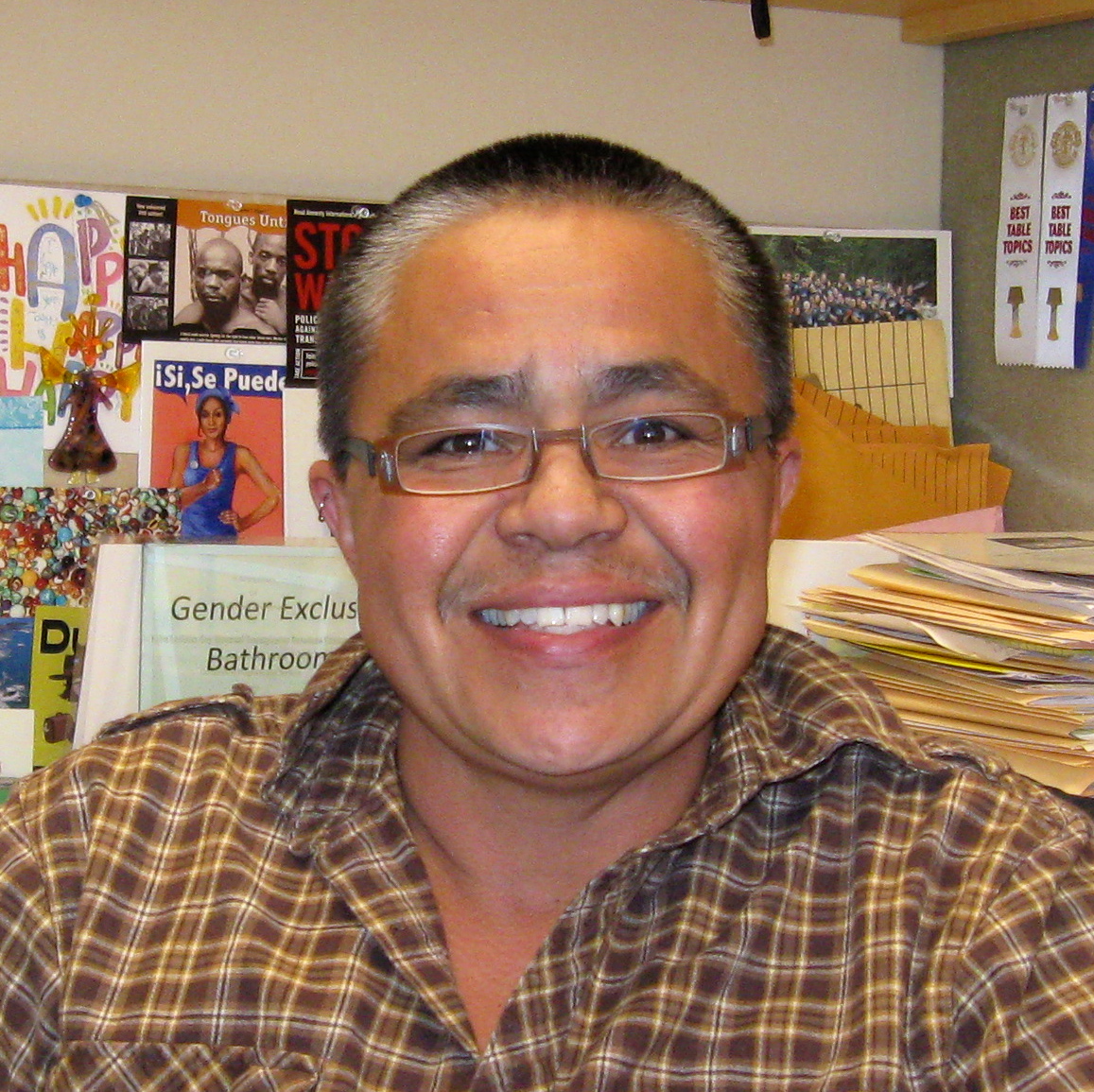
Kai Medina-Martínez became the director of the LGBT Resource Center in 2007.

Kai Medina-Martínez is the director of the U’s LGBT Resource Center, which provides information on LGBT issues as well as sensitivity training for allies.

Medina-Martínez, who prefers the gender-neutral pronoun “they,” equated the higher occurrence of bullying in the LGBT community to a societal stigma.

“Gay in our country is a bad thing,” they said. “Bullying is very much a concern in the LGBT community.”

Medina-Martínez said bullying is a problem for every group. However, they pointed out that in order to prove that bullying is a hate crime, a victim must demonstrate that sexual orientation was a factor. Medina-Martínez said in order to help stop bullying, society needs to be more aware and look for signs that include: loss of interest in school and school events, trouble sleeping and nightmares, declining grades and increased fighting in school.

“The secrecy around bullying keeps the cycle going,” Medina-Martinez said.

Fighting for Utah LGBT rights involves more than just marriage

Brandie Balken, executive director of Equality Utah, works in her office October of 2012 in downtown Salt Lake City.

Story and photo by JAKE GORDON

Fighting for equal rights in behalf of the lesbian, gay, bisexual and transgender community isn’t just about marriage — it is much more complex than that.

Brandie Balken, executive director for Equality Utah, expressed frustration that the public views gay marriage as the main issue.

“When we look at what the equality movement is and what our role in the equality movement is, we are really looking at the beginning of a person’s life all the way through the end of a person’s life,” Balken said in a talk to reporting students at the University of Utah on Sept. 13, 2012. “And I mention that because I think in the popular dialogue today, all we hear about is marriage and I have to tell you that there is so much more that needs to be done.”

The LGBT community has to fight hard for the same human rights that straight people generally take for granted. Rights like visiting loved ones in the hospital, transferring health and retirement benefits to a partner and being recognized as a non-biological parent are some things that Balken has had to fight for with the costly help of a lawyer.

“To secure access to your partner (in a hospital), even if you have been married in another state, you have to get a designated beneficiary contract and you need to establish a will and a trust if property is included,” Balken said. “My partner and I have spent literally almost $10,000 with our attorney preparing contracts to protect our home, to protect our life insurance investments and to protect as best we can our child to make sure that she is cared for.”

Tooele County Justice Court Judge John Mack Dow, who practiced law for 21 years prior to being named judge, talked about the differences between rights for straight and gay relationships.

“If there is a husband and a wife then the rights are transferred automatically in the relationship,” Dow said. “But if it is a homosexual partnership then they have to get the necessary paperwork and even that paperwork can be challenged in court by other family members.”

Balken has forked over the money to work with lawyers to become the medical decision-maker for her partner. When going on trips, Balken makes sure that she packs her paperwork and legal documents, just in case something does happen.

Niki Corpron, a registered nurse at Intermountain Healthcare hospital in Murray, said the hospital has strict policies regarding who can or can’t visit during an emergency.

“If someone is brought in by an ambulance and they have a homosexual partner then they aren’t allowed in to visit without the appropriate paperwork,” Corpron said. “If the partner doesn’t have their papers then they have to contact the family and receive permission from them.”

Balken is not only fighting for herself and her own family, but as executive director for Equality Utah she also is working for equitable rights for all in the state. Balken said Equality Utah was founded in 2001 as a political action committee, or PAC. The purpose of a PAC is to help people get elected into office. Equality Utah also fights legislation that seeks to disallow equal rights to gays.

She said that in the nation marriage is basically a state-by-state determination. Some states allow marriage, some states allow civil unions and some states, like Utah for one, prohibits any or all marriages or civil unions. Therefore, in Utah, equal rights are an uphill battle for Equality Utah and the LGBT community.

One piece of legislation Balken mentioned was a constitutional amendment that passed in 2004 penned by Rep. LaVar Christensen (R-Draper), which was called Amendment 3.

“This amendment to the constitution basically says marriage equality is prohibited, civil unions are prohibited, and any other contractual agreements with substantially equivalent benefits are prohibited,” Balken said. “That went before our legislature, was signed by our governor and put to the ballot in 2004 and more than two-thirds of the population of Utah approved that measure. So, currently in the state of Utah, marriage equality is banned in the constitution as are civil unions.”

Balken also knows that it takes multiple approaches to educate the public about equal rights.

“You have to educate the population about the issues, about the language, and about the implications of unequal policy,” she said. “You have to work with elected officials who are seated to understand the importance of equitable policy and to work with them to change that policy.”

Equality Utah works to get more fair-minded people in office, from the school board all the way up to the state house, to sustain achievable cultural change.

Although it is a long road to travel for equal rights, Equality Utah has had some success in passing some legislation. Balken said the organization passed in 2007 a bullying and hazing statute and a hate crimes prevention law.

“Those may seem like small things,” she said, “but . . . prevention of hate crimes or at least acknowledgement of hate crimes as well as prevention of bullying and hazing behaviors is crucially important.”

LGBT community pushes legislation for equal rights in Salt Lake City

Story and photo by MATT ELLIS

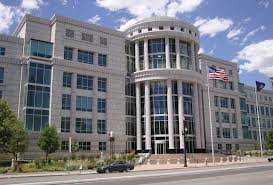
The Scott M. Matheson Courthouse is where the Utah Supreme Court meets.

It is no secret that people who are in the lesbian/gay/bisexual/transgender (LGBT) community may find life to be a lot more difficult on a day-to-day basis than those who are not. There are currently no laws against discrimination in the workplace and where they live. There is also a constant political battle as people who identify with the LGBT community fight for rights and protections many feel should be afforded to them as American citizens.

Though there seems to be growing support among the general public through most of Salt Lake City, people in the LGBT community are fighting an uphill battle in the court systems as they try to secure their liberties, such as the right to marry, the right to adopt children, and the right to be free of discrimination in the workplace.

Several organizations are involved in politics on behalf of the LGBT community, but little progress has been made relative to other, more progressive cities around the U.S. – such as San Francisco, where gender-reassignment surgery can be subsidized by the government.

So if the public opinion is shifting, why is it so hard to gain support in the political arena? Kai Medina-Martínez, director of the LGBT Resource Center at the University of Utah, summed it up simply.

“Gay, in our country, is not a good thing,” Medina-Martínez said. “It’s something to be ashamed of and be treated badly for.”

But in a study released in August 2012 by the Huffington Post and the Campus Pride Index, the U was declared to be one of the top-25 LGBT-friendly campuses in the nation. It seems, then, that the lack of widespread support for putting the LGBT community on an equal playing field probably goes deeper than just being gay or transgender.

“I think one of the first major obstacles is that any time you talk about protection and rights for LGBT it automatically means marriage,” said Brandie Balken, executive director of Equality Utah, in a phone interview. “There is not a lot of support for [gay] marriage in Utah among the population at large.”

That is due in large part to the presence of religious organizations, none more significant than the Church of Jesus Christ of Latter-day Saints. The LDS church holds firm that marriage should be between a man and a woman only. Given that many Christian sects share this belief and that America was founded on Christianity, this may help to explain why people are hesitant to show public displays of support.

Chad Christopher, a sophomore studying mass communication at the U and an openly gay student, said he supports legalizing gay marriage but he doesn’t think that it is totally necessary.

“It’s more about the benefits rather than the actual title of being married,” he said. “It’s about health benefits and just being able to really function as a family. If we can have all that, we don’t need the title.”

He said that unless things change over the next couple of years, he plans to leave Utah after graduation and settle in a place where he would be able to start a family, though he doesn’t know where yet.

But the struggle to legalize same-sex marriage is not the only legal battle the LGBT community is fighting. Every day, gay or transgender people are evicted from their homes or fired from their jobs simply because of the fact that they do not identify as a heterosexual male or female. Drew Call, a Salt Lake City man who worked for the LDS church, said in an interview with Salt Lake City Weekly that he is gay, but said he has never been sexually active with a man. In spite of that, he was fired from his job because of his friendship with other gay men.

Balken and Equality Utah, along with many other pro-LGBT organizations, hope that they can help our society progress to a point where things like gay friendships won’t matter.

Equality Utah is an organization that works to educate the public about the LGBT community and the issues it faces, as well as back political candidates who support the expansion of rights afforded to LGBT people.

“We’ve passed 25 pro-LGBT ordinances,” Balken said of EU’s work with local legislators. They include “fifteen [that] have to do with gender identity in housing and the workplace, four are to prevent bullying, and four others that are statewide statutes including a hate crime statute.”

She said Equality Utah plans to keep focusing on schools because bullies are targeting LGBT students. With students’ expanded use of social media websites such as Facebook and Twitter, Balken said it is much harder for students to escape the abuse and that her organization seeks to find a way to address that through legislation. Equality Utah was also able to pass a gatekeeper bill in March 2012, which mandates that teachers receive training on recognizing suicidal behavior in students and how to act accordingly.

Though she knows the road is not easy, Balken still has big plans for future legislative battles.

“Right now we are working on statewide legislation for housing and employment protection,” she said. “Further down the road we are looking at some sort of a contract package to make it easier [for LGBT people] to protect their homes, kind of like a will or trust.”

Such a package would allow unmarried same-sex couples to take advantage of many freedoms that are afforded to married couples, such as the ability to pass property on to their partner or make medical decisions on their behalf.

Balken said it might help the cause if there was a way to rally public support and try to get rid of the disconnect between popular opinion and that of the lawmakers, but she is not sure how that can be done.

“I would have addressed it by now,” Balken said, “I honestly don’t know.”

LGBT organizations continually work toward equality in Utah

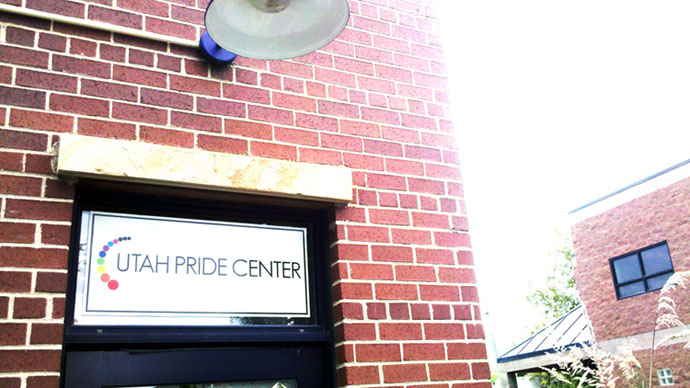
The Utah Pride Center, located at 361 N. 300 West, is an advocate for the LGBT community.

Story and photo by CHAD MOBLEY

Salt Lake City is seen through the eyes of the nation as a conservative and religiously centered metropolitan area whose dominant Mormon culture controls everything from lawmaking to media consumption. However, the population is ever changing and growing more diverse all the time. The lesbian, gay, bisexual and transgender community is one segment of the population with organizations in place to help balance the scales and promote equality among all citizens in Utah. Equality Utah and the Utah Pride Center went to bat for the LGBT community during a recent controversy and the leaders involved felt the outcome was positive.

In late August 2012, KSL refused to air the new NBC comedy, “The New Normal.” That decision caused a media firestorm and many in the LGBT community in Salt Lake City to take action. The issue was covered by news outlets across the country, including the Los Angeles Times, Huffington Post and CBS. When the story first broke, the Utah TV station was portrayed as regressive and bigoted.

Not only did this decision catch the attention of the national media, but enraged advocates for gay rights in America.

GLAAD President Hernon Graddick was quoted in a blog from the organization’s website: “Same-sex families are a beloved part of American television thanks to shows like ‘Modern Family,’ ‘Glee’ and ‘Grey’s Anatomy.’ While audiences, critics and advertisers have all supported LGBT stories, KSL is demonstrating how deeply out of touch it is with the rest of the country.”

Graddick continued, “We invite Jeff Simpson (CEO for Bonneville Media, KSL’s parent company) to sit down with GLAAD and local LGBT families. We know that if he would, he would see that not only are our families normal, but by citing ‘crude and rude’ content and refusing to affirm LGBT families, KSL and Mr. Simpson are sending a dangerous message to Utah. They should make that right.”

Five days after KSL’s decision not to air the program, the director of the Utah Pride Center, Valerie Larabee, along with Equality Utah director, Brandie Balken, her family and another same-sex family sat down for a roundtable discussion with KSL and Bonneville Media.

The organizations then released a joint statement on Aug. 29 regarding the decision to pull the show from the primetime lineup.

According to KSL, “It was helpful to talk together, to better understand issues, and to be able to discuss the reasons behind our decision to not air ‘The New Normal.’ This was not a decision we made lightly and it was not made because of any single issue including gay characters or LGBT families. … We care about and value all members of our community, including LGBT people and their families, and are grateful when there can be the type of cordial and respectful dialogue we have had today.”

Equality Utah and the Utah Pride Center added in the statement, “We had a great opportunity to talk about our families and our kids. We appreciated the opportunity to express our concerns, and to hear firsthand the reasons behind this decision. We accept their explanation that the decision to pull ‘The New Normal’ was not made lightly and it was not made because of any single issue including gay characters or LGBT families.”

After having seen the show, Balken and Larabee agreed with KSL’s decision.

“Having the LGBT presence in the show was important,” Balken said in a telephone interview. “However, more than or equally important to just being present is how we are portrayed. We want to be represented as who we really are.”

Larabee added, “Once we saw the first episode, we got it completely. I agreed with them. We think it is very poorly written.”

One member of the local LGBT community felt relief knowing that advocates are ready to fight for their rights.

“That really does show what they are doing and how effective they are,” said Shalise Mehew of Salt Lake City. “I totally agree, I wouldn’t want it on primetime either.”

After a heated controversy over what seemed to be an anti-gay decision, a simple dialogue  immediately alleviated concerns. A planned protest was cancelled, a joint statement was released and an understanding between two sides of the community was reached.

“It was the first step in helping to create trust between at least a segment of our community and the local media,” Larabee said.

The Utah Pride Center and Equality Utah continually monitor the media to correct any unfair reporting or disparaging portrayals of the LGBT community and its families. The two organizations maintain relationships with the media on a daily basis and they work with GLAAD when they have any major issues surrounding coverage or statements made by those in the media industry.

“Utah Pride Center and Equality Utah work tirelessly to promote tolerance and grow acceptance of LGBT people and families in Utah,” said Graddick of GLAAD on the website. “We are proud to be working with them.”

For the organizations, fighting for equality doesn’t stop with the media. One of their goals is to reach this same type of understanding between the LGBT community and the dominant religion.

“We are really invested in continuing conversations with LDS people,” Balken said. “We live in the same places, work in the same places and have kids in the same schools. Anytime people can and will sit down and really just be real with each other, it’s a great release and it’s positive.”

Valeria Moncada

MY STORIES:

MY BLOG:

When I first began reporting on the lesbian, gay, bisexual and transgender beat, I wasn’t sure how I felt about it. I hadn’t actually taken the time to get to know anyone who is lesbian or gay. Reporting on the topic helped me have an open mind towards the beat. Coming from a Catholic family with strong religious beliefs I always thought that the LGBT community would never affect me or be a part of my life.

At first I thought to myself, how am I going to do this?

Will I be able to report on the topic without adding my own opinion?

How will this benefit my career as a journalist?

As I began brainstorming my first article I wasn’t sure where I was going with it. I found sources and I wrote down some questions. As I conducted my interviews I realized that reporting on the LGBT community was better than I imagined. It opened my views towards people who are lesbian or gay and it helped me realize that they are just regular people who want to have equal rights.

I began my interview with a lesbian couple from Logan. As I interviewed them, I realized that they were just like any other couple I had met. They had life goals, a home, regular jobs, they were full time students — the only thing that was different was that they don’t have the opportunity to have equal rights, like any straight person in Utah does.

This made me want to learn more about the LGBT community, it made me want to participate in events and offer my help in any way that I could. Living with a person who is gay also helped open my views towards the beat. I loved that I had someone to directly go to to ask questions when I didn’t understand what someone said or what the issues were with receiving equal rights.

The fact that we had to report on only one beat was nice. I loved that I was able to do a follow-up story on one of the sources I had interviewed. I liked getting to know the new people, getting to know their environment and understanding their sexual orientation.

This beat helped improve my professional development as a journalist because it taught me not to judge people by their cover. It taught me that no matter what your sexual orientation may be, everyone should be treated equally and as a journalist it helped me understand the life of the source I was reporting about. I learned to report without choosing a side. I learned to look at both sides of the story.

I am very grateful for the opportunity I had. Being able to report for the LGBT community helped build me as a better person. I met multiple people who are some of the most interesting humans that I have met. To be honest, I would like to continue getting involved in the LGBT community. Reporting for them helped me realize that they do deserve equal rights and that something needs to be done.

ABOUT ME:

I attended Utah State University Eastern in Price, Utah, during 2010-2012, where I studied communications and took general courses. My original intent was to study cosmetology and after a year I realized that it wasn’t what I wanted, it was what my parents wanted. I enrolled in a media writing class where I was introduced to The Eagle newspaper and that is when I fell in love with journalism. I wrote many different articles, such as profiles, news, sports and on some occasions opinions.

I continued writing for The Eagle newspaper during those two years. My sophomore year I was chosen to be the features editor on the staff, where I became proficient in InDesign and Photoshop.

I transferred to the University of Utah in August 2012, where I continue working on my associate’s degree and began my communications major. My current writing is published on Voices of Utah.

My goals for the future are to continue my education until I receive my masters’ degree and pursue a career in broadcasting. I plan on leaning toward news broadcasting, although I am interested in sports broadcasting as well.

My dream job is to be a news anchor on the Hispanic channel, Univision. Growing up I always watched the women on the news and imagined myself in their position.

Journalism allows me to express myself in ways that I haven’t been able to before. I love being able to interview new people, learn about their lives, showcase them through photography and inform my audience about the subject.

Madeline Smith

MY STORIES:

MY BLOG:

Covering the lesbian, gay, bisexual and transgender beat this semester has opened my eyes to a variety of things. Through my outside story about housing, I stumbled across a unique focus of contrasting the University of Utah’s transgender housing policies with the rest of the Pac-12 schools listed in Campus Pride’s Top 25 LGBT-friendly universities. Once I finished this story, I realized how beneficial it is to be aware of all the different focuses a story can have.

This epiphany helped me choose an interesting angle for my Pride Week story on a unique group of drag queens in Salt Lake City. I initially intended to profile someone participating in the U’s Pride Week drag show, but as I got to know my source, my story blossomed into a larger picture. Not only was Tanner Crawford, also known as Klaus von Austerlitz, breaking the stereotype of a drag queen, but he was also part of a larger group of queens who shared the same non-traditional vision. The Bad Kids, as they call themselves, are breaking the stereotype that drag queens are all about glamorous makeup and high heels. I found that not only in my Pride Week story were stereotypes being broken, but most people in the gay community don’t fit into the preconceived notions people from outside of their community have imposed on them.

This supported my moral belief that the gay community is not a separate entity of our society. Instead, individuals are simply trying to live their lives day to day just as straight people try to do. The in-class interviews with Brandie Balken and Kai Medina-Martínez also reiterated the importance of acceptance because there is no difference between the gay and straight community but a minuscule detail of sexual expression and orientation.

Despite my strong beliefs, I found it relatively easy to remain objective when writing my stories. I used only the information my research and interviews gave me and was careful not to editorialize anything. This benefitted me as a journalist because I’ve practiced removing myself from the issues and only telling the story with the facts at hand. I am also familiar with how to steer clear of words or phrases that may infuse my opinions, and that will help me cover stories that may be about issues I don’t agree with. Journalism is about remaining unbiased, and I feel I have a good amount of experience to consistently uphold that value.

ABOUT ME:

I am a sophomore planning on graduating in 2014 with a bachelor of arts degree in mass communication.

I have been working at the Daily Utah Chronicle as a photographer since August 2011, specifically shooting sports photos. I have written stories for the Chronicle as well, ranging from a feature about Battle of the Bands to a profile of the Women’s Resource Center. My dream is to be a photojournalist where I can specialize in sports and band photography, and write some feature stories every now and again.

I love spending time in the mountains hiking and photographing nature and wildlife. Snowboarding, reading comic books and playing softball and guitar are some of my hobbies.

Ainsley Young

MY STORIES: 

MY BLOG:

My time in this class has been interesting. We were assigned the LGBT beat for our stories this semester, which I thought was an amazing gift from the gods of reporting.

That was the unofficial beat at the Daily Utah Chronicle, the student newspaper I write for. Each chance I got to report on and share stories from the LGBTQ+ community, I did little backflips in my mind.

However, after a short talk with my editor at the Chrony, I was told that I should refrain from covering LGBTQ+ stories, because I would insert small editorializing thoughts and implications into my stories.

In short, I was more than thrilled to be required to cover the LGBTQ+ community. But looking back on things, it could have been a double-edged sword. I never got to experience something I wasn’t familiar with and I was never forced to do research before starting a story. I already had several connections, so I never got practice in contacting sources for my stories.

The issues the LGBTQ+ community faces are often described as the new “big war,” and are compared with racial and sexual equality struggles over the history of our country. Through the years, media have been more and more involved with covering aspects of this community as they fight for equal rights and to have their voices heard.

That is the job of the media, especially to us reporters. We are, first and foremost, storytellers. It is our duty to share our experiences with the world from an objective standpoint. In a way, our responsibilities as journalists are very similar to a camera’s duty of taking a picture. We capture an event in its entirety and without any editorial input.

I have my own political beliefs and also my own ethical and moral compass. This beat intertwined very closely with those, as I was often talking to and working with people who shared my beliefs in certain aspects of the world and how it should work.

It was difficult to remain objective; I won’t lie about that fact. From a very early age, I was involved with and an ally to the LGBTQ+ community. The issues the LGBTQ+ community faces are very dear to me, and it’s hard to keep yourself unbiased when you’re involved with something you feel a great passion for.

A funny story about working this particular beat is from a conversation I had with my editor at the Chrony. She told me she noticed that I had a problem with objectivity when it came to the LGBTQ+ community. That was hard for me to hear, and I was even put on an unofficial probation (mostly at my request) from writing about this community. As I said earlier, this proved to be a double-edged sword when it came time to cover the LGBTQ+ community for this class. I dealt with my personal thoughts and feelings by having a lot of different people read my story and tell me if it sounded 100 percent objective, without any implications or subliminal messages.

I learned a lot about my career goals and myself this semester. Through an event unrelated to this class, I discovered that my dream of being a sports reporter wasn’t as golden as I thought it to be. I’d much rather be a reporter on a beat for crime or ethical/moral issues, to share stories of people who need their stories shared.

ABOUT ME:

When I first came to the University of Utah, I declared myself as a computer science student working toward a degree that emphasized on entertainment arts and engineering (video game design and computer animation).

It wasn’t until I got a job writing for the hockey club here (the Skatin’ Utes) that I decided journalism might be a better career path to follow. Once I got into that field, I totally fell in love. I loved being in the middle of something that was happening and being able to share with people my experience. I loved being a storyteller.

I don’t plan on graduating in the immediate future, as I’m only in my second year here. My ideal job is to be a reporter for the Boston Bruins hockey club in Boston, Massachusetts. If I work there, I would be more on the PR side, working closely with the team and coaches and putting out stories for the fans of the team.

If I don’t end up in that particular sports field, I would prefer to be doing beat writing for a local paper here, on any beat I can get. I’m on the lookout for internships and guest writing jobs.

Chad Mobley

MY STORIES :

MY BLOG:

I was covering a segment of the Salt Lake City population that I knew little about. The lesbian, gay, bisexual and transgender community is flourishing, more now than ever, within the confines of a religiously oppressive and overly conservative state. In order to discover the factors that contributed to this surprising actuality, I decided to immerse myself in the culture by attending events and talking to organization leaders within the LGBT community.

I started by telling friends what I was assigned to cover, and I’ve got some lesbian and gay friends. They gave me plenty of ideas for topics to cover, but most importantly, they directed me to a coffee shop downtown that is a safe haven for LGBT people to gather and interact. After looking into it, I found out that it was called Café Marmalade and its building also housed the Utah Pride Center.

With the task of coming up with my own story ideas, and being new to journalism altogether, I knew this would be the place to start my adventure.

I was nervous.

I navigated my way through unfamiliar territory, on the west side of downtown, to find Café Marmalade. With horrible experiences in downtown parking in the past, I pulled into an unmarked spot in the parking lot next to the building uncertainly. I got out of my car with almost no plan at all, and made my way toward the building, full of apprehension.

Little did I know, I was about to experience journalism in its truest form for the first time ever and I would love it. The butterflies in my stomach would disappear and I would suddenly know that I was meant for this.

When I walked into the LGBT coffee shop as a straight person, I could almost feel a hush fall over the room. Friendly baristas and a professional and courteous staff at the Utah Pride Center led me to the person I needed to talk to.

Valerie Larabee, the director of the Utah Pride Center, graciously sat down with me for my first ever one-on-one, in-person interview over coffee.

This was the first step on a path that exposed another side of the community that I never would have known without this beat. I connected with neighbors, friends and colleagues along the way. I wanted a better understanding of a segment of the community, and they wanted to be better understood.

The discovery of a mutually beneficial relationship between reporter and interviewee deepened my passion for journalism this semester.  I realized the importance and power of reporting the news and I will continue to wield it.

ABOUT ME:

I have always loved sports, and I have always been told that I have a talent for writing. Those things have led me to where I am today, pursuing journalism at the University of Utah. I’m focusing on sports because that’s my passion, but I’m writing about anything and everything that comes my way. In my brief career, I’ve already gained a wealth of worldly knowledge and become a more rounded individual. My passion for journalism continues to grow as I dive deeper and deeper into reporting. Working full time, studying full time and writing full time for the Daily Utah Chronicle combined to create a chaotic life lately, but I love the experience. If only I could still find time to ski.

Kimberley Mangun

MY STORIES:


MY BLOG:


ABOUT ME: