Gender Blender at University of Utah Pride Week

Story and photos by ADRIENNE PURDY

How would you feel if your job was in jeopardy based on your sexual orientation? How about if you were asked not to associate with your extended family because of perceived negative influences from your lifestyle? These issues and more were addressed at Gender Blender, an event put on by the Social Justice Advocates in correlation with the University of Utah Pride Week during the first week of October 2012.

This year’s Gender Blender showed a short movie from YouTube, titled “Transgender Basics – Gender Identity Project,” and concluded with a panel of four students self-identifying as members of the LGBT community who took questions from the audience. Lauryn Hansen of the Social Justice Advocates was in charge of the event held in the Petersen Heritage Center. The campus organization strives to create and promote a safe environment for everyone on campus. The Gender Blender event is a way to bring up conversations that otherwise would not happen.
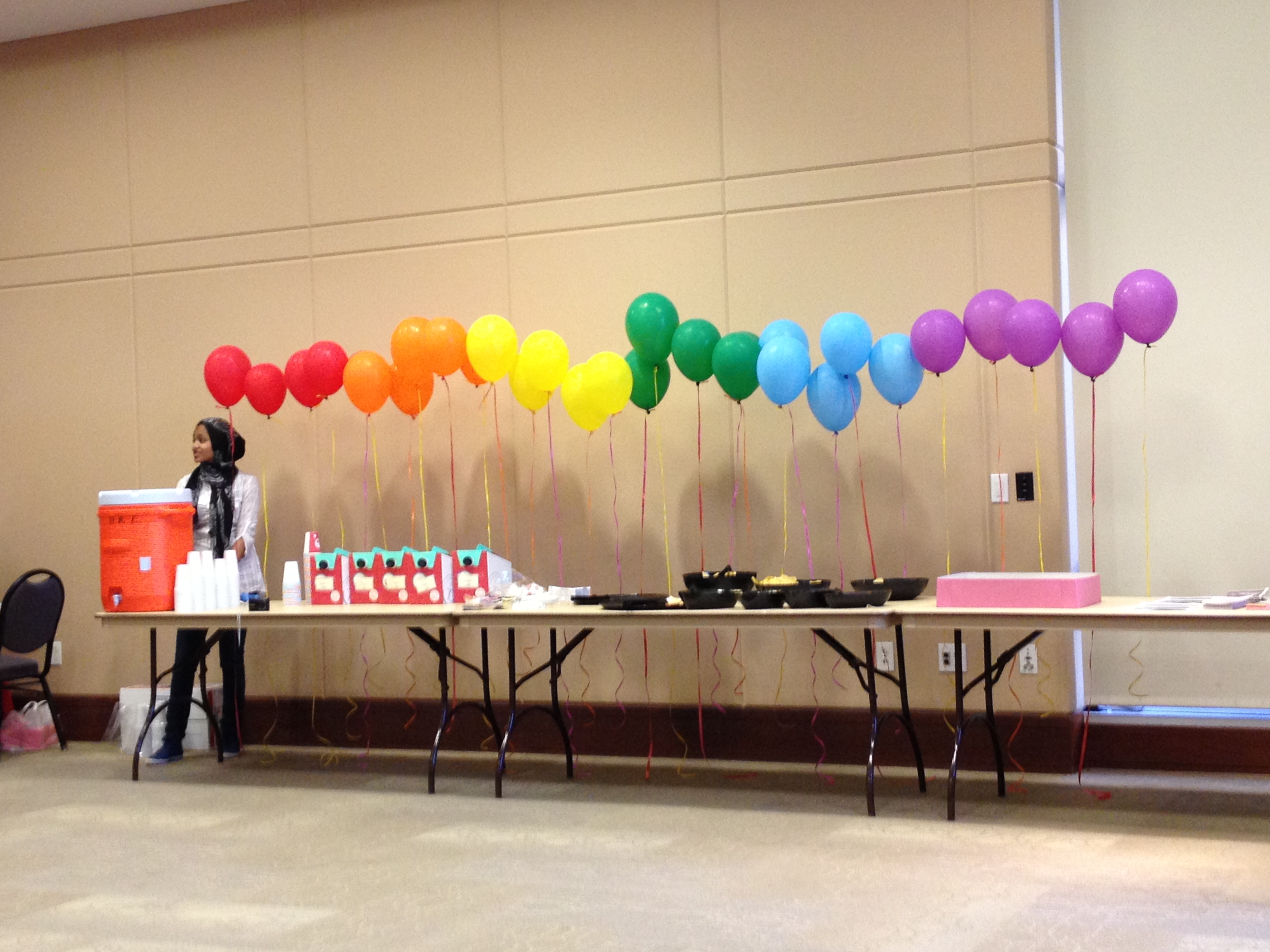
Decorations at the Gender Blender discussion at the University of Utah Pride Week.

The video highlighted three individuals with different identities: A transgender man or a woman living as a man, a transgender woman or a man living as a woman and a gender-queer individual or an individual who identifies as both a man and a woman.

The video showed some of the problems encountered by transgender individuals, such as gender expectations and the feeling of being forced to select a particular box, indicating that one must choose male or female and there is no other option.

A handout was given at the Gender Blender with a picture of a “Genderbread Person” showing gender identity, gender expression, biological sex and sexual orientation and making the differences between them easier to understand.

The Genderbread Person illustrates that gender identity is how you think about yourself in your head. It is the chemistry aspect and how you interpret what it means. This can range from woman to genderqueer to man.

Gender expression is how you demonstrate your gender based on how you act, dress and behave and can be expressed as feminine, androgynous and masculine.

Biological sex refers to the organs, hormones and chromosomes that you were born with that determine whether you are male or female. One can be born male or female, but one can also be born intersex, which is a biological combination of both the male and female sexes. When a child is born intersex — and depending on the type of intersex condition — surgery may be performed for social reasons rather than medical necessity.

Sexual orientation is who you are physically attracted to, which can range from heterosexual, bisexual and homosexual. Knowing the wide range of possibilities of identity, expression and orientation helps us understand why the problem of “boxing in” is so prevalent.

The four-person panel who fielded questions from the audience after the movie was comprised of Adrian Harrison, Kiko Cloward, Kai Medina-Martínez and Eduardo Galindo, who are students or faculty at the U. All panelists self-identified as members of the LGBT community. Different sexual orientations were represented on the panel, which enabled different points of view to be expressed and heard.

One question from the audience regarding how to ask about someone’s identity sparked different answers from the panel.

“The best way to learn is just to ask,” Cloward said.

Medina-Martínez countered: “I think the intention of needing to know is important. If it’s to honor someone or meet them there that’s great, otherwise does it really matter?”

Galindo said: “Ask respectfully instead of asking a loaded question.”

When asked about what it is like on campus for a member of the LGBT community, Galindo and Medina-Martínez told the audience about the initiative for an inclusive bathroom policy on campus.

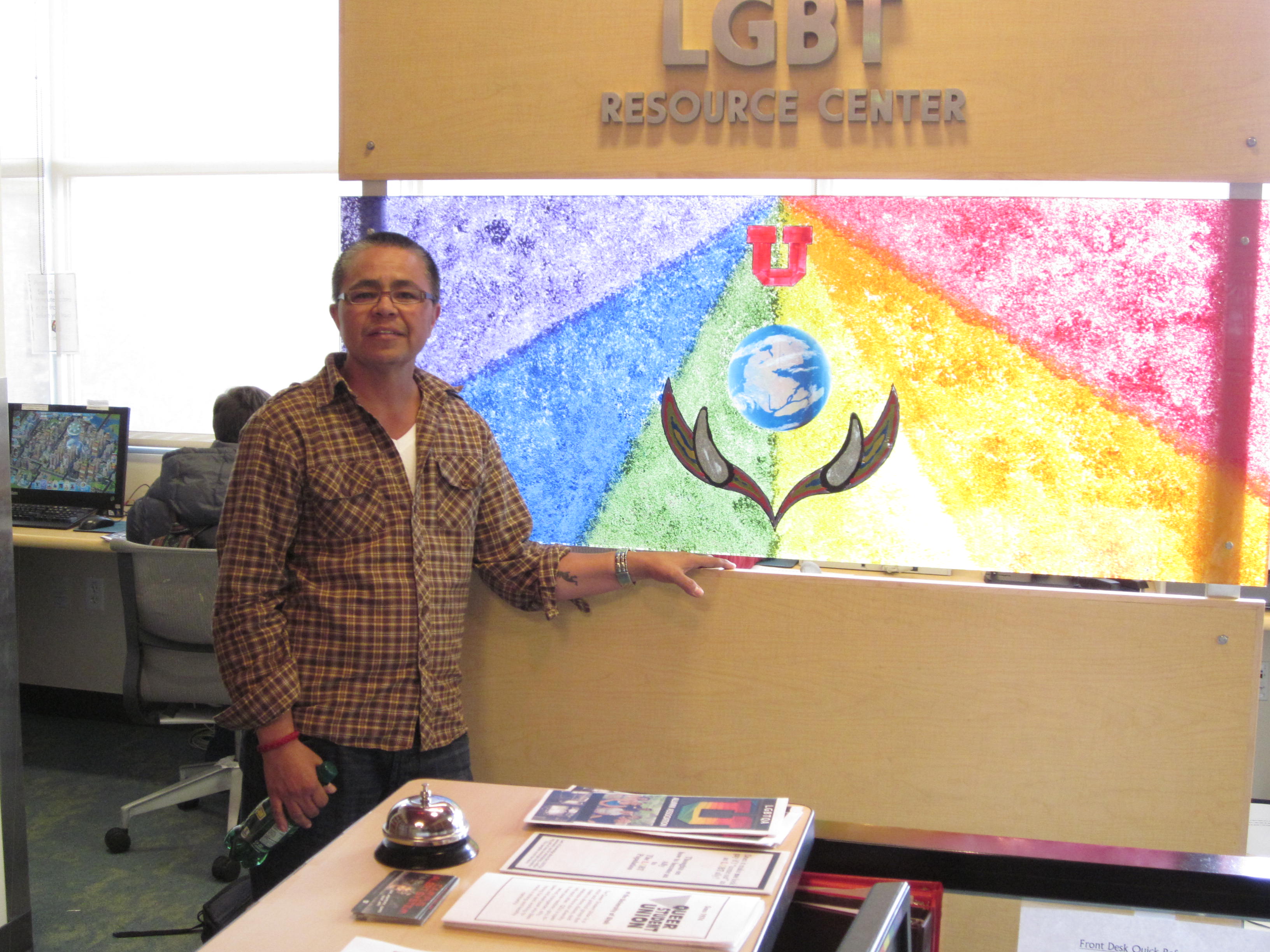
The LGBT Resource Center in the Union Building at the University of Utah.

Medina-Martínez, who is the director of the LGBT Resource Center on campus, said that where to go to the bathroom is something most people don’t even think about. But for a transgender individual it can be a big problem. Wanting to go to a restroom where one feels comfortable usually means going out of the way to find a single-stall bathroom. The LGBT Resource Center has compiled a list of these bathrooms.

The stigma that surrounds transgender individuals in society was a hot topic and attendees asked whether the same stigma exists in the LGBT community.

“There can be trans phobia in the LGBTQ community as well as the non LGBTQ community,” Galindo said. Transgender can still be a taboo subject even in communities who are very accepting.

A recurring theme among the panelists was the term cisgender, which means conforming to gender-based expectations. Medina-Martínez, who now identifies as gender fluid and uses the pronoun they, said they became very good at expressing hyper femininity at a younger age.

“People want to put me in boxes. I like the fluidity,” Medina-Martínez said.

Cloward, who now identifies as genderqueer, went through periods of expressing femininity and masculinity.

“I love some feminine activities no matter how I look and I love some masculine activities no matter how I look,” Cloward said.

As Lauryn Hansen of the Social Justice Advocates said, “We live in a world with seven billion people, each with our own uniqueness.”

Note: A new version of the “Genderbread Person” with a flowchart is now available.

Campus resources and policies make the University of Utah attractive for LGBT community

Story and photos by JAKE GORDON

With assets like the LGBT Resource Center and policies that really benefit all students, the University of Utah is one of the top schools in the nation when it comes to the lesbian, gay, bisexual and transgender community.

C. Kai Medina-Martínez stands in front of a mural inside the LGBT Resource Center at the University of Utah. Medina-Martínez is the center’s executive director.

C. Kai Medina-Martínez, executive director of the LGBT Resource Center, talked to journalism students in September 2012 at the university about the benefits of having the resource center.

The center, which is located in the Olpin Student Union, had a grand re-opening in October 2011 after moving into an office space of just under 1,000 square feet.

“There is a large lounging area that the students utilize,” Medina-Martínez said. “Right now we have four computers that students can use to do papers or study and we also allow students to do 10 free copies a day.”

Medina-Martínez, who prefers the pronoun “they,” said the resource center is a great resource to U students. The center also does a lot of education, including training and outreach.

“We do LGBT one-on-one training,” they said. “We also do our Safe Zone training, which is three hours. We talk about terminology and we talk about history.”

Being an ally, or “someone who advocates for and supports members of a community other than their own,” is talked about in the Safe Zone training as well as transgender training. Medina-Martínez said it is important to educate people on what transgender means and also the importance of having trans-inclusive policies in the classroom and on campus.

Valerie Velarde, who is the center’s Safe Zone coordinator, is one of the students responsible for the trainings, which she did during campus Pride Week in October 2012. Velarde said educating people about the LGBT community is helpful for everybody involved and that it can change the way people think.

“I would really like to bring home the fact (in Safe Zone training) that this is not an exclusive issue that affects only those with queer, or different than the hegemonic norm, identities,” Velarde said in an email interview. “We have an incredibly diverse campus with a multitude of ideologies and varying degrees of liberalism and conservatism floating about ­— which is a good thing.”

Safe Zone training is an educational class for everyone to better understand the lesbian, gay, bisexual and transgender community.

Both Velarde and Medina-Martínez talked about campus policies that benefit all students and not just the LGBT community.

One of those policies brought about by Medina-Martínez is located on the Campus Information System (CIS) under the student tag. Students can now list a preferred name that they will go by in classes.

That is important for individuals “who are going through some sort of transition,” they said. “They will change their name that is assigned to them at birth to match more of their identity.”

The sign for the LGBT Resource Center just outside the front door. The center is just one resource for the LGBT community that makes the University of Utah a desirable school to attend.

“These policies might start out to appear to be helping a certain group but they actually expand to help more than just that one group,” they said.

Medina-Martínez has also worked to make changes to buildings on campus, such as the campus recreational activities building (HPER).

Now, there is more privacy in the men’s shower area. “From what I hear from men, regardless if they are cisgender (opposite of transgender) or however they identify themselves, they want privacy in the shower,” Medina-Martínez said.

The policy changes that the U has made in an effort to accommodate all students has earned the university some recognition.

Campus Pride is a national nonprofit organization for student leaders and campus groups that are working to create a safer college environment for LGBT students. Campus Pride also has created an index, released in August 2012, for the purpose of helping a prospective student who identifies as lesbian, gay, bisexual or transgender to find a university that has policies in place to create a safe study environment.

According to the Campus Pride Index, the University of Utah scored the highest possible score of five stars as a prospective place for higher education for the LGBT community. The university scored perfect in the sub-categories of support and institutional commitment, academic life, student life, campus safety, counseling and health and recruitment and retention efforts. The only categories that the university fell short on was in policy inclusion and housing/residence life.

“Campus Pride is really the only resource out there for the prospective LGBT student to find out what college to go to,” said Jess McDonald in a telephone interview. “Being highly ranked says a lot about the campus and that they value LGBT students as much as any other student,” said McDonald, who is media, communications and programs manager for Campus Pride.

Medina-Martínez also talked about the U’s favorable rating.

“They (Campus Pride) rated the university based on their policies and procedures as one of the top-25 schools in the nation out of more than 300 schools,” Medina-Martínez said. “What it means is a really great thing for the university.”

University of Utah LGBT Resource Center breaks “out of the closet,” allowing for improvement, greater student outreach

Story and photos by RACHEL JACKSON

The expansion of the LGBT Resource Center at the University of Utah has enabled the center to provide more assistance for members of the LGBT community, as well as a judgment-free zone for all students to study.

The first LGBT center, which opened at the U in 2002, was housed in a cleaned-out utility closet in the A. Ray Olpin University Union. And now, 10 years later, the center has doubled in size, to nearly 1,000 square feet, thanks to the David Bohnett Foundation, an activist group from California, which gave the LGBT center a grant of $15,000.

“We broke out of the closet,” said Kai Medina-Martínez, LGBT Resource Center director. “Last year the space was expanded and we now have a larger area to work in.”

The sign that is featured in the LGBT Resource Center on the University of Utah campus. The center is located on the fourth floor of the Union building.

The center on the fourth floor of the Union also offers a larger lounging area for all students, including a printing center with computers that students are able to use with no cost to them.

Before the grand “re-opening” on Oct. 17, 2011, students had to meet in the library for advocacy groups and training classes. Now everyone who is interested has an exact place to go for information on LGBT issues and the staff has the chance to be more organized.

The resource center offers a variety of informational classes and training on LGBT issues, such as Safe Zone training, which is designed to educate participants about the LGBT community and how to stop discrimination.

“We make sure the policies of the university are inclusive of LGBT and other identities also,” Medina-Martínez said.

The policies that Medina-Martínez has been working on are important, because they focus on equality for all. This includes all students in general and specifically trans-gender or non-gender-conforming students who might be in a transition stage.

“One of those policy changes that occurred about a year ago … is any student regardless of how they identify can go on [the student system] and choose a preferred name,” Medina-Martínez said. This was a way to allow people who are going through a gender transition to be identified in class by a name that more appropriately matches the gender they wish to identify with.

Another top priority for Medina-Martínez is to have a place for transgender students and everyone in general to have private, single-stall bathrooms that they can access on campus.

The LGBT Resource Center website has a list of unisex and single-stall bathrooms that includes the areas on campus where the bathrooms are located and on what floors.

“So these policies even though they start out to be inclusive of a certain group, they actually expand to everybody to be able to utilize,” Medina-Martínez said.

In the College of Health building (HPR) on campus, some trans-identified students were unsure of where they could go on campus to shower. Medina-Martínez was able to have some shower curtains installed. This was for the benefit of the trans students, but also for students in general who prefer privacy.

On Aug. 21, 2012, the U was named one of the top 25 friendliest LGBT campuses in the nation by Campus Pride, a nonprofit organization striving for a safer environment for LGBT students all over the country.

The top schools were chosen based on data from the Campus Pride Index and rated on a 5-point scale according to policy inclusion, student life and academic life. The study included a total of 339 universities and colleges.

Even though the U excelled above several other schools in areas of policy and acceptance of LGBT students, Medina-Martínez said work still needs to be done in the area of gender-neutral housing on campus.

“Many of these things couldn’t have taken place in the small closet our office used to be,“ Valerie Velarde, a student worker at the center, said in an email. “This is a highly important place to come hang out in, gain community, or even do homework in comfortably.”

One way the center encourages community is by hosting an event called Fabulous Fridays once a week from 3 p.m. to 5 p.m. This brings people together to enjoy free food, play games and meet new people.

Brandon Vanschoiack feels at home in the LGBT Resource Center at the U.

The continual goal of the center is to create a place where students can meet peers with similar interests and experiences.

“It’s a great place to connect with others,” said Brandon Vanschoiack, a senior double-majoring in political science and philosophy.

Vanschoiack said he has been going to the resource center for a year since it has moved locations. He keeps coming back, because he feels a kinship with other students who visit and likes to share experiences “of feeling unwanted.”

Unwanted is something he never feels at the LGBT Resource Center.

“When you walk in there are no flashing lights that go off and say, ‘gay, gay, gay,'” Medina-Martínez said. “Anyone is welcome to come up.”

This type of environment is what the center has worked toward since its original opening in 2002.

Vanschoiack said, “It’s really a safe place I can go to be myself.”

Utah’s gay and lesbian parental rights

Story and photo by KOURTNEY COMPTON

Your worst fear is realized: your spouse and children have been involved in a horrific accident. In the emergency room you find your spouse on life support, and your children being wheeled into various ICU units.

As you rush to their side, an unstoppable force prevents you from walking in. This is not a force of nature or a force of man; it is a force of law and prejudice. For you are of a same-sex marriage and according to the law, you have no rights here.

This is the reality of Jessica Finnegan’s everyday life. She has been a caring parent and the financial provider for her family for the past 13 years. She paid for the expensive process of in vitro fertilization (IVF) using her brother as the donor, so she and her partner could have two children together. They both had children in prior relationships and together with these two new ones they face constant legal hardships.

Jessica Finnegan, center, Jasmyn, left, Jacquelyn, right.

“I have no rights, I have to lie and tell them I’m the babysitter or Katherine (her partner) to get medical care for my own children,” says Finnegan, who lives in Salt Lake City.

Luckily, she works for XO Communications, a company that offers equal health benefits for all domestic partners whether heterosexual or LGBT.

Many Utah companies are following suit. Intermountain Healthcare (IHC) has decided to extend health care benefits to both same-sex and opposite-sex domestic partnerships.

However, even with this progress, it is just a step toward equality, not a final resolution. This became evident once the employees discovered IHC would not be subsidizing the benefits of LGBT couples. Subsidized health insurance means that part or all of the premium is paid for with state or federal funds to ensure that low-income individuals have access to health care. This means they will likely pay anywhere from $100–$300 monthly more than a legally married couple.

“I commend Intermountain for taking the first small step in allowing access to benefits,” said Brandie Balken, executive director of Equality Utah. “We will continue to have conversations about equity in the way those benefits are applied.”

IHC is the third largest employer in Utah; the first and second are the government and the LDS Church. Neither of these extends healthcare benefits to same-sex partners.

According to the Corporate Equality Index, “57% of Fortune 500 companies offer healthcare benefits to same sex domestic partners.”

Healthcare is just one of the many aspects of life where members of the LGBT community face inequality.

In 2000, Utah adopted a law that prohibits anyone cohabiting with an unmarried partner from adopting or fostering children. Gay men and lesbians who live alone may adopt. One individual who asked not to be identified said, “To get around this law, many same-sex couples hide their lives together, pretending their partner is a renter or hiding them completely. We hung pictures of the LDS temples in our house when we knew they were going to come over and we changed all the pictures of us to pictures of just myself.”

In Utah, close to a third of all gay and lesbian couples living together are raising children. There are 2,900 children currently living in homes with two same-sex parents, according to a 2008 report, by The Williams Institute a national think tank at UCLA Law, dedicated to conducting rigorous, independent research on sexual orientation and gender identity law and public policy.

However, even though there are thousands of children living in same-sex parents homes, the children themselves may not have the same legal rights as opposite-sex married ones.

According to Gay & Lesbian Advocates & Defenders, New England’s leading legal rights organization, in the event of the parents’ death, their children may not receive Social Security survivor benefits. In the event of the legal parent’s death, the non-legal parent may not be able to win a custody hearing against biological relatives.

Not only do they face multiple difficulties in their union together, but in the event of a separation or “divorce,” the non-legal parent does not have any standing in court.

One LGBT couple here in Salt Lake City is currently in the midst of their partnership break up; they said it was primarily because of these inequalities. “Peter,” who asked that his real name not be used, said, “The top frustration of our marriage has been the extra hoops we have to jump through to gain just a fraction of the legal and financial protections that come automatically with a marriage license.”

In February 2008, the Salt Lake City Council unanimously approved an ordinance to create a citywide domestic-partnership registry, providing a mechanism by which employers can extend health care and other benefits to adult designees of their employees.

While Peter has not had to test the effectiveness of the Salt Lake City Registry with a hospital visitation, he and his partner have encountered other problems. He added, “Even though we have paid the thousands of dollars in legal fees and completed the registry to get the paperwork necessary, oftentimes companies choose to ignore the paperwork when it is presented. By the time we have obtained resolution legally, oftentimes the original crisis has passed.”

Peter also said he is frustrated by lawmakers. “The anxiety I feel every winter when the Utah legislature is in session, wondering what kind of hostile and nonsense laws they are going to try and pass.”

He said if he were given the power, the top thing he would change is to get government out of marriage altogether. He said he would start with the elimination of DOMA, the Defense of Marriage Act, enacted Sept. 21, 1996, as he feels it is unconstitutional and an overstep of federal and states rights.

Jessica Finnegan, whose partner was involved in the accident, said, “I have supported my family for over 13 years, I have paid for the house, the food we eat, the medical procedures to bear our children, yet I feel like a renter in my own home.  I have raised my children side-by-side with my partner, yet should anything happen to her, I have no rights to my own family.”

The difficulties of being LGBT in sports

A local high school football stadium has seen brighter days.

Story and photo by CARSON HUISKAMP

Many boys grow up hoping to become an All-Star like Lebron James or Aaron Rodgers.

Throwing the ball around with friends, they imagine they have just caught the game-winning pass at the Super Bowl, or made that buzzer-beating 3-pointer just before time ran out. Sprinting down their driveway in pure joy, they look around as the crowd around them screams and shouts their name in rejoice.

In a sense, every child is just like one another.

But when it comes to LGBT student-athletes, not every child is just like one another. And some members of the lesbian, gay, bisexual, and transgender community must examine the risks and dangers of coming out to the public, especially in sports.

“I think it’s just fear. Not knowing what they will be faced with, and especially not knowing themselves,” said Bernadette Bell, director of student services at Judge High School, located in Salt Lake City.

“I don’t even know any LGBT kids who play sports. But our school policy is they get to play like anyone else,” Bell said.

LGBT students face many more risks with coming out than just losing family or friends. Peer pressure from fellow classmates can have a lasting effect on LGBT kids and sway their decision about coming out in school.

A teacher at Rowland Hall who asked not to be identified said, “There was one time I walked by and a couple students made the comments ‘you’re just so gay’ to another student. I stopped them and said, ‘you think I’m a bad person?’ They just stood there. Walking by that stuff concerns me. You’re using the term so freely and people tend to just laugh that stuff off.”

Imagine a student who has a passion for sports but may possibly be shunned by other players or coaches because he or she is gay or lesbian. Imagine the possible tension in locker rooms from not-so-accepting teammates, or even opponents.

“I think in women’s sports and women’s fields of play, it’s not as bad,” the teacher said. “But in the male field, everyone feels they have to keep up that aura that ‘I’m masculine and physical and tough’ so they aren’t seen as weak to others.”

The fact is, sports and being gay don’t mix well. In fact, the two don’t mix at all. It wasn’t until 2007 that the first NBA player came out to the public well into his retirement. The NFL has not had a single active player in its entire history come out to the public about their sexual orientation either. And nearly every professional sport one hears about avoids the topic altogether.

When such little attention is given to the issue by the media, it’s no wonder kids are hesitant about coming out to their respective high school teams. When no professional player is willing to risk coming out to the public in fear of the ramifications, a child will likely be hesitant in their personal lives to come out as well. Professional athletes are role models for millions of kids, and yet many refuse to even talk about the issue of equality and LGBT communities.

“I think that you are so worried that you will lose your family, and peer pressure is so difficult,” the Rowland Hall teacher said. “In junior high, middle school, and high school, the peer pressure can just be so harmful.”

It is very rare to see openly LGBT kids in high school sports, mostly because of the threat of stereotypes and bullying.

“A guy who is gay doesn’t want to come out to others because they don’t want people to say they are not as strong,” the teacher added. “The same can be seen in the armed forces, you don’t want the assumption that you’re not strong enough in sports.”

Strong, tough, brave, confident. These are the messages boys and men are bombarded with on a daily basis.

“There is so much fear out there that people are afraid to be who they are,” the teacher said. “It has a long ways to go.”

The Salt Lake City LGBT community wants equal rights

Story and photo by VALERIA MONCADA

Many lesbian, gay, bisexual and transgender Utahns want equal rights. This does not only include equal marital status but also includes issues such as adoption, benefits, the protection of their children and the right to make choices for their partner.

Monica Martin, 22, and Hali Taylor, 23, have been dating for a year and living together in Logan for 10 months.

“Neither of us has been disowned or had our parents disappointed in us,” Martin said. “But my father was remarried this summer and he made it clear he didn’t want us introduced as a couple at his wedding because he didn’t want people focusing on us and our relationship rather than his marriage. In reality he was afraid that he would be judged as a father.”

Martin and Taylor have also encountered difficult situations where landlords did not want to rent them an apartment due to their sexual orientation.

“Renting an apartment was hard in a religious community,” Martin said. “Even though people are not supposed to discriminate, they do. We have had to be careful not to disclose our relationship to possible prospective landlords.”

When it comes to acceptance, some people are not as lucky as Martin and Taylor.

Berlin Schlegel, 20, who lives in Murray, did not have his family’s support during his coming-out process.

Berlin Schlegel, on the left, and Tadd Mecham are like any other couple: they enjoy reading together, hanging out and spending time with their dog.

“The biggest struggle I have had to overcome was the disapproval from my family,” Schlegel said. “My mom did not take my coming out well and it has since then created an ongoing conflict.”

Schlegel not only had to face family issues, but he also began to get cyberbullied.

“I would receive anonymous emails that said things like faggot, queer, homo, etc.,” he said. “There were not any instances that were very assertive, just a few offensive slurs here and there.”

In the lives of a gay or lesbian person there are more difficulties than just marriage. Equal rights, renting a place, buying a car and family situations all can be challenging.

Martin and Taylor have thought about these difficulties.

“Honestly marriage is the least of our worries,” Martin said. “I am more concerned about hospital rights, partnership rights, insurance, all the details that straight couples often take for granted. It scares me that one day I could end up in the hospital or Hali could and we would not be able to see one another without permission of an immediate family member.”

Others do worry more about equal marriage rights, such as Tadd Mecham, a student at the University of Utah.

“I am concerned that equal marriage rights will take longer than they should to become legally recognized nationwide it is already long overdue,” he said.

Mecham added, “If I want to get married it should not be a process of moving to another state. I should be able to get married and adopt if I want to. Also, it would be nice to be able to legally visit my partner if they were in a serious accident. Things like that should not fall under anyone else’s responsibilities.”

Martin worries about end-of-life issues. “If I die my wishes would be determined by my family who honestly has no clue what I want if such a thing were to happen,” she said.

“I would love to one day call Hali my wife, but if it cannot happen tomorrow or even five years from now that is OK, it doesn’t change how much I love her,” Martin said. “All we ask for is the ability to gain civil union rights.”

Sometimes there may not be any family members to decide what happens. Brandie Balken, the executive director of Equality Utah, recently related a story about friends of hers.

“Nikki and Ann had been together for 24 years, they had all of their paperwork put together,” she said. “Unfortunately Ann died of a heart attack. Nikki called the morgue and then went to pick up the body. She had every contract except Disposition of Remains.

“Ann’s parents were dead and she did not have any siblings, there was no one to give the body to because Nikki did not have that contract, Ann’s body goes to the state and Nikki does not have a say in what happens,” Balken added.

Despite all of the challenges the LGBT community faces, Martin stressed how ordinary their lives are.

“We are definitely normal,” Martin said. “We are best friends; we build forts like kids, have sushi dates and spend nights watching our favorite shows and doing homework together. And we could not be happier.”

Utah Pride Festival unites community

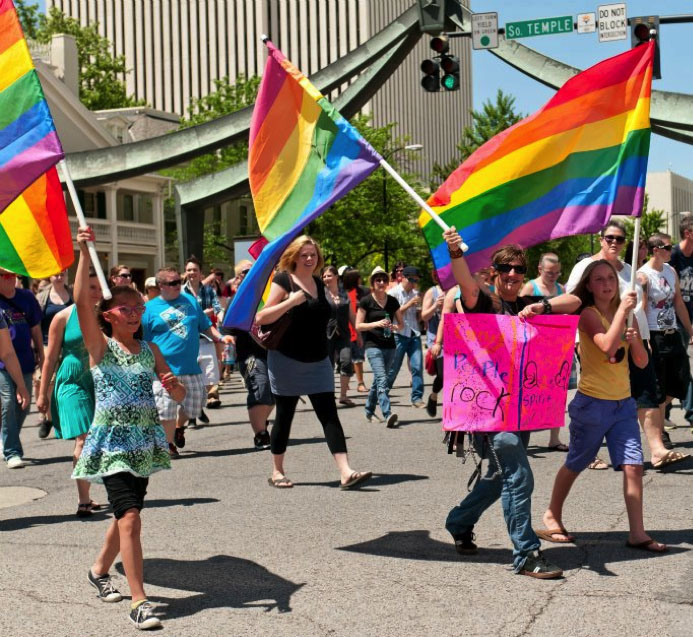
Participants in the annual Utah Pride Festival show their colors as they march holding rainbow flags. Photo courtesy of the Utah Pride Center.

Story by AINSLEY YOUNG

The Utah Pride Festival is a three-day event held each June that allows people of the LGBTQ+ community and their allies to come together to celebrate who they are and to show their true colors.

“People know they can attend the festival and are free to be who they are and they will see 20,000 other people also being free to be who they are. People will also find acceptance and love at the Pride Festival,” said Megan Risbon, executive assistant and volunteer program manager at the Utah Pride Center.

In 2012, there were around 23,000 attendees.

“I think people attend the Pride Festival for many reasons,” Risbon said. “Most people know they can see how diverse our community here in Utah really is at the Festival.”

Risbon said it’s important to attend the festival and make new friends and allies. One way to do this is by volunteering.

“This volunteer had recently come out and was afraid to attend his first Pride Festival without any friends or family. Even though he was hesitant, he signed up to volunteer for a three-hour shift. I assigned him to take tickets at the main gate for that one shift but he ended up working another shift for us that day,” Risbon said.

“After the festival, he emailed me and told me what a wonderful time he had volunteering. He had met so many people when taking tickets and it was a great experience for him. He stated that he was usually quite shy but decided to be super friendly and extroverted while volunteering and because of that, he made many new friends,” she said.

Bexi Lee, a volunteer at Ogden Outreach and the Utah Pride Center, said she has been to the Utah Pride Festival for the last three years in a row.

“It’s a weekend off from work, a chance to hang out with friends and an opportunity to join my community in voicing our needs and wants. Oh, it’s also the first sunburn of the summer,” she said.

Lee said in addition to the parade and shows, there is a lot of information on sexual health. The Utah Pride Festival is also where she discovered the organizations she’s a part of now.

“The more we continue to have the festival, the more opportunities we have to spread our message,” Lee said. “Those who have a different idea of how life should be lived would consider it a victory on their part if the festival was discontinued.”

Brenden Beery, who volunteered as parade monitor at the festival in 2012, said he goes to get more acquainted with the LGBTQ+ community.

“Being a gay male, I wanna know what’s going on in my demographic. It’s more than just a parade; they have political booths and other things like that,” he said.

The booths inform people about the human rights movement and goings on in the fight for marriage equality. There was also a booth from the U doing a study on same-gender attraction.

To Beery, knowing he isn’t the only one is comforting, and he finds that comfort at the Utah Pride Festival.

People attending the festival shows that they are proud of who they are, Beery said.

“It shows there is a generational shift in values regarding the LGBT community,” he said. “They welcome all aspects of human sexuality; it’s not so much a gay pride parade as an equality parade.”

Each year, the festival kicks off with the Grand Marshal Reception where the Utah Pride Center honors its Grand Marshal along with other award recipients.

Saturday’s festivities begin with a 5K run in the morning. Following the run are three simultaneous rallies and marches. The Interfaith Service, Gender Rally and Dyke Rally are held, followed by a joint march to the festival grounds.

When these groups reach the festival grounds, the opening ceremonies are held (national anthem, raising of the rainbow flag above the City/County Building) and the festival is officially opened.

The first few hours of Saturday’s events are set aside for family-friendly activities. Parents may bring their children for family-specific events (clowns, magicians, cotton candy, kid crafts, etc.). Saturday night finishes up with a dance party at the Main Stage.

Sunday begins with the annual Pride Parade. The 2012 festival marked the largest Pride Parade and the largest parade in the State of Utah with over 150 entries, Risbon said.

Also in 2012, the festival welcomed 300 active and faithful LDS members representing Mormons Building Bridges, along with allies and parents of LGBTQ+ people to march at the beginning of the Pride Parade. After the parade, the festival grounds open with music, speakers, vendor booths, bingo, karaoke and other activities being held from 11 a.m. to 7 p.m.

Equality for Utahns based on awareness

Story and photo by PAUL S. GRECO

Awareness is a compelling issue among the lesbian, gay, bisexual and transgender (LGBT) community. “Our biggest obstacle on Capitol Hill in Utah is awareness,” said Brandie Balken, Equality Utah’s executive director.

She said a lack of understanding regarding the rights of the state’s LGBT citizens daunts advocates. Envisioning a fair and just Utah is Equality Utah’s hope.

“Equality means all of us,” Balken said.

Equality Utah, located in downtown Salt Lake City, was established in 2001. It is the state’s largest civil rights organization for LGBT Utahns.

Max Green, a University of Utah alumnus, has been Equality Utah’s advocacy coordinator since December 2011.

Max Green with Equality Utah.

Green said he conducts citizen-lobbying and advocacy trainings to educate people about LGBT concerns. He alerts individuals to help make political changes that will bring equality to Utah’s LGBT community.

He said the primary goal of these trainings is to increase the number of supporters who will vote for more fair-minded officials.

Homelessness among LGBT youth

In 2008, UCLA’s Williams Institute used data gathered from the U.S. Census Bureau to estimate Utah’s LGB population at between 47,000 and 63,000.

In its mission statement, Equality Utah advocates to secure equal rights and protections for LGBT Utahns. Along these lines, Green addressed the concern of self-disclosure. He said there are safety factors involved. “It’s not necessarily safe for everyone to come out,” he said.

“There are people who are so admittedly against the LGBT community,” Green added, “that if it’s their child, they don’t know how they would react.”

He said many youth end up homeless when they come out to their parents.

According to the 2011 Comprehensive Report on Homelessness in Utah, “Sexual orientation is often cited in studies of homeless youth as one of the contributing factors in a youth’s reason for being expelled or running away from home. In the Utah survey, 29% of homeless youth were not heterosexual.”

This survey was conducted by the Volunteers of America Youth Drop-in Center, Salt Lake County Youth Services, the Utah Pride Center and Valley Mental Health. The report was based on youth aged 15 to 24.

LGBT youth and suicide

Another result of inequality and unfairness is suicide. As a member of Utah’s LGBT community, Green lost three close friends – in the course of junior high school through college.

“Not as a result of their sexuality, but their treatment because of their sexuality,” Green said.

According to a 2009 study by the American Academy of Pediatrics, “LGB young adults who reported higher levels of family rejection during adolescence [compared to heterosexual young adults] were 8.4 times more likely to report having attempted suicide, 5.9 times more likely to report high levels of depression.”

Bullying problems

Green said he not only wants Utahns to be aware of the LGBT concerns, but also for the LGBT community to be aware that change can and is happening.

In 2011, two Utah school districts, Salt Lake and Park City, passed an anti-bullying policy that includes sexual orientation. This is enforced among students as well as school employees.

Also involved in promoting equality for LGBT Utahns is the Human Rights Education Center of Utah (HREC), founded by Carla Kelley. She serves as HREC’s executive director and advocates against bias, bullying and discrimination of LGBT individuals.

“We have no right to dehumanize any human being,” Kelley said.

Kelley is not a member of the LGBT community; however, she is a single mother of three with one son who is openly gay.

Civic Ventures recognized Kelley as a social entrepreneur over 60. She also has received several acknowledgements for her humanity efforts. In 2009, Kelley was named Wasatch Woman of the Year by Wasatch Woman Magazine.

Kelley explained that it would be beneficial for individuals to check their biases and ask, “Why do I have these?”  Kelley said self-awareness of personal biases can help individuals better understand inequalities through association.

Equality Utah’s website details ways for individuals to get involved. Similarly, HREC has information on how to advocate for LGBT rights.

Max Green, with Equality Utah, said, “I believe that a better place to live is one where all of its citizens are respected, everyone has value, everyone has the same footing under the law. If society were changed slightly, not just for one group but for all of us, it would make a huge difference on the lives of kids growing up today.”

The University of Utah plans to update transgender housing policy

Story and photo by MADELINE SMITH

The University of Utah ranked as one of the top schools in the country for having an LGBT-friendly campus, according to Campus Pride’s “Top 25 LGBT-Friendly Colleges and Universities,” released on Aug. 21, 2012.

However, Kai Medina-Martínez, the director of the U’s LGBT Resource Center who uses the pronoun they, said the U received a low rating for its housing policy. They said the U doesn’t allow students to self-select a roommate of the opposite sex.

Medina-Martínez said in a telephone interview that the Center collaborates with Housing and Residential Education on inclusive policies in housing.

“We let students know how to contact housing and find safe and comfortable living arrangements,” they said.

The U’s current policy accommodates transgender, genderqueer and gender variant students in finding comfortable on-campus housing through a confidential application process.

According to the Housing and Residential Education website, possible accommodations include allowing the student to live with a preferred roommate, live in a super single room, or live in one of the communities that have shared rooms and a unisex bathroom.

Andrew Kahrs is a housing specialist with Housing and Residential Education at the U. With regards to transgender students, Kahrs said in a phone interview that they work with students on a case-by-case basis to find appropriate housing.

Kahrs said Campus Information Services (CIS) recognizes students by their birth gender, and the U only offers single-gender suites.

“A student can request to be identified as female although CIS says male, and if they have already transitioned, they can live with other females,” Kahrs said.

Kahrs said all of the resident advisors, resident advisor supervisors and live-in supervisors in the residence halls are trained by the Utah Pride Center, located off campus at 361 N. 300 W.

“We train our staff to be aware, and there are resident advisors on every floor to make sure all students’ needs are met,” Kahrs said.

The U’s housing office and the LGBT Resource Center are working on a more simplistic process for transgender students to get into appropriate housing, Kahrs said.

A possible change to general housing applications would be asking students if they would be comfortable living with an LGBT student, Kahrs said.

“Times are changing and people are more open,” he said.

By including a web page on the Housing and Residential Education website specifically for students to see transgender housing options, Kahrs said it’s easier for potential students to see that the U has multiple housing options and it could help students choose to attend the U.

LGBT Housing at Other Pac-12 Universities

The U was among four other Pac-12 schools listed in Campus Pride’s “Top 25 LGBT-Friendly Colleges and Universities.” According to Campus Pride, University of California, Berkeley; University of Oregon; University of Washington; and Stanford University are also lesbian, gay, bisexual and transgender-friendly campuses.

The University of Oregon has a Gender Equity Hall that is open to any student identifying as LGBT. It’s located on one floor of Carson Hall, a residence hall on Oregon’s campus. According to Oregon’s housing website, this option is also open to intersex students, or those who don’t want to be identified by any gender, and students who are more comfortable living with members of the opposite sex are able to live here. It has gender-neutral bathrooms in every wing.

The University of California, Berkeley, offers mixed-gender room assignments in the Unity House, which is a theme program. Theme programs are residential communities sponsored by an academic department. According to the website, “The Unity House Theme Program is unique to Berkeley and is a pioneer in its focus on gender and sexuality…”

Similar to Oregon’s housing policies, Stanford University has gender-neutral and gender-inclusive housing in buildings that offer additional privacy in restrooms and showering areas, according to the student housing website. Transgender students can choose to find their own roommate and live in the gender-neutral housing, or apply for housing through a confidential process. They are only asked as much information as needed to place them in the appropriate housing arrangement.

Like the U, The University of Washington allows students to request their own roommate. According to the housing web page, roommates are assigned based on the “gender marker as it appears in the UW Student Database and cannot assign opposite sexes to the same room or apartment.” However, gender-neutral housing is available.

On-campus Housing at the U

According to the U’s website, students can choose their roommate, live in a super single room with their own bedroom and bathroom or in a community of single rooms with a shared unisex bathroom.

Chapel Glen and Sage Point residence halls are the only two buildings that offer super single bedrooms, which are more expensive, Kahrs said. Super single rooms and single deluxe rooms run for $4,322 per academic year, according to Housing and Residential Education’s website.

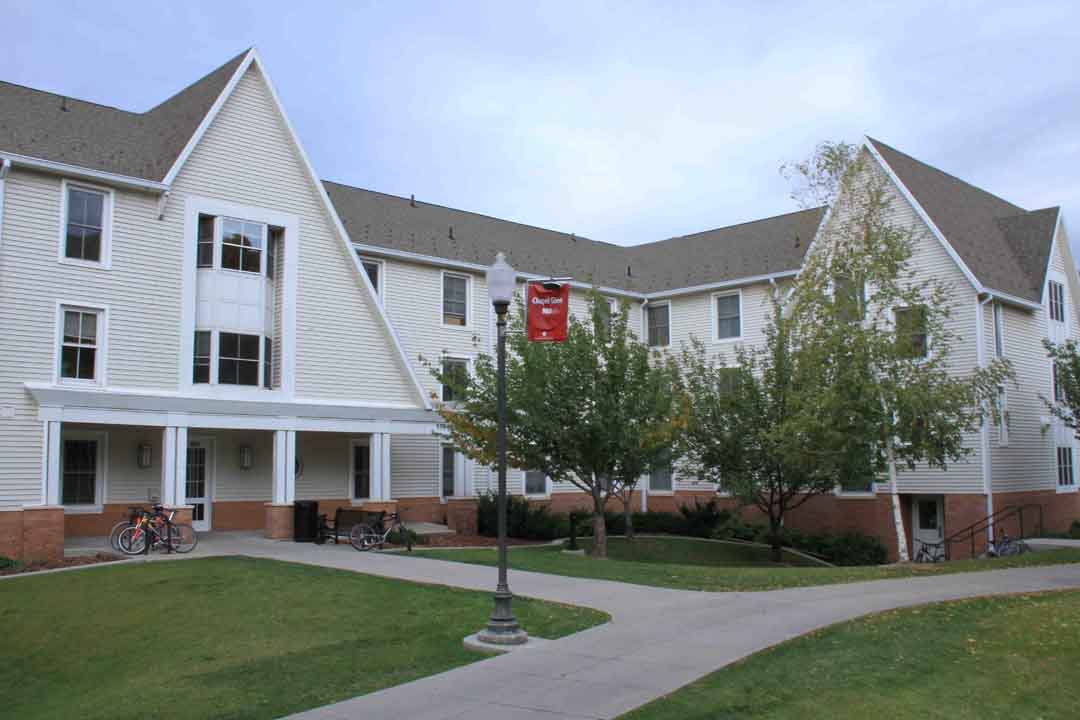
Chapel Glen is one of the residence halls at the U that offers super single rooms.

“Students who are nervous about living with other students often choose the super single,” Karhs said. He added that there’s a possibility that similar spaces to the super single could be built in the future if there were to be an increase in students living on campus.

The Alliance House is another on-campus housing option that is open to anyone with an academic interest in living and learning, and it celebrates diversity. “It’s not just for LGBT students,” Kahrs said.

According to the Community Diversity web page, “[The Alliance House] is a safe place where the things that make us unique are shared and explored.”

Kahrs said, “Most students want to live with someone else, regardless of how they identify.”

Raising awareness helps reduce the number of homeless LGBT youth

Story and photo by RACHEL JACKSON

Awareness is the first step toward acceptance.

One of the most important ways to help homeless youth of the LGBT (lesbian, gay, bisexual and transgender) community is through awareness and this is one of the top priorities among LGBT centers in Salt Lake City.

The Utah Pride Center has a youth activities program called TINT (Tolerant Intelligent Network of Teens), which is a vital part of the center. It provides a safe haven for youth ages 14 to 20 — regardless of race, gender or sexual orientation.

The TINT center

The TINT center is part of the Utah Pride Center and is located in the Marmalade district of downtown Salt Lake City.

“We see a high level of family rejection at TINT, if they were accepted it wouldn’t be such a big issue,” said Danielle Watters, director of community support and wellness services at the Utah Pride Center.

Youth can stop in to chat with the volunteers or fellow young people during the designated drop-in times. The open times are typically from 2 to 3 p.m. on weekdays and 6 to 8 p.m. on Saturdays.

The TINT program stresses that it is not just a gay group for youth — the main goal is to give kids a safe place to hang out.

Along with a pool table, a library and video games, TINT offers support groups for youth who are in need of someone who will just listen.

“A physical place where youth can feel safe is really important,” Watters said. “It can be scary for them [to be homeless]. They need a place where they can access basic needs.”

Jaaycob Okumura sought help two years ago from TINT when he was coming out as gay.

“The TINT [center] has helped me by giving me a safe space to grow and learn who I am,” Okumura said in an email. He is now the coordinator for the Queer and Straight Alliance at the Utah Pride Center.

Watters said a young member of the LGBT community can become homeless in several different ways. Family rejection is the most prevalent type; the next most common form is when LGBT students move here for various reasons and have nowhere else to turn after their funds fall short.

Social acceptance also plays a big role in homelessness. Watters said some youth are fired from their jobs because they are LGBT. Then they have trouble getting a new one.

The TINT center also has a program that allows homeless or non-homeless youth to always have a place to eat. According to its website, the center’s motto is, “If the TINT is open, soup’s on!”

Soup isn’t the only thing the TINT center dishes up. The program serves an educational meeting every Saturday to educate LGBT youth on HIV.

The program is called Rise! and its goal is to end HIV in the community. It has a commitment to inspire queer youth to make a change, with the idea in mind that HIV impacts everyone. According to the Rise! website, it takes an effort from all to make the ending of HIV a reality.

It takes a “responsibility of educated community members,” said Brandie Balken, executive director of Equality Utah. “That’s how we build a better community.”

Equality Utah continues to work on implementing laws and informing Utahns in order to reach a point where LGBT members are recognized as a part of the community.

“It’s a top priority to gain visibility and awareness,” Balken said. Equality Utah strives for change and bringing to light the problem of having unequal policy.

Equality Utah has a petition on its website that people can sign. The petition will abolish the law that protects employers from firing a person for being LGBT or being uncomfortable with an employee’s sexual orientation.

According to the Equality Utah website, the No. 1 issue for the LGBT community is “securing measures that prohibit discrimination based on sexual orientation, gender identity and gender expression in employment, housing, public accommodation, education and extension of credit.”

Equality Utah and the Pride Center are both striving for LGBT equal rights and fair treatment for all people.

Another non-discriminative resource for youth is the Homeless Youth Resource Center in Salt Lake City. It is run by the Volunteers of America organization. The center, located at 655 S. State St., also has a drop-in time when youth can stop in for basic needs such as showering and doing laundry.

Last year, 1,047 youth were helped through the programs offered there. The programs include street outreach, drop-in center and a transition home.

Through all of these different resources, youth have a chance to feel safe, know they are not alone and talk to someone who has experience.

“Though I have never been a homeless youth, [TINT] has still been a safe haven for me whenever I have needed it,” Okumura said in an email. “[And it] has given me the opportunity to learn life skills.”