Misrepresentation in media portrayal of the LGBT community

Story and slideshow by Adrienne Purdy

See a slideshow of media misrepresentation of gays and lesbians.

Our lives include so much media and television that we often take in what we see without question. But should we? Are groups being represented accurately? Or do the media depict stereotypical images of Asians, African Americans, women and lesbians and gays?

For instance, “Modern Family” is a multi-award-winning TV show that features a media stereotypical gay couple: two middle age white, upper class, extremely flamboyant men who are trying to adopt. But is that how all or even most gay couples are? Or are a wide variety of lifestyles represented?

From Ellen DeGeneres, one of the first high-profile celebrities to come out in 1997, to the many entertainers who have done so in 2012, Hollywood is showing that coming out does not have to include the fanfare of magazine covers and daytime talk shows. For instance, Jim Parsons became one of the first gay men to allow a reporter out them in a story.

In a New York Times profile, the key sentence does not come until more than three quarters of the way through the two-page article: “The Normal Heart resonated with him on a few levels: Mr. Parsons is gay and in a 10-year-relationship and working with an ensemble again onstage was like nourishment, he said.”

Other actors are working to defy stereotypes of gay men. For example, Matt Bomer plays Neal Caffrey in “White Collar”, a white-collar criminal who helps the FBI catch other criminals. He also plays a stripper in the hit “Magic Mike.” Bomer shows that the stereotypical image of a gay man is not only incorrect most of the time, but not important.

Dave Kirtley, who identifies as straight, says, “Celebrities have definitely paved the way for coming out of the closet. Ellen DeGeneres paved the way. Rosie O’Donnell paved the way. ‘Will and Grace’ is huge for the gay community. The LOGO station for gays and lesbians, I mean, they even have their own TV channel.”

But what about celebrities who are the subject of rumors about coming out but will neither confirm nor deny them?

Entertainment Weekly reported, “The media are becoming less tolerant of celebrities they believe to be unforthcoming about their sexual orientation.”

Actors who are openly gay are also showing that coming out in no way hurts their career. Take Chris Colfer, for example, one of the youngest openly gay actors in Hollywood. Stemming from his success on “Glee as one of the only gay kids at the fictional McKinley High School, he is now releasing a new movie that he has written, executive produced and starred in.

Some may say that coming out can hurt an actor’s career. But, as Entertainment Weekly’s Matt Harris wrote, “If your greatest ambition is to be the star of a series of Nicholas Sparks-style sincerity-in-the-rain romantic melodramas, being an out gay man is still probably going to be a handicap. Could an openly gay actor, for example, have gotten cast in Channing Tatum’s role in ‘The Vow’? It’s doubtful. On the other hand, could an openly gay actor have gotten Channing Tatum’s role in ’21 Jump Street’? Absolutely.”

Does this speak to the stereotypes the media portray? If an out gay man can convincingly portray a heterosexual romantic lead better than a straight man, shouldn’t he get the role?

These boundaries and barriers may take some time to break down.

Kristina Spainhower is a UPS driver. Her handle was “Wild Child” until she turned 40, and then she shortened it to “Wild.”

Her partner, Wendy Judson, is a critical care nurse who also happens to be a movie aficionado.

“We vote, we pay taxes, we have jobs, we come home to pets, we donate to charities,” Judson says. “We are just like anyone else. We’re no different.”

Spainhower says that most media portray gays and lesbians in a stereotypical and often-times biased light.

One TV series that Spainhower believes shows situations accurately is “The L Word.”

“The L Word” was a TV series that ran from 2004-2009 about the lives of a group of close-knit lesbians and their interactions with friends and family members with differing opinions about their orientation.

“It’s pretty close to life,” Spainhower says. “The family situations and interactions are very good as well. It’s not something that’s talked about a lot on channels 2, 4 or 5 or in the news or mainstream media.”

Others, like Kirtley, feel that the family situations in “Modern Family” aren’t true to life. “I think that Cam and Mitch [the gay couple] are the quintessential stereotype, and since ‘Modern Family’ is such a successful show and has such a large viewership some people who may not know many gay couples may get the idea that all gay couples are like them which isn’t true,” Kirtley says. “I think Hollywood and the media in general need to portray gay couples, and lesbian couples for that matter, more accurately and with more diversity.”

Jacob Stokes feels that although “Modern Family” does a good job portraying one kind of relationship, it is not the standard of every gay relationship. Stokes, who identifies as gay, says, “As with any culture, you have people on either end of the spectrum and everywhere in between. There certainly are gay couples consisting of flamboyant men who want to adopt children. There are conservative couples whom many would not believe to be gay except for the fact that they like other men. Some men want children, others do not. I think Modern Family has done a good job at portraying one type of couple, but it certainly does not extend to every gay man or relationship,” he said in an email interview.

Spainhower says that neither lesbian nor gay couples are portrayed enough in the media, let alone accurately. She also feels that two women together are more accepted in media and culture than two men are.

Stokes says, “I think that widespread stereotypes take a lot of work and time to change. Just as stereotypes about African Americans or any other historical minorities still linger it will certainly take time for people to regard homosexuality without discrimination or prejudice.”

Affirmation helps gay and lesbian Mormons reconcile faith and attractions

Story and slideshow by JAKE GORDON

Take a photographic tour of this story!

In many opinions, society as a whole is slowly becoming more accepting of the lesbian, gay, bisexual and transgender community. Organized religion, however, is almost the complete opposite. Most religions do not accept gays and lesbians, and often opposes them in many of their actions.

The problem is, many inside the LGBT community still hold on to their religion beliefs that they grew up with. Affirmation is a national not-for-profit organization with a chapter in Salt Lake City that helps provide much-needed support and belonging for gay and lesbian Mormons.

Affirmation President Joshua Howard Behn expresses the importance of having the group for gays and lesbians who still feel the need for their spiritual side.

“Affirmation essentially is a group that provides a safe place for those that are trying to reconcile their faith with their orientation and that is within the context of the LDS Mormon faith or heritage,” Behn said while sitting down for an interview in front of Café Marmalade in Salt Lake City. “For those who are just coming out, it gives them a place to talk to people who have been there and done that. It also gives them a safe environment where they can ask questions and not have to worry about the faith itself, because that can come later.”

Behn said there are other resources for the gay and lesbian community in Salt Lake City, but they are broader in scope. Affirmation specifically helps gay and lesbian Mormons with the spiritual aspect.

“We understand our people and we can speak the language,” Behn said. “When you are talking to somebody that is having a very difficult time, it helps to hear from somebody who relates to you directly and knows your story.”

The history of Affirmation goes as far back as 1977, when a group of gay Mormons quietly met at Brigham Young University in Provo, Utah, talk about faith and their same-sex attractions. Matthew Price was at those first meetings and became enthused at the idea of a national organization of gay LDS people. Although it hit its fair share of speed bumps of not being able to meet regularly, the meeting in December 1979 marked the real beginning of Affirmation as a national organization.

Currently, 11 regional chapters of Affirmation exist in the United States and the first official chapters started in Los Angeles and San Francisco.

As the president of Affirmation for 2012, Behn admits that the group has hit a crossroads after nearly 35 years of existence.

“Historically, we have tried to have a big tent model where we don’t care if you are in the church, we try to maintain everybody,” Behn said. “But now, there are needs that really aren’t being met because things are changing. The church is becoming more open.”

The crossroads of the organization is its struggle to define itself.

“There are those in the group that still want their faith very much and so it comes down to whether to define for those that want their faith or do we define it for all,” Behn said. “Personally, I don’t think that we can’t be everything to everybody as a group because we don’t have the resources for that.”

Chapter members range in age from 18 to 60-plus.

The group informally gets together as a chapter, but Affirmation also has national parties and events that all members are encouraged to attend.

Behn has noticed that church membership is changing more toward acceptance far more drastically than the leadership is. Those living in a ward would be hard-pressed not to find a family that currently doesn’t have a member that is either gay, lesbian, bisexual or transgender, he said. A ward is a neighborhood of church members who meet together for worship.

Mark Packer, who has been a member of Affirmation since he came out in 1991, has found comfort in the group. He was introduced to Affirmation that year by his partner. Packer at first was admittedly scared out of his mind to socialize with a group of gay and lesbian Mormons.

“I have a lot of friends in Affirmation,” Packer said during an interview at the Salt Lake City Library. “Early on, it was critical for me because I was early in my coming-out stages. To hear other peoples stories and to hear what they have gone through and what they are going through helped me to be able to survive at the time.”

Packer admitted that he thought occasionally about suicide during the coming-out process. He said it is also helpful to tell his story to fellow members, and he likes to be there for others who are coming out and need the same support that he received.

“It’s the old thing where I had a position in the church,” Packer said. “I had a wife and I had kids and at first I was scared to be found out. I was just scared of other gay guys.”

Before coming out, Packer was heavily involved in The Church of Jesus Christ of Latter-day Saints and even held callings of elder’s quorum president and ward executive secretary, both of which are responsible leadership positions.

“Looking back now I chuckle because it was complete chaos for a while and very unpleasant,” Packer said about his active life in the church.

Packer said he hasn’t attended church services since 2010, but he hasn’t really left the church.

“I was excommunicated (stripped of membership) in 1999,” Packer said. “The way I look at it is the church left me because that was not something I was looking to do.”

One of the last times Packer attended church was in November 2010, when he came out in front of his ward in fast and testimony meeting, where members share their spiritual feelings.

“I didn’t think it would cause trouble but it did,” Packer said. “I just felt like I needed to do it. It caused trouble with the leadership, not with the ward members.”

Like Behn, Packer has noted more willingness among younger Mormons to accept gays and lesbians. However, the church leadership is much slower when it comes to accepting gays and lesbians.

The Church of Jesus Christ of Latter-day Saints has been firm on its position of what marriage is and who is supposed to get married. As part of a message given in the General Relief Society Meeting in September 1995 titled, “Family, A Proclamation to the World,” Gordon B. Hinckley, who was president of the church, said, “The Family is ordained of God. Marriage between man and woman is essential to His eternal plan. Children are entitled to birth within the bonds of matrimony, and to be reared by a father and a mother who honor marital vows with complete fidelity.”

Utah voters mirrored this sentiment in 2004 with the passing of Amendment 3, a same-sex marriage ban.

Two years later, Dallin H. Oaks, a member of the Quorum of the 12 Apostles, shared his thoughts of the homosexual lifestyle in a press release.

“This is much bigger than just a question of whether or not society should be more tolerant of the homosexual lifestyle,” Oaks said. “This is more than a social issue – ultimately it may be a test of our most basic religious freedoms to teach what we know our Father in Heaven wants us to teach.”

Scott Trotter, media spokesman for The Church of Jesus Christ of Latter-day Saints, declined an interview request for this story.

Behn and Packer do hope for change in the church, but both men know that change won’t come swiftly.

Affirmation President Behn knows that members in the church hold a lot of power for change inside and outside the church as well.

“Once the membership is ready for it to change on a massive scale, then the leadership will be ready,” Behn said.

When it comes to the University of Utah, pride has no borders

Story by VALERIA MONCADA
Photo from the Utah Legal Immigration blog

The University of Utah celebrated Pride Week in October 2012 with many different activities. 

A discussion panel on Oct. 4 was open to U students to inform them about “Pride has no borders,” the theme for the immigration panel. Immigration and equality are two much discussed topics in the United States, and lesbian and gay individuals want to have rights in the U.S just as much as an immigrant does.

Panelists discussed issues that focused on different countries, states throughout the U.S and at one point religion was involved as well. Life becomes much more complicated as a gay immigrant who is interested in issues such as marriage, benefits, receiving citizenship and adopting children.

Panelist Ricky Gutierrez, a graduate student in education, culture and society, said, “I think we need to recognize the way both immigration and sexuality have been intimately connected. We cannot have ideas around being gay without ideas around being white or being black.”

Another discussion was about religion and the LGBT community. Mariana Ramiro Gomez, a graduate assistant at the LGBT Resource Center, said that when she came out her mother didn’t attend church for about two years due to the conflicts that she faced there for supporting her daughter.

Max Green, an advocacy coordinator with Equality Utah said, “The truth is, gay people go to church.”

Green also said that the best way to break down stereotypes is to communicate with church leaders.

“This probably won’t change their opinion, but it will let them know that the people they preach about are in their audience,” he said.

Utah office

The immigration center in Salt Lake City, Utah.

Other concerns had to do with immigration and same-sex marriages. Due to the federal immigration law lesbian or gay citizens cannot marry an immigrant and hope to start the citizenship process. Lesbian and gay individuals face double discrimination: not only are they discriminated against for being immigrants, but they also are discriminated against by the immigrant community for being gay. This also includes the issues they face in the process of coming out to the community.

According to the Immigration Legal Resource Center’s webpage on LGBT immigrant rights, “many immigrants have fled their country of origin due to sexual orientation or gender identity also referred to as SOGI based persecution. Others fear social isolation from their community in the United States.”

Not only does this mean that lesbian, gay, bisexual or transgender immigrants need legal and social services that are unavailable to them because they are both immigrants and gay or bisexual, but they could also face difficulties in obtaining a lawful immigration status.

Max Green of Equality Utah added, “You have absolutely no safeguard, you have no rights and these things prevent people from having real and meaningful relationships.”

The Paper Moon, a one-of-a-kind bar in Salt Lake City

Story and slideshow by CARSON HUISKAMP

Take a personal tour of the Paper Moon bar.

There it stood. A rainbow flag painted across the front entrance of the Paper Moon for guests to see.

When it opened in December 1993, there was no such thing as a gay bar, or a bar that had a target audience of mainly the lesbian community in Utah.

Paper Moon co-owner Rhonda Wilson attributed this to two things.

“I do believe it has a lot to do with the liquor laws and the strong standing of the Mormon Church here,” she said.

It is true that Utah has some of the strangest, most strict liquor laws in the entire country. Utah also has one of the most religious populations in the country, with 62.2 percent of the state identifying with the LDS church. But facts like these don’t mean that the entire state is conservative.

In fact the number of people coming out in the LGBT community has boomed in the last quarter century, with an estimated 4 million openly gay people in the US, according to one expert.

According to statistics from Parents, Families, and Friends of Lesbians and Gays, anywhere between 4 and 10 percent of  the population is LGBT. That estimate puts the Salt Lake Valley at roughly 48,000-120,000 LGBT individuals currently.

Also, according to the Advocate, a gay and lesbian news magazine, Salt Lake City is one of the most welcoming LGBT cities in the country.

“While those unfamiliar with the Beehive State are likely to conjure images of the Mormon Tabernacle Choir, far less-oppressive-than-it-used-to-be Salt Lake City has earned its queer cred,” said Matthew Breen in an article published by the Advocate.

Many people will ask, what has changed in Salt Lake City to make it so much friendlier for the LGBT community?

The answer is the social scene.

The Paper Moon, which is located on State Street and 3737 South, plays host to one of the most unique bars in Utah. In a sense, it truly is one of a kind.

“The history of the club is in December [2012] we will be 19 years old,” Wilson said.

“We really are the only lesbian club in the state of Utah,” she said.

When the Paper Moon first opened, the owner didn’t exactly know what the reception would be for the club. But after some thought she went ahead and decided to open anyway.

“The owner herself was lesbian, and she felt the lesbian community needed somewhere to go,” Wilson said. “There were all these gay clubs at the time popping up …, so she felt the girls would like somewhere to go also.”

What really makes the Paper Moon unique is the number of regulars who come to the bar to break away from their everyday lives and join the LGBT community at night.

“I’d say at least 50 percent of the people who come here are regulars,” said Alicia, who asked that her last name not be used in the story.

People may ask, what does the Paper Moon offer that other bars do not? And the answer is simple — fun atmosphere with a little bit of spice and originality for the women who socialize at the venue.

To the right of the entrance, a bar sign of two women kissing shows what this scene is all about.

Inside the bar women dance, sing and play pool with one another as they intermingle without the worry of what others may think.

On Mondays starting at 8:30 p.m., the bar holds its weekly White Trash Texas Holdem’ Tournament.

Tuesday and Thursday nights provide a more vibrant feel to the club, as women can sing and dance under the disco lights for Karaoke night. Or, if they are feeling a little more seductive, a stripper pole and cage are located on the stage.

Free pool is offered every Wednesday for those who want to relax.

Finally, Friday and Saturday nights provide the finale of the week for customers, as local DJs provide the Top 40 DJ House Party Music event all night long for those at the Paper Moon.

All these events held at the Paper Moon each and every week give customers a reason to come back.

“I just think it is a great place for lesbians to come together and be themselves honestly. A lot of times we are singled out and looked upon differently, so I think it’s a great place to come to and be ourselves and be gay,” Alicia said.

LGBT Resource Center connects through Pride Week

Story and photos by CARSON HUISKAMP

This cute dog represented the U as it hit the event stage.

The dogs wagged their tails, they barked and they ran around the Union patio at the University of Utah, strutting their stuff in order to win the Pride Pet Pageant and garner a few toys such as doggy bones and chew toys. As folks gathered around to watch the owners and their dogs give a show, in the background stood a small kiosk that was the sole reason for  the event.

This kiosk stood all by itself, much like a lone wolf in the middle of the patio. Many asked why it was there as they walked by.

That dialogue enabled staff with the university’s LGBT Resource Center to share information about Pride Week.

“We wanted to do a Pride Week and come up with a theme that spoke to the fact that there are issues in this population that are more than just marriage equality,” said Kai Medina-Martínez, the center’s director.

An important aspect of Pride Week is fundraising, which helps keep the center running. Financial support through donations helps build programs that promote its message to the LGBT community at the U.

This center might not be the most well known around campus, but its goal is as big as any.

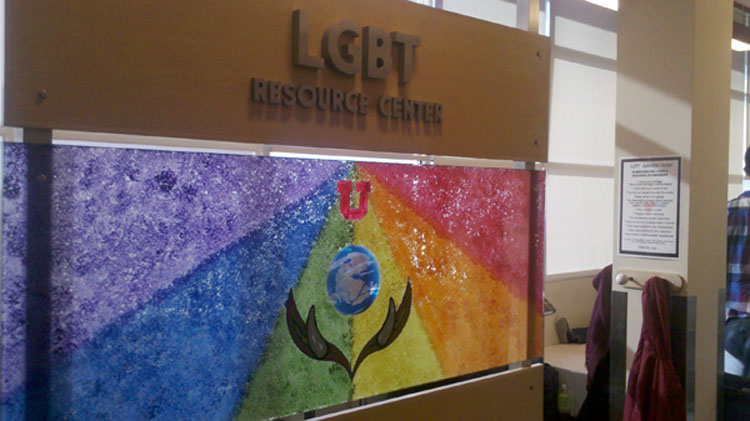
When the LGBT Resource Center first opened its doors in 2002, it didn’t have the resources to help much of the community.

“It was a small closet. In that closet all they could put in it were a desk and a small red couch,” Medina-Martínez said.

A grant from the David Bohnett Foundation enabled the LGBT Resource Center to provide computers for students.

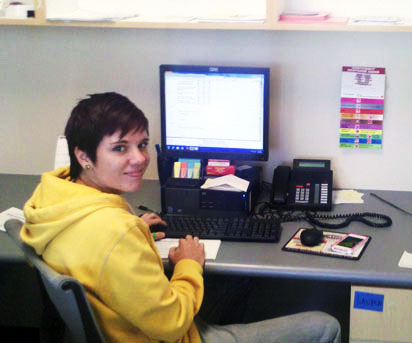
Now the facility has grown to more than 1,000 square feet and is located on the fourth floor of the Union Building. The Resource Center offers students access to safe workstations and printing hubs. All this was made possible through the David Bohnett Foundation, which donated $15,000 to create the LGBT CyberCenter. Because of this donation, the Resource Center was able to include four Internet-ready IBM computers, as well as a laser jet printer for students to use on a daily basis Monday-Friday, from 8 a.m. to 5 p.m.

One of the biggest contributions the Resource Center provides is the variety of programs and events it runs or is involved in that help ensure the safety of LGBT students around campus.

The LGBT Resource Center provides one of the friendliest atmospheres around campus.

One unique program the LGBT Resource Center provides is called Queers Peers, which allows students to anonymously ask questions about being LGBT or other issues through the use of email.

“What is most beneficial about the program is that anyone can submit any question without the fear of having to ask someone in person or being judged,” said Mariana Ramiro, head of the Queers Peers email service.

However, Ramiro said the program isn’t very well known around campus and has not gotten much of a boost in acceptance or usage over the years.

“We only get about one email a month. Most of the emails tend to just be spam,” she said.

However, where the email service is most helpful to U students is with the distribution of LGBT information and social events.

“We do get emails asking about resources for coming out, as well as where and how to find out about possible social events,” Ramiro said. “It has existed for a couple of years now, and I just wish most people knew about Queers Peers so it could be used more.”

And that is why the LGBT Resource Center was found all throughout campus during Pride Week in hopes to spread the word about resources like Queers Peers, and the center itself.

Lack of marriage equality for LGBT hinders immigrants’ ability to come to America

Story and photos by MATT ELLIS

For years there has been a struggle for the nationwide recognition of same-sex marriage. Some states have legalized the marriage of same-sex couples, but most have not and political battles wage on. At the center of the debate are liberties that are denied non-married couples. Though these discussions have taken a more prominent role in our culture over recent years, the implications of these policies on immigration have been discussed in far smaller circles.

The University of Utah Hinckley Institute of Politics is where five panelists gathered to discuss rights for LGBT immigrants on Thursday, Oct. 4, 2012.

The challenges that face same-sex couples where both partners are American citizens are compounded exponentially when crossed with issues of immigration, mostly because of the denial of rights that would normally be afforded to a couple trying to enter America.

Many pieces of legislation are under fire by those fighting for same-sex couples’ immigration rights, but the one that may be the most central is the Defense of Marriage Act (DOMA), passed in 1996. Section 3 of DOMA defines marriage exclusively as the union of a man and woman, and the word “spouse” as a reference only to a partner of the opposite sex.

Under these definitions, an American citizen can request citizenship for their partner so long as that partner is of the opposite sex. For same-sex couples, immigration to the U.S. can be vastly more complicated.

Mark Alvarez, an immigration lawyer in Salt Lake City, spoke at a panel at the University of Utah in October 2012 on the difficulties that face same-sex couples who want to immigrate to the U.S.

“It’s because of DOMA,” Alvarez said. “A same-sex couple cannot petition for normal family rights.”

Because an individual has no legal grounds for petitioning for the citizenship of a same-sex partner, the partner often has no way of achieving that status and is forced to leave the country with or without their companion.

Mariana Ramiro works with the LGBT Resource Center at the U. She is originally from Mexico City and has had personal experience with the difficulties of immigration.

She and her family immigrated here illegally, and lived illegally for more than a decade. She eventually got a green card and is now in a five-year probationary period before citizenship where she can still be deported for any reason.

Mariana Ramiro smiles for the camera. She and her partner are enduring the very issues that the panel was assembled to discuss.

Her partner is in a similar situation, which puts a great deal of stress on their relationship.

“I can be with my partner here, but if my partner ends up getting deported there’s no way to [bring us back together],” Ramiro said at the panel. “I either stay here and try to become a citizen, and maybe hope that in the future there is something that will change that I can bring my partner back. But realistically we are going to be separated unless I choose to go back there, but then that would disqualify me from citizenship.”

These fears are very real, even for those who have been legally married in the U.S.

In the case of Pablo Garcia and Santiago Ortiz, whose story was published on immigrationequality.org, the two were legally married in Connecticut but Garcia is not an American citizen.

Ortiz, who was born in New York, is an American citizen but because DOMA overrides local laws even he and his partner are not exempt.

Ortiz has tested positive for HIV and sometimes has to travel abroad to receive treatment. Garcia is unable to accompany him on those trips because he fears he would not be allowed reentry. When Ortiz’s father died Garcia couldn’t even attend the funeral in Caracas, Venezuela.

“You are putting yourself at risk for legal ramifications, for jail time, for pursuit under the state,” Max Greene, the advocacy coordinator for Equality Utah, said at the panel. “Those things prevent people from real meaningful relationships because you are already in the society where some of us aren’t valid. Imagine what that does to someone’s ability to be who they really are.”

But hope is on the horizon for couples like Ortiz and Garcia.

In 2011 the Obama administration announced that it found Section 3 of DOMA to be unconstitutional as it relates to issues of immigration, bankruptcy and public estate taxes. Though there has not been a formal repeal of the law, the administration decided that it would no longer be defended in court.

Eight federal courts, including the First and Second Circuit Court of Appeals, have also found Section 3 to be unconstitutional and as of 2012 several cases regarding immigration were awaiting a response to review in the U.S. Supreme Court.

Additionally, according to the Global Post, the Immigration and Customs Enforcement Agency has announced that deportation will not be a priority for illegal immigrants who have strong family ties in the U.S., specifically those in the LGBT community.

Many have compared the struggles of the LGBT community with the African-American civil rights movement and while that does entail subjugation and oppression, some are hopeful that the end result will be similar and that equality will soon emerge.

Alvarez is confident that, in spite of the political dealings moving at such a slow pace, America is ready for the next step.

“I think our society is [moving] forward,” the immigration lawyer said at the panel. “I firmly believe this country is on its way to marriage equality. The question is when, and I think it’s coming sooner rather than later.”

Safe-zones create inclusive environment, safe space to be in

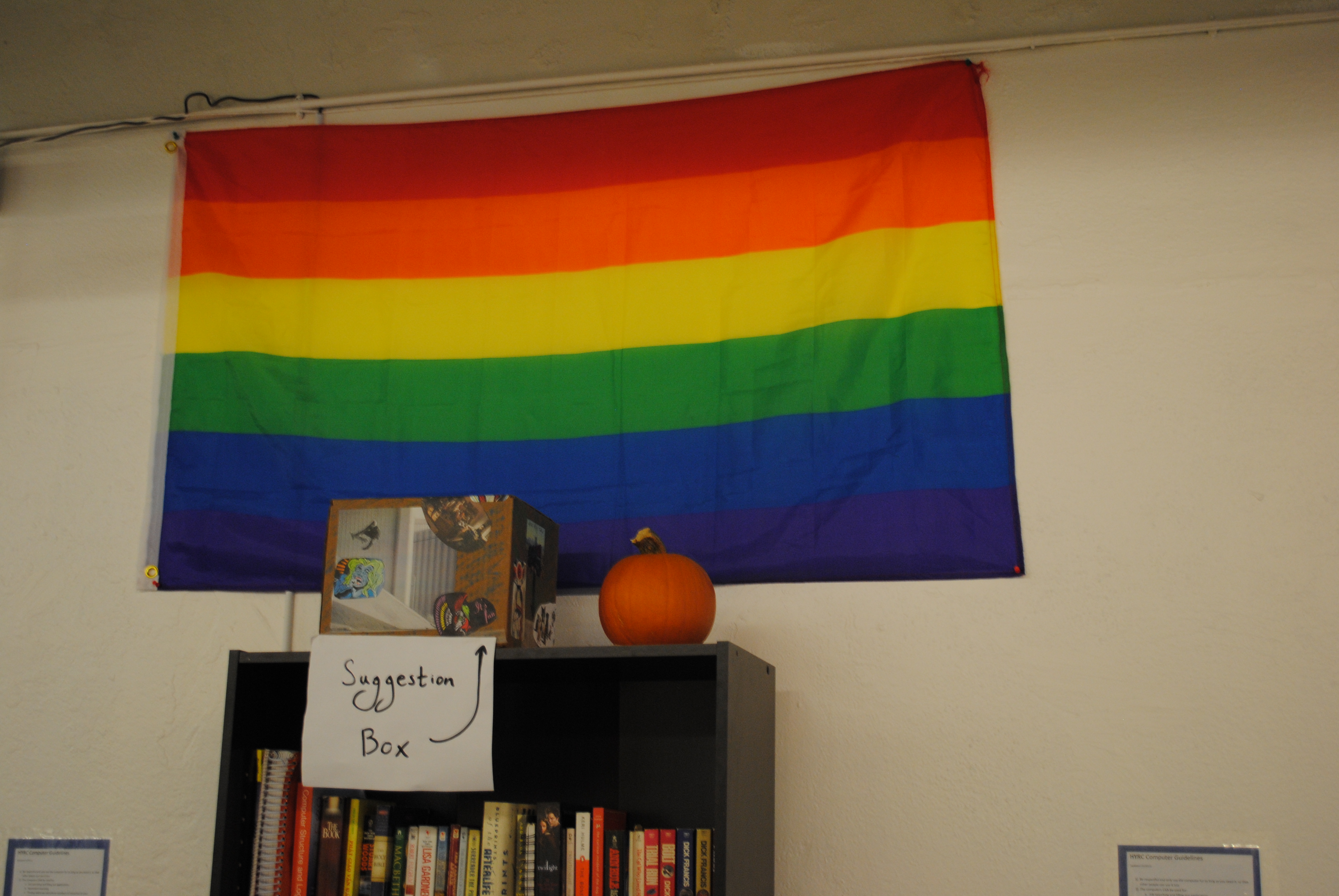
A rainbow flag, the symbol for the LGBTQ+ community, is a sign to all that the space is a safe place to go and be included in everything without worry of discrimination.

Story and photo by AINSLEY YOUNG

Every month, the LGBT Resource Center at the University of Utah holds classes known as Safe-Zone Trainings. They’re a three-hour session designed to answer questions and provide a safe space for people to come together and be educated about the power of words, how they affect people around you and how to keep an open mind when it comes to diversity.

Each training session is usually formatted with a short presentation, a discussion and activities. At the training offered during Pride Week 2012, the activity was to go around the room and silently answer several yes or no questions and then add a bead to a string for each yes, to symbolize the attendees’ privileges.

“In the training, we cover concepts related to the LGBTQA community. We also do exercises that are intended to spark dialogue on what it’s like for people to be marginal on gender expression and orientation,” said Kai Medina-Martínez, the director of the university’s LGBT Resource Center.

“The trainings create a situation of inclusion around dialogue that’s intended to bring awareness to people and have them learn things based on inclusive narratives,” said Medina-Martínez, who uses the pronoun they.

“We live in a world where we assume everyone is cisgender [born as a gender and identifies and acts within societal expectations of that gender] and heterosexual but we’re not. We have people who are transgender, gay, bisexual and a-sexual,” they said.

Medina-Martínez said it’s important to break down the negative stereotypes that are cast by society.

“We value a certain type of person, but we live in a diverse world with a lot of diverse people. Not everybody is the same, and we should all benefit from equal treatment,” they said.

The trainings are designed to be a safe place where people can meet others who are interested in learning how to be inclusive of all people or people who want to share their knowledge on being inclusive.

“I think it’s a great resource for anyone who wants to know a little more about the community and the real issues that face this population,” said Valerie Velarde, the safe-zone coordinator at the LGBT Resource Center. “As for creating a safe zone, people have to know where they can go for support with no biases or assumptions precluding them. Too much of this world is harsh, and people need that place they can go to relax and be themselves.”

Velarde said the trainings can help to make the world “be that much less harsh.”

“We always say once you hear a person’s story, it is a lot harder to hate them. I think that is a lot of what we are trying to get out there — personal stories of raw and real hatred. We are all privileged and not everyone sees the pain we often inflict,” she said.

“Safe-zone training gives individuals the quaint, safe space to ask any questions they want and get a rough view of LGBT identities,” Velarde said.

These trainings are a good way to educate people on different matters and issues going on in the LGBTQ+ community that may not be shown to everyone all the time, she said.

“For too long, people have had little to no idea of what the community really looks like, simply gaining most of their assumptions from popular media or the news…. A little more knowledge never hurt anyone,” Velarde said.

It’s important to be knowledgeable and active in minority communities, such as the LGBTQ+ community, she said. These trainings are an excellent way to get involved by showing an interest and making an effort to create a safe space and environment for all people, she said.

Between five and 30 people usually attend the workshops that are held in open, public spaces. The LGBT Resource Center also holds private training sessions for companies and departments at the university or small businesses. These private trainings have more than 100 attendees.

In addition to the full-length, three-hour trainings, the center hosts quasi-trainings that are a little shorter, with varying activities tailored to the organization or department’s needs, with job-specific situations and  opportunities to work together as coworkers and peers.

“Also, I sometimes mix and match what I do and ask different questions, but usually the same concepts are brought up regardless of what I say,” Velarde said. She said sometimes she starts with a question and answer session, while other times she’ll start with a discussion or activity she created to best suit whichever audience she is educating.

“These trainings opened up a lot of doors for me,” said Kim Bliss, who attended a safe-zone training in spring 2012. Bliss attended the training when she saw a flyer for it around the university campus that caught her attention.

Bliss said she was deeply impacted by one of the discussions at the training, and that it had changed her mind about a lot of the stereotypes that she had been familiar with.

“Whether you’re straight or gay, black or white, young or old, you’re still a person and you deserve to be treated with respect. Just because you may not agree with how someone lives their lives doesn’t mean you can judge them and cause them any harm,” she said.

Velarde holds these trainings  once a month at various locations around the U campus. Velarde said there can be more than seven meetings a month depending on which department or campus organization wants to schedule one.

LGBT youth become homeless for many reasons

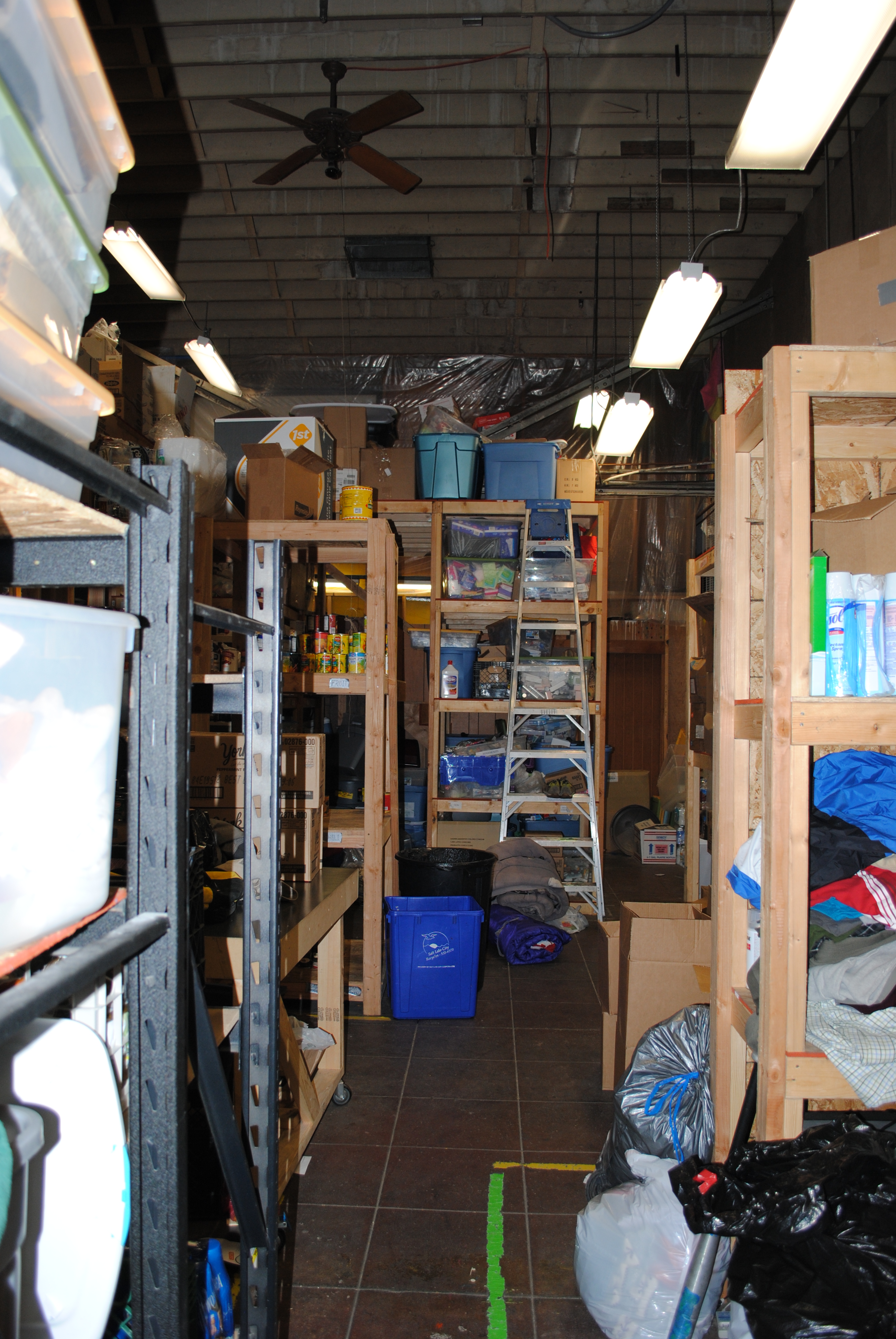
A look into the back room of the Volunteers of America homeless youth shelter in downtown Salt Lake City shows shelves of food, clothes and other items donated by people.

Story and photo by AINSLEY YOUNG

Take a tour of the Volunteers of America resource center.

In 2009, the Road Home, a homeless shelter based in Salt Lake City, helped more than 4,456 individuals.

Statewide, 42 to 44 percent of the homeless population self-identify as LGBTQ+. This number of  individuals is disproportionate compared to the overall population. About 6 percent of every population self-identifies as lesbian, gay, bisexual, transdender, questioning or another identity within this community. When most people think of homeless LGBTQ+, they usually get the scenario of a young person coming out to their families and then getting thrown out and are forced to live on the streets.

However, Brandie Balken, the director of Equality Utah in Salt Lake City, said that is not usually the case.

“When you think about the paradigm of… [coming] out to your parents and [getting kicked out] of the house, that’s the most extreme situation — not to say that it doesn’t happen — but that’s not the most common situation. Parents will frequently do things like ‘you can’t see these friends, you can’t dress this way, you can’t say those things’ or [they will] say things that are demeaning to folks who happen to be LGBT, and if that’s your own identity as a 13-, 14- or 15-year old, it’s unbearable,” she said.

Individual identities are so fragile at those ages, and there’s so much going on in the lives of youth. To not be supported by family, their most intimate support structure, makes the situation become unbearable. As a result, many people choose to leave home altogether, Balken said.

“They feel like it’s safer and they have a greater chance to explore their opportunities that way…,” she said.

These individuals will frequently stay with their friends, doing what is known as “couch hopping,” or sleeping on couches and air mattresses because they can’t afford a bed. Eventually, they find themselves with no other place to go but the streets, Balken said. Many of these young people haven’t even come out yet, but they feel that the unsupportive environment is not something they can live with, so they leave.

Balken said part of the contribution to the LGBTQ+ homelessness comes from a part in the adoption system that doesn’t allow any committed, long-term couples who are unmarried to adopt. This knocks out those couples as potential parents to children in need of foster care or adoption.

“We know that some of our young people are not with their birth parents or not in a stable home because of their orientation or because they don’t feel supported in their lives by their parents and we have a system that doesn’t allow youth who identify as lesbian, gay, bisexual and transgender to be adopted into a family that could model for them what it is to be an adult and be that person,” she said.

Intrigued with the process of becoming homeless, Natalie Avery created a documentary called “Outside,” which follows the lives of homeless LGBTQ+ individuals. This documentary followed four individuals for five years and was released in May 2012. Avery was a graduate student in film at the University of Utah when she began the project.

“I was in my last year of graduate school and I learned about the issue of couch surfing.… I had never heard of it and I heard that the LGBT population was significantly higher than just the average and that when people were talking about homeless youth, at that time, they were talking about children of families, not invisible youth,” Avery said.

Avery was inspired to take a deeper look into the issue of homelessness and highlight the lives of these individuals, the problems they face and how they handled them. Avery said she was surprised at how fast the fall could be from having a home to getting involved in drugs, finding a safe place to sleep or keeping warm in the winter, some of the many issues they were met with on the street.

“There is this remarkable group of people out there trying to help [these youth] in different ways, particularly the Homeless Youth Resource Center which still exists and is getting stronger and doing a lot for LGBT homeless youth. I was really impressed with the level of service they were getting,” she said.

Many youths take refuge in shelters like the Homeless Youth Resource Center, run by Volunteers of America Utah, located in downtown Salt Lake City. The shelter runs during business hours and offers refuge, hot meals cooked by volunteers, a donated clothing box and group activities to teach life skills and also bring the individuals together.

From July 2011 to July 2012, the shelter served 1,264 homeless youth, and around 30 percent of those individuals self-identified as LGBTQ+.

“Our hope is to meet the needs of youth and help keep them off the street,” said Zach Bale, vice president of external relations at the VOA in Salt Lake.

The drop-in shelter bases its different services on the intake of individuals, mostly aged 15 to 22 years, and what their needs are, Bale said. The center allows youths to come in and get what they need, including showers and laundry, with computers just recently added to provide individuals with aid in job searching. Youth can select everyday clothing from the donations closet at the front of the shelter. A special closet in the back contains clothes suitable for job interviews.

In addition to providing individuals with food, clothes and daytime shelter, a therapist at the shelter is available to work with youths each day to give them guidance and direction on personal matters in their lives. Tanya Ray is a certified counselor who completed a class at the Utah Pride Center where she learned how to be inclusive and friendly toward members of the LGBTQ+ community.

While many may have the classic scenario of getting kicked out of the house after coming out to parents, many members of the LGBTQ+ community feel that leaving home is their best option as far as making their way in the world.

Salt Lake City group of drag queens is changing the scene

Story and photos by MADELINE SMITH

Klaus von Austerlitz isn’t your stereotypical drag queen with fake breasts, high heels and glamourous makeup. Instead, he takes the stage with a chalk white complexion and black designs drawn on with eyeliner, a red wig topped off with his trademarked black mouse ears and moon boots.

“I take the stereotype and flip it on its head,” he said. “We make the idea of what women should be gross.”

Von Austerlitz is Tanner Crawford’s stage name. Crawford is a junior at the University of Utah working on a bachelor’s degree in performing-arts design. He specializes in lighting, makeup and wigs and aspires to be a wig master for a professional theater.

Growing up, Crawford felt foreign living in Ferron, Utah, and developed von Austerlitz’s character during high school. It wasn’t until 2011 when Crawford began doing drag that von Austerlitz, a German man, came to life. The foreign roots stem from Crawford’s feelings of being different in his hometown, he said.

“[Klaus] is my idea of what a boy can be,” he said.

He uses his performing-arts design experience in von Austerlitz’s costumes. He said even if the look isn’t 100 percent great, he still has a solid idea and a full design.

During the U’s Pride Week drag show on Oct. 4, 2012, von Austerlitz performed to a remixed version of Carly Rae Jepsen’s “Call Me Maybe.” He mixed the song to transition from the original to a version with ghoulish vocals and a darker sound, and he performed accordingly.

Von Austerlitz pointed to his hand and the numbers 666 every time Carly Rae Jepsen sang, “Here’s my number…,” in her song “Call Me Maybe.”

Crawford said the Pride Week drag show attracted an audience he typically doesn’t see elsewhere. He was unsure how people would react to his performance.

“I was out of my element,” he said. “I just wanted to show what I’ve got.”

Crawford said his strange style stems from his concern about the drag scene being too homogenized. He doesn’t like the idea of drag entailing only dressing up like a woman and lip-synching.

“[It’s] sexist. It’s men putting on what women should be,” he said.

Doing drag is a form of catharsis, a more intimate means of art. He said he uses it to express dark messages that people don’t want to think about. For example, he utilizes revered symbols such as painting an upside-down cross on his forehead and dousing his clothes in blood to inspire people to question societal norms.

Crawford strives to make people more open to being uncomfortable. He also puts himself in unusual situations, including watching disturbing documentaries that force him to learn how to react.

“I try to be comfortable being uncomfortable,” Crawford said. “It makes me more open of a person.”

He said a lot of his costumes are inspired by Japanese horror films such as “Ju-on” and “Ringu.”

Crawford tries to incorporate multiple cultures, such as Japanese and Native American, into his costumes by utilizing dominant symbols like a cross, feathers or culturally-influenced makeup.

Despite using important symbols, he takes precautions not to stigmatize any one group of people.

“I try not to be racist or demeaning,” Crawford said.

He also gets inspiration from the movie “Party Monster,” a story about the original club kids in New York City in the late 1980s who wore flamboyant and bizarre costumes.

The Bad Kids

The movie also inspires Crawford’s friends, a group of five queens who met at Miss City Weekly on June 2, 2011. They discovered a shared interest in challenging the standard image of a drag queen and formed The Bad Kids, named after the famous Lady Gaga song.

Cartel Fenicé, as Scotty Phillips is known on stage, is Klaus von Austerlitz’s drag sister.

“We try to be a collective, all-inclusive group,” Phillips said in a phone interview.

They encourage people to join them, be themselves and express who they are. The Bad Kids don’t follow the rules like traditional drag queens, Phillips said. They don’t portray themselves as women on stage and they’re trying to change the idea of what gender is.

“It’s disrespectful to women,” Phillips said. “It’s like we assume all women have big breasts.”

Instead of wearing fake breasts, The Bad Kids bear messages scribbled on their bare chests with eyeliner, or Kentucky Fried Chicken buckets on their heads with their bodies covered in blood and feathers.

However, The Bad Kids aren’t all about gore. They use the stage to make statements that they feel strongly about, such as abortion and greed.

Phillips dressed as a gypsy for a performance at Metro Bar during the themed show “Politics are a Drag.” He danced to a mash-up of Shania Twain’s “Cha Ching,” “Money” by the Flying Lizards, and “Money, Success, Fame, Glamour” from the movie “Party Monster.”

“[I was] the mystic woman trying to tell the world that what everyone is doing in America is filthy,” Phillips said.

He ended his performance by ripping off his dress to reveal dollar sign pasties covering his nipples and throwing Monopoly money at the audience.

Despite the sometimes-political meaning behind their performances, The Bad Kids never take themselves too seriously, Crawford said.

“We’re like clowns,” he said. “We make people have a fun time.”

The Bad Kids perform on the last Thursday of each month at Metro Bar, located at 540 W. 200 South. Crawford encourages other queens to join the group to ensure fresh, creative performances at the club, and can be reached by email at klausxoxo@hellokitty.com.

Even when they’re not doing drag shows, The Bad Kids dress up and go out for a night on the town, regardless of the public’s reaction. Phillips said this is how they perpetrate their vision and make their presence in the community known.

Philips said some individuals they encounter wonder why the queens don’t wear fake breasts. Others think it’s a bold thing to do in Salt Lake City.

“Some see it as unique, some people expect us to embody what women look like,” he said.

Phillips said being out in the community also creates awareness of the group. Individuals who are interested in doing drag are invited to  connect to The Bad Kids through each of the queen’s Facebook pages.

Crawford said the group tries to be friends with everyone, in part because the drag community in Salt Lake City is so small. Since 1976, the local drag scene has been dominated by The Royal Court of the Golden Spike Empire, a nonprofit organization that is made up of high-fashion drag queens who perform to raise money for Utah charities.

The Bad Kids want to create a spectrum of queens to break away from the standard, Crawford said.

Klaus von Austerlitz waves to the crowd after the crown was given for the best drag queen at the U’s Pride Week drag show, held at Sugar Space on Oct. 4, 2012.

Phillips said The Bad Kids want to do bigger shows in larger venues with a variety of performances.

And Crawford said the group hopes to film videos and post them on YouTube.

“I’m being myself!” he said. “Come do it with me!”

The importance of allies in the LGBT community

Story and photos by Chad Mobley

Attending a Safe Zone training, like the one held during Pride Week on Oct. 5, 2012, at the University of Utah, gives people a chance to gain a better understanding of the lesbian, gay, bisexual and transgender community.

Lauren Jensen works tirelessly to build education and awareness of the LGBT community around the University of Utah and Salt Lake City.

This training was an open forum with conversations led by two facilitators to create dialogue among participants. Many of the talks focused on how straight people could become allies of the LGBT community and how important  allies are in the progress of equality among all genders and sexual orientations.

“Allies are underappreciated because it takes a lot to be a part of the LGBT community whether you are actually in the community or a supporter,” said Lauren Jensen, speakers bureau coordinator at the LGBT Resource Center at the U. “The LGBT community couldn’t exist without supporters on the outside. We need as many voices and as many supporters as we can get.”

But becoming an ally of the LGBT community may bring unwarranted connotations.

“There is a stereotype for allies as well,” Jensen said. “If they support gay marriage or gay rights, then people think ‘Oh they must be gay.’ When in fact all they believe is that everybody should have equal rights. Just because you support gay rights doesn’t make you gay and that’s something people need to realize.”

Jensen sets up panel discussions all over campus at professors’ requests. She also coordinates workplace panels for companies across the Salt Lake Valley. The purpose of these events is to create a situation for people to openly ask questions about anything that has to do with the LGBT community. These panels, in conjunction with events like Safe Zone trainings, educate straight allies about LGBT issues.

Janice Marcus of Parents, Families and Friends of Lesbians and Gays (PFLAG) recognizes these programs as an effective means to grow the allied community in Salt Lake City.

“PFLAG is aware of Safe Zone training and encourages members to attend trainings,” she said in an email.

In addition to Safe Zone trainings and panel discussions facilitated by the University of Utah LGBT Resource Center, PFLAG separately holds events to build and educate the straight ally population.

PFLAG provides a support group for parents, families and friends of the LGBT community the second Tuesday of every month from 7-9 p.m. at the Utah Pride Center, 361 N. 300 West. The first hour is spent as a support group helping people to understand the feelings of a friend or family member coming out to them. The second hour is used to educate members by providing accurate information about what it means to be LGBT, how it feels and how they can provide the best support.

“We provide support for parents, families and friends of gays and lesbians, as well as advocate for the LGBT community,” Marcus said. “We are willing to provide education and panel discussions for any group or work place that would like to contact us. I think that it’s critical that people understand that PFLAG is not associated with any political organization or religious belief.”

Thanks to events like these across the country, the LGBT community is gaining strength nationwide through growing allied support.

Sean Mehew, federal club co-chair for the Human Rights Campaign’s Utah steering committee, has seen this growth firsthand over the past few years.

“Voter approval of gay marriage is over 50 percent for the first time ever nationwide. Five years ago it was probably only 30 to 40 percent,” Mehew said.

One of the HRC’s top priorities is fighting for same-sex marriage. If it is ever going to become a reality, the LGBT community needs allies in high places.

“Look at President Obama coming out [as an ally]. That’s the first time that a president has ever even had a positive stance,” Mehew said. “When he originally came to office, he said he wasn’t sure what his stance was on gay marriage, but he evolved.”

Educating people and growing the straight ally community is the best means for gaining equal rights for lesbian, gay, bisexual and transgender people. People interested in becoming an ally can attend Safe Zone trainings, panel discussions or PFLAG support groups. A week much like Pride Week, called Ally Week, will be held on campus in April 2013 for students and community members.

“As allies mature in the process of providing support for the LGBT community, they transition from offering support to [the LGBT community], to speaking up when they hear inappropriate comments,” Janice Marcus of PFLAG said. “Regardless of the process in which they are involved, they cannot remain silent. Silence allows abuse and discrimination to continue unchecked, so that speaking up in small groups, followed by increased knowledge to provide education through interviews and panel discussions are critical.”

The LGBT Resource Center at the University provides a wealth of information on becoming an ally.

10 ways to be an ally and friend:

  1. Be a listener.
  2. Be open-minded.
  3. Be willing to talk.
  4. Be inclusive and invite LGBT friends to hang out with your friends and family.
  5. Don’t assume that all your friends and co-workers are straight. Someone close to you could be looking for support in their coming-out process. Not making assumptions will give them the space they need.
  6. Homophobic comments and jokes are harmful. Let your friends, family and co-workers know that you find them offensive.
  7. Confront your own prejudices and homophobia, even if it is uncomfortable to do so.
  8. Defend your LGBT friends against discrimination.
  9. Believe that all people, regardless of gender identity and sexual orientation, should be treated with dignity and respect.
  10. If you see LGBT people being misrepresented in the media, contact GLAAD.

Information courtesy of Lauren Jensen.