Immigration and gay rights discussed at the University of Utah

Story and photos by CONNOR WALLACE

Immigration and gay rights are usually thought about as two separate topics. This becomes a problem when individuals are both immigrants and identify as being gay. A panel at the Hinckley Institute of Politics on Oct. 4, 2012, titled “Pride Has No Borders” discussed both immigrant and gay rights during the University of Utah’s Pride Week. The panel included immigration attorney Mark Alvarez; Utah AIDS Foundation Hispanic Outreach Coordinator Alex Moya; and Mariana Ramiro-Gomez, a staff member of the U’s LGBT Resource Center. The topics of gay and immigration rights are not only pressing in this state, but also on a federal level.

According to the organization Immigration Equality, in May 2012 Pres. Obama announced his support for same-sex marriage. His administration then created a “written guidance that will extend discretionary relief to lesbian, gay, bisexual and transgender (LGBT) immigrants with U.S. citizen spouses and partners.”

Even though important steps are being made toward immigration equality, it is still very unequal.

“Same sex couples are not able to apply for certain immigration benefits the way heterosexual couples would be able to,” Alvarez said at the panel discussion.

He said that even though the U.S. is a progressive country, other countries are farther ahead in gay rights.

“There’s sometimes a misimpression that Latinos are slow on LGBT issues. That’s not true. I lived in Spain,” Alvarez said. “Spain has marriage equality. Argentina has marriage equality. Colombia allows same-sex couples rights in immigrating.”

According to the Library of Congress, the Uniting American Families Act of 2011 hopes to “amend the Immigration and Nationality Act to include a ‘permanent partner’ within the scope of such Act. Defines a ‘permanent partner’ as an individual 18 or older who: (1) is in a committed, intimate relationship with another individual 18 or older in which both individuals intend a lifelong commitment; (2) is financially interdependent with the other individual; (3) is not married to, or in a permanent partnership with, anyone other than the individual; (4) is unable to contract with the other individual a marriage cognizable under this Act; and (5) is not a first, second, or third degree blood relation of the other individual.”  This act, if passed, would affect the lives of thousands of people in the U.S.

“There are 36,000 couples affected by the inability to apply for immigration benefits. This is according to the 2010 U.S. Census,” Alvarez said. “The Uniting American Families Act, which has been proposed before the Congress for a decade, would allow permanent partners to be sponsored for residence.”

Alex Moya’s main focus at the Utah AIDS Foundation is speaking with gay Spanish-speaking immigrant men about health promotion and HIV prevention. It is this kind of boundary crossing that shows the division between immigration rights and gay rights.

“I think in publications and the mainstream discourse we talk about straight immigration rights and in the gay movement we talk about white men who want marriage but we don’t talk about what happens in between,” Moya said at the panel.

In an interview with Moya, he said that gay marriage isn’t thought about the same way in the gay Hispanic immigrants as it is in the mainstream gay community.
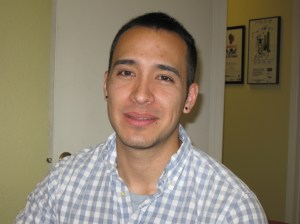
Alex Moya sees a unique side of the gay marriage debate due to his work with gay Hispanic immigrants.

Alex Moya sees a unique side of the gay marriage debate due to his work with gay Hispanic immigrants.

“When mainstream citizens are talking about gay marriage as a right, sometimes that has a different meaning for the guys that I work with,” Moya said. “There’s the idea that yes we should care because if same-sex marriage is legal then there’s another way to gain the green card, but there are many that don’t want to get married to a citizen. So I think that the conversation about the rights of the LGBT people is sometimes a little bit different on what we’re looking for as immigrant Latino men.”

Moya, who graduated from the University of Utah, said information about the gay minority community is not taught in schools.

“I think education needs to change. I think I was here five years and most of the important learning about queer people of color I’ve done outside of this institution,” Moya said during the panel. “I think teachers who don’t decide to dedicate the last class to talk about queer issues or to talk about Latinos needs to happen. I don’t see why it is more important to teach about one culture or one race over the other. I think that it should be more balanced.”

Mariana Ramiro-Gomez works for the LGBT Resource Center at the U. She is originally from Mexico, and is a legal resident in the US. When she and her family applied for their green cards, she feared coming out to her parents would ruin her chances for legal residency.

“I didn’t know if [my mother] was going to kick me out or if she was going to disown me or if I would have a family, and ironically when I was coming out is when we were in the middle of the process of getting our green cards,” Ramiro-Gomez said. “I was afraid that they would not include me as part of the process and the paperwork to get my permanent residency.”

She hopes that laws will change to make gaining legal residency and moving from one country to another easier.
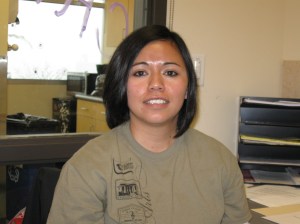
Mariana Ramiro-Gomez said that being gay and Hispanic means she has to censor her identities depending on which group she is with.

Mariana Ramiro-Gomez said that being gay and Hispanic means she has to censor her identities depending on which group she is with.

“Nature doesn’t stick to these arbitrary borders that we’ve placed upon it. So I do believe that anything and everything that’s living would freely transfer,” Ramiro-Gomez said. “Especially between Canada, US and Mexico there is NAFTA so all of our produce and all of our trade travels freely but our bodies cannot. Ideally, our bodies would be part of that transfer. Realistically, I would love to see some sort of legal path toward legalization where everyone who is here already who is undocumented would get access to a green card to at least be here temporarily, ideally permanently.”

Ramiro-Gomez said the fear of her partner being deported is ever present for her. She would have to choose between going back with her partner to Mexico, which would disqualify her from legal residency here, or she would have to stay here and hope that laws change to the point where her partner can come back to the US.

There is hope for change. The Uniting American Families Act is one such option that allows permanent partners to stay in the US. This, coupled with gay marriage being passed in nine states as well as the District of Columbia, shows signs of change coming sooner rather than later.

Gay male athletes are still seeking acceptance from coaches, teammates and fans

Story and photos by MATT ELLIS

Check out some sports venues in Salt Lake City.

In September 2012, Jamie Kuntz was kicked off of the North Dakota State football team after he was seen kissing his boyfriend.

When former NBA center John Amaechi came out as being gay in 2007, he was met with harsh words from the public and former NBA players alike.

Though current athletes, when asked, profess to support gay people and their right to participate in sports, the facts have shown that homosexuality in athletics is an issue that is far from being resolved for both players and fans.

Kuntz was sidelined with an injury when his team took the field against Snow College over Labor Day weekend and was filming the game from the press box. A teammate saw Kuntz kiss his 65-year-old boyfriend and told coaches, who confronted him on the bus ride home.

According to Kuntz, he initially lied about the situation, saying the man was his grandfather. He later felt guilty about deceiving his coaches and told the truth. He was officially kicked off the team for lying, not for being gay, even though there is no record of a player being disciplined in such a way for being dishonest.

In an interview with ESPN, Kuntz pointed out that if it had been an older woman with him in the press box he probably would have been congratulated by his teammates.

So if Kuntz had not lied in the beginning, would he still be on the football team? Was the lie simply an excuse to get an openly gay man off the North Dakota State football team?

An individual involved with the athletic department at Weber State University, who asked that his name not be used, offered his opinion.

“Obviously I’m not familiar with their policies or how they run their program, but it would have been interesting to see what would have happened had the athlete not told a lie,” he said. “It sounds to me like an excuse to basically ostracize an openly gay athlete, but we can never know for sure.”

He added that he thought most of the American public would probably say that they support gay peoples’ right to participate in athletics but that “when the rubber meets the road,” few of them would support what they said with their actions.

Several surveys done by different news outlets would seem to support this theory.

In a survey done by NBC/USA Network of 979 randomly-selected people, 86 percent of those surveyed disagreed with the statement, “openly gay athletes should be excluded from playing team sports,” and 61 percent agreed that “homosexuality is a way of life that should be accepted by society.”

But in the same survey, 68 percent of those surveyed agreed that “it would hurt an athlete’s career to be openly gay.”

A student-athlete at the University of Utah, who also asked not to be named, thinks it has to do with the common stereotype of the gay man.

“A lot of people think of a gay guy as really feminine or almost dainty-like,” he said. “Most men in sports don’t really fit that description, so it’s like an inconsistency that’s maybe hard to wrap their mind around.”

He said there was an athlete in his high school who was openly gay, and that didn’t sit well with a lot of people who shared the same locker room.

Many people feared they might attract unwanted attention from the gay teammate during private activities, the athlete said.

“It was weird to be in the same locker room or in the same shower situation with someone of your same gender who might be interested in you sexually,” he said. “I know there were guys who complained to coaches and stuff to do something about it.”

That sentiment was echoed by Tim Hardaway in 2007 when he learned that John Amaechi had come out to the public.

On Miami sports radio station WAXY-AM, Hardaway insisted that he would never want a gay man to play on the same team. If it were to happen, he said he would actively distance himself from that individual because he didn’t think it right that they share the same locker room.

Lebron James, also in reaction to Amaechi’s announcement, said in an interview with ESPN that having gay teammates would be an issue of trust. If a gay athlete hasn’t come out to his teammates, then he isn’t being completely honest and, according to James, can’t be counted as trustworthy.

But if that athlete were to come out, according to James’ reasoning, they should be fully accepted by both coaches and team members.

History has shown that it isn’t always that easy.

Glenn Burke was an outfielder in the MLB for the Los Angeles Dodgers and the Oakland Athletics during the late 1970s. Though the general public wouldn’t know of his sexual orientation until years later, he discreetly came out to his teammates and was met with hostility.

The abuse, both verbal and physical, eventually forced him to retire from baseball after only three years in the majors, which Burke later said was much earlier than he would have liked.

A European soccer player named Justin Fashanu also came out during his playing career. He was, at one time, one of the premier footballers in England andwas the first black man to command a £1 million signing fee.

After coming out he faced homophobic slurs from teammates, fans and even his own manager, which many point to as the reason his performance dropped off toward the end of his career.

As a black man he faced racist remarks on a regular basis, according to Peter Tatchell, a British human rights campaigner. But it was the homophobic variety which many, including Tatchell, say were the ones that got to him.

In 1998, amid allegations of sexual assault, Fashanu took his own life.

Michael Star, who does a weekly political podcast out of Rochester Hills, Mich., regularly speaks on LGBT issues with guests, both political and non-political. He said it is a part of who we are to resist changes in what we perceive as normal.

“Humans naturally want to believe that what we are doing is right,” Star said. “We sort of have an inclination to subjugate those who do things differently because we want to think that our way is the best way. So even though the individual may want to be quote-unquote ‘progressive,’ it’s a slow process because you’re almost going against human nature.”

As many have done before, Star compared the gay athletes’ situation to that of African-Americans during the Civil Rights movement. He believes that change is coming, but that it takes time for the masses to accept the transformation.

In the meantime, gay athletes’ fear of being in the open will persist.

“These athletes have a legitimate fear that life as they know it will change,” the WSU athletics representative said. “When you come out, you’re putting a target on your back that’s impossible to hide. It’s there for everyone to see.”

2012 election results give LGBT community hope

Story and photo by DAYLAN JONES

“To achieve change, it takes multiple approaches.”
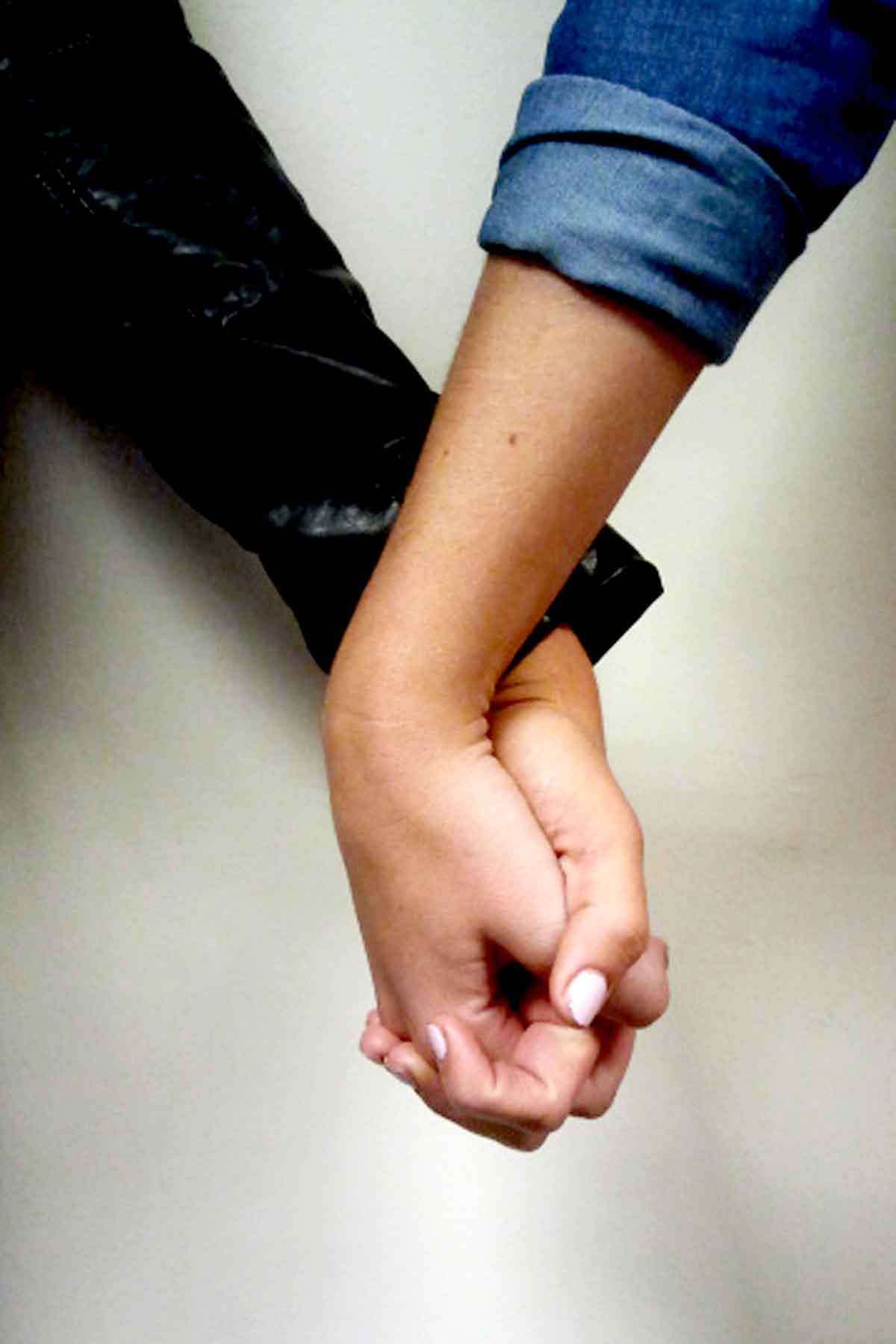
Two women hold hands to show strength and unity for a cause

“To achieve change, it takes multiple approaches,” explains Brandie Balken, executive director of Equality Utah.

Balken compares the inequality the LGBT community faces right now to the Civil Rights Movement. People were treated differently by others simply because of the way they were born. African-Americans eventually achieved equal rights and changed history.

Kari Ellingson, associate vice president for student affairs at the University of Utah, said, “There is a lot of unawareness. The more people become aware, the harder it is to discriminate…. Once you begin to recognize you know LGBT people and like them, the more you see them as people and that’s when legislation starts to change.”

Equality Utah is the state’s largest advocacy and policy organization for the lesbian, gay, bisexual and transgender (LGBT) community.

According to an Equality Utah email sent after Election Day, “YOU made this possible! … Thanks to you — our volunteers and supporters, we have accomplished so much to elect pro-equality candidates and build support for statewide nondiscrimination in employment and housing!”

The email also noted progress across the country for the LGBT community. Voters in Maryland, Maine and Minnesota passed same-sex marriage, the first openly gay senator was elected into office and the first president ever to endorse marriage equality was re-elected.

Equality Utah and the LGBT community have taken steps forward in Utah in recent years. According to the website, “In 2008 Equality Utah passed a bullying and hazing bill that created a statewide definition of bullying and hazing and outlines the minimum standards for bullying and hazing policies in local districts and charter schools. In 2010 Equality Utah added cyber bullying and verbal harassment to the list of prohibited behaviors.”

Most recently in 2012, in collaboration with the political election, Equality Utah released this statement: “‘It’s Utah’s time to lead!’ Last night we saw that the LGBT voice carries real power. Where are we headed next? The 2013 legislative session where we can, and we will, lead the nation by ending discrimination for LGBT Utahns and their families in workplace and housing.”

Equality Utah is constantly striving to look forward for a better tomorrow and has 21 “Equality”-endorsed Utah elected officials who it believes will join the organization in the fight for civil rights.

One of the  fights Equality Utah is winning is with bullying in schools. This is a major problem, one that parents can’t truly protect their child or children from. Balken said that when she was a child, bullying wasn’t as bad as it is today because she got to go home and escape it.

But these days, children can’t escape it because technology is everywhere. Cell phones and social media are constant for the younger generation. This makes the cyberbullying issue that much more crucial to stop in its tracks. Balken said the bullying and hazing bill that was passed will help make a difference in people’s lives; individuals want to live as normal of a life as possible while being treated equally.

“Equality means all of us” is the underlying theme that keeps her going. Balken said the LGBT community is facing more than just unequal marriage rights today. Some of the other obstacles include being unable to visit one’s partner in the hospital.

According to a 2011 poll of Utahns released by the Human Rights Campaign, “Seventy percent of respondents said they know someone who is gay or lesbian and 42 percent said their feelings about LGBT people have become more accepting over the last five to 10 years. (Seven percent said they have become less accepting.)”

Kari Ellingson said, “It’s important to recognize victories when you have victories, even if they seem small. The LGBT community made progress through this election nationwide. Here in Utah they received some hard knocks last session yet, they know it is important to keep standing up for things that matter.”

Pride Week at the University of Utah, a ‘top-25’ LGBT-friendly school

Story and photos by DAYLAN JONES

Pannel style discussion at the Hinkley Institute, Oct 4, 2012

Panel discussion at the Hinkley Institute of Politics, Oct. 4, 2012.

The University of Utah was named one of the top 25 most LGBT-friendly colleges and universities in the U.S. by Campus Pride in August 2012. The ranking gave the U something else to celebrate during the annual Pride Week celebration, held Oct. 1-5, 2012.

The rankings are based on data from the Campus Pride Index, which rates colleges and universities on things such as LGBT-friendly policies.

The U received high scores in all categories but LGBT Housing and Residence Life, where it scored a 3.5 of 5 stars.

“We are currently working towards that with the housing department and other necessary departments to have that by the fall [of 2013],” said Kai Medina-Martínez, director of the LGBT Resource Center at the U.

“It’s a good thing,” Medina-Martínez said about the publicity. “When the list came out the major news outlets contacted us, the U’s webpage acknowledged us, and in addition to the school, it’s a really good thing for the state.”

The Pride Week panel at the Hinckley Institute of Politics, Oct. 4, 2012.

The Pride Week panel at the Hinckley Institute of Politics, Oct. 4, 2012.

Pride Week has a different focus or theme every year to educate students and the public about issues in the LGBT community. This year’s theme was “Pride Has No Borders.”

The panel, “Pride Has No Borders: Immigration,” held Oct. 4 at the Hinkley Institute of Politics, focused on the challenges lesbians and gays of color face as they apply for immigration, get jobs and try to make a difference.

“As a woman of color and an immigrant myself I can connect with this,” said Valeria Moncada, a student who attended the panel. “It hurts my heart to see the hardships and unfairness we as people of this country place on immigrants. Immigrants as individuals are treated unfairly but because you are LGBT, you have less rights than a traditional immigrant.”

Pride Week also featured fun events. The Drag Show was a hit and gave new insight to one student. Madeline Smith commented on the “feisty” performers and “huge variety of looks and performances.”

The show, also Oct. 4, was held at Sugar Space in Salt Lake City. “My favorite performance was Klaus von Austerlitz,” Smith said. “He lip-synced to ‘Call Me Maybe,’ but mixed the song so it would change from the original song to a really creepy version and he would dance accordingly. He walked out all stiff like a doll and had 666 written on his hand so every time it said ‘here’s my number…’ he pointed to his hand.”

Smith, who was attending her first drag show, said she was “in awe at how Klaus fought the stereotype that all drag queens have to have fake boobs [and] wear heels…. He creeped out the crowd but everyone loved him.”

Sterling Anderson, a gay student at the U said about Pride Week, “I feel like I can be myself, and accepted for who I am on this campus. I don’t feel I have to hide my status and know I will be respected in that aspect. I feel very fortunate.”

pinkdot events come to Utah, by way of Singapore

Story and slideshow  by CHAD MOBLEY

Experience the pinkdot events.

While locked out of her office and waiting on an uncomfortable orange couch for someone to let her in, Valerie Larabee, director of the Utah Pride Center, got started on another busy day by going through emails on her smart phone. Little did she know, she would soon open a message that could effectively spark a revolution for the lesbian, gay, bisexual and transgender community nationwide.

The email, from a man she had never met face to face, contained a YouTube video of an event that took place in Singapore in 2009. It was a powerful visual representation of an extravagant affair that encouraged people to gather in celebration of love — love between all people, regardless of sexual orientation. This celebration was the first of its kind worldwide.

The pinkdot events provide a venue for straight people to come out and publicly display their support of their friends, family members and complete strangers who identify as lesbian, gay, bisexual or transgender. It is a family-friendly celebration with live entertainment, celebrity appearances, refreshments and fun for all people. All races, sexual orientations, genders, religions and ages are invited to attend.

“I saw the video and I immediately knew that we had to do this,” Larabee said. “We had to start doing this here in the US. We particularly needed to start it here in Utah because our big challenge here is getting straight parents to understand that they too could have a gay kid. It’s very likely that they have a gay person in their lives and we would hope that the love that they have for them is enough for them to come out and be visible in their support of them.”

Larabee and her colleagues got to work that day in the fall of 2011.

They instantly envisioned a national phenomenon, so one of the initial steps was purchasing the web addresses for pinkdot in each state; PinkDotUtah.org was the first they acquired. Next they created a task force, called the Support Love Courage Council, whose only objective is planning the pinkdot Utah events. After that, they had to execute the project.

The first pinkdot Utah public celebration occurred in 2011 in Salt Lake City. Another was held in September 2012. Both had more than 2,000 participants.

The most recent event happened in St. George, Utah, on Nov. 3, 2012. It was the first pinkdot to be held outside of Salt Lake City since the celebrations were launched in the United States.

“We were the first permitted public gay event in St. George,” Larabee said. “Pinkdot got covered in their paper, which was amazing. That’s what we are striving for, is to come out and be visible.”

Ken Kimball is the man who sent Larabee the email that ignited the campaign. Since then, he has been at the helm of the Support Love Courage Council as the project lead.

“It’s amazing that it even got through her filter because she gets thousands of emails,” Kimball said. “I sent her the video and Valerie wrote back, ‘You wanna play?'”

Kimball grew up LDS in Utah, but moved away after graduating from Brigham Young University because, he said, he knew he was gay.  He spent the next 20 years living in cities across the country, including Los Angeles; Austin and Dallas, Texas; and Tampa and Miami, Fla. Fifteen of those years he spent with his husband, Miguel. As they prepared to move back to Utah, he said they were scared.

Kimball’s roots within the LDS faith go back to the foundation of the Mormon Church. His ancestors were among the first four Mormon families to come to Utah.

“There might be families that have as much time in the LDS church, but nobody has more heritage than me,” he said.

With that heritage comes a rift within his own family. Kimball is the third oldest of nine siblings.

“I have some siblings that are fully accepting, my parents are really accepting … and I have siblings that won’t let their kids interact with me,” Kimball said. “There’s nieces and nephews I don’t even know.”

In a state that is predominantly Mormon, Kimball and the rest of the 18-member Support Love Courage Council thought it was paramount to craft the pinkdot events in a way that could include all religions. Kimball said he thinks about his family’s inclusion with every decision he makes.

“We didn’t want it to be a political statement. We didn’t want it to be a statement about marriage equality. There were a lot of things we didn’t want pinkdot to be about,” Kimball said. “[Mormon] theology and what they talk about is being loving, being supportive and being caring for all people. So it’s a message of inclusion and celebration by those individuals.”

Events are family-friendly and alcohol-free in an effort to ensure that everyone feels comfortable and welcome.

Ann Clark, a straight ally on the board for the Support Love Courage Council, is one person helping to maximize inclusion in the pinkdot events.

“I’m a parent. I want to show my children that we’re all the same,” Clark said in a phone interview. “I think that’s something as well, that’s why we try to aim for family-friendly.”

Clark became an ally not because she has a gay family member, not because she has a lesbian friend, but because she said she doesn’t understand why people are separated by whom they choose to love. Before joining the Support Love Courage Council, Clark worked on planning the Utah Pride Festival and subsequently became a member of Parents, Families and Friends of Lesbians and Gays (PFLAG).

She understands the importance of holding pinkdot events in large metropolitan areas like Salt Lake City, but feels the events can have a bigger impact on smaller communities, like St. George.

“I think it’s almost more important than doing it here [in Salt Lake City],” Clark said. “I’m an ally and we have a really strong ally backing in Salt Lake City. It’s almost a necessity [in rural places] because there’s not as much acceptance and not as much outreach…. If you put it in communities where more people can join together and watch that acceptance, that’s an important thing.”

Spreading these events across the country has been a slow process, but it is gaining momentum. Kathy Godwin, Mountain West regional director of PFLAG, said in an email how her organization is helping spread the word.

“We use email, we distribute fliers, we get our members to each bring at least one friend,” Godwin said. “It is a simple as that to begin. Outside of Utah, PFLAG does try to report on Facebook, the national PFLAG blog, etc. This builds awareness of this event and the purpose outside of our community. The power of social media.”

The goal of the Support Love Courage Council is to generate awareness of pinkdot Utah events until every state holds its own celebration. It wants to see these events in major cities and smaller rural communities as well. Groups in Florida and New Mexico, among other states, have formally expressed interest in holding their own pinkdot events in the near future. However, Ken Kimball hopes to see a day that these events are no longer necessary.

“I hope that someday the whole pinkdot concept is irrelevant,” Kimball said. “The support, the love and the courage is to love people for who they are. Hopefully it will become something that we don’t need to talk about, that people just do, but we’re not there yet.”

University of Utah named one of top-25 LGBT friendly university and colleges

Story and photos by KOURTNEY COMPTON

The University of Utah received a near-perfect ranking in every category in a study announced on Aug. 21, 2012, by the Huffington Post in partnership with Campus Pride. Campus Pride is a national nonprofit organization for student leaders and campus groups working to create safer, more inclusive LGBT-friendly colleges and universities.

The Campus Pride rankings are based on questionnaires submitted voluntarily by students, faculty and staff at 339 U.S. colleges and universities. The questionnaire addresses issues on LGBT-inclusive policies, housing, academic life, health and counseling, faculty, recruitment and retention, and other categories.

“Praise and accolades are deserved for these top 25 colleges and universities,” Campus Pride executive director Shane Windmeyer said in a press release. “Every student deserves to feel safe on campus, and all of these colleges are committed to creating a more LGBT-friendly campus.”

The lowest ranking the U received was a 3.5 out of 5 in the housing and residence life category. Currently there is no designated housing on campus that is listed as gender-neutral, which could have impact on the rating.

LGBT life was not always this way in colleges, and this ranking is a statement of growth, work and effort of the campus, its staff, faculty, and students alike.

Kai Medina-Martínez, the director of the U’s LGBT Resource Center who identifies with the pronoun they, said the U received a low rating for its housing policy. They said the U doesn’t allow students to self-select a roommate of the opposite sex.

Medina-Martinez said the LGBT Center is working with the Housing and Residential Center to create more inclusive housing policies.

The computers available to students at the LGBT Resource Center.

The computers available to students at the LGBT Resource Center.

“We want to stay away from the word tolerance, we aim for acceptance,” they said. “The more we can breakdown the myths about us, such as, we want to recruit people or we are out to destroy the traditional family, the more people can be less threatened and more open.”

Many colleges have LGBT organizations as well as departments dedicated to the fair treatment of all students, such as the LGBT Resource Center at the U, which is located in the Olpin Student Union.

“There is a large lounging area that the students utilize,” Medina-Martínez said. “Right now we have four computers that students can use to do papers or study and we also allow students to do 10 free copies a day.”

The LGBT Resource Center also holds an event called “Fabulous Fridays,” every Friday between 3 p.m. and 5 p.m. for students to socialize, eat snacks and play games.

“College is about preparing people to navigate many different environments and interact with many different people, it is consistent,” Medina-Martinez said.  This leads to many LGBT individuals taking this opportunity to fully explore themselves and realize who they are.

Mural located in the LGBT Resource Center.

Mural located in the LGBT Resource Center.

Travis Nguyen, an openly gay student at the U, said, “It’s definitely easier for me at the U. In high school and during my freshman year at Dixie [State College], no one knew that I was bisexual. I just felt I didn’t have enough strength to put myself out there and deal with it then. It was also easier in college because I knew that once my mom found out she wouldn’t be happy and at least I wouldn’t be living in her house. At the U the people are more mature and open minded to the people and things around them. Basically it’s just a whole lot easier.”

The LGBT Resource Center hosted Pride Week, Oct. 1-5, 2012. The theme was, “Pride has no Borders.”

Nguyen added, “The University of Utah hold a lot of gay and lesbian events all over campus. Here I can be who I want to be.”

Studies show no difference for children raised by same-sex parents

Story and slideshow by KOURTNEY COMPTON

See some of the controversy surrounding Chick-fil-A and religion.

Rob Fuentes’ niece holds up a sign with a broad smile across her face. The sign reads, “I love my gay uncles.” He says, “I can’t wait to adopt a child of our own. We have been wanting one for so long now and I think we can finally do it this next year.” He and his same-sex partner are just starting the process of adopting a child of their own.

There is much controversy surrounding same-sex parenting.  People of all walks of life wonder how the children of gay and lesbian parents will turn out.

Julie Johnson, a Salt Lake mother in a lesbian partnership of 20 years said, “I had two children from my previous marriage, and my partner Margaret brought two into the relationship. We faced a lot struggles, at first, we stayed almost hidden from and out of our children’s extracurricular lives. I would attend my children’s activities and Margaret would attend hers. But, as times progressed and acceptance began to increase this changed. Ultimately, our children were really the ones who opened our eyes to the acceptance. I still remember the day when my daughter came in and said she wanted us both to go stating if we were not proud of her together, she couldn’t be proud of what she was doing.”

Today gay parents are certainly no novelty. Television is full of examples, such as the characters  Mitchell and Cam, parents of an adopted child on “Modern Family.”

Annette Bening’s portrayal of a lesbian mom to two teens in the movie “The Kids are Alright,” garnered her nominations for multiple awards including an Oscar. Hollywood has many examples that have helped set the ideal that same-sex parenting is not unlike straight parenting.

Keith Eckert of Salt Lake City, an adoptive father in a same-sex relationship of 15 years, said, “These are some of my favorite shows, because I feel that finally the rest of the world is getting it. We had to jump through so many legal hoops and circus acts to do what happens many times by accident and mistake for so many others. We love our child and both of us wanted to adopt badly. It is a shame that society will only allow me to be the legal parent of our son. Hopefully someday that will change. But these shows open our world up to the rest and say, hey, we go through the same things you do, and it’s hard at times, and it is fun, and challenging, and full of love, just like your family.”

However, there are those who feel differently. In January 2012, then-presidential hopeful Rick Santorum suggested that it was better for a child to be raised by a societal “normal” family and better for the child to have a straight dad in prison than two gay dads raising them.

Pope Benedict has come forward and said that the need for children to live in a heterosexual home is the key to preserving humanity. In November 2011, The Huffington Post reported that Catholic charities had quit the business of adoption completely in Illinois rather than agree to not discriminate against same-sex gay and lesbian parents.

However, numerous studies have shown that children reared by same-sex parents are well adjusted.

A study published in the American Sociological Review in 2001 found that while there appeared to be some differences in outcomes between children in same-sex and heterosexual households, they were minor and not nearly what family scholars would have expected.

In 2007 a second study was published in the Journal of GLBT Family Studies. Researchers conducted a combined analysis of developmental outcomes for children of same-sex and heterosexual parents found that there were no differences in the raising of the child by same-sex parents and in fact they fared equally well in both environments.

In 2010 the Williams institute released a study suggesting that same-sex parents now appear to be more stable and competent than heterosexual ones. The study listed many deficits in societal norm heterosexual relations, such as defined roles of parents, sexual abuse of the child, and parent’s lack of desire for the child in their life as part of the reasons. The study finds that these negative aspects are all but nonexistent in a same sex parenting family.

This study asserted that “non-heterosexual parents, on average, enjoy significantly better relationships with their children than do heterosexual ones, and the kids in same-sex families exhibited no differences in the domains of cognitive development, psychological adjustment and gender identity.”

Based strictly on this published science, two women parent better on average than a woman and a man. Lesbian co-parents seem to outperform comparable married heterosexual, biological parents on several measures, even while being denied the substantial privileges of marriage.

The overall academic discourse surrounding gay and lesbian parents’ comparative competence has swung — from the wide acknowledgement of challenges to “no differences” to more capable than traditional heterosexual parenting families.

This is old news to psychologists, who in fact have considered the issue settled since 2005 when the APA had issued a brief on Lesbian and Gay parenting in which it asserted, “Not a single study has found children of lesbian or gay parents to be disadvantaged in any significant respect relative to children of heterosexual parents.”

Dawn Appleburg, of Seattle, was adopted by one partner in a lesbian relationship when she was 8. “At times it was difficult. I would get asked all sorts of questions that I didn’t feel other children had to deal with. Even at times asked if I had any interest in boys at all or if I would be just like my mom’s and only like other women. Well, my three beautiful children and my husband I guess can answer that.”

Appleburg added, “I am as normal as it comes. I am a Christian, a wife, a mother, and an advocate of equality for everyone. My moms instilled the acceptance of all people in me. I wish others had the same level of love for everyone that they do, and my kids can’t wait to see their grannies every time we go and visit.”

The future of homeless LGBT youth in Salt Lake City

Story and slideshow by RACHEL JACKSON

See inside the Homeless Youth Resource Center.

It’s just another Monday for the Volunteers of America Utah outreach team. Members spread out so they can cover more ground and find their target — homeless youth. The team members hop on TRAX, because that is a common place to find them. The next place they look is under overpasses or in parks. They just want to tell them that they have somewhere safe to go.

Volunteers of America is a national nonprofit organization, which was established in 1896 by social reformers Ballington and Maud Booth. A chapter is located in Salt Lake City that has various human services programs, including homeless resources, detoxification services and housing assistance.

A  survey done by Volunteers of America showed that approximately 41 percent of the youth they served in 2010-2011 identified as LGBT.

Although that number has varied slightly since the summer months, Zach Bale, vice president of external relations for Volunteers of America, said that a little more than one-third of the youth he sees are LGBT. The number is disproportionate when compared to the general population of LGBT in the Salt Lake City community, which is 6 to 9 percent.

According to both the Utah Pride Center and Equality Utah, an advocacy organization for LGBT Utahns, there are two central causes to youth homelessness: a lack of recognition and acceptance on both the personal family level and by society in general.


Recognition

Recognizing that homeless youth exist, and realizing that there are specific reasons why they end up homeless, is a crucial step for initiating changes.

According to the 2012 Comprehensive Report on Homelessness in Utah, released Nov. 8 by the Housing and Community Development Division, there was no representation of the LGBT community in both the adult and the teen categories. The survey included race, gender and age, but omitted sexual orientation.

This is one main reason why the state doesn’t know how many homeless people identify as LGBT. Awareness of LGBT homeless people on the state level would enable places like Volunteers of America to receive more funding.

“Awareness is half the battle,” Bale said. The homeless youth center on 655 S. State St., sees about 60 to 70 youth per day. In 2011, more than 1,000 youth were served at the center with basic needs such as accessing laundry services, food and hygienic resources.

The Volunteers of America Homeless Youth Resource Center accepts a small portion of funding on the federal and state level, but the majority of funding comes from local and private donations.

In 2011, Volunteers of America joined advocacy work with Equality Utah. The advocacy work was for the emancipation bill, which allows teens who are 16 and older to make legal decisions for themselves. And for many homeless youth this is a necessity.


Acceptance 

Lack of acceptance is another reason why teens end up on the street.

“We see a high level of family rejection at TINT,” said Danielle Watters, director of community support and wellness services at the Utah Pride Center. “If they were accepted it wouldn’t be such a big issue.”

Utah Pride Center houses TINT, the other downtown youth resource center in Salt Lake City where youth can come to access basic needs.

Utah has the highest population of members of the Church of Jesus Christ of Latter-day Saints (LDS) in the nation — 62.2 percent of the total population.

In a January 2012 Pew Research study on Mormons in America, 65 percent of U.S. Mormons reported that being LGBT should be discouraged by society.

Eliana Birdsall, 20, said, “I have been homeless on and off for about 5 years. It was just easier to be homeless than to have to deal with all of it.”

Birdsall’s mother has been into heavy drug usage for most of her daughter’s childhood. Birdsall feels she has no one to turn to, because the rest of her family members are LDS. She is bisexual and is afraid to tell them. Her aunt came out to her family as a lesbian and they refused to speak with her for several months.

Birdsall uses the homeless youth center almost every day.

Brandie Balken, executive director of Equality Utah, said, “When we look at our homeless youth, they are almost 50 percent [LGBT]. There is an obvious misrepresentation of our LGBT kids who are in our homeless youth population.”

Balken said that one of the reasons why these kids end up on the street is because they do not fit in with their biological families due to a lack of acceptance. The kids then look for a place they can be acknowledged for who they are, and the sexual orientation they identify with. They are either placed with a foster family through the state or they end up roaming the streets in search of shelter.


What is being done?

Volunteers of America also has a homeless outreach program where staff and volunteers search for individuals and families experiencing homelessness. Outreach workers supply people with basic necessities such as food, clothing and other survival material.

“We hop on TRAX, and seek out youth,” Bale said. “The outreach workers find youth and let them know that they don’t need to stay on the street.”

Meals are prepared three times a day at the center, often by volunteers who have purchased the food.

To further help youth, Volunteers of America Utah has partnered with the Utah Pride Center. Each now refers clients to the other organization if staff feel people would be better served or feel more comfortable at the other facility.

Volunteers of America also works with the Fourth Street Clinic. Youth are referred to the clinic when they are in need of medical care. This clinic allows uninsured and homeless individuals the opportunity to become healthy so they can work toward getting back into secure housing.

“We’ve been seeing a lot of kids with kids lately,” Bale said. So the center has had to acquire supplies to help teen mothers in need. The Fourth Street Clinic gives homeless pregnant girls or women the prenatal care they need to give their baby a chance at a healthy life.


What still needs to be done? 

“In an ideal world we wouldn’t have anyone to help, but that’s not the case,” Bale said.

The Homeless Youth Resource Center is looking to expand. Bale said Volunteers of America is searching for a parcel of land that is big enough to construct a building from scratch and incorporate all of the plans for the future.

“We don’t provide shelter,” Bale said. “We want to be able to open an emergency shelter with about 30 beds for youth to sleep in.”

Bale and a group of other staff with Volunteers of America Utah went to various U.S. cities such as San Francisco and Seattle to study and learn from larger cities’ youth resource centers. They found that several cities offer homeless youth employment training and specific skills required to get a job.

Volunteers of America Utah hopes to offer something similar to help homeless youth get off the streets and transition into confident, self-sufficient adult lives.

Transitional housing is another project that Volunteers of America is currently working on. The existing building was scheduled to be remodeled, but on Sept. 16, 2012, an accidental electrical fire destroyed the roof and most of the top floor of the building located at 556 S. 500 East in Salt Lake City.

Two organizations, including the B. W. Bastian Foundation, have donated $50,000 each to support the project. Individuals will be able to live in the Transitional Home for Young Men until they get a job and are capable of supporting themselves.

Bastian said in a 2011 press release, “The fact that over 40% of the homeless youth are on the street because they are ‘not straight’ sickens me. I believe the LGBTQ community owes it to these kids to show them there is love for them. We also need to educate the parents and families of these kids to the truth so that fewer and fewer of these kids end up homeless.”

2013: LGBTQ equality in Utah? It has a fighting chance

Story and photo by SASCHA BLUME

With the 2013 Utah legislative sessions set to begin on Jan. 28, the lesbian, gay, bisexual, transgender and queer community is in a political quandary.

Max Green, advocacy coordinator for Equality Utah in Salt Lake City, said, “We’re not asking for special treatment, just the same protection that everyone is provided.”

Green said the national and state elections of 2012 have made an impact on the coming year’s legislative process.

“With so much turnover from the elections not every person is up to date and not every legislator is familiar with the legislative readings,” Green said.

This makes it particularly difficult to have a season-long dialogue about specific legislation, Green said.

In an attempt to bring equal rights and protection to the LGBTQ community, Equality Utah created the Common Ground Initiative in 2012. The nonprofit organization’s mission is: “To secure equal rights and protections for LGBTQ Utahns and their families.”

This proposed initiative was designed to positively impact four problem areas in Utah’s LGBTQ community:

(1) Fair housing and employment (SB 51). Currently, Utahns can be evicted from their house because of their sexual orientation.

(2) Expanding health care (HB 64). Currently, lesbian and gay individuals cannot visit a loved one in a hospital.

(3) Relationship Recognition (SB 126).

(4) Inheritance. LGBTQ individuals are unable to claim inheritance when their partner dies.

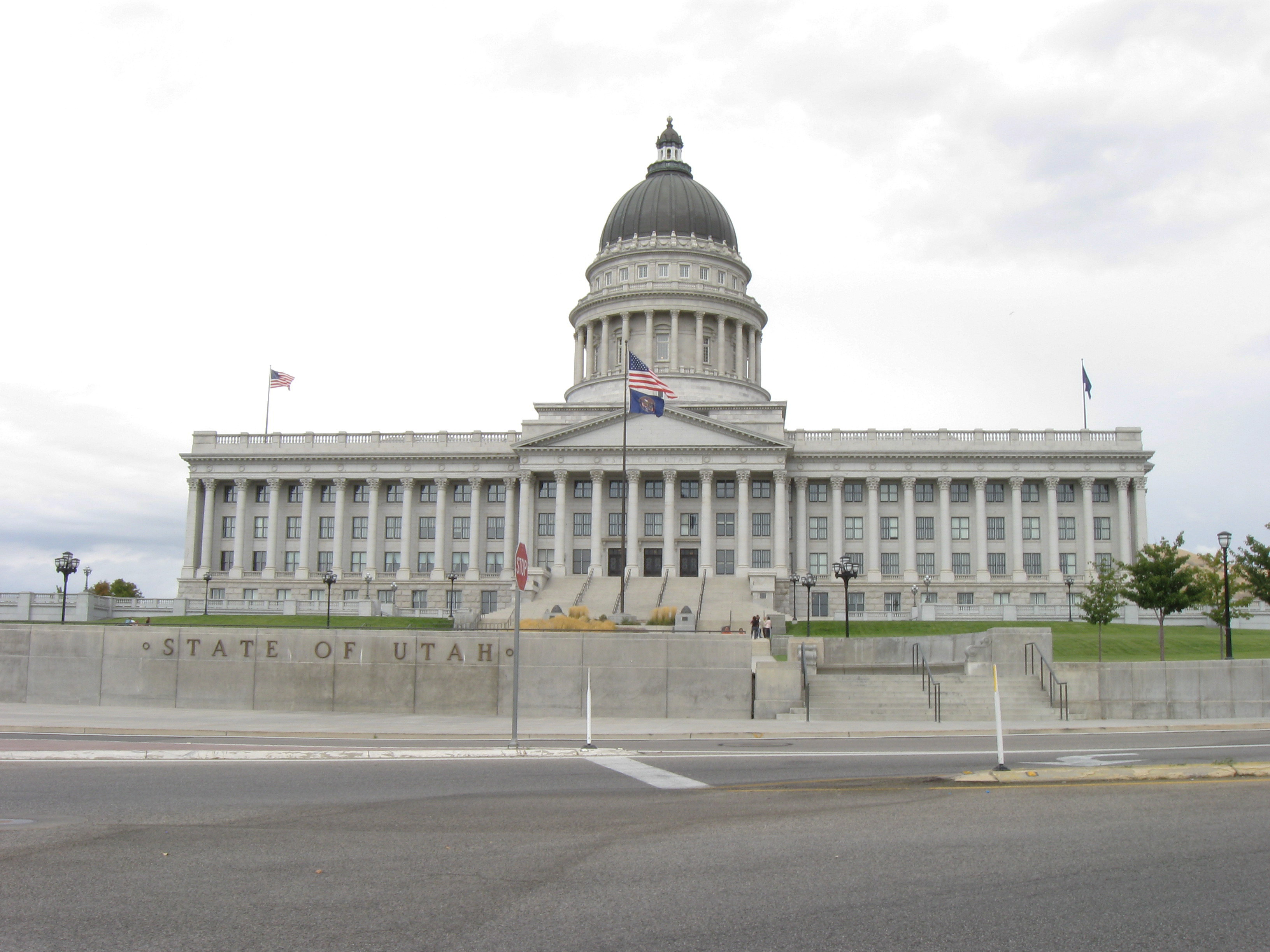
During the 2012 legislative sessions, Utah’s Sate Capitol Rotunda was the site of a rally organized by Human Dignity Utah. The purpose of the rally was to encourage Utah legislators to ratify the Common Ground Initiative.

The rally drew more than 100 people — some carried signs, others sang, but all were there to show solidarity in their quest for equality.

Five speakers addressed the audience and the dozens of lawmakers who watched from the third-floor balcony surrounded by armed Utah Highway Patrol officers.

Sister Dottie Dixon, a local art performer, told the audience, “By showing up here today we’re showing that we are fed up; we’re tired of being ignored, politely dismissed, relegated to second-class citizens.”

Kathy Godwin, president of the Salt Lake Chapter of Parents, Families and Friends of Lesbians and Gays (PFLAG), told the crowd that the majority of Utah citizens and businesses want equal protection for the LGBTQ community. She also said that approximately 70 percent of Utahns encourage state legislators to give civil rights to the LGBTQ community.

Isaac Higham, a keynote speaker with Human Dignity Utah, said after the rally, “I’m sick of the nonchalance of how easily they just dismiss our community and don’t even give us a true fair hearing.”

Higham said that Utah legislators are misinformed regarding what the people of Utah want. He said it’s the job of all Utahns to remind lawmakers that they are in office to work for the people, not just their agenda.

The Common Ground Initiative failed. All four bills went unheard and were effectively tabled.

Annual Gay-La and Silent Auction raise funds for the U’s LGBT Resource Center

001

Story and photos by SASCHA BLUME

The culmination of Pride Week at the University of Utah was the Gay-La and Silent Auction at the Jewish Community Center.

Approximately 240 people attended the dinner and silent auction with all proceeds being donated to the LGBT Resource Center at the U.

The money earned at the event went to student scholarships and student emergency funds.

People who attended the event were able to silently bid on numerous items, including: a limited edition collection painting by Trevor Southey, Ballet West tickets and a two-night stay at Hotel Monaco located in downtown Salt Lake City.

The silent auction raised $2,800, with the highest auction item being Southey’s painting. It sold for $500.

gay la_silent auction

The Gay-La Silent Auction featured a wide variety of items.

Attendees enjoyed the meal and the silent auction, but every person who paid to participate in the Gay-La was there because Matthew Breen was the keynote speaker.

Breen, a U alumnus, is the chief editor of the nationwide LGBTQ news magazine, “The Advocate.”

He began his speech by thanking everyone in attendance for their time and kindness toward the U’s effort in championing LGBT equality in Utah.

Breen disscussed the hardships of growing up gay in Salt Lake City during the 1980s and 1990s, and said how thankful he was to be back at the U.

It was while he was at the U, that Breen grew to understand that on planet Earth, it is not easy to conduct one’s life with loving kindness, especially  when the community he grew up in was intolerant toward the LGBT community.

“A younger me would have benefited from Pride Week,” he said.

During the keynote speech, Breen said how important it is for gay and lesbian people to come out as soon as possible. He also encouraged parents and the community to support all people in this process.

It has been 15 years since Breen publicly stated that he is gay. However, this trip to Salt Lake City was the first time he has been openly gay in Utah.

gay la_jim dabakis

Approximately 240 people attended the Gay-La and Silent Auction at the JCC.

In his speech, he encouraged the audience to never forget the hard work and dedication of previous generations and their efforts to end discrimination against the LGBTQ community.

Breen’s speech, however, was not exclusively focused on how far the LGBTQ community has come. Rather, he focused on the idea that people should “take abject lessons to heart,” and that they should “unlearn that there are two sides to the story.” Breen said there is only one truth in a story and that is what people should focus on.

He then discussed the idea that the media and general public still are misinformed regarding what being gay or lesbian is.

Breen explained that in America most people still link pedophilia with gay men. He also said the media and general public still believe that children cannot thrive in a same-sex household. He stated categorically that there is zero evidence to support these myths. The audience responded with loud applause.

The Gay-La also recognized nine students who attend Brigham Young University for their courage and resilience for upholding its Honor Code despite the fact that they are gay. BYU forbids sexual contact between gay people and will expel students for having same-sex relationships.

IMG_0007

BYU students having dinner.

One of the students, Adam White, said, “It is scary to speak up for what you believe to be right, but I found that when I raise my voice to spread awareness and understanding, that it does make a positive difference on this campus.”