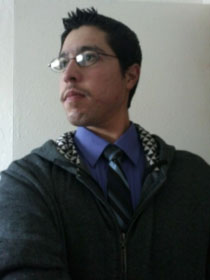
Trevor Rapp

MY STORIES:

MY BLOG:

As my time with the Voices of Utah comes to a close, I wanted to take a moment to reflect on what it has meant to me.

First of all, when I came into Voices of Utah, I was told that I would be covering the African-American beat. To be honest this made me a bit uncomfortable. Not that I had anything against African-Americans personally. Some would say I was mildly racist but really it was more uncomfortably ignorant. That kind of thing happens when you grow up living in a town of 50,000 people with only three African-Americans. I could always be outwardly genial but I was quietly uncomfortable when I spoke with them. I just didn’t know what to do. I think it was just growing up being constantly told not to be racist toward people of different ethnicities instead of being told how to be their friend. I knew what I was not supposed to do. And there were a lot of things I was very good at not saying, but that didn’t help me with my interviews because now I actually had to do something.

I had to interview them.

I had to talk.

And it turned out to not be so hard.

In fact, that’s how I met Ennis. Ennis is a 50-year-old man who is going to the same university as I, who happened to live in a neighboring apartment complex. I spoke with him at times as he would pass me on the playground that sits between our two complexes. It was usually brief, but through that I found that we had a common background of having served in the military. I also found that he was quite pleasant, very smart, and fun to talk with.

But the most revealing thing for me was when I got the chance to interview him for a piece written for Voices of Utah about University of Utah student innovators. During the course of the interview he mentioned something that floored me. He said I was the only person who had come to visit him in the entire time that he had been there. This deeply upset me. By this time I had known him for several months and knew there was not a reason to not like him and to not be neighborly. In addition, there were many other of my white friends whom I considered very extroverted. Were they just like me, only being friendly to those who they most easily identified with?

I don’t know.

But it made me wonder if in a world obsessed with political correctness defined by copious checklists of things not to do, maybe we focus on our to-do list more.

And the first thing on mine?

Be good to my neighbors.

TRapp2(1)ABOUT ME:

I am currently a student at the University of Utah studying Chinese and employed as a member of the Utah Army National Guard.

I earned a Bachelor’s of Science from Brigham Young University-Idaho in University Studies with an emphasis in Military Science.

My experience in the Army National Guard has allowed me opportunities to build small-group leadership experience. It allowed me to organize and conduct small and large group training sessions; practice accountability for personnel and equipment; support, follow and implement the policies of officers; suggest and implement forward-thinking and pro-active policies; and to practice maturity, leadership and professionalism.

My experience as a student journalist has helped hone these skills and expand my vision.

Alexa Wells

MY STORIES:

378625_10150529405500579_1046758825_n

Taken at Alexa Wells home January 1, 2013. Photo by Jill Wells.

MY BLOG:

Over the course of my Spring 2013 Intermediate reporting class, I learned a lot about the African American community. I found it interesting to learn about all of the different organizations that help spread diversity in Utah. With Utah being 1.3 percent African American, I think it is important to have these organizations to give resources for those individuals. This beat reporting has helped my professional development by making me more aware of my style of writing. I have learned how to be more accurate and why it is important to include links in my stories to back up the facts. I have also learned how much a photo can help your story by making it more interesting by having a visual with the words. During this class I have learned why it is so important to remain objective in my writing. It is easy to come off as biased, so I have learned how to word my stories so that I am not including my own opinion. It was difficult to remain objective at first, especially when I am writing about a nonprofit organization, because I find myself wanting to tell my readers how great it is. Instead, I have learned to show my audience how great the organization is by explaining the different things that they are doing to make it great instead of just telling  them. In the end, showing compared to telling my audience how they should feel about my beat makes for a much stronger piece.

ABOUT ME:

My name is Alexa Wells and I am 20 years old. I was born and raised in Salt Lake City. I am a junior at the University of Utah and I am studying mass communication with an emphasis in journalism. For the past three years I have worked at Wells Fargo bank as a teller. My goal is to graduate and get a job working for a local news station and work in broadcast journalism. In my spare time I like to snowboard, hike and read books. Spring semester of 2013 I have been a student journalist for Voices of Utah for my intermediate reporting class. I hope to get an internship for a news station next fall and continue to improve my writing skills.

Gustabo Rodriguez

MY STORIES: 

MY BLOG:

Intermediate reporting was not what I was expecting; students are expected to work in a real-world environment. This class pushed me to work more on my writing skills because I thought I knew how to write. But it taught me how to be more conscious on articles I wrote. Writing is an art like the title of the book says for this class and like most arts people have to practice at it. At the beginning of the semester I was a little nervous because it had been a while since I wrote an article. I learned that I can handle pressure and deadlines and this class showed me that I can really pull this off.

My beat was the African-American community and I learned a lot from the people I interviewed and in some cases I related to them. Stanley Ellington was one of our guest speakers for the class and while he was introducing himself he said something I related to. He said whenever he talked on the phone people would think he was from California, that he was from the ghetto, when in reality he’s from Alabama.

When people ask me where I’m from I answer I’m from Los Angeles and people assume that I come from the worst part of the city. I learned just to be patient and just explain to those people where I come from and not get mad or upset. Also what I learned from my beat is that it doesn’t matter if one is or belongs to a minority group you can still succeed in life regardless of your ethnicity.

ABOUT ME:

meMy name is Gustabo Rodriguez. I’m from Los Angeles and I moved to Salt Lake when I was 15 years old. I graduated from Granger High School in West Valley City. I lived there throughout my sophomore and junior years, but moved to Kearns in my senior year. In high school I knew what I wanted to study in college and that was communication.

When I enrolled at Salt Lake Community College that was my choice and here I am today. So right after high school in 2008 I attended SLCC (the Taylorsville campus) and graduated in the spring of 2011. I transferred to the University of Utah that fall.

I like watching and playing sports — basketball, soccer, baseball and football. Being from Los Angeles, I’m a big Lakers fan. My baseball team is the Angels. I don’t really follow the MLS but I follow the Mexican soccer league where my team is at and they are called Monarcas Morelia. Football I would have to go with the San Diego Chargers because Los Angeles doesn’t have a team.

I like any kind of music as long as it’s catchy I don’t have any favorite type of song, genre, or artist. That is one of the ways I could relax after a long day or even a long week. Action and comedy movies for me are the best and I always enjoy them.

Alysha Nemeschy

IMG_0292

Photo of Alysha Nemeschy taken April 2013.

MY STORIES:

MY BLOG:

As a student journalist writing for Voices of Utah, I have had the opportunity to learn more about myself and my community in one short semester than I have throughout my entire college career.

Reporting on the African American beat in Utah brought me to the realization that minorities are very underreported in the media and it us up to the next generation of journalists to bring this underreporting to an end.

Learning that Utah is made up of a 1 percent African American community got me thinking about the other minorities in the state that account for only a small population and in turn often go unnoticed.

As a feminist I have spent many years striving toward bringing equality toward genders – yet this still leaves me as a journalist, focusing on a very small minority group.

Writing on the African American beat has showed me that people throughout the world are being underreported. It is not just women or African Americans who do not get covered, but it is an entire population being suppressed in the media due to the lack of coverage that we receive.

Social-justice issues are scattered throughout the world, and as a journalist it is important to shed light on these issues and bring social awareness to audiences.

After reporting for Voices of Utah, I would like to continue to focus on bringing political and social awareness about civil issues to audiences as I continue on my journey as a writer.

ABOUT ME:

I graduated from the University of Utah with a Bachelor of Science degree in International Relations in May 2013. In August 2013, I will be completing two additional Bachelor of Science degrees: Political Science, and Mass Communication with an emphasis in Journalism.

In spring 2013 I was a student journalist for Voices of Utah. Additionally I completed an internship as an opinion columnist for The Daily Utah Chronicle.

My love for interacting with people landed me a job with Delta Airlines when I was 18. Working for this company led me on my global journey to understanding the world through travel.

My passion for education and traveling has brought me on an exciting journey with a broad sense of knowledge in many different areas. I believe that global education and understanding is one of the most vital necessities to bringing peace to this world.

Upon completing school I would like to continue writing as a freelance journalist while traveling the world and spreading awareness about human rights.

Kimberley Mangun

MY STORIES:

  • My headline here

MY BLOG:

ABOUT ME:

You don’t have to die alone from AIDS in Utah

Story and slideshow by SASCHA BLUME

Visit the Utah AIDS Foundation.

It was the day after Christmas, and it was 25 degrees outside with an abundance of snow on the ground. The building inside was bare, disorganized and in the middle of re-creating itself, the building was busy using the holiday weekend to install new paint and carpet.

The only room that was intact was the decorated memorial room.

The Utah AIDS Foundation was started in 1985 to battle the then AIDS epidemic and worldwide AIDS pandemic.

Today, the Utah AIDS Foundation, located at 1408 S. 1100 East in Salt Lake City, aims to prevent and eradicate AIDS.

In the 1980s and early 1990s there was a stigma around AIDS (Acquired Immunodeficiency Syndrome).

People thought they could get infected with HIV (Human Immunodeficiency Virus) by playing basketball with an HIV/AIDS-infected person.

People thought that if they shopped in a grocery store with an HIV-infected person they would get AIDS.

In response to the HIV/AIDS epidemic, the U.S. government provided funding for HIV/AIDS prevention and management for large cities/states.

The horrors of living with HIV/AIDS

The victims of AIDS vomit most of the day, they have continuous diarrhea, and develop purple blotch marks on their skin.

They lose their hair, their ability to eat and the function of their blood.

The intellectual and emotional damage a human who suffers from HIV/AIDS leads to self-isolation and a disproportionally high rate of suicide.

A plan was hatched

“No one talks about AIDS,” said Mario Duran, the MSM (Men who have Sex with Men) and HIV prevention coordinator for the Utah AIDS Foundation.

According to Duran, they want to end that stigma.

In response to the HIV/AIDS epidemic, The Utah AIDS Foundation created a five-point program that is designed to educate the general public and HIV-positive men about HIV/AIDS.

The Five-Point Program

(1)  Testing

At the Utah AIDS Foundation, the general public is welcome and encouraged to come in for a free HIV/AIDS test Monday through Thursday. People are also encouraged to get tested for all sexually transmitted diseases while they are at the foundation.

Brianne Glenn, the HIV/STI testing coordinator for the Utah AIDS Foundation, says everyone who tests gets an “anonymous number and they are referred to, as their number” while they receive HIV/STI testing.

“About 100 to 200 people come in a month for testing and one to two people a month test positive for HIV/AIDS,” Glenn said.

When a person has a preliminary positive test, they are immediately given a more comprehensive HIV/AIDS test. This procedure is called a confirmatory test.

The Utah AIDS Foundation’s free testing isn’t just for gay men. Straight males/females, swinger groups, and any other type of sexually at-risk person is encouraged to participate in the free testing program.

(2)  Gays and Geeks

According to Duran, the Gays and Geeks club was started because “there is so much stigma around gay masculinity and hyper sexuality.” The Gays and Geeks program is designed for HIV-positive men to come together in a safe environment for friendship and support.

The program is also designed to break down gay social stereotypes. For example, there is a common stereotype that gay men are only interested in working out, wearing high end fashion and having promiscuous sex with as many partners as possible.

The group meets once a month, usually at a movie, park or somewhere “geek orientated.” The Gays and Geeks meetings typically host five to 20 people per outing.

(3) 3-D Doctors

Duran said the Doctors, Dudes and Dinner program was an idea that was “borrowed directly from a Baha’i tradition.”

The Utah AIDS Foundation and two volunteers from the University of Utah spend a significant amount of time locating a doctor and venue that is willing to host the event. During this program a doctor will give an hour-long lecture on their specialty. The lecture is then followed by a free dinner.

The Utah AIDS Foundation set up this program as a response to the social stereotypes that gay men face. Many of these stereotypes include the idea that gay men are unhealthy and make irresponsible sexual decisions that heighten their risk for HIV/AIDS infection.

Because there is so much focus on gay men’s sexual health, the Utah AIDS Foundation felt there was a need for gay men to receive free health advice concerning other health issues that they might deal with.

According to the Utah AIDS Foundation’s website, “each 3-D event has a different intriguing health topic, (travel health, relationships, self-compassion, nutrition, skin care, etc.).”

The website also states, “3-D is a stepping stone to start the conversation on normalizing health in conversations about the gay community because of the unique way 3D is structured.”

(4) Outreach

Often on the weekend you will see Duran and a group of highly trained volunteers canvass the downtown Salt Lake bars and nightclubs handing out sex kits.

These sex kits include two condoms, one packet of silicone lubricant, and several promotional cards highlighting the work and contact information for the Utah AIDS Foundation. Workers distribute 75,000 kits annually.

We want to “talk about sex openly, we want to get a contact list and we try to get people in to test,” Duran, said.

That is the reason why they canvass.

The Utah AIDS Foundation is not interested in ending gay sexual relations, even if, having sexual relations means an HIV-positive man is involved.

(5) Case Management

Despite the dramatic decrease in HIV/AIDS infectious disease cases, people still get HIV/AIDS. When a person tests positive for HIV/AIDS, the Utah AIDS Foundation relies on a few staff members to help them rehabilitate their lives. One of these people is Zoe Lewis, a case manager for the Utah AIDS Foundation.

“This is a place that fights for people,” Lewis said. Because the Utah AIDS Foundation has been helping people battle the virus for almost 30 years, it’s much easier for people to receive great medical treatment when under the support system of the Utah AIDS Foundation. Lewis explained that many people often get very confused and lost when they try to get medical and insurance help on their own.

Lewis is one of several case managers who make sure the HIV-positive man gets complete encouragement to fight the battle against the virus. Case managers make sure every person is “teamed up with doctors and have a health provider.” They also make sure the individual is introduced to a wide and vast support system. This is why the programs Gays and Geeks and 3-D exist. The Utah AIDS Foundation wants to ensure that all HIV-positive men receive not only physical life management skills but, they also want these HIV-positive men to be emotionally happy and stable.

In Utah, AIDS is not a death sentence

“Most clients are afraid to have sex because they are afraid to pass it on. Abstinence is not necessary for an HIV/AIDS-infected person,” Lewis said. “It’s quite possible to have a good sex life.”

Part of the Utah AIDS Foundation’s objective is to adapt to modern HIV/AIDS medical research and prevention techniques.

“Our programs are always trying to accommodate all people’s needs – that’s why, you always see change,” Duran, said.

Part of this worldwide intellectual change is: gay men who are HIV/AIDS-positive can have safe sex.  The Utah AIDS Foundation has numerous suggestions for safe-sex practice for men who have sex with men. These techniques include wearing condoms, practicing oral sex instead of anal sex and many other techniques.

Despite the Utah AIDS Foundation’s best attempt at getting people to consistently practice safe sex, people in Utah still get HIV/AIDS. Regardless of the modern medical advancement of curtailing HIV/AIDS there still is no clinically proven cure for the virus.

This means people still frequently die from HIV/AIDS.

There is a reason why the memorial room stayed intact during the foundation’s Christmas remodeling. No human dies alone at the Utah AIDS Foundation.

‘I am who I am’: A profile of one man’s journey toward self-acceptance

Story and slideshow by DAYLAN JONES

Feeling from an early age that you are attracted to the same sex can be scary and confusing.

“I thought it was normal to feel this way. It wasn’t till 5th grade when I realized there were homosexuals and it wasn’t considered ‘normal’ to everyone else,” said R. Gamelson.

“Moving to the States, exploring my wants, coming out to my family and being on my own,” all those things were difficult and scary, said Gamelson, who asked that his first name not be used.

He feared being judged but said, “Even though I feel I am an exception, I am who I am. I am the same person; I will not treat you differently, so why would you treat me differently… If we quit assuming things and educate ourselves, the world will be a lot more accepting.”

Gamelson was born in the Philippines and lived there until he was 12. He said it’s a completely different culture there. “It isn’t bad to be gay over there. In some cases it is even celebrated,” he said.

When his parents decided to come to America Gamelson was excited to start a new school and make new friends. “I feel like I was an exception, I wasn’t shy, I didn’t act ‘prissy’ and I was good at sports,” he said.

Still silently questioning his sexuality in the back of his mind, he pushed it to the side and kept busy. He was involved in sports, newspaper, yearbook and theater. Gamelson made many friends quickly and felt accepted.

Although he said he enjoyed being involved in many extracurricular activities, he had one love: dance.

Gamelson started dancing at age 4 and credits his sanity today to over 15 years of dance, he said jokingly.

“It is my art, my expression and my outlet,” he said. Eventually he hopes to own his own studio and make that his life’s work.

“I only stopped for one year in junior high because of the fear of being judged or not being accepted,” he said. “After I got over that, nothing was going to stop me from achieving my dreams.” He said dancing is his escape from everyone he is afraid will judge him or treat him differently. “Art forms and outlets do not judge, only people do.”

His high school dance teacher, Karen Jones, said, “Ron is a beautiful dancer. Being a boy in high school, it is not common for a boy to stand out and stand proud as a dancer, he did both… He wasn’t concerned what others thought because he was proud of his ability and that was his to have; no one could take that away.”

Though he felt accepted socially, his self-acceptance was still a constant battle. He said the questioning became more intense and harder to push aside.

When Gamelson entered his senior year he couldn’t fight it anymore. That’s when he made the decision to accept being gay; accept it within himself. He knew what felt wrong and what felt right. Yet, he wasn’t quite ready for the world to know. His upcoming job offer was the perfect way to explore that.

“I met [him] at the gym I was going to. He heard I was a dancer and he offered me a job,” Gamelson said about his boss who introduced him to the gay community. That’s when Gamelson landed the job that started the double life no one knew about during his senior year.

“I would go to school like everyone else and go-go dance at night in Salt Lake City,” he said.

Seeing the new job as an opportunity to get to know a different side of himself and get to know this new community, Gamelson danced most Friday nights. “I would arrive at 9 that night, walk in through the back door and get myself ready. There was an immense amount of body oil and glitter,” he said.

Although he was a little overwhelmed his first night at the club, the night’s pay eased his concerns. Yet, fearing judgment and questioning of his sexuality Gamelson told no one; not his friends or family.

“About a year into it I told very few people, but I continued to dance another year before I was done,” he said.

“I came to the knowledge that you cannot have a relationship; you are there to flirt and entertain, to make money in tips. That is just too detrimental for a healthy relationship,” Gamelson said.

Meanwhile, Gamelson attended Weber State University where he completed his associate’s degree in spring 2012. “It made me realize I don’t necessarily need school to live my dream,” he said. “I believe a general knowledge is important, but I don’t need more than that to own my studio.”

Joking that the associate’s degree was easier than having the courage to tell the people who were closest to him, Gamelson said his mom “just knew… if you got in trouble and had to tell your mom, you know not to look her in the eyes because she already knew, she knows you better than anyone.”

But he was nervous to tell his dad. “My dad was a bit different; he had a hard time at first knowing his boy who was athletic and who played football was ‘playing for the other team,’ but he came around and we are pretty close again.”

Gamelson said most of his friends were supportive when he came out. “Some stuck around, a lot stuck around. They accepted [that]I am who I am.”

He enjoys giving back to his community. He volunteers at the Utah Pride Center, where he acts as an ambassador. “I saw an ad on Facebook, I called, went through some meetings, got the opportunity to speak with youth who were and weren’t struggling with their sexuality. I wanted to help; it is a support group, it is safe.”

Gamelson said he has learned a lot about himself and others during his coming out process. “There is a lot of assuming; people assuming I was one way and I wasn’t, me assuming I would be judged and not accepted but I was by many,” he said. “If we quit assuming things and educate ourselves, the world will be a lot more accepting.”

Berlin Schlegel has learned to take the good with the bad

Story and slideshow by Valeria Moncada

Get to know Berlin Schlegel and his friends.

Coming from an LDS family, Berlin Schlegel, 20, has had to face many difficult situations throughout his lifetime. Yet, in hand with these difficulties he has also had positive life lessons that he has learned from.

Schlegel was born in North Dakota. A month later he was adopted and then taken to Montana by his adoptive family.

“I grew up there until the age of 12,” Schlegel said. He then moved to Utah with his family and has lived here ever since.

He came out to his family and friends during his senior year of high school in October 2009. The process took about a month due to Schlegel’s fear of not being accepted.

“When coming out to my friends I didn’t feel as much fear as I did when coming out to my family. My friends made me feel comfortable and accepted,” he said. “My family, on the other hand, made me nervous and I felt like I could not tell them. It was a very big step for me.”

Schlegel added, “My friends took it incredibly well, I certainly could not have done it without them.”

He vividly remembers the night he came out to his mom.

“It was Halloween night when I built up the courage to tell my mother,” he said. “She was very upset and I ended up staying the night at a friend’s place.”

Schlegel’s father and sister took his coming out surprisingly well, by accepting him and his decisions. Things then gradually became easier with his family, until Christmas Eve.

“My mother and I got into another argument about my orientation,” Schlegel said. “It ended up with me being told to leave. That was definitely the worst of everything. As time passed things gradually began getting better.”

Schlegel has had to face many difficult situations in life, yet he has no regrets.

“I don’t really like to think of myself as having any regrets,” he said. “I think that there is something to be gained from every experience, regardless of how positive or negative it may seem.”

The most meaningful object to Schlegel is some old paperwork, such as his birth certificate and other hospital documents, that he has from his birth family.

“It’s all that I really know about them and I would like to find them someday,” Schlegel said. “I suppose that it would be one of the only tangible things that hold a lot of meaning for me.”

Another thing that Schlegel hopes to do one day is to see a Broadway show.

“It seems like it would be fun and I have always wanted to attend one,” he said.

Human rights are a subject that Schlegel is very interested in. His biggest interest is ongoing historical examples of discrimination that exist.

“It seems as if regardless of the culture or time period, there seems to be some form of authorization that emerges,” he added.

Schlegel’s biggest accomplishment would be when he was arrested about a year ago for an act of civil disobedience.

“Me and 26 other individuals were arrested outside of the courthouse of Tim DeChristopher’s sentencing,” he said.

DeChristopher, a climate activist, is co-founder of an environmental group called Peaceful Uprising. On Dec. 19, 2008, DeChristopher placed bids to obtain 14 parcels of land for $1.8 million in protest of an oil and gas lease auction. He was removed from the auction by federal agents, taken into custody and questioned. He was sentenced to two years of prison on July 26, 2011.

“We had gone into it with the idea of getting arrested,” Schlegel said. “It was a fun experience; it made me feel like I was a part of something bigger than I was so that was nice.” Although Schlegel did not have to spend the night in jail, he and other protestors were still arrested and had to be bailed out.

Schlegel has attended the Utah Pride Festival every year since he came out. He served as an intern for the Utah Pride Center and was largely responsible for the event planning of Queer Prom 2010. The prom, sponsored by the Utah Pride Center, is for LGBT couples between the ages of 14 and 20 who are not allowed to go to their prom. This event is held at the Salt Lake City library annually in April. In 2013, Queer Prom will be held on April 21.

Schlegel wants to finish his bachelor’s degree in musical theater at Weber State University and then he hopes to move to Chicago to pursue his career.

“I am also open to the idea of graduate school or applying to the Peace Corps later down the road. I suppose it all depends on how things play out,” he said.

Even though Schlegel has had to face difficult situations he has a positive mindset on life and tries to make the best of all of these challenges.

Schlegel added, “I’m just a person that is full of clichés so I tend to stay positive in life and I just think life is what you make of it so people should make the best of it.”

Coming out was the hardest thing that Schlegel has had to overcome in life, but it taught him a great deal.

“I can’t imagine my life any other way and in my regard I am grateful for the trials that I face,” Schlegel said. “It made me much more aware of the discrimination that exists throughout society and encouraged me to do something about it.”

How Mormonism shaped Salt Lake City gay activist Troy Williams

Story and slideshow by CONNOR WALLACE

See Troy Williams in action.

It is difficult to mention Troy Williams without bringing up his experiences with the Mormon Church and his activism in the gay community. But Williams, production and public affairs director at KRCL 90.9 FM, is better known for his role in the Salt Lake City Kiss-Ins.

Williams grew up in Eugene, Ore., where he was raised in the LDS church. Like others, he decided to go on a mission and was sent to England. Looking back, he says there were signs that he was gay.

“I pushed down my sexual desires in such a way that I channeled it into zealotry,” Williams said. “But it would creep out in interesting ways. I was on my mission from ’89 to ‘91, and I still broke the rules so that I could get the new Madonna CD that came out or the new Erasure CD, all this gay stuff, gay music. I remember teaching … and this family let us in to teach the first discussion. So here I am talking about Joseph Smith … and I see for the very first time on the television set the Madonna ‘Vogue’ video and all of the sudden I’m transfixed…. All I could do was watch.”

After returning home from his mission he was an intern with Utah’s chapter of the Eagle Forum. In Utah, The Eagle Forum is a religiously conservative anti-gay organization that focuses on affecting policy. Williams tried to deny his identity while there, but it kept bubbling to the surface. Since then he has maintained a cordial relationship with Gayle Ruzicka, the chapter’s president.

“I love Gayle Ruzicka and Gayle Ruzicka loves me, and she’ll tell anybody. Gayle always says ‘I have gay friends’ and ‘I’m not a homophobe’ … Well she’s talking about me and other people that she knows,” Williams said.

Although Williams cares for her, he acknowledges the negative impact she and former Utah State Senator Chris Buttars have had on equal rights. Both have succeeded in striking down legislation that would give the gay community more rights.

“Make no mistake, I don’t trivialize the damage that she’s done to LGBT families because it’s been horrific,” Williams said. “But on the flip side of that I think that Gayle and Chris Buttars and all these homophobic adversaries in Utah have really helped the LGBT community congeal to become stronger, to become more weathered. We’ve organized so much and a lot of it is due to the fierce opposition that we’ve had.”

Williams also points out that not only does this opposition help to make the community stronger, but it also helps each individual to feel more wanted.

“Salt Lake City is one of the easiest places to be a gay person,” Williams said. “It’s so easy to plug in to the community here. We just kind of take you in.”

After his time at the Eagle Forum, Williams reevaluated his life and became more entrenched in the gay community. He eventually landed at the local nonprofit indie-music radio station, KRCL, which debuted in 1979. It was one of the first to put gay people on air when it introduced “Concerning Gays and Lesbians” in the 1980s.

Williams has used KRCL as a type of conduit to help not only the gay community, but also the Salt Lake City public as well. “RadioActive” is a set of community features that explore the different issues concerning the Salt Lake Valley. “RadioActive” has moved from being a one-hour show on Sundays to a segment that is played each hour.

Vicki Mann is the general manager of KRCL, located at 1971 W. North Temple. She said Williams is vital to the station because he oversees the community connection features, fills in as a DJ when needed and is a hard worker.

“He really does whatever he needs to do,” Mann said. “He’s a roll-up-your-sleeves kind of guy.”

In 2009, Williams took the activism out of the radio booth and onto the doorstep of the Mormon Church. Two gay men were arrested for kissing on Temple Square. In response, Williams helped lead three Kiss-ins there. Although the events were in protest, one of the Kiss-ins ended up bringing him together with his current boyfriend.

“I had to lead the Kiss-ins but I didn’t have anybody to kiss until I scanned the crowd, and there was this adorable guy there. I actually just went down and grabbed him and pulled him up with me, and then the pictures were shot and then it ended up in the [Salt Lake] Tribune and then three and a half years later he’s been my boyfriend. When I go in and meet with [the Church of Jesus Christ of Latter-day Saints], I’m always like ‘I want to thank you guys for helping me to hook up with my boyfriend because if it wasn’t for you arresting those two boys on the plaza I never would have met Josh,’” Williams said. “It’s fun to tease them about that a bit.”

Williams was in the spotlight again soon after his role in the Kiss-ins. He received a part on the “Colbert Report,” a satirical news show. He was also in “Tabloid,” a documentary about a woman who tried to seduce a Mormon away from his religion, and even met another famous Utahn.

“That was like the craziest week for me because I went and and shot the Colbert piece, and then I went to L.A. and did the … film the next day, and the third day I met with Roseanne Barr in a coffee shop and developed this deep friendship that I still have to this day,” he said.

Brandie Balken, director of Equality Utah, was a former co-host of “RadioActive” with Williams. Equality Utah is a civil rights organization that focuses on improving LGBTQ people’s lives through political action and educating the public about issues facing this community. Balken points out that there are more similarities than differences between Mormons and LGBTQ people.

“We share families, we share workplaces, we share neighborhoods, our kids go to the same schools,” Balken said. “There’s a lot of interface between these supposedly separate communities.”

Williams agrees and points to the group, Mormons Building Bridges. Members of the organization marched in June 2012 with Williams and Dustin Lance Black, the Academy Award-winning writer of the movie “Milk,” in the Utah Pride Festival Parade.

“We marched at the front of the Pride Parade with 300 active Mormons who, in their Sunday clothes, were marching to show their support for the LGBT community. That’s unprecedented, and it sparked Mormons marching in 10 different Pride parades across the summer, across the country,” Williams said. “This is such an exciting time. You can actually see the nation shifting on an issue and it’s happening so rapidly.”

Troy Williams continues his advocacy on behalf of the LGBTQ community and his work to improve relations with the LDS Church.

“I think without folks like Troy,” Balken said, “we are more likely to leave people behind.”

Salt Lake City band RaeRe combines soul with folk music

Story and slideshow by MADELINE SMITH

Meet the band at RaeRe’s rehearsal

Tanner Crawford gently plucks the strings on his cello. Cameron Jorgensen joins in on his bass drum mirroring Crawford’s rhythm while lightly tapping on the rim of his snare. Scotty Phillips’ soulful vocals fill in the rest of the sound as Fleetwood Mac’s “Landslide” rings through Crawford’s living room.

These three musicians make up RaeRe (pronounced “Ray-Ray”), a local Salt Lake City soulful folk band. Their unusual arrangement of instruments gives insight to the band’s personality.

The members of RaeRe attended Emery County High School, and all throughout, Phillips and Crawford played music together. Their first original song, “I’m a Vegan,” was written during their junior year.

They started writing songs first on the piano, and Crawford would then translate the notes onto the cello.

Crawford also plays an Appalachian dulcimer, a four-stringed instrument that is plucked or strummed, usually heard in bluegrass music. “Hope and Coffee” is currently RaeRe’s only song with the dulcimer.

Phillips struggled at singing with the cello at first, but he learned to sing on key, driven by his emotional connection to the instrument.

“The hardest thing about singing with a cello is that it’s not a typical instrument to sing with by itself,” Phillips said. “It’s usually an instrument that accompanies something else, like a piano.”

In the summer of 2011, Crawford and Phillips were ready to move on from a single accompanying instrument to a fuller sound, and asked Jorgensen to be their drummer.

Crawford and Jorgensen listen to similar genres of music so they thought he would be a good fit. As they practiced, they could feel the music click.

Jorgensen focuses on understanding the structure of the song, and sometimes practices on a full drum kit with cymbals. Occasionally, he’ll bring a hi-hat or crash cymbal onstage, but it doesn’t get more complex than that, he said.

“Adding more drums can easily lead me to overcomplicating my part, which is a huge disservice to the band and audience,” Jorgensen said. “People come to shows to listen, not watch.”

He uses mallets, rods, brushes and sticks to create a variety of tones that suit the mood of any song, he said.

Jorgensen doesn’t just play drums, however. He picked up the guitar in RaeRe’s songs “The Witch” and sometimes plays on “Yellow Daisy.”

“Playing with other bands, your guitarist will leave their guitar at your place and you can’t help but play it,” Jorgensen said.

The band members thought of finding a permanent guitarist, but adding another person with a sporadic schedule to work around seemed like too much of an obligation, Jorgensen said. Also, it would only add so much to a sound they’re already content with.

He said a benefit of having just one string instrument is that Crawford doesn’t have to match another person, and can follow his own formula to suit the atmosphere of Phillips’ lyrics.

Phillips sings about life experiences other people can connect to, such as lucid dreams or a favorite coffee shop.

“I like to write things that I know other people could possibly relate to because music is very special to me as a tool to help other people,” Phillips said.

His lyrics don’t only stem from happiness, however. He said he’s also motivated by hard times he’s been through and tries to create something special from the heart, hoping people will enjoy it.

“Inspiration doesn’t always mean it’s uplifting,” he said.

The mood of Phillips’ words dictates which instrument Crawford plays. Because the dulcimer has a limited range of notes, he uses the cello or piano on more dynamic songs, he said. Also, the cello is better suited for songs with a sad or angry tone.

Jorgensen bases his percussion part off Crawford’s arrangement to fit the overall feeling of the song they’re working on.

RaeRe rehearsed its only love song, “Like Blake,” in Crawford’s living room on Nov. 25, 2012, and even though Phillips isn’t in the same state of mind as when he wrote it, he still gets choked up, he said.

He sings about a past breakup and questions why the relationship didn’t last, after all he and Blake went through and how perfect they were for each other. In the chorus, Phillips references a novel written by Richard Bach about a seagull that is bored of its day-to-day life, titled “Jonathan Livingston Seagull.” It flies higher than the other seagulls and was, as Blake described Phillips, distinctly different.

As they performed this song in Crawford’s Salt Lake City apartment, each member’s eyes closed, and they subconsciously responded to each other’s playing.

“When three talented people care about what they do, a natural chemistry develops,” Phillips said.

Every time Phillips sings, he becomes the music, allowing the words to take control. This makes it easier to convey the emotion he felt when the lyrics were written, he said.

Crawford called it a performance blackout, where he loses himself in the music and doesn’t remember what happened while playing his instrument.

“It can only be achieved safely when you know your music,” he said.

RaeRe’s Audience

Not every member in the band is gay, but it identifies as queer.

Jorgensen said, “If people thought I was gay, I’d be OK with it.”

Phillips said, “There’s nothing specifically homosexual in our songs, but it’s who I am so it reflects in them.”

Even though he doesn’t sing about relationships often, Phillips said he’s not going to incorporate the word “female” as opposed to “male” to please people.

Crawford said despite how the band identifies, straight people hear their music and say, “’Whoa, I feel the same way,’” because they talk about emotions that are human, not specific to just one group of people.

RaeRe carries this theme of openness through its performances, and wants to break the invisible barrier between the musicians and audience.

Crawford said, “Just because we’re on the stage doesn’t mean we can’t interact with the crowd.”

Phillips likes to create a metaphorical sense of comfort while performing. He often sets up end tables and displays items from his house on top of them.

RaeRe’s stage presence is very casual, Jorgensen said. Most bands that have a cellist play in a formal sitting position, but Crawford tries not to look rigid. Jorgensen said they just get into the music.

RaeRe had its debut on July 31, 2012, opening for Jay Brannan at Kilby Court, 741 S. Kilby Court. Phillips, a fan of Brannan, said it was a dream come true.

The band’s second show was at Paper Moon, 3737 S. State St., with The Brian Bingham Band.

On Nov. 6, 2012, they opened again for The Brian Bingham Band, along with Chanda Charmayne at Urban Lounge, located at 241 S. 500 East.

Jorgensen said RaeRe’s audience is often pleasantly surprised about how full of a sound it delivers, despite not having a guitarist.

Phillips said, “Compliments never get old and they never go to my head.”

He recalled receiving a letter from a woman his mom works with, who had connected to RaeRe’s music. She specifically praised each musician, and said “Marilyn’s Song” helped her through a hard time.

Phillips saw her at a Smith’s grocery store and he said she was crying as she hugged him. He was astonished that his band’s music could impact a listener enough that they would be excited to see him.

“To be able to give someone help is the best thing you can do,” Phillips said.

After their performances, the members of the band watch videos recorded during their set. Phillips said it’s surreal to hear people singing along.

RaeRe is focusing on getting its music to new audiences using social media such as Facebook and YouTube.

“You just have to not be afraid to tell people what you’re doing,” Phillips said.

The guys are planning to play more shows in 2013, possibly with an onstage couch to accompany Phillips’ end tables and complete a full living room vibe, Crawford said. Until then, Phillips, Jorgensen and Crawford have a lot to prepare.

The band is getting ready to record its first EP, although it has enough material to record a full album. There are 25 to 30 original songs written, and RaeRe is always in the process of writing more.

“I woke up yesterday and wrote two songs,” Phillips said with a laugh.