Utah’s Black Chamber of Commerce and ACCEL helping African American businesses and the Utah economy

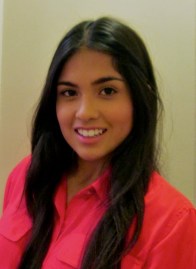
Beyond Beauty is a black owned salon in Murray, Utah and is owned by Angel Bumpers

Beyond Beauty is a black-owned salon in Murray, Utah, and is owned by Angel Bumpers. She is also one of the founders of the Utah Black Chamber of Commerce.

Story and photo by ALEXA WELLS

The Utah Black Chamber of Commerce and ACCEL, African-Americans Advancing in Commerce Community Education and Leadership, are both organizations located in Utah with a focus on helping black-owned businesses with networking and coming together in the community.

The Utah Black Chamber of Commerce is a nonprofit organization whose mission statement is “to economically empower and sustain African American communities through entrepreneurship and capitalistic activity within the United States and via interaction with the Black Diaspora.”

Stanley Ellington is from Fort Knox, Ky., and has lived in Utah since September 2000. Ellington’s parents are both African American. Ellington has a bachelor’s degree in administrative management from Excelsior College, a master’s degree in management from the University of Phoenix, and is pursing a doctorate degree from Grand Canyon University in organizational leadership with an emphasis in organizational development. With these credentials, Ellington started and became the executive director of the Utah Black Chamber of Commerce.

Ellington has been labeled as the African American representative of business. He is on The Board of the Governor’s Office of Economic Development, a licensed Christian minister at the New Zion Baptist Church in Ogden, Utah, is serving as a board member on the Pastor France Davis Scholarship Fund,  and is a member of the Junior Achievement of Utah organization.

“I came to Utah to be a leader,” Ellington said.

Another local leader is James Jackson III. He was born and raised in Utah, and attended Cottonwood High School in Murray. He graduated from the University of Utah with a degree in finance and marketing. Jackson took a break from school for about seven years and then went back to obtain his MBA from the University of Phoenix.

Jackson has known what he wanted to do since he was in junior high school: work in the financial industry doing strategic and market planning.

He was a member of the Utah Black Chamber of Commerce until he saw the need to build an organization where the black community can network together. Jackson started ACCEL in the winter of 2009.

ACCEL is for helping black communities with starting new businesses and brings the diverse community together and builds an environment for networking. Utah has many black-owned businesses, and with ACCEL it gives them the resources that they need to gain exposure throughout the community.

With organizations such as the Utah Black Chamber of Commerce and ACCEL, black business owners are able to obtain scholarships and attend seminars and networking events to get their business running.

Both the Utah Black Chamber of Commerce and ACCEL are committed to providing training and education to help business owners become successful. These organizations are looking for ways to teach people how to run a business and share the resources to help them when they need it.

One option Stanley Ellington is considering is offering webinars through the Utah Black Chamber of Commerce.

Job opportunities in Utah are helping to bring more diversity to the state and increase the black population. ACCEL and the Utah Black Chamber of Commerce are both working on helping bring diversity to Utah’s business owners.

Ellington says that he would like to see more ethnic diversity in Utah, since the black population is only 1.3 percent.

Jackson said, “Utah’s economy is fairly stable and the black population is growing. Most African Americans come to Utah because of the job opportunity.”

According to the ACCEL website, “The growth is due to Utah being more stable economically than the national average, as the job rate is increasing faster than the unemployment rate and has an attractive cost of living.”

Derek Miller, active executive director of the governor’s Office of Economic Development, said on the ACCEL webpage, “Utah has been ranked as the No. 1 most dynamic economy in the nation in 2009 and has seen 50% growth since 2007.”

The Utah Black Chamber of Commerce and ACCEL have made goals for improvement during 2013. Ellington is on track to relaunch the UBCC website, and Jackson hopes to offer more events each month, increase the membership base, add a member-to-member discount and improve the website. With these goals, both the Utah Black Chamber of Commerce and ACCEL will continue to be a resource for black-owned businesses in Utah.

Two local organizations help black business owners in Utah

Story by ALYSHA NEMESCHY

ACCEL CARD

ACCEL business card emphasizes taking the community to the next level

Born and raised in Utah, James Jackson III was the only black person
in his school until he reached the fifth grade. When he reached high
school, Jackson was one of about a dozen black students.

Jackson said that Utah’s significant lack of diversity makes him
excited to see new black people in the community. He said there are
very few unfamiliar African American faces in the state.

Recognizing this diversity gap at a young age, he chose to make a
difference in Salt Lake City by launching a business called ACCEL,
African-Americans Advancing in Commerce, Community, Education and
Leadership.

The idea of such an organization began in late 2005. Angel Bumpers, an
African American who had recently started her own business, Beyond
Beautiful, realized that there was no black chamber of commerce to
assist her in her business journey.

After starting Beyond Beautiful, Bumpers became one of the original
founders of the Utah Black Chamber of Commerce, hoping to help other
business owners.

Bumpers was in her mid-20s when the chamber was founded. She said
many people thought she was too young to take on the responsibility.
Due to this, she said she was forced to step down from her position.
She chose to resign from the chamber altogether.

Jackson, also a co-founder of the chamber, said that by 2008, the
organization seemed to have stalled.

He established and founded ACCEL in 2009 as a place for the black
community to come together, network with each other and recognize
other black Utah business owners.

According to ACCEL’s website, the majority of Utah is unaware of
black-owned businesses in the state due to “lack of exposure and
support of the community.” If the black community came together for
this one purpose, “a powerful synergistic organization would be
created to stimulate and excite the black marketplace.”

According to the US Census Bureau, there has been a small increase of
black people in Utah over the last four years. Jackson attributes
this growth to Utah’s overall growth and the growth of the economy
itself. With ACCEL, the increased amounts of African Americans in the
state have a place to turn when they are in need of help with business
ownership.

Jackson said some of the black-owned businesses in Utah include
catering companies, barbershops, physical therapy offices, moving
companies, network marketing companies and many more.

Although there are many black-owned businesses in the state, Bumpers,
owner of one of the longest-run black-owned businesses in Utah, said
Utah is still falling far behind the rest of America in regards to
minority-owned business exposure. She believes this is due to a lack
of knowledge, lack of communication and lack of support.

Jackson hopes to overcome these obstacles by sharing details about
ACCEL and how it can help individuals who are interested in starting
businesses.

Providing these things to the community requires support from others.
ACCEL has built up a large array of supporters including Zion’s Bank,
Budweiser and PepsiCo, who all provide donations to the organization.
Jackson said these organizations are passionate about being involved
with diverse organizations.

Having the support of others gives Jackson the opportunity to do what
he loves — educate others. With ACCEL, Jackson is able to do exactly
that.

Jackson focuses on the strange paradox of Utah having a strong economy
yet a lacking educational system. Through ACCEL he hopes to improve
education for the youth of Utah by offering seminars, networking
events and scholarships.

By helping other business owners and educating the youth, an important
part of his journey through ACCEL is to “remain humble and
never be afraid to ask questions,” Jackson said. “You learn more when you’re humble
rather than prideful.”

Bringing diversity to Utah classrooms through the Teacher Recruitment Scholarship Program

Story and photo by LORIEN HARKER

According to a 2010 survey by the National Congress for Black Women, less than 9 percent of educators in the United States are African-American.

The Teacher Recruitment Scholarship Program is looking to raise the percentage of diverse educators in Utah.

The TRS is a scholarship for those of an ethnic background who are majoring in early education. The scholarship is available through the University of Utah, Salt Lake Community College, and the Granite, Jordan, Salt Lake, and Davis school districts. According to the Salt Lake Community College Financial Aid website, the scholarship “is designed to increase the number of culturally and ethnically diverse students accessing higher education and completing teaching preparation programs.”

Fennel and I in Park City.

Fennel and reporter Lorien Harker enjoying the fresh air in Park City, Utah.

The scholarship offers compensation for tuition costs for a full two years and $500 a semester for books. Kailie Fennel, a prospective 2014 University of Utah student currently majoring in early elementary education at SLCC, is a recipient of the TRS.

She says in a phone interview that having a diverse field of educators would help students broaden their thinking process, as well as become more exposed to people of different ethnic backgrounds. Fennel says through students becoming more acclimated to different races, they can avoid awkward situations like she had in a middle school history class.

“In middle school, a teacher asked me if it was OK to talk about slavery. They made it a big deal,” Kailie says.

She also says she has yet to have an African-American educator.

“I’ve never had a black teacher,” she says. “I was looking up statistics on something and found there were only 8 percent black people in Salt Lake.”

According to the Utah census in 2010, the African-American population in Salt Lake was 2.7 percent.

Kailie says if there were more ethnic teachers, it would prevent awkward situations for students from happening, and students need to be exposed to culturally diverse teachers for this to happen.

Mary Burbank, the director for the Urban Institute for Teacher Education, says the goal of the TRS is to “broaden the traditional audience of teachers.”

The population of diverse students is increasing, and Burbank says the teachers need to reflect that diversity. In addition, diverse teachers would offer a “broad spectrum of contributions.”

She also says students would benefit from diverse teachers because of language differences, life histories and perspectives of the educators. Burbank says oftentimes, a single student of a particular race is often singled out in class and seen as the “token representative” to their class of that race. A field of diverse educators would “open up perspective” for students in the classroom, Burbank says.

“Any group of kids would be strengthened,” she says.

Cheryl Fennel, Kailie’s mother, said in a phone interview that she has felt the impact of the lack of diversity on her children in the community of South Jordan. Cheryl has three African-American children, one Korean child, and three white children.

“I think there can be some struggle socially,” Cheryl says. “They can’t be raised in an area like South Jordan without it affecting them.”

Cheryl says her children are “in a weird spot” because they are African-American, but raised in the predominantly white and Mormon culture of Utah. She also says she is concerned about her youngest daughter, Tara, going to school out of state. She has talked to other adoptive parents who have sent their children to college elsewhere, and they say that their children were shunned by the African-American students as well as by the white students.

However, Cheryl says compared to other children of adoptive parents in other areas surrounding South Jordan, her children have it relatively easy. Though she admits sometimes her children — her youngest son Josh in particular — relish the attention, she says education should focus more on the academics rather than diversity.

“It shouldn’t be about color,” Cheryl says. “I wish the issue would just go away and Kailie could just be a person.”

As far as Kailie’s awkward situation, her mother says to “handle it with a giggle,” because you can’t force complete acceptance of diversity into a class that is inexperienced with diverse students.

Kailie says she wants to be an educator her students can talk to about their personal lives and academic concerns.

“I hope to teach not only core curriculum but to give students a way to be themselves and be proud of it,” Kailie says. “I feel like there’s something to learn from everyone, whether it’s from a student, a peer, or a co-worker.”

Kailie says she knew she wanted to be a teacher when she helped her older sister grade papers for her elementary school class.

“I got to sit with this girl who had dwarfism. She was a first grader and she was probably shorter than my nephew, who is 2,” she says. “I had the opportunity to read with her during their recess as she couldn’t go outside because of medical problems. I would help her sound out each word and help with the ones that she didn’t know. Anyway, it’s satisfying to see that your service helps out someone else. It was a growing love for teaching that started with helping out my sister but was solidified when I got to teach a group of primary children.”

Kailie’s sister, Shaunna Page, was a teacher in Payson for the Nebo School District. Besides her sister, Kailie has an aunt who teaches children with disabilities. A grandmother and cousin are also educators.

“Seeing children learn is such a reward to me,” Kailie says, “probably more than anyone else.”

A journey of faith: overcoming racial restrictions in the Mormon Church

Story and photo by CHRISTIE TAYLOR

The Genesis Group was formed as an auxiliary unit of the Church of Jesus Christ of Latter-day Saints on Oct. 19, 1971, to support the needs of its African-American members.

It was founded by six men — including three church Apostles, a term given to the governing bodies in the church hierarchy, and three African-American church converts.

According to the website, the idea was to develop and support new member growth among black members as well as bring some of the members, who had left the church because of racial restrictions, back into the faith.

The group’s presence was important, because prior to 1978 the Mormon Church restricted African-Americans from holding a high-ranking church position — termed the priesthood — serving Mormon missions and participating in certain temple practices.

Jerri A. Harwell, a Genesis member, isn’t sure why the group was formed then, but said, “Perhaps black members asked the church and started getting some answers.”

Perhaps she was right.

The LDS Church on 6710 S. 1300 East, where the Genesis Group meets from 7 p.m. to 8:30 p.m. on the first Sunday of every month.

The LDS Church on 6710 S. 1300 East, where the Genesis Group meets from 7 p.m. to 8:30 p.m. on the first Sunday of every month.

Harwell, whose husband, Don, is the current president of the Utah Genesis Group, said her interest in the Mormon religion came while she was watching a church-produced show.

“I was a huge fan of the Osmonds,” Harwell said in a phone interview. She tuned into the show because she heard they would be performing.

They weren’t scheduled to perform until the end of the program. While Harwell waited, the church provided a phone number to call to receive information on Mormon principles.

Harwell, who has written a book about her conversion, titled “Leaning on Prayer: A Story of Faith, Perseverance, and Conversion,” was a freshman at Oakland University in Michigan at the time and thought it would be great to get some mail.

The church sent her a brochure on the teachings of the religion. She tossed it in a drawer without looking at it. She said she happened upon it again a few weeks later while she was cleaning out the drawer.

While looking through the brochure, she found a prepaid postcard to get more information on the church. She said she filled it out and mailed it in.

Two LDS missionaries soon contacted her to set up a meeting. Harwell said when they met at her college dormitory, they were surprised to discover she is African-American. Knowing the church’s restrictions, they asked her if she was “really” interested in learning about the faith.

She said she didn’t believe in God then, but was interested in what the missionaries had to say. They gave her a first lesson on the Mormon religion and asked her if she would like to continue meeting with them. She did.

Harwell was baptized a member of the Mormon church in 1977.

While in her sophomore year of college, Harwell decided to get more involved in the church and asked to serve a mission. Her request was denied, because of her race.

The denial tested her faith in the church and she prayed about it. The answer came. “It was a burning that this was where I was supposed to be,” she said.

That steadfast faith in the church teachings pushed her to continue on. But Harwell wasn’t the only one struggling with the racial restrictions.

Nkoyo Iyamba, a KSL 5 TV reporter and member of the Mormon Church, was living in Nigeria when her family first heard about the faith.

In a phone interview, she recalled a story about Anthony Obinna, the first convert to the LDS Church in Nigeria. An article in the Ensign, titled “Voice from Nigeria,” stated Obinna had three dreams at different times of rooms in a beautiful building, shown to him by a man with a walking stick.

A picture he saw of the Salt Lake City Temple in Reader’s Digest resembled the building he was seeing. He wrote to the Salt Lake City church headquarters in 1971 and requested more information, according to the article in the church-owned magazine.

The article said he was sent the information, but was informed the church would not be sending missionaries to Nigeria.

Iyamba said he wanted to baptize his people, but didn’t have the authority because he was black. Obinna organized and baptized his people anyway, she said.

“The true heroes are those who continued to go to church and live the gospel faithfully, despite being discriminated against,” Iyamba said.

While Obinna was forming an unofficial Mormon congregation in Nigeria, Ruffin Bridgeforth, Darius Gray and Eugene Orr, the three founding African-American church converts, were developing the Genesis Group back in the U.S.

Bridgeforth was president of the group, Gray served as his first counselor and Orr served as his second counselor.

Margaret Blair Young, an adjunct professor who teaches creative writing at Brigham Young University, has co-authored three historical novels on black Mormons with Gray. They also co-created the documentary, “Nobody Knows: The Untold Story of Black Mormons.

During a phone interview, Young said white male members were being ordained at 12 years old. But black male members of the same age had nothing to look forward to. So, one of Gray’s efforts to improve church membership among young black men was to organize a team to compete in a regional church basketball game.

The game was originally set up for active members only, she said.

Most of the boys recruited to the team were inactive in the church, but Gray made arrangements for them to be able to compete anyway. Being a KSL 5 TV reporter at the time, he also made an agreement with a co-worker to put the boys on TV during a sports segment, if they won.

Young said that partway through the intense game, Gray was informed the boys weren’t qualified to compete because they weren’t active members of the church. Because the church leaders who had made the exception were unavailable during the game, he couldn’t do anything to change the decision.

“We lost all the boys after that,” Young said, referring to their interest in the church. It was a huge disappointment for the Genesis Group and for Darius Gray, personally.

Young said Gray became inactive after the incident. Nevertheless, he continued a close friendship with Genesis President Ruffin Bridgeforth and cared for him during his struggle with diabetes. Bridgeforth continually tried to bring Gray back into the faith, Young said.

All the persistence of faith by Africans, African-Americans and the Genesis group may have finally made a significant difference within the church in 1978.

During the 148th Semiannual General Conference on Sept. 30, 1978, a revelation by the first presidency of the Mormon Church was announced.

The revelation, named the Official Declaration—2, granted “every worthy member of the Church all of the privileges and blessings which the gospel affords,” regardless of race or color.

This revelation allowed Harwell the opportunity to become one of the first African-American female missionaries for the church. She served in Houston in 1980.

After her mission, she attended Brigham Young University in the fall of 1983 and met her husband, Don, through the Genesis Group, according to her book.

Darius Gray eventually returned to the church as an active member and became president of the Genesis Group after Bridgeforth’s death in 1997. Don Harwell took his place as president in 2003.

Harwell and Gray weren’t the only ones making history after the racial restrictions were lifted.

According to the Ensign article, Anthony Obinna and several converts living in Nigeria were officially baptized by LDS missionaries shortly after the 1978 church revelation.

Obinna was ordained and appointed to branch president in Nigeria, an honor that made him the first black man to serve a high-ranking church position in Africa, according to the article. Obinna was also able to baptize his wife, Fidelia.

Nkoyo Iyamba said she immigrated to Utah in 1977 and was baptized a member of the Mormon Church in 1983. She currently sings in the Mormon Tabernacle Choir.

The Genesis Group has continued to grow since its humble beginnings. Young said black membership has grown from 300 to 400 African and African-American members to about 1 million today. Even though the church does not keep official records of membership by race, Young said through demographics, estimates can be made.

Young attributes some of the local growth to the dedication of a monument in the Salt Lake Cemetery to black pioneer Jane Manning James, and a play that Young wrote based on James’ life, titled ”I am Jane.

Harwell said visitors come to each monthly meeting. “People come from out-of-state to attend our events,” she said. Consequently, they are becoming more diverse.

Harwell, who doesn’t think in terms of being a black member of the Mormon Church, said, “I think in terms of being a member of the Church of Jesus Christ of Latter-day Saints. The Lord does not see color, He does not see race.”

Utah becoming the new frontier for booming black-owned businesses

Story and photo by TALON CHAPPELL

Cold, conservative, culturally closed, homogenous.

For many outsiders, these are the words used to describe the state of Utah and its values. But steadily, more and more diversity has moved within Utah’s borders.

The increasing job market has given birth to a new pilgrimage to the state, one vastly different than the one Brigham Young and his Mormon followers made some generations ago. It’s bringing a new wave of African Americans and their families who have uprooted their lives from the other side of the country, and have settled down in the Salt Lake Valley, eagerly attempting to start a new life, but simultaneously maintaining their Southern roots.

According to the 2010 U.S. Census, the African American population in Utah is at 1.3 percent, which is up 65.9 percent from the 2000 Census that listed the African American population at 0.8 percent. A major cause of the increase was Hurricane Katrina and relocation efforts in 2005. According to ABC News, nearly 600 evacuees were brought to Salt Lake City in the wake of Katrina.

The entire state saw a 23.8 percent increase in total population, which many believe to be a sign of Utah’s economic growth in times of dismal economic decline. According to Forbes.com, the employment growth average for the state of Utah is 0.6 percent per year, which differs drastically from the national average of -0.6 percent per year. This and many other reasons led to Forbes.com listing Utah as the best state for business for the third consecutive year.

James Jackson III is the founder and executive director of ACCEL (African-Americans Advancing in Commerce Community Education & Leadership). He is a firm believer that Utah’s increasing African American population is due to the state’s growing job market. “Most of them move [to Utah] because of a job,” said Jackson about African Americans moving from the other side of the country.

Jackson and ACCEL  have helped numerous black-owned small businesses in the greater Salt Lake area by offering members greater networking resources, financial guidance and emotional support from other members. Moving companies, catering companies, physical therapists, network marketing, financial services, barbershops and restaurants have all been opened by African American citizens and are aided by ACCEL. “The ethnic community is very tight … and the businesses reflect that,” Jackson said.

Papa O's Asset for Story 1

Marcus Brinson, part owner of Papa O’s restaurant in Draper, is hard at work in the kitchen. Papa O’s is one of the newest members of ACCEL.

Take a trip down to 11483 South State St. in Draper, and you might as well have driven down to a country kitchen in southern Florida. Papa O’s soul food restaurant is a newer member of ACCEL  and has been offering authentic Southern-style comfort food to Utahns since October 2012. Marcus Brinson is part owner and manager of Papa O’s. He and his family, including four of his seven children, moved to Utah from Naples, Fla. (near Fort Myers) last September, after his sister, who also lives in Utah, said there was no diversity in the food.

“I was really hesitant,” said Brinson about moving his family from Florida to open a restaurant. Brinson said the business went through a turbulent time when sales would be booming one day and excruciatingly slow the next.

In addition, he said some of his employees were not passionate about the food, or the restaurant’s customers.

“We had some employees that put us in a bad spot,” Brinson said.  “So I made a change.”

He decided to make the restaurant a family affair. His kids clean tables and take orders, he and his sister take turns managing the restaurant, and he even has his mother making all the desserts by hand. All of the restaurant’s dishes are family-kept recipes including juicy fried chicken, smoky barbecue ribs, creamy mashed potatoes and macaroni and cheese, crispy fried okra, and five different kinds of cornbread.

Stanley Ellington, the executive director of the Utah Black Chamber of Commerce frequently attends UBCC meetings at Papa O’s as well as at other black-owned businesses in the greater Salt Lake area. Ellington still thinks the state has a long way to go in reaching racial equality in small business platforms.

“I have discovered there is a great divide between the haves and the have not’s,” Ellington said. “They [African Americans] don’t have the resources that are needed in order to create their business … that’s why I’m in Utah … to be a leader.”

Ellington was born in Alabama and lived in Washington, D.C., both of which are considered hubs for the national African American community. He moved to Utah in 2000 while serving in the Air Force and decided to stay after retiring in 2002. Ellington believes that the number of black-owned businesses listed in the census information is overrepresented. He also believes that several black-owned businesses in Utah have failed due to a lack of knowledge and racial tension within the state.

“People know prejudice is alive and well,” Ellington said. “We’re [UBCC] coming [up] with a solution.”

Overall, the economic future looks bright for all Utahns. As employment rates rise, so too does the state’s diversity.

A report made by the Small Business Administration Office of Advocacy showed that Utah had 241,692 small businesses in 2008, accounting for almost 50 percent of private sector jobs. These numbers are expected to grow after another report by the U.S. Chamber of Commerce listed Utah in its  top-10 economic “Boom States.”

Talon Chappell

MY STORIES:

MY BLOG:

This past semester has been far more rigorous and daunting than I had ever anticipated. I thought that being the casual newspaper reader would prepare me to be able to write and report with the knowledge and skills of an actual journalist. I learned quickly that there is much more to reporting than finding something interesting and spewing out the facts.

Accuracy, good questions, accuracy, good note taking, accuracy, people skills, accuracy, objectivity, accuracy, writing skills and accuracy are just some of the tools I gained or sharpened during this semester. I also learned that editing is far more valuable and crucial than I had ever thought before. In high school, I would spew out my work, giving it one half-hearted glance for minor spelling or punctuational mistakes, and turn it in thinking it was worthy of being published. That bubble was quickly and unceremoniously popped. I now view my work for spelling and grammatical mistakes, improper word usage, word repetition and non-flowing paragraphs, just to name a few.

I have been at the U for almost three years now, and although I lived in Layton, I thought that I knew a lot about the culture of Salt Lake City. To a point, I did know a lot about the culture of Salt Lake City, the white culture. Until this semester, I had never ventured to explore the African-American culture that, while small, is growing in exposure. I learned that many of Salt Lake’s African-American residents come from a variety of backgrounds and are usually from outside of the state. Many of them come to Utah in search of a better job market, better housing situations, and better quality of living than where they come from. I also learned that there are some serious adjustments they have to make to thrive in the plain yogurt bowl known as Utah. The African-Americans who move here vary from the hard-working factory stiff, to the bright-eyed entrepreneur and everything in between. Without this class, I probably never would have met some of these great, hard-working people or been to some of their outstanding new businesses.

Covering this beat made me realize that even in a relatively homogenous place like Utah, there is a variety of vibrant and growing cultures and subcultures just begging to be explored by the willing writer. Sure, I could stick with what I know and continue to write stories on people just like me, but now I want to do more, I want to see new things and meet new people whose values and experiences differ from my own.

ABOUT ME:

Sports are my true passion in life. Playing, watching, analyzing and commentating are what I love to do. Late into puberty, when I realized I wasn’t going to fit the body type of the traditional professional athlete, I gave up on playing for a career, but I knew that sports would still be a part of my professional life. Watching SportsCenter on ESPN nearly four hours a day,  I grew to admire the work of sports analysts like Mike Wilbon, Tony Kornheiser, Hannah Storm, Stuart Scott and Scott Van Pelt. I knew that I wanted to talk and analyze sports for a living, but getting to ESPN is a tall order to fill. Many of these reporters worked their way up from newspapers, to magazines, to blogs, to radio, then up to television. So I decided to begin my climb up the media ladder by committing to the mass communication major here at the U.

I have always been fascinated with words. As a kid I would always ask my parents and teachers what the definitions of words were. Even today, I sometimes challenge myself to use sentences with uncommon or complicated words or vernacular. My love of wordplay and convoluted words naturally led me to writing. Writing is a cruel beast, but attempting to tame the written word is the underlying dream of every writer. My hands get sore, my posterior gets numb and my brain goes dead, but the rush of a good piece is so worth it.

“The difference between a successful person and others is not a lack of strength, not a lack of knowledge, but rather a lack of will.” — Vince Lombardi

I have the will and determination to climb the steep hill that is becoming a successful journalist. Much like a professional athlete, I don’t like to lose. I take that same mentality into all facets of my life, including my work. I want to be considered one of the best by my peers and by my readers. I want future generations of young sportswriters to look at one of my pieces or quotes and say, “That’s what I want to do. I want to sound like that guy.”

Renee Estrada

MY STORIES:

IMG_0371MY BLOG:

At the start of the semester I was excited to learn that my class would be beat writing for African Americans in Utah. Being a part of a fellow minority group, I was eager to cover stories about African Americans. It is my personal belief that some of the most interesting stories come from minority communities, and all they need is a reporter willing to cover them.

Once class got rolling, I realized what a challenge this beat would be! African Americans make up a very small percentage of the Utah population, 1.3 percent according to the U.S. Census Bureau, so naturally stories would be more difficult to come by.

Since finding stories about African Americans proved difficult, I found my stories by taking national issues and localizing them. I gathered the opinions of other Utahns to get a feel for popular sentiment.

I covered President Barack Obama’s inauguration, but focused on the reflections of African Americans. I  wanted to know they felt about his first four years and the four years ahead of him.

The other national issues I covered proved quite controversial. I covered the movie “Django Unchained,” which dealt with slavery in the South. Additionally, I wrote about the marriage equality movement and its similarities to the civil rights movement.

Covering this beat has shown me just how diverse Utah is. At first glance Utah may seem fully of cookie-cutter families and lacking diversity. Now I realize Utah has many small, different, ethnic communities. And because these communities are smaller, they need coverage to make their voices heard.

My experiences in this class helped me realize  even though you may not see a story right away, a true writer can find a story in any subject.

ABOUT ME:

I’ve been interested in writing my entire life. Growing up, I always said, “When I grow up I want to be a journalist.” There are a variety of factors that led to this. First, my passion for reading, and second my father.

Throughout elementary school, middle school and high school, I was always reading. Reading for school or reading for fun, I always had my nose in a book. I would finish entire series in a week or less and the bookstore was essentially my candy store.

So after reading and reading, I began to think, I could try this. I could try to write something. Eventually that desire went away, suppressed  by homework and other activities. But at the end of the day I still really wanted to write something.

The second factor that developed my interest in writing was my father. He was always submitting letters to the editor for our local paper, the Orange County Register. He was published quite often. Our home phone number was listed in the phonebook and readers would call our house, praising my dad’s letters and agreeing with his opinions.

As a kid I was amazed that my dad was published in a newspaper.

“How cool, I want to do that,” I thought to myself.

So finally when I was off at college, I realized writing was what I wanted to do. In 2011, I declared myself a communication major, with an emphasis in journalism.

In addition to that major, I also declared myself a political science major.

I’ve always had an interest in politics. Growing up, my family regularly engaged in debates over the dinner table, and I  often watched the news with my dad. Once I began college I became more and more interested in politics, and taking political science classes because I was genuinely fascinated. I’m expecting to graduate winter of 2013.

In the fall of 2012, I moved to Washington, D.C., to intern with News Generation. Living and interning there was one of the most exciting opportunities I’ve had throughout my college career. I gained independence and a better sense of what the professional world is really like.

In the meantime, I’ve been honing my writing skills at the Daily Utah Chronicle. There, I report on a variety of topics and campus events.

Currently, I live in Salt Lake City, and I’m your average “poor college student.” I hope that won’t be for long, though.

Danealle Plascencia

MY STORIES:

photoMY BLOG:

This semester I gained different experiences focusing on the African-American community in Salt Lake City. One of the experiences that I had was being able to meet a great leader of the African-American community who helps small business owners to find the right sources so they can succeed in the future. His name is James Jackson III. He showed me that working hard and getting the right education you could succeed in life and try to help your community as much as you can.

My second experience gained was trying authentic Ethiopian food for the first time. I stepped in Mahider Ethiopian Restaurant looking to try something unique from Africa, and I found more than just food. I was able to learn one of the main Ethiopian ceremonies, which the main element is coffee and the meanings for the community.

My last and most wonderful experience was getting to know Susan Clissold. She is the owner of a small shop in Salt Lake City that focuses on selling handmade items from African artists and teaching the community about her culture with art. She taught me that having passion for something can help people in other parts of the world and have the satisfaction of doing good for someone.

Reporting increased my understanding in the community. Looking around, finding new places and people led me to find new stories and experiences that I will always have present in my life.

ABOUT ME:

Since I can remember I always had an interest in reading and writing. I enjoy reading novels, being outdoors during the summer and trying new dishes.

Currently I am attending the University of Utah, where I am working on completing my degree in communication with a focus on public relations. After graduating from Kearns High School in 2009, I continued my education at Salt Lake Community College. I completed five semesters and earned an associate of science degree in 2013. During my time at SLCC I gained experience with different communication classes that I took, which helped me decide on my current major. While attending college, I was exposed to different situations that taught me how to develop my education.

I want to focus on helping the Hispanic community. Since I have Hispanic heritage, I have the ability to help minorities and make the community stronger through communication.

I hope one day to become a noted reporter or broadcaster and help the community to be well informed.

Christie Taylor

MY STORIES:

24090_1401722285378_5041283_nMY BLOG:

Focusing on the African-American community in Utah this semester has shown me just how desperately this state is in need of more exposure to diversity and diversity education in schools. During our first in-class interview with James Jackson III, executive director of ACCEL, an interesting question came up. The question was whether or not Jackson felt Utah was a prejudiced place. He responded by saying that he didn’t feel people in Utah were necessarily prejudiced, but he did feel ignorance was an issue. Overall, he felt Utah is friendly, but the lack of diversity causes ignorance. As I worked through interviews and stories in the African-American beat I often found myself thinking the same thing. It’s something I had not considered until I started working this beat. I have personally never witnessed any racism in Utah, although I do hear about it in the news occasionally. Hearing first-hand accounts of racist or ignorant remarks was disheartening. In two out of the three stories I have written, I discovered that high school seems to be a big part of the problem. Since it is difficult to expose people to diversity in a state that serious lacks it, education on diversity is desperately needed. I recall a comment the Rev. Jesse Jackson Sr. made while we were live tweeting his speech from the University of Utah. He said, “We hate what we should love.” I didn’t think much of it at the time, but the more the semester went on the more that quote sunk in. The more I worked this beat I came to realize that it’s not necessarily hate that people feel, but fear. We fear what we don’t understand. The more we can expose people to differences, the more tolerant I believe we’ll become as a community.


ABOUT ME:

I am a University of Utah graduate with a bachelor’s degree in Mass Communication with an emphasis on journalism and new media. The joke in my family over the years has been you either go into medicine or broadcast news. Medicine was definitely not in my blood, but I’ve been passionate about news as long as I can remember. I love meeting new people and hearing about their lives. I often find myself getting into deep discussions about life with complete strangers. I was recently watching Jane Fonda on Oprah’s “Next Chapter” and she talked about never feeling comfortable in sameness. I have never been able to articulate my feelings completely, but that was exactly what I have always felt. I had my first Oprah “aha” moment. I am the most at ease in difference. I like being exposed to new experiences, new cultures and new people. Journalism is the perfect fit for someone like me. Interviewing people is probably my favorite part of the process. While interning in the social media news division at KSL 5 TV, I found my place in news. I loved being able to interact with viewers and answer questions for them that a story didn’t. New media provides valuable interaction between media outlets and their audiences. I want to be a part of the process that is changing the way journalists report news.

Lorien Harker

MY STORIES:

MY BLOG:

My most revealing experience of my beat was in an interview with Stanley Ellington for my Black Veterans in Utah story. In our interview, we were discussing inter-racial relations within the military. I brought up the topic of a veteran support group for minorities and asked why he felt it was important. He compared language barriers to culture barriers, and how important it is to be fluent in someone’s culture to truly be able to communicate and understand each other. This, Ellington reasoned, is why minority support groups are important.

Something else I learned about myself this year is I’m not a great multi-tasker or procrastinator. I feel this is something every student at one point in their life is forced to learn the hard way. With a part-time job, school, work and an internship, I feel I spread myself too thin – and unfortunately I feel my school work took the brunt of my shortcomings. However, there are some very valuable lessons I learned this semester.

First and foremost, I enjoy print writing more than I thought I did, and enjoy television journalism a lot less than I thought I would. This has really helped me define my career path. Though both careers are somewhat time consuming, through taking my T.V. journalism class, I’ve learned that I am not someone who can have their career be so time consuming. Although I greatly admire my T.V journalism professor and his work ethic, I know this is outside of my range of possibilities. I find reporting just as fulfilling, yet somehow less frustrating.

ABOUT ME:

I am a junior at the University of Utah majoring in broadcast journalism. While attending the U, I have had opportunities to participate in Newsbreak, a student TV news network on campus, as well as intern for the x96 radio station. I am a writer for The Cultural Hall, a blog about LDS culture and issues.

I’m also a volunteer for the VA Salt Lake City Health Care System. I have been involved with the A Million Thanks Organization, which gathers letters of thanks from citizens to deliver to veterans currently serving, in hospitals, or retired.

In the future, I hope to become more involved with the Honor Flight Network, an organization that provides a free trip to WWII veterans who have yet to see their monument in Washington, D.C. Though I do not come from a military family, I am very passionate about veterans and their service.

I was on the first flight out of the United States after 9/11. Though this was a scary time for America, I felt the country pull together during a time of tragedy. This planted the seed of patriotism in me forever, and I will never forget the images of those brave men and women rescuing those who were trapped under the rubble of the Twin Towers.

In my spare time, I love to sing, play my violin, read, take long walks, visit with my grandma, and dote on my dog.

185906_10150130928282145_2041957_n

My grandmother and I after Miss South Jordan 2010

I have three sisters and one brother, who is serving an LDS mission in Buenos Aires, Argentina.