The U connects to the west side for further educational options

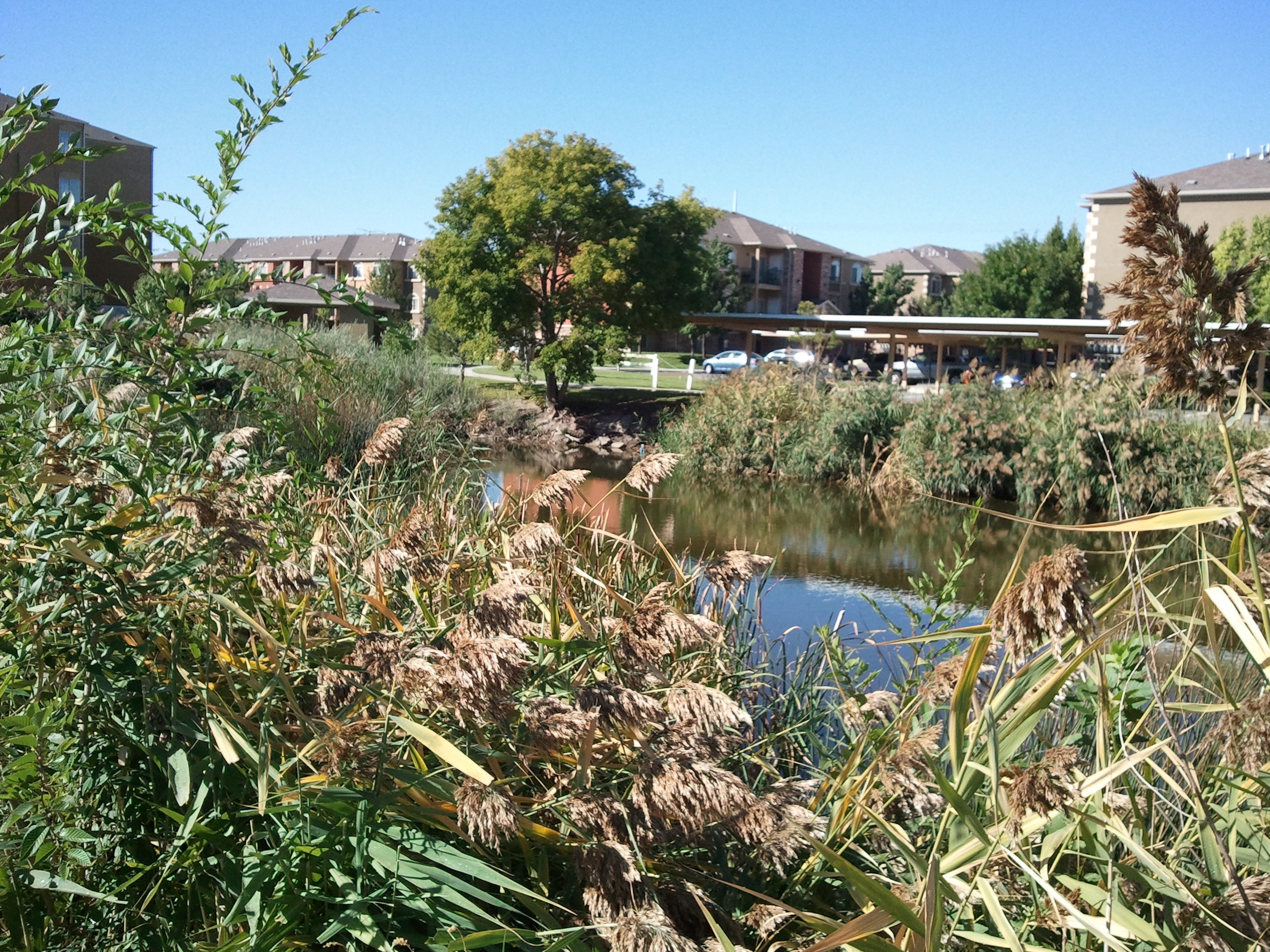
The Jordan River, West Valley City

The Jordan River runs through the west side of Salt Lake City.

Story and photo by JOHANNA WISCHMANN

“Partners in the Park” gives the community on the west side access to information and opportunities for further education after high school.

The program, which focuses on seven neighborhoods, started about nine years ago to raise awareness to people that they can have the chance to receive a further education.

“Partners in the Park” strives to strengthen opportunities for youth to receive further education. It also supports community leadership and helps the community have a more stable foundation by working on things like health, safety, housing and employment.

During the summer, free events are held in ethnically diverse neighborhoods at Jordan Park, Neighborhood House, Riverside Park, Sherwood Park, Westpointe Park, Constitution Park and Poplar Grove Park.

Joèl Arvizo, the partnership manager for youth education and success at University Neighborhood Partners, said particular communities are targeted because “of historical inaccessibility and disadvantages.” He also said, “The families are very interested in direct information for their children’s further education.”

UNP works with culturally diverse Salt Lake City neighborhoods to try to get students interested in attending the University of Utah. UNP partners with nonprofit organizations and U departments and colleges to try to link these neighborhoods to the U and create a stronger foundation for these communities.

“The west side has a lot of stereotypes which often aren’t accurate,” said Sarah Munro, UNP’s associate director. “Partners in the Park” is one of UNP’s programs.

Overall, Munro said UNP’s “program gives the west side the same opportunities that other neighborhoods have.”

Munro said one of her long-term goals is to try to ensure that the west side receives more recognition from the government. “The biggest complaint is that they were under represented,” Munro said. In an interview she described some of the problems west-side residents have had and said people often don’t know how to make their voices heard.

UNP aims to “help build a bridge from the U to the west side.” Munro said programs like Partners in the Park help a lot of children because parents want them to have a brighter future than the situation they are currently in.

“Our policy is to work with anybody,” she said. “They should have the same opportunities that other areas have.”

On average, 400 people attend the events, which feature activities and picnic dinners.

“For the past 10 years the region has been researched and we found that fewer numbers of students were attending the U from that region,” Arvizo said.

“Partners at the Park is necessary to spread information about the help we can offer the community,” Arvizo said.

“Partners in the Park” and the UNP are always looking for help and volunteers. To access more information and ways to help visit the website or contact staff.

Bennion Center, Mountain View Elementary School partner to prepare students for higher education

Story and photos by TOM BETAR

Put down the crayons and paint and pick up the calculator and textbook — students at Mountain View Elementary School are being prepared to soar into college and beyond with the help of the University of Utah’s Lowell Bennion Community Service Center.

The Lowell Bennion Community Service Center, located in the Student Union Building, has partnered with Mountain View for about 10 years. During that time they have fostered many positive relationships with their students and faculty. The Bennion Center staff coordinates several programs that are designed to help students and teachers of Mountain View, both inside and outside the classroom.

Nancy Basinger, Bennion Center assistant director and service learning manager, said the center was founded in 1987 and was named for Lowell Bennion, a famous volunteer in the community. He is honored by the Legacy of Lowell event, which is the kickoff to homecoming every year. In 2011, the event was held Sept. 24 at Mountain View. It featured about 1,000 university students and community members working on about 20 different service projects that included everything from making dental hygiene kits to crafting quilts for refugees.

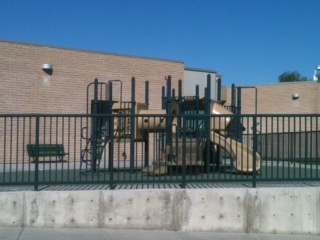
Mountain View Elementary School, located at 1389 S. Navajo on the west side of Salt Lake City, is a Title 1 school, which means it is typically populated by students from low-income families. Students in this area are generally underrepresented at colleges such as the U, so schools like Mountain View Elementary are working to reverse this trend.

Mountain View Elementary School has many programs in place to help students succeed in higher education.

Alice Ma, 22, is the education and advocacy coordinator at the Bennion Center and works with Mountain View children by reading to them throughout the week. She also oversees two student-directed programs that take place at Mountain View. The programs, SOARE and Soaring Eagles, are directed by student volunteers at the U and are set up to get Mountain View students thinking about higher education as early as possible.

SOARE is a program where field trips are set up so students from Mountain View can come visit the U campus to explore and ask questions.

Soaring Eagles is a tutoring program where volunteers from the U spend a minimum of one hour a week throughout a full semester at Mountain View tutoring students, helping out in classrooms or working with students after school. Ma said Mountain View students respond well to these programs.

“The field trips have been successful in the past and they get kids excited,” she said. “The idea is to encourage them to come to college and get them excited about coming.”

Jim Martin, 36, has been the principal at Mountain View Elementary School for two years. He said Soaring Eagles helps tutor his elementary students specifically in math and reading. He said volunteers help all throughout the day, but even when the final bell rings to dismiss students at 2:50 p.m., many of them do not head home.

“We have about 270 kids who stay for an additional hour of school,” Martin said. “So some of those (Soaring Eagles) volunteers are steered toward the after-school time and being able to support kids’ learning needs.”

Ken Kurimoto, the student director of the Soaring Eagles program since May 2011, said many students and teachers at Mountain View need assistance.

“Because of the distraction of other students and learning levels of individual students, teachers cannot teach every student in an equal level, especially with a large amount of students,” he said in an email interview. “People need our help, so we need to understand the strategies and concepts of helping others in need.”

Kurimoto said there is a unique atmosphere at Mountain View that indicates how serious the school is with achieving the goals of higher education. He enjoys the work he does with these students.

“Mountain View is highly focused on the discipline of the entire students including hallway procedures, classroom procedures and respect to authority such as teachers and tutors,” he said. “Teaching them is a very interesting and exciting matter. It does not matter what your major is, teaching other people is important.”

Principal Martin said college preparation at elementary school is now a reality.

Children at Mountain View are spending less time on the playground and more time in the classroom as programs such as Soaring Eagles prepare them for higher education.

“Our goal in elementary school now is having kids be college and career ready,” Martin said. “And anytime they can interact with someone from the university it sort of cements that idea for them.”

Ma said it is true that elementary students respond differently to university students than they do to teachers or administrators.

“University students know what’s going on and can better answer all of their questions,” Ma said. “The (elementary) students get more one-on-one time are more willing to listen to someone who has the experience. They get really excited when university students come.”

Another student-directed program the Bennion Center provides in connection with Mountain View is the Social Justice Gardens. Lacey Holmes, Bennion Center public relations coordinator, said the community garden is divided in two. Half of the space is reserved for families who want to rent beds and maintain their own space. Residents can come and pick fresh produce from the other half. The garden is on the grounds on Mountain View and there is an after-school aspect of the program that focuses on teaching students about nutrition and environmental education.

“The Social Justice Gardens were started by a Bennion Center student and their idea is really to focus on environmental education and really bridging that gap between income,” Holmes said. “It really provides an opportunity for natural organic food in that area that might not be provided any other  way.”

She said much of the west-side work that her organization does is related to Mountain View Elementary.

“I think our mission on the west side is really to get our students involved in bettering the community but also to get the residents involved in higher education and desires for that, so it’s kind of a two-way street,” she said.

Holmes said students should stop by the Bennion Center at any time to get more information on service that can be provided to Mountain View or any part of the Salt Lake City community.

“It really provides an opportunity for students to get outside themselves and to maybe see a different aspect of life than they’re used to, and for them to really do things that they care about and to put their skills to use,” Holmes said.

Principal Martin said being a west-side school has historic challenges, so partners such as the Bennion Center are invaluable.

“(Elementary) schools have traditionally not been very successful with west-side students, so that continues to be a challenge,” he said. “What’s great about this area here is we understand that it is really important to try to pool as many resources as possible for the benefit of the students that we work with. I think that’s what been done so successfully here.”

Martin said these educational partners and programs provide hope for students in the future.

“We’re constantly trying to figure out ways to be more successful with our students because we believe that their potential is huge and we just need to be able to figure out how to best tap that potential so that we can see kids achieving at super high levels,” Martin said.

Martin said right now there is no way to track the progress of his students as they move on to higher education, so it is hard to quantify any success. He said he has seen progress in the past few years, but there is room for improvement in regards to preparing students for higher education.

“We haven’t figured it out,” he said. “We haven’t found the recipe for success but I think we’re slowly and gradually figuring things out and seeing some success. I think we’re on the right track.”

Martin said seeing his elementary students work with students from the U is a great opportunity to plant the seed of higher education.

“Our 84104 ZIP code is pretty poorly represented at the university (of Utah) so it’s nice to be able to make connections with university students,” Martin said. “It’s always powerful when I see a student from Mountain View with a student from the University of Utah because I think that we’re making those connections so that students can start to see the university and higher education as a possibility and as kind of a life plan.”

Sorenson Unity Center and Planned Parenthood Association of Utah host sexuality class for teens and parents

Story and photos by SHELLY GUILLORY

The Sorenson Unity Center, in partnership with Planned Parenthood Association of Utah, held a workshop in October 2011 to provide a comfortable setting for parents and teens to talk about sexual health and STDs.

But no one showed up.

“I think it’s uncomfortable for teens and parents to participate in a workshop together,” said Angela Romero, program coordinator for Sorenson Unity Center. “Sexual education is a difficult subject to discuss.”

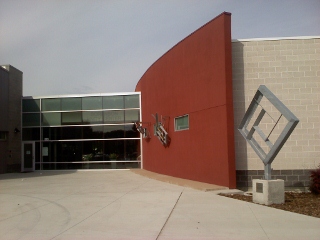
Romero said the Sorenson Unity Center, located at 1383 S. 900 West, has worked with Planned Parenthood for the last three years and has offered two sexuality classes with the organization. The center has also partnered with the Salt Lake Valley Health Department and offered two workshops. The class in October — the fifth —  was the first held for teenagers and their parents.

“The goal is to have healthy discussions about sexuality and health issues related to sexuality, and the risk you take when you become sexually active,” Romero said.

To market the class, Sorenson Unity Center sent e-invites to its community partners and also sent mailers to residents who live near the center.

Planned Parenthood planned three activities for the class, which included mini interviews for parents to do with their teens regarding friendships, media and dating, and one activity geared toward health care and education resources offered by Planned Parenthood and community agencies.

Romero said the goal is to create more awareness about sexuality and encourage parents to provide their teenagers information — information that cannot be found in health education classes in Utah schools — about sexuality in an age-appropriate way.

“We have to meet certain requirements,” Romero said. “With teens and parents being here, Planned Parenthood is able to answer questions that might not be able to be answered in schools.”

Lynn Beltran, STD and HIV program manager at the Salt Lake Valley Health Department, said in an email that laws in Utah dictate what can and cannot be taught in schools. Schools teach an abstinence-only curriculum 95 percent of the time.

Beltran said classes offered at Sorenson are designed to fill the void in sex education classes in schools.

“National research from the scientific community shows that abstinence-only education leads to higher rates of unprotected sex as well as earlier onset for sexual activity among youth,” she said. “Comprehensive sex education really allows for discussion about postponing sexual activity and how to protect yourself if you choose to be sexually active.”

Teenagers who have sex risk sexually transmitted diseases, HIV and unintended pregnancy. Without access to information, many teens do not understand the risks associated with sexual activity.

Beltran said STD rates in Salt Lake County have been increasing for years. She said chlamydia is the most common reported disease and is often a marker of how much infection is circulating in the general population.

“Youth aged 14 to 19 comprise the greatest proportion of our chlamydia infection and in small areas of Salt Lake, 1 in 4 teens has chlamydia,” she said. “So the attitudes of that subset of the population have a strong influence on our increase. It is very hard for public health to compete with cultural shifts when there is no effective comprehensive sexual health education in the school systems.”

An increase in the number of sexual partners a person has, a younger onset age for first sexual encounter, peer pressure and changes in attitudes regarding sexual activity all contribute to the increase, she said.

She also said research shows that youth want this discussion with their parents, even though they may act like they do not. But some parents have a difficult time talking about a subject that many consider taboo.

Annabel Sheinberg, director of education at Planned Parenthood Association of Utah, said in an email that parents are the most influential sexuality educators of their children. Sheinberg, who was responsible for facilitating the class in October at Sorenson Unity Center, said in her talking points that when teens have accurate information, they provide their peers with facts rather than myths.

“What is offered in school is not enough,” she said. “If parents don’t take the opportunity to talk, they are allowing the media to be the main educator of their children.”

Sheinberg also said teen girls between the ages of 15 to 19 in Rose Park and Glendale have a 1 in 100 chance of getting pregnant, which is 10 times higher than youth on the east side near the University of Utah.

But it might be uncomfortable for teens to talk openly about their sexuality with their parents.

Sorenson Unity Center’s Romero said although no one attended the class in October, about 20 teenagers attended the previous class — a class specifically aimed at teens. And not their parents.

“My child actually participated in [the last class],” Romero said. “He said he learned a lot of information. He didn’t really go into detail about things, but he said it made him more aware of risks.”

Hoping for a better attendance for Sorenson Unity Center’s next class, Romero said the center will focus on organizations that already work with populations who have an interest in the topic. She also said the class will cater to teens or parents, but not both.

The Health Department’s Beltran knows that teens are interested.

“They do actively engage in the classes and ask really good questions,” she said. “Our biggest challenge is simply getting people to show up for classes in the community.”

Utah nonprofits, Sorenson Unity Center roll with recession

Story and photo by DEREK SIDDOWAY

In the midst of numerous stock market plummets, layoffs and home foreclosures, many people have come to rely on soup kitchens, housing services, welfare entities and charities such as the Salvation Army and Deseret Industries for basic necessities.

According to the Bureau of Labor Statistics, Salt Lake City’s unemployment rate was at 7.4 percent in August 2011. Online real-estate marketing company RealtyTrac reported 560 housing foreclosures in the city throughout September 2011.

With no economic relief in sight, nonprofit organizations in Utah are working tirelessly to meet an increased demand for their service. A 2011 report prepared by the Community Foundation of Utah and Wells Fargo paints a vivid picture.

According to the report, “The New Normal, Changes to Utah’s Nonprofit Economy in the Great Recession”: “Utah nonprofits are, like the families they serve, stretched to the limit,” In addition, “As many as 14 percent have no cash on hand, and are living paycheck to paycheck, much like many of the people who come to them for assistance.”

The report, presented to the Utah State Legislature in February 2011, indicates demand is continuing to increase. In 2009 and 2010, nearly 80 percent of Utah nonprofits saw an increased need for service. These findings hint that up to one-third of Utah nonprofits could be out of business if there is no relief in the immediate future. When the report was published, 70 percent relied on deficit spending or were operating on less than three months of reserve funding.

“There is basically no reserve fund left in the state of Utah for nonprofits,” said Nancy Basinger, assistant director and service-learning manager of the Lowell Bennion Community Service Center. She studied nonprofit interactions with the government for her doctorate research at the University of Georgia in 2003 and is a member of the advisory board at the Nonprofit Academy for Excellence in Professional Education at the University of Utah.

Basinger, who has published various reports and research projects concerning the nonprofit sector in Utah, said nonprofits suffer more in a down economy when demand rises and funding bottoms out. She is concerned over how nonprofits will continue to meet their obligations and serve the community if they are unable to make payroll.

“This is the rainy day and now we’ve got to really figure out what to do,” Basinger said. “The pot is smaller and the (number of) people donating is smaller.”

The pot may be shrinking while demand has done anything but. In addition to providing for the physical needs of their patrons, nonprofits have experienced an increased need for social and mental programs as well.

“Behaviors supported by social services are more in need because of job loss, at-home abuse, substance abuse and no health insurance,” Basinger said.

The Sorenson Unity Center houses a variety of nonprofit organizations selected through its Programming Partnership.

Some nonprofits have responded to these diverse needs by joining forces. For example, the Sorenson Unity Center has found that this strategy benefits patrons in addition to decreasing operational costs. The operation came about in 2008 when the Sorenson Multicultural Center and Salt Lake County approached the city government with a plan to run the center for a reduced cost. Located at 900 W. 1383 South, the Sorenson Unity Center provides services for the Glendale and Poplar Grove neighborhoods.

“Sorenson Unity Center is a way to bring organizations under one roof so that it’s not so difficult to have a million nonprofit organizations competing for the same dollars,” Basinger said. “(Salt Lake City) has decided that it is in its interest as a supporter of society to support the work of those nonprofit organizations. They are working together and accomplishing twice and much with the same dollars.”

Angela Romero, Sorenson Unity Center’s program director, is responsible for the selection of nonprofit organizations through its Programming Partnership. She describes her job supervising the partnership as a way to provide opportunities for the community that would be otherwise unavailable. Nonprofits seeking to use the Sorenson Unity Center’s resources must show Romero the services they will provide to the community before they are approved.

“We want to be a resource through the programs we provide,” Romero said. “We hope individuals can take away something that will help them in dealing with the current economic environment.”

According to its annual report, the Sorenson Unity Center had a total of 8,334 participants in programming activities for the 2010-2011 fiscal year. Overall, the center and its affiliates served more than 18,000 patrons during the past fiscal year. These affiliates — Unity Computer Center, Computer Clubhouse, Donated Dental, Fitness Center, Child Care and general events and meetings — saw a total of 74,283 visitors during the same period.

However, the Sorenson Center and its affiliates receive financing through city funding. This steady source of revenue allows the center to maintain its facilities for the community’s use without wondering where the next check is coming from.

“I think what the recession has done is (create) a greater need for us to provide quality services for individuals that are in our community,” Romero said. “Hopefully more people are able to access the programs we have here.”

Melanie Holbrook

MY STORIES:

MY BLOG:

Reflection: the intentional consideration of an experience in light of particular learning objectives. As I’ve taken the time to reflect on my service-learning course, I’ve learned a lot about myself along with having had epiphanies about my career.

Throughout the course our class focused on nonprofit organizations located on the west side of Salt Lake City. From September to November, we had to write four stories about four different organizations; this process included research and interviews with multiple sources.

It sounded like a simple process to me at first, but contacting sources can be difficult. People may not get back to you, their schedules may be too busy for an interview or they may have trouble answering your questions the way you’d like. Our stories also required multimedia assets. My beats pertained to organizations helping youth, which then raised another problem of permission of taking pictures of children.

A lot of times you’ll come across organizations not allowing photos to be taken, which is a problem some of my peers and I encountered.

These occurrences drew epiphanies about my career. Gathering all the information and placing the puzzle pieces together to write a great story is hard.

Another epiphany and aspect I learned about myself is the concept of giving your reader total background about what you’re writing about. I found that in my writing I’ll use vague words such as “activities” or “things.” What sort of things? What sort of activities?

As I write it out and as some may read, it sounds obvious: of course you can’t be vague with your readers. But that’s something I learned. I was OK with doing it and now have learned not to do it.

About myself, I learned that I still have some brushing up to do with my grammar, punctuation and knowledge of AP style. In order to be successful and a great journalist, I need to know it in my sleep, no excuses.

I knew I loved talking and getting to know people, but reporting for these stories proved that fact even more. The people behind the scenes of these nonprofits are amazing people, they are working solely to help others. I absolutely loved interviewing people and being able to inform myself and readers about these organizations.

I want to inform people the best I can, to let them know every detail of what’s going on and what’s out there.

A journalist’s career is tough, but I want to stick with it and pursue this career.

ABOUT ME:

Originally from San Francisco, I’ve lived in Salt Lake City now for three years. I plan to graduate with my major, mass communication/journalism, and my Spanish and international studies minors. With the help of great professors and internships at ABC 4 News and Salt Lake magazine I’ve developed a love for writing and reporting. I’d love to eventually report for art, music and fashion. I love talking with people and finding out what their story is.

Rose Park: Diverse in culture, united by community

Story and photo by MELANIE HOLBROOK

The Salt Lake City neighborhood, Rose Park, is well known by its diversity in culture. However, what people may not know is that its groups and councils bring the community together.

Brad Bartholomew, Rose Park community council chairman, said in a telephone interview that groups such as the community council, the Lions Club and the Rose Park Revival are just a few organizations in the community.

“There are also a group of people who mainly like to get together just to hang out and get to know others in Rose Park. They have one or two food drives every year as well,” Bartholomew said.

Rose Park’s community council meets the first Wednesday of every month to discuss what’s happening in its neighborhood, to discuss concerns from community members or organize community events.

The Rose Park Revival, a committee created for fun in the neighborhood, has held events such as the “Crop Swap” and the “Fun-O-Rama.” The crop swap is an opportunity for residents to share produce from their garden and get to know their neighbors.

According to the revival’s website, “The feedback received was very positive but insightful as well. Folks here are so kind that the idea of selling the fruits of their gardens was a bit foreign, when they usually just give them away to neighbors and friends.”

The crop swap allowed people to swap things like Armenian cucumbers for a bushel of apples. The event was held in August 2011 and was a success. “I was even surprised at the quantity and quality of offerings given the late spring and earliness of the date,” wrote Jim Harper, a community member, in a post on Rose Park Revival’s website.

Mario Organista at Westpointe soccer field.

Mario Organista, 20, a Rose Park resident, said his neighborhood “definitely has several ways of bringing people together.”

One unifying activity for Rose Park community members is soccer. Residents from all over the neighborhood come together for games. It gives members a chance to interact and cheer for fellow friends and family. “Soccer games are just full of energy and puts everyone in a good mood. After having a good time with your neighbors, you don’t want to have tension,” Organista said.

Organista has lived in Rose Park his whole life and has enjoyed it. “There’s usually stuff going on for the community to get together and have fun,” he said.

He said a unique way that the community is unified is through there being a lot of different cultures. “There isn’t just one race or culture that is a minority; there’s so many different people, it makes us have more in common,” Organista said.

Collin McLachlan

MY STORIES:

MY BLOG:

This semester has been really different from semesters I’ve had in the past. I took the Introduction to News Writing

Collin McLachlan

course in the spring. In that course, I developed a better understanding about writing for print. I started to consider learning more about the craft of writing to have it as a career option.

After a few weeks in this course, I may have changed my mind. My original intent when becoming a mass communication major was to study broadcast journalism. After doing internships for both KUTV and KSL, I learned that it is important to understand the basics of journalistic writing, even in broadcast. There are a lot of scripts to write, questions to jot down and — especially now with web content — a lot of writing to accompany video stories published on a website.

I took this class to increase my skills in writing, and it has done so. I really do feel much better prepared for the challenges that my career might produce. However, I had an epiphany. For me, working in a print news studio, doing the same work day-in and day-out that we have been doing in class would feel like taking a drill to my brain.

I have enjoyed this class. I’m grateful for what I have learned. I just don’t know if I could take this as my daily job, at least not for very long.

As for this class as a whole, I have learned quite a bit from the beat we were assigned. The story that personally impacted me the most was when I covered the Utah Dream Center, which is an organization that is helping under rivileged refugees from all over the world. Traveling down into a west-side neighborhood for that story really opened my eyes to the poverty that exists, even here in Utah.

But, as far as the social justice topic, I felt I needed to exam it a bit closer. When I was leaving the Dream Center neighborhood, I noticed a man on the side of the road who had just blown his tire while driving. The tire was on the opposite side of the car from the spare tire he was already using, so he had no spare. I pulled over and tried talking to him. Even though he could barely understand me, I tried to tell him about Pick-n-Pull and how it sells cheap tires. I then gave him a ride to his apartment just a few blocks away.

From what I could gather from him: he came from Somalia alone, was living in his apartment alone, and was working as a bagger at a nearby grocery store. The apartment complex he lived in was one set aside for refugees. Judging by the façade, these apartments looked fairly new.

This is where my social justice confusion came in. Many people living down in these areas have histories that I am so glad I don’t have, and their neighborhood really is less then ideal. However, It seems to me that a lot of people who are proponents of social justice cry out, “The rich white man is suppressing the lower class.” The general argument is that those of us who are “white” and “have so much” are putting down those who don’t.

I was confused. I drove this really nice man home to his apartment because his car had broken down. Right after that, I drove to the apartment I live in, in Bountiful. I noticed that, judging by the façade, his apartment and my apartment were roughly the same size. We both had vehicles to drive, although his was temporarily unusable. I too had worked as a bagger at a grocery store; however, I recently quit when I obtained a paid internship in the field I am going to school for.

So after this experience I wondered, “Where is the injustice in this example?” His basic needs are covered as much as mine, and to the extent that mine are.

Now please do not misunderstand me. I am grateful for a better understanding of  people and their circumstances. Not all refugees are in this same circumstance, and I have not gone through anything close to what I imagine they have. I am not saying that they don’t deserve more. I understand that injustice could lie in their lack of opportunity to better their employment or further their education. I can’t argue that.

I just noticed that he and I are living in very similar circumstances, despite stereotypes some may hold about refugees being underprivileged.

ABOUT ME:

Collin McLachlan was born and raised in Utah. He attended Woods Cross High School, where he enrolled in band, choir and theater classes. Upon graduation he attended what was then called Utah Valley State College. After completing a two-year LDS mission to Ft. Lauderdale, Florida, he attended Salt Lake Community College before transferring to the University of Utah.

Collin always wanted to do something in television, and realized that the most stable career in this field was reporter/anchor. After completing his general education requirements at SLCC, he enrolled in mass communication – new media at the U, before changing his major to mass communication – journalism.

He has completed internships with KUTV and KSL, and is currently a paid intern with the Davis School District Communication and Partnerships Department.

Collin’s dream job would be a morning personality reporter. As a hobby, he follows the automotive industry closely and is building an ‘89 Jeep Cherokee to four-wheel in Moab in his spare time.

Spy Hop and UNP: Shining some light on the west side of Salt Lake City

Story and photo by COLLIN McLACHLAN

What if you turned on the radio and heard this: “A young man was stabbed today in a probable gang fight in Bountiful.” Would you be surprised? Now imagine if the radio said it was in Rose Park.

“Stereotypes don’t reflect crime statistics,” said Sarah Munro, associate director of University Neighborhood Partners.

Founded Nov. 1, 2002, UNP is a program that “brings together University and west side resources for reciprocal learning, action, and benefit.” According to its website, UNP collaborates with communities and nonprofit organizations in an effort to “provide access to higher education.” Its drive comes from the idea that education is the key to strengthening both families and communities.

“UNP is not a service organization,” Munro said. “What we do is meet with local nonprofit organizations on the west side and establish partnerships that will benefit the community.”

UNP has many challenges to its work. “The difficult thing is that people want to know what changes are happening,” Munro said.

She said it’s difficult for UNP to measure its success because success doesn’t come from UNP’s work alone. Since its main focus is to create partnerships, UNP finds success when its partners do.

This doesn’t mean that success cannot be tracked. One organization that UNP has partnered with in the past is Spy Hop Productions.

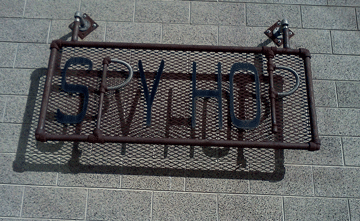
Spy Hop Productions works to help students on the west side.

Spy Hop Productions is a youth media arts and educational enrichment center. Spy Hop’s purpose, according to its website, is to “empower youth to express their voice and with it create a positive change in their lives.”

According to the site, Spy Hop works with some 1,800 students every year in the fields of documentary arts, video production, audio engineering, music and interactive media. Founded in 1999, Spy Hop has been “acknowledged by the Sundance Institute as setting the standard for media arts learning across the nation.”

Students learn things at Spy Hop that go beyond the classroom. “These kids are being taught to express themselves in a positive way,” said Virginia Pearce, director of Marketing and Community Programs in a phone interview. “It gives the kids a chance to be proud of something, which goes a long way.” A lot of students at Spy Hop live on the west side and come from backgrounds which Spy Hop refers to as “underprivileged.”

Spy Hop works directly with its students over long-term mentor-based instruction. The students get hands-on tutoring as they work on media stories, documentaries or music recordings. “There are so many success stories, I couldn’t think of just one,” Pearce said.

Matt Mateus, a programs director at Spy Hop, shared one student’s story that can be counted as a success for both Spy Hop and UNP. He says a student who grew up in Rose Park in an underprivileged family came to Spy Hop wanting to be a recording engineer. But he needed special classes that Spy Hop couldn’t provide. Spy Hop did, however, have contacts with universities that offered those classes. After the student had worked to raise the money, Spy Hop helped to send him to a school in Arizona that had a recording engineer program. “That student now works in Salt Lake where he owns his own recording studio,” Mateus said in a phone interview.

Spy Hop and UNP do still share a common belief that drives each organization. “Preparing students for higher education is directly related to Spy Hop’s programming goals,” Mateus said. The organization collaborates with Salt Lake Community College (SLCC) quite a bit.

“A lot of our students are underserved,” Mateus said. “They usually don’t have the opportunity to jump into the U of U, so they go to SLCC.”

These types of success stories are different from the articles normally published in the newspaper.

Ryan McDonald

MY STORIES:

Photo by Andee McDonald


MY BLOG:

Even though I basically live in the same city as the people whom I was able to associate with this semester, I was most struck by how different my life is from many of their lives. Often times we think of people being in a different culture if they live in a different state or country, but it’s amazing how many different cultures there are right in Salt Lake City.

Because of this, I gained a different perspective on what a community is. Many people whom I have talked to during the semester have said that creating a universal understanding of community is a big challenge in the nonprofit organization world, and I can see why. The American way of life is in many respects very different from the way of life that many of these people are accustomed to, so I feel that it is very difficult to define a community by geography. Rather, I now feel that a big part of what makes a community is the commonalities that people share.

In having this opportunity this semester, I not only learned about different people, but I learned more about what a career in journalism might be like. In a way, those two things are polar opposites. Journalism as a business and as a career is very unattractive right now, but having the opportunity to be involved in people’s lives on a more intimate basis like I have had this semester is very appealing to me. Because I wanted to get to know people on a more personal basis, it was difficult at times to remain objective. It wasn’t so difficult in writing the stories, but it was difficult to remain objective when it related to what kinds of questions I wanted to ask different people.

I think many journalists desire to “get dirt” on people, but I definitely learned that I don’t want to make that my primary objective. Rather, I like to tell stories that are uplifting and inspiring. As stated before, I like having the opportunity to build relationships with people and find the good in them. Because of this, one challenge for me as I make a career out of this craft will be having the willingness to write the stories that bring light to problematic issues rather than just the ones that are uplifting.

As a religious person, I had many thoughts throughout the semester about how my faith relates to different people in society. One of my core beliefs is that there is a God and that He loves each of us as His children beyond measure. As I met people from all over the world this semester, that belief rang true. They may not believe the same things I do as it relates to faith, but the beliefs that I have of why each of us is even here in the first place grew stronger.

Throughout this semester, many questions have been raised in my mind about the future of the journalism profession. I still have my questions and my fears about relying on it for my livelihood, but having opportunities to rub shoulders with the types of people that I have associated with this semester make me realize that I want journalism to continue to be an integral part of my life.

ABOUT ME:

When I was 2 years old, my family was watching a basketball game. Everybody thought I was just staring at the screen, but I suddenly blurted out, “There’s Vlade Divac.” He was playing in the game as a member of the Los Angeles Lakers.

That knowledge of sports has continued throughout my life, and as I’ve gotten older, my passion for athletic competition has increased. Combined with a love and a skill of writing, I hope to make a living being involved in sports media. I particularly enjoy writing, though having the opportunity to communicate sports through any medium makes me happy.

I am currently about halfway finished with my bachelor’s degree, majoring in mass communication with an emphasis in journalism. Even though I attend the University of Utah, I currently serve as the editor-in-chief of The Globe newspaper at Salt Lake Community College. In addition, I am a sportswriter at the Daily Utah Chronicle where I am the gymnastics beat writer. I love journalism!

Cecelia Fennell

MY STORIES:

MY BLOG:

I admit, the journey this semester has been difficult. Never having done beat writing in my past, I was instructed to compose four news stories dealing with the west side of Salt Lake City and nonprofits in that area. While I sat flustered at my computer, trying to squeeze more information into my first story, I never imagined I would grow to like this beat.

It was a struggle, because I didn’t know a lot about the west-side community. I live in South Jordan, which is in Salt Lake County, but not in Salt Lake City. Finding stories, sources and scheduling interviews was difficult while trying to balance my other classes and new job located in Utah County.

The struggle was more frustrating when sources were trite with me and didn’t call back as promised. This forced me to have to chase them down, and by their deep sighs and constant shrug-offs to other sources, I could tell I was becoming a nuisance.

Not all my sources were hard to work with. Many were polite, helpful and appreciated the work I was doing surrounding the organization. I was happy when they would ask me where they could find the story once it was published. Their expression of interest in my hard work made me feel it wasn’t in vain.

I noticed improvement in my writing with each story. Through constant editing I learned essential AP style rules and grammatical errors. There are always mistakes to be corrected, but because of my experience this semester I know there are certain mistakes that I won’t make anymore.

When the class first began, I thought the curriculum we were learning about headlines, writing online and social media were valuable, but mostly for journalistic careers. A few weeks into the semester I got a new job as a human resource assistant. I have been a valuable asset to the company through my creativity in writing job posts for recruiting and by implementing company social media.

I was surprised to find that the company didn’t have any social media accounts. Because I have studied new media and social networking, I was able to set up accounts and make the company more aware of the importance of utilizing social networking.

Throughout this course I had the opportunity to speak with people I might never have known, I learned to prioritize my time better in order to complete tasks and I realized that hard work really does pay off. I am grateful for the difficulties faced this semester because they have made me a better student, employee and person.

ABOUT ME:

Cecelia Fennell is a student journalist at the University of Utah who will graduate in December 2011 with a B.A. in Mass Communication. She enjoyed working as a news intern for ABC4 during the summer of 2011 and continues to develop her writing and reporting skills. Cecelia loves working with people and enjoys the service opportunities that come with being a journalist.