Communities United, Mexican Consulate keep Ventanilla de Salud open for Utah immigrants

Stories and photos by TOM BETAR

Take a peek in the Ventanilla de Salud HERE

Peering into the Ventanilla de Salud, or health window, of many Utah immigrants may yield cloudy results, so organizations like Communities United (Comunidades Unidas), are working to remove that opacity and open the windows and doors to allow these individuals to become more healthy, educated and productive members of society.

Integration can be a foreign concept to some, but for the members of CU integration is the critical concept that will allow immigrants to reach their full potential as American citizens and community members.

Rose Maizner, interim executive director of CU, said integration occurs in many ways. But, CU’s two main initiatives are community well-being and the recently updated community engagement.

The community well-being initiative covers a wide range of health-related issues and includes services such as diagnostic testing, prenatal classes, referrals and transportation. Advice is also given to residents so that they can affordably and effectively visit a doctor.

The community engagement initiative focuses on civic and social integration, with an underlying philosophy that immigrants need to understand the systems that exist so they can advocate for themselves and address problems they face. This initiative also promotes the idea that immigrants need to be immersed and involved in their community to make changes and to make it stronger.

Maizner said while most immigrants are not a drain on the healthcare or other systems, it does become a possibility if they do not understand some of the basic processes.

“The goal is to help our immigrants in the community become more integrated into the fabric of our society,” Maizner said. “People are not going to be able to be fully integrated unless they have a basic understanding of how our systems operate. We are providing a bridge between a more marginalized community and the larger community.”

David Monge is the program coordinator for Ventanilla de Salud, which roughly translates to health booth or health window. This program takes place at the Mexican Consulate, 1380 S. Main St., and is part of the health initiative of CU.

Although the name may suggest otherwise, it is essentially a small countertop reception area with employees who provide free services such as basic testing for diabetes and blood pressure, as well as a body mass index calculation that can reveal weight issues.

Rows of chairs fill a large room somewhat resembling the waiting area for the typical DMV. While immigrants wait to receive services from the consulate such as visas, passports or identification, they can also take advantage of Ventanilla de Salud. Health-related posters and images are splashed on the walls, and pamphlets containing health information are prominently displayed along the polished countertop.

Monge said another important aspect of his program is Seguro Popular, which allows the family of an immigrant resident to obtain health coverage in Mexico while the immigrant remains here or tries to travel home.

“Pretty much anyone who walks in can have these services,” Monge said. “One of the key things is that every day in front of this audience here we provide health information. We provide information about a specific topic and about something that matters like heart health, cholesterol, influenza, prenatal care, etc. We invite people to come talk to us.”

Maizner said Communities United was started as a neighborhood initiative in 1999 in Midvale, Utah. It was originally created in response to the high infant mortality rate among immigrants, and also to address the overall understanding of the healthcare and democratic systems among immigrants. The organization expanded rapidly and the main facility is now located in Salt Lake City at 1341 S. State St.

“People had no idea what services were available or how to access them,” Maizner said. “We started as a very small organization and through the passion and commitment of our staff, our administrative team and our board we’ve really grown quite significantly in the past few years. We’re still learning a lot but I think on the whole we’ve been really successful and are poised for continued success.”

Masha Boguslavsky, CU’s multicultural health network and breast cancer program coordinator, came to the United States in 1997 from Uzbekistan, so Russian is her first language. She has been with the organization for almost three years. Previously, she majored in international studies as an undergraduate at the University of Utah. She also worked for the International Rescue Committee and said she has always had an interest in working with immigrants, refugees and nonprofit organizations.

“I get to meet people from all over the world, educate them about health issues, (and) help them get a variety of free services,” she said in an email interview. “So it’s definitely an interesting and rewarding experience to say the least.”

As part of CU’s health initiative, free events are organized where immigrants can get HIV or glucose testing, as well as vision exams and healthcare information from various organizations such as the Huntsman Cancer Institute. Boguslavsky said staff members and volunteers drive immigrants to their medical appointments and interpret services for them.

“I think our programs are of great benefit to our diverse community,” she said. “And we always strive to improve ourselves and to be able to serve our clients more effectively.”

Boguslavsky said physical services are only part of the way in which CU helps immigrants in the community.

“Our goal is to make sure everyone receives information, education and assistance to address the most pressing health needs,” she said. “This includes having knowledge of and access to all available federal and local health services and resources, as well as having accurate information on receiving affordable medical services and getting good results.”

She said mammograms, flu shots, general check-ups, prescriptions and referrals for specialized care are just some of the free services available to immigrants. Classes focusing on educating people about breast cancer and prenatal care are also offered. Boguslavsky said proper health care is important to almost all aspects of an individual’s life, so CU’s free and low cost programs are invaluable to residents.

Boguslavsky said that sickness prevents many people from working, and therefore hours and money are lost for sick residents.

“Health is very important among these particular residents. It affects your family and your life in general so it’s very important to stay healthy. If you don’t have health you can’t provide for yourself,” she said.

All Salt Lake City immigrants can benefit from the services provided by CU, but individuals on the west side are of particular interest to organizations like CU because of the complexity of the area in which they live.

CU’s interim Executive Director Maizner said her organization recently partnered with the EPA to conduct a revealing assessment of both immigrant and non-immigrant populations on the west side. The holistic assessment gauged the general concerns and priorities of these residents.

“The sense that we got from a lot of residents we spoke to is that they feel kind of neglected,” Maizner said. “A lot of people felt like the people who were supposed to be representing them weren’t really representative of the average resident.”

Maizner said working with immigrants on the west side is a challenge in large part because of the area’s unique history and diversity.

“One thing that we found is that the west side is a very fractured community,” she said. “Because of the different patterns of migration there is a big divide between the Caucasian population and some of the newer immigrant populations and even between the immigrant groups themselves.”

This diversity makes it harder to assess the needs and wants of the west side as a whole, and many residents are not motivated to join together collectively.

“It’s hard for people to pull together, to band together, and to address issues that affect all of them because it’s such a fractured and divided space,” she said. “We love to see more collaboration between the long-time residents and the newer immigrants but it’s very far from happening.”

Maizner said the programs and services that her organization provides are received well by the community and that some immigrants may only come to them for health needs.

“By and large people are really receptive to our services,” she said. “I think there is a general sense that there are not a lot of services and programs available to them or that they qualify for, and so people very much feel like we are a resource for them and maybe one of the only resources that they are really comfortable going to.”

Maizner said CU’s staff, many of whom predominantly speak Spanish and are from immigrant families themselves, help clients feel at ease. She said many of her clients learn about CU through word of mouth.

“They understand where a lot of our clients are coming from and some of their concerns and the issues that we need to be sensitive towards,” she said. “We definitely have a good reputation within the community and that’s kind of how we are able to continue to serve our clients.”

Homeless outreach brings Volunteers of America’s resources to the streets

Story and audio slideshow by LAURA SCHMITZ

Go on a ride-along with the Homeless Outreach Team.

When Buddy Tymczyszyn and Kimberly Bell go to work each day, they don’t need to put on fancy clothes or stare at a computer screen. They don’t need to worry about office politics. But, during the winter, they definitely can’t leave home without their gloves.

Just west of the hubbub of downtown Salt Lake City rests their quaint work center, housing a program that actively pursues a population with which few are familiar.

Utah’s arm of Volunteers of America facilitates a Homeless Outreach Program that is constantly ready for action, equipped with a van-full of necessities, including food, water, beanies and blankets.

A national, nonprofit organization, VOA has a presence in 44 states and employs a range of paid staff, who work to tackle issues such as homelessness and drug addiction.

Tymczyszyn, 22, and Bell, 24, join forces to make up the outreach team. Together, the two pack up a van with supplies each morning to scan the streets of the west side for homeless people in need.

“We do a lot of driving,” Tymczyszyn said of his 40-hours-per-week job in the field.

“Part of [the program] is to get people socks, jackets and blankets — stuff to keep them warm and safe on the streets,” he said. “But the heart of it underneath is to help them with any kind of deeper, underlying issues that may be keeping them out there.”

Both began their posts with a “heart” for the homeless population.

“None of us really deserve to be where we’re at,” Bell said. “Those of us that have enough money or family support to be able to stay in a warm place and have good food, it’s not because we did anything to deserve it.”

The team documents every shoe, scarf and bag of chips they give out in order to ensure that VOA receives adequate donations and its clients — the homeless people they serve — are given proper financial support.

VOA’s donations come largely from the Utah Food Bank and individual donors. Clients will receive state funding based in part on the amount of services they receive from the organization.

As Tymczyszyn and Bell traverse alleys and fields, searching for potential clients, they will often discover vacant tents, blankets or sleeping bags — evidence of a shelter.

“Some are remarkably easy to find,” Tymczyszyn said. “They follow the same, routine pattern every day.”

If the team reaches a “home” of someone who is not there, they will “water bomb” or “sock bomb” the residence, leaving a water bottle or pair of socks with VOA’s business card attached.

“It helps give us a good name to them, so the next time we see them, they can recognize us or they can just give us a call from that number,” Bell said.

During outreach missions, Bell and Tymczyszyn said clients’ reaction to them depends on their approach.

“A lot of times it takes meeting someone five or 10 times before they trust you enough to talk to you. The next step is learning their name, then the step after that is having them take a pair of socks or a bottle of water from you,” Tymczyszyn said. “Every little step of the way is a success.”

Cliff Thurber, 54, has made the streets of Salt Lake City his home for several years. A regular client of VOA, he is an example of the established trust its staff strive to build, as he candidly spoke with Tymczyszyn and Bell like old friends.

“They’ve given me food and good [conversation] and comforting thoughts, so that’s been helpful,” Thurber said of the two.

Thurber moved from Provo to Salt Lake City, seeking a steadier income. He now sells the Salt Lake Street News, a newspaper put out by the Salt Lake City Mission. The nonprofit publication is specifically geared to help people experiencing poverty and homelessness.

“I earn 50 cents a paper,” Thurber said. “Once I sell them, I can turn more money back in and get more papers to sell. I buy them for 50 cents and sell them for a dollar — sometimes people donate more. It’s really coming along.”

Thurber said he does his best to remain law-abiding in his lifestyle.

“Police have never really hassled me,” Thurber said. “I’ve tried to stay above the law and tried to not do anything [illegal] — not be drunk in public places or anything like that. That’s not good,” he said with a laugh.

Though several clients are experiencing homelessness because of job loss or negative life circumstances, some come to VOA with needs arising from addictions.

One frequent client, Kevin Hansen, openly said he was on the streets because of a history of alcoholism.

“I just love alcohol,” Hansen said, describing what he believes to be the ultimate reason for his homelessness.

His past “hurts sometimes, but sometimes it doesn’t.”

Bell and Tymcyzcyzn both agreed their job can be emotionally taxing as they build relationships with their clients and struggle with them through their situations.

“Sometimes, I want to make people’s decisions for them,” Bell said. “Some of our clients are really intoxicated all the time. They drink a lot constantly, and it’s a way for them to drown their pain, but they’re slowly killing themselves — I just want to make them stop [for their own good].”

One goal of the homeless outreach team is an initiative they call harm-reduction. Tymczyszyn said the goal of harm-reduction is to try to get clients into a better situation immediately, working toward the deeper-rooted problems later.

The team provides needle-cleaning kits and safer methods of using cocaine in order to minimize the adverse consequences of the drugs while coming out of addiction.

“If they’re going to use needle drugs, how can they clean their needle to do it safely? If they’re going to sleep outside on the street that night no matter what, how can we try to help them stay warm in the process?” Tymczyszyn said.

Bell said that though she sometimes feels “helpless” because of the negative habitual cycles some clients fall into, she recognizes that any change is “ultimately their choice.”

Despite challenges that come with the territory, Bell said her job is rewarding.

“I wouldn’t have it any other way, because I don’t want to live too far removed from the tragedy that exists,” she said. “I don’t just want to live in ignorance, because ignorance is bliss, but our world isn’t a blissful place.”

This year marks VOA Utah’s 25th anniversary. According to its website, it boasts about 140 paid, professional staff who serve more than 10,000 people throughout the state each year.

“Substance abuse and homelessness are the main areas of focus in Utah,” said Zach Bale, director of external relations for VOA Utah. “We go where we’re the most needed, and do what needs to be done.”

The homeless outreach team is in the field 8 a.m. to 5 p.m. Monday – Friday.

“It’s the most incredible job in the world — I can’t believe I get paid for it,” Bell said.

Capitol West Boys and Girls Club helps kids with life skills in a safe environment

Story and photo by MELANIE HOLBROOK

Boys and Girls Club at Capitol West

The Capitol West Boys and Girls Club helps boys and girls in its community become productive and caring citizens in a fun and easy-going atmosphere. Located in Rose Park, youth of all ages are invited to spend their time doing various activities so that they can feel in a safe place.

According to the club’s website, the mission of the Boys and Girls Club is “to inspire and enable the youth in communities, especially those who need it most, to become caring and responsible individuals through guidance-oriented adult relationships and engagement in a variety of enriching activities within a safe environment.”

At the Capitol West Club, located at 567 W. 300 North, Teen Center Director Jessica Hill organizes activities, supervises staff and helps out with recreational games. Activities such as basketball tournaments or billiards are held at the club.

“We go on a lot of field trips too; we’ve gone river rafting. I’ve taken them camping and bowling up at the University of Utah,” Hill said.

Hill explained a lot of their programs are based off of drug prevention. A big goal of the club is educating teens on life skills and how to make the right decision in certain situations.

One of the strongest assets the Boys and Girls Club provides is its formula for impact, which consists of Five Core Program Areas.

Hill said those five areas are character and leadership development, education and career development, health and life skills, sports and the arts. These areas are offered to meet the needs of all types of kids who come in and out of the club. These areas can help kids reach their full potential.

“We really just want to focus on healthy lifestyles and academic success. We obviously want them to become educated so that they can have a good lifestyle and good future and contribute to society,” Hill said.

Although the boys and girls are learning things such as life skills and receiving help with academics, it isn’t a school. “We’re making learning a fun thing to do. We want them to come here because they’re having fun,” she said.

Hill said the club is extremely diverse in ethnicity and age; 50 percent of the club is made up of teens (ages 12-18) while the other 50 percent is made up of children younger than age 12. “We’re located in a very tight-knit community, so we have a lot of African refugees, along with a lot of Hispanic kids, a lot of Polynesian kids; pretty much kids from all of the world,” Hill said.

Javier Argueta is 13 years old and has been coming to the Capitol West Club since he was 6 years old. Argueta said he first went because he didn’t have much to do after school and heard about it from his friends in his class. He decided to stay at the club because he loved the people.

“I like the staff because they always talk to me if I ever have problems. This is my second house because I’m always here,” Argueta said.

He said he’s learned a lot at the club over the years. “I’ve learned to be nice to people and to encourage myself.”

Kids such as Javier Argueta became members after hanging around the club for a few days. Hill explained that by offering membership to kids they can feel a sense of belonging, something anyone wants in life. Membership entails simply having the child’s name documented and knowing a familiar face.

Hill explained at the club kids and staff have been able to make close relationships with one another, creating a high level of trust. Kids know they can confide in staff; people are there to help them out with anything, whether it be homework or emotional stress.

Sorenson Unity, Multicultural centers are a good value

by NATHANIEL BINGAMAN

Come see the center

Once upon a time, children could look down, find two quarters on the ground and use them for a full day of fun. Some would say those days are gone. With an economy spiraling downward and unemployment skyrocketing, having fun with just 50 cents is a thing of the past. Or is it?

The Sorenson Unity Center andthe Multicultural Center, at the corner of 900 West and California Avenue, offer activities for children at prices that have probably not been seen in ages. The centers serve the community of Glendale, which is located on the west side of Salt Lake City.

“Glendale is a low income community. I love being able to give back to the kids in this area,” said Kaleigh Clark, who works in the aquatic center.

The centers are community-based facility that are owned by Salt Lake City and provide programs and services to the residents of the community.

Although they are based in the Glendale area, the community they serve is much bigger. Anyone can go to the centers and pay the same price as a local resident.

Seniors pay only 50 cents Monday through Friday mornings and a dollar during the afternoons. Children under the age of 17 can swim for 50 cents on Fridays and on the other days of the week it is only a $1.50.

“The prices are low, but families can also apply for a scholarship program,” Clark said. The scholarships are offered to children whose families qualify for government assistance, such as Medicare and food stamps. The scholarships allow the kids to participate in as many programs as they want for only $10.

In addition to low cost swimming, people can participate in basketball, soccer, snowshoeing, T-ball, softball and the list goes on and on.

“My kids love it. They have so much fun and it costs so little,” said Claudia Corona, whose children have participated in many different activities offered at the centers.

Corona used to take her kids to soccer practice there. At the time she was in need of work. She noticed they had a job opening. Within a couple weeks she was happily greeting patrons at the front desk. You will probably see her warm smile on your next visit.

“I love my job, I am able to see families come in every day smiling and having a good time,” Corona said. “It is fun seeing mothers and daughters come in to take belly dancing classes together.” Yes, for $10 you can learn to belly dance.

The Corona family spends a lot of time at the centers. Her daughter began working there as a volunteer. “She had a great time playing with the kids. She started as being a referee for youth soccer. Now she works here part time.”

Volunteers are able to participate in various sports programs as youth coaches and referees. “We love our volunteers. They do a great job with the kids,” Corona said.

Coaches at the center are asked to take a test to determine their commitment to the children. They are told to focus on sportsmanship, playing as a team and having a good time. These are not the coaches who are going to yell at your child over mistakes they make on the playing field. It’s all about having fun and learning a little in the process.

For you working parents who need a place for your child to stay out of trouble, the Sorenson Unity Center offers after-school programs for kids 5 to 13. The kids in the program take field trips, swim at the pool, hike, do arts and crafts projects and get help with homework. The center also gives the kids a safe place to learn in a connected and safe environment. These children also learn how to give back to their community.

One program allows the children in the after-school program to be involved in a pen pal program. Children at the center write to seniors who are living at the Sunday Anderson Senior Center. “The kids here are so sweet and smart. They love writing and getting the letters,” said Clarissa Warath, a lifeguard at the center.

Many thought the good old days were gone. But at the centers you can take a step back in time. Things are inexpensive and good values are being taught around every corner.

University Neighborhood Partners aims to widen access to education for west side residents

University Neighborhood Partners, located on the west side of Salt Lake City, partners with 25 organizations across the Salt Lake Valley to provide access to education and services for residents of that community.

Story and photo by LAURA SCHMITZ

When Sarah Munro began her dissertation at the University of Michigan, she saw a need to bring access to education to minority communities.

After conducting research in Italy and receiving her Ph.D. in anthropology in 2002, she now works as the associate director of University Neighborhood Partners to make that need a reality.

As part of the president’s office at the University of Utah, UNP is “a bridge between the U and nonprofits on the west side,” Munro said.

UNP was launched in 2002 and acts as that bridge by creating partnerships under three main “umbrellas” — youth and education, community leadership and capacity building.

Serving two ZIP codes and seven neighborhoods on the west side of Salt Lake City, UNP currently boasts about 34 partnerships with 25 organizations. Munro admitted that monitoring the success of UNP is difficult, given that much of its work is seen only by the success of its partners.

“We’re always the convener,” Munro said. “We don’t actually do the work — we bring in community organizers to do the work.”

Munro collaborates with UNP staff in choosing organizations with which to partner. She said she and the seven to 10 staff members then maintain partnerships through ample communication and a positive attitude.

“We’re in constant communication,” Munro said of UNP and its partners. “We sit in both worlds and anticipate needs and goals.”

UNP works by building relationships with organizations that work with underrepresented populations, including refugees and undocumented immigrants. Munro said language, transportation and childcare are major hurdles west-side residents face in accessing basic freedoms, including education and healthcare.

“Our policy is we help anyone who comes to the table,” Munro said. “We don’t choose who we help, the organizations do. We simply create the table.”

According to 2010 census data, about 13 percent of Salt Lake City residents are Hispanic — a 78 percent increase from 2000 census data. As demographics continue to change in the United States, Utah and the Salt Lake Valley, Munro said institutions of higher education must adapt to prepare future students for college by widening access.

“A long-term goal is to move students from the west side to succeed, completing high school and coming to the U,” Munro said. “In 20 years, if the U can’t be more effective at this, it will no longer be the flagship university in the state.”

Rosemarie Hunter, director of UNP, was inspired to join hands with UNP after her time as a social worker. She was involved in the U’s College of Social Work for 16 years.

Hunter said education allows individuals to make choices and decisions from a place of knowledge.

“Education is a shared value across all communities and families,” she said. “Education really is power — anytime you can get access to education, you can take better care of yourself and your family.”

Hunter said UNP’s goal is not to try to jump in and “fix” everything, but to create a “mutual shared space” of learning between members of the west-side community and the U, allowing the U to change to support a more diverse population.

“What we look to do is go into existing places to (allow west-side residents) to interface with university life while going about their daily life,” Hunter said. “The U is learning a lot from residents and their cultural backgrounds and life experiences.”

Another UNP staff member, Brizia Ceja, began working for the organization as a freshman at the U as a student intern.

Originally from Mexico, Ceja moved to the U.S. at 13. She then grew up on the west side and still has family living there. She said she is therefore able to relate to that community on a personal level.

“I’m able to identify with most families I work with,” Ceja said. “I come from an immigrant family. I am the first person in my family to go to college.”

Ceja now works as an academic consultant for UNP to facilitate partnerships with middle and high schools. She said schools on the west side are often crowded with one academic adviser serving many.

“We want to start working with them young to make sure they don’t slip through the cracks,” Ceja said. “We want to make sure students have a safe place with (academic) mentors.”

Ceja said she wants children on the west side to view college as not only a possibility, but a natural progression after high school.

“I want them to know (college) is an option,” Ceja said. “Just like high school follows middle school, college follows high school.”

UNP has established partnerships with two elementary schools, one middle school and two high schools on the west side of Salt Lake City. The organization continues to foster relationships with these students to help prepare hundreds for a collegiate experience.

Utah nonprofits fighting to stay afloat in a rough economy

Story and photos by BROOKE MANGUM

With the downturn in the economy many businesses are losing their shirts, but what is seldom thought about is how nonprofits are impacted during these times.

According to the National Center for Charitable Statistics (NCCS) the U.S. is home to more than 1.5 million nonprofit organizations. There are nearly 10,000 registered nonprofits in Utah alone.

Although nonprofits may not be the first type of corporation that comes to mind when thinking about big business, it is still a moneymaking entity that relies on a healthy economy. Many Utah nonprofits are struggling to survive and are looking for strategies and ways to stay in business.

“Obliviously in this economy everybody suffers,” said Nancy Basinger, Ph.D., the Lowell Bennion Community Service Center assistant director. “Nonprofits maybe suffer more because there is more demand and there are fewer dollars coming in the door.”

Nonprofits have been an area of research for Basinger for about eight years. She received her master’s degree in nonprofit organizations and her doctorate studying the interactions between government and nonprofits. Basinger has also worked in the nonprofit sector as a bookkeeper and financial director.

Basinger said the main problem facing Utah nonprofits is that community needs are up but the revenues are down. Organizations are being forced to lay off staff members and downsize services even though the demand is still rising. This makes fulfilling the needs of the community extremely difficult, if not impossible.

The Community Foundation of Utah  reported that in 2010, 77 percent of reporting nonprofits in Utah saw an increase in demands for their services. Subsequently, organizations are looking for funding any way they can, since much of their savings have been depleted.

“Organizations that used to keep six months’ worth of expenses in the bank for a rainy day have now spent it all. This is the rainy day and now we have to figure out what to do,” Basinger said.

Nonprofits are tightening their belts and are working to become as cost efficient as possible. This means organizations are finding new ways to deliver their services as well as making changes in funding sources.

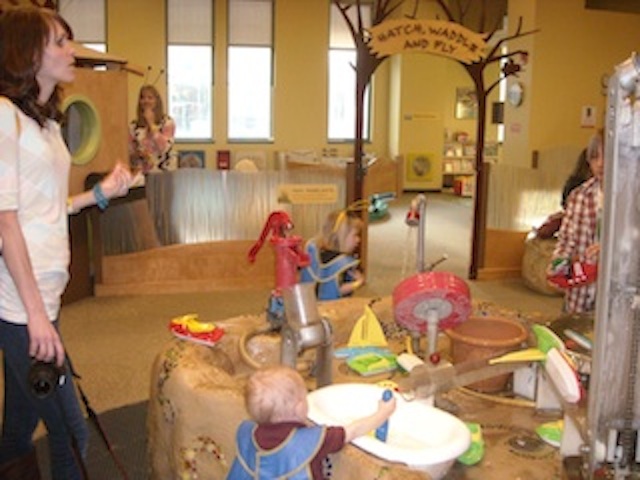
Discovery Gateway has fun interactive exhibits suitable for children of all ages

One organization that is doing this is the west-side nonprofit Discovery Gateway. Discovery Gateway specializes in children’s education through interactive exhibits, and like many nonprofits has experienced a drop in funds to the organization.

Steven Suite, chairman of the board of directors of Discovery Gateway, says the museum has been hit hardest by the decrease in donations given by foundations. Many foundations base their donation amount upon the interest they make on their investments. If the foundation’s investments do poorly, the donations to nonprofits suffer.

“Our strategy has been to put more focus on corporate sponsorship, more importantly, finding new donors to help fill the pot,” Suite said.

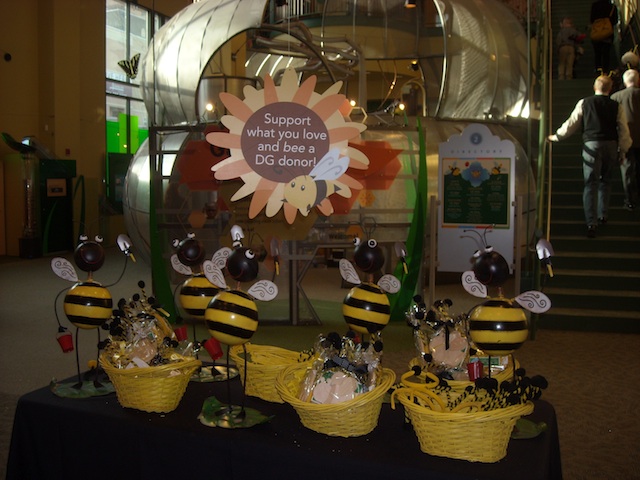
All donations to Discovery Gateway are tax-deductible

Discovery Gateway children’s museum is a 501 (c)(3) public charity. This type of nonprofit is tax exempt, benefits the community and derives at least one-third of its revenue support from the public.

“Discovery Gateway gets its funding from two places, the ZAP tax, which comes from the government and private donations and fundraising events,” Suite said. “Donations and fundraisers account for more than half of the museum’s yearly income. Without it the museum would cease to exist.”

According to the Community Foundation of Utah, 35 percent of Utah nonprofits have experienced a significant decrease in end-of-year giving. Twenty-eight percent reported a decrease in overall contributions and foundation, and corporate giving is down by nearly 50 percent. Overall, 64 percent of Utah nonprofits have seen donations decrease since the beginning of 2010.

Historically, Utah residents have given a great deal of support and funding to charitable organizations such as nonprofits. In fact, according to a report by the Community Foundation of Utah, the average charitable contribution per tax return in Utah is 4.9 percent while the national average is only half of that at 2.2 percent.

“Luckily, we have not had to go as far as raising our admission prices, or cutting down our hours but we did reorganize,” said Lindsie Smith, Discovery Gateway development and marketing director in a phone interview. “We have made changes in our staff and board of directors, and consolidated. To keep overhead costs down we have not rehired or filled any open positions.”

Utahns Against Hunger encourages Food Stamps program to those who qualify

Food Pantries only feed a small percentage of Utah's Hungry

Story and photo by CECELIA FENNELL

Efforts to end hunger in Utah continue beyond September, the state’s hunger action month, because food donations and distributions from food pantries only feed a small percent of the hungry.

That’s why Utahns Against Hunger, a nonprofit organization based on the west side of Salt Lake City, works to develop more effective community outreach programs for the larger percentage of Utah’s hungry. It does this by providing programs for low-income communities instead of providing direct services.

“Food pantries only feed a small percentage of the hungry so we provide other options and programs to meet all hunger needs in Utah,” said Mike Evans, associate director of Utahns Against Hunger. One option is the Supplemental Nutrition Assistance Program, also known as SNAP, a food stamps program.

According to UAH’s website, the organization was originally a project run out of Crossroads Urban Center in the late 1970s. As the community realized the need to improve federal nutrition programs statewide, it was established in 1981 as its own nonprofit organization. Since its beginning, UAH has worked to expand the reach of nutrition programs to “an estimated 1 in 6 households in Utah” who struggle to afford enough food by presenting and passing bills through Utah’s legislature. UAH is not an emergency food provider; instead its mission is to work with policymakers and community leaders to shape public policy by making nutrition programs work for the people who need them.

UAH serves all of Utah, but specifically those in need. Evans said the individuals who are most in need happen to live on the west side, which is why most food pantries are located in that area. UAH commonly advertises its events and programs to homes on the west side. In the past, the nonprofit distributed door hangers with information written in English on one side, and Spanish on the other.

According to its website, “UAH offers 17 food assistance programs, projects and initiatives. One program, Food Stamps, also known as the Supplemental Nutrition Assistance Program, or SNAP nationally, provides food assistance to low-income individuals and households through an electronic benefits transfer EBT card called the horizon card.”

Nathan Cram, director of Americorps VISTA, a partner of UAH, has been using food stamps himself over the past two years. Cram qualifies for food stamps because his net income is below the poverty level. He said the horizon card works a lot like a debit card and prevents many cases of fraud because of the rules associated with using it. It can only be used for food items and in stores that sell a majority of food products, he said.

“In order for an individual to qualify for the food stamps program, federal law requires that the individual’s net income be under poverty level,” Cram said. “Essentially they have to live on less than $900 each month,” he said. People can apply for food stamps through the Department of Workforce Services.

“Ninety-seven percent of food given to low-income communities comes from food stamps, only 6.6 percent comes from food pantries,” Cram said in a phone interview.

However, Evans said only 55 percent of those eligible of food stamps participate. “Some don’t know they’re eligible, some would rather seek other options and for others it’s an issue of humility – they want to be able to help themselves,” he said.

As an individual who has participated in SNAP, Cram encourages individuals who qualify for food stamps to participate because the quality of food is better.

“People surprisingly have more obesity in the low-income community because they can only afford foods high in fats and carbohydrates. Food stamps allow higher-quality food,” Cram said.

He also recommends using the food stamp calculator on UAH’s website to get an estimate on eligibility.

Since Utahns Against Hunger is an advocacy organization, it doesn’t need volunteers like food pantries and other nonprofits typically do. Directors of UAH encourage people to speak with local legislative leaders about existing hunger issues as a means to get involved.

“One of the best ways for people to get involved is by talking with their political leaders, volunteering and standing up and having a voice,” Evans said.

Mallory Black: Spreading the word about nonprofit organizations

Story by RYAN McDONALD

Reeling from a bad break-up in August 2010, Salt Lake Community College student Mallory Black, 23, felt as though she was just going through the motions of everyday life.

“I just wasn’t happy in general,” she said in a telephone interview. “I needed something to look forward to.”

Mallory Black enjoys helping nonprofit organizations. She wants to make a career out of doing public relations work for nonprofit organizations. Photo courtesy of Mallory Black.

While thumbing through a newspaper one day, Black stumbled upon an article that listed different volunteer opportunities available in the community. One particular listing caught her attention. It was a call for volunteers to help at a 5K run hosted by Friends in Need Animal Rescue, a nonprofit organization located in Eagle Mountain, Utah. Friends in Need works to raise awareness of the proper treatment of animals.

“I’ve always liked to help but I never felt like I could contribute,” Black said. “I’ve always loved animals. I thought, ‘Why not? I could do that.’”

It was a 5K that would change the course of Black’s life.

“I just loved what they were doing,” Black said about seeing Friends in Need for the first time.

A business major at the time, that experience and subsequent volunteer opportunities have caused her to want to study public relations.

“It (the 5K) made me think of the impact of newspapers,” she said. “Why was this just a little blurb? I feel like some good things don’t go to print. Not that the media should be painting this beautiful picture of the world, but it gives people hope that other people are doing good things in the world.”

In addition to causing her to think about the role of newspapers in society, the event caused Black to think about the things she could do to help.

“How could I do that?” she thought. “How could I write an article or make this 5K a bigger deal?”

Now 24 and a student at Utah Valley University, Black wants to make a career of doing PR work for nonprofit organizations. Over the last year and a half, Black has volunteered for nonprofit organizations such as the Adopt-A-Native-Elder Program in Salt Lake City and the American Red Cross while continuing to help Friends in Need. She also recently worked as an intern at Salt Lake County Youth Services.

Besides her own volunteerism, the work of others has had a deep impact on Black. She particularly admires Kim and Karen O’Donnell, the directors of Friends in Need. Black referenced the fact that the O’Donnells prepare every single meal for every single animal at the sanctuary every single day.

“I’ve just been so amazed with how much heart these people have,” she said. “They literally do this every day. They are so dedicated and good in their intentions.”

Kim O’Donnell feels the same way about Black.

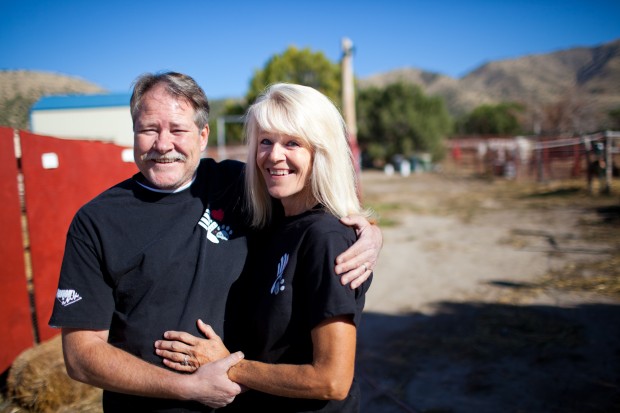
Kim and Karen O'Donnell, the directors of Friends in Need located in Eagle Mountain, Utah. Photo courtesy of Kim O'Donnell.

“We are very lucky to have her,” he said in a telephone interview. “She really likes the volunteer sector. She’s always been there for fundraising. People like her are really hard to come by.”

Although O’Donnell said that it has become easier with technology such as Facebook, he explained that it is a challenge for nonprofit organizations to get the word out to people like Black about the need for help. He said it is also challenging to spread the word about the services offered by an organization.

“If you’re just a few people, it’s a 24/7 job,” he said of the time it takes to promote Friends in Need. “Word of mouth comes into play a lot. You make do with what you have. Unless you’re a multimillion-dollar corporation, people just don’t know who you are and they probably never will.”

In a previous interview, Rose Maizner, development director of Comunidades Unidas (United Communities) in Salt Lake City, echoed O’Donnell’s struggles with trying to effectively let people know of the services a nonprofit organization provides.

CU focuses its efforts on helping immigrants and refugees find access to health care. Staff and volunteers will often go door-to-door in certain neighborhoods to spread this word. Although it can be difficult, Maizner said the organization has found such a method to be useful.

“Our organization has always been proud of our grassroots approach,” she said.

Black realizes that many nonprofit organizations don’t have the funds to pay someone to do public relations work full time, but that idea has not dissuaded her from making it an important part of her life.

“If it doesn’t work out then I definitely want to try and help out as a hobby,” she said. “I’d want to do it for free.”

Salt Lake City Head Start: More than just a preschool

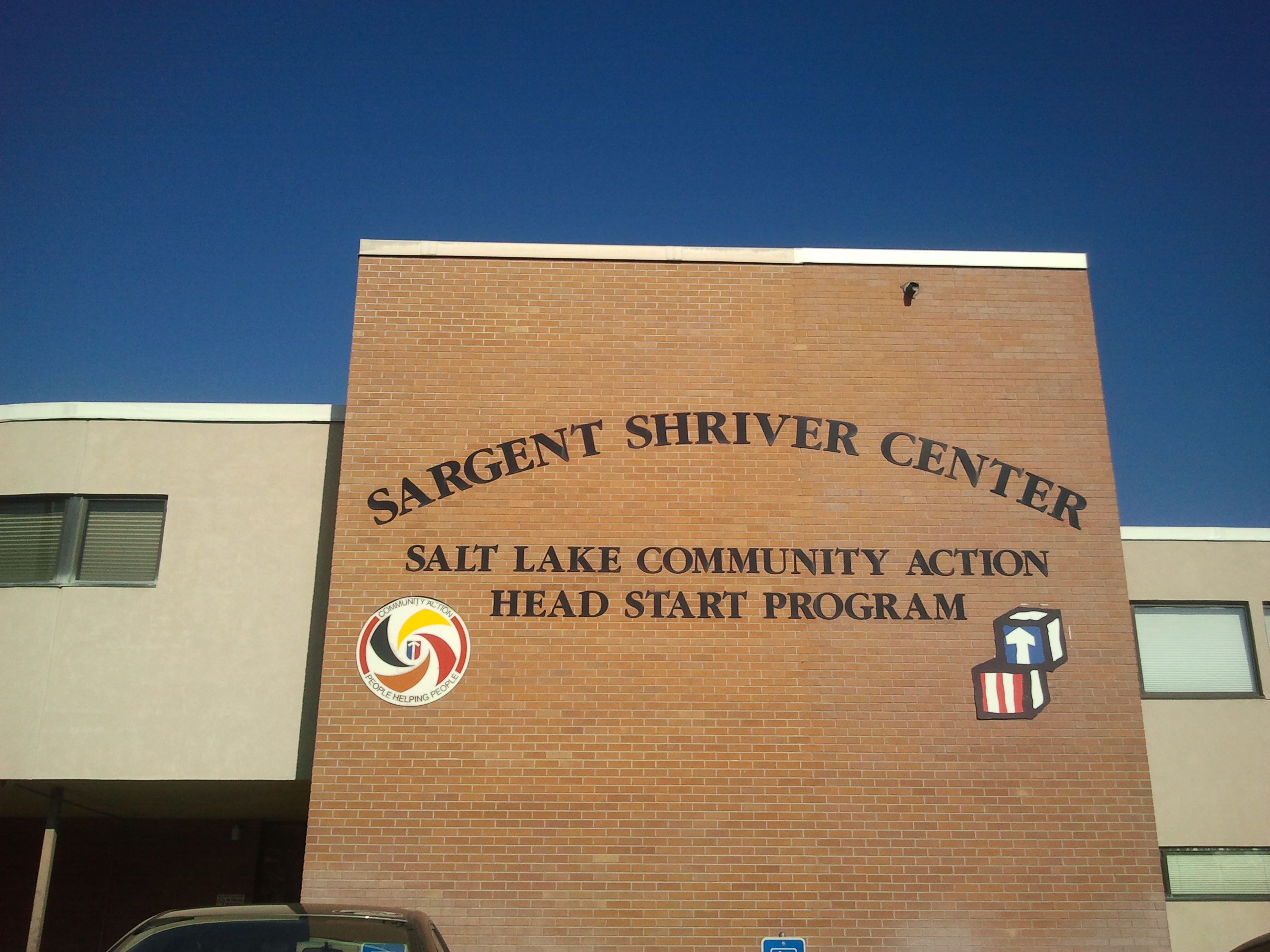
Story and photo by NATHANIEL BINGAMAN

Children are the future. In the United States the poverty level is increasing. That increase includes children. So, what are communities doing to ensure that children will grow strong, healthy and educated? One program to assist those in need is Head Start.

Low-income families can involve their 3- to 5-year-old children in Head Start.

According to its mission statement, “The mission of Head Start is to empower and educate young children and families facing adversity.”

The Salt Lake Community Action Program (CAP) opened the first Head Start program in 1965. In its first year the program had 34 students in two classrooms. Today Head Start works with 2,400 different families per year, spread throughout 84 different classrooms. The main campus is located at 1307 S. 9oo West. It also has various classrooms spread throughout the Salt Lake Valley. Children and their families all receive personal attention.

For example, at the beginning of every school year dentists volunteer their time go to the schools and give dental care to every child.

“If you are in pain because your teeth are falling out, you are not going to learn very much,” said Kristyn Hancock, the community partnership manager of Head Start, in a phone interview.

Dental hygiene is not the only thing on which Head Start focuses. The value of a healthy meal is also high on the list.

Children receive two-thirds of their daily nutritional needs during the day. “Our families are on a limited income. Foods that are unhealthy are usually the cheapest,” Hancock said. She also said they serve more than 2,000 meals per day and these are not your typical school lunches. The meals include a wide variety of selections such as pumpkin soup and salmon linguini.

Families with children in Head Start are assigned a family advocate. These advocates work with families and help them engage in their child’s learning.

“We teach parents to read to their kids and how to help them with their homework,” said Kayla Beesley a family advocate in the Head Start program.

Beesley works with 64 families in the Salt Lake area. Her position allows her to help find resources for families. From health care to clothing, she works with local businesses and nonprofit organizations to get families the things they need. Families who have children enrolled in the Head Start program can receive all these services for free. “It is very satisfying to know you are helping someone in their time of need,” Beesley said.

The Head Start program relies heavily on volunteers. According to the website, Head Start places about 4,000 volunteers each year. Volunteers must be 16 years of age or older and complete a background check.

“This job has made me aware of problems that I was not aware of before. Our waiting list is a sign of how much help is needed,” said Katie Smith, the volunteer coordinator for Head Start. “Volunteers help with a lot. They read to the children, play games with the children even help them brush their teeth after breakfast and lunch time.”

Not only do the volunteers help inside the classroom, they can help outside as well. Student-nurses volunteer their time to give free checkups and physicals to the children every school year. Landscapers and painters provide their trades to the interior and exterior of the buildings as well.

“People think we are just a preschool for poor kids,” Hancock said, “but we are so much more.”

Johanna Wischmann

MY STORIES:

MY BLOG:

Doing beat stories are a lot of work. I learned a lot of skills and new information throughout my journey doing beat stories. I never went to the west side of Salt Lake City before doing the beat stories. The stories taught me that there is a lot more diversity in Salt Lake than most people would assume. Doing these beat stories I realized that there will be a lot of times that I will not know anything about a story and it will be completely new to me. During my career I will have to do a lot of things that may make me feel uncomfortable. Doing these things will strengthen me and prepare me for the greater tasks that I will one day have to face. The beats have not changed my views on politics or religion. During high school I volunteered a lot and have already been aware of the issues in our state. I learned and became more aware of foundations in Salt Lake City that can help people. As a communicator it is my responsibility to report what is going on, no matter how bad or good it is. It was not very difficult to stay objective because as a communicator you must be able to understand that it is your job to be fair and stay objective no matter how you personally feel about the matter.

ABOUT ME:

Originally, I am from Hamburg, Germany. I have been living in the United States for the past 11 years. For the last three years, at the University of Utah, I have been studying mass communication with an emphasis on visual journalism. I am also minoring in leadership studies. I plan to graduate in May 2012. For almost a year now I have been interning at KUTV Channel 2 News. I love to travel and hope to discover stories everywhere in the world.