Sunwhee Mike Park

MY STORIES:

MY BLOG:

Something that was entirely unexpected for me this semester was the amount of genuine, personal connections that I made with the sources that I interviewed. I think I always approached reporting in a strictly professional way, and never imagined having relationships with my sources outside of a professional context. This semester especially, in the midst of a pandemic and the sheer absence of face-to-face encounters, I thought that this would certainly continue to be the case.

However, the sources that I talked to surprised me with how personable they were, how easily they opened up to me, and how close I felt to them when listening to their stories. During interviews, I felt myself feeling more at ease and increasingly feeling like I was simply having a conversation with these people, instead of interviewing sources. In essence, it felt as though I had made a friend after each interview – something I never anticipated while reporting. Since my stories focused primarily on Black business owners and community leaders, I now want to visit them in their elements in person as soon as the opportunity arises.

Apart from the personal connections I made, though, I grew a lot as a professional in this field as well. In the past, the task of reaching out to sources, setting interview times, and then the final act of interviewing itself felt hugely taxing to me. As a natural introvert, it is directly outside of my nature to do these things. This semester, however, I felt a push – both out of necessity and of my personal desire to grow out of these introverted tendencies – to just put myself into those uncomfortable situations as much as possible in order to build a sort of tolerance.

With this change in mindset, I certainly felt myself becoming more confident and efficient in all aspects of my reporting. Having sent out so many interview inquiry emails (and being rejected by quite a few of them), reaching out to people barely crosses my mind as a task anymore. I’ve also become more skillful in finding ways to contact sources, sometimes talking to a handful of people just to get through to the source I want. Finally, the interview process (as I mentioned above) started feeling more natural, comfortable and conversational instead of presentational. I feel almost like I could translate my skills directly into the professional field now.

But perhaps most importantly, reporting on this beat has allowed me to become more active in my own community. I spoke with several Black leaders whose activism and devotion to Utah’s Black community is simply inspiring. I think the idea of activism and being a leader in a community felt like it was reserved for a special kind of person who had special skills to take on such daunting responsibilities. But hearing many of these leaders’ stories, they claimed to have started in a similar place: without much knowledge or experience, but with great passion and ambition. Their stories made me start to understand that it does not take much to get started in activism. I began to feel that I have a responsibility to represent and speak up for my community, to help it grow and overcome its many challenges in this country.

With that in mind, I attended and spoke at my first march this semester, to condemn the recent rise in violence against AAPI (Asian-American and Pacific Islanders). Additionally, I am now focused on reporting as much as possible on this issue (separately from Voices). I truly think that speaking with Utah’s Black leaders, and understanding that I could be a leader in my own community through devotion and passion, was crucial in making my decision to get involved in activism.

ABOUT ME:
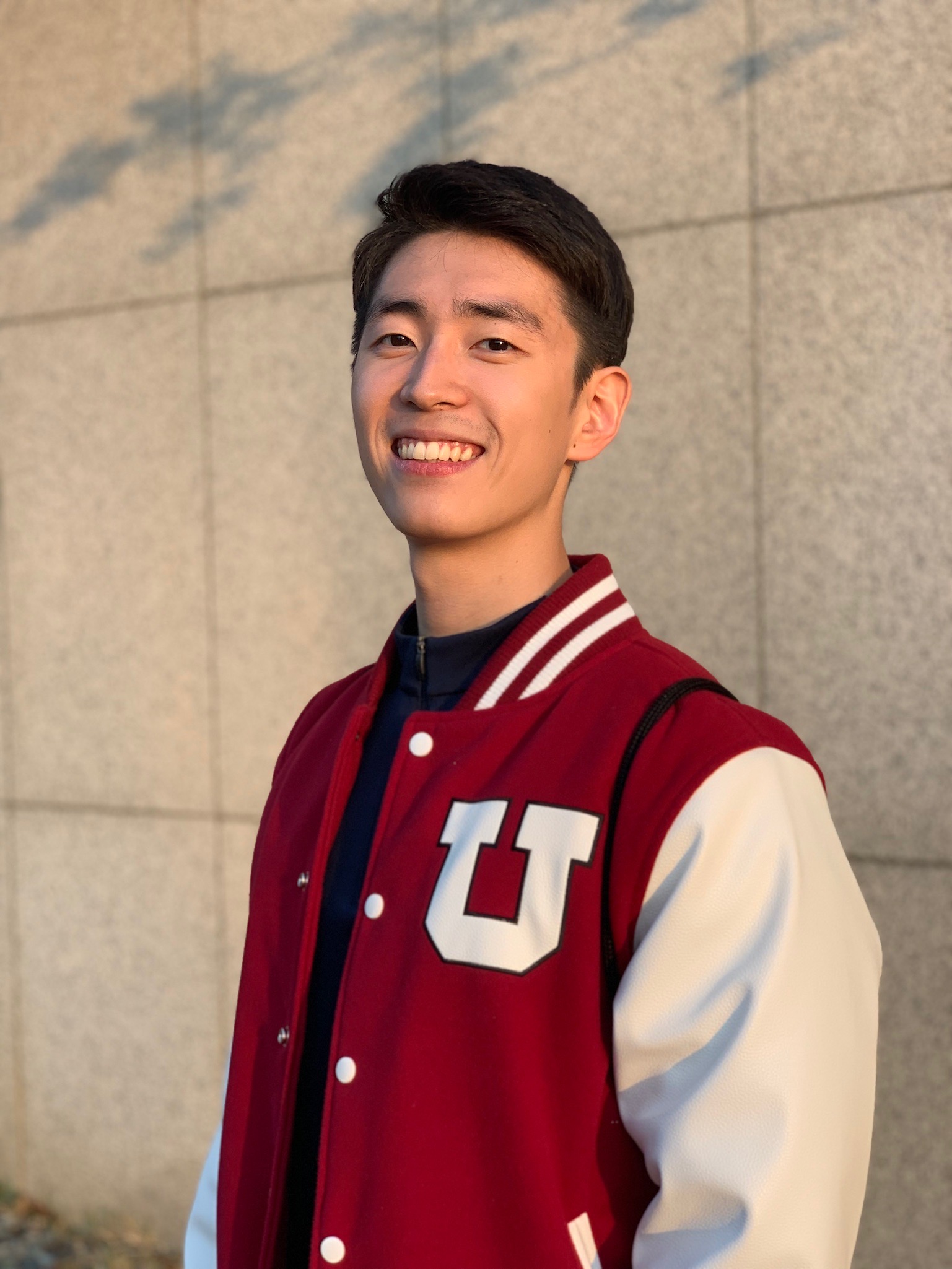
Sunwhee Mike Park is a student reporter at the University of Utah. He is a fourth-year student completing his bachelor’s degree in communication with an emphasis in journalism, and minoring in writing and rhetoric studies. He originally attended the University of Utah Asia Campus in Songdo, South Korea, before moving to Salt Lake City in 2021.

Park is already a published writer in his native South Korea. Beginning in 2019, his pieces have been printed in publications such as The IGC Journal and Incheon NowHe was also the head writer for the Songdo Chronicle – the Asia Campus’s iteration of the Daily Utah Chronicle.

Park’s interest in journalism began in 2016, when he shadowed a freelance journalist covering the protests against former President Park Geun-hye in Seoul, South Korea. Park began to film and narrate his own reports of the protests independently in the field, which he considers to have been an invaluable introduction to journalism and the spark that lit his passion for reporting.

In his final year at the U, Park serves as the treasurer for the International Student Council and works as an international ambassador for the International Student & Scholar Services (ISSS) office. Tying his passion for journalism to his interest in international affairs, Park hopes to work in the global communication field in the future.

Tess Roundy

MY STORIES:

MY BLOG:

Writing was never an obvious career choice for me. I remember as a child I was drawn to math and science. In school, I felt confused by grammar rules. In math there was a step-by-step guide that led me to the right answer. In writing I felt paralyzed by the endless possibilities.

It wasn’t until after graduating high school that my love for journalism sprouted. Particularly radio journalism that told stories centered around people. I loved (and still love) programs like “This American Life,” “RadioLab,” and “Reply All.”

I fell in love with the creativity, voice and production these programs brought to stories. I had never felt so magnetically drawn to a medium before.

After a lot of deliberating, I decided to pursue it academically. This wasn’t an easy choice. I still didn’t feel like a writer and was scared I’d never feel like a journalist. But upon starting this degree I loved it. It was satisfying a deep craving.

Though, that’s not to say it’s been easy for me.

I still have trouble writing. Sometimes I feel like no combination of words I conjure can give justice to the ideas in my head. Or that there’s no way I can give my topic or interviewees the reporting they deserve.

But overcoming the challenges I have and covering Black representation in Utah K-12 schools this semester in Voices of Utah has been rewarding.

Throughout this semester I’ve noticed a great improvement in my interviewing. This isn’t the first experience I’ve had finding people and conducting interviews, but this is the semester with the most obvious self-improvement.

During my first interviews this semester I acted like a nervous, giggly robot. I’d read off my list of questions without following up on anything they had said, or asking them to expand. I’d nervously laugh then feel self-conscious that I was being unprofessional.

Before my third interview of the semester, I noticed an unfamiliar calmness. I had prepared talking points, and a few questions I wanted to ask, but I left room for listening. From then on, the interviews I conducted were more conversational, and frankly better. In fact, I look forward to interviews now. I think they’re fun.

What originally drew me to journalism was hearing remarkable true stories. I realized that finding these stories and listening to people’s experiences brings me the same excitement and joy I felt listening to the podcasts I love.

I still sometimes feel writing paralysis. But giving a voice to those in Salt Lake City’s Black and minority communities has been rewarding and worth the personal struggles I’ve encountered. I look forward to my future of amplifying voices to underrepresented folks in my career. I am happy with the progress I’ve made and the experience I got reporting this semester. And I look forward to the progress I’ll make as a journalist in my career.

ABOUT ME:

I am an aspiring radio journalist who enjoys telling and hearing human interest stories. I study journalism at the University of Utah and will graduate fall 2021. I love living in Utah, I love the mountains, desert, and the people here.

In the past most of my stories revolved around education in Utah and this continued with my contributions to Voices when I covered the importance of Black teachers in Utah’s K-12 schools. After this semester, I’ll continue telling stories about underrepresented groups in this state I love.

In my free time I love finding and trying new recipes, baking and cooking (so long as I can eat and share it with my friends and family). I also love reading, playing Tetris, and, of course, listening to podcasts.

Brynna Maxwell

MY STORIES:

MY BLOG:

My first article raised awareness for the struggle athletes are going through in regard to their mental health during the pandemic and how it is happening on all levels of play — from high school to college. My initial expectations were to have each athlete I interviewed tell the same type of story and have the same issues in their life.

However, I could not have been further from the truth. Each interview took a different turn and went on a unique path. I learned that everyone has had a different experience related to COVID-19 and has each handled it differently. It was so interesting learning about the trials and tribulations they each had gone through because they were all entirely different from one another. 

I had a couple epiphanies through the process of writing both of my articles. I learned that I like learning about other people’s stories and what their life is like. It fills me with so much joy when a person gets asked that one question and they just light up, catching me up on their journey through life. I want to continue doing that in some way.

The stories I have written have both hit very close to home. The first had such an impact on me because my mental health was not that great for a lot of my sport’s season. The second article was about my childhood coach and it was so great to go back and reflect on all of the memories over the years. Because of these similarities in articles, I learned a lot about myself during the interviewing process. I found out I was not the only one struggling mentally this year, and that everyone has had issues related to their mental health and overall wellbeing. It was a relief to know I was not alone. 

I am currently a shooting guard on the University of Utah women’s basketball team. Photo courtesy of Utah Women’s Basketball

I definitely want to continue my involvement in relation to athletes and their mental health. Both articles I wrote showed me the incredible impact coaches can have on their players. Being a student athlete myself, I can relate to these people’s experiences involving mental health and my heart goes out to them. I want to continue being a voice for the voiceless in this area, whether through journalism or just using the platform I have been blessed with to engage and educate others on mental health.

After interviewing people for my second article, I might be able to help by becoming a coach. Through my experiences, and the people I interviewed for my article, I learned there is a lot that needs to be done to give athletes the support they need mentally on all levels and I want to be a part of the journey to get that help for them.

ABOUT ME:

Born and raised in the Pacific Northwest, I have always had a love for writing. I grew up in a small town about an hour away from Seattle and graduated from Gig Harbor High School. When not writing, I fill my time playing basketball, writing in my journal, petting my cat, and going on adventures. You can almost always see me hiking up a mountain.

I am currently a sophomore attending the University of Utah and pursuing a bachelor’s degree in communication with an emphasis in journalism. My first story was published in the fall of 2020 on the U NewsWriting website.

Through my writing, as well as playing basketball, I have been blessed to experience a lot of amazing things, including being shown on TV. Those experiences helped me understand my passion for sports broadcasting and journalism which, hopefully, I can find a lasting career in once I graduate.

Roberto Elguera

IMG_2578MY STORIES:

MY BLOG:

This semester writing for Voices of Utah helped me realize the work and talent on the west side of Salt Lake City. Through meeting many new faces and seeing new places, I feel connected with the city more than ever. The city doesn’t feel like concrete slabs, shopping malls, and piercing skyscrapers. No. I see vibrant walls and hear the hissing of the spray decorating a once blank wall. I hear spoken word and mantras of encouragement coming from the local Hip-Hop artists pushing themselves to get their voices heard and put Utah on the map. I feel the care and unity in the community gathering centers. Providing spaces for youth to stretch their creative and academic skills.

The least I can do is amplify these voices and make people more aware of each person’s story. It wasn’t easy, and at times nerve-racking. But as Yoda says, “Do or do not, there is no try.” There was no time, in mulling over how I was going to give a “perfect” interview, I just needed to put myself out there. At times I felt lost. No story in sight, but it was that one detail that helped me to see the bigger picture. Seeing the crowd go wild at Kilby Court helped me realize the impact the Hip-Hop scene can have on a bigger scale.

A book that helped me in my feature writing is William E. Blundell’s The Art and Craft of Feature Writing. Blundell’s story-telling and breakdown of what he’s learned in his years as a journalist, helped me understand the structure, pacing, and word selection, to help me develop my own style. 

ABOUT ME:

I’m, as you can see, Roberto Elguera. I was born in Lima, Peru, and raised in Provo, Utah. I’m now living in Salt Lake City, where I’ll be graduating as part of the 2020 class at the University of Utah with a bachelor’s degree in communication with an emphasis on journalism. Having a diverse background, I was always interested in people’s stories. In my career, I hope to give people the opportunity to share those experiences. Part of my time at the U included an internship at K-UTE Radio. I was able to pursue my interests in Hip-Hop culture and entertainment by hosting “The Hip Hop Drip.” I got to interview artists, partake in shows in Salt Lake City, and build my radio chops.

Ellie Cook

MY STORIES:

MY BLOG:

The objective I found sometimes difficult was to assure the content was related to the subject we’ve focused on this semester. We had such a specific beat to focus on, and sometimes it became easy to lose sight of that focus. Neighborhoods on the west side of Salt Lake City have some individuality, but they also have a lot of similarities to other areas within the city. I found it tricky to sometimes differentiate as to why a certain story that took place in the western area of Salt Lake City needed more attention, while I could touch on the same thing in another area of the city.

I think the most moral/ethical issue I faced with this beat was being politically correct when talking about the populations in which I touched on. I didn’t want to come across as prejudiced and share inaccurate content when referring to certain classes, races, etc. and their involvement within certain areas of the city. That was a huge aspect of my articles and I needed to ensure I respected everyone regardless of race, age or class. Researching other articles written about similar subjects helped, as well as listening to the way politicians referred to these populations. I never want to sound politically incorrect, nor disrespect anyone as my goals are to represent people appropriately.

The COVID-19 pandemic has definitely made things difficult for journalists. For me, I wasn’t able to conduct in-person interviews or visit locations I talked about within my stories. I wasn’t able to provide pictures or videos either. My compromise became contacting a giant amount of sources rather than hoping one or two would respond. This was to be sure I would have enough sources to touch on a subject, and I felt since I couldn’t visit these locations myself, interviewing more people who are there regularly would fill in some blanks for my article that I was unable to cover myself.

Overall things were pretty difficult during this time for reporting, but it was good practice for situations in which I won’t be able to get information firsthand. Many situations are out of our control, and it is important for other journalists and me to find other ways to cover stories in these troubling times.

ABOUT ME:

IMG_2367Ellie Cook studied communications with a minor in psychology at the University of Utah and graduated in the class of 2020. Some of her notable work in the communications field has been working as the fashion week coordinator for Trend Prive Magazine and as concerts vice-chair for the Associated Students of The University of Utah. Her writing work has been published in Trend Prive Magazine, U NewsWriting, and the Utah Communication History Encyclopedia. She’s also worked as a Youth Mentor at La Europea Academy, a rehabilitation home for adolescent girls that treats patients with mental health disorders, eating disorders, those suffering from substance abuse, etc. She hopes to one day combine her passion for writing and working with troubled teens and publish research articles regarding the psychology of adolescents. In her leisure time, Ellie enjoys volunteering with animals, participating in community theater, and modeling/acting for NIYA Management. 

Liam Elkington

MY STORIES:

MY BLOG:

I had no real notion of what professional journalism looked like in practice before taking this course. All my ideas about research, sources and writing had come from classes that took a general approach. The most challenging (and the most helpful) aspect of the course was the fact that you are expected to perform the tasks of producing great reporting largely outside of class. I learned through experience that responsibility and initiative are requirements for accomplishing any form of meaningful storytelling.

Before taking this course, I had no experience working on a beat. While I was familiar with the concept, I learned to appreciate why having publications that cover specific areas and topics are vital. As I started researching the beat for this course, I started to realize just how little I knew about it. Entire communities and cultures exist within a few blocks of Salt Lake City. There are people and ideas that I would have never been exposed to if I hadn’t been looking. Now, I appreciate the purpose of a beat. There is great value in learning about people and things that are not familiar, and this is accomplished by having a group of reporters that are dedicated to telling the stories that might not otherwise get heard.

A side effect of reporting the stories of a specific community is that you learn about many of the issues that are faced by that community. Learning about immigration, homelessness and education is much different when hearing it from the perspectives of those who are actively involved in those issues. The most moving stories are the human ones, the ones that help us empathize and desire for change. In order for change to come about, these stories must exist. Reporting is vital not only for democracy, but also for our ability to care for our communities.

ABOUT ME:

Liam Elkington graduated with a BS in Communication in 2020. He has experience creating stories in multiple media formats such as audio, video and writing. Liam has shot and edited short documentaries, reported local stories and reviewed products and produced radio programs for student publications and projects. He enjoys focusing his stories on people and their perspectives, and is passionate about music journalism.

Cheyenne Peterson

MY STORIES:

MY BLOG:

This past year, I moved to Salt Lake City’s west side and I don’t believe I would appreciate it as much as I do now. This beat has given me the opportunity to learn about my new community and the curiosity to explore it. There is so much more to the west side than what is portrayed by others.   

I originally thought that this beat was going to be easier. It was difficult to find people to cooperate with interviews. I had people hang up on me or flat out tell me they didn’t have the time. I had to change the direction of my topics to people who were more agreeable. It was intimidating at times, but it pushed me. It pushed me to try again and again, until there was someone who was willing to give their time to a learning journalist. It was so rewarding in the end. The people who were open to talking to me were so kind and made the push worth it. The experience made me appreciate the amazing people in the west-side community. 

I have learned that I do enjoy talking and interviewing people who are passionate about something dear to them. I have the chance to feature them in my own writing and the ability to have it published. It gives a voice to the community. I have found that it is important to not only write an entertaining article, but also to write something meaningful and impactful. 

I found that being a professional communicator can be difficult at times, but also rewarding. I want to write the story as best as I can, for the sake of the community I am writing it for. It is challenging to get a piece the exact way that you would like. In the end, the time makes up for how a story might impact or change a community.

ABOUT ME:

IMG_3636 2

My parents gave me a dune buggy when I was 6-years-old. I lived in this buggy and wanted to be just like my dad. He is a retired driver for Mickey Thompson Off-Road Racing and today watches his old off-road racing friends in NASCAR. We attended hundreds of races growing up. I learned quickly that the sport was expensive and my family didn’t have the time to keep up with my own competitive racing. During this time I became fascinated with the NASCAR pit reporters like Jamie Little and Kim Coon. I wanted to know how they became reporters and was informed that they were journalists. This is what sparked my writing career. 

I am an outdoors woman. Almost everyone in the racing world is involved in the outdoors and I wanted to follow the footsteps of the racing community. I found myself working for an outdoor television show in Nashville. I learned how to produce, film, edit, and be in front of the camera. I had the awesome experience to film legendary outdoor television stars like Jimmy Houston, Hank Parker, and Jimmy Sites. I also had my own episodes.

I am currently a student at the University of Utah studying Journalism. I hope to one day become a broadcaster/reporter in the racing industry or have the opportunity to start my own outdoor television show. I am looking forward to using my degree and entertaining many viewers.

Alison Tanner

MY STORIES: 

MY BLOG:

Beat reporting has helped my professional development in a number of ways. In order to successfully write about a beat, you have to be continuously engaged with your interactions. It was important for me to learn and re-learn not only how to communicate during interviews but also to be aware of my communication via email and over the phone. I feel like beat reporting has made me an overall better communicator and it’s become really satisfying to feel connected to those I interview, even if I’m different or may not fully understand the depth of what they are trying to explain to me. I found it somewhat difficult to express some of the strong messages shared from those I came in contact with. This allowed me to explore showing my readers more than just simply telling the audience.

Of course, this semester had its disappointments. COVID-19 put a strain on connecting and communicating with contacts that I had. It’s been hard for me to have more meaningful experiences. Some phone interviews have been great, but I know that had I met with these people in person, I would be able to show and express feelings a little more. It’s also been difficult because while I know that amplifying voices that are often unheard is important, my major concern is that the people around me are safe and healthy from this powerful virus.

In contrast, a major success for me was my first story. I felt so connected to the students and supervisors of the Mestizo Arts & Activism Collective. I was able to write a succinct piece about how the collective originated and one of the founders just happened to be visiting from New York City. It felt like the stars aligned and I was supposed to focus on these wonderful people for the piece.

In other courses, I’ve dabbled into a little bit of investigative journalism and hard news, but it never felt like that was where I needed to focus my skills. I definitely feel like this semester solidified my love for soft news and amplifying voices to create incredible stories. I don’t know what my future holds, especially with the uncertainty of the job market with COVID-19, but I do know that no matter what field of communications I am a part of, I’ll always love to write.

ABOUT ME:

Alison Tanner headshotAlison Tanner graduated from the University of Utah in Spring 2020, with a degree in communication and an emphasis in journalism. Throughout her undergraduate career, she completed several communications-focused internships with the Natural History Museum of Utah, JDRF International, SelectHealth, Virtualities/Facebook and Universal Media. She also volunteered as a Refugee Programs photographer for Utah Department of Workforce Services in Fall 2019. During her time at the U, she served on the Student Media Council, participated in Her Campus Utah chapter and the Crimson Transfer Honor Society. In her free time, she loves listening/dancing to music, trying new foods, and traveling to new places — preferably, all at once.

Martin Kuprianowicz

Profile picture

MY STORIES:

MY BLOG:

A few things that I can really take away from my community involvement this semester is the level of passion that I’ve discovered that members of the west-side community hold in regards for others, as well as my own developing passion for reporting. One of the people I interviewed and probably my favorite person I’ve ever interviewed was Juan Gilberto Rejon, also known as “Coach Juan.”

Coach Juan has a level of passion for children of the community like none I’ve ever seen. The man spends every waking minute of his life working to better the lives of the underserved on the west side of Salt Lake City. His programs aimed at getting children involved in the outdoors and ultimately graduating from high school and moving on to college are his life’s work. He’s even bankrupted himself several times giving resources to people who needed it most, always putting others before himself. I had a really fun time interviewing him and learned a lot about what he does. I also learned much about myself as a reporter.

I realized that I’m often better at talking to people than I give myself credit for, and I really enjoy doing so. I was also pleasantly surprised by how willing most people were to talk when I asked them for an interview. They loved to tell their story, like when I interviewed families who owned ethnic food restaurants. People often want to share with you their thoughts, experiences, and projects, and are very helpful especially when it comes to finding more people to interview. “Oh, you have to talk to so-and-so,” or “Oh, please go here and talk to this person,” are phrases I heard often when interviewing my sources because a lot of them really care about their community and want people’s voices to be heard. It was inspiring.

Sometimes, it is in fact hard to remain objective, like when you are reporting about something you are genuinely excited about. This often results in you starting to write or report in an overly enthusiastic way that can sometimes over-hype the truth in certain ways.

This occurred, for instance, when I was writing about delicious, family-owned ethnic food places on the west side. Of course, when I went to the restaurants I tried the food. Some of it I thought tasted so good (because it did) that I started writing my original draft of the piece with a biased tone of admiration. I had to take a step back and put my taste buds aside and revise with a little more heightened sense of objectivity!

ABOUT ME:

I’m Martin Kuprianowicz. I’m an editor for SnowBrains as well as its Alta Ski Area reporter for the 2019-20 ski season. I’m an undergraduate at the University of Utah pursuing a degree in communication with an emphasis in journalism. I’m from Midland, Texas, and grew up skiing at a humble hill called Ski Apache in Ruidoso, New Mexico.

Meg Clasper

MY STORIES:

MY BLOG:

I definitely felt like an outsider during this whole process. Normally I feel like an outsider to Salt Lake City as a whole because I live farther north and don’t have much time to explore. Not knowing the culture of the city as well as the places viewed as important. I can see the slight rift between east and west Salt Lake City, and not even being part of the city, I feel even more of an outsider. Despite this I kept going and working to understand life and motivations of those I was talking to.

This feeling didn’t affect my reporting at all because I was already accustomed to the feeling and was able to find ways to overcome it.

During one of my interviews I had a source ask me to keep things “off the record” though the information I was being told was a history of the business. I didn’t agree to keep anything off the record but did comply with his wish for me to not write anything down. The whole situation after he asked about things off the record made me nervous. I expected something a lot more serious than just the history. In the end, I didn’t end up using any of the major information given to me then in my story. I did use a few general facts that would appear to be common knowledge.

I did find it a little hard to remain objective when writing the Mestizo piece. The coffeehouse had so much character to it all I wanted to do was describe every inch of the place and how it made me feel. Especially the chai lattes, which I was not lied to when Prof. Mangun told me they were the best. Being there was an experience all on its own. It’s hard to effectively get across to readers and I encourage anyone who has the opportunity to visit Mestizo Coffeehouse for themselves.

ABOUT ME:

I will admit, I am a nerd. While I love anything to do with video games, I also enjoy Marvel superheroes and transformers. I believe my love for these things comes from the deep universes their originators have created. Creating these deep vast universes is why I started to write. When I found journalism in high school, I realized there was a universe around me ready to be explored and documented. After becoming a journalism major at the University of Utah, I needed to find a beat. I wanted to cover something positive and fascinating, and gaming was the perfect fit.