Devon Alexander Brown

MY STORIES:

MY BLOG: 

I was 14 when I knew I wanted to be a journalist. It’s a moment I remember vividly.

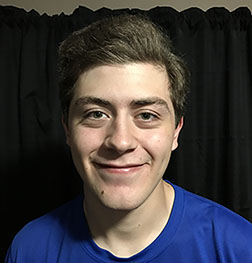
I was watching “Almost Famous,” a film that chronicles a teenage music journalist who gets the Rolling Stones assignment of his dreams: observing and interviewing his favorite rock band, Stillwater, as they tour the nation. Headshot

I was blown away.

It confronted me with my own interest in writing and helped me recall all of the encouragement I had received from teachers over the years. The film wasn’t my first introduction to journalism, by any means, but it was certainly the most impressionable. I think seeing someone my age, accomplish something I had never even imagined, helped me realize the viability of writing as a career. And I haven’t looked back.

I can say that covering the refugee and immigrant beat has also been a seminal experience for me. It’s taught me the value of building trust with a source. It’s taught me the importance of time management. It’s taught me the importance of building rapport with a network. It’s taught me how to navigate potentially sensitive subject matter. And most importantly it’s given me the confidence that I need to hold my own in this industry. These lessons are invaluable for any emerging communicator.

When I started this semester I was an anxious mess. Although I had fundamental skills, I’d never really put them into practice in a professional setting. Now, nearly four months later, I feel that I’ve gained an internship worth of experience. And I’m grateful for being challenged with a beat that forced me to get out of my comfort zone.

I’ve always considered myself a writer. Now I know what I stand for. I know what my goals are. And because of my experience reporting for Voices of Utah, I have the confidence to actually claim the title.

And as a writer I choose to be accurate and accountable. I choose to be objective. I choose to write the stories that are important, not only to me and my ideology, but to the people at large. I strive for excellence. And without Voices of Utah, I’m not sure I would know what excellence is.

ABOUT ME:  

I was born and spent most of my life in Crestview. It’s a small, country town in Florida just shy of the Alabama border. I’m also an only child. So I spent a lot of my free time alone. If I wasn’t outside pretending to be a samurai, I was indoors reading and creating fantasies that I could escape to.

I’ve never read a novel by the late author David Foster Wallace, but I’ve always identified with a quote attributed to him: “The purpose of fiction is to combat loneliness.” I think a good book does just that. But as I’ve grown older, I’ve realized that it isn’t necessarily fiction that’s my passion. I just like stories.  And a story doesn’t have to be fictional to be enthralling. It simply needs to be written well.

I’ve moved on from my hometown, but my affinity hasn’t changed. I’m still a logophile. And I’ve carried that love of words throughout my academic career. I’m now a fourth-year communication student at the University of Utah, majoring in journalism, and I hope to eventually become a staff writer for a publication like The Atlantic.

I believe the world needs more writers who are dedicated to their craft, ethics and the process of distributing information. Although the journalism industry seems bleak and many citizens are distrustful of our work, I trust that can change. I trust the people want to be informed by an objective voice and I believe their desires simply aren’t being represented.

There’s hope in the media. I want to play a role in restoring that hope.

Hayden S. Mitchell

MY STORIES: 

MY BLOG: 

As I began my beat I didn’t know what to expect. I had written fictional stories, news articles and essays in the past, but I had done nothing like beat reporting. So, when I started out I promised myself a couple of things to ensure I reported well. Firstly, I made sure to give a serious effort in every aspect of this class, Voices of Utah. This included researching the topics I was reporting on, developing sources and writing detailed as well as informative stories.

Since our beat was focused on the refugee crisis, specifically in Utah, I gathered as much information as possible, understanding that this would be beneficial to my reporting. I searched through news clippings, online articles and talked to people involved with refugees. No information I collected was more important than the notes I obtained when Aden Batar, the immigration and refugee resettlement director at Catholic Community Services, visited our class. After listening to him talk about his journey to Utah and the struggles he went through, I had a newfound investment in the beat. I felt like there was real reporting to be done on the topic of refugees.

After Batar spoke to us, I decided to continue my reporting by contacting Batar outside of class to find out more information relating to our beat. He helped me understand what people go when they flee from their homes and are forced to search for a new home. Batar shed light on an issue I had very little knowledge of, giving me a new perspective to look through for our beat. This new information I was learning about rarely appeared in the national news because it wouldn’t generate buzz, but this is absolutely something that should be reported on. We could see serious benefits if more people paid attention to the smaller yet important issues.

The issue or topic of refugees is typically used in political discourse, which can create positive and negative feelings on the subject. Some people think that refugees need our help while some think it is not our responsibility. While covering this beat I didn’t look at it through that lens. I looked at it like an assignment. I had no bias or ethical issues going into this beat. All I wanted was to see what was really going on and report my findings. During my reporting I did not find it difficult to remain objective. I understood that in journalism, especially in beat reporting, it is important to present only the facts without any editorializing. This helps the reader understand the real story.

As a result of my reporting this semester, I developed a real understanding of what the profession of journalism looks and feels like. Reporting takes some real effort in order to achieve success. I believe I improved as the year went on. However, I understand that there will always be room to improve my writing and my craft.

ABOUT ME:

biopichsmI am currently 22 and a fifth-year senior at the University of Utah. I plan on graduating in May 2018 with a bachelor’s degree in communication with an emphasis in strategic communication. When I first started my college career I had no interest in the communication department. I was going to be a business major. That goal quickly changed after I struggled my way though a couple of accounting classes. Those were brutal. I did realize a couple of things after making my way through the majority of the business school requirement. Firstly, I will not make it through life if math is involved in any aspect and second I enjoy writing.

Understanding that I like writing I decided to switch my major to communication. There was a real difference in the effort I gave and the focus I had. I was actually learning about subjects I found interesting as well as writing a lot more. Writing was the only subject I ever liked during elementary school and high school. My grades were usually always good.

This year I took classes that focused on journalism, specifically beat reporting. I realized that I do not enjoy that type of writing. I prefer writing a story or essay where I can put my personality into it. In journalism it is important to present the facts when writing. There is no room for editorializing but that is not what this style of writing calls for. I think I am much more proficient when I decide what and when I am writing.

I will  continue to work hard improving myself and my writing. Hard work will hopefully lead to success in whatever I put my mind to.


Jace Barraclough

MY STORIES: 

089MY BLOG:

At the beginning of the semester the topic for my enterprise story haunted me as I was unsure of what to write about. I was also unfamiliar with much of the crisis surrounding refugees. The only real exposure I had was a documentary I had volunteered to usher at Sundance Film Festival last year, as well as the van-loads of refugees who would come to the employment agency where I previously worked. Unfortunately, I was prohibited from asking any questions or learn about the hardships of those people because I had to keep our conversations to professional standard and avoid personal questions.

The idea of social media refugee fundraising came to me as I saw ads from refugee charities on my newsfeed on Facebook. They were mostly by United Nations High Commission for Refugees (UNHCR) with a link that took you directly to a page that let you donate quickly and easily. I thought it was genius.

I started to search for refugee charities utilizing social media for fundraising and found a video of a feature story by KSL. It was about a woman and her family who gave up their own Christmas presents to donate to a Syrian refugee family through a website called Humanwire. I immediately began digging into the site to learn how it worked.

The premise of the website was that a donor could look through profiles of refugee families and essentially take that family under their wing. Depending on the amount donated would determine how much contact you have with them.  Smaller donations merited updates on their situation. Larger donations gave you the option of having live-streamed conversations with them to encourage a better relationship.

I interviewed three donors and got a statement from one of the co-founders within a short amount of time. One of those interviews was same woman who was featured on KSL’s story previously mentioned. Everything seemed wonderful. Only one of the three had mentioned any mishaps with the company, but nothing compelling enough to make me think the company might be fraudulent.

The night before the first draft was due I received a message from one of the women I interviewed. She told me she was tipped off by the other co-founder of the company who had recently quit, that they were being investigated for fraud. I had to completely rethink the angle of the story. It went from something positive and motivational to investigative and cautionary for those thinking of donating.

It was a whirlwind of an experience. However, I learned a great deal in a matter of minutes upon receiving that message. I learned the importance of flexibility after learning how quickly a story can change. I figured I had two options: I could take the easy road and continue with the story I had, or I could do what any good journalist would do — write the story the people need requiring a significant amount of more work. I chose the more difficult course of action.

Something I learned while researching the company is how common it is for fraudulent companies to claim legitimacy and charity as a means steal people’s money. On almost every website whether government or otherwise, experts caution people to make sure to do research on any charity claiming to be the real deal. Advisories such as these come when enough cases have been reported to deem it necessary to caution people.

I feel my work was necessary because people need to be warned of the white-collar crime happening by thieves posing as philanthropists. Unfortunately, in cases dealing with the financial side of white-collar crime, there must be a case built against the suspect before accusations can be made. This includes the investigation of expenditure reports, bank account activity, financial reports, etc. This is an extensive process that can take a lot of time.

In the case of Andrew Baron of Humanwire, more than $100,000 of charitable donations had been taken before they were able to arrest him. The money he took was raised by generous people who sacrificed their time, talents, and even Christmas presents for their families. It’s highly unlikely that money will ever be repaid.

With this semester focusing on refugees, it has opened my eyes to the necessity of our assistance in helping them. My church has made it very clear that we need to be looking for opportunities to serve these people. I believe my stories will be contributing pieces of the puzzle to bring awareness and a call to action to aid them in whatever capacity we can.

ABOUT ME:

I was born and raised near Salt Lake City, Utah. I’m a senior at the University of Utah majoring in journalism. I have worked in various areas in media industry, including radio, photography, TV, film and writing. I recently co-directed a documentary that won awards at four different film festivals. I currently work as a studio technician at KSTU Fox 13.

Anna Stump

MY STORIES: 

MY BLOG:

When I found out I was going to cover the refugee community in Utah for my beat this semester, I was both excited and equally nervous. I signed up for this class without prior experience in writing news stories and had a limited understanding of how to conduct a proper interview.

I have always been interested in cultures other than my own. Despite our differences, I believe the human experience is a shared one, so I was eager to learn about a group of individuals that I knew very little about. The people I interviewed were all unique and held vastly different roles in the refugee community, some of whom were refugees themselves. Interviewing such a diverse community allowed me to gain an expansive perspective of those affected by war and famine and individuals who are working together to help people in need.

Most of what I struggled with was not knowing how much narrative content to share while still keeping the story “newsworthy”. I learned a great deal that I was unable to communicate with my readers, which felt like sacrificing my personal voice. While I did all that was required of me, I was not able to portray the look on the Somalian woman’s face when she told me she hasn’t seen her husband in 7 years. My writing is the best that it has ever been, though I don’t think I fully shined a light onto the emotions portrayed by those I interviewed.

I realize now that I have a skill in connecting with people from all walks of life. As much as I have enjoyed this class, I don’t believe that my avenue of sharing stories is in news writing. I’m not sure what my future career will be, but I am eager to see where my passions lead me.

ABOUT ME: 

Hello all, my name is Anna Stump. I am a senior at the University of Utah studying communication with an emphasis in journalism, as well as a minor in parks, recreation and tourism. I will be graduating in the Spring of 2018, and have high hopes for my future as a communicator.

BIO VOU

My passions lie in the outdoors, where I spend almost all of my free time. I enjoy climbing, skiing, paragliding, rafting, mountain biking, campfires with strangers etc. etc. If it pushes my limits and puts me outside, I’m all over it.

I was born and raised in the suburbs of Alpharetta Georgia, where I spent 18 years of my life. I was later accepted to the University of Utah, and made the spontaneous decision to pack my bags and fly across the country in pursuit of mountainous adventure. I am currently a competitive rock climber and love every moment of being gripped on rock. I am also working as a sales rep for Red Bull, planning events and spreading my wings as a communicator in the adventure industry.

My hopes for the future run far and wide. I don’t exactly know what it is I will be doing once I graduate, which is both liberating and terrifying. I would like to explore my potential as a writer in the context of adventure travel or documentary filming. Above all else, I love new experiences and the abundance of learning through travel.


Danny O’Malley

MY STORIES:

MY BLOG:

When I first read the description of this course, I was excited to hit the pavement and start talking about things I wanted to cover (craft beer, geek culture, and so on). Upon realizing that it wasn’t a total free-for-all, and that we would be assigned to a specific part of the community, I felt a mixture of disappointment and curiosity. However, I recognized that immigrants and refugees often have amazing stories to tell, and at this moment in our country’s history, it’s critical that we tell them. So I dove in.

It’s been a gut-check. If you’re reading this from the U.S., you are abundantly privileged just by virtue of living here. But it never really crystallizes until you talk to someone who has been through hell before they arrived. My choice of career (marketing and public relations) relies on an immense amount of faith in the economy, society and people. Refugees have had that faith questioned via threats to their lives, not just to their job security.

Civic responsibility is about staying informed and being a part of the community. Both of those concepts have waned, it seems, in society at large over the last few years. Thanks to covering refugees and aspects of the lives they lead here, I’m much more aware of the contributions every person can make to their community, not to mention the potential that many natural-born citizens are squandering on petty things. It has been said that “people make the place.” We need to enable people of all walks of life to thrive in this world, not erect barriers and point fingers.

I grew up in Berkeley, California, so it’s hard to shake my inner hippie. Human society is at its pinnacle (or at least has the potential to reach great heights) when people of diverse backgrounds and viewpoints are allowed to live truthfully and respectfully with one another. The current administration wants to paint all non-Americans as “the other” and deepen the trenches of fear and doubt and misunderstanding. We don’t need a wall. We don’t need a cap on humanitarian aid. We need to address the lack of understanding through telling stories and sharing experiences. And especially through civic action and responsible journalism.

It was easy to feel like an intrusive outsider when asking people to talk to me. Luckily I spoke with people who invited my inquisitiveness. If we were to work this beat, say, in the actual refugee camps, being an outsider would likely be a handicap. Trust is hard to gain, and it’s tough to say whether a stranger is out to help or harm until you talk to them and see their actions and motivations play out. Knowing what questions to ask and how to draw out the best in your interviewees is a complex web of research, interaction and more research. As student journalists, we’re lucky that we haven’t been assigned an “agenda” by anyone, other than the pursuit of higher learning. That wouldn’t be the case if we introduced ourselves as CNN or Fox News reporters.

I thanked every person I spoke with and usually threw in something like “at the risk of editorializing, I think you and your work are amazing, keep it up.” So, yes, it was extremely difficult to remain objective. Journalism can easily stray into hot water by showing bias and taking sides, but it would take a tremendously apathetic person not to be wowed by the feats accomplished by people who really care and who have overcome incredible odds.

I feel a little disappointed that I couldn’t do more. But I attended a volunteer orientation for the “Know Your Neighbor” program through Salt Lake City, and if I’m accepted I hope I can make a larger impact. I definitely want to take part in future charitable events with the International Rescue Committee. I’ve met some incredibly kind people there, and I’d love to have some of that rub off on me. I’ve grown a little cynical in my old age.

As a result of my reporting and covering this beat this semester, I will dedicate more of my time to serving causes I believe in. There’s a quote from Dr. Martin Luther King Jr. that’s been rattling around inside my head all year: “The arc of the moral universe is long, but it bends towards justice.” After meeting the amazing people involved in the cause of helping refugees and building our communities, I want to do what I can to weigh that curve.

ABOUT ME:

Photo.jpg

I’m a jack of many trades. My professional resume consists of graphic design, customer service, online marketing, solar power sales and small business consultation. I’ve volunteered as a weekend radio DJ, helped plant trees and cleaned up local parks, and served craft beer at a brewery supply taproom. I’ve welded steel sculptures and whittled wooden wands. I’m a science and nature enthusiast with a budding passion for photography.

When I was 11 years old, I wrote an epic galaxy-spanning sci-fi novella, and my English teacher made me cut it down to a measly 10 pages. Despite that crushing blow to my youthful enthusiasm, I’ve continued to write creatively and pursue artistic endeavors throughout my life. (I’ve got several hundred pages of certifiable proof that I’m a huge fantasy and sci-fi geek if you need it.) I received a certificate in 3D Animation from the Gnomon School of Visual Effects in 2007. I graduated from the University of Utah in December 2017 with a B.S. in Communication.

It’s my life goal to continue helping the environment and sharing knowledge with others. We have a critical responsibility to make the planet better for future generations. My motto is “meet beautiful people, leave beautiful artifacts.”

Salt Lake City’s farmers markets draw loyal consumers

Story and slideshow by JOSH SOUTAS

Experience all that the Winter Market has to offer.


“We never miss a market,” said Salt Lake City local Paula Butler. Her friend, Lori Martin, added, “We come every time.” Butler and Martin are just two of the many consumers who wander around the Winter Market at 10 a.m. every other Saturday from November until April looking for locally grown produce.

The two said the combination of fresh produce, and the get-together that the Winter Market has become, is what keeps them coming back.

“It’s now as much of a social event as it is a grocery shopping event for us,” said Butler, who is also a regular at the summer Saturday Market. “Not only do you know what you are buying is healthy and good for you, but it is fun to come and meet the farmers who grow and are selling their own local products.”

In its third year, the Winter Market is held in the historical Rio Grande Depot. The train station’s tracks were first used in 1910, according to Utah Communication History Encyclopedia writer Kelsie Haymond. The old train station is transformed into a paradise for consumers who are looking for locally grown produce during the winter months. Vendors, who set up shop where passengers used to load onto trains, give the landmark building a lively atmosphere again.

The market entrance runs through the Rio Gallery, located in the Grand Lobby of the Rio Grande Depot. Shoppers on the second floor get an overhead view of the artwork in the free gallery.

Alison Einerson, market manager of the Salt Lake City Farmers Markets, said in a phone interview that the Winter Market almost exclusively features food vendors who cater to local eaters.

The Winter Market occurs when many vegetables and fruits are out of season. Einerson said that challenge was not difficult to overcome.

“It’s really eye opening to see that there are still so many locally grown fresh fruits and vegetables available, even though it is December and snowing, or February and bitter cold outside,” Einerson said. “There [are] beets, asparagus, parsley, onions, potatoes, and in my opinion our market is home to the best local baked goods.”

Einerson also agreed with market regulars Butler and Martin that many people attend the market not only for the produce, but also for the social occasion that it has become.

It is not surprising to see the Winter Market be successful even though it has not been around as long as the established Saturday Market. Farmers markets have risen in popularity with more than 8,200 nationwide, a 76 percent increase since 2008, according to the USDA.

Steven Mountford is a honey farmer with White Lake Farms. The Genola, Utah, farm has been a vendor with the Winter Market since its opening. It also takes part in the Saturday Market during the summer.

Mountford said he understands why farmers markets have been growing in popularity and size, especially in the last few years.

His explanation? He said people are starting to be curious and are caring where their food is coming from.

“It is important to expose people to the reality of where their food is coming from,” Mountford said. “People are now questioning how their food is getting to them and if it is good for them.”

Mountford isn’t wrong, according to a 2011 food dialogues survey. The survey focused on opinions, attitudes and questions that consumers and farmers had about the state of how food is raised in the U.S. The study found that “consumers think about food production constantly, yet know very little about how food is brought to the dinner table.”

Mountford believes that consumers asking questions about their food and caring where it is coming from is making a difference.

“You get customers asking restaurant owners, ‘Where did this chicken come from?’ or ‘Where did these vegetables come from?’ People didn’t used to ask these questions. And it helps motivate restaurant owners to buy locally,” he said.

Salsa Del Diablo, a Salt Lake City company, has participated in the Winters Market for two years. It also took part in the Saturday Market for the first time in 2015, one of the four Utah summer markets it participated in last year.

The company carries eight different salsa flavors in the summer, and four in the winter. Salsa Del Diablo motivates customers to buy its products by donating 1 percent of profit to adaptive sports in Utah.

Employee Jennifer Lehmbuck said the local markets are what helped the company break through into grocery stores in 2015.

“Farmers Markets open doors for local companies like Salsa Del Diablo,” Lehmbuck said.

Besides the exposure that the market has provided, Lehmbuck said she has seen other benefits of participating in markets.

“These local farmers markets build community. It helps get people connected with their food and lets them get to know where and whom their food is coming from,” Lehmbuck said. Salsa Del Diablo sources the majority of its salsa ingredients from Bangerter Farms, located in Bountiful, Utah.

Michael Pollan, author of “Cooked: A Natural History of Transformation” and creator of the Netflix documentary series “Cooked,” told “Nourish” that “a farmers market is kind of like a public square, and there is a nice social energy. At the farmers market, city meets country. People learn about where their food comes from and the people who grew it.”

Market Manager Einerson said this growth in community is one of the main benefits of a farmers market. It supports the local farmers and vendors.

Winter Market Transitioning to Summer Saturday Market

 The Winter Market at Rio Grande closes for the season on April 23, 2016. But Einerson and vendors are looking ahead to the Saturday Market, which will be taking place for the 25th time this year. “It has been a staple of the community here in Salt Lake City,” Einerson said.

Many of the Winter Market vendors, including Salsa Del Diablo and White Lake Farms, will return for the weekly Saturday Farmers Market. They will be joined by dozens more who did not participate in the seasonal event.

Einerson said the time off in between the markets seems seamless to staff as they work throughout May to approve applications, finalize vendor lists and assign locations in Pioneer Park.

The summer Saturday Farmers Market, along with the Arts and Crafts Market, run June 11 through October 22, 2016, from 8 a.m. until 2 p.m.

“It doesn’t seem like a long break to us because we don’t stop working. But I am sure the public miss it,” Einerson said.

Indeed, for locals like Paula Butler and the Lori Martin who “never miss a market,” the month and a half without a farmers market is too long.

Interested in finding a local farmers market near you? Visit The Salt Lake Tribune for a list of farmers markets near you.


Josh Soutas

MY STORIES:

MY BLOG:

At the start of this semester I could easily have pointed out my two greatest weaknesses when it came to reporting and writing. First, punctuation, and second, interviewing sources.

BiopicThrough this class I feel that I have grown greatly in both of these two areas of my craft. Although I am still working on punctuation, I feel that I have learned how to properly use it better this semester, through both in-class exercises and the out-of class stories.

Where I have had the most growth in my eyes, however, is learning how to ask better questions when interviewing sources. Through this class, the discussions, readings and assignments, I feel that I have been able to ask better, more meaningful questions to get the information I need from a source.

For me, one of the most difficult parts of being a professional storyteller is remembering to keep your voice and opinion out of a story, but still be able to influence that piece with your style. I have learned this semester that this is a difficult but very rewarding challenge. On the other hand, the most satisfying part of being a storyteller, is when you complete and publish a story and see that you gave someone, or something, a voice that it did not have before.

 My reporting increased my understanding of our “Arts and Culture” beat tremendously. It is funny to think how we struggled to describe what “Arts and Culture” meant to us in the beginning of the semester. One way that my reporting increased my understanding of our beat is by getting the stories and opinions of the arts and culture here in Salt Lake City through interviewing my sources.

I think that the biggest benefit of covering this beat was getting to know and become fairly connected to the culture here in Salt Lake City. Being a transfer student who spent the last two years in Florida, I knew very little about the arts and culture here in Salt Lake City. Because of our out-of class stories, I feel that I became more connected with the city that I live in.

As a result of my reporting this semester, I have improved in multiple, if not all areas of my writing/reporting. I am no longer nervous when preparing to interview a source, and have learned how to paraphrase, and paraphrase well.

ABOUT ME:

I am currently 21 and a junior at the University of Utah. I spent the first two years of my college education at the University of Tampa in Florida. I will graduate with a degree in communication with a sequence in journalism. I am interested in both sports and advocacy journalism. I love to meet new people, which is why I moved to Florida alone when I had the opportunity. It is also is why I am passionate about journalism. I like to hear people’s stories, get their viewpoint and see something through someone else’s eyes.

I have a love for all sports, especially soccer. You will never see me miss a Manchester United game. I am a hard worker, go to school and work full time, and enjoy nature even if the mountains are second best to the beaches in Florida.

My passion for advocacy journalism comes from my parents and family background. I am the oldest of eight kids, four of whom are adopted, including one boy and one girl from Ethiopia, Africa. My Mom, who is finishing up her master’s degree in social work, and my Dad, who is a dentist, help lead mission/free dentistry trips for the Ordinary Hero Foundation. My parents have preached equality and human rights in my house for as long as I can remember and I want to use journalism to give a voice to those who are otherwise voiceless.

Peyton M. Dalley

MY STORIES: 

MY BLOG: 

I transferred to the University of Utah after two years at Dixie State University. My goal was to get more journalism experience and pursue the passion for writing I’ve had my whole life. Not only was I able to get writing opportunities, but I also had a one-on-one interaction with my future employer.

Within three months I was able to execute my passion for writing, while developing a skillset that can be used through a variety of fields, not just in the journalism world. This prepared me for face-to-face interviews and on-the-spot writing that led up to my final enterprise story, where I was able to have a taste of my future career at NBC down in Los Angeles.

JSsummer2015-122-1677x2516

Photo by Alyssa Ence.

Reporting and being a hands-on journalist this first semester helped me realize that silence sends the most powerful message. Seeing that I often ask many questions at once, reporting helped me realize that one question can lead to another and listening can be more powerful than asking. However, I did struggle with staying on one specific beat this semester. My reporting and journalism took more than one route and it was hard to re-route my objective back to one specific beat.

While my enterprise story was by far the hardest to execute, because of the time frame and deadlines, writing profiles and other side stories in between helped me develop the concept for my final story. I was also able to learn how to meet those deadlines in a short time. It not only gave me the confidence to know I could write a well-constructed story in a short time,  but also helped me multitask with several stories on the line with similar deadlines.

Both my media classes this semester provided me with the tools for constructing a well-written story. They also gave me connections for internships and opportunities to meet new people. On top of writing for class, I was also able to write as an intern for the Daily Utah Chronicle and become a co-editor for Odyssey Online. Both have helped get my work published on a platform for an audience to engage with.

Overall I would say this was a successful semester that pushed me to limits I didn’t even think were possible. I’m looking forward to what the next semester has in store and as a result of my reporting this semester, I have realized this is what I want to do with my life.

ABOUT ME: 

My name is Peyton Dalley, or TinaPey on social media. Since I was 8, I’ve had the desire to write and perform on NBC’s “Saturday Night Live” — a dream I’m currently in the process of living.

If I’m not at my tiny pink laptop writing about a millennial-related topic, I can be found at a local coffee shop or head-banging at one of my favorite concerts. Little-dog videos are what get me through the day, and Amy Schumer’s voice soothes me to sleep at night. I love connecting with people on a real-world level, and enjoy laughing at the little things.

Currently I write for the Daily Utah Chronicle, as well as Odyssey Online, where I get to write what I love about this thing called life. I have been called the song bird of my generation, and am often times mistaken for the actor Tina Fey. Most importantly, I’m fluent in both English and sarcasm, and majoring in mass communication at the University of Utah.

Jordan Senteno

meMY STORIES:

MY BLOG:

While reporting on this beat and writing stories, I did feel like an “outsider” just because I had never reported or written stories that dealt with diversity in arts and culture. I have never focused on this beat, so I felt like an “outsider” because I didn’t have the knowledge or background on this beat that an “insider” has. I think it affected my writing to begin with because I didn’t know what to expect or how to write a story that depicts diversity in arts and culture. But, as the semester went on, I felt more and more comfortable with the beat and the expectations. This allowed me to grow as writer.

My reporting of this beat did increase my understanding tremendously. For example, I learned the value of arts/culture in Salt Lake City. There are several different organizations here in Utah and they’re all striving to inform the community of the arts and many events happening all while trying to get others to make a difference and be creative. As we had guest speakers come in and talk about their role in the arts, I became more comfortable writing stories that reflect our diversity in arts and culture. I do see benefits of reporting this beat. For example, it broadened my writing ability as I got out of my comfort zone and wrote stories on a beat that I had never written about. Another benefit was getting my work out there in the world as we’re published, so many people can view my stories.

As a result of my reporting this semester, I became more aware and more knowledgeable about diversity in arts and culture. I will use this information to attend events in the community. This class as a whole from the reporting, exercises and discussions has helped me so much in developing my writing ability. I want to thank you Professor Mangun for pushing me this semester to become a more versed and credible writer.

ABOUT ME:

I realized when I was a sophomore in high school that I wasn’t going to become a professional football player. But, becoming a sports journalist will allow me to write about my love and passion for sports. Ever since that moment I have aspired to achieve my dream.

I graduated from Herriman High School and chose to take my talents to the University of Utah and major in communication. Being a sports fanatic I enjoy watching all sports and will never pass on watching a sporting event or reading different sports articles. Another one of my hobbies is writing on my blog.

I will be graduating from the University of Utah in May 2017. This journey has been tough and filled with many obstacles, but I feel like it has prepared me for becoming a successful sports journalist. My ultimate long-term goal/dream is becoming a sports anchor for either ESPN or NFL Network.

Cory Patel

MY STORIES:

MY BLOG:

ABOUT ME: