Salt Lake City organizations promote community dialogue 

Story and photo by LIAM ELKINGTON

Salt Lake City has never particularly been known to be a diverse town. Due partly to its settlement by primarily white pioneers, Salt Lake City has gained a reputation for being fairly homogeneous. However, throughout the Salt Lake Valley one can find enclaves of unique cultures, cultivating their communities.

Salt Lake City’s west side serves as a home for diverse residents. Cultures can vary between neighborhoods, with each having different modes of expressing their heritage and integration into Salt Lake City as a whole. Several organizations within Salt Lake City are dedicated to not only recognizing and celebrating these differences, but also cultivating a community where differences between residents’ cultural and political backgrounds can be discussed, examined, and learned from.

One such group, Utah Humanities, offers Community Conversation Toolkits designed to provide support for local not-for-profit organizations that wish to host community dialogue events. Utah Humanites’ website features a quote from Lynn Curtis, a participant in the program, who said, “I savor the discussions which have always been engaging, but sometimes difficult.” 

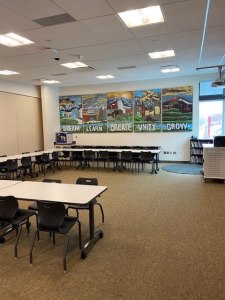
rsz_20200225_142648

The Utah Humanities Council is located at 202 W. 300 North.

The toolkits currently offered by Utah Humanities focus on discussion that surround race and diversity, as well as bridging differences between religious beliefs. While Utah Humanities enables other organizations to host these dialogue events, there are different other events within Salt Lake City that are designed to focus not only on dialogue between community members, but also various forms of cultural and civic education.

The Village Square is a Florida-based organization that is “dedicated to maintaining factual accuracy in civic and political debate by growing civil dialog on diverse issues, and recalling the history and principles at the foundation of our democracy.” The Village Square has an active branch in Utah, which hosts events that encourage participants to engage with issues facing the community, as well as expand attendees’ understanding of Utah’s cultural diversity. 

One of the events featured Andrea Smardon of the KUER podcast “Next Door Strangers.” The podcast focused on the national commentary that our nation has become increasingly divided, and discusses methods that allow individuals to reconnect with their communities in a meaningful way. 

The Village Square events tend to lean political, with events of the past granting participants the opportunity to “speed date” local leaders. One event especially found success in gathering Clinton and Trump supporters during 2016 in an effort to promote civil discourse. 

One could argue that the motivation behind having dialogue between different parties is to achieve understanding, and hopefully to connect in a meaningful way. Utah organization The Golden Rule Project believes that sharing, kindness and compassion are primary facilitators for gaining understanding across any number of social boundaries. 

The website for the Golden Rule Project states that “The Golden Rule Project is not religious, not political, and not associated with any agenda. We promote the Golden Rule as a basic human value.” 

The Golden Rule Project goes about its mission by being involved with numerous organizations, nonprofits and events ranging from farmers markets to Pride parades. Additionally, it hosts community conversation events, again designed to bridge the gap that an individual may feel exists between them and their community.

Communal dialogue can have a real effect on the lives of those involved. Jennifer Mayer-Glenn, director of University Neighborhood Partners, stated the importance of these types of resources. She recalled her work with the Human Rights Commission. Mayer-Glenn collaborated with the Commission as well as west-side communities to host a series of dialogue events designed to determine the needs of Salt Lake residents. These events encouraged discussion regarding the specific cultural, educational and economic challenges faced by the west-side community. The data gathered from these events was used to inform Utah state legislation, and may continue to influence how the west side is perceived by decision-makers in Utah. 

While there are several organizations that provide the space and means for dialogue events, an obstacle facing the communities that could benefit from them is lack of information. “I don’t want to represent community voice,” Mayer-Glenn said. Instead, she said she prefers that communities and organizations are given the resources to speak with each other, that way the needs of the community are being actively expressed.

These organizations are hardly alone in their efforts of community outreach. Many of them place emphasis on collaboration with nonprofits and government bodies like the Human Rights Commission. Ultimately, the goals of these organizations are similar, and require that the community be actively engaged in the discussions being created. The cooperation between these organizations is met with cooperation with the community, so that it may, as Mayer-Glenn suggested, represent its own voice.

Our CASA brings academic opportunity to the west side of Salt Lake City

Glendale-Mountain View Community Learning Center, located at 1388 Navajo St. in Salt Lake City.

Story and photos by CHEYENNE PETERSON

As the school bell sounds with a shrill “brrring,” out walks 17-year-old Anwar with 10 of his classmates from Our CASA, an after-school program offered within the Glendale-Mountain View Community Learning Center. Anwar has a smile from ear to ear as he says goodbye to his classmates and teachers. He then makes his way to the front office, where he waits patiently for his little sister to join him so that they may catch the bus home to their family.

Students with smiles are something you see often in the west-side communities of Salt Lake City, due to the Our CASA organization.

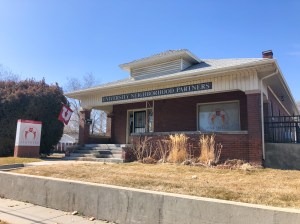
University Neighborhood Partners, located at 1060 S. 900 West in Salt Lake City.

Our CASA (Communities, Aspiring, Succeeding and Achieving) is a program that has collaborated since 2016 with the University Neighborhood Partners (UNP), the Salt Lake City District, Google Fiber, and schools on the west side. The organization consists of students, parents, teachers, and community members who all want to support families living in west-side neighborhoods as they set their sights on higher education and rewarding careers.

Our CASA does this by creating college-themed “lounges” located in classrooms of schools and community centers. The goal of the room is to make it comfortable and home-like for students with couches, desks, computers, and other necessities. Hence, the room is known as a lounge.

According to Sol Jimenez, the education pathways coordinator at the Glendale-Mountain View Community Learning Center, the lounge not only creates a room and place where people can come and get together, but it also serves as a hub for access to college resources and information on continuing education. 

“It is also a place that would hold programing that would involve students, parents, families, and various different people to get more information in whatever that they need, in terms of building an education pathway,” Jimenez said.

UNP Associate Director Paul Kuttner said the first Our CASA lounge was created in 2013 in a combined effort of the Salt Lake Center for Science Education (SLCSE) and a University of Utah social services student.

SLCSE housed the sole lounge until 2016 when Google Fiber chose to give a charitable donation of $50,000 to Our CASA. The funds were distributed equally to the six current Our CASA lounges located in Backman Elementary School, Glendale-Mountain View Community Learning Campus, Northwest Middle School, Salt Lake Center for Science Education, UNP Hartland Partnership Center and West High School.

Kuttner joined the UNP staff in 2016. He said that at each school and community center, a team was brought together of students, parents, teachers, and administrators in order to decide what they planned to do with the money and what activities they wanted brought to the table.

The partners allowed the kids involved at the West High School location to name the program.

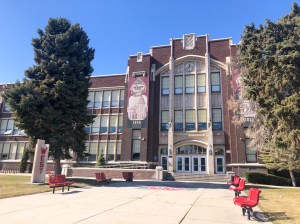
West High School in Salt Lake City, 241 N. 300 West.

“The name Our CASA was submitted by a student at West High School and from there we decided on it being the acronym for Communities, Aspiring, Succeeding and Achieving. Students wanted it to be something that bridges cultures, so they liked having one word in English and one word in Spanish. They wanted it to feel more home-like than school-like,” Kuttner said.

Each school and community center was given the creative freedom to use the Our CASA lounges differently. “We support that, because we figured people on the ground at the school know what’s best. We try to support them in using the space as best as they can,” Kuttner said.

He added that the focus is on community engagement and leadership of families and students. They all offer support for people as they pursue higher education and careers.

The organizers wanted the lounge to create a sense of belonging for students and families. “The feeling you belong and having a safe place to connect in your school is proven to be key for students’ success and family engagement,” Kuttner said.

Helping students apply to and get accepted into college is a focus of Our CASA. This directly impacts the students’ level of confidence and helps them to achieve their educational goals.

“It is wonderful and it’s helpful. It helped me maintain my grades. I get helped with homework and stuff that I don’t understand,” Anwar said. 

Jimenez was initially involved with the basic establishment at the community center. She has seen the number of students who attend Our CASA at Glendale-Mountain View Community Learning Center grow annually. “I think it’s a positive sign that we are doing what we are aiming to do,” she said.


Mestizo Arts and Activism Collective — 13 years later

Story and photo by ALISON TANNER

What began as a safe space for youth to discuss different topics and concerns, has become an engaging and creative platform for young students to take action in their community. In over a decade, the continuously blossoming program is impacting many in the Salt Lake Valley.

Mestizo Arts & Activism Collective (MAA) was co-founded in 2007 by Caitlin Cahill, David Quijada and the late Matt Bradley, remembered as a powerful force in the community for change. These activist researchers were working on several different documentary projects relating to race in schools, immigration issues, and in-state tuition for undocumented citizens.

Along the way, they met with various youth who were passionate about social issues and wanted to get more involved. With a little bit of funding and a big commitment to addressing these topics in a safe space, the MAA was born.

Over a decade later, Caitlin Cahill reflects on the collective’s progress. “It’s so beautiful to see the way it’s developed. I feel humbled and inspired.” Although Cahill has since moved from Utah, she often comes back to visit. “It’s a space of activism, which is a key part of healing in this crazy world we live in.”

So how does it work? Each year, a diverse and intergenerational collective of young activists, artists and researchers work together to address urgent issues in the community. Nearing the end of the school year they work on a final project, created by a specific student or students, showcasing what they’ve learned throughout the year. Students have created everything from documentaries to murals.

MAA is a community partner with University of Utah Neighborhood Partners. UNP’s mission brings the community together by connecting the university and people in west-side neighborhoods with resources in reciprocal learning, action and benefit. As UNP proactively helps historically unheard voices, it acts as a convener, contributing to the decrease of barriers to higher education.

Various MAA mentors mentioned that the collective also provides the opportunity to connect with others and discuss topics that aren’t necessarily taught at school or in their homes.

Artwork serves as a key focus of the collective. Painting. Filming. Drawing. Speaking. Dancing. These young people are allowing others to see that activism is powerful and necessary, displaying it through words, colors and sounds.

Over the last decade there have been significant losses in art education, due to the No Child Left Behind Act of 2002. UNP Director Jennifer Mayer-Glenn mentioned that when the focus shifted to helping students achieve higher skills at math and science, arts education fell to the wayside.

“Many communities relate so much to music, visual art and dance. It is hugely important,” Mayer-Glenn said. “Art is a way to express oppression and repression.”

Although it begins with high school-aged students, the MAA has created an impact with far-reaching effects. With an initiative to help youth find opportunities and remove barriers to higher education, many who began in MAA are giving back, sustaining a successful cycle of change.

MAA members pose for a photo at the Marmalade Branch of the Salt Lake City Library. Pictured from left to right is Caitlin Cahill, Yair Marin, Elizabeth Estrada-Murrillo, Jarred Martínez, Sharay Juarez, Itzél Nava, and Leticia Alvarez Guitérrez.

“MAA is a space where it’s developed and centered around high school-aged youth, but it’s where our leadership has come from. They have a different role, like myself, but we’re all still involved,” said Jarred Martínez, who serves as the MAA advisor with UNP in conjunction with the U. Martínez said that much of where he is today is due to his connection with MAA.

Itzél Nava is a student at the U and a former member of MAA. At a young age, she thought she’d never attend college. She now serves as an MAA mentor, regularly meeting with the students and providing her leadership to the collective.

“Whenever someone asks me to tell them about MAA, I tell them it’s a program that caters to west-side students.” Nava added, “You always hear about the east-side schools and their resources, but now we’re showing everybody what’s happening and what amazing things our students are doing here.”

Amazing things is right. In 2008 to 2010, an ethnically diverse group of student researchers began the “We Live Here” project. Calling attention to the complexity of multi-ethnic/cultural neighborhoods that are often overlooked, students engaged in oral history and research to document the value and contributions of their community. They wanted to challenge assumptions about the west side, creating a multi-layered interactive community history map.

Another student mentor, Yair Marin, has been involved with the program since his sophomore year of high school in Salt Lake City. Of MAA, he said, “It’s especially rewarding because it’s intergenerational. You could call it a second family.”

Marin also said that there have been various instances where students came to the leaders for personal help. Being a mentor allows them to create meaningful bonds that continue long after students have graduated from the program.

Leticia Alvarez Gutiérrez, MAA faculty advisor, said students who participate in MAA while in high school receive university credit for attending 85% of the program. This serves as yet another way that Mestizo Arts & Activism removes barriers for students of minority backgrounds to receive higher education.

“I think for me the most important thing is getting to know who these young people are. It’s a sacred space. We all hold very strong relationships,” Gutiérrez said.

The collective meets every Monday and Wednesday at Mary W. Jackson Elementary school. A full archive of its projects is included on the website. Though MAA is a small organization, the colorful tapestry of its impact is larger than life, as it reaches many in Salt Lake City and beyond.

“Activism is more than protesting. We all want to live in a better world,” said Cahill, MAA co-founder. “This space is creating the world that we all want to live in.”

Ski programs molding better lives for those living in Salt Lake City’s west-side communities

Story by MARTIN KUPRIANOWICZ

Voices of Utah 1

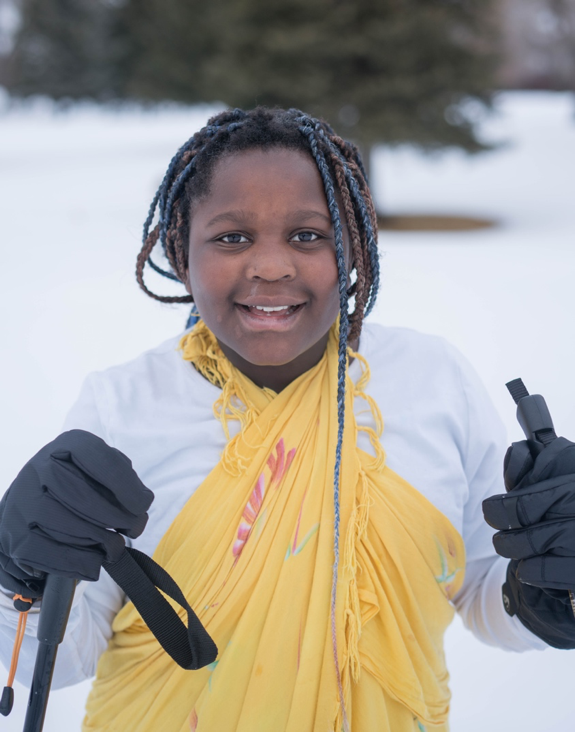
Children living on the west side of Salt Lake City enjoying the snow and cross-country skiing. Photo by Peter Vordenberg

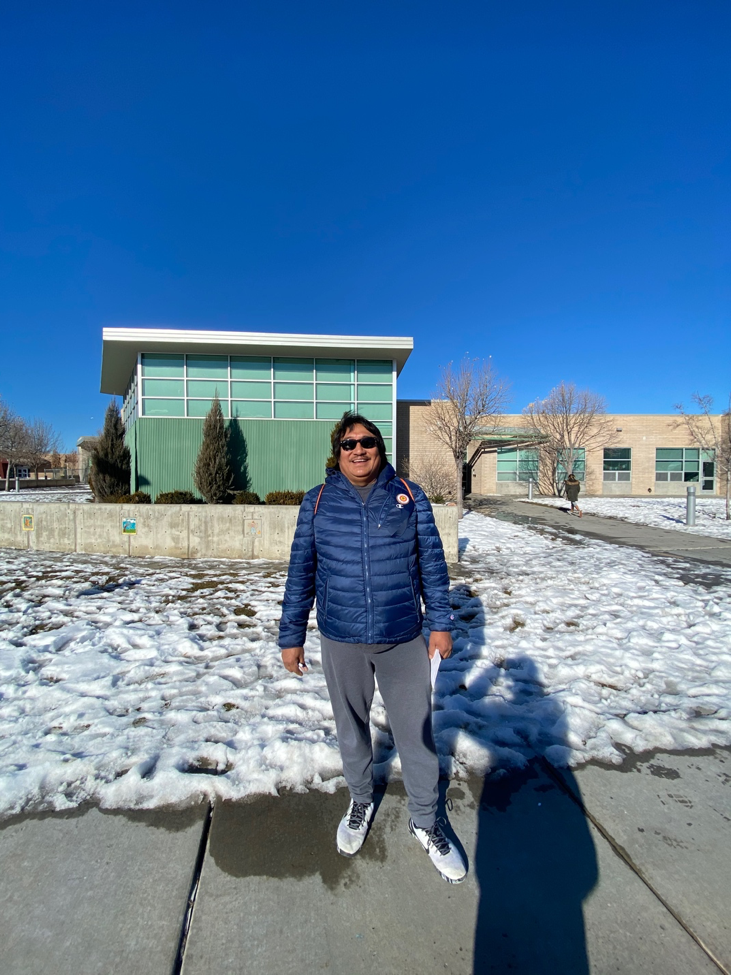
It’s Saturday. The sun is shining and snow is on the ground. Parents are dropping their children off at Mountainview Elementary in Salt Lake City and the kids are already exploding with excitement — they are going on a field trip. Juan Gilberto Rejón — or “Coach Juan,” as those in west-side communities refer to him — is patiently waiting outside of the school to take roughly 50 elementary students to the Bear River Migratory Bird Refuge to view a population of wild eagles on this day.

Coach Juan is the founder, executive director, and coach for the Hartland Community 4 Youth & Families, which is a program that aims to create pathways to college for the underserved by getting students involved in the outdoors. Coach Juan started this program because he believes the experiences earned in the outdoors are valuable ones that can set children up to better handle adversity throughout their lives.

On weekends throughout the school year, Coach Juan often takes students on excursions to participate in a wide variety of outdoor activities, from bird watching to skiing. Recently, cross-country skiing has been a big emphasis of the program.

“It’s a blessing for our underserved and our underprivileged because they wouldn’t be able to do it otherwise. It’s too expensive,” Coach Juan said. “For a family of five or six to go skiing at $200 a pop, that’s already over $1,000 being spent for just a day of skiing. There’s just no way these families living in poverty could afford that.”

His ski program is partnered with the Utah Nordic Alliance that takes students cross-country skiing on weekends in the winter. Another partner is She Jumps, an organization that motivates women and girls of all backgrounds to step out of their comfort zone in a fun, non-threatening, inclusive environment to learn outdoor skills.

Coach Juan’s program has been operating for three years, but his inspiration to get students involved with the outdoors goes back almost two decades to the birth of his son.

Voices of Utah 2

Coach Juan pictured outside of Mountainview Elementary, the meeting place for students going to the Bear River Migratory Bird Refuge. Photo by Martin Kuprianowicz

“When I first moved into a 300-bedroom apartment complex here (on the west side) there were a lot of things happening that were not safe for kids. We had a lot of robberies, carjackings, prostitution, drugs, alcohol, so as a community advocate I had to do something for my child,” Coach Juan said.

What began as a mission to improve the quality of life for his child then translated as improving the lives of everyone in his community, especially vulnerable children on the west side of Salt Lake City. Coach Juan started a community soccer program that would eventually grow into a multifaceted, multi-partnered community outdoor program for youth.

The program focuses on helping students to pursue higher education. Coach Juan’s son went through it. Now, his grandchildren are enrolled. Hartland Community 4 Youth & Families has since grown and is now partnered with the Utah Nordic Alliance, headed by former two-time Olympic ski racer Peter Vordenberg.

Vordenberg coaches ski racers who have won gold medals in the Winter Olympics and World Cup championships. In addition, he helps Coach Juan organize the single-day cross-country ski trips by providing students with everything they need to go skiing.

But he didn’t always plan to be a community advocate. It all started by chance one day when he was invited by a friend to tag along with the kids on one of these ski programs.

“I was out there hanging out with all the kids and with Coach Juan and I was like, ‘Oh man, I got to be more involved, not just take pictures but I got to see what I can do to help out.’ So, I joined the board,” Vordenberg said.

Vordenberg has been on the Hartland Community 4 Youth & Families board for three years. He says that his favorite thing about being involved with the program is watching the kids develop a love for skiing and the outdoors. “It really builds their confidence and helps them dream bigger,” Vordenberg said.

Another opportunity for the west-side youth is the Parks and Recreation program that is affiliated with world-class ski areas Brighton and Snowbird. The Northwest Recreation Center is one of many centers throughout the Salt Lake Valley  that shuttle elementary and middle school students to those ski areas and provide them with gear, lift passes, and instructor training.

Snowbird Mountain School Director Maggie Loring has run this program on Fridays in the winter for 18 seasons. She said programmatic goals include developing new skiers and riders who may be interested in one day working as staff at the resorts, and providing a community service to children who may not otherwise get the opportunity to enjoy winter sports.

“One anecdote I can share is that the current manager of our programs was initially in our 4th-grade program, became a junior instructor, and kept going. It’s really an opportunity for resorts to capture both new guests and new staff,” Loring said in an email interview.

However, the impact of these programs is also a lot simpler than getting kids involved with the outdoors and setting them up for potential life paths in the ski industry.

“One of my favorite things about this program is the opportunity to see the kids pour out of the buses so excited to get onto the mountain,” Loring said. “Many of them may not be able to sleep the night before because of how excited they are for this new adventure. I remember from my own childhood how excited I was to get out of school to go skiing!”

Voices of Utah 3

It’s nothing but smiles when the kids get off the bus and go skiing. Photo by Peter Vordenberg

Connecting people with education: the Glendale Community Learning Center is driven by community

Story and photo by MEG CLASPER

From kindergarten to 12th grade students trudge down the halls of public schools. From class to class, teacher to teacher, students rely on those halls as pathways and safe spaces. Where those halls end, the halls of the Glendale Community Learning Center begin.

Nestled between Mountain View Elementary and Glendale Junior High, the Community Learning Center (CLC), at 138 Navajo St. in Salt Lake City, serves as a community and learning hub for the surrounding neighborhoods and schools. With four classrooms and six kitchens, the CLC creates programming driven by community needs.

Out of these programs, many are focused on helping parents of the community interact with the school system. English as a Second Language classes, also known as ESL classes, help non-English speaking parents communicate with school faculty and staff who may not speak the same language. Other courses provide parents with skills to better engage with teachers and administrators. A weekly meeting, held on Friday mornings, has also been set up for parents to meet directly with faculty and teachers of the schools.

In January 2020, the CLC hosted one session of the “Late Start Listening Tour” put on by the Salt Lake City School District. It allowed the Board of Education to hear community members’ thoughts and concerns about the current school system and a possible late start for high schools.

In addition to encouraging these meetings, the CLC offers classes to community members that are life-skill based. One class, Food Justice, focused on the sharing of cultural and family recipes. Each session emphasised a few common ingredients such as rice and noodles and encouraged attendees to pick recipes using those ingredients.

With collaboration from different community members and students at the University of Utah, these recipes have been compiled in a cookbook titled “Savor: Stories of Community, Culture, and Food.” The book shares the stories of how communities are built around food. This cookbook is sold online and at the CLC.

The CLC’s six kitchens are also open for community use. “You can go in [the kitchens] in the morning and see moms talking over coffee or making smoothies for teachers,” said Jennifer Mayer-Glenn, a previous administrator at the CLC.

Other than skills classes, the center offers courses to help adults prepare for applications and tests. For example, one tutors community members for the citizenship test. And the “Know Your Rights” course was started in 2016 in the middle of a spike in fear about immigration issues. It teaches adults what rights they may not know they have.

With its proximity to the elementary and junior high schools, the CLC is a big part of how both operate. “We consider it as part of our school,” said, Kenneth Limb, principal of Mountain View Elementary, in a phone interview. He works directly with the CLC on a daily basis and said appreciates the programs it offers.

Working

Students receive help with all types of homework in the Learning Lab.

After school, students from the elementary and junior high are able to cross the fields to the doors of the CLC. There they are able to take part in the after-school Learning Lab. Here 60 students connect with volunteers from the University of Utah to receive help with homework. Enriching activities are offered too. Science experiments and other subject-related visuals are planned to help students better grasp the concepts. The Learning Lab also serves as a safe place for students to remain until adult family members are able to pick them up.

In addition to the Learning Lab, the CLC offers courses to help students fill out Free Application for Federal Student Aid (FAFSA) forms, apply for scholarships, and fill out college applications. With this help students are able to feel more comfortable when it comes to approaching college. For those who want to move toward the workforce, courses are available to help individuals create resumes and cover letters.

Limb said activities not directly connected to the schools are available to students. While they are able to take sewing and cooking classes, social-skills courses are built to guide students through real-life situations. What youth get out of these courses are knowledge and skills to be able to deal with strangers, ability to work with adults and formally introduce themselves. By helping students interact with the outside world they are better prepared to enter it.

Many events are also planned by the CLC to help connect the community to the schools. According to many posts on the center’s Facebook page, it holds meetings between parents and the Salt Lake City School District, holds back-to-school celebrations for students, and promotes events at East High School.

With both schools and the CLC working together students are made to feel welcome and important when it comes to education. The connection enforces opportunities and the importance of education, no matter what hall students may be in.


Glendale-Mountainview’s Community Learning Center is a tool for academic success

Story and photo by NINA YU

After a six-hour day of absorbing math, language arts, and social studies, most students are ready to head home to catch a break. However, as soon as the bell rings, the Glendale-Mountainview Community Learning Center starts seeing kids filing in for another round of learning.

The Glendale-Mountainview Community Learning Center (CLC) is a place for students to go after school for tutoring, and includes a wide range of other educational and artistic activities. According to a brief description on the Salt Lake City School District website, a CLC, “is a philosophy, a place, and a set of partnerships between a school and other community resources. The CLC model builds on the core instructional program of a school by adding educational and life skill enrichment for the entire family and [removes] barriers to learning by providing necessary social services.”

Essentially, this center is a safe space for kids to catch up on school and learn life skills with the home economic programs. It can even be an early-preventative method against turning to negative influences.

The CLC works with a long list of community partners that all have a commitment to enhance the services in five areas: quality education, personal development, community development, family and community engagement, and family support.

“We get a lot of value supporting students. Their worth is important especially since a lot of them don’t have a support system at home,” said Keri Taddie, the CLC coordinator. “Even if it’s at someone’s home, there can be language barriers or parents have late work schedules, so what we do at the center is help these kids and build a long-term relationship. Students that participate in this program tend to be with us long-term. We watch them grow up.”

The CLC has multiple community partners that help kids with tutoring and homework. One of them is the University of Utah’s Utah Reads (originally America Reads). Utah Reads is a program within the Bennion Center that tutors elementary school children with learning how to read. Utah Reads’ mission is to provide quality, one-on-one tutoring for elementary students at Title 1 schools in the Salt Lake district. Utah Reads’ tutors are trained college students who are placed at any of the sites that the program partners with — Glendale-Mountainview CLC being one.

“Each site is student-run. We do one-on-ones every week and the student leaders take care of scheduling, assessments, placements, and tutor management,” said Asma Hassan, the program manager for Utah Reads. “At each of our sites, we try to work with whatever makes the child unique. The CLC is one of the sites that is more unique, because of the Learning Lab. It’s more helping with homework and for those who need it, we even offer later hours.”

There are about eight to 10 tutors assigned to each site. Since the CLC is both a space for Glendale and Mountainview students, 16 tutors are assigned to the site. Utah Reads works on building a mentor relationship with the students who are struggling in school. The tutors’ goal is to catch those who are struggling at an earlier age so they can proceed with their peers accordingly.

Along with Utah Reads, the CLC also has partnerships with programs such as Big Brother Big Sister, Bad Dog Arts, and Discovery Gateway.

The Learning Lab at the CLC.

On average, the CLC sees about 55 to 65 kids participating in the Learning Lab daily. There are about 90 kids weekly. According to CLC coordinator, Taddie, most of the kids who come to the CLC are elementary school children, ranging from first to the fourth grade. Not only does the center provide literary tutoring and homework help, it also has many after-school programs such as music, math club, home economics, and sports.

Most of these programs and partnerships are free for the students, except for the Mountainview After-School Program and the Glendale Community Education Program. The After-School Program is held five days a week for three hours and 15 minutes a day until 6 p.m. and it helps parents know that their child is in a safe environment while they’re at work. The program charges $40 a month, but families are eligible for reduced fees and beyond that, there are also fee waivers.

The Community Education Program is the biggest one in the district and oversees the after-school programs. The program is for parents and students who need a consistent space. The fee is $50 a year, but the reduced and waived fees still apply.

“Fees are a barrier,” Taddie said. “What you see happen is that kids will see that there’s a fee and they immediately put the flyer away. They don’t ask questions. They don’t ask if there are options for them.”

For some students, the educational and art programs are so memorable they come back and volunteer when they’re in high school or college.

“I definitely recommend that students take advantage of the Learning Lab and any other programming at the CLC,” said Kenneth Limb, the principal at Mountainview Elementary, in an email interview. “All CLC programs are enriching and support academic and social/emotional learning.”

The teachers, counselors and administrators all support and promote students’ attendance of the Learning Lab and the other programs. The CLC is located at 1388 Navajo St. and wedged in between Mountainview Elementary School and Glendale Middle School.

Planting a seed: how to grow your own educators in Salt Lake City

Elizabeth Montoya, left, writing a note about an event to Maricela Garcia, who is pictured with her daughter Karen Sanchez Garcia at the Glendale Mountain View Community Learning Center at 1388 Navajo St., Salt Lake City.

Story and photo by IVANA MARTINEZ

The concerto at the Glendale-Mountain View Community is ongoing. It begins with a chorus of students shuffling to class, kissing their parents goodbye at the early morning drop-offs and continues several hours after school finishes. And it wouldn’t be possible without the orchestra of people who ensure the children get the resources they need. 

With severe teacher shortages in Salt Lake City, the University of Utah’s Neighborhood Partners has teamed up with schools around the west side in Salt Lake City to address this issue through the program Grow Your Own Educators (GYOE). 

According to the Grow Your Own Educators 2018-19 annual report, the program provides a framework for parents and community members to teach at Title 1 schools. Title 1 schools are defined by Salt Lake City School District as schools that have a high concentration of low-income students who receive federal funds to assist in meeting students’ academic needs. 

According to the report, GYOE has been working closely with a cohort of 12 paraeducators from Salt Lake City School District during the 2018-19 school year.

The program has paraeducators participate in eight training sessions once a month where they sit down and study topics that correlate with Utah state standards. 

Paraeducators can be found in the halls of Mountain View Elementary School reading with students. They can be found in the Glendale Middle School helping teachers in their classrooms. Or, they can be found at the Community Learning Center (CLC) in the kindergarten rooms. 

Ruth Wells has been a paraeducator for the last five years. Wells’ pathway into education began with a desire to be involved in her children’s lives. “I wanted a way of being home when they were home,” she said. 

“I decided that helping a teacher in a classroom would be the perfect way of still being a part of education,” Wells said, “while still being able to take care of my kids the way I wanted to take care of them.” 

For other paraeducators, like Myrna Jeffries, a teacher who migrated from the Philippines, becoming a paraeducator was a way to continue her career here in the United States. Jeffries was recruited one day while walking around the neighborhood by Elizabeth Montoya.

Jeffries began working for only a few hours a week until she asked to take on more responsibilities at the school. JShe began going to the CLC and into the elementary school to assist teachers and help students. 

The most challenging aspect of the work, Jeffries said, is communicating with the students. According to the Utah Department of Health, one in seven Utah residents speak another language, and one-third speak English less than well. Communication barriers are often present for community members at the CLC, but Jeffries said she works around that by using body language to overcome the barrier. 

The Beehive 

Most people in the community know family-school collaboration specialist Elizabeth Montoya, who has worked at Mountain View Elementary for the last 16 years. On most days, students and parents will see Montoya riding on her large blue tricycle around the Glendale area carrying food or binders in her rear storage basket for a program. Montoya recruits parents or members around the community to come in and help out with activities occurring at the Glendale-Mountain View Community. 

Montoya’s specialty is acting as the community’s megaphone. She ensures families know about opportunities and programs that are offered. Her job is connecting parents to resources that help them partake in their children’s education, or advance  their personal and career ambitions. Montoya creates connections with parents and informs them about programs such as GYOE. 

“That’s what we want,” Montoya said. “We want to educate people in the community.”

If Glendale were a hive, Montoya would be the queen, said CLC Program Director Keri Taddie. Montoya has worn many hats throughout the years and created educational opportunities for parents, such as Padres Comprometidos. The program connects Latino parents to these schools by providing a pathway to invest in their child’s academic success and continue their own as well. 

“They’re our children and we should invest in their school too,” Maricela Garcia said in Spanish. She began volunteering at the CLC when her oldest daughter started preschool years ago. 

“I would go help the teacher check homework or have the kids read with me,” Garcia said. 

Although she isn’t currently a paraeducator, she actively engages and participates in the Glendale-Mountain View Community. 

Language barriers haven’t stopped her from volunteering either. Despite the fact that she didn’t speak English at the time, she had students read to her in English. Garcia then began coming to the community meetings at Mountain View Elementary even before her daughters began attending the school. 

Garcia, who is currently taking a leadership class at the CLC, wants parents to know about resources available for their children. She wants them to feel empowered to learn about their options — whether they have legal status in the United States or not. 

A leading obstacle, Garcia told Voices of Utah, is that Latino parents don’t have adequate information about post-secondary education. She said many of them don’t believe it’s possible for their children to go to university because they don’t have scholarships. 

With programs such as GYOE, there are pathways for parents, young adults and community members to have access to new professional development in their lives. Because many paraeducators come from various backgrounds with education, the initiative grants access to paraeducators to work toward teacher licensure.  

“Many students can keep studying. And there are many opportunities for everyone,” Garcia said. 

The importance of the community background is pivotal to the Glendale community, which has a high concentration of students from diverse backgrounds. An understanding of a student’s culture provides context to support and foster their educational pathways. Because many of the paraeducators come from within the community, it establishes a unique understanding of how the community works. 

“I think that we’re always trying to pull back from that part of the community,” CLC Program Director Keri Taddie said, “and bring those strengths into the school because they have relationships and cultural knowledge and community knowledge that we don’t always have.”  

The Glendale community doesn’t run by itself. It’s an entire ecosystem composed of volunteers, parents, educators and paraeducators who prioritize education and make sure that students are benefitting from the educational system.  

“Sometimes people say, ‘Oh thank you for all you do,’” Montoya said as she shook her head. “No. We do it together. I don’t do it myself.” Montoya recalled a saying from her mother about a community of bees and how it takes a whole beehive to make a lot of honey. 

Hartland Partnership Center has kids dancing into their future

Story and photo by KATHRYN A. HACKMAN

The University Neighborhood Partners (UNP) Hartland Partnership Center.

As the last school bell rings at Mountain View Elementary and Glendale Middle School, 15 to 25 kids make their way to the University Neighborhood Partners (UNP) Hartland Partnership Center. This is their weekday routine, with afternoons full of experiential learning and creative fun. However, once a week, this creative fun is taken to an entirely new level.

Every Tuesday throughout the year, you can find Kelby McIntyre-Martinez, the program director of professional development at the Beverley Taylor Sorenson Arts Learning Program, leading a high energy dance and theater class for the Hartland kids.

Through these performing arts classes, the children can talk about social justice, immigration, identity and cultural differences. This is all thanks to the safe outlet of expression that the arts can provide.

“The arts at Hartland transcend language. They transcend background. As a class, we may not fully understand each other, but we are still creating together,” McIntyre-Martinez said.

She describes an afternoon spent at Hartland as “loud, boisterous and “smiley.'” It’s a time that calls participants to live in the moment. It’s an hour that is full of nonstop energy. “The work that I’m able to do at Hartland is just joy,” McIntyre-Martinez said.

However, this reciprocal bond between the University of Utah and west-side residents didn’t always exist.

In 2003 the University of Utah and west Salt Lake City’s diverse neighborhoods were nothing more than cordial acquaintances. Although they were neighbors in the Salt Lake Valley, their interactions were minimal. That all changed in 2004 with the creation of the UNP Neighborhood Partnership Center.

UNP decided the best way to connect with the west side was to move into the Hartland Apartments, which many Glendale residents called home. 

This newly founded collaboration set out to empower the community, 75% of whom are non-native English speakers, through building university connections and promoting education. They began to offer English language instruction, mental health support, citizenship classes, employment workshops, and educational resources.

This campus-community fusion was designed to ensure that those living in the area had access to a wider range of local resources. Over the years, that’s precisely what they’ve done.

With rapid growth and community involvement, UNP eventually moved into a larger building right across the street.

“The role of UNP is to bring together community residents with the University of Utah, and surrounding organizations,” said Jennifer Mayer-Glenn, the director of UNP.

She said that the greatest enablers for those living on the west side are caring communities, quality teachers and schools, cultural services, and places of belonging.

While UNP offers these educational programs for adults, it certainly hasn’t forgotten about the kids.

The UNP Hartland Neighborhood Partnership Center offers a year-round after-school youth program for the children living in the nearby apartments.

UNP’s model is about being involved with the children and investing time into programs that create pathways to higher education.

Abdullah “Tuna” Mberwa moved from Kenya into the Hartland apartments in 2003, one year before UNP became his neighbor. He was one of the first children to experience UNP’s after-school program. Today, he’s the youth center coordinator.

His experiences allow him to connect with the kids in a very unique way. “I don’t want them to just look at me as the program coordinator, but as a mentor,” he said. Not only does he take on the role of mentor, but also that of a tutor.

Hartland staff like Tuna, and occasional volunteer students from the U, can provide the academic and language support that the children may not receive at home.

Homework is a challenging task for students all across the United States. But for the children at Hartland, there’s an added level of complexity. Many of the students come from countries in Africa, South America, Central America, and the Middle East. Therefore, English is not the primary language spoken among their families.

The academic support that UNP provides is crucial.

But after a studious hour well spent, the kids get to let loose with a university partner. These partners — like McIntyre-Martinez, who also is on faculty at the U — are experts in their craft and teach classes in subjects like art, yoga, and science.

On Tuesdays, the children often rush to get their homework done because they know “Miss Kelby” is coming to dance with them.

Through dance, the children can bring their stories and backgrounds to life and blend them with the arts. Together the students fuse their worlds and create original works.

She ends every class by asking the students if there is anything, they’d like to teach her. A few lessons ago, she said three boys from Mexico showed everyone a song from home. Another time she had two boys teach the class a dance from Burundi.

The arts are a crucial part of the after-school youth program. As McIntyre-Martinez said, ”It creates a space where students feel welcomed and valued. It creates an area where you don’t need to speak the same language to come and jam.”

Not only does her class expose the Glendale children to the arts, but also higher education.

One of the courses she teaches at the U is called Theater for Social Action, which takes place at Hartland. Her college students ditch their textbooks for the afternoon and instead experience what teaching in the arts is really like.

They spend the semester working with the children at Hartland, co-creating, and bringing art to life. Both the students and the children end their 16 weeks of preparation with a performance at the Sorensen Unity Center where they receive the applause that every artist seeks.

This exposure to the collegiate world allows the children at Hartland to envision a future in college. 

Over the past 12 years, McIntyre-Martinez has seen the direct impact that Hartland has had on the children living in west Salt Lake City. She knows this reciprocal model that UNP has works because she sees some of her Hartland kids grow up to join her on the university’s campus as college students. She said, “We’re now reaping the fruits of this awesome partnership.” 

Keith Lopati, West High School’s outstanding softball coach

Story and photo by HUNTER THORNBURG

When West High School in Salt Lake City is searching for a new head coach for any of its athletic programs, it creates a selection committee through which all potential coaches will interview. The committee contains two student guardians, two staff members, one of the school administrators, and the athletic director. All potential hires receive the same questions from the committee, and the process is competitive.

Coach Keith Lopati in his West High School office.

Out of this selective procedure came West High School’s Varsity Softball Coach, Keith Lopati.

Lopati is a special education teacher, working specifically with the behavior unit at West High. He is heading into his eighth year of softball coaching in Spring 2020. Lopati strives to connect with his athletes and does everything he can to help the student-athletes get where they want to be. For him, it all starts with establishing the coach-player relationship.

He added that after the relationship and trust is built with his athletes, he focuses on what they’re hoping to achieve as a student-athlete, whether that be playing at the collegiate level, or simply just concentrating on self-improvement.

Lopati said, “My coaching style is really being able to build a rapport with all of the athletes that I come in contact with, whether it be female or male, and starting from there and working the ground level up.” He added, “The approach is really just to get to know them and build that relationship with them in order to understand their needs, and then go from there.”

Over the years he has coached at West High School, he says he has been fortunate to have worked with all sorts of individuals — from the top-tier athletes to those students simply looking to be a part of a team.

Student-athletes say he has significantly impacted them on and off the field.

Daisy Taloa, a senior at West High School, said Lopati is good at holding the athletes accountable and making sure they are always on top of their school work. She said he is an involved coach too. Despite keeping the athletes in line academically and athletically, Taloa also mentioned that Lopati has established engaging and fun conditions for the girls to play softball in.

Taloa said, “When we had to put pressure on ourselves to make sure our performance was our best, we’d do it, but it was fun. You didn’t ever feel like you didn’t want to play softball anymore, and he made the environment a good environment for you to want to stay in.”

Taloa added that Lopati has helped her improve as an athlete and as a student. She will play collegiate softball on a full-ride scholarship for Grand Canyon State University, located in Phoenix, following her senior year.

Another senior leader and future collegiate athlete on the team is Kensey Lopati, the coach’s daughter. Like her teammate Taloa, Kensey said her dad is involved as a head coach, and focuses on making sure the student-athletes are doing the right things on and off the field. However, Kensey said that when the girls make mistakes during practice, Lopati calmly brings it to their attention and teaches them the way to correct it.

Regarding Lopati’s approach, Kensey said, “His coaching style really is: if we want it, we’ll go get it. He’s just here teaching us and giving us the tools to succeed.”

She said that thanks to the guidance of Lopati, as a father and a coach, she will go on to play collegiate softball on a full-ride scholarship for Salt Lake Community College following her high school career.

Lopati’s success connecting with the athletes, and guiding them to triumph has not only been recognized by the student-athletes, but also by West High School’s athletic director, Rachel Townsend. She has been in the position for three years, and pays close attention to the many athletic programs the school, located at 241 N. 300 West, offers. Although she was not the athletic director when Lopati was hired, she says she’s not surprised the committee decided on him.

Townsend agrees with the student-athletes and their assessment of Lopati. She appreciates the fact that he holds the athletes accountable on and off the field.

“He has created an environment that makes people want to play here, people that aren’t really familiar with the sport. He’s also created an environment where the students know that what they put in is what they get out of it,” she said.

Townsend said Lopati has successfully coached several athletes to the collegiate level, both at Division 1, and junior college. Some of the athletes currently playing college softball include Huntyr Ava at Brigham Young University, Keisha White at North Carolina State, and Jazmyn Rollin at the University of Missouri.

Lopati won 5A state championships with his team in 2017 and 2019, and also won Coach of the Year in those seasons. Townsend attributed this success to his extensive knowledge of the game, and his ability to effectively convey that knowledge to the student-athletes.

As the 2020 season approaches, Lopati says he is planning to keep up the momentum and will continue to make efforts to connect with his athletes in order to guide them to successful futures.

Utah’s air: Not good for what ails you

Inversion

Brace yourself — The inversion is coming. This is the text of a bumper sticker.

Story and photos by SARAH SAIDYKHAN

On July 24, 1847, Brigham Young and the Mormon pioneers of what is now The Church of Jesus Christ of Latter-day Saints arrived on the outskirts of the Great Salt Lake Valley looking for a new place to corral their wagons and set up camp. The church’s archives state that as Young gazed over the vast and barren land sprawled out before him, he said, “This is the right place.”
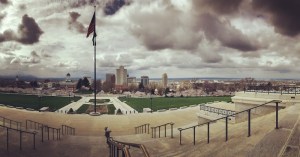
City View

Salt Lake City.

Nowadays we know that what Brigham Young was looking at were massive mountain ranges surrounding a desert-valley landscape. This mountain range design creates a makeshift bowl that protects the valley from strong winds and other harsh elements. Along with adventurous recreation, the mountains assist in creating high- and low-pressure systems that trap toxic particulate matter in the air during winter inversions and smoke-filled haze pollution resulting from possible summertime fires.

Kellie McCleve lives in the southern end of the Salt Lake Valley and is a mom to five kids under the age of 14. From her home, she is able to see the smog pollution that covers the Valley. She said, “Sometimes the sky’s so gross you can’t see anything but like, a yucky, brownish haze. It covers the whole Valley.” McCleve said that when she takes her kids into the city, she has a mask for each of them to wear. “It’s so gross! We shouldn’t be breathing that in. No one should be breathing that in.”
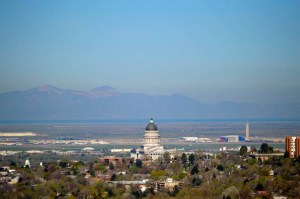
Smog Lake City

Light haze covering the Salt Lake Valley.

But every day, hundreds of thousands of people do breathe it in. McCleve said that when she moved, the inversions were something she could see from a distance. But now she knows her home was never actually immune. “I worry because when we moved out of the city, I really thought we escaped it, we didn’t. We just see it now from a distance. It’s always around us but it’s worse down in the Valley.” McCleve believes that no one person can fix the depleted air quality and for now, she continually looks for ways to lower her carbon footprint saying, “We’re all responsible for the problem and that means, we’re all responsible for cleaning it up. If we don’t, we’re all in trouble.”

Today, Utah is home to over three million people and the Kem C. Gardner Policy Institute projects that by 2065, Utah will be home to roughly six million people. Even as the state grows more diverse, there is still an environmental justice divide visible in the Valley.

The east side houses a predominantly white population. One can usually find new and remodeled schools and readily available public transportation. There are pricey coffee shops every few blocks and multiple grocery stores within walking distance where residents can purchase organic, fresh fruits and vegetables. The east side of the Valley also sits at a higher elevation and in a way, overlooks the west side. But even at higher elevations, the air is still filling with particulate matter from emissions, just not at the same levels as what accumulates in the air down on the Valley floor.
West Side Industry

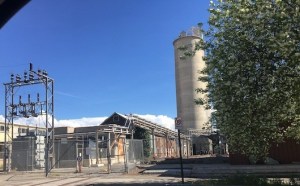
Westside industry.

The west side of the Valley houses a large majority of Utah’s lower-income families. There’s more diversity in the communities and predominantly, most people of color live on the Valley’s west side. Grocery stores are spread miles apart from residents, creating food deserts, and there’s a significant lack of public transportation. Instead of coffee shops and farmers markets littered throughout the neighborhoods, there are factories, refineries and major transportation, and trucking hubs all contributing to the air quality.

With the depleted air quality in the Valley, who is affected the most? Anthony Sudweeks is one of the principals at Wallace Stegner Academy (WSA), located on Bending River Road on the west side of the Salt Lake Valley. The school offers a free, college preparatory education for grades K-8. With over 600 students, the majority of kids attending WSA are Hispanic, students of color and/or from low-income families who reside in the neighborhoods surrounding the school.

Sudweeks said he is asked by parents frequently, “Can you keep all the kids inside for indoor activities?” As much as he wishes that were possible, it’s not a reality. A few days of inside play are OK, but kids need to run and expel their energy so they can pay attention and learn while the teacher is instructing. Instead of packing hundreds of energy-filled kids in a crowded lunchroom like sardines in a can, the school adheres to strict guidelines on how the red, orange and yellow days are handled.

utahblueskyslc

A “green day” in Utah.

Sudweeks said, “On red days, no kids play outside. On orange and yellow days, students with asthma or heart conditions, who have to have a doctor’s form filled out, don’t go outside.”

The school uses one of the state’s outdoor air quality monitoring websites to decide who or if any students go outside during the orange and yellow days. “There are air testing monitors that the state funds all over the place,” Sudweeks said. “There’s one about two blocks from here.” He and the other employees at WSA are vigilant in making sure that the kids are not outside when the inversions are happening and when the air quality monitors show that any unnecessary exposure to the air would not be safe.

WSA checks the air quality website multiple times daily because, even though the weather is not the culprit, the pressure systems may change from morning to afternoon. But Sudweeks said, “It’s not really dependent on the weather. High- and low-pressure fronts can change it, but the air quality’s not very unpredictable. It’s predictable. In the morning we know what it’s going to be like in the afternoon, it doesn’t randomly change. It doesn’t predict green and turn into a red.”

Sudweeks did say that during the winter inversions the forecast will sometimes show a yellow day in the morning, but by the afternoon it will have turned into a red day. Those days, he said, “It’s a constant check, constant.”

An inversion builds, trapping pollution.

The area of WSA is surrounded by four major freeways. Sudweeks explained that the neighborhoods around the school are some of the worst polluted spots in the state when it comes to bad air quality. So, why knowingly put a school in an area that suffers from some of the most polluted air in the state? “Because this is where our students live,” Sudweeks said. “This is Glendale, and most of our students live in Glendale. If we moved the school somewhere else, what we’d be saying is, these kids don’t deserve a good charter school.” Glendale is a suburb of Salt Lake City and according to Statistic Atlas, roughly 40 percent of the population living there is Hispanic.

Sudweeks quickly affirmed, “This is their neighborhood and these kids absolutely deserve to have a great school in their own neighborhood.” He said that one of the reasons why the school’s location was decided was “to make sure that the kids living in some of the most polluted and lower-income parts of the city still have access to the best education possible.”

Sudweeks explained the environmental justice issues the school and area are facing. “It’s a nationwide phenomenon where the lower the income neighborhoods are, the more likely they are to live in bad air quality. Nearer to freeways and industrial areas.” He said that’s also particularly true in Utah. The area is economically growing and with that growth brings large diesel-fueled trucks, more traffic, congestion and, overall increased pollution.

Winter Smog

Eastside winter smog — University of Utah’s family housing.

Sudweeks also ran for state legislature in 2018. One of his platforms was Utah’s air quality, more specifically, the air quality monitors and their need to be updated. He said, “They need about $3 million invested into them because they’re falling apart. The session before the last, they voted to not put any money into them and this last session they put $1 million. But they are in desperate need of upgrades on the monitors themselves.”

Sudweeks said he feels like the majority of the legislature just doesn’t care because it would mean truly facing the air pollution problem. “They just pretend like it’s an issue we have no control over, which is not true.” Sudweeks said the state could completely move to Tier 3 fuel, which is low in sulfur and according to the EPA, reduces carbon dioxide emissions into the air.

Sudweeks said the state is also needing a revamp of the public transit system to meet the needs of the people. “Buses don’t get people on public transits, trains do,” he said. “We’re a big enough county where we could justify a large investment into public transits. Because of our air quality needs, we have no business not investing heavily in public transits.” Sudweeks referenced the recent legislature and said, “No money for public transit, but a lot of money for widening and expanding roads.”

He said Utah’s inversions give residents a false sense of security in believing the air is only bad when inversions are happening. A large study by Harvard T. H. Chan School of Public Health agrees. The study found that EPA standards may not be strict enough in preventing premature deaths from air pollution. The research showed that if particle pollutions in the air could be lowered by roughly 10 percent, the death rates of people 65 and older would be lowered, possibly saving 7,000 to 10,000 lives each year.

Hazy City

Haze building over the Salt Lake Valley.

Improvements to the air quality in Utah have been made over the years. Technological advancements created cars that run on natural gas and batteries. Electric vehicles, trains and buses are carrying more people around the Salt Lake Valley, reducing the need to get in a gas-operated vehicle for a quick drive to the store. More homes are being powered through renewable solar energy, and in general, more people are aware of the issues of air pollution and what contributes to it. Still, with all the improvements, there is a visible racial divide when it comes to air we breathe.

Rep. Angela Romero represents Salt Lake Valley’s House District 26. She is also one of the many advocates fighting for clean air in Utah. Of the roughly 39,000 people living in her district, almost 60 percent are Hispanic and people of color.

Romero said in a phone interview that when the topic of air pollution comes up, people have to realize there’s more to it than just air pollution. “There’s an environmental justice concern for those affected the most.” The EPA recognizes environmental justice as the fair treatment of all people regardless of race, color, national origin, and income with regard to the development, implementation, and enforcement of environmental laws, regulation, and policies. This means that every person living has a right to a fair and meaningful life and protection from environmental and health hazards. This is not the case for hundreds of thousands of people living in the most polluted parts of the Valley bowl.

Romero said, “Most working-class communities and communities of color, live in areas that are more industrial, so they’re going to be exposed to more toxins in the air than others.” She and her colleagues are looking at the intersectionality of all issues facing people of color and marginalized communities. “We’re not looking at how they collide and how they displace people, it’s how they all work together,” Romero said.

As the Valley becomes denser in population, Utahns must continue being vigilant in finding and implementing ways to stay ahead of the added pollution. Romero said, “It’s kind of hard for us to solve the problem if we’re not coming up with innovative ways to address it [air pollution].”

Public Transportation

Riding public transit lowers dependence on fossil fuels.

Cleaning up the air is not a one-person job. It’s everyone’s job to work together to make it better. Romero said that a lot of time people want to put all the blame on industry and other heavy air polluters. But, she said, “We don’t look at ourselves and what small things we can do when we’re looking at air quality and energy. How do we play a role in that? What are some practices that we can change in our own lives?”

Romero said she’d like to see the state focus on using more renewable energy sources like adding roof-top solar panels to all state-run buildings and offering higher discounts to homes using solar panels. Businesses and homes can also update their heating and air-conditioning units to function more efficiently. Romero said it comes down to all residents making the commitment to change the habits that are contributing to the depleted air quality.

Utah has over 200 sunny days a year. Roof-top solar is an important investment for Utah’s future economy. More importantly, using a 100 percent renewable and clean energy source can help to improve the long-term health of all residents.

In the Salt Lake Valley’s mountain landscape environment, there will always be air pollution concerns. “We have inversions,” Romero said, “and they’re never going to go away, but what can we do to be more proactive, so we don’t make them worse?” Romero said that people can make little changes like taking public transit. Even though it may take a bit longer to get somewhere, plan for it and make it part of the routine. Walk or ride a bike if only going short distances and carpool whenever possible. The more we drive, the more we’re creating dirtier air with our cars. Romero said, “Getting people out of their vehicles and onto public transportation is a great way to start.”
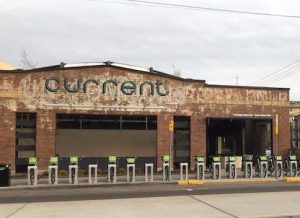
Bikes are readily available around the city.

About the future of Utah’s air quality, Romero said, “We’re trying to be more proactive. We’re looking at inversions and air quality and we’re looking at it more from a public health perspective.” She also said, “If we truly want to change the route we’re going, we have to reevaluate systems that are in current existence. It’s not only about communities of color and marginalized communities. It’s about us as an entire community.”

Romero said all it takes are small changes in everyday routines to help improve air quality. Any day is a great day, to start a new and healthy habit.

To make improvements to Utah’s air quality, follow the CLEAN AIR plan:

C: Carpool whenever possible
L: Limit cold starts on cars and combine trips
E: Engage in clean air advocacy
A: Access public transportation
N: Navigate smog ratings and engine types
A: Avoid unnecessary commutes
I: Idle less or not at all
R: Ride a bike or walk when possible

To learn more ways to help clean up Utah’s air, visit the Utah Department of Environmental Quality, Utah Department of Health, or Air Now.


This slideshow requires JavaScript.