Why Latinx representation in leadership roles is important for the success of Latinx children

Story by TYSON ALDRIDGE

The importance of role models in everyday life cannot be underestimated. Children anywhere from ages 3 to 16 look for an older role model whom they can look up to and learn from. Most people can think back to when they were younger and remember who their role models were. Sometimes these role models can even help shape a young child’s future career or passion. But oftentimes for young children of Latinx descent it can be hard to find positive role models in important positions. That is why Latinx representation in leadership roles is vital for the success of Latinx children.

According to a 2011 article, “In 2008, only 28 percent of traditional college-age Hispanics were in college, up from 17 percent two decades earlier.” The importance of roles models for young Latinx youth is stressed throughout this article, and with positive role models the author thinks this could result in more Latinx students attending college, or applying for positions they may not have otherwise.

Having legislators, teachers, coaches, or athletes to look up to can help a younger generation dream bigger and truly believe that they one day can be in a prominent leadership role.

Former Utah State House Representative Rebecca Chavez-Houck says, “The reason why it’s so important is because if we are not the anomaly anymore, if we’re seen as the norm, if we’re seen as a default, that anybody can be a legislator, anybody can be a leader, that you’re not making this image in your head, ‘a leader is x, this is what HE looks like’ more often than not.”

Chavez-Houck also explained that the reason she got into politics was because she wanted to help diversify the state government. She attended an event where she saw all of the representatives from Utah and she said she was shocked by the lack of diversity that was represented. So she took it upon herself to get involved in politics and give the Latinx community of Utah a voice in the capitol. And in doing so, little girls and boys can see a Latinx leader in the government and aspire to possibly be in a leadership role someday.

Cherise Tolbert, who works for latpro.com, said in a 2018 article that “cultural, ethnic, and gender-related barriers are too easily accepted as part of one’s identity. One could assume that without role models, Latina women cannot become nonprofit leaders. I think a young latina woman who sees an executive board member, whose contributions inspire and command respect, will want to follow the board member’s footsteps.”

Erlinda J. Martinez, the current president of Santa Ana College in Southern California,  said in an email, “It is very important that we have role models in every profession; that students see teachers like themselves, that defendants see attorneys and judges like themselves , etc.” With the number of the Latinx population growing in the United States, it is vital to have representation in leadership roles. Martinez added, “If children and students see themselves in others it becomes easier to believe that they too can become anything they want!”

Martinez explained how having positive role models can make a drastic difference in the future. She said, “Once there are role models in professional/leadership positions it leads to decision making that is in keeping with valuing diversity and inclusion.” This is essentially where a domino effect would take place. “More Latinos become educated. More Latinos are hired or promoted. The justice system changes. The education system changes. The economics changes, etc.,” Martinez said.

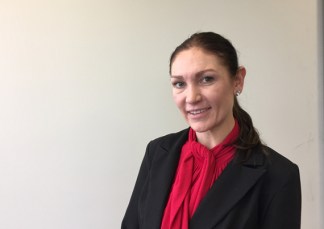
DavidIbarra pic #1

David Ibarra is in the process of running for mayor. Photo by Tyson Aldridge.

David Ibarra, a current candidate for Salt Lake City mayor, said in a phone interview, “It’s important for all parts of our community to participate and to be represented. The Latino community is going to be the majority community shortly in America.” Ibarra stressed the importance of Latinxs getting out and supporting their candidate to ensure that they are represented at all levels.

Being a role model can be a very tough road, but the story you get along the way can be inspiring. This held true when Ibarra said, “Anytime that a Latino breaks through it is an example that it is possible for anyone. I was brought up in foster homes, and have been a dishwasher at a restaurant. Ten years later I owned the restaurant through hard work and perseverance.”

resize for Krissi EDIT

Dave Ibarra poses in front of his “Let’s think Big” poster. Photo courtesy of the Dave Ibarra for Mayor campaign.

The biggest thing stressed through all the interviews was vision. Being able to see yourself in a leadership role because the person in that role is like you. Ibarra said, “I share my story only for the benefit of the youth that if it can happen to me, then it can happen to you. It breaks through the glass and makes them believe that it is possible. Latinx in politics is huge because not only can I think I can do it, I know I can.”

Positive Latinx role models are vital for the future. Having Latinx leadership will give kids a higher bar to aim for. It can help give them the mindset that they can be in an important position. “We pursue what we see,” Rebecca Chavez-Houck said. “And if children do not see people that look like them that have their experiences, that have their perspective that represent their communities, then they don’t see that as an opportunity for themselves.”

Pride, success and accomplishments: Three Hispanic influencers share their stories

Story and photos by LINA SONG

The Hispanic community is not only continuing to grow across the United States but also making many accomplishments that shape the community for the better. A former member of the Utah State House of Representatives and two students attending the University of Utah share their thoughts about the achievements they built for their community in Utah. The three members of the Hispanic community have contributed their talents, dedication, and success to improve and make a change.

Rebecca Chavez-Houck

Rebecca Chavez-Houck, a former member of the Utah State House of Representatives, explains her journey of breaking the stereotypes imposed on Hispanic woman. 

Chavez-Houck’s journey started after she graduated from the University of Utah in 1982 and worked for a small newspaper firm in Wyoming. After working there, she moved back to Utah and started working in public relations. As she was getting into politics, she realized that the legislature did not represent the community in Utah.

In order to represent the Hispanic community, Chavez-Houck was elected to become one of the member in the Utah State House. By being a woman in a male-dominated industry, she was able to break the public’s notion of a representative being a white male. Chavez-Houck discussed the Latin phrase “Vox Populi,” which means the “voice of the people.” She always remembered this phrase when she was working as a member of the House.

“I was the conduit to make change and to be that voice,” Chavez-Houck said proudly. “We were there to be the voices of the people.”

The influence of her parents helped her realize the importance of education and supporting one another within a community. By using her journalist side through being an observer and by understanding her views and being self-critical, Chavez-Houck accomplished to accentuate the Hispanic community’s strengths.

Neida Munguia

Neida Munguia, a sophomore at the University of Utah, was born in Salt Lake City but was raised in New Jersey. Munguia’s parents are from Michoacán in Mexico. Munguia grew up in a very diverse community. She returned to Utah for high school. During those years, she was the head of multiple Latin clubs. Munguia was most active in the club Latinos In Action and continues to participate to this day.

“Since LIA took off in Utah, I was able to help our sister programs in Florida, Texas, Idaho, and California take off as a resource appointed by LIA.” Munguia said.

picture2

Munguia believes that her community has flourished and enriched the United States which brings a sense of familiarity.

Munguia discussed the events that she started while she was in high school. The first event was the “Dia de Los Muertos” dance, which was created in order to portray the beauty of celebration for the day of the dead in Mexico. Another event was the implementation of day care for parents with young children during school events. They included providing translation services and offering tutoring to the parents. Through these achievements, Munguia wants to show and remind students within her community that they are capable of great things. By carrying out her passion, she built stronger ties and helped her organization and the community move forward for the better.

“The fact that as a community we slowly see the importance of education is a success beyond our wildest dreams,” Munguia said. “My whole purpose of starting the festivals, dances, and after-school activities was to empower my students.”

Jesus Jimenez-Vivanco

Jesus Jimenez-Vivanco, a freshman at the U, grew up in West Valley City, Utah. He is the first in his family to graduate high school and attend university.

Jimenez-Vivanco believes the biggest accomplishment his community has made is speaking up and breaking certain stereotypes. He gives the example of himself and his friends attending university and studying diverse subjects. Jimenez-Vivanco also said he feels prideful that his father works for the construction department and helped build many of the buildings at the U.

edit 2

Jimenez-Vivanco said many people view the Hispanic community negatively but in reality people work hard and are generous to others.

By realizing the importance of education, Jimenez-Vivanco always reminds his younger sisters to appreciate their education and fight for what is right. He believes that by influencing his sisters, other people within the community will pass on their moral beliefs and values. Jimenez-Vivanco said he hopes that he will be able to show the strengths of his community by being honest and hard working.

“Many Hispanics rise up in politics here (Utah), whether it’s immigration, women’s rights, LGBTQ rights and many more. They speak up and fight for what’s right,” Jimenez-Vivanco said. “I am giving a good name for my community by helping others and taking my skills to the next level — something that everyone should do, not just people in one community, but all of them to make the world a better place.” 


How Latinos in Action is inspiring youth who are Latinx to find success and overcome challenges like high dropout rates, youth suicide, and more

Story, photo, and graphics by MEGAN CHRISTINE

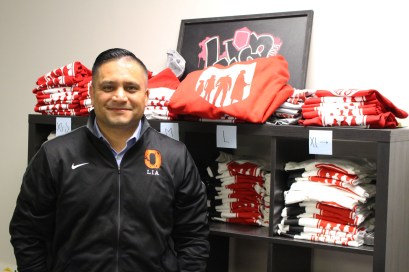
“Our work is transformative. It allows kids to see that they don’t need a diploma to make a difference today or to be a leader today,” said Jose Enriquez, founder and CEO of Latinos in Action.

Enriquez

Jose Enriquez, founder and CEO of Latinos in Action.

Latinos in Action, or LIA, offers an asset-based approach to assist students who are Latinx graduate and succeed after they leave high school. It is offered as a class that students can take throughout middle school, junior high, and high school. Its end goal is to “empower Latino youth to lead and strengthen their communities through college and career readiness.”

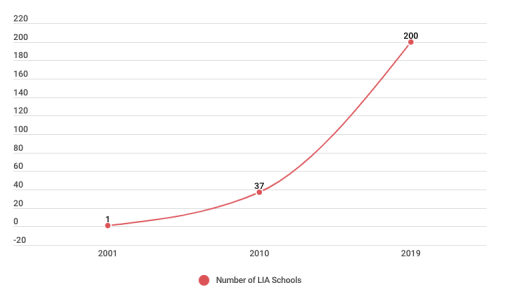
# of LIA schools

The number of schools with LIA classes has increased from one in 2001 to 200 in 2019. 

Enriquez founded LIA in 2001. He began the first LIA class at Timpview High School in Provo, Utah. Since then, it has grown significantly and there are LIA classes offered in eight different states.

Enriquez said he created LIA because there is a “glaring need for it.” According to an article by NBC News, the Hispanic high school graduation rate is at an all-time high, but Latinxs still have the highest dropout rate of any group in the U.S. LIA students have a graduation rate of 98 percent.

The four pillars of LIA, the things the curriculum focuses on, are personal assets, excellence in education, service, and leadership. Enriquez created these pillars based off of things that helped him through high school.

“They were the little things that made a big difference. I want the same thing for Latino youth. A place where they can shine, develop, and lead without fear,” Enriquez said.

30:40:30

The LIA classes have a 30/40/30 makeup.

The LIA classes have a 30/40/30 makeup. This means that 30 percent are students who are doing well in school, students who take AP and honors classes and have a high GPA, and 40 percent are students who are “going through the motions” and have about a 2.0 GPA. The remaining 30 percent are the students who are learning English as their second language.

“When you put them together it’s magical. They begin to learn from each other and understand that they can do more together,” Enriquez said.

One of the four pillars of LIA is personal assets. The reason he included this is because Enriquez says that a lot of youth are increasingly worried about finding employment and housing. He also said that young people are being “sucked into a social media pit” where they are constantly comparing themselves to others.

“Youth are trying to find themselves in this world of heightened social media, heightened instant gratification, heightened pressure. You see this in the number of those with anxiety, depression, and suicides that are occurring in the younger group rather than the older,” Enriquez said.

Utah has the sixth-highest suicide rate in the U.S. with 22.7 per 100,000, according to a report released by the Centers for Disease Control and Prevention in 2017. Suicide is the leading cause of death for Utah youth ages 10 to 17.

Suicide rates in the U.S.

The highest suicide rates in the U.S., according to the Centers for Disease Control and Prevention report in 2017.

“Even those who are affluent are going through these things, because depression doesn’t have a ZIP code,” Enriquez said. The personal assets pillar focuses on giving youth their confidence back. “This is why it’s important to have that social-emotional component, we’re going to give them the skillsets to be ready.”

Another one of the four pillars of LIA is service. One class will spend about 100 hours at a local elementary school tutoring young children who are learning how to read.

Ivan Cardenas, current regional program manager at LIA, used to be a teacher for the LIA class. He said his personal favorite part of the program is the tutoring piece.

“It creates this bond between the tutor and the student. He or she is seen as a role model, as an example for this child,” Cardenas said.

This act of service can be a pivotal moment for some LIA students, because some did not grow up with the culture of reading. “It’s a discovering moment for them. Many of them decide then that they want to teach. They discover a passion for it,” Cardenas said.

Tutoring these children can help LIA students foster a sense of a belonging in their community. Children have accessible role models to look up. Also, the teachers and administrators at the elementary schools get to see the LIA students in a different light. Cardenas said “they see these Hispanic kids as productive members of society. They’re doing something, they’re contributing, they’re translating. It’s just an amazing time of discovery for all.”

Students who are Latinx can face unique challenges while in school. Cardenas said there are “stereotypes these kids get in the hallways at school. That’s very real, and lately has been more evident unfortunately, due to the negative comments we hear in the media from our top leaders.”

Ashley Castaneda, 20, is a second-year student at the University of Utah. She took the LIA class while she was a student at Granger High School in West Valley City. She credits her experience with the program to her success now.

Castaneda noted that it is important to have a space where you feel comfortable and connected to your peers. She said that in her class, her teacher helped her and her peers embrace and take pride in their culture. They did activities related to Hispanic culture, like performing dances in front of the school. They were taught about role models in their community.

“That was my favorite part,” she said. “Even though it was helping us towards college, it also helped us embrace our culture.”

Castaneda takes pride in where she came from. She received more money than she needed in scholarships when she began college, so every year she goes back to the LIA class at Granger High to offer her excess money to them in the form of a scholarship.

“The whole point is to show people that sometimes we need to go back to our own communities,” Castaneda said. “A lot of students who are Latinx go to college and just forget where they came from, and that’s not what I want to happen. I want people to go back, remember where they came from, and use that to empower others.”


Resources are available, including the 24-Hour National Suicide Prevention Hotline: 1-800-273-TALK (8255). The SafeUT app is a “statewide service that provides real-time crisis intervention to youth through texting and a confidential tip program – right from your smartphone.”

Kids need more Latinx role models in Utah, and here’s why

Story and photo by KRISTEN LAW

Kids pursue what they see. This is what former Utah State House Representative Rebecca Chavez-Houck said in an interview. She said that kids are inspired by the role models in their lives.

The most impactful thing from a study released in January 2018 by Education and Employers reveals that over 36 percent of kids place their career hopes based on people they know. Lack of diversity and lack of authentic and encouraging mentorships were two major issues that stunt a child’s dreams for their future, the report said.

Jennifer Mayer-Glenn, director of Family and School Collaboration in the Salt Lake City School District, creates opportunities to help build the capacity of school staff and create welcoming environments for culture in the Salt Lake schools. 

Screenshot 2019-04-03 13.55.06

East High is one of the five high schools in the Salt Lake City School District.

Mayer-Glenn says that although there are a few Latino teachers, diversity could be better in the Salt Lake City School District. “Even if a student of color has one teacher of color through their entire career, that makes a huge difference in them feeling connected to the institution,” Mayer-Glenn said. Additionally, she said it can be hard for students who don’t see themselves in their history books. “If they can’t see themselves, it is hard for them to relate.”

Mayer-Glenn said it’s important that Latino kids see other Latino doctors, lawyers, leaders, business owners, and politicians because then they see themselves and say, “I see me and I can be that person.” The hope behind this is to encourage all kinds of kids to pursue all kinds of careers to help all kinds of people.

Recently, Mayer-Glenn said she took a trip to the doctor’s office. Upon arriving she was delighted to see that the medical assistant there was Latina. “We need more Latina doctors,” Mayer-Glenn said. Excited about this, she decided to encourage the assistant by stopping to talk with her about her career goals and aspirations. 

Cecilia Rollett is a wife and mother, originally from Veracruz, Mexico. “It was hard at first to adjust to living in America because of the language.” She recalled a difficult moment with this when she was first pregnant, only a year after being in Utah and still not knowing the language. She had to work through her doctor appointments during her pregnancy sometimes without her English-speaking husband or an interpreter.

Rollett has now been in Utah for five years and speaks English fluently as her second language. Those interactions she had with doctors during a very vulnerable time in her life encouraged her to be a translator and counselor working with Spanish-speaking clients at the Pregnancy Resource Center.

Thinking of her own experiences, Rollett said, “Whether or not they know English, these women need these resources. I had [my husband] who is American, but some of these women, it’s just them.”

Mayer-Glenn said, “It’s about developing relationships with people.” Trusting in those authentic relationships and then encouraging other people to invest in those same kinds of impactful relationships. Mayer-Glenn calls this her “heart work.” “Having those individual relationships where people trust you and push you and encourage you I think is really important [in a child’s life],” she said.

Teachers and mentors play a large role. Mayer-Glenn recalls an impactful moment in her own life where a mentor, Archie Archuleta, an icon of activism in Utah, encouraged her to push herself toward her potential. “I’ll never forget Archie [telling] me ‘it’s your turn, you’ve earned it,’ like go forward and do this work because you’re ready.”

The most impact Mayer-Glenn has felt being on the other end of this was when she was an assistant principal at Glendale Middle School. This is where she felt she had more of a direct influence because she interacted with the kids every day.

“They would come to my office and sometimes they would just need a pat on the back and be told ‘you’re going to be OK.’ And also challenging them and really pushing them saying ‘you have the right and you can be who you want to be’ and show them ‘these are the things you are going to have to do in order to get there.’” It was those individual relationships that she believes really had an impact.

MEChA High School Conference at the University of Utah

Story and photos by IASIA BEH

Several hundred Latinx high school students came to the University of Utah on Feb. 27, 2019, for the 24th annual Movimiento Estudiantil Chicanx de Aztlán, or M.E.Ch.A, High School Conference. The conference consisted of workshops, a keynote and lunch.

IMG_2181

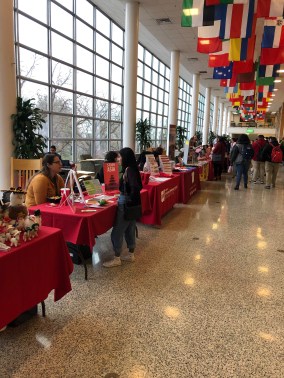
A high school student receives information from university groups at the M.E.Ch.A. High School Conference.

The students all had varying reasons for attending the conference. One student came to fulfill hours for his Latinos in Action club. Others came to learn about college. Some came to learn about how undocumented students can get funding and help for school.

There was a sense of excitement all around the conference. Students were rapidly chatting each other up and approaching students from other high schools. It was often hard for the presenters to get the students’ attention as they were getting to know other students who were like them.

Conferences like this, for many students, are a break from the whiteness and racism of the schools they attend, especially for students who are undocumented. About 10 Latinx Taylorsville sophomores and juniors engaged in a group discussion after the workshop “Erasure of African Roots in México.” One sophomore named Juan said the reason some DACA students might not know their options for after high school is “because most of the time they are scared to speak up about it so they don’t know what to do when they graduate high school.”

IMG_2179

Students attend an “Erasure of African Roots in México” workshop on Feb. 27, 2019.

The students were adamant that the current political climate is the reason that many students are afraid to speak up. The president was elected when they were in junior high school.

How has that affected the students and their ability to enjoy school?

“It has affected us in, like, that we get attacked either by the teachers or the students that they make racial jokes,”  Juan said.   

Their teachers would make jokes?

“There were a lot of teachers that would like, say racial jokes in our classes that we had in ninth grade,” he clarified.

Another sophomore, Marissa, who went to Eisenhower Junior High with Juan, said that her friend had a poor experience with her science teacher. A white student had lost a paper and the teacher believed that she had completed the assignment and gave her full credit. Her friend, who is Latina, lost the same paper. However, she was not believed and was accused of not really losing her paper.

This wasn’t the only Latinx student who had this issue with this teacher. Other students commented that they felt like he would glare at them and otherwise make them feel uncomfortable.

“He was like that. He did really bad things to all of us Latinos,” another sophomore, Andrew, said.

“He would try to keep it low-key,” Marissa said.

“He would even give us dirty looks!” Juan added.

They then talked about how they went to the administration about the situation, and how they found a safe place to talk about it: Latinos in Action (LIA). They said that other students had had similar incidents with other teachers and it helped to hear about them from peers. However, they mentioned that some teachers were not supporting the existence of LIA.

“There were a lot of teachers that didn’t support that program at Eisenhower just because we were Latinos and we weren’t the [student body officers] who were white kids,” Juan said.   

While these students’ stories are anecdotal, they are far from unusual. The university has been taking strides to overcome these obstacles that students of color may face when they get to the U, including offering high school conferences that bring underrepresented students to campus.

Martha Hernandez, who gave the “Erasure of African Roots in México” workshop, said these conferences are important because students have the opportunity to see themselves reflected in college students. 

M.E.Ch.A. provides a “space where they can celebrate their cultural identities and have a space on campus where they can do that,” Hernandez said. “And also for them to know there is a community on campus for them.”


Latinos In Action members provide aid to classmates with disabilities

Story by EMMA JOHNSON

Jordan High School Latinos in Action (LIA) members are changing the lives of their non-mobile, non-verbal classmates at Jordan Valley School for the disabled. According to the Latinos in Action national webpage, there are groups established in eight states, in over 200 schools, with 8,000-plus student members. LIA members at Jordan High assist their disabled classmates across campus using EagleEyes.

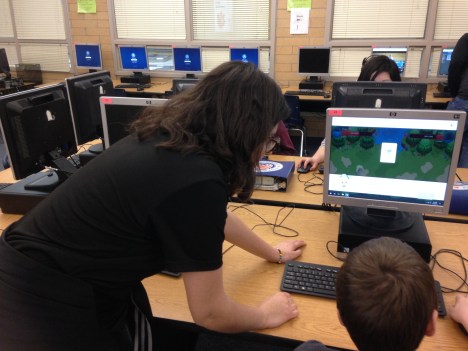
EagleEyes is a mouse replacement system for the computer that tracks eye movement and converts it into mouse movement. The system is primarily used to assist the profoundly disabled. This technology was developed at Boston College and through an exclusive licensing agreement The Opportunity Foundation of America (OFOA) owns the technology and now manufactures, trains and distributes the technology.

Matthew Bell, a foreign language teacher at Jordan High, says in phone and text interviews that the Latinos in Action program was presented to Jordan High 10 years ago by the founder, Jose Enriquez. Bell says through the presentation he immediately saw the program as an opportunity to help Latino heritage students become more involved in the school and in their community. “Another selling point was the strong emphasis the program placed on post-secondary study and achievement,” Bell adds.

There are 24 Jordan High School Latinos in Action volunteers who spend one hour two days a week volunteering at Jordan Valley School. Eighteen of the students facilitate either the EagleEyes or Camera Mouse technologies with nine Jordan Valley School students. LIA members have been volunteering in the classroom for five years.

EAGLEEYES2

Latinos In Action students assisting a Jordan Valley student with EagleEyes. Photo courtesy of Opportunity Foundation of America.

Debbie Inkley, executive director of OFOA, says she has witnessed many student volunteers bring small gifts to their disabled peers. She sees students go above and beyond their responsibilities every day. “Many Jordan High School students will call me if their Jordan Valley School peer is not at school to check and see if their peer is sick,” Inkley says. Both groups of students create bonds with one another. The love and equality between students is evident in their work and is demonstrated in their progression, Inkley explains.

LIA volunteers not only assist their fellow classmates in academic progress but also have given them the gift of friendship. “Jordan Valley School students are elated when they see their Jordan High School Latinos In Action volunteers. They love working with peers and having friendships,” Inkley says.

EagleEyes can be a very intense situation. A lot of patience and care is required of all volunteers assisting the disabled students. Matthew Bells says he has seen students’ experiences with working with EagleEyes benefit them in and outside the classroom. “I think the biggest lesson learned at EagleEyes for my students is that there is a person to be discovered in everyone they meet,” Bell explains.

EAGLEEYES

EagleEyes volunteers prepare the software for student use. Photo courtesy of Opportunity Foundation of America.

To become eligible for EagleEyes users usually have difficulty communicating or can’t communicate at all. EagleEyes gives them the opportunity to express themselves through words, games, and learning. LIA students are helping their fellow peers communicate in a way they never dreamed of.

LIA members have learned to understand skills bigger than they could have ever expected, Bell says. “Some other little lessons are that they have learned patience, the importance of avoiding multitasking and take a process one step at a time, and perhaps most important they have learned to put all electronics aside and really focus on the person and the task,” Bell says. The growth he has witnessed in LIA volunteers stretch beyond themselves and achieve goals the program was created to help achieve.

The program has helped students reach new perspectives in terms of how they see their parents’ sacrifices, how they see their community and how they see themselves in their future community. Bell says many of his LIA students will be first-generation college students and graduates. “They know very little about how to get there, how to pay for it, or what it takes to be successful in comparison to high school,” Bell says. They are willing to make the sacrifices and being a part of Latinos in Action helps them realize the importance of a successful future.

Camila Gallardo, a senior at Jordan High School, has been a member of LIA for four years. She says in a text interview that LIA has given her another group to call family. She says being a member has helped her to become more confident in herself and made her want to embrace her culture. “I’m so happy Latinos in Action has given me opportunities like volunteering with these kids because it has made me a better person overall and has made me learn so much that you just don’t learn in a classroom setting,” Gallardo says.

“I have had such an amazing time volunteering at Jordan Valley doing EagleEyes,” she says. “It is something that I always look forward to because it’s always just amazing to watch these kids smile when they interact with us.” LIA has created an opportunity for Gallardo to grow beyond herself. Participants of LIA focus on skills that will help them prepare for college and career readiness and leadership development skills. She feels her time spent volunteering with LIA and EagleEyes has not only helped her through high school but also will assist with her professional success.

Latinos In Action school and community involvement has taught students personal skills desired for future success and given Jordan Valley School classmates the opportunity to experience genuine peer support. “The EagleEyes Latinos In Action program changes lives,” OFOA Executive Director Debbie Inkley says. All who are involved with the program say it has been fulfilling and uplifting in every way.

Bicultural struggles: Life in Latinx shoes

Story and photo by ZANE LAW

The Latinx community has taken on the challenge of raising bicultural children, allowing their kids to venture from familial norms. While many Latinx immigrants came to the United States as solely Spanish speakers and Latin-embodied individuals, their kids and younger generations are transitioning to a more Americanized way of life. From bilingual speech to the foods they eat to the clothes they wear, everything can change before a parent’s eyes. Many parents struggle with this process. 

Shane Macfarlan, a well-published anthropologist and assistant professor at the University of Utah, said culture is an “integrated system of symbolically encoded conceptual phenomena that is socially and historically transmitted within and between populations.” 

To put this mouthful in far simpler terms, Macfarlan said culture is an intertwined web of knowledge that gives meaning to acts and things. This explanation says that culture is a set of thoughts and beliefs that allow Americans to know an extended hand as an attempted handshake, burgers and hotdogs as go-to barbecue/party foods, and the word football as a game played with pads and a helmet instead of a soccer ball and cleats. These words, gestures, and foods did not have an assigned meaning or context until a group of folks came together and decided it to be this way. 

This definition and concept are described by Macfarlan as being both a blessing and a curse for immigrants. While culture allows people to bond with each other, coordinate activities, and hang onto loved traditions, the integration of a foreign culture can also be a challenge. He said that because of the “integrated system” aspect of his culture definition, “changing one aspect of someone’s culture can inadvertently change other aspects as well.” 

For example, a bilingual home would allow someone to communicate openly with friends and family of different cultures, while also giving folks a leg up in terms of job qualifications. Bilingual individuals are always needed in the job force and are in high demand, so being raised in that environment is helpful.

A parent of a bilingual child would most likely be happy to see their kid grow up with more opportunities, but because a language was added to the child’s life, Macfarlan’s definition says that other aspects of their family’s culture are able to change as well. The parent may struggle to keep their kid speaking Spanish, enjoying the same foods, or practicing the same traditions. 

Andrea Ibanez, however, said in a video chat that she had a different experience. An Argentinian-born woman who has now lived in California for about 40 years, said that when she moved to the U.S. as a child, her mom wanted them to learn English in order to be successful. Mama Ibanez would speak to Andrea in English whenever she got the chance, wanting to pick up on school-learned knowledge. There were fewer Latinx individuals in the U.S. and Spanish speakers were not as sought after, so the Ibanez family was trying hard to focus on acculturation rather than enculturation. English was key and Spanish fell to second best. 

andrea and kids

Andrea and her kids enjoy a nice, Argentinian meal.

This cultural identity and monolingual predicament strained Ibanez’s relationship with her own daughter. She continued with her English-only mindset until she realized the benefits of being bilingual. Ibanez said she began giving Spanish lessons to her daughter when she turned 16, but by then it was too late. Her daughter always thought that speaking Spanish was difficult and embarrassing. They would reply to each other in different languages and argue for hours about the benefits and the embarrassments of each side.

With so much pressure to fit into “the crowd” at younger ages, there is a huge decision to be made. Latinx individuals are able to conform to American society and leave large portions of their culture behind, refuse to assimilate and fall back on ethnic ties, or accept both cultures the same and effectively communicate with both communities.

According to a 2014 study, “ethnic minority individuals may engage in frame switching (switching between their dual cultural identities in response to cultural cues as needed).” While this style is ideal, being able to communicate with different people and understand the values, beliefs, and norms of each, it is much easier said than done. 

Rebecca Chavez-Houck, a former Utah House of Representatives legislator and mother of two, speaks of the trials of being a mother to bicultural children. Her kids practiced the first assimilation option, joining their friends and forgetting their Hispanic roots.

She explained that while teens already tend to pull away from their parents, as a mechanism of growth and independence-gaining, the pushback is “augmented and amplified when dealing with a Latino kid.” She said that kids simply want to fit in with friends and are embarrassed by roots that are not common within peer groups. They do not fully know who they are or what values are important to them yet.

While Chavez-Houck did struggle with her kids’ personal growth, she said the transition is easier for the parents and children when the community is there to support and foster a wholesome experience. According to a 2018 Salt Lake Tribune story, there are 440,000 Latinx community members now residing in Utah.

Being able to stay in touch with roots and complete a smooth transition to biculturalism, based on Chavez-Houck’s statement, is becoming easier as Latinx populations increase statewide.


Why the Latinx community is migrating to Utah

Story and photo by KILEE THOMAS

For five years in the 1990s, Alex Guzman provided the voice-over for Tony the Tiger in Latin America. That was just one of the jobs Guzman held during a long career in Guatemala working in marketing for the international advertising agency Leo Burnett and La Prensa Libre newspaper.

He was a recently elected senator in Latin America. But, he still couldn’t escape the threat of violence in his home country, regardless of his success. Guzman’s wife and children were nearly kidnapped. For the sake of their safety, they had to leave. The family immigrated to Utah 11 years ago because his daughter was already going to college in the state and it made sense to keep the family together.

Like Guzman, many immigrants choose to migrate to Utah because one or more family members already resides here. According to the American Immigration Council, one in 12 Utah residents is a native-born U.S. citizen with at least one immigrant parent.

In 2017, the Migration Policy Institute, reported that Utah’s population was composed of 8.7 percent of immigrants and 57.5 percent of those foreign-born residents were of the Latinx community.  

Similarly to most Utah immigrants, Guzman had to start all over from the bottom up in a new country, new culture and new language. Today he is president and CEO of the Utah Hispanic Chamber of Commerce. Despite the obstacles he faced, Guzman said he never forgot his passion and drive. “If the second door is closed, I want to make doors,” he said.

Guzman isn’t the only one who fled to Utah to escape the violence of their home country in an effort save their family.

Bryan Misael Vivas Rosas, a 25-year-old from Venezuela, had to leave everything behind to support his family. “The dictatorship of Maduro has the country almost in a civil war. People are starving, being shot, robbed. It’s not safe to walk down the street in the middle of the day, let alone at night,” Rosas said.

He left at the end of 2016 and moved to Utah to stay with a family friend until he got on his feet. “I had to leave my parents, my sister, good work opportunities and almost all of my possessions,” Rosas said.

Now as a self-made audio sound engineer in West Jordan, he has the opportunity and resources to financially aid his family back home, as well as his sister who has recently migrated from Venezuela to Utah in order to be closer to him.

IMG_2225

Bryan Misael Vivas Rosas working at an event as a DJ. Photo courtesy of Bryan Misael Vivas Rosas.

According to the American Migration Council, Utah’s largest Hispanic immigrant population comes from Mexico, which makes up more than 43.2 percent of all immigrants residing in Utah. Like the 105,998 Mexican-born immigrants living in Utah, Clara Miramontes’s family immigrated to Utah from Mexico because of an already established family member living here.

Miramontes was only 5 years old when her family left Mexico to live with her mother’s sister in Magna, Utah, and although she said she doesn’t remember much of the immigration process, she remembers the expectations going in. “When moving to a new country, you have high hopes or else, you would feel like you’d never make it,’ she said.

At 17, she’s a soon-to-be graduate of Cyprus High School with a full-time scholarship in hand to attend Westminster College in fall 2019 to pursue her dream of becoming a doctor. She also works along with her mother as a peer mentor at Matheson Junior High.

IMG_0338

Clara Miramontes assisting a student at Matheson Junior High. 

Miramontes said she believes she puts in the effort to make full use of her opportunities now because she doesn’t want her family’s sacrifices to go to waste. “My parents gave up more than me. They gave up their career, their family, their livelihood just to give me and my siblings a better life,” she said.

Although many immigrants come to the United States to pursue better opportunities, the immigration process and politics surrounding it have caused issues. Miramontes said she believes the topic of immigration would be less controversial if it was seen from a more understanding approach and perspective.

She said she hopes for more compassion from people. “I wish people knew that we are not here to take everyone’s jobs or do illegal things. Some of us want to live a better life and have a prosperous future. I think all of the sacrifices people make to come here should be appreciated and taken into account,” Miramontes said.

During the government shutdown that lasted from Dec. 22, 2018, until Jan. 25, 2019, Alex Guzman said some 35,000 applications for immigration were placed to the side. Consequently, he said, it will take 10 years to solve and reprocess those applications.

And although it will take time to fix, Guzman doesn’t think there is anything that will stop immigration from happening in Utah or the United States.“There will always be a ladder taller than that wall,” Guzman said about the structure that President Trump seeks to have built along the U.S.-Mexico border.


Minorities brighten up the future of science and technology

Story and photo by SAYAKA KOCHI

STEM (Science, Technology, Engineering, and Mathematics) is a key field for innovations. As demand increases for researchers and engineers in Utah, the underrepresented minorities, especially those with roots in Latin America, are needed to be scientific innovators.

IMG_0475

Katherine Kireiev, STEM communication manager at the Utah STEM Action Center.

“It doesn’t matter what the color of skin is. STEM is helping to improve human lives, and maybe, the technologies are based on our abilities to keep up with them,” Katherine Kireiev said. She is an underrepresented first-generation American born to Russian parents. She works at the Utah STEM Action Center as a STEM communication manager, supporting Utah citizens including Latinxs to engage in sciences.

Latinx people are less likely to pursue higher education or their careers in the STEM fields, compared to other ethnic groups. According to a 2018 Pew Research Center report, Hispanics are significantly underrepresented in most STEM occupations; only 7 percent of all STEM workers in the U.S. are Hispanics, while 69 percent are Caucasians.

“The Latino culture of filial piety can be one of those things where they are expected to go into similar lines of work. Or maybe not given the right messaging to drive them toward college or science at home,” Kireiev said.

“Latinos are very family oriented and tend to work more in hands-on jobs rather than go and pursue higher education, because culturally, over generations, they don’t think that’s a pathway,” she said.

“What we do here in this agency is to try to make equity across all of the population,” Kireiev explained about what the center, located at 60 E. South Temple in Salt Lake City, is doing. The Utah STEM Action Center creates children’s “wow” and “why” moments by organizing STEM-related events, showing how science works around them.

“We try to equip students with opportunities that they wouldn’t dream of,” Kireiev said.

“With our very large Latino population in the state of Utah, we target public schools and charter schools. … We’re really trying to get teachers to recognize that [we need to] start them young and get them young and just show them that it can be really fun,” Kireiev said. For example, students are given a little toy that can be programmed to follow different color patterns. “It’s really cool and they say, ‘Oh, my gosh. I made it do that?’ Once students make these physical connections and see in actuality that hands-on piece, then it really lights them up,” she said. 

SACNAS (Society for Advancement of Chicanos/Hispanics and Native Americans in Science) is also an organization supporting college students in the minority groups to build up their community in the STEM fields.

“SACNAS offers a lot of career development, a lot of workshops to help with applying for grad schools, med schools,” said Reuben Ryan Cano in a phone interview. He was born and raised in Utah, and his parents are both from Mexico. He became the president of SACNAS University of Utah chapter while studying as a pre-med biology student at the University of Utah.

“There is a lot of networking that goes on. There is a chance to present their research, learning how to present, and also see other presentations, sharing science as well as sharing those professional skills,” Cano said. “SACNAS can engage minorities in STEM by building a community, providing support necessarily, and professionally encouraging skill development.”

The connection is vital when motivating underrepresented students to be exposed to scientific fields. Lace Padilla, the former vice president of SACNAS University of Utah chapter who currently works as a post-doctoral fellow at Northeastern University, has discovered the importance of connection through an unexpected meeting.

padilla_conference

Lace Padilla has a Ph.D. in cognitive neuroscience. Photo courtesy of Padilla.

Padilla was born to a Mexican-Native American mother and a Caucasian father. She grew up in a small mountain town in Colorado. Her first career was not in science but in an artistic field.

“Where I grew up, people didn’t become a scientist. I never knew any scientists, and I didn’t think someone who looked like me could be a scientist,” Padilla said. Her art career started when she got to know an artist in her hometown. Inspired by the artist who trained Padilla, she became a graphic designer.

“But I always loved science. I graduated first in my class, but for whatever reasons, I never met a college counselor. Just nobody encouraged me to pursue science. So I just didn’t think it was an option,” Padilla said.

After she came to Utah to complete her master’s degree in arts at the University of Utah, she happened to meet a woman who was studying visual perception.

“Visual perception is a really interesting field because it is a science of how our visual system understands the world around us. It was so cool because that was always what I wanted to study in arts,” Padilla explained. Thanks to this meeting, Padilla was encouraged to get into the science field, a decision that changed her life.

Padilla became a graduate research assistant in the visual perception and spatial cognition research lab under the professor’s mentorship and finished her doctoral program in cognitive neuroscience at the U. Since 2018, she has been working as a National Science Foundation (NSF) postdoctoral research fellow at Northeastern University in Boston.

“I wouldn’t have gotten to science if it wasn’t for just randomly meeting this woman who believed in me,” Padilla said.

“Sometimes minority groups get passed over for science because they don’t know someone that can show the way they should have,” Padilla said. “One of the biggest applying factors that makes a minoritized person successful in STEM is having a mentor. If you don’t have a mentor, it’s hard to find a path.”

The current STEM fields are not diversified enough. This inequity is resulting from a lack of real person-to-person connections, inspirations, and encouragements. Underrepresented people hold unlimited potential in science.

“Studying science changed my life,” Padilla said. “I’ve never imagined someone like me could be a scientist. Because I learned a possibility, it changed everything for me. I feel like I’ve been successful because I realized what a privilege it is to study science.”


Navigating bilingual education for Utah students

IMG_8714

Story and photos by KAELI WILTBANK

The last decade has seen a large influx of Utah residents who speak a language other than English in the home. As of 2016, that number was over 400,000 people, ranking Utah as the third-fasting growing state for residents who speak a foreign language in the home. Much of that growth can be attributed to native-born children of immigrants

Paige Wightman teaches eighth- and ninth-grade English at West Jordan Middle School. Because of the demographics of the area, she was required to get an English as a Second Language (ESL) endorsement, which has given her the opportunity to teach a language development class. The curriculum is designed for students who don’t speak English as their primary language at home. While the languages spoken in the class range from Portuguese to Arabic, the main language spoken by her students is Spanish.

IMG_8716

Pictured here and at top, three books from a small Spanish selection of books at Sprague Branch Library in Salt Lake City.

When speaking of the challenges of teaching a class of bilingual children she explains, “I ran into some problems when I encouraged my students to read a book in English and a book in their native language one quarter and the kids didn’t have access to what they needed. It surprised me and it was very disheartening when I learned that we didn’t have any Spanish books in the library.”

According to a study by the American Psychological Association, native Spanish-speaking students who had an increased vocabulary in Spanish saw significant positive effects on their English fluency and reading speed. Their research helped prove a positive correlation of literacy skills being transferred between the first and second languages. 

Rebecca Chavez-Houck, former Utah State House Representative, is a third-generation American. She recounts her grandfather moving to the United States from Mexico in the early 1900s and making education in both Spanish and English a priority for his children. “My grandfather, my mom’s dad, knew how to read and write in Spanish. So what did he do? He taught his kids how to read and write Spanish before they were in kindergarten. This set the stage for my mom’s success as well as for subsequent generations,” she said.

The Gomez family has been living in Utah for over 15 years and has been navigating their own bilingual experience a bit differently in 2019. Both Monica and her husband Rafael grew up speaking Spanish as their native language. Monica was born in Mexico and picked up English from watching movies and television. When she moved to San Diego and married Rafael, who was born in the U.S. to immigrant parents, they had to decide how they wanted their three children to learn both languages.

Gomez explained the education her oldest daughter received in San Diego. “It was a Spanish immersion program in San Diego where they had half of their classes in English and half of their classes in Spanish. By sixth grade, they would come out reading and writing in both languages. But she was only there for a couple of months because we moved.”

After coming to Utah the girl was put in the English courses. Monica’s daughter, now 18, said she can speak both Spanish and English like she’s a native to both, but has a difficult time writing in Spanish.

Monica’s youngest son, Nick, is 10 years old and can understand Spanish, but doesn’t feel confident speaking the language. “Nicholas is different [than my older children] because, church, school, and friends are in English. We speak Spanish at home but if it’s homework time it has to be in English.”

Monica described a system that she saw in Mexico growing up. Many of the schools have English classes offered to children from the time they are in preschool, similar to what is offered to high school students here in the United States. She said she would have liked the opportunity to have her son take Spanish classes in elementary school, believing that this could be an alternative route to the ESL program.

Wightman, the teacher at West Jordan Middle School, is eager to offer better resources to her bilingual students. She has asked her school librarian to be on the lookout for Spanish books. Like many teachers, she has spent much of her personal money filling her bookshelf with Spanish options but has found that most books are low level and not what her middle school students need. Wightman explained, “I think that sends the message to that community that they are children or like it’s some sort of disadvantage if you don’t speak English and the only other resource we offer them is something with very simple Spanish. We should be encouraging culture and language through a variety of different ways.”

While the resources for bilingual students in Utah may be limited, Wightman said she has deep respect for her diligent students. “I’m especially fond of the Latinx community because they are some of the hardest working students I have, keeping in mind they have to work double time. They have to translate what they hear into Spanish, then they have to translate their answer from Spanish to English. They have to have the courage to speak up, which is hard for any teenager, but especially hard if you’re afraid you’re going to sound dumb.”

Wightman concluded, “We need this generation to stay in school and we need them to have post-secondary education. They are going to be the change makers and if we want any change we need to invest in them, in the Latinx community.”