The can of beans in your pantry could save a family

Story and photo by KOTRYNA LIEPINYTE

More than 21,833.

That’s the number of people who reported their income levels as below the poverty line from the 133,656 people who live in West Valley City.

West Valley City has a rate of poverty that is higher than in other Utah cities. “I have seen families with little kids go to bed hungry,” says resident Omar Reyes, shaking his head, “It’s wild.”

Although Reyes himself doesn’t face the issue firsthand, others do. Reyes lived next to a struggling community and researched the issues. Poverty does not necessarily connote starvation, however. Often times, poverty in the United States leads to malnutrition that  leads to higher risk of disease.

The diseases tend to be foreign to us, which then require doctor’s assistance. However, the families who deal with these illnesses don’t have the financial aid for healthcare, either. Unfortunately, these families choose to suffer in silence, compromising their life instead of facing debt they may be unable to repay.

Poverty also does not have one face. It can be seen in the most inconspicuous places, even right in front of your eyes. Poverty is overlooked in the United States because of the set stereotypes placed upon it. It’s a common misconception that a person living under the poverty line must look homeless and starving.
ed for story 2

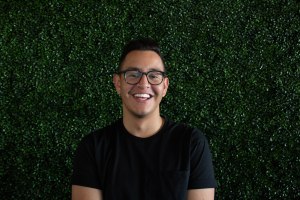
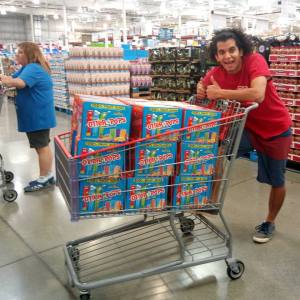
Edwardo Hurtado, a student at the University of Utah, stocking up on some Otter Pops to distribute to the food banks.

Edwardo Hurtado, a student at the University of Utah, debunks this stereotype. “It’s incredibly frustrating when people think you have to look poor,” he says. “These people don’t look poor. These people just can’t afford good groceries. They can’t afford their bills and they can’t afford their healthcare.”

Hurtado stresses the importance of food drives in the community. “It’s the easiest way to help out,” he states. “Just bring cans of food.” The Utah Food Bank accepts donations year-round at most Harmon’s locations. You can also donate money directly to the food bank on the website.

Having done food drives in areas of South America, Hurtado hopes to bring the same success from the South American drives to the local communities here. “We helped a lot of families down there,” Hurtado says, “and we’re just hoping to bring the same gusto here.”

Hurtado works closely with the food drives in West Valley City, including Utah Community Action and the Community Action Program food pantry. He volunteers his time serving the residents and helps prepare emergency packets. For information on how to volunteer, call (801) 972-6661.

Gabriel Alfaro, a resident in West Valley City, thinks back on the time his family was below the poverty line. “You adapt,” he begins in his response email, “but it’s terrifying. The worst part is not knowing how long you’ll be in that grey area.”

Alfaro also helps with food drives when he can. Alfaro and his family often make care packages for their neighbors who are still living in poverty. “We know what it’s like to go to bed without food,” he writes. “And now that we don’t, we want to help our friends who still do.”

The care packages typically consist of nonperishable food items along with blankets and socks. Alfaro’s family makes and distributes about five care packages a week, first to families whom they know and then to strangers. They knock on doors and leave the packages in mailboxes or on front porches.

The Salt Lake Tribune reported in 2015 that the racial segregation around the poverty line was huge. White people below the poverty line live on the east side of the city, while minorities below the poverty line live on the west side. On the east side, 16.2 percent of those residents live below the poverty line and 32.5 percent of that poor population are minorities.

On the west side, 17.1 percent of the population is poor and 68.8 percent of that population are minorities. While the poverty rate has gone down over the years, the minority rate has increased.

“Minority is the majority in West Valley, and it’s just going to keep growing,” Alfaro says. “A big chunk of those guys live off of food stamps.”

RoadSnacks compiled a list of the top-10 poorest places in Utah for 2019, and while West Valley City dodged the list, the feeling of fear still hovers. “I couldn’t imagine living in this place of limbo where you don’t know if you’re going to get dinner or not,” Reyes says.

Hurtado’s call to action is simply looking at your pantry. “Chances are, you probably have food in there that you haven’t eaten, and don’t plan to,” he says. “When you look at that food, imagine how stoked a starving family would be to have it? Put it in your car and next time you’re at Harmons, drop it off. And hey, you just fed a family.”

What you think about when you think about Latin Food

Story and photos by SHAUN AJAY

Latin American cuisine is sometimes seen as synonymous with your neighborhood taco or burrito stand. A restaurant in Virginia discusses in an article how most of our perceptions of Mexican food are inaccurate. Dishes we typically think about aren’t really Mexican, but a fusion between American and Mexican food. Not all Latin food is fried. Not all Latin food is tortillas with beans and rice. Yes, Mexico is on the list, but it isn’t the sole contributor to this rich and diverse culture of Latin food. In every South American country, there is a specific regional taste.

MEXICO

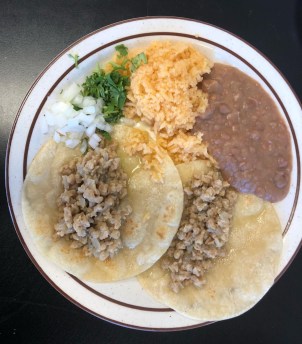
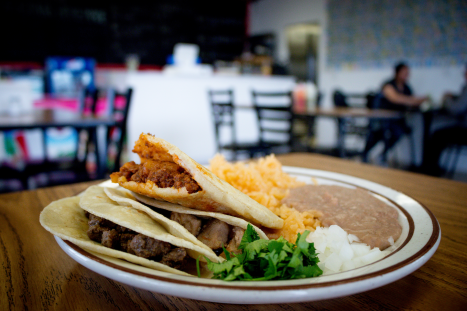
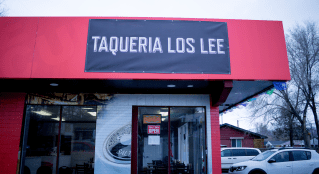
Taqueria Los Lee is a small family business at 700 E. 2646 South in Salt Lake City. The restaurant is a building in the corner of the street, beside a Sinclair gas station. The menu is drawn in primary colors on a blackboard. The daughter of the owner suggested a plate of tacos and gorditas with rice and beans (frijoles) and un medio litro de Cola (half liter). A fitting size meal for an ordinary customer.

The restaurant has little paper cutouts of cacti, sombreros and chilis colorfully hung up on the ceiling. The walls are covered with little lotería cards: a red sun, a scorpion, some palm trees. The whole thing feels like a summer’s breeze in mid-July in the chilly month of February.

A plate of gorditas with rice and frijoles.

The order arrives in 15 minutes, steaming and carrying a strong aroma of fried garlic and cilantro. Frijoles is a doughy sauce made from pinto beans boiled for six hours on low-fire. The gordita (meaning chubby in Spanish) drips some rich oil like liquid gold on a ceramic plate.

Oscar Lee, the patriarch of the restaurant, has his lunch break before his interview. He is from Victoria City in Tamaulipas, Mexico, a state historically known for its agricultural and livestock prosperity. He used to live by the border near Texas and immigrated to the United States. He has lived in Utah for nearly 17 years and has been running his restaurant since July 2018.

Lee wanted to cater to his area and provide what he believes is authentic Mexican food. The demographic of his customers is true to this fact, during lunch hour, the restaurant is occupied by Spanish speakers. But after an article written by the Salt Lake Tribune, he has had more gringos (an American who is not Latinx) visit his restaurant and even become regular customers.

He turns and faces the menu on the blackboard and, like a school teacher, starts to explain his menu. He said their las gorditas is their most popular dish, with either homemade asada (roasted pork or chicken) or potatoes stuffed inside. But he prefers to snack on something a little more sweet called esquites. This is a dish made with corn, freshly cut from the grain, that is mixed with margarine and fresh cheese in a cup.

Lee said that red enchiladas are his most special dish. He makes them with corn tortillas, fresh cheese, ground beef and a red chili sauce. He prefers to not make this too spicy. Another special dish is chicken mole. It mixes chicken breasts with some chocolate and peanuts. Genuine chicken mole takes days to make with additional ingredients. He said that ready-made mole is available, but he prefers making everything from scratch.

Shortly after the restaurant opened, Lee said he was approached by Sysco, a food distribution company, to provide him with menu ingredients. He refused to take the offer, as they were all ready-made and only involved putting them in the oven. “It takes the authenticity from cooking, and from the food,” he said. Lee believes in making his ingredients daily to preserve the authenticity of his cuisine that reminds him and many others of home.

EL SALVADOR

Juanita Restaurant is a small family-owned business at 271 W. 900 South in Salt Lake City. The restaurant specializes in classic Salvadorian food. Carolina Vides, the daughter of the owners, was born in Cabañas, Sensuntepeque. Her family moved to the U.S. in the 1990s and opened this restaurant only four years ago. The restaurant business has always been a part of the Vides family, having run another in Salvador, cooking and making the same pupusas that they love.

IMG_3517

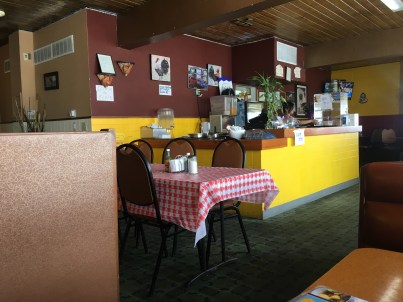
A look inside Juanita’s restaurant

Juanita’s is designed with dark maroon and bright yellow wall paint. Diners can take a seat by the television screen in the corner that broadcasts the Premier League with Spanish commentary. Vides then sits down to talk about the menu — a wide selection of main dishes, appetizers and finger snacks to try.

Pupusas, you should go for the pupusas,” she said. They are a typical Salvadorian snack made from either rice or corn flour. Her favorite is the corn flour. Vides said the pupusas are a staple diet in El Salvador, having been passed down from generation to generation. The fillings are versatile and can be made with anything from chicharron (pork skin) to frijol con queso (beans with cheese). She offered an assorted plate of mini pupusas.

Vides said most people confuse this with Mexican gorditas. Most of her customers are either Mexican or Guatemalan. She places the pupusas on the table beside a tub of curtido, or coleslaw, and a bottle of spicy tomato sauce that complements the meaty pupusas.

For the main dish, she presented a plate of mojarra frita (fried fish) with green salad, rice, and tortillas. The fish is a fresh-water tilapia, cooked till a dark brown like charred wood, but the inside remained a creamy white texture. The restaurant also sells bottles of Kola Champagne by Cuzcatlan, a classic soft drink with a sweet mix of orange syrup and carbonated soda. It leaves a refreshing taste in the mouth.

While patrons feast on the tenderness of their tilapia or pupusas, Vides is usually tending to other customers, flipping tortillas on a hot pan, or taking orders on the phone. One can leave the restaurant feeling very satisfied.

PERU

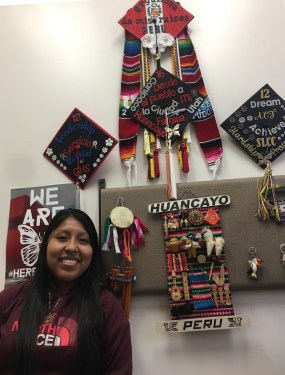
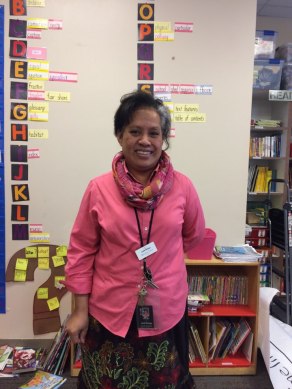
Giulia Soto is a second-year program coordinator and advisor at the Center for Ethnic Student Affairs (CESA) at the University of Utah. She comes from an indigenous family from Huancayo, in the central highlands of Peru. Soto immigrated to West Valley City at age 5, during the sendero luminoso era, a Communist party during the 1990s that wanted to overrun the government. Her father was able to come to the U.S. and was given a work visa to live in the mountains as a shepherd.

“Since my family is indigenous, it affects . . . how I was brought up, and the foods that I eat,” Soto said. Her diet is completely Peruvian. That was all she knew of during her younger years. The most common dishes for her are arroz chaufa, lomo saltado, and pollo a la brasa.

Arroz chaufa (Chinese rice) and lomo saltado are a mixed style of Chinese fried rice and vegetables with typical meats like pork, chicken or beef. Soto said that most of their dishes use white rice, potatoes and chicken. “We laugh about this sometimes, because a lot of people connect this to the Asian community,” she said. Her favorite dish to make is aji de gallina (chicken stew) that combines rice, potatoes and aji de gallina (yellow capsicum). Soto said this dish is usually considered to be Peruvian comfort food. 

Soto in front of her Huancayo displays

A common ingredient across the board is pimiento y comino (black pepper). Another is aji panca, a hot red capsicum that’s not too spicy, and is used as a paste when making food like tallarin rojo (Peruvian red spaghetti). All of these spices are indigenous to Peru and are the trademark for its dishes.

La Pequeñita International market at 2740 State St. is owned by a Peruvian in Salt Lake City. It provides imported ingredients from Latin America to the locals in Utah. Soto said she sometimes sees people driving down from Idaho and buying these ingredients in bulk. “You have to be savvy at cooking, cuz it’s just aisles and aisles of herbs and spices, and you should know what to use it for,” she said.

Pachamanca peruana is a popular dish from the mountainous regions of Peru. Pacha means earth and manka means pot in Quechua, the indigenous language of Soto’s family, spoken in the highlands. The dish is made for special occasions like family gatherings or fundraisers, as it requires extreme preparation.

Soto said that the pachamanca is usually comprised of marinated sheep meat, camote (sweet potato) and humitas (fresh corn with dough). She also noted that humitas is usually mistaken for tamal, a Mesoamerican dish, that tastes savory and usually has stuffings like chicken inside. The pachamanca begins with heating stones over a fire, and then placing everything into a natural oven dug from the ground, cooking the meat for about two hours.

Soto said that the pachamanca is not something you would see at a restaurant in Lima, let alone in a Peruvian restaurant in Salt Lake City. The pachamanca is only maintained as a tradition through teaching the next generation how it’s done. However, one way to grab a taste, without buying your next ticket to Peru is to attend fundraisers.

In Utah, Peruvian families come together and do fundraisers for the community where they make and sell food and sometimes host soccer tournaments. “It’s a way for us to help each other out, someone who’s had a car accident or immigration issues,” Soto said. There are at least 15-20 fundraisers in the summer between the months of June and August that she attends. 

The Peruvian community in Utah typically hosts its fundraisers at what it calls “parque canipaco,” or Parkway Park, in West Valley City. These fundraisers not only help the community at large for Peruvians, but also is a way of keeping their tradition alive through food and celebration. For more information about these fundraisers, contact Soto at giulia.soto@utah.edu.


Juan Chacon, a Mexican immigrant turned restaurant owner

Story and photo by KILEE THOMAS

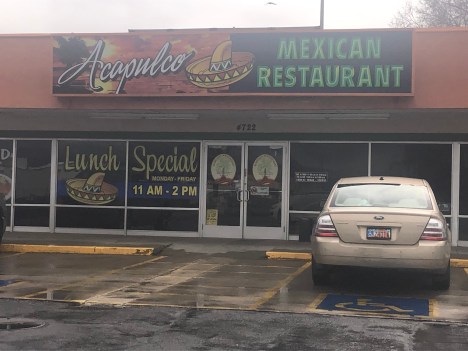
Situated in Kearns, Utah, is the authentic Mexican restaurant, Acapulco. The family-run and -operated restaurant opened 1991 at its original location (just a few blocks away) before reopening at its current location at 4722 4015 West. 

IMG_6624

Acapulco Mexican restaurant is particularly known for its smothered burrito.

Juan Chacon, a 61-year-old Mexican immigrant, is the man behind the popular eatery, Acapulco. Chacon sat in a corner booth toward the rear of his restaurant.

The atmosphere has a homey and nostalgic feeling with its giant box TV screening the latest American football game, the tables filled with endless chips and salsa baskets and the walls covered with hanging swordfish, sombreros, original Hispanic paintings as well as a giant mural of the ocean that takes up the entirety of the back wall.

He looks around his restaurant with a warm smile before taking off his Houston baseball cap.

Chacon believed fate intervened with his journey to the United States. “It’s destiny, I guess,” Chacon said. He wasn’t escaping violence or seeking asylum. He saw it as a simple opportunity to live a different life.

He left his family farm in Chihuahua, Mexico, in 1978 when he was 20 years old. He wasn’t searching for valued success, he was searching for purpose. “I didn’t need money, I wanna do something,” Chacon said.

He started working at a Chinese restaurant in Salt Lake City when he arrived in Utah before going back to his home town to spend time with his father for three months. When Chacon returned to Salt Lake City later that year, he landed a job at a Mexican restaurant where he worked the food line in the kitchen.

Chacon said this is where he learned how to run a restaurant. When he decided to leave the restaurant, he took a souvenir on his way out. “I stole the menu thinking, ‘one day I want to start my own restaurant,’” he said.

Chacon decided to open up the authentic Mexican restaurant with his brother to be his own boss and do things “my way,” he said. He reaches over, grabs the baseball hat and places it back on his head. “I believe to run a business, the first thing you have to do is work hard,” Chacon said.

He might be the owner, but he is also the dishwasher, cook, waiter and host. “I don’t get tired of working here everyday because I use to do this, but I use to do it for somebody else.” He points at the clock. “I can leave when I want, but I stay later than supposed to because I love talking with our customers.”

This type of friendly and outgoing energy is what’s kept Tiffanie and Rob Hargis loyal customers for the past 22 years. “We go at least one to two times a week. Their family always know when we are there and they come out to talk to us to see how we are doing,” she said.

The Hargises always make it a point to go to Acapulco for all of their family celebrations and get-togethers. “We have so many special memories tied to this restaurant. We have been going here for so many years after lacrosse practices and games, for birthdays and holidays,” Rob said.

Chacon and his family have built a special relationship with their customers. A relationship that goes past the usual bond between restaurant owner and customer; a relationship that feels more like family.

“When our parents passed away we gave them a huge picture for their wall that was in our parents’ house and it looks great in there. It’s like part of our family is there,” Tiffanie said. The southwestern picture of a pink sand-colored home and dusty pink sky is hung up in the back corner of the restaurant.

IMG_0165

Tiffanie and Rob Hargis donated the painting to the restaurant. Photo courtesy of Rob Hargis.

While the success of Chacon’s restaurant is something to be proud of, the journey that led him to where he is today wasn’t an easy one. It was costly.

When he first came to Utah, he bought a new $1,700 truck with the money that he had saved. The INS, otherwise known as ICE today, took away his truck after he was pulled over and asked for legal documentation.

Chacon paused for a moment. Becoming emotional from the pain of this memory, he said, “I still remember their faces.” Closing his eyes, he takes a deep breath and shakes his head as if to shake away the memory.

“They told me it wasn’t my car anymore. It belongs to the U.S. Government.” Chacon said he remembers feeling hopeless because the officers warned him not to get lawyers involved. He said the agents told him it would be a useless ploy that would cost him more than what he’d already lost.

“In Mexico, they always talk about freedom in the U.S. and that day, I found out it wasn’t really true,” he said.

He smiles as a way to relieve the built-up emotion in the room.

“I still have the truck’s title,” he said with a laugh.

Chacon may believe that the restaurant and his life today is in thanks to some sort of  divine intervention or fate, but his beloved family and customers think his determination to learn, fight against adversity head on and to live life “his way” is the center and heart of why Acapulco is the favorite restaurant to so many, even 27 years later.

Hispanic immigrants are creative and family-inspired

Screenshot 2019-03-06 15.26.51Story and photos by KRISTEN LAW

Alex Guzman, president and CEO of the Utah Hispanic Chamber of Commerce, said Hispanics are creating jobs and working hard. “They became business owners, with no intention to become business owners. They just had intentions to provide [for their family],” he said.

Moving to a new country and not knowing the language can be difficult. This calls for some creativity when it comes to employment. “What is the solution if I don’t have a job? Create my own job opportunity,” Guzman said. UHCC helps train Hispanic entrepreneurs and business owners and educates them on how to run a successful company. 

According to UHCC, “Success is most often achieved by knowing where your resources lie and not depending entirely on you[r] own talent and strengths.” Guzman said the UHCC helps teach basics like how to file taxes, how to hire and fire personnel, how to do invoicing, and many other skills that are necessary to know before starting a successful business. 

Local businesses are often creative and diverse. Five main industries are reflected in UHHC’s membership directory: restaurants; construction; landscape and snow removal; professional services including photographers, videographers, and accountants; and commercial or residential cleaners. Guzman said they make up about 85 percent of the members.

One local restaurant, although not a UHCC member, illustrates the family-inspired creativity that Guzman emphasized.

Screenshot 2019-03-06 15.26.25

Taqueria Los Lee is located at 2646 S. 700 East in Salt Lake City.

Taquería Los Lee began in the heat of the summer in 2018 in South Salt Lake with a passion and inspiration for flavorful, authentic Mexican food.

The moment you enter the restaurant you are quickly greeted by the Lee family’s welcoming presence. The large windows and open, sun-filled room displays colorful and traditional decorations, which also add to the intimate and wholesome feel of the restaurant.

IMG_1715

The menu of gorditas, tacos, and daily specials is handwritten on the chalkboard.

The family behind Taqueria Los Lee cherishes what they do. Each member has drive, purpose, and a solid work ethic and they inspire each other to be creative.

Rosi and Oscar Lee are the cooks, and their daughters Anileb Anderson and Flor Lee help run the business in various ways. Rosi said she loves to cook and has catered in the past, but she wanted to do something more with her passion for food and make it into a business.

She used to bring her dishes to community or neighborhood events. “People would try her food and would love it,” Anileb said.

IMG_1702

A combination plate with tacos and a gordita, a pocket made of masa and stuffed with filling.

Jim Light, a retired chef from the Salt Lake area, has become a regular at Taqueria Los Lee. He said he doesn’t remember exactly why he initially visited, but his first impressions left him coming back at least once a week since October 2018. “Everything I have had has been really excellent. Their mole sauce, in particular, is very very good,” Light said. “Part of the fun for me has just been getting to know this really cute family that owns this place.” The Lee family even taught Light how to make one of his favorite meals, a bean dish he had really come to enjoy. “They can’t afford to hire anybody, so it’s just a three-generations, family effort.”

Anileb works at the restaurant every day from open to close and helps cook when things get busy. Her sister works another job while helping run the business. Rosi and Oscar are the cooks. It really is a family endeavor. “We’re just a family that works here, so we like to be here with each other,” Anileb said.

This work ethic is bred into Hispanic culture. Guzman said it is not uncommon for some immigrants to work several jobs. However, family-run companies include the whole family, so working from a young age is typical. Working is a part of life. However, Guzman said it is not just about working hard, but about working smart. 

The Latinx community is contributing to Utah’s local economy and well-being not simply benefiting from it. Javier Palomarez, the United States Hispanic Chamber of Commerce president, said in a 2014 speech, “In the state of Utah, Hispanics are paying taxes, creating jobs, and greatly contributing to the local economy.” 

Growing up, Guzman said his father told him, “Work hard. Be the best in your class. Don’t be ambitious. Be content with what you have.” Guzman emphasizes the effect that family has in the Hispanic community in their drive for a successful business. The main goal is family and good living.

Tomsik helping West Valley community one taco at a time

Story and photo by KOTRYNA LIEPINYTE

Patricia Tomsik starts her Monday mornings by boiling some water on the stove. The smell of coffee engulfs the cozy kitchen as she sits down and scribbles notes in her notebook, the news playing on a TV in the background. Tomsik lives in West Valley City, the largest Hispanic city in Utah with 37.7 percent of the Hispanic population residing here. The news continues to flash on her TV, showing updates on President Trump’s plan of building a wall. Tomsik watches intently.

“There’s more problems we have to deal with than this wall,” Tomsik says scoffingly, going back to writing in her notebook. She’s referring to the 13.8 percent poverty rate and the 5.4 percent unemployment rate West Valley City is notable for, as well as the high rate of suicide the state of Utah is facing.

Tomsik originally came from Ciudad Juárez, Chihuahua, and is used to the massive number of homicides that country faces, but “nothing like this” she says, referring to the suicide rates Utah is infamous for.

Tomsik’s son has struggled with depression and suicidal tendencies since he was a boy. She says that this is normal in a Hispanic community, especially with bullying in schools. “It’s just one of those things that you unfortunately have to deal with, and that’s just the reality,” Tomsik says, shaking her head. “I know other mothers are dealing with it too. It’s just sad.”

Miguel Alonso, a friend of Tomsik’s son, agrees. “We’ve been friends since junior high,” Alonso says, “and it’s kind of just an unspoken agreement that we all have to be there for each other.” Alonso is originally from Mexico City, and was forced to cross the border with his family to live a better life in the United States.

Alonso often spends his dinners at the Tomsik household. Tomsik hosts regular weekly meals at her home, inviting Alonso and his high school and college friends for a classic Mexican meal, complete with music and dancing. “It’s nice to get together,” she says. “We’re all just trying our best.”

While the community feels uneasy with news regarding President Trump’s wall, Tomsik tries to focus on the bigger issues at hand that the Hispanic community in Utah must face. Tomsik pays particular attention to the overall well-being of her community. While she hopes to help the community with depression, she knows it’s not an overnight project.

IMG_6033

Gabriel Moreno, a University of Utah student currently holding an internship in Washington, D.C., grew up with the Tomsik family.

Gabriel Moreno, a University of Utah student, is also attempting to find ways to cope with the issues the Hispanic community is facing. “I’m seeing everything first-hand here,” Moreno discusses over the phone while working out in Washington, D.C. “It’s just scary.”

Moreno originally emigrated from Columbia and grew up in Sandy, Utah. His passion lies in “Project Be Yourself,” a nonprofit organization focusing on mental illness in the state of Utah. “One of the most sickening things about this all,” he says, “is how easy it is to prevent these things. We just need to show the kids that there’s no bad culture, there’s no bad race. We’re all the same.”

By providing her neighborhood with fresh food and a listening ear, Tomsik hopes someone will begin to pay it forward so the good acts can spread. Alonso and Moreno assist as much as they can while also focusing on the online problem of cyber-bullying.

The trio works together in an attempt to help the Hispanic community thrive, but rarely see results. “It’s tough,” Moreno says. “I mean, we can’t just make jobs or say ‘stop bullying’ and expect it to stop. It’s a work-in-progress, but I don’t think any of us are planning on quitting any time soon.”

As Utah sits as the fifth highest in teen and young adult suicide rates, the trio is scrambling to find something to help counter this. Often times, the food and advice are not enough. Tomsik believes that communication and openness about mental health will be a step forward in the right direction. “We’re not talking enough about it,” she says, “and it needs to be talked about.”

As President Trump’s plan to build the wall continues to occupy the screen on the TV, Tomsik simply hums to herself as she resumes scribbling in her notebook, making a grocery list of ingredients for this week’s dinner. She sips her coffee while planning what meal she will prepare next.

Tomsik lives by a “we’ll cross that bridge when we get there” attitude, tackling a single problem at a time in the West Valley City community. “It’s hard to measure progress with something so intangible,” she says. “But we’re just going to assume it’s working and go from there.”


Moki’s Hawaiian Grill offers a taste of Hawaiian and Pacific Islander food in Salt Lake City

Story and slideshow by GEORGE W. KOUNALIS

Moki’s Hawaiian Grill brings the food and atmosphere of Hawaii to Taylorsville, Utah, from the 808 to the 801. Located right next to an Indian market and a True Value hardware store, the restaurant’s bright yellow sign sticks out as one drives by on Redwood Road.

The atmosphere of the restaurant is laid back and family-oriented. Family is a cornerstone of many Pacific Islander cultures, and Moki’s is able to make many customers feel like they’re part of the family.

Bele Tukuafu, 19, has been working at Moki’s for six months.

“My uncle owns the restaurant,” she said. “My uncle’s sister started the restaurant in 2002, and he took it over.”

Tukuafu said the Moki’s in Utah is the first of two locations, with the second restaurant located in Mesa, Arizona.

“We try to make simple, good Hawaiian food,” she said.

The food is simple and basic, but explosive with flavor. It is a tour of the Hawaiian Islands and many other Pacific Islander cultures.

Each plate comes with a choice of meat; two mounds of white rice; a Hawaiian salad consisting of chicken, cabbage and rice noodles with a house dressing. The flavors of each respective item had a story.

Kristian Naone of Honolulu was at the restaurant with Ted Camper, a University of Utah student from Chicago. Growing up in Honolulu with Hawaiian cuisine, Naone had a lot to say about the food.

Naone ordered the chicken katsu plate. Katsu is very similar to the fried chicken many Chinese restaurants make prior to coating it with a sweet sauce.

“It’s a dish that one could eat a lot of without getting full too fast and is complemented by the macaroni salad that Moki’s makes,” he said.

“That’d be good on a sandwich, it’s real crispy,” Camper said about Naone’s order. Both diners offered the writer a piece of each respective dish.

Camper ordered the teriyaki beef. Moki’s dish is more authentic than anything one can get at Rumbi Island Grill, Naone said. The teriyaki beef at Moki’s is marinated prior to being cooked, unlike many other restaurants’ interpretation of teriyaki where a sauce is coated on the meat after cooking.

The marinade reminds one of Korean bulgogi, a dish that consists of thin sliced marinated beef that’s been grilled.

“Modern Hawaiian food is a culmination of multiple ethnic foods,” Naone said.

“It’s because of the sugar plantations back in the day,” he said. “There were a lot of different cultures from Asia that were living with each other, but had no way to communicate with each other, except using food.”

“Prior to colonization,” he added, “Hawaiian food was simple. Taro was the big starch for people. It was the potato for the islands.” Colonization had brought problems with it, such as the overthrow of the Hawaiian monarchy in 1893, but also created a fusion of food.

The Spam musubi is an example of this. The dish is comprised of a piece of cooked Spam covered in teriyaki sauce, put in rice that was pressed with a musubi press, then wrapped in seaweed.

“Spam is a big part of Hawaiian cuisine,” Naone said. World War II “created a lot of meat shortages on the islands, but Spam was abundant and easy to access and quickly became part of the cuisine.”

Lokomokos are also a popular Hawaiian dish, he said. “We call it surfer food because it’s simple to make, but hearty and gives you the energy to go out and surf all day.” Lokomokos consist of rice, brown gravy, hamburger patty and egg. The meal is served with a side of macaroni salad.

The theme of this fusion of cultures is very apparent with the kalua pork and kalbi ribs. Hawaii’s history can be told by its cuisine.

Naone said, “Kalua pork is made in a slow cooker. You put your pork and cabbage in and let it cook. The cabbage absorbs the juices and turns almost translucent, but is filled with the pork flavor.”

One bite into the kalua pork shows the flavor of the seasoning salt used. The pork has the consistency of almost melting in one’s mouth.

“The cabbage in this dish almost acts like noodles,” Naone said. While eating the pork, one has to mix it with the cabbage at the same time to make sure that all the juice is eaten.

The kalbi ribs are a dish very similar to Korean BBQ short ribs. “You have to make sure to eat all the meat around the bone,” Naone instructed. “Be sure to bite around the bone to get the sinew as well.”

The kalbi ribs at Moki’s explode with the flavor of the marinade and the cooking technique used. The smell of the marinade prior to taking a bite builds the flavor as one takes a bite of it. The flavor is a rich experience of sweet and smoke along with the fat melting in one’s mouth. It is similar to eating meat candy.

“There was a place across the street of my high school that offered comfy memories,” Naone said. “They’d serve kalua pork, rice, chicken katsu, all the comfort foods were there. This was the food we would have served in school as well. Katsu, rice, kalua pork. This is local food to me.” 

The Hawaiian salad offered a mix of sweet and salty flavors that pair well. The sweetness of the vinaigrette against the crunch and saltiness of the rice noodles offered an equilibrium that made the dish a good go-to in between the kalua pork and kalbi ribs.

The rice at Moki’s is served in two big mounds, topped with black sesame seeds, and can be mixed with the restaurant’s own rice sauce. The sauce offers a flavor similar to the Filipino condiment toyomansi, which is a mix of soy sauce with lime juice.

To finish the massive lunch, the two placed an order for malasadas, mango otai and a pineapple split.

The malasadas are very similar to a donut, but not as dense. “This is food you would get at a carnival,” Naone said. Malasadas are covered in semi-wet granulated sugar with a very crunchy outside, but a warm doughy inside.

Camper said, “The best part about the malasadas is they’re not as floury and you don’t have to drink a sip of something after every bite.”

Naone pointed out, “It’s very important that they use granulated sugar to coat the malasadas.” He also said that the way the granules stick to the outside surface of the malasada creates the texture necessary when one eats malasadas. “Usually when you order these back home, they give it to you in a brown paper bag and you just eat it straight out of the bag.”

For the pineapple split, a pineapple is cut in half and served with Dole Whip, whipped cream, and strawberries on top. The quality of Moki’s Dole Whip, a soft serve pineapple-flavored frozen dessert, is very similar to the Dole Whip served at Disneyland.

“When my family came to California for the first time, we went to Disneyland,” Naone said. “We saw the line for the Dole Whip and I was just thinking to myself that I can get this anytime I want at the Dole Plantation.”

The mango otai is one of Moki’s non-Hawaiian dishes that shows the Tongan roots of the Tukuafu family. Naone said, “Otai isn’t necessarily a Hawaiian drink, but it’s still present in Hawaii.” The otai consists of shredded mango, coconut cream, sugar and mango juice. Naone pointed out that the use of a boba tea straw is important for this drink because of the shredded mango.

Camper said, “There’s nothing like this in the Chicagoland area. Pacific Islander culture feels like it’s missing in Chicago.”

Salt Lake City’s Pacific Islander community is big. According to the Salt Lake Tribune, Utah is home to one out of every four Tongans who live in the United States.  

Moki’s also offers a Polynesian plate. “The plate has samples of Tongan, Fijian and Samoan food,” Tukuafu said. The restaurant’s mixing of Pacific Islander cuisine offers Utahns a unique chance to get an authentic taste of these cultures. “We just try to make it as close to home as we can,” she said.

Hawaii’s history is marked by colonialism, the sugar plantations and the impact of World War II. The islands’ story is not only told through what’s been recorded but also through its cuisine. The use of Spam, teriyaki and lokomokos tell Hawaii’s post-colonial history through food. Moki’s is a testament to that history by serving its cuisine.

[Editor’s Note: Salt Lake City’s growing demand for Hawaiian and Polynesian food was the subject of a recent New York Times article. Reporter Priya Krishna focused on one local chain, Mo’ Bettahs, owned by brothers Kalani and Kimo Mack.]

This slideshow requires JavaScript.

Utah restaurants provide traditional Hawaiian food

Story and photos by SHAELYN BARBER

The traditional Hawaiian plate lunch is a rich fusion of foods from many countries. When Hawaii’s pineapple and sugarcane industry began people came from all over the world to work on the farms, and they brought a variety of cultural foods with them. When workers took their lunch break they shared their food with each other, and the Hawaiian plate was born.

Keni Aikau, the owner of The Hungry Hawaiian, and Masa Tukuafu, the owner of Moki’s Hawaiian Grill, are two men who brought this tradition to Utah with their restaurants.

The Hungry Hawaiian


The Hungry Hawaiian is a hidden gem. Tucked away in an unassuming strip mall at 1492 S. 800 West in Woods Cross, the tiny restaurant packs a punch with its full-flavored meat plate.

“For us, food is the other emotion, you know? You’ve got happy, sad, food,” Aikau says.
He was born in Hawaii and raised in Utah, and his childhood was filled with food.

“At a very young age we started learning and we just cooked. Everything we did was based around food,” Aikau says. He began learning at family luaus and celebrations. The young children in the family would carry out simple tasks, and as they got older they became more involved in the process of making food.

In 1978, Aikau’s father opened the original Hungry Hawaiian restaurant in Provo, Utah. It didn’t last long. Despite the popularity of the restaurant, it ran into financial difficulty and was forced to go out of business. He was never able to re-open his beloved restaurant.

But Aikau’s love for food led him to pursue a culinary education at Western Culinary Institute, now called Le Cordon Bleu, in Portland, Oregon. He brought his traditional food with him.

“You can’t tell me that Spam isn’t a meat!” Aikau exclaimed. Spam, though popular in Hawaiian cuisine, comes with a negative stigma on the mainland. His colleagues at Western Culinary Institute scoffed at the canned meat. That is, until Aikau gave his classmate a Spam and egg sandwich for breakfast. He ate the whole thing, and part of Aikau’s as well.

After his father’s death in 2010, Aikau returned to carry out his father’s dream himself. He modified his father’s original recipes and on June 23, 2017, the restaurant opened once again — this time in Woods Cross, north of Salt Lake City.

His goal was to keep the menu as simple as possible. Each plate comes with two scoops of white rice, a scoop of macaroni salad, and a choice of beef, chicken or pork.

“We just keep hearing how good it is from everyone around us,” Michelle Benedict says. She was drawn to the restaurant for the first time after hearing about the food from her neighbors.

“I just adore Hawaiian food,” Kristin Yee says with a laugh. “I know it’s rich so I have to be careful how much I come.” She has been a regular at the restaurant since its beginning. She was initially interested when she noticed Aikau’s children on the corner holding signs during the first week they were open.

Yee loves local food places but says, “It’s not just support, it’s really good. So, you’re getting the benefit too.”

Moki’s Hawaiian Grill


From the minute you step into Moki’s Hawaiian Grill, the warm smell of Hawaiian barbeque greets your nose. Mellow ukulele music hovers underneath the friendly chatter of customers, and the staff greet you with a smile from behind the counter.

“Food is what brings people together,” Masa Tukuafu says. He started Moki’s in 2002 and now owns two restaurants: one in Mesa, Arizona, and one located at 4836 S. Redwood Road in Taylorsville.

“In the beginning I just wanted to burn the place down,” Tukuafu says. “And, as time goes, you figure things out. So, you learn from your trials and you just keep going at it.”
Despite his trials, Tukuafu says the biggest benefit of owning Moki’s Hawaiian Grill is being able to provide for his children and his family.

“Being a first-generation here and struggling all the way through school and graduating from the University [of Utah], it was a challenge, and I didn’t want my kids to do that,” Tukuafu says.

Tukuafu is half Tongan and half Samoan. Traditional Polynesian food is costly to make, so he chose to run a Hawaiian restaurant instead. The ingredients for that cuisine are much easier and cheaper to find, and far more accessible than those required for Polynesian food.

“We wanted to provide something that was more for the majority instead of the minority,” Tukuafu says. He places an emphasis on health at his restaurant, altering traditional cooking methods to reduce fat and grease by using an open broiler for the restaurant’s meat.

“I heard about Moki’s because they’re one of the only places that sells musubi and I love musubi,” says customer Faitele Afamasaga. Spam musubi consists of a hunk of grilled spam and a block of rice wrapped in seaweed.

Afamasaga is a frequent visitor and usually comes for a cone of Moki’s ever-popular Dole whip ice cream.

“We like the cultural food from Hawai’i,” says Jennifer Selvidge, a first-time customer with her husband. She drives past Moki’s almost every day for work and wanted to try it.
“Everyone that’s had Moki’s or the style seemed to enjoy it and go back,” Selvidge says.

Pacific Islanders coalesce to preserve their culture

Story and photos by WOO SANG KIM

The Sixth Utah Pacific Island Heritage Month — an annual celebration held to increase the profile of the Pacific Islander communities and raise awareness of the different Pacific Islands — will be held July 28, 2018, from 6-11 p.m. at Sorenson Multicultural Center & Unity Fitness Center at 855 W. California Ave. in Salt Lake City.

Susie Feltch-Malohifo’ou, executive director of Pacific Island Knowledge 2 Action Resources, proposed the observance in 2013 and Gov. Gary J. Herbert declared August as Utah Pacific Island Heritage Month.

Will Unga, career adviser at Salt Lake Community College, has assisted with hosting the annual celebration at the Sorenson center. “The event is like Hawaii. We offer different types of foods and teas. Some people love it. Some people find it interesting. Some of the dishes are lu sipi, palusami, ika, taro and cape. We also have dances like haka, mari, sipi tau and siva tau and arts like tattoos, drawings, ta moko and tatau,” he said.

“We prepare yearlong, working to offer tables for vendors or to let them perform. We want to get to a level of having an application process to elevate the level of quality,” Unga added.

He said the event is extremely short-staffed. Volunteers’ time is limited. More money is needed to hire an overseer. Yet, Feltch-Malohifo’ou’s drive and determination have helped the event to expand exponentially each year.

“The first celebration was a test, the second was going somewhere and the third was phenomenal. The first gathered about 100 people, mostly the families and friends of the event associates. The second had 300 people and the fourth had 600 people,” Unga said.

Micronesia Cultural Booth participated as a vendor at the past celebration. Melsihna Folau, a third-grade teacher at Pacific Heritage Academy who volunteered for the booth, said, “We aim to raise awareness of the current problems of the Micronesian region and educate people about the culture of Caroline Islands, Mariana Islands, Marshall Islands and Kiribati Islands.”

2

Folau helped in hosting the Micronesia Cultural Booth.

Folau said the staff offered food and clothing as samples. Pilolo, tapioca mixed with banana and coconuts, and kemalis, rice mixed with coconuts, are given. The staff also answered questions about the Micronesian region. Most inquired about global warming and what the inhabitants are doing to slow the heating, Folau said.

“It took us six months to prepare. We had to get approved from the Marshallese government, connect to friends in Kiribati Islands, write to tourism management companies and talk to visitors from Guam. Getting the approval was the hard part,” Folau said.

The vendor also increased in size and had to divide. “The Marshallese wanted to have their own things, so they separated last year. They were excited to show their crafts and share things that they were shy about before,” Folau said.

“We are all part of the one history with different perspectives. I was excited to learn from experiences and network with people. I am just happy that I have been a part since the beginning,” Folau said.

The Queen Center, a Pacific Islander nonprofit promoting healthier lifestyles by providing cultural resources, tobacco prevention and advocacy and education, also has participated in the heritage celebration. Tufui Taukeiaho, a health sciences instructor at Granite Technical Institute who served as a committee member to the nonprofit, said, “We helped out by starting a 5K run.”

Taukeiaho said the Queen Center has hosted the run since the first celebration. The 5K started with 80-100 runners but the number surged each year. The funding from the run was given to two families. The husband of one family had a kidney failure and the other family had a 4-year-old boy who had cyclin-dependent kinase-like 5 (CDKL5) disorder — a rare X-linked genetic disorder that results in difficulty controlling seizures and severe neurodevelopmental impairment. Each family received a check of $6,000.

3

Taukeiaho assisted families in need by helping coordinate the 5K run.

“Helping out to host the 5K run as a committee member and handing out the checks to the families was very rewarding to me,” Taukeiaho said.

The celebration increased the cultural awareness even among Pacific Islanders. According to a Salt Lake Tribune article, “One of every four Tongans in the U.S. calls Utah home,” Utah boasts the second largest Tongan population and fourth largest Samoan population in this country. Yet, Unga said, “Second-generation Pacific Islanders have never been home (Pacific Islands). They don’t get any more of the culture, food, and language.”

Second-generation Pacific Islanders responded very positively to the past celebrations. “They can’t get enough. They want more. After the taste, they save up money to go back to the Pacific Islands and see more, especially the language,” Unga said.

They also garnered an opportunity to network with other community members. “I advise and connect students to other Pacific Islanders. I help them get internships and jobs, and refer them to other business contacts,” Unga said. “I help no less than 50 students a year.”

Some students even took part in the fourth celebration by screening a film. Unga said students from Salt Lake Community College made the film incorporating the Pacific Island videotaping techniques learned from the New Zealand filmmakers.

Participants gained novel experiences, too. “When you work with people, you have to learn to compromise. Keeping mind and heart in the right spot answered my question of what I want to accomplish at the UPIHM. Past years have been that way,” Unga said.

“Pacific Islanders are a very small group of minorities,” he said said. “We have challenges because of that, and we have one common goal: To live a happy life. We just want everyone to be successful and try to be good members of the society.”


Pacific Islander cuisine and the impact of colonization

Story and photos by ANTHONY SCOMA

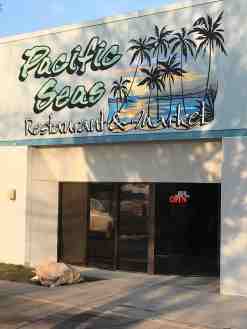
On the corner of Redwood Road and Paxton Avenue in Salt Lake City hangs a sign that reads “Pacific Seas Restaurant and Market” on a background of beaches and palm trees. While the sign is at odds with the landlocked, wintery Utah surroundings, the interior of the building is filled with the enticing scents, sounds and heat of a busy kitchen. Adults and children sit and eat at the tables or stand near the counter and order what is likely the most popular Pacific Islander cuisine in Utah.

IMG-0853

1151 South Redwood Road, Salt Lake City

“A lot of these customers that we receive come to the restaurant because it reminds them of their upbringing and their culture,” Maryann Tukuafu, the manager of Pacific Seas, said in a phone interview. When asked why food is so important she said, “I know for the Polynesian culture, it is a sense of togetherness, a unity. Food brings people together.”

At any celebration, from birthday to baptism to promotion party, food plays a part in recognizing good news. Tukuafu emphasized how these traditional dishes promote feelings of happiness and togetherness among Pacific Islander families and communities.

This shared experience and expression of culture is built on a history that stretches back to the first Pacific Islander communities. However, the diet of those who inhabited the islands originally had a much different makeup than what is seen today.

IMG-0856

A plate from Pacific Seas Restaurant consisting of lu sipi, a dish of lamb, taro leaves, mayonnaise and coconut milk; a lamb chop; fish with coconut milk gravy; and sweet potato.

According to a 1992 study by the Institute of Polynesian Studies, 85 percent of pre-colonial Pacific Islander diet was vegetable-based with 10-15 percent coming from protein largely sourced from the sea. More specifically, the Pacific Islander diet in the pre-colonial era was 60-78 percent carbohydrates, 10-15 percent protein and 7-30 percent fat. In comparison, the modern U.S. diet is 45-65 percent carbohydrates, 10-35 percent protein and 20-35 percent fat.

“Prior to colonization, refined sugars, deep frying, and trash foods like turkey tails and lamb flaps were not part of the diet,” said Jake Fitisemanu Jr., chair of the Utah Pacific Islander Health Coalition, in an email interview. “It reduced the prestige and perceived value of indigenous foods and enhanced the value of introduced and imported foods.”

It wasn’t just changes in diet that European missionaries and colonizers brought. They also introduced technology and economic systems that made the Pacific Islanders’ highly active farming, hunting and fishing lifestyle obsolete. As with most demographics, modern work has continued this shift to more sedentary lives.

“In terms of activity, westernization’s emphasis on cash economy devalued the traditional subsistence, hunting, and fishing lifestyles of [Pacific Islanders],” Fitisemanu said. “Modern transportation, heavy machinery and processed foods have allowed for sedentary lifestyles that are a far cry from traditional lifeways that depended on intensive manual labor, walking, paddling and physical activity to ensure survival on remote islands with limited resources.”

These factors have contributed to the rise in obesity and diabetes in Pacific Islander communities. According to findings shared by the U.S. Department of Health and Human Services Office of Minority Health, Pacific Islanders were “three times more likely to be obese than the overall Asian American population” and “20 percent more likely to be obese than non-Hispanic whites in 2015.” In addition, “native Hawaiians/Pacific Islanders are 2.4 times more likely to be diagnosed with diabetes as the white population.”

This phenomenon is not isolated to just Pacific Islander immigrants. According to a July 2010 bulletin posted by the World Health Organization, the abandonment of traditional diets for imported foods has led to widespread obesity, nutritional deficiencies, heart disease, diabetes, hypertension and premature death throughout the Pacific Islands.

Local groups and events are working to improve the relationship between Pacific Islanders and their diet, exercise and health. The MANA 5K and Aloha 5K promote Pacific Islander health. Utah Pacific Islander Health Coalition chapters in Salt Lake and Washington counties host a Health Week every year. They provide health resources, wellness screenings and demonstrations to promote Pacific Islander families’ physical activity. Weber and Davis counties will also host similar events after the creation of new UPIHC chapters there, Fitisemanu said.

For food and exercise, Fitisemanu recommended Pacific Islanders start with “small, incremental changes that reduce our reliance on processed foods in favor of more fresh foods and more varied diet.”

He also stressed “family-based and group-based efforts that play to our cultural values of social connection and mutual support. We need to learn lessons from the way our ancestors lived and thrived before colonization, and I believe those tenets are easier to integrate into our cultural worldview than new-fangled fad diets and celebrity-endorsed workout routines,” he said.

It must also be noted that health is informed by a culture’s values, history and ideals of beauty. Here again, we see evidence of the clash between pre-colonial and post-colonial ideas. For a Pacific Islander, what communicates health and beauty may be very different than what would be found in the pages of a western magazine.

When asked what the standards are for female beauty among Pacific Islanders, Susi Feltch-Malohifo’ou, executive director of Pacific Island Knowledge 2 Action Resources, said, “For a Tongan, and Samoans, I’d say heavier-set. Our older elders, they love women with big calves.” She also said that being overweight in Pacific Islander culture “signifies that your family has money to feed you. … When you are plump, that is looked as your family having status.”

The role food plays in Pacific Islander culture and health is significant. Food is used to communicate love, togetherness, celebration and community. The traditional food practices of the Pacific Islands are being used as a model for improving diet and overall health of the community in Utah and the Pacific Islands. And the authentic food from Pacific Seas Restaurant has brought Utah Pacific Islanders together since 1991.

Maryann Tukuafu’s father, the founder of Pacific Seas restaurant, “didn’t realize that it would flourish the way it did,” she said. “There were no other Polynesian/Pacific Islander restaurants at the time. [In] 1991, you still had people migrating from the islands to America. So it gave people who didn’t have time … time to swing by and pick up a plate.”

Power of woman: struggle to strength

Story and photo by MCKENZIE YCMAT

We all have a story to tell, all we need is a platform to share it. Two women, Noelle Reeve and Hailee Henson, are both members of the Pacific Islander community and have stories that they believe will inspire people not just within their community, but all women in general.

“I just want to be remembered,” said Reeve, a 23-year-old half Hawaiian woman from Sandy who was recently diagnosed with lupus. “I just want to tell my story like everyone else.”

Lupus is a common disease that causes the immune system to have a hard time telling the difference between good and bad substances going through your body. This forces the body to create an army of antibodies that attack good tissues, which can lead to mild and sometimes life-threatening problems.

Reeve started showing signs of lupus early in her teenage years and decided to visit her doctor after noticing she had become sensitive to light, struggled with fatigue throughout the day and experienced muscle soreness.


28514327_10215218327122531_3995672404635637534_o

Noelle Reeve was diagnosed with lupus at age 20 and now tries to share her story.


“My first appointment was with a rheumatologist I found through Google,” Reeve said. “He looked me up and down and only asked short questions. Every time I would answer he would talk over me. I had hoped I would go in and spend at least an hour doing tests and figuring things out, but I was only with him for 10 minutes.”

After countless appointments with numerous doctors, Reeve felt like she was at a loss and needed to find another route to find the answers she was looking for.

“I realized I wasn’t being taken seriously because of my age, my gender, and possibly even my ethnicity,” Reeve said.

Researchers have found that 50 percent of non-white patients have lupus, compared with 25 percent of whites. Reeve finally discovered a small group of doctors who are aware of these facts and also are members of the Pacific Islander community.

“I felt like I finally found a place where people understood my disease and they also understood my heritage,” Reeve said.

The new group of doctors diagnosed Reeve with lupus and helped her find a treatment that fit her needs. She said she feels like she is managing her disease and living a healthy future.

“I finally feel like I have control of my life and I found it through my own community and my family,” Reeve said. “I hope one day I can help someone else as they have helped me.”

Reeve is trying to get more involved with her community and wants to help others find answers to their health questions by sharing her story with friends and family who struggle with the same things.

“It’s all about family in the Pacific Islander community and that’s the one thing I hope people take away from hearing my story,” Reeve said.

Susi Feltch-Malohifo’ou is the executive director of Pacific Island Knowledge 2 Action Resources, an organization that focuses on violence prevention, economic impact and education within the Pacific Islander community. ““Everything is for the family. That’s why we’re so good at sports, besides our build. It functions the same way as a family. All for one, all for one family,” she said.

Hailee Henson, a 25-year-old from North Salt Lake, grew up in a strong Mormon family but never knew her family heritage. Henson’s mother was born and raised in a white family, but her father was adopted as a child and never knew his ethnic origins.

“I served an LDS mission and spent 18 months with companions who were islanders from Tahiti,” Henson said in an email interview. “I always felt some sort of draw to them and special bond with them, but never knew why. They always joked that I was an honorary Tahitian.”

It wasn’t until early 2018 that her family decided to visit the Polynesian Cultural Center in Hawaii — a trip that pushed her father to get an official DNA test to find out which community he belongs to.

The day after returning home from their Hawaiian trip, the DNA test results had arrived. His father and mother were both Polynesian, making Henson a part of the 56 percent of the Native Hawaiian population to be considered as Polynesian mixed with another race.

“It felt amazing. It felt so right. Honestly, my family was so excited,” Henson said. “But like I said before, I’ve always felt so drawn to the Polynesian culture and this helped that tie make so much sense.”

Henson is currently studying to be a chef at the Culinary Arts Institute in Orem, Utah, and feels like her newfound identity has opened her eyes to a whole new menu.

After learning about her family heritage, Henson wants to understand more about Polynesian cuisine and share her findings with her family.

“I’m obsessed with Island cuisine. It’s such a simple way of life — eating off of the land and appreciating all that you’ve been blessed with,” Henson said. “The islands contain some of the best, fresh produce. They’re so blessed! I’d love to delve further into working with island cuisine and tropical fruits and fresh fish and all the good stuff.”

Reeve and Henson hope to make a change within the Pacific Islander community to show that women have a passion and a story to share that can change many — specifically those in their close communities — for the better.