Refugees in Cache County confront unique problems far from Utah’s urban center 

This slideshow requires JavaScript.

Story and slideshow by EMILY ANDERSON

Since the ratification of the Refugee Act of 1980, more than 60,000 refugees have traveled thousands of miles — escaping war, oppression and famine — to resettle in Salt Lake City.

About 400 of those refugees decided to migrate 82 miles farther, making a home in Cache County.

Being away from Utah’s capital and largest city presents a number of issues for members of a population struggling to confront memories of their home country, adjust to a new culture and society and make their way in America.

Most of the refugees living in Cache County moved to the valley to obtain work.

“In Logan, many refugees we spoke with had come to the area originally based on recommendations from friends about the meat packing plant locally,” read a report on refugee needs written by Utah State University (USU) researchers and presented to the Utah Department of Workforce Services in 2015.

Julie Taquin of Cache Refugee and Immigrant Connection said in a telephone interview that about 80 percent of refugees in Cache County work at the JBS Swift & Co. meat-packing factory in Hyrum.

While JBS Swift provides a stable entry-level job opportunity that does not require fluent English, refugees frequently find themselves discontent with work conditions, said the USU report. The company offers benefits for its employees, but wages for factory workers are low.

Glassdoor, an online company database that includes employee reviews and salary reports, shows that wages for factory employees range from $10 to $12 per hour. The U.S. Health and Human Services Department’s 2017 poverty guidelines dictate that a family of five must bring in more than $28,780 to be considered above the poverty line. With these wages, a refugee working at JBS Swift would have to work at least 56 hours a week at $10 per hour, or 47 hours a week at $12 per hour, to merely keep a family of five from living in poverty.

JBS Swift did not respond to requests for comment.

“Whereas refugees in Salt Lake are afforded somewhat greater flexibility in their job options, those in Heber and Logan feel confined to these positions even when work conditions are not satisfactory to them,” said the USU report. “Although there are likely many other employment opportunities available in Logan and Heber, the communities there do not appear to be aware of them. This makes the refugee communities in smaller areas more vulnerable to changes in one company’s policies or employee needs than those in larger metropolitan areas.”

The report went on to recommend that the Department of Workforce Services look for ways to diversify job opportunities for refugees. However, difficulties for refugees in the area extend beyond the workplace.

Although JBS Swift commonly provides employees with health insurance, refugees in Cache County face other limitations to receiving health care.

Another study conducted at USU in 2016 found that refugees must confront physical, structural and cultural challenges when seeking health care.

“The most prevalent barriers to health care access included language barriers, the fear of missing work and difficulty navigating a complex health care system and its corresponding insurance policies,” said Josh Hoggard, one of the students who conducted the study, in a telephone interview.

Some of the cultural problems that refugees have when receiving health care, according to the report, include a wariness of preventative treatments, difficulty understanding when to call 911 and dealing with gender roles in medicine — for example, some refugee women are uncomfortable with male obstetrician-gynecologists.

Many refugees involved in the study weren’t sure how to schedule time off work for doctor’s appointments and struggled to comprehend insurance policies.

These structural issues are connected to the most prominent physical problem — language differences and limited access to translators.

Difficulties surrounding language, however, transcend health care to affect every aspect of life, according to Nelda Ault-Dyslin, one of the founders of Cache Refugee and Immigrant Connection. Some refugees take classes at the English Language Center of Cache Valley, but not all have the time or money for the $25 per quarter courses.

“One of the biggest resources we need is translators,” said Ault-Dyslin, who is also the program director of USU’s Center for Civic Engagement and Service-Learning. “We don’t receive any help from some of the larger refugee assistance organizations in Salt Lake City, so we rely entirely on volunteers,” she said in a telephone interview.

CRIC currently has one person on staff, Julie Taquin, who is paid through the AmeriCorps VISTA program, and two volunteer translators.

“We’re very small,” Taquin said. “Up until recently, we were a completely volunteer-run nonprofit.”

The four-year-old organization, however, is quickly growing. CRIC opened a physical office space in September 2017 at 429 S. Main St. in Logan.

Here, CRIC welcomes refugees during walk-in hours, which are Monday through Thursday from 4-6 p.m. The organization helps refugees with any responsibilities they are struggling with. That might include paying medical bills, scheduling doctor’s appointments and applying for government assistance like the Supplemental Nutrition Assistance Program — food stamps — and Medicaid.

“Anything they come in with, they can present to us and we help them work through everyday tasks,” Taquin said.

The nonprofit also works to integrate refugees into the community.

CRIC operates a community garden for refugees, located west of Logan High School. There, Taquin said, refugees can grow produce from their home countries that they might not typically find in an American grocery store.

With the help of Michael Spence, who is a USU track and field and cross country assistant coach, CRIC has organized an all-refugee track and field team. Taquin said this helps refugees build relationships and find an active outlet.

Despite these efforts, CRIC still finds it difficult to make refugees feel completely comfortable in Cache County.

“One of the largest challenges we face, just because there isn’t such a large refugee community, is just making the general population understand that refugees are here,” Taquin said. “Then, they can kind of be adapting their services to fit the needs of the refugees.”

Once residents are aware of refugees in their area, however, Ault-Dyslin said they are welcoming.

According to the USU report for the Department of Workforce Services, many of the refugees who move to Cache County are Muslims from Somalia, Sudan, Ethiopia and Eritrea.

The Muslim population in Cache County is small. In 2010, there were approximately 308 Muslims in the county, according to the U.S. Religion Census. This amounted to not even one-hundredth of a percent of the county’s population at the time. Their only place of worship is the Logan Islamic Center.

“Can you practice your religion in Logan?” is listed in a frequently asked questions section of the Logan Islamic Center’s website.

“Praises all to Allah, yes, we can,” answered the center. “As a Muslim, we need to pray five times a day, and, fortunately, we usually do not face any issues in performing prayers. We heard reports that some supervisors allow our brothers and sisters to pray in their office. We also heard that people were praying in the park during their outdoor activities. However, we do face some challenges in practicing our religion.”

Despite having a resource for growing produce commonly found in their home countries, Muslim refugees struggle to find halal meat, or meat acceptable for consumption in Islam. According to the Logan Islamic Center, Muslims have to either purchase expensive, imported meat at Sam’s Club, slaughter animals themselves or travel to Salt Lake City to purchase the meat from halal butchers.

Although many refugees in Cache County struggle to find food that conforms to their religious beliefs and culture, the Logan Islamic Center believes community members can still help them feel welcome. The center encourages non-Muslims to invite their Muslim neighbors to dinner to get to know them better — as long as they provide a halal meal.

Another frequently asked question is, “How do the people of Logan treat you?”

“Alhamdulillah, the people of Logan treat us kindly.”


University of Utah launches Doctors Without Borders student chapter

Story and image by ANNA STUMP

Médecins Sans Frontières (MSF), also known as Doctors Without Borders, is an international humanitarian organization whose mission is to expand accessibility of medical care for those affected by conflict, epidemics, disasters, or exclusion from health care. These efforts include providing doctors, nurses, logistical experts, water and sanitation engineers and administrators to over 70 war-torn regions and developing countries across the globe.

Doctors Without Borders emphasizes “independence and impartiality.” The organization provides support to those in need regardless of political, religious and economic factors. Working as a private entity allows MSF to follow its own moral code and operate in any way it sees fit. Because MSF is a non-governmental organization, all of the services and operations are driven by the selfless work of volunteers.

Two of these volunteers are Julia Case and Kelsie Lee. The freshman roommates at the University of Utah are working toward bringing a student chapter to life on campus. Both women were exposed to the organization’s work at an exhibition that left them hungry to help in any way possible.

They attended MSF’s exhibition “Forced from Home,” which took place at the Salt Lake City Public Library in late September 2017. The interactive experience was designed to expose the realities of the global refugee crisis to those who attended. While walking through the exhibit, participants gained a closer look at some of the disturbing challenges faced by the 65 million asylum seekers displaced from their homes due to war and persecution.

FORCED FROM HOME

A tour guide leads participants through the exhibition and shares the hardships of traveling through the Mediterranean Sea.

During the tour, participants experienced what it would be like to gather essential belongings with dire urgency. The group had a 20-second time limit to determine which five items they would take with them on their arduous journey into the unknown. Constrained to only five items, participants were forced to decide which necessities were more crucial. For example, debating between a blanket and water or food and money. This activity gave participants a taste of what a refugee experiences while scrambling for necessities during a time of emergency.

Motivated to act

The exhibition emotionally impacted Case and Lee to the point of seeking ways they could lend their hands to MSF, despite neither of them having any medical knowledge.

“When our guide finished taking us through the exhibit, Julia and I were really eager to do something,” Lee said in an email interview. From here it gets a little blurry, but all I remember was spontaneously writing down that we wanted to start an MSF chapter at the U, and next thing I know we’re here, with the chapter expected here on campus at the beginning of next semester.” The student chapter should begin in the Spring of 2018.

MSF currently has student chapters on campuses across the country that work closely with the organization to unite students who are passionate about MSF’s mission to provide lifesaving care to those who need it most. MSF collaborates with each chapter, and provides the resources needed to plan memorable events such as fundraisers, map-a-thons, film screenings and Doctors Without Borders field staff presentations on campus.

Future goals

Both Case and Lee are hoping to hold up to four events in Spring 2018 semester. One event in particular is a “Walk 4 Water.” During this event, students will walk to raise awareness of the demand for clean drinking water in countries with limited access and help raise money to provide sterile water and drinking wells to developing countries in need.

For Kelsie Lee, fundraising walks are no foreign activity. She herself has participated in a Walk 4 Water and has helped organize a community-wide walk for charity. At the age of 10, Lee went on her first service trip to Uganda. On this trip, she witnessed the hardships faced by those who walk miles for water, struggle to find food and are exposed to sometimes fatal diseases such as malaria.

“Walking for water specifically is such a cool concept because it really puts into perspective the fact that women, men, and kids all around the world walk miles upon miles upon miles for water every day, and sometimes it’s not even clean water. When people come out and get involved in these walks, they are walking for those people,” Lee said.

The freshmen are also working toward having a field worker from MSF visit campus. The volunteer will speak with students and faculty about the organization’s current projects and share the various ways one can support refugees from home. Case is thankful for the opportunity the student chapter will present to students who want to help but have no idea where to start. “This club offers a unique experience of being part of a global organization, and we as students can help with pressing issues on the other side of the globe right from our own campus,” she said.

Both women are eager to further the reach of the MSF program through their projects at the U.

“Doctors Without Borders has been very open to allowing us to not only plan out our own ideas for fundraisers, but also giving us choices as to where the money goes. It could go anywhere from helping the refugee crisis, to medical needs, to water. The options are endless, which is why I’m so proud to get to be a part of something so awesome, that really just wants to help in any way possible,” Lee said.


Teaching nutrition to refugees in the Salt Lake Valley

Story and photos by ZACH CARLSON

Laureen Carlson is an employee for the Expanded Food and Nutrition Education Program through Utah State University’s College of Agriculture. Carlson’s goal is to help individuals and families, especially those who are lower-income, eat healthy and affordable. Carlson said EFNEP is available in every state and most territories. Carlson has been employed by EFNEP since 2013.

For the past four years Carlson has gotten to know many refugees. Most of the refugees she has worked with are Nepalese, but she has also worked with some families from Sudan and other African countries.

When asked what nutrition was like in refugee camps, Carlson said, “They would get packages that they were so appreciative for. But for example, their protein was lacking.” She also added that they would get meat packed in salt. Salt-packed meat isn’t as healthy but does last longer. “Their diet consisted mainly of rice with small amounts of vegetables,” Carlson said.

Once refugees get to Utah they can get the ingredients that they really need to be healthy and provide for their family from a nutrition standpoint. Carlson said one of the biggest problems she faces is getting refugee families to eat complete proteins. Because most families face dietary restrictions due to their religion or customs, they only will eat goat or yak — especially with the Nepalese. These also happen to be two of the more expensive meats to purchase, so many families go without the proper proteins that they need.

Carlson’s goal is for families to eat healthy, not necessarily eating like Americans. “I always try to be their facilitator using their own bread, yogurt, whatever food and spices they regularly eat,” Carlson said.

Often, she tries to combine common foods here with food or spices that refugees know and eat. Carlson said many families make their own yogurt. She will use this yogurt with fruits to make healthy smoothies. One of her other go-to foods is pizza.

She uses bread that the family makes in place of regular pizza dough. “With almost everything we add spices we wouldn’t traditionally use in American pizza. I use theirs,” she said. “They have these tin containers that have all these different spices. Some of them have even brought those when they came because they are very careful with their spices. I would have them use what spices they wanted on their pizza.”

She would then add cheese that meets their dietary standards. This is to add more dairy to their diet. “I don’t think I went into a refugee home that was getting enough dairy,” Carlson said. She added that some children do get enough dairy, because many refugee mothers nurse longer than average here. Most of the refugee families Carlson teaches breastfeed the children until they are about 3, with one family even nursing a child until he was 5.

Carlson only speaks English, so sometimes there is a language barrier in their communication. When she can, Carlson works with a Nepalese translator, Chandra Sapkota. Sapkota often asks for Carlson because he considers her to work well with the families.

Google Translate is an incredibly helpful tool for her to communicate with refugees who aren’t fluent in English when she doesn’t have Sapkota’s help. She recalls one instance where she was teaching a mother, who spoke little English, how to make tuna casserole for her daughter. By using Google Translate, Carlson could communicate by typing in what she wanted to say in English, then it was translated to the mom’s native language. Because she can’t read, Carlson would have Google Translate “speak” the translated message to her.

“You couldn’t tell her to go buy tuna fish because she wouldn’t know. I left her all the cans, everything, so that way she could go match it in the store,” she said. “So, not only did we make it together but you can’t give her a recipe. We ended up having to make it two different times so that she could go through all the steps. In hindsight, I should have had her do voice recordings on her phone,” Carlson said. This is a new technique she has begun using, where she will have refugees record the steps in recipes on their phone in their own language. This helps them re-create the meals cooked together on their own, because they can grasp the cooking concepts better.

A health and hygiene issue that Carlson faces involves proper dental care. “I never saw a grandparent or great-grandparent that had a full set of teeth. There were multiple children that their teeth had rotted and had to be pulled. That was something we would try to bring up and encourage. We really would talk about brushing teeth and things like that,” she said.

Carlson said it is uncommon for a refugee to eat out a lot and get fast food often, but she has taught some refugees who partake in American food. She taught an African refugee who was extremely excited to be here and eat American food. But then he noticed that he was gaining a lot of weight. Carlson said once he realized how much weight he was gaining he immediately stopped eating fast food and went back to the food of his culture. He began working out to lose weight and is back to where he was before he dove into American food.

Carlson said most of the families she teaches make food from their homeland. Most, if not all of them, cook their own food, typically curry, sometimes three times a day. One indulgence that she has had a problem with is soda pop. They particularly love Fanta Orange.

“There’s something about Fanta Orange,” she says. Many of the refugee families thought that Fanta had juice in it and that they were being healthy. They loved that they were drinking juice and that it tasted so good. Except it wasn’t juice. Even when she went back to visit them later after her teaching with them concluded, some families still consumed Fanta Orange very frequently.

Life is hard for everyone, refugees included. For many refugees, their trials and hardships don’t end once they get to a new country. They instead face a new set of challenges that take the place others. A big challenge that many of them face is eating properly. Through the Expanded Food and Nutrition Education Program, Laureen Carlson helps refugees get the nutrients they need without spending unreasonable amounts of money.


Catholic Community Services remains a helping hand for those in need in Salt Lake City

Story and slideshow by HAYDEN S. MITCHELL

“All we want to do [as an organization] is help folks in our community,” said Aden Batar, immigration and refugee resettlement director at Catholic Community Services, located at 745 E. 300 South in Salt Lake City.

The primary goals of CCS are to help those in need and create hope for people who have none. According to its pledge, “Catholic Community Services of Utah has been empowering people in need to reach self-sufficiency.” CCS does this by lifting up those in the community, regardless of gender, race or religion.

In 1945, the Rev. Duane G. Hunt of the Catholic Diocese of Salt Lake City saw there were many people in need of assistance. These folks were poor and no help was coming their way. So, with that, Hunt started an organization to contribute to his community. According to the CCS website, this organization started by creating adoption centers, poverty assistance, foster care, counseling and transit programs.

“There have always been people in need … that is way we must help if we are able to,” Batar said. “Not everyone can do it themselves, which is why organizations like this are around.”

Following 1945, Hunt’s organization continued to expand, beyond his death in 1960. It grew from a single office to four different sites and buildings that deliver social services to folks in need of help in Utah, specifically Northern Utah and the Wasatch Front. As the organization grew it strove to help more and more people in need of assistance. The Rev. Hunt’s organization joined the United Way Agency in 1951, allowing them to help more people, according to the CCS website.

The St. Vincent de Paul Thrift Shop and Soup Kitchen were opened in 1967, as an extension of the Rev. Hunt’s organization. It began providing food and clothes for the homeless, which continues to this day. Over 1,000 meals a day are served to needy Utahns at the St. Vincent de Paul Dining Hall located in 437 W. 200 South in Salt Lake City. It is a mid-day and evening meal service, according to the Society of St. Vincent de Paul,

Ethan Lane, a local high school student who has volunteered at the soup kitchen over the last couple of years, spoke very highly of the work they do, saying, “Having a reliable place to go get a nice meal is important.” Lane added, “Without this place providing the service they do, there would be a lot more hungry people here in Utah.”

That is why it is important for community organizations to continue their work by maintaining the places like the soup kitchen and increasing their reach. Poverty and hunger continue to be an issue in Utah. According to the U.S. Census, more than 10 percent of the population is living below the poverty line. That is one in every 10 people living in Utah. Add to that, Utah is ranked fourth in the United States for the highest rate of very low food security.

Not only has Hunt’s organization made efforts to help the hungry and homeless in our community but they also strive to help others in need like immigrant and refugees, says Batar. The Rev. Terence M. Moore added the refugee resettlement program to Hunt’s organization in 1974. The refugee foster care program was established the next year to assist unaccompanied minor refugees.

Shortly after the organization began assisting with refugees it added immigration services in 1981. Included in those services was aid to the disabled and the Utah Immigration Project. Both immigrants and refugees are facing a new environment but they are coming from vastly different situations. Immigrants are choosing to resettle in a new location whereas refugees are being forced to leave their homes and find a new one, according to cnn.com. Although they don’t all come from the same situations they need some of the same assistance.

“Refugees and immigrants have the same difficulties adapting … they have a hard time with the language, the weather and the feeling of being home takes a while,” Batar said. “It is important for them to understand that they have help and they are not alone in a difficult time.”

Soon after the additions of the refugee and immigration services, the organization changed its name to Catholic Community Services of Utah but the mission remained the same. According to the CCS website, that mission is “to practice gospel values of love, compassion and hope through service, support and collaboration.”

“We are a medium-sized non-profit organization that provides some great help to our community,” said Danielle Stamos, public relations and marketing director at CCS. “We will continue to expand our efforts to help in all aspects of our organization … making people’s lives easier is what we try to do.”

Stamos said CCS will continue to contribute to the needs of others by helping those weakest become strong and functioning members of the community. “Hopefully, in the future we will be able to help more people, knocking down the number of people in need,” Stamos said. That may be a harder challenge for the CCS refugee services compared to the organizations other programs. The problems come from political controversies and new policies centered on refugees. With threats of policy change and residents angry about potential safety concerns, the number of refugees getting help may be reduced.

Bradford Drake, executive director of CCS, said in a newsletter, “Even in the wake of this uncertainty, CCS continues to do what we have always done — provide help and hope to those most in need.”

Drake wanted to reassure the staff, volunteers and those who receive assistance from CCS, that the organization will continue to help refugees transition into a new country, culture and lifestyle.

Of course, any organization is only as good as their volunteers, Stamos said. Without volunteers CCS would never be able to reach its full potential. So, if you want to get involved with some volunteer work, the website lists multiple opportunities. One can volunteer to assist refugees, or monetary donations are always welcome.

With all the challenges facing people today, it’s nice for people to know a resource like Catholic Community services is available to assist them.


This slideshow requires JavaScript.

How the Refugee Services Office fights discrimination and empowers refugee women

Story and gallery by ALAYNIA WINTER

Approximately 60,000 refugees from all over the world live here in Utah. Unlike other traditionally red states, Republican Gov. Gary Herbert has openly pledged to keep Utah’s doors open to refugees. The UN Refugee Agency (UNHCR) reports at least 50 percent of refugee populations are women and girls. This means there are somewhere around 30,000 resettled women and girls attempting to pick up their lives and integrate into Utah’s society.

Women are especially vulnerable to violence when displaced or during times of war during the process of migration. According to a report by Amnesty International, women in refugee camps are raped every day while collecting water. This is just one example of the incredible hardships women face during the resettlement process. Gerald Brown, assistant director for the Refugee Services Office, said, “Five to six years ago, we realized women needed more resources. Just more.”

The Refugee Services Office (RSO), a division of Utah’s Department of Workforce Services, is a government organization filled with individuals working hard to improve the lives of refugees by assisting in finding employment, providing mental health services, and much more.

As a government organization, Refugee Services Office can’t have a volunteer program. Programs are primarily supported through the Know Your Neighbor program through the city mayor’s office. This program is very supportive, said Halima Hussein, a Somalian refugee herself and women’s refugee coordinator for RSO.

“There is always a need for more programming,” Brown said. Whether it’s funding for more women’s programs, or daily and after-school programs, help from the community is always appreciated. RSO has workshops available such as: family planning, domestic violence and sewing classes. Anyone is welcome to participate.

Issues facing women are often serious, ranging from domestic violence to public harassment stemming from antipathy to facial coverings. “If they go to the bathroom, or try to get on TRAX and someone is yelling at them — and it happens in any of those public spaces — we have [a safety escort] specifically assigned who walks with the refugee community,” said Hussein, referring to resources RSO offers to refugees when faced with abuse or harassment. She puts her hand down on the table with conviction. “But for Utah, I think compared to any other place it’s been better. I think it’s been better for our community. The community around us has been extremely supportive, including the LDS church.”

Despite the occasional incident, Hussein maintains Utah is a welcoming community. She warmly shares a story of a Utah family and a Somalian family who have become dear friends through the Know Your Neighbor Program.

There are a variety of resources available to refugees who experience discrimination or abuse. “We have a lot of mental health patients in the community, because of the trauma. And some people cope better than others,” Hussein said. “We are very big on therapy and medication — that kind of thing. We have social workers and therapists in the office who work very closely with domestic violence, sexual abuse, discrimination and gender identity issues.”

Hussein is highly respected, Brown said, and many women feel comfortable speaking to either her or Asha Parekh, the organization’s director. However, the caseload is large and Hussein is often stretched thin. “Halima is one of the few resources we have for these women,” Brown said.

In addition to struggling with roadblocks such as language and cultural barriers or not having a car, female refugees also face additional hindrances stemming from lack of equal opportunities and sociocultural factors. Such opposition can substantially hinder establishing friendships and support systems, which can lead to unhealthy alienation, depression and loneliness.

Due to a lack of trusted confidants and support systems, women refugees often struggle with having limited resources in talking about certain sensitive, yet vital topics. Brown said, women are often not comfortable discussing complex family issues, physical or sexual abuse, or hygiene issues in front of men and the organization needs Utah women to be involved.

The Refugee Services Office is committed to empowering women by also strengthening their families. Alexx Goeller, youth services coordinator for RSO, works directly with Utah school districts to help refugee families to know their rights and facilitate success in refugee children’s education.

Refugee women frequently struggle to communicate with their children and with the education system after resettling here in Utah. Goeller said, “Often families will know a kid is acting out and don’t know why and when we hear about things like this, we will facilitate a meeting with a translator.” Schools are legally mandated to communicate with parents in their native language, she said. RSO works diligently to partner with translation services and companies. Sending home letters to parents in their native languages is the school’s responsibility.

“It is costly for school and some schools are better than others,” Goeller said. “It’s important that schools are cognizant that New American families have different needs. It’s not that they don’t want to be involved, often they just don’t have the resources to now how.”

In many instances, refugee children’s parents aren’t able to communicate with the teachers, Halima said. The language barrier is much easier to overcome for children than for adults.

“For women to have stronger families, we really need to work with their kids especially because school is so hard for them” Hussein said. “Some will drop out and go to wrong places. The school system here is according to age and you cannot put a child who studies from kindergarten here and has had all the privileges from the school system in the same level.”

The Utah State Board of Education has been a huge support as far as letting families know their rights when it comes to education, said Goeller. The Utah Education Network (UEN) has a website that is designed for supporting refugees and Utahns in finding resources for education.  There are also parent resources specifically for refugee parents, such as translations in 30 languages.

“We see a lot of kids that get really discouraged because they can’t catch up in school or can’t learn English fast enough. We see these kids getting involved in gangs, or substance abuse,” Goeller said. “When we hear about these situations we have social workers visit the families and become involved.”

Despite the many barriers and setbacks refugees face, Hussein firmly believes in the perseverance and resilience of refugees. She has seen many positive changes and is hopeful for the future.

Looking forward, Halima hopes to see thriving, self-sufficient communities. She believes a more personalized and collaborative approach would empower communities to better serve members who are struggling.

“There are 17 communities, each with a woman leader. … So, my dream is to see each community apply for grants and do their own thing,” Hussein said. “And each community can work on something they need specifically. Maybe one community needs to focus on health issues. They can start their own programs — community-based programs. That’s my dream.”

Hussein encourages Utahns to dig deeper and to build friendships with communities that may be different from the mainstream population. “Some people see refugees, but don’t really know them. Many people are surprised by what they find.”

To get involved, read about opportunities to work with refugees in Salt Lake City.


Utah college students on refugee policy

Story and photos by BLAKE LANCASTER

College can be a life-changing part of anyone’s life. Many college students move out for the first time, start their journey to their careers, and real-life topics that may have not mattered as a kid suddenly start to mean more.

There’s a reason why refugee resettlement is such a hot topic around the world. The U.N.’s refugee agency reported in 2016 that 65.3 million people are displaced, which is one for each 113 people and the highest that number has ever been surpassing even the end of World War II. This has sparked political debate in many Western countries where refugees seek refuge, including America, regarding how many refugees should be admitted into the country each year.

“We’re going the wrong way,” said Warren Kidman, a student from the University of Utah, regarding the U.S. admitting 60,000 fewer refugees in 2017 so far compared to 2016. “So much on the news I see that more and more people are showing up at these refugee camps without slowing down and people just arguing about how many we should allow here.”

Kidman happened to be passionate on the subject. He said he doesn’t watch the news much, but something about the stories on refugees and immigration seem to interest him. Kidman isn’t a fan of the low refugee admittance number or recent travel ban from the Trump administration.

“I just think it’s funny how America’s origin is pretty much a bunch of white people claiming some land that other people were already living in and now we’re being stingy with it,” Kidman said.

While Kidman is unhappy with the current refugee crisis and how America is handling it, that isn’t the case for everyone. Jacob Breinholdt, a sophomore in the University of Utah’s pre-law program, said Trump is making smart moves in the refugee situation.

“Every day there’s a new story from one of the European countries that host lots of refugees. Whether it’s the bombings, fights breaking out, sex crimes, stealing, or whatever, I just don’t like all the negativity I’ve read or watched the news about,” Breinholdt said. “Why commit crimes in the place giving you refuge? It makes the whole refugee situation look bad.”

Barack Obama had an overwhelming focus on refugees especially from Syria as an estimated 11 million have fled their homes from a civil war. Donald Trump has cut the number of Syrian refugees that Obama had set by over 80 percent and cut the total number of worldwide refugees allowed in by over half.

“I hate to judge an entire group of people, but what has happened so far in Europe the last couple of years isn’t a small sample size. I don’t know if it’s clashing cultural values or what, but I stand with Trump’s choices until the violence and negativity in other countries of refuge stops,” Breinholdt said. “It’s not worth jeopardizing the safety of Americans and our country.”

However, McKenzie Sandler, a student at Salt Lake Community College and volunteer for The Refugee Education Initiative, doesn’t like to dwell on the negatives.

“I wish Trump, his team, and the people who support his decisions on refugees could just meet some of these kids I’ve worked with,” said Sandler, talking about refugee students she tutors through this program. “They’re people too, but a big difference from us is the amount of help they need right now.”

Sandler has tutored and mentored students from several countries at The Education Initiative, both online and at the downtown center at 101 S. 200 East. She went there once for a high school class and decided she wanted to do more. In spring of 2018 she will be transferring to the University of Utah’s College of Social Work in hopes to enter a career in a field similar to where she’s been volunteering.

“If someone told me five years ago that this would be my career plan, I probably wouldn’t have believed them,” Sandler said. “I had no idea a simple high school assignment would inspire me in this area this much.”

Sandler encouraged others to volunteer and if not to at least learn more about the The Education Initiative at the website.

While there are certainly dissenting opinions on refugee policy, it can be promising to see young people with an interest in refugees and other real world topics.


A day in the life of a refugee

Story and photos by WESLEY RYAN

Refugees, within the past year, have had to deal with a gargantuan amount of resistance. However, there are two refugee students who attend Salt Lake Community College who proudly live an American life and have aspirations they want to achieve.

Jemima Singoma

Walking across Salt Lake Community College (SLCC) with a beaming smile and a confident stride, you’ll see Jemima Singoma heading to her weekly meeting at the Refugee Club. There, she meets and enjoys the company of other refugees with similar stories to hers.

“When we first got here they immediately took us. They took us and separated us from our parents,” Singoma says, remembering the day she arrived in the United States at 13 years old. “We didn’t speak any English and they tried to put us in foster care.”

To this day, Singoma still doesn’t know why she and her brothers were temporarily separated from her family. All she knows is the United States government approached her and her family and tried creating more fear in their life. Possibly never seeing her family again, Singoma was forced into the care of strangers who didn’t speak the same language as her and her siblings. Singoma was eventually reunited with her family, but it won’t change what had happened.

Although Singoma recalls this moment being petrifying, she recounted the story through a smile and laughter, never showing a sign of resentment toward the American government. As a matter of fact, she plans on working within the American justice system in the future. Studying political science, she hopes to one day become a divorce judge, whether that’s in America or in her native Congo is a different story.

“I’d prefer to live back home, in Africa. Anywhere in Africa, or Nigeria,” Singoma says. “It’s just so beautiful all over.”

It’s not as simple as buying a plane ticket and flying over to Nigeria for the weekend. Working two jobs, going to school and caring for a child can prevent a lot of travel. However, Singoma is determined to give her daughter the life she deserves.

Only recently did Singoma pick up the second job at the Sephora warehouse in West Valley City, Utah. Although, Singoma says she prefers her job as an after-school teacher, mainly because of her love for kids. There, she teaches the kids the importance of being curious, math and proper grammar. Five days a week she will devote her time to school and work, but the weekends are when she relaxes.

On the weekends, you will see her in various dancing spots with a group of her friends she went with or met that night. Never breaking a smile and answering questions with a slight laugh, it’s quick to see why she’s so good at making friends.

Singoma is no different than most people in their 20s: going out with friends, exercising, dancing and meeting people. Nevertheless, she also has responsibilities and goals she needs to accomplish: finishing college, becoming a marriage counselor, raising a child and, finally, becoming a divorce judge. Singoma is your everyday person, the only difference is she has a different history.

Peter Muvunyi

Entering the international room you immediately see Peter Muvunyi helping another student with her math homework. Wearing a striped polo and innovative “toe shoes,” Muvunyi guides this student to the answer.

Muvunyi is a first-year student at SLCC, trying to get his surgical technician certificate. While he doesn’t particularly find the medical aspect interesting, he finds the life of a surgical technician enthralling. The main reason being its ability to lead to a better and easier life. Meanwhile, his work as the communication director for his church allows him to harness his other skills.

“I’m in charge of the communication and without me it’s pretty much chaos,” Muvunyi says. Every Saturday, Muvunyi goes to his church to set up and work the sound for the service. He makes sure the music is playing properly and all the microphones are set up correctly. Yet, the work he is doing and the courses he studies doesn’t relate to his dream.

“My dream goal is to own a school, it’s going to be high-tech though,” Muvunyi says. “Like, a fun, superhero kind of school. Have talented people come [work].” He’s already designed his future school in a program created by the architecture department. The architecture isn’t what interests him though, it’s the software and development aspects. Muvunyi doesn’t see his school being outstanding because of the way it was designed. He sees his dream school as being the best because of the softwares and programs being used to enhance the student’s learning, not their surroundings.

When it comes to Muvunyi’s dream, he will gladly admit it’s unlikely this will happen. It doesn’t stop him from continuing this interest of his; that’s what makes it a dream for him. Muvunyi has vastly different goals in mind compared to his dream though.

“My main goal is to just get a diploma that I can give to my mom, and then pursue my own interests,” Muvunyi says. He admits he could do both but his family wants him to follow societal norms. Muvunyi is no different than millions of Americans in this design. Conforming to certain ideals not only because it’s the societal ideology, but because it’s what his family believes. Nevertheless, like most people, he swerves from the road.

To rebel against his family’s ideals he will use bitcoin. His family doesn’t see the worth or understand the point of bitcoin. For them, bitcoin is a game where you waste your money. It’s not a realistic approach to life, which is why his mom still has some control over his rebellion. For example, whenever he wants to acquire more bitcoin he can only use so much of his own money or else his mom will put a stop to it. Muvunyi can understand his mom’s resistance to let him pursue this, considering he knows her and his brother are “straightforward people.” Being what Muvunyi considers a “city boy” or a “privileged refugee” is why he is able to experiment with these technologies.

“The thing is, there are different types of refugees. There are refugees who have fled and are in camps. Other refugees who have settled in a country and are able to provide themselves with the basic necessities. Then there are the refugees who have those things but live in camps,” Muvunyi says. “I am one of the refugees — my parents were financially stable, my mom was financially stable.”

Muvunyi’s hardships aren’t diluted by the fact he is considered a privileged refugee. Talking about the long arduous process of trying to acquire asylum, traveling for a year from Zambia, to Rwanda, to the United Kingdom and then, finally, the United States of America.

This isn’t out of the ordinary for his family, though. Watching his parents constantly try to find a place they can call their own, he saw what he wanted to change for himself. It was only natural Muvunyi would learn from his parents and adapt to a life he perceives as better.

Being a refugee since 2000, Muvunyi has had to acclimate to American culture and is still in the process of it. He knows it’s not an easy path, but he will make sure it is the best one he can create.

American Life

Singoma and Muvunyi are no different than Barbara working at Jamba Juice or Miguel, the personal trainer. However, with the sentiments being thrown around regarding refugees it’s hard for many people to understand refugees are just normal people with dreams like anyone else.

“Have various cultures side-by-side; show and highlight the differences. Celebrations and activities help the most,” said Jason Roberts, the advisor and founder of the Refugee Club at Salt Lake Community College. Going to a festival celebrating the culture or visiting a restaurant specializing in the food of a country with a high refugee population are simple ways to immerse oneself in these differences.

“There’s a war with good and bad. Refugees are just people,” Roberts says.

This slideshow requires JavaScript.

No escape from danger: LGBT refugees fled to Kakuma Camp for their lives, only to be greeted with hostility

Story by KAYA DANAE

Photos by MBAZIRA MOSES and KAYA DANAE

Homophobia is pervasive in Kenya, and some LGBT refugees at Kakuma Camp say they have faced discrimination from fellow refugees and United Nations High Commissioner for Refugees (UNHCR) workers that has exacerbated living conditions in the overcrowded facility.

Mbazira Moses, a gay refugee currently living at the Kakuma Camp, said in an email interview, “I have been exposed to persecution and hostility ever since the time I arrived in Kakuma.”

Moses was assaulted and stabbed by a fellow refugee on Oct. 11, 2017. After reporting the incident to the police, Moses said nothing was done.

He claims he has been assaulted several times, but said police have never investigated. Instead of receiving help, Moses was jailed along with 18 other LGBT refugees who had peacefully protested their unfair treatment at UNHCR headquarters in Nairobi.

LGBT refugees peacefully protest at the UNHCR Headquarters in Nairobi.

After speaking with a lawyer, Moses was told to accept whatever charges were filed against him, as this was the only way he could expect assistance from UNHCR.

Established in 1992, Kakuma Camp is located in the northwestern region of Kenya. Ethiopian, Sudanese and Somali refugees fled their war-torn countries and came to Kakuma refugee camp, which is divided into four zones.

With an influx of new arrivals in 2014, Kakuma surpassed its capacity by over 58,000 individuals. The camp has expanded and currently holds 77,092 refugees, according to the UNHCR Kakuma informational pamphlet.

Moses said many of the staff at Kakuma Camp are homophobic and view the LGBT community as cursed. Individuals are not given the same opportunities as other refugees. They are not employable because of their sexual orientation and are not given proper medical treatment. Many medical centers refuse to serve them at all, he said, and if they are treated, they are often refused medication and treatment for HIV.

Moses Mbazira holds the LGBT flag in his tent at Kakuma Camp.

According to Moses and many other LGBT refugees living at Kakuma Camp, they face eviction due to homophobic neighbors, leaving them homeless in the camp. UNHCR has placed the LGBT community in a housing section next to the river, where they face flooding and mosquitoes. Many of the refugees have malaria and are not given the treatment they need. The homes themselves are just tents, not properly covered to protect from the rain.

Thirteen UNHCR employees stationed at Kakuma Camp were contacted about Moses’ allegations of mistreatment toward LGBT refugees in the camp. Only four responded, and they said they could not comment.

“Agony has brought action,” Moses said. “Many of the LGBT members who have been granted asylum and refugee status under UNHCR within Kenya, receive consistent persecutions and grief by the host community and other members living within the camp. We (LGBT Community) have articulated our concerns to UNHCR but have been overlooked. This has caused a need to call on UNHCR to permit us a convention letter that will grant us a fair free movement to seek asylum in a country where we reserve the same rights as other refugees regardless of our sexual orientation.”

Barnabas Wobilaya, 36, is a gay Ugandan refugee and HIV/AIDS activist who was resettled in Salt Lake City. He fled Uganda and arrived in Nairobi, Kenya, in January 2015. Wobilaya became an HIV/AIDS activist in Uganda because he had two siblings who lost their lives to HIV. Because of his activism, he was exposed as a gay man in the newspapers, lost his job, and had to move around a lot for his own safety.

“When you get to Kakuma, there is no housing. You arrive at the camp, and they give you land. You build your own house. They give you poles and a tent to put up yourself, some people use iron sheets for their roof,” Wobilaya said.

“The LGBT people are always the last people to get the services they need, always,” he said.

“Their cases are not being worked on. They have been there for years. Three years, five years. Cases of LGBT refugees are supposed to be fast because their need is so immediate. We suffer. I know people that have been in Kakuma since I arrived in Kenya that have still never seen their files. They don’t know what’s going on. Nothing happens.”

The resettlement process is in the hands of the Government of Kenya. Because Kenya still maintains largely homophobic outlooks  and policies, many LGBT folk are treated as criminals rather than asylum seekers and refugees.

“When I was in Kenya, I could not find a job,” Wobilaya said. “Kenyans know that many refugees from Uganda are gay. They are very homophobic. You go to the store to buy something, and they say ‘Uganda?’ and then they kick you out. You cannot buy things, if you can’t speak Swahili they will not give you service. They then say ‘these are gays’ in Swahili and you know to leave or else you will be beaten.”

LGBT refugees attempt to drain the water from the river that flooded their tent in Kakuma Camp.

Wobilaya was evicted from homes three times because his landlords discovered his sexual orientation. Many LGBT people are forced to live in Kakuma because landlords refuse to rent to them in Nairobi.

The UNHCR used to give refugees a stipend of 6,000 Kenyan shillings, which is about $60 U.S. per month. With that, they were supposed to pay their rent, medical bills, transportation cost and phone bill.

“Today they give them $45, but you have to pass an assessment that your living conditions are horrible, many people have to live in one room, a lot end up on the streets as sex workers so they can afford to live,” Wobilaya said.

“Now that I am in the States it is difficult to find ways to help. They tell me ‘we are dying’ and I can’t do much. After I pay my rent and bills I send my leftover money to my LGBT friends in Kenya. So I ask, let us help these people. Let’s fundraise. Help them to buy food,” Wobilaya said.

At Kakuma camp, World Food Program ( WFP) in partnership with UNHCR provides food distribution (maize, peas, flour, cooking oil, soap, salt, porridge) and some essential items like soap and toothpaste to every refugee within the camp.

However, the food supply has been continually decreasing, Wobilaya said, leaving LGBT refugees at a disadvantage since they are unable to find work and buy their own food. UNHCR has not created a system to notify LGBT members about their case progress levels, and they feel they cannot turn anywhere for support.

Wobilaya encourages the  LGBTQ community in Utah to help. “We in the LGBT community are one big family, so advocate for your brothers and sisters; that’s the only thing I ask.”

You can contact Tayyar Sukru Cansizoglu, the UNHCR head of sub-office in Kakuma, at cansizog@unhcr.org and you can donate to the LGBT Kakuma refugee community through a fundraiser established by a Salt Lake City LGBT activist.


Volunteer programs aiding not only refugees, but volunteers as well

Story and slideshow by SCOTT FUNK

Do you know what a refugee is? Do members of society take the time to know who these people are, or do they simply walk past and question why they are here? What if you knew? What if you understood their story and why they are here? If you did, would it make a difference?

Gerald Brown, the Utah state refugee coordinator and assistant director of the Refugee Services Office, said in an interview that refugees “don’t have any American friends. Being nice to people is most important to them. Even just a smile at them. Many refugees have said that just a smile from the mainstream is meaningful.”

Why would a smile be so meaningful? To understand that, it’s important to understand what a refugee is. Brown said a refugee is someone who has been forced to flee their country because of persecution, war or violence. Persecution must come from one of five scenarios: race, religion, nationality, political opinion or membership within a particular social group.

“Leaving their country is difficult and traumatic,” Brown said. “The resettlement process is just as difficult and often traumatic. They are so inspiring. You can’t believe what they’ve gone through, and what they’ve done.”

So why would a smile be so significant? Because of the trials refugees face to get here. A smile can signify happiness to them — something that some have been lacking for a long time.

There are many ways to share your happiness with refugees in Utah. One of these ways is by joining a volunteer program in Salt Lake City called Know Your Neighbor (KYN).

KYN is a volunteer program that offers over 20 different opportunities to volunteer with local refugees. Some of these opportunities include: helping a refugee prepare to take the citizenship test; helping refugees learn a new language; helping teach life skills such as sewing; becoming a tutor to help learn English, math or even to learn to drive; teaching technology skills such as typing or how to use programs; presenting and leading class on a topic of your choice; and becoming a family friend.

Rachel Appel, the program coordinator for KYN, said there are roughly 200 active volunteers helping over 350 refugees who have enlisted in KYN. The opportunity that has had the most success, and the one that Appel believes is the most beneficial, is the family friend.

A flyer provided by KYN describes a family friend as an individual, family, or small group, who will develop a friendship with a refugee family through weekly gatherings on their own schedule.

One volunteer who participates in this is Kim Watson.

Watson has a family of her own and is just as busy as everyone else, but one day she decided she wanted to volunteer. She has been involved with KYN for over a year, and she loves it. In an interview at an orientation, she described what it is like being a family friend.

Watson said there is no such thing as a typical visit, because each one is different. But what she has found to be the most beneficial to the individual whom she works with, is just being in their home to talk. Watson said that some days she’ll go over and ask what they want to do, and occasionally all they’ll say is just talk; talk about anything and everything in life. (Families can not be identified due to confidentiality guidelines.)

Sometimes, with the permission of the family, she’ll even bring her kids so that they can play with the kids of the refugee she is visiting. Watson made it clear that there is in no way any form of financial aid going on. She said that if she has some extra veggies from her garden she will take them, or if she is going to donate items to the Deseret Industries, she’ll take them to her refugee family first to see if they want them. Watson says her purpose of being there is to be a friend and to develop a relationship.

At the orientation, Watson shared that at her own home, her house is filled and yet she still thinks she needs things. One day, when she was visiting with her refugee friend, they were sitting and talking outside on a curb and her friend told Watson that she believed she had everything. Watson went on to explain that in her friend’s home, there was barely anything, especially compared to her own home. And yet, with barely anything, her friend said that she had everything.

“I could listen to NPR for 100 years and never have the same experience as I did than when I was with my friend on a curb,” Watson said. “I now have a sign in my home that says ‘I have too much here’ and it’s a constant reminder to me of what I have, and what others don’t have.”

Appel, the program coordinator for KYN, said making friends and developing relationships, like the one that Watson has made, is the goal.

“It’s bigger than just matching families together,” Appel said. “It’s for refugees to have the opportunity to participate in social activities. So they can have an American friend to break down barriers and to ultimately have a unified community in Salt Lake.”

To become a volunteer and a family friend, there is a process that one must go through. The first thing to do is get in contact via email with Rachel Appel (Rachel.Appel@slcgov.com). Second is filling out a volunteer application and attending one of the monthly orientation meetings — Appel will have that information —  held at the City and County Building in downtown Salt Lake City.

At these orientation meetings, potential volunteers will introduce themselves to each other and then they will receive a “Refugee 101” from Gerald Brown, the assistant director of the Refugee Services Office, where they will learn more of what a refugee is. They will then learn the volunteer opportunities, role-play volunteer situations and also have the opportunity to hear from a current volunteer and hear their story. At the end, there is an opportunity to ask any questions that may have not been answered.

Once they have completed the orientation, the next step is to schedule an interview with Brown. This interview also consists of a background check, and will help determine which opportunities are best for the volunteer as an individual and which refugee family they would pair with the best if they chose to be a family friend. Once that is completed, they may begin to volunteer based upon their availability.

“We want a good community,” said Brown at a November 2017 orientation. “We have to help refugees integrate. These people have gone through things I can’t imagine. They are so inspiring. And if we make them feel like they belong here, it will add value to them.”

Women of the World: a safe haven for Salt Lake City’s refugee and immigrant women.

Story, photos and slideshow by DEVON ALEXANDER BROWN

Thanks to the steadily rising influx of technology companies, the Salt Lake City metropolitan area is becoming affectionately known as Silicon Slopes, a burgeoning parallel to California’s Silicon Valley.

But it wasn’t career advancement opportunities that brought Samira Harnish, a former semiconductor engineer for Micron Technology Inc., back to Utah. It was the chance to make a difference and fill a necessary void.

IMG_5587

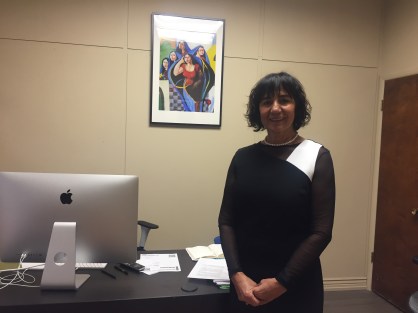
Samira Harnish standing in her office at Women of the World, located at 3347 S. Main St.

Harnish immigrated to the United States from Baghdad, Iraq, in the late 1970s. She studied engineering at Utah State University, but frequently suffered discrimination due to her race and gender. She also endured depression because she felt isolated in her new community and found it difficult to express her feelings. The need for female advocacy and empowerment drove her to establish Women of the World, a nonprofit organization based in Salt Lake City, in 2010.

Harnish knew from an early age that she wanted to help others. As a result she’s amassed over two decades of volunteer experience and before founding Women of the World, she served as a medical interpreter for local organizations like Catholic Community Services, the International Rescue Committee, the Huntsman Cancer Institute and the Refugee and Immigrant Center – Asian Association of Utah.

But it wasn’t until her stint as an interpreter that she came to realize the true wants and desires of refugee and immigrant women.

“I actually listened to them to know what they want,” Harnish said. “They say, ‘I wish we had a woman that could hear us and guide us.’ When you are foreign in a country you don’t know anything. You need someone to guide you and to give you advice.”

And as she listened to the desires of refugee women from disparate cultural backgrounds, Harnish said they came to the same conclusion: they wanted a space of their own. Where they could freely share their concerns, interests and dreams without being overshadowed by the men in their lives.

Although Harnish stepped up to meet their needs, for a while she was alone in her efforts. For five years she operated without an office or case managers, simply visiting refugee homes, gathering contacts and securing much needed donations.

Salt Lake City is the nation’s second largest resettlement site for refugee women. It also has the largest proportion of single mothers and women-at-risk of any resettlement community. Four out of five refugees are women and many are survivors of teen marriage, domestic violence and rape. Once resettled they must juggle the effects of these traumas with unique economic and social challenges.

Yet, until Harnish founded Women of the World, there was no local organization dedicated to assisting such a notable demographic. And the women are grateful.

IMG_5598

Thank you letters displayed in the Women of the World office.

Apiel Kuot, a refugee from South Sudan, is one of these women. She said she was stressed and scared when arriving in Utah in the fall of 2016, but Women of the World helped her with winter clothing, a television and other essential household goods. She also learned to start thinking positively.

“I can’t count the things they’ve helped me with because there are so many things I have received from them,” Kuot said in a telephone interview. “And they give me encouragement which is much better than anything else someone can give.”

Now a year later, she is confident and self-reliant and is planning to earn a social work degree.

“There are some women who are at a camp that will soon be in this place, but they don’t know where to go with their issues,” Kuot said.  “I trust Samira and Women of the World and I will tell them because they (WoW) always give me positive things, not negative things.”

The Women of the World office, located at 3347 S. Main St., is considered a second home by women like Kuot. Women hailing from countries like Iraq, Nepal, Myanmar, Iran, Rwanda, Somalia and Uganda come there for help navigating community resources and often engage with one another over hot tea and desserts, sharpening their conversational English skills in a pressure-free setting. Most of the women learn of Women of the World through word of mouth.

“We love to warm everybody’s heart,” Harnish said, while preparing a cup of hibiscus tea. “I love the way everybody comes in here and feels comfortable. Some of them that wear hijab, they take it off because they know the windows are tinted and there are no men so they feel very secure.”

Women of the World seeks to empower women by promoting self-reliance through service, education and economic development programs. As a nonprofit, Women of the World operates without government funding, instead relying on charitable donations and an annual fundraiser held the day after International Women’s Day. Harnish says she prefers to operate without federal assistance because it allows her to tailor Women of the World’s services without worry of a pushed agenda.

“When the government gives you the money, they always tell you to go that way or this way, you know, their way,” Harnish said. “I’m here to listen to them (the women) and do whatever they ask.”

Harnish and the case managers she employs work to help women create resumes, tighten interviewing and job skills, plan for entrepreneurship and acquire mental health and legal assistance. More importantly, they help instill in participants a deeply rooted sense of self-confidence through their practical English program. Launched as a two-month pilot program for six women with no English skills, by its conclusion all six women were able to gain employment.

When discussing self-reliance, terms like education and employment tend to rank paramount. While earning potential is indubitably connected to the ability to provide for oneself and family, Women of the World knows it is only one aspect and it differs by individual.

McKenzie Cantlon, a case manager at Women of the World, worked with refugees in Buffalo, New York, and the United Kingdom before relocating to the Salt Lake Valley. She says the economic and social support refugees receive has been phenomenal in all areas, but she’s noticed a problematic pattern: proximity to services.

In Utah, voluntary agency affiliates like Catholic Community Services and the International Rescue Committee are based in Salt Lake City. That means refugees located farther north or south do not have the same access to essential resources. For this reason, Women of the World stresses self-reliance above all else.

“For some women self-reliance might be having the courage to leave the house and go grocery shopping or taking their children to the park,” Cantlon said in an email interview. “For other women this might mean going to school, getting a job and supporting their children without the help of others. Women of the World works to promote every kind of self-reliance.”

Courtney Bullard began working as a case manager for Women of the World in the summer of 2016. She lived in the Middle East for five years and attended graduate school in London. Bullard said she’s seen tremendous success from refugees working with Women of the World, but true economic independence isn’t always an option. Regardless, self-confidence is the first step to its path.

“There are a lot of barriers that refugees face upon coming to the USA because of how the resettlement process is set up,” Bullard said in an email interview. “We have women who might always rely on government assistance because of their various situations, however, when they advocate for themselves whether it might be asking for higher pay at work or looking the cashier at the grocery store in the eye at the store — I consider them on their way to self reliance.”

Regardless of definition self-reliance does not manifest overnight. Rather, it’s often an arduous journey that requires discipline and dedication. For Kaltum Mohamed, a Sudanese refugee, it’s taken four years to reach her dream of opening a restaurant.

IMG_5611

Kaltum Mohamed standing in front of her food truck “Mother of All.”

Mohamed was resettled in 2013 after years of moving between refugee camps. After receiving assistance from the IRC for 10 months, she met Samira Harnish. Through their shared Arabic language, they quickly formed a powerful friendship.

Harnish said Mohamed approached her early on with the desire to open a restaurant — refusing to allow any obstacles to deter her confidence. However, after attending a few practical English classes she stopped showing up.

“The last day she got really upset and said she just wants to find someone to give her a loan,” Harnish said. “I told her, ‘No one is going to give you a loan unless you finish that program. You go in there and finish.’”

So Mohamed persisted. She now operates Mother of All, a food truck that can be found at The Black Diamond Store and The Front Climbing Club in Salt Lake City.

“They (WoW) help me too much,” Mohamed said reflectively in her South Salt Lake apartment. “And I always tell everyone, don’t give up on the things you need. Continue doing it and face everything with confidence.”

To commemorate the successes of refugee women like Mohamed, Women of the World holds an awards banquet and social mixer at the end of every year. In addition to inspirational stories, small ethnic meals are brought and shared by members of the community and musical entertainment is provided.

This year’s event will be held Dec. 9, 2017, from 2-5 p.m. at the Salt Lake County South Building Atrium on 2100 S. State St. It is Women of the World’s 7th Annual Celebration for women who achieve their goals and is free and open to the public.


This slideshow requires JavaScript.