Disabilities services at University of Utah

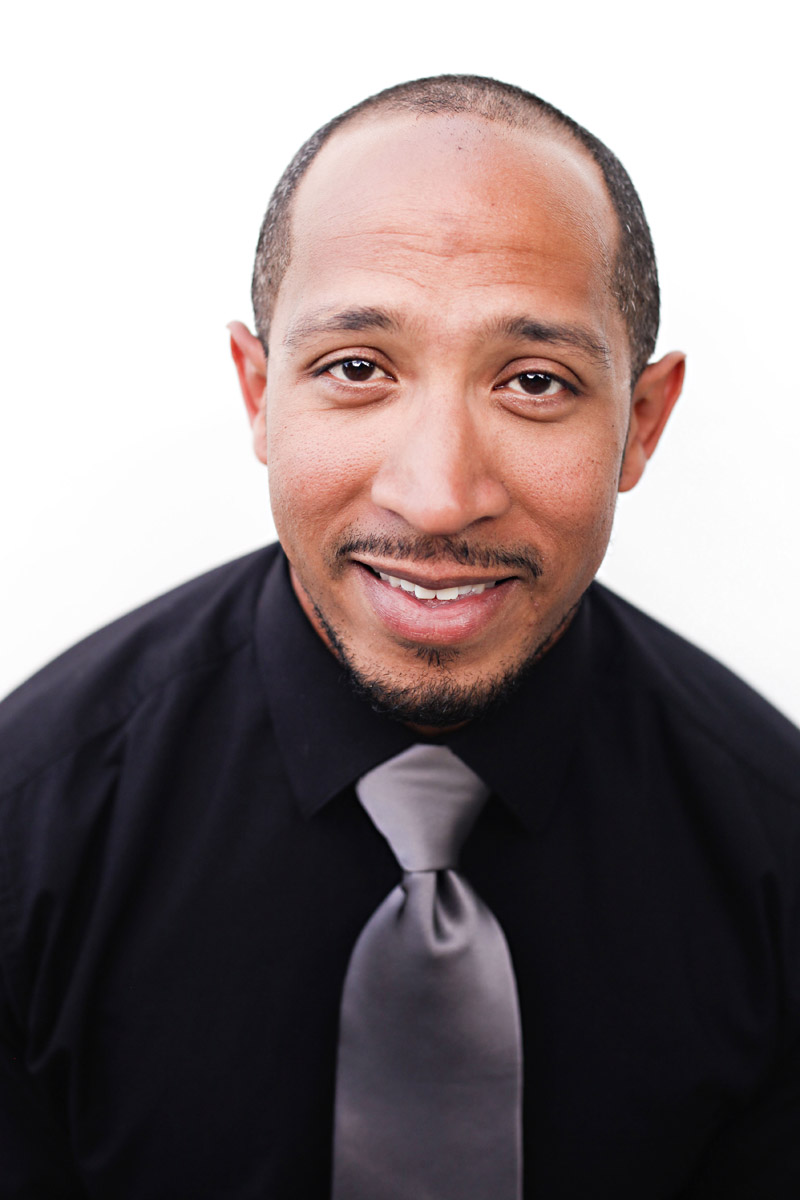
Story and photo by WENDY DANG

The fact that the University of Utah has an office for students who need assistance in class with physical or mental disabilities is not a well-kept secret. The Center for Disability Services is working hard to ensure every student has an equal opportunity to further their education.

Chris Burningham says his responsibilities as a disabilities adviser at the CDS include starting incoming students on the processes of applying for services they may require, such as getting textbooks in Braille or American Sign Language interpreters to sign class lectures.

After scheduling an appointment to talk with an adviser and completing all of the paperwork, students must provide the necessary documentation from doctors or therapists that clearly state the restrictions of their disability.

“It’s a clear process throughout the office to take each student on a case-by-case basis,” Burningham said. “The (more complicated) disabilities aren’t usually like the last (ones we’ve dealt with) and we try to accommodate as best we can.”

The Center for Disability Services is tucked away in the southwest corner of the Union building.

The Center for Disability Services is tucked away in the southwest corner of the Union building.

The CDS can provide extra time or a quiet place to take a test, convert textbooks to Braille or audio recordings, or even offer early registration for classes to students who might need to consider the accessibility of a classroom.

“If a student using a wheelchair can’t physically get into a classroom, we’ll move the class,” Burningham said.

However, the Center for Disabilities Services doesn’t make changes to the course requirements to show preference to students who use their services.

“If a student asks for a note-taker and they have no reason to be missing classes, we say no. They still have to complete all the coursework,” Burningham said. “Now if they request more time to complete the work, that is something we can do.”

Note-taking is a very common service the center provides for students who might have attention deficit disorder, autism or mobility limitations that make it difficult to copy down key points in a lecture.

Shawna Meyer, a senior who is majoring in English, has been a note-taker for the center before.

“It wasn’t any trouble,” she said. “I usually take good notes anyway and I thought ‘Why not? It’s easy money and a good cause.’”

Meyer filled out paperwork in the CDS stating that she agreed to submit her notes to the center. Throughout the semester, Meyer simply copied her notes and sent them to an email address the CDS provided.

“I would send the notes at the end of every week, sometimes every two,” Meyer said.

Of the 1,200 to 1,400 students who are eligible for resources offered by the CDS, only a handful are in the office more than once during a semester.

Burningham said the most basic requests can be handled over email. Students who require more complex services, such as personal campus guides for students who are blind, require daily interaction with the CDS.

“It’s about finding a balance between what we can legally provide and what the student needs to succeed,” Burningham said.

The Center for Disability Services, located in room 162 of the Union building on the south side of the ground floor, just past the pool tables, is currently available for walk-in appointments to students who are currently registered with the center. The office is open Monday to Friday from 8 a.m to 5 p.m.

Salt Lake City’s CHOICE Humanitarian, helping African communities

Story and slideshow by ALEXA WELLS

Visit Kenya with three women who volunteered for CHOICE Humanitarian.

CHOICE Humanitarian, The Center for Humanitarian Outreach and Inter-Cultural Exchange, is an organization that helps the countries of Kenya, Nepal, Bolivia, Guatemala and Mexico. According to the website, the goal is to “end extreme poverty and improve quality of life through a bottom-up, self developing village-centered approach.”

CHOICE Humanitarian was founded in 1982 by Dr. Tom Evans and Dr. James Mayfield. It is a registered nonprofit organization and takes pride in making every dollar count with solid management and low administrative costs. The headquarters are located in Salt Lake City.

CHOICE expeditions are open to the general public and all ages and different backgrounds. Each village has different projects depending on their unique needs. There are many different tasks that volunteers may end up working on such as: classroom construction, community water systems, bio-gas digesters, health clinics, personal hygiene workshops, pit latrines, micro-enterprise training and other village needs.

CHOICE Humanitarian focuses efforts on two of Africa’s highly impoverished areas, the Kwale and Kinango districts located in the Coast Province of Kenya and East Africa. According to worldhunger.org, in the Kwale area, 32 percent of the population has been reported to be classified as “food insecure” while 40 percent of the population is in absolute poverty. This district results in one of the highest infant mortality rates in the country.

According to the International Fund for Agricultural Development, about 79 percent of Kenya’s populations lives in rural areas and relies on agriculture for most of their income. Nearly half of the country’s 40 million people are poor, or unable to meet their daily nutritional requirements. In some places the conditions have improved since the early 80s, but the poverty rate has remained the same at 48 percent. Kenya has one of the world’s fastest population growth rates and in the last 30 years the population has more that tripled. This population growth causes the country to not have enough resources, resulting in extreme poverty.

Lisa Crossley lives in Layton, Utah,  and has participated in the Kenya expedition for the last three years with her neighbors, Tasia and Kimberly Jensen. Crossley and the mother-daughter team  first participated in the program in summer 2009, where they helped to build a school. In summer 2010, they returned to the same village and helped to teach the children in the school. And the following summer, after saving money from the previous year, they helped improve the water catchment systems in Kenya for two weeks.

“My whole outlook on life has changed since I started volunteering in this organization,” Crossley said. “You don’t realize how good your life is until you go somewhere like Kenya. The children of the school eat a cup of grains for lunch and are lucky to have a place to sleep at night. They are so grateful for the volunteers and the help that they bring to the village. I highly encourage anyone to come and experience this, because it is life changing to be able to make a difference.”

People who volunteer for these expeditions gain hands-on experience while working on the village projects that they are assigned. According to the CHOICE Humanitarian website, “They can learn how to combat poverty with new strategies, such as important hydro-electric installations now in the planning stages. With CHOICE Humanitiarian imput, these and other humanitarian organization projects will result in better economic conditions for tens of thousands of villagers.”

Tasia Jensen said, “I highly recommend for everyone to go on a humanitarian trip sometime in their life. It really makes you appreciate what you have, and you learn so much about the African culture. I spent most of my time hanging out with the children. I did art projects with them and helped teach some of them how to read and write. One of the art projects that was created by the students of Kwa Mulungu Primary School was auctioned off by CHOICE Humanitarian, and the proceeds were to benefit the villages in poverty around the world. They were so happy that I was there to help them, I loved seeing their smiling faces.”

All of the expeditions with CHOICE Humanitarian run one week long. Those who are interested in applying need to book their expedition three to six months in advance due to medical testing and travel assignments. Those who don’t have the time or money to go on expeditions with CHOICE Humanitarian also have the option to donate money to the foundation, get involved in Women’s Equity programs, volunteer at CHOICE headquarters, or create a fundraiser. For example, people can donate money to purchase school desks for the schools in these countries that need them.

“The best part of the expedition was the first day that we got there,” Kimberly Jensen said. “The villagers had a welcome celebration in our honor, and we danced around and sang to their music. It was an amazing experience. They were all so happy to have us there, it really touched my heart.”

Details about expedition costs and country-specific needs can be found on the CHOICE Humanitarian website. The price of the expeditions range from $1,995 to $2,195 per person, not including airfare. The fees include village lodging, food, ground transportation, project costs and materials, and two nights in a hotel. While working within these communities, volunteers are treated as a welcomed guest as they help with their daily life schedules.

“I would help them with their water supply and carry the water in giant buckets on my head. It was so heavy and the temperature there was so hot, I thought I was going to pass out. Then I thought, wow … this is what they do every single day, when all we have to do is turn on the water faucet,” Tasia Jensen said.

While the expeditions are only one week long, most volunteers stay extra days and book other adventures and things to do before or after. Things like sightseeing trips, safaris and hikes are all common outside of the CHOICE Humanitarian program.

“The first year that we went to Kenya we booked a week long African safari after our humanitarian excursion. I am so glad that we did that, it was a great experience to see all of the wild zebras, lions, cheetahs, elephants and so many more amazing animals,” Lisa Crossley said.

CHOICE Humanitarian continues to lift the spirits of thousands of villagers within the five countries where volunteers work. In Kenya, the major tool to fight against poverty is education.

“I will continue to volunteer for this organization because it has changed my life,” Kimberly Jensen said. “I do not regret a minute of my time I spent helping the villagers and children in Kenya. I will make sure that my kids get to experience what I have experienced, and I hope that more people will become involved in humanitarian projects.”

Is the LGBT equality movement the civil rights movement of the 21st century?

Story and slideshow by RENEE ESTRADA

Explore the Utah Pride Center and the Office for Equity and Diversity.

Throughout America’s history there have been movements toward equality. Americans who felt alienated or limited by the government protested, petitioned and fought for their rights.

The African-American civil rights movement followed after and spanned three decades, the 50s, 60s and 70s.

Currently, the LGBT equality movement is under way. The basis of the equality movement is to allow gay, lesbian and transgender couples the right to marry and all the rights that come with it, including, but not limited to health insurance benefits, tax benefits and estate filings.

According to David Frum of the Daily Beast, proponents of marriage equality have called it the “civil rights movement of our time.”

Not everybody is happy about this, including Frum and Jack Hunter, another conservative opinion columnist.

In Hunter’s article, “Why Gay Marriage isn’t the 60’s Civil Right’s Fight,” he argues, “There have been instances during the gay-rights movement that arguably could be compared to the black civil rights struggle, like the Stonewall riots of the 1960s or Matthew Shepard murder in 1998. … Still, with the possible exception of the mistreatment of Native Americans, there has been nothing quite like the systematic exploitation and institutional degradation experienced by earlier black Americans.”

Edward Buendía, an associate professor in the ethnic studies department at the University of Utah, disagrees with this notion.

“One of the arguments, against this movement as a civil rights movement, is that you don’t have lynching,” Buendía said in a phone interview. “Yes, there are not gay people being lynched, but we do have individuals that have lost their lives. Some people believe you have to be on the same level of scope to legitimize it and from my point of view, one life is too many to lose.”

In Frum’s article, “Let’s not call marriage equality the civil rights movement of our time,” he argues, “And while homosexuality has always had a large stigma attached to it, the number of gay people denied a job because of their sexuality just utterly pales in comparison to the number of black people denied jobs because of their skin color.”

Frum’s statement brings up another point. You can see when someone is African American. Meanwhile, you cannot see that someone is a homosexual.

The National Association for the Advancement of Colored People has endorsed same-sex marriage. According to a statement from the organization, “The NAACP Constitution affirmatively states our objective to ensure the ‘political, education, social and economic equality’ of all people. Therefore, the NAACP has opposed and will continue to oppose any national, state, local policy or legislative initiative that seeks to codify discrimination or hatred into the law or to remove the Constitutional rights of LGBT citizens.”

Regarding the endorsement, NAACP President and CEO Benjamin Todd Jealous said at a press conference, “Civil marriage is a civil right and a matter of civil law. The NAACP’s support for marriage equality is deeply rooted in the Fourteenth Amendment of the United States Constitution and equal protection of all people.”

In 2004, Utah residents voted to amend the state constitution to include a ban on same-sex marriage. In 2013, three couples challenged it. One of the couples is married in Iowa, but the marriage is not recognized in Utah.

Considering the Advocate, a national gay and lesbian news magazine, named Salt Lake City the gayest city in America in 2012, the statewide same-sex marriage ban is interesting. Granted some of the criteria were more humorous than serious, but the title still revealed Salt Lake City has a large, active, gay community.

“They [same-sex marriage bans] don’t make sense. They are restrictive and anti-people, because anytime the government says, you as a people, even though you didn’t do anything wrong, we are going to deem your existence illegal. That’s discrimination, and that’s wrong,” said Max Green, Equality Utah’s advocacy coordinator.

Green also offers another point. He believes the equality movement is taking an approach that is not seen very often. Supporters and advocates are tackling the most challenging aspect, and then moving on to more basic issues.

“This is the first time we’ve seen a sort of top down approach to an equality movement,” Green said. “In all other movements we’re seen bottom up. With the Civil rights movement, it was let’s start with something like desegregating the buses and desegregating schools, and then desegregating the military … so they went from the base up to the top. With the marriage equality movement it’s really starting at the top and going down, which is an interesting way to do things.”

Civil unions are offered as an alternative to same-sex marriage.

Thomas Allen Harris, who directed and produced a short documentary titled, “Marriage Equality,” disagrees with this alternative.

During an interview with NPR, Harris said that civil unions create a second-class label for gays and lesbian couples, making them less than heterosexual couples.

Some same-sex marriage advocates, including the three couples who are challenging Utah’s same-sex marriage ban, believe these bans are illegal, because of the decision affirmed by Loving v. Virginia.

The case Loving v. Virginia dealt with the legality of interracial marriage. According to a story in Slate, Mildred Loving and Richard Loving were sentenced to one year in prison for violating Virginia’s anti-miscegenation statute, the Racial Integrity Act of 1924. Eventually the Supreme Court ruled that the act violated the Due Process Clause and the Equal Protection Clause of the Fourteenth Amendment. It was clear in the decision of the court that the Justices found this to issue to be a civil rights issue.

In 2007, Mildred Loving issued a statement for her support of same-sex marriage.

“I believe all Americans, no matter their race, no matter their sex, no matter their sexual orientation, should have that same freedom to marry … said Loving. I am still not a political person, but I am proud that Richard’s and my name is on a court case that can help reinforce the love, the commitment, the fairness and the family that so many people, black or white, young or old, gay or straight, seek in life.”

Some say Loving v. Virginia has paved the way for Hollingsworth v. Perry, given their similarities.

Hollingsworth v. Perry is a case that was heard by the US Supreme Court on March 25, 2013. Plaintiffs argued Proposition 8, a voter-approved initiative to ban same-sex marriage in California, violated the Due Process and Equal Protection Clauses of the Fourteenth Amendment to the United States Constitution.

The decision of Hollingsworth v. Perry will not be out until June 2013. It seems until then Americans will have to see if the court deems same-sex marriage to be a civil rights issue.

Buendía sees the legal aspect is where the two movements intersect and share the most similarities. There were been many legal battles over segregation, and there are ongoing legal battles over LGBT rights, including housing and workplace rights.

While the movements bear some resemblances, it is clear there are distinct differences.

“We have to be careful of the significant difference for some people around race and color versus gender and sexual orientation,” Green said. “For some people those qualities don’t mix. We have to respect that and be aware not to rob someone of their identity.”

The rewarding challenges of transracial adoption

Story and slideshow by CHRISTIE TAYLOR

Experience the lively dancing and drumming at Asante Dance and Drum.

It’s a typical Saturday at Asante Dance and Drum in Lindon, Utah, with moms accompanying energetic children to their weekly classes. The chilly spring morning hasn’t dampened any of the families’ spirits as they enthusiastically welcome each other to class.

One of the usual dance teachers is unable to attend this week’s lesson, which sends the moms into organization mode as they try to figure out a fill-in for her class of 5-year-olds. One woman bravely offers, settling any disturbance the lively morning has suffered.

Nothing is distinctive about this morning or this scenario except every mom who has come to this studio is white, and every child is black.

Another feature that sets this particular morning apart is the rhythmic and repetitive drumbeats that begin to float through the air as the boys begin their drum lesson. The pounding sound from hands hitting leather-covered drums takes on a faraway sound of an ancient African village.

In another room, fast-paced hip-hop tempos pour from the speakers of a class full of African-American girls practicing the week’s hip-hop dance lesson.

The moms gather in the foyer chatting while the background beats and music play. With big smiles on their faces and enormous amounts of pride in their tones, they discuss their children’s weekly happenings.

The commonality of these women is they have all adopted transracial or transcultural children. The terms were designated to describe the process of adopting a child of one ethnicity or race by parents of another race or ethnicity, according to U.S. Department of Health & Human Services.

“In the United States these terms usually refer to the placement of children of color or children from another country with Caucasian adoptive parents,” the website states.

The classes at Asante provide a support group for these white parents and their adopted black children, and offer the diversity the children aren’t exposed to in their everyday lives.

The adoptions of the students at Asante fill both the transracial and transcultural categories. Most of the children in this group who were adopted transculturally came from Ethiopia.

Hannie Smith, 13, who was adopted from that country when she was 4 years old, thinks the dance class has been a great way to reconnect to her culture. “It’s cool to bring us all together,” she says about the weekly class.

Smith, who lives in Utah County and is maybe one of five ethnic students in her kindergarten through 12th-grade-level school, loves coming to the class and connecting with other children like her.

Asante Dance and Drum was formed specifically for children like Smith who are adopted by white parents and experience little diversity in their communities. The original founder of the group left and it was up to the moms to keep the program running.

The dedicated women running the program want the group to expand to include anyone interested in learning more about the diverse group and to children of all ethnicities.

“We’re not just about adoption, we’re about the whole child, celebrating our differences and similarities,” said Sage Service, one of the adoptive moms.

Service adopted her daughter, Mya, as an infant. She has taken Mya to the dance class since she was 3 months old to expose her to the diversity as well as show support for the program.

The lack of diversity these adopted children experience is one of the main reasons why transracial adoptions are so controversial in the United States.

Adoption experts seem to have conflicting opinions on children being placed in homes without at least one parent who resembles them in ethnicity, according to HHS.

Some think a child should always be placed with at least one parent of the same race so the child has a way of forming a racial identity; others argue that race shouldn’t even be considered when determining placement of a child. The latter feel the family needs of the child far outweigh ensuring they are placed with same-race parents, according to HHS.

In 1994 a bill addressing transracial and transcultural adoption came before Congress. The bill, submitted by Sen. Howard Metzenbaum  of Ohio, caused intense debate among members of Congress, but eventually passed both the Senate and House of Representatives.

The Multiethnic Placement Act brought people from opposite sides of the controversy together and paved the way for both sides to agree. According to HHS, “adults of all cultures need to work together to help adopted children of all cultures reach their highest potential.”

While having a family has been a huge benefit in the lives of the children at Asante, a wish for more diversity education, especially in school, was a common theme among them. Many said that although they were happy with their home lives, school was more of a challenge.

“I wish we did talk about it [diversity] more,” said Hope Vanderwerff, a 14-year-old attending Canyon View Junior High in Orem. “We learn about other countries in world geography, but that’s about it.”

Diversity aside, some experts believe the rise in transracial and transcultural adoptions can be attributed to the scarcity of young white children available for adoption, according to HHS.

But some families have other reasons for adopting transracially.

Anna Watson was a county worker who had eight biological children before she decided on transracial adoption. She met her daughter, Jane, while working in foster care when Jane was an infant. (Both have requested pseudonyms to protect their privacy.)

When Watson applied to adopt the infant she was denied. “We were the wrong color,” she said.

She wouldn’t accept that as a legitimate answer and hired an attorney to sue for custody. Jane’s biological family fully supported Watson’s intent to adopt and she eventually won the case.

“She was born on drugs, she shook and threw up and was developmentally delayed,” Watson said about Jane. The biggest reward and challenge was all the hard work it took to get her daughter to the healthy, beautiful young woman she is today.

When Jane was about 17 months old, Watson discovered the toddler’s biological mother was pregnant again. She wanted to adopt that baby as well. She was told the infant would be placed with her when she was born. Instead, the newborn was placed with an ill-equipped 65-year-old woman because she was also black.

She said the state even went so far as to call her and threaten to pull her foster care license if she chose to pursue the adoption.

Watson went to court a second time and sued for custody anyway.

In court, Jane was asked to draw a picture of herself and her mom. The young girl drew herself as brown and her mom as white. Watson said that when the court asked her daughter why she had chosen those colors, Jane said, “Because heavenly father said so.”

She won the case and legally adopted Jane’s sister.

Jane, now 19, teaches African-American and hip-hop classes at Asante and is getting ready to serve an LDS mission in Atlanta. Her sister was accepted to Brigham Young University and will attend this fall.

Jane said it was interesting growing up in Utah. With little diversity outside of her family, she found school a challenge.

“I experienced a lot of stereotypical name-calling, she said. “Sometimes I would get offended, but realized they just didn’t understand or they were doing it to be rude.”

The only time she would bring it up to her mom was if it was constant. Other than that she would just try to stand up for herself.

“My mom was so forward, so if it was small comments I would just keep them to myself,” she said.

Susie Augenstein didn’t struggle with the adoption process itself. Her challenges began after she brought her adopted children home.

Augenstein adopted a sister and brother from Ethiopia, both of whom had survival issues. She said her son, who was struggling the most, would often push his new parents to test their love for him. She said they had to constantly reassure him.

It took a lot of time, patience and counseling to get him to trust the parents and their love for him.

That was tested again during a recent trip to Ethiopia. The Augensteins’ son feared they were taking him back, when in actuality the family was going to meet the children’s aunt. When she placed the children for adoption, she told the orphanage that the biological mother was dead. That was the only way the institution would take the children.

Augenstein recommends that any parent who adopts a child, whether transracial or transcultural, find a good counselor who can help deal with the issues of trust that children may experience.

Like many of the other moms at Asante, Carrie Peterson was inspired to adopt after learning about children’s poor living conditions. In her case she was compelled to adopt after hearing media reports about the horrific conditions of Romanian orphans. Although she ultimately did not adopt children from that country, she did adopt two newborn girls from Philadelphia.

Peterson said that in 1992, the concept of transracial adoption was fairly new in Utah.

She found that being among the first families to adopt transracially caused many people to be patronizing because they thought she was so “saintly” for adopting poor black children.

“We’re just a family, we just love each other,” she said. She doesn’t feel saintly about her choice to adopt; she just wanted to have a family and these children needed one.

Sage Service doesn’t feel any better than anyone else either for her choice to adopt transracially. “Mya would still be the amazing girl she is and have a great heart had I not adopted her,” she said. She feels Mya’s experiences would be different, but not better or worse.

Rhonda Fairbourn, the adoptive mom who filled in for the absent dance teacher, thinks each dimension of raising children, whether biological or adopted, has its struggles.

“I was living in a bubble,” she said about her life before she adopted. “I don’t live in a bubble anymore because of the kids’ struggles.” All her children have had problems in all different ways.

These families can all attest that adopting transracially has its challenges. And although it’s controversial, the love they feel for their children is real.

As Sonya Doty, an adoptive mom said, “It’s by far the hardest thing I’ve ever done, but the most rewarding.”

Black Student Union at the University of Utah helps students connect

Story and slideshow by GUSTABO RODRIGUEZ

Explore the Student Involvement Wing and the Center for Equity and Student Affairs and the Office for Equity and Diversity.

The University of Utah is a school where high school students can expand their educational horizons.

Students from a diverse background also apply to the U to expand and get a higher education. But some of them need help adjusting to the new school and to obstacles they might face as they attend the U.

The U has a variety of clubs and organizations that help students of diverse backgrounds with college life. For example, these clubs might help them get into classes for their majors, academic advising and financial advice.

There is one organization in particular at the U that helps African-American students.

The Black Student Union is one of the diverse organizations at the U that is dedicated and focused on helping the underrepresented students. BSU helps black students get involved with the school and within their community.

BSU has even hosted a special day at the U for black high school students to get them interested in higher education and inspire them to apply to the U or other institutions. BSU members have workshops, activities, and they give the visiting students a tour around campus.

The conference also helps students apply and enroll at the U or another school by telling them what to expect when they enroll.

This is why BSU is there ­­­— to help incoming U students get to know not only the school but also other students if they feel lost during their first semester.

James Jackson III founded ACCEL (African-Americans Advancing in Commerce Community Education & Leadership). Jackson was part of BSU in his early years at the U. This organization helped him become comfortable on campus. He did not feel like he was in a strange place anymore after he joined BSU.

“It was an opportunity for me to socialize and I made friends on campus,” Jackson said in an email.

He also had help from older students in BSU to show him around campus. This was also another opportunity to make new friends.

Not only does BSU work with the black students, but it also helps other clubs on campus. For example, they have participated in events for the Social Justice Advocates and the Asian American Student Association. This is a way to let students know that BSU helps other groups regardless of their background. They’ve also worked with the Kick off Black Social where other black students and staff bond and have a stronger community.

Fattima Ahmed got involved with BSU when she got an email stating the group needed volunteers to participate in the annual high school conference her freshman year.

“Coming to a new environment I was wanting to get involved in my campus and community. I was eager to grasp the exciting opportunity!” Ahmed said in an email interview.

To seize her opportunity to join BSU, Ahmed went to an advisor at the Union Building and the advisor recognized her from the high school conference.

The advisor told her to attend the next BSU meeting to see what BSU was about and what to expect.

“Before I knew it they were encouraging me to run for an executive position,” Ahmed said.

Ahmed has had students from high school reaching out to BSU to get the black students in their high school to get together to form a stronger community.

“I’ve personally worked closely with students to help them toward the intense processes of college; including college admissions, financial assistance, and certainly support,” Ahmed said.

The Black Student Union has 200 members and counting, according to the email addresses BSU has in their directory. These are not only former students from the U, but also members within the faculty at the U, alumni and community members.

Future college students at the U can count on BSU to help them throughout their college years. BSU has a service and supporting faculty and advisors who provide personal mentoring, not just for school but also to the students.

“They whole-heartedly support our future endeavors and provide any support to make sure we get there,” Ahmed said.

Faculty and the advisors help BSU and their students connect with other resources on campus and share their personal experiences in an attempt to aid students in their college endeavors.

The financial questions from students are a specialty of Ahmed.

“It’s an interesting hobby of mine to personally assist students with situation such as these,” Ahmed said.

Ahmed is not only involved with BSU as a member, but she is there to work with the new college students here at the U one-on-one.

“I’ve worked with students in a more collective manner, but I’ve had so many experiences interacting with them one on one on a personal level. I love being able to specifically learn about interests, family, and academics,” Ahmed said.

If students are confused or don’t know what classes to take next, BSU works with the Center for Ethnic Student Affairs. The center, located on the second floor of the Student Union, provides academic advising for students.

“Denise E. Francis Montaño has provided so much help for students who come to receive advising,” Ahmed said.

Montaño is one of the many advisors CESA has for students who seek help or guidance to pick their classes. She is more than an advisor— she treats every student as a friend and will listen to them. It doesn’t matter if a student has a question about school or just wants to talk; Montaño will be at the CESA office.

“Any student who walks through our doors can connect with any and all of our advisors,” Montaño said in an email interview. “Students connect with advisors for a variety of reasons and may talk about their academic progress, negative and positive experiences in the classroom/campus/or SLC, issues that cause them to feel discouraged/stuck, family challenges — anything.”

She is not Ahmed’s advisor but she welcomes any question that she might have. Ahmed and Montaño have shared work-related experiences with the Inclusion Center for Community Justice. This is a nonprofit organization being hosted at the U; this is a small program that provides experiential programing to promote dialogues for inclusion and social justice for the state of Utah.

“Fattima has been a consultant for BSU and even though her schedule is filled with services she does as a social justice advocate she took on the role of a BSU officer,” Montaño said.

Volunteer work is also an emphasis of BSU. This year the group has partnered with the Bennion Community Service Center to bring the US Dream Academy to campus. This mentoring program is designed for students from third and eighth grade levels who have parents in jail and help them understand and keep going to school.

On April 20, 2013, board members Jasmine Walton and Charity Jefferson worked together to provide the BSU Black Affairs to celebrate the end of the spring semester. This was a dance event for every student to get a chance to dress up and have a good time with friends.

To find out more about BSU, students can visit the CESA office at the Union or follow the group on Twitter (@UofUBSU). BSU has an annual membership fee of $10 that each person, including the executive board members, pays in order to join. This helps BSU fund the opening social they have at the start of every year.

If students are interested in joining the BSU board or have any questions, they can email BSU at bsuoftheuofu@gmail.com.

“No you do NOT have to be black to be in BSU nor do you have to be in order to run,” Fattima Ahmed said in an email. “We stand as a group who welcomes all!”

Thelina Smith, Miss Black Utah USA, strives for science education

Story and photo by LORIEN HARKER

On the Miss Black USA pageant website there is a statement that reads, “It’s time to redefine what it means to be a courageous, compassionate [and] CONFIDENT black woman today. We’ve got obstacles to overcome and stereotypes to smash. Sound like your kind of revolution? Join the movement.”

Thelina Smith has got some smashing of her own to do.

524502_4026434416872_1145373459_n

Smith competing for the title of Miss Pioneer Valley in August 2012.

Smith is the current reigning Miss Black Utah USA. She also is a junior at the University of Utah who is studying biomedical engineering with an emphasis in biomaterials and leadership studies.

Smith is extremely busy with duties of the crown and sash, such as being an advocate for heart health while promoting her own platform. However, she makes sure to be involved with her studies. Smith started the first chapter of the National Society of Black Engineers at the U, reactivated the U’s Society of Women Engineers and is a biomedical engineering ambassador for the College of Engineering.

As a requirement for her title, Smith also promotes a platform, or an issue she feels needs to be addressed within the community. Smith says her platform, “Engineering the Leaders of Tomorrow, Because Tomorrow Matters Today,” is meant to “motivate minorities and underrepresented students to engage in STEM education.”

Smith says her platform has three goals. First, to reach out to the community, specifically women, through educating them on STEM (Science, Technology, Engineering and Math) education. Second is to “continue to charter diverse student organizations throughout Utah that serve to recruit and retain minority and underrepresented students in STEM fields.” And third, she wants to “establish a council” to mentor the youth she hopes to recruit into math and science education.

“I feel that this pageant allows me to take my efforts to the next level,” Smith says in an email interview. “I want to challenge young ladies to think about what it is to be beautiful and smart and to capture the attention of young men to let them know they can have a future within STEM education.”

Smith has also been working on partnering with the National Society of Black Engineers, The Society of Hispanic Professional Engineers, The American Indian Science and Engineering Society, and the Society of Women Engineers, of which she has been an active participant. Smith wants to partner with these societies to form a council called STEM-Diversity Industry Advisory Council.  This council would include “community leaders and local STEM company representatives that will [oversee] the support of these student chapters,” Smith says.

Despite her full schedule, Smith is making time to run for Miss Black USA in Washington, D.C., in August 2013.

Although there have been women of color to win larger national and international pageants, Smith doesn’t feel women of color are being represented to their full potential within these programs.

 “I wouldn’t consider myself ‘marginalized’ in pageantry but rather ‘underrepresented.’ There have been women of color to capture the crown as Miss America, Miss USA, Miss Universe, [but] this is still relatively a small number in comparison to the number of years that these organizations have existed,” Smith says.

Lana Thompkins, the public relations spokeswoman for Miss Black USA, says in an email interview that the Miss Black USA is necessary because women of color do not feel beautiful with today’s standards of beauty.

 “Self-esteem is the core of a woman’s belief in herself. Miss Black USA sets our own standards of beauty,” Thompkins says.

African-American women have been faced with many stereotypes, Thompkins says, and the purpose of the Miss Black USA pageant is to disprove these stereotypes.

“While 80% of Miss Black USA contestants are graduates or professionals and represent a new generation, we are often negatively typecast, demeaned, and portrayed in the media and in the workplace as ‘broken,’ ‘unattractive,’ ‘alone,’ ‘hard to work with,”’ and even ‘violent,’” Thompkins says.

Raychellene Talbot, the wardrobe coordinator for Miss Utah under the Miss America Organization, feels that Miss Utah has a “melting pot of pageant girls” despite the fact that there has yet to be an African-American Miss Utah.

“We have so many different contestants at the local and state level. I know Miss Utah Outstanding Teen 2011 had 6 different nationalities,” Talbot says.

The Miss Black USA pageant was founded in 1986 by Karen Arrington. The scholarship program boasts a two-year tuition scholarship to Miles College, a historically black college in Fairfield, Ala.  The scholarship also awards a fully furnished apartment close to campus. If contestants such as Smith win and choose not to attend Miles College, they do not receive the housing benefits.

Women who have competed for the title of Miss Black USA have gone on to win titles within the Miss USA organization. Chenoa Greene, Miss Black New Jersey 2007, went on to become Miss New Jersey USA in 2008.

Thelina Smith says, “The Miss Black USA pageant is a showcase of women who otherwise may have been overlooked.”

Ogden resident Stanley Ellington enjoys helping the community

Story and photos by GUSTABO RODRIGUEZ

Helping people in the community of different cultures is a job that not everybody can fulfill. Reasons for helping or not helping people can come in various answers or excuses, but not for one man who helps from his heart.

Stanley Ellington was born in Alabama and lived in Washington, D.C. for seven and a half years. Then he went to Germany for two and a half years. He returned to the U.S and lived in Kentucky in 1974.

In the U.S. Air Force, Ellington helped people solve their personal problems related with their job or family.

In 2000, he moved to Utah because of his job in the Air Force. He retired in 2002 after serving for 28 years. From there, he knew that he wanted to continue to help people. He moved to Utah where the diversity is lacking, and was further motivated to help marginalized communities.

“I’m a good bridge for helping out people in the community,” Ellington said.

He enjoys helping individuals. For example, he helps an elderly woman by taking her husband to the doctor.

Stanley Ellington

Stanley Ellington is a leader in the community.

Ellington also was the first executive director of the Utah Black Chamber of Commerce.

He is part of the National Baptist Association, which is divided in the states of the Utah, Idaho and Wyoming. He has many ways to help people not only in Utah, but other states by helping the other churches in those states.

He is a Christian minister for the New Zion Baptist Church in Ogden and now as a licensed minister he can help more people in the community. Ellington gets involved with the community in Ogden not only through his profession, but also through the church. He is the director of the Christian education of the church. By being in charge of the education department, his duties are to set classes for the Christians and prepare the four phases of the classes.

In 2006 he built his own business that provides consulting in business management. During this time he was made the first executive director of the Utah Black Chamber of Commerce. He helped small businesses in Salt Lake and the surroundings areas to thrive in the community.

People from the black community, like many other people, are always looking for a new opportunity. Ellington said that he knew a woman who went to look for a job and the first thing they asked was if she knew Stanley Ellington.

“Just because we’re black were supposed to know each other,” Ellington said.

He has experienced different cultures here and learned the customs of other individuals. Working for the State of Utah Governor’s Office of Economic Development he learned that some women don’t greet men or other people. So Ellington had to create a new way to greet a woman from a different culture.

Kathryn Crosby, a friend of Ellington, met him two years ago through their affiliation with the Utah Business Development Alliance.

Kathryn Crosby

Kathryn Crosby appreciates her friendship with Stanley Ellington.

Crosby has a great admiration for Ellington because of the way he can handle situations, and for his accomplishments with the community and his life.

“Stanley has a unique ability to see clear routes through complicated issues, and to communicate with people from all walks of life,” she said in an email interview.

Crosby also said Ellington has a contagious amount of energy and enthusiasm.

“I consider myself very fortunate to be able to call Stanley my friend and colleague,” Crosby said.

She respects Ellington because he works hard to help out people and he does not settle for reports that he is very sure do not make sense.

For example, he said that in Utah there was a report that locally-owned black business were increasing year after year, but he was not convinced.

Ellington said it is difficult for business owners to seek additional training because they can’t leave their business to go to school. If they do, they risk losing clients. He feels that the Utah Black Chamber of Commerce can help entrepreneurs by offering classes online. Webinars, or online seminars, also could be a good idea because people have become more computer savvy. He said a program on public television that would help educate business owners might be useful too. He said that it would be another way to educate not just the black community, but also people from different cultures who want to succeed in Utah.

Ellington has influenced many Utahns because of all the organizations he has been involved with.

“I’ve been labeled the African American representative,” Ellington said.

Cynthia Nielson met Ellington when she joined the Utah Business Development Alliance (UBDA). Nielson and Ellington have worked together on many projects, including managing, organizing and preparing presentations.

“Stanley has extensive training in business management and administration,” Nielson said in an email interview.

She also said that Ellington has been a big influence in the goals of UBDA, which includes assisting small businesses in finding and getting contracts that are going to help them succeed by getting their name out into the market.

“Stanley is a great teacher and donates a lot of time to our non-profit organization. Stanley is eager to improve himself through education and is dedicated to his religion. He has a kind heart and I admire him greatly,” Nielson said.

Stanley Ellington came to Utah to do what he was born to do: help people. That mission was his destiny.

“God brought me to the state of Utah,” Ellington said.”I don’t know why, but it was to fulfill my mission in Utah.”

James Jackson III and ACCEL help black-owned businesses in Salt Lake City

Story and photo by GUSTABO RODRIGUEZ

How can a person get help promoting their own small business here in Utah? Where can a person seek help, especially in a town like Salt Lake that has room to have a lot more of their own local businesses, compared to Los Angeles, New York, or Miami that have the most diverse local own business in the country.

 Photo courtesy of James Jackson III founder of ACCEL

Photo courtesy of James Jackson III, founder of ACCEL

James Jackson III is a businessman who can help people, especially the black community, promote their own business.

Jackson was born and raised in Utah and like most of the diversity in the state he wanted to put his culture at the top of the list of this state. Jackson attended and graduated from Cottonwood High School in 1998.

He graduated from the University of Utah in 2002 with a Bachelor of Science in Marketing, and a Master of Business Administration from the University of Phoenix. Jackson wanted to help people in his community; he wanted to help them by promoting them and watching them grow.

In junior high Jackson already knew what he wanted to do in the future, unlike other kids that don’t know what career they want. He wanted to help people from his culture, from his community and one of the reasons why is because there is such a small portion of African Americans here in Utah. So as a minority his goal was to help them in every way possible, help them achieve their goals.

ACCEL, African-Americans Advancing in Commerce Community Education & Leadership, is an organization that helps African American business to achieve their goals in a small diverse market here in Salt Lake.

Jackson founded ACCEL in 2009 and has helped about a dozen businesses and counting because this was the goal of Jackson, helping as much black business as possible.

ACCEL with their executive director Jackson need some help too from large private companies so he started a partnership with Pepsi Co. and Zion’s Bank and wants to establish a relationship with Budweiser. He wants this partnership because they can help money wise with the local owned businesses.

At the University of Utah Jackson had a professor whom he admires and respects him and considers him a mentor throughout his career.

Wilfred D. Samuels English professor at the University of Utah

Wilfred D. Samuels, is an English professor at the University of Utah

Professor Wilfred D. Samuels knows very well Jackson from his childhood all the way up to when he became his pupil at the U.

The youngest of Samuels’s son’s was best friends with Jackson and ever since he has been a much known friend.

“Although it has been over ten years that James was here on campus, we attend the same church,” Samuels said in an email.

Samuel said Jackson came from a loving and caring Christian family  and was raised with the highest values. Jackson and his family have always attended church and loved music. Samuels said that’s why they formed part of the church choir — his grandparents too — and participated in all church activities.

“At the U of U, he pursued a career in business. He worked hard and remained passionate about his major,” Samuels said.

Samuels said after Jackson graduated from the U he went on and worked with the Utah Black Chamber of Commerce and tried every single way to get the church involved in business efforts. That showed his commitment to the chamber and that he wanted to help his community by starting with the church.

“I know James to be congenial, principled, dedicated and passionate about life. He is totally committed to his personal growth and development. I admire and respect him,” Samuels said.

Being passionate about life and wanting to help others in his community, Jackson never gave up and he sought out help to start and make ACCEL a reality.

Francisco J. Sotelo is the executive director for the Utah Hispanic Chamber Commerce and a good friend of Jackson. Sotelo and Jackson met through an event two and a half years ago.

“James is a great leader and a good representation for his community, representing the African American people,” Sotelo said in a phone interview.

Jackson approached Sotelo with a strategy to make ACCEL which was a great idea, it just needed a little help, Sotelo said. ACCEL and the Utah Hispanic Chamber of Commerce help each other by exchanging ideas to help their community. Sotelo took a lot from Jackson which later he applied to the Utah Hispanic Chamber of Commerce.

“Even right now we sit down and discuss ideas we can apply for our chambers and not just for one,” Sotelo said.

ACCEL and the Utah Hispanic Chamber of Commerce have a great relation and with the same objective: helping the community in every possible way.

Jackson said he is very grateful to the Utah Hispanic Chamber of Commerce for showing him the right way and steps to form ACCEL and in the process help the black community rise in the local market in Utah.

James Jackson III: building a stronger African-American community

Story and photo by DANEALLE PLASCENCIA

How do you picture Utah when you know the majority of the population is Mormon? Do you picture only Caucasians? What about the minorities?

For almost two decades, Utah’s population continued to rise while the percentage of its people who are Mormon slowly and steadily declined, wrote Matt Canham in an article for The Salt Lake Tribune.

Newcomers have found that Utah is economically stable and offers different sources for the community to grow in comparison to the rest of the nation.

The job rate in Utah is increasing faster than the unemployment rate, and has an attractive cost of living which is making people to consider Utah as their new home.

Like any other state, Utah offers different sources to help the community, including the minorities.

One of those sources is ACCEL (African-Americans Advancing in Commerce, Community, Education and Leadership).

This organization is committed to being the premier organization in providing education, resources and visibility for the African-American small businesses owners of Utah.

Photo Courtesy of James Jackson III, Founder of ACCEL

Photo Courtesy of James Jackson III, founder of ACCEL

The founder of ACCEL is James Jackson III, who was born and raised in Utah.

Jackson, 33, graduated from The University of Utah with a bachelor’s degree in finance and marketing.

He earned a master’s degree from the University of Phoenix in 2010.

After working on his own for a while he decided to establish ACCEL in the winter of 2009.

The main reason for the creation of this organization is the passion for business that Jackson has, especially the necessity of helping those around him in their endeavors.

Being able to offer the community more resources for education to have a better future is a main focus.

Jackson develops the idea of creating an organization from his own experience of being the  owner of a small business dealing with the sale and management of properties.

That is how he noticed how the African-American community didn’t have enough resources and support to develop their business ideas.

“Creating ACCEL took a lot of time, and help from other people who I see as an example for my project,” Jackson said.

One of those people who helped Jackson is Francisco J. Sotelo, current executive director of  the Utah Hispanic Chamber of Commerce.

Jackson and Sotelo met three years ago, during an event of the UHCC. Jackson asked him for help to create a stronger organization.

Sotelo had meetings with Jackson to help him understand how a chamber works, and share his strategies that he had used to create a successful chamber.

During the meetings they shared ideas and new projects for both organizations.

Since then Jackson and Sotelo have a very good relationship.

They meet often to talk about Jackson’s projects, and to keep each other updated about their respective organization.

“Our relationship has grown over the years and as well the chambers, we had learned from each other through the years,” Sotelo said in a phone interview.

Official Logo of ACCEL

Official Logo of ACCEL

Networking plays a big role for ACCEL. Jackson believes that a networking community is more effective than one that is not really connected. That is why he is creating a new website for ACCEL with the help of Ronda Fisher.

Fisher said in a phone interview that her goal is to design the site so people can find resources and assistance more easily.

“I’m really excited to see the results,” Fisher said.

Besides being a successful business man, Jackson is a member of one of the most established black churches in Utah, the Calvary Chapel Salt Lake and makes time to be part of the church activities to be connected with the community.

Between his activities Jackson is the coach of a kids basketball team, and reads books like “Think and Grow Rich: Your Key to Financial Wealth and Power ” from the author Napoleon Hill, for personal enrichment at the start of the year.

Community is the main focus for Jackson in his life. He knows the African-American community population is only 1.3 percent in the state of Utah but that is enough for him to keep working hard to create a successful community.

“Things have changed in Utah. I remember when I was in elementary school, there were only a couple of black kids in my classroom, but things have changed since then,” Jackson said.

Jackson has dedicated the last four years to building a stronger African-American community in Utah, and all his work is being rewarded.

“Jackson works really hard every day, and has done a lot of things for ACCEL,” Fisher said.

Diversity of cultures in Utah is becoming more noticeable, and Jackson is trying to be part of it.

Jackson’s future plans for ACCEL include having more members, hiring an executive director who would be in charge of the organization, and creating scholarships like SOMOS, the prestigious award offered by the UHCC.

ACCEL, after four years of its creation, now is offering sources for 300 African-American small business owners in Utah.

“James is a great leader and represents the black community very well,” Sotelo said.

Utah’s Black Chamber of Commerce and ACCEL helping African American businesses and the Utah economy

Beyond Beauty is a black owned salon in Murray, Utah and is owned by Angel Bumpers

Beyond Beauty is a black-owned salon in Murray, Utah, and is owned by Angel Bumpers. She is also one of the founders of the Utah Black Chamber of Commerce.

Story and photo by ALEXA WELLS

The Utah Black Chamber of Commerce and ACCEL, African-Americans Advancing in Commerce Community Education and Leadership, are both organizations located in Utah with a focus on helping black-owned businesses with networking and coming together in the community.

The Utah Black Chamber of Commerce is a nonprofit organization whose mission statement is “to economically empower and sustain African American communities through entrepreneurship and capitalistic activity within the United States and via interaction with the Black Diaspora.”

Stanley Ellington is from Fort Knox, Ky., and has lived in Utah since September 2000. Ellington’s parents are both African American. Ellington has a bachelor’s degree in administrative management from Excelsior College, a master’s degree in management from the University of Phoenix, and is pursing a doctorate degree from Grand Canyon University in organizational leadership with an emphasis in organizational development. With these credentials, Ellington started and became the executive director of the Utah Black Chamber of Commerce.

Ellington has been labeled as the African American representative of business. He is on The Board of the Governor’s Office of Economic Development, a licensed Christian minister at the New Zion Baptist Church in Ogden, Utah, is serving as a board member on the Pastor France Davis Scholarship Fund,  and is a member of the Junior Achievement of Utah organization.

“I came to Utah to be a leader,” Ellington said.

Another local leader is James Jackson III. He was born and raised in Utah, and attended Cottonwood High School in Murray. He graduated from the University of Utah with a degree in finance and marketing. Jackson took a break from school for about seven years and then went back to obtain his MBA from the University of Phoenix.

Jackson has known what he wanted to do since he was in junior high school: work in the financial industry doing strategic and market planning.

He was a member of the Utah Black Chamber of Commerce until he saw the need to build an organization where the black community can network together. Jackson started ACCEL in the winter of 2009.

ACCEL is for helping black communities with starting new businesses and brings the diverse community together and builds an environment for networking. Utah has many black-owned businesses, and with ACCEL it gives them the resources that they need to gain exposure throughout the community.

With organizations such as the Utah Black Chamber of Commerce and ACCEL, black business owners are able to obtain scholarships and attend seminars and networking events to get their business running.

Both the Utah Black Chamber of Commerce and ACCEL are committed to providing training and education to help business owners become successful. These organizations are looking for ways to teach people how to run a business and share the resources to help them when they need it.

One option Stanley Ellington is considering is offering webinars through the Utah Black Chamber of Commerce.

Job opportunities in Utah are helping to bring more diversity to the state and increase the black population. ACCEL and the Utah Black Chamber of Commerce are both working on helping bring diversity to Utah’s business owners.

Ellington says that he would like to see more ethnic diversity in Utah, since the black population is only 1.3 percent.

Jackson said, “Utah’s economy is fairly stable and the black population is growing. Most African Americans come to Utah because of the job opportunity.”

According to the ACCEL website, “The growth is due to Utah being more stable economically than the national average, as the job rate is increasing faster than the unemployment rate and has an attractive cost of living.”

Derek Miller, active executive director of the governor’s Office of Economic Development, said on the ACCEL webpage, “Utah has been ranked as the No. 1 most dynamic economy in the nation in 2009 and has seen 50% growth since 2007.”

The Utah Black Chamber of Commerce and ACCEL have made goals for improvement during 2013. Ellington is on track to relaunch the UBCC website, and Jackson hopes to offer more events each month, increase the membership base, add a member-to-member discount and improve the website. With these goals, both the Utah Black Chamber of Commerce and ACCEL will continue to be a resource for black-owned businesses in Utah.