Spice Kitchen Incubator helps refugees start food businesses

Story and photos by RYAN CARRILLO

Spice Kitchen Incubator gives certain Utah residents a unique opportunity: a chance to plan and develop a food-based business.

The kitchen incubator primarily assists international refugees who have relocated to Salt Lake City, but also provides services to immigrants and lower-income individuals. The program is part of the International Rescue Committee in Salt Lake City, or IRC SLC, which helps in international crises and relocates refugees in 22 different cities throughout the U.S.

Spice Kitchen Incubator provides everything from ovens to large prep space for the chefs

Spice Kitchen Incubator provides everything from ovens to large prep space for the chefs.

Refugees are individuals forced to leave their native country due to political unrest, war or safety concerns. When they are relocated to the United States, they have to adapt to a completely new culture and way of living.

Spice Kitchen Incubator helps them adjust to some of these changes.

Entrepreneurs, or participants, in Spice Kitchen Incubator aspire to start their own business. These individuals will mostly likely run their own catering business, food truck or farmers market booth by the end of the program.

The program is designed to help each entrepreneur achieve these goals and be successful in the American business market.

“Every entrepreneur’s goals are different but our overall goal is to build self-sufficient businesses,” said Genevieve Healey, the program coordinator for Spice Kitchen Incubator. “Those are the things we are helping them with, [things] like accounting, marketing and connecting them to resources. At a certain point they are comfortable doing that all on their own and they know how to use those resources.”

Spice Kitchen Incubator is divided into two different levels: pre-incubation and incubation. Pre-incubation is designed to help entrepreneurs develop a business plan and teach them how to run a successful business. Incubation is focused on real experience and exposure, putting each participant in control of their business.

Entrepreneurs begin in pre-incubation. They participate in this level for six months before advancing to incubation, depending on their individual needs and progress. During this phase of the program, they are building the foundation for running a business.

Each Saturday, the kitchen incubator hosts workshops for those individuals, covering everything from profit-and-loss and advertising to marketing positioning and food costing. Additionally, each entrepreneur will participate in a focus group. The focus group plays an essential role in the development of the aspiring business owner’s business plan.

“Volunteers from the food industry and the community come and try the entrepreneur’s food and those are entrepreneurs in pre-incubation so they are just developing their menu and what they are going to sell,” Healey said.

Feedback from volunteers is essential. It helps the chefs make adjustments to the business plan. It also can help them develop a mentorship with people in the community.

Kamal is one of 10 entrepreneurs in the pre-incubation stage. As a Bhutanese refugee, he was resettled in the U.S. almost five years ago. He has participated in the Spice Kitchen Incubator for almost a year.

Kamal’s focus group met on March 11, 2015. The chef spent several hours preparing food to present to the group. He said he has enjoyed participating in the program and was excited to share his culture and food with the volunteers and staff. He said he is very appreciative for the help of his wife and daughter, as well as a local volunteer, while preparing for his focus group.

Kamal prepares for his focus group with the help of his wife, daughter and a community volunteer.

Kamal prepares for his focus group with the help of his wife, daughter and a community volunteer.

After pre-incubation, entrepreneurs advance to incubation. This portion of the program typically lasts for 4 to 4 1/2 years. In all, entrepreneurs are able to be in the program for five years. There are currently three entrepreneurs enrolled in the incubation portion of the program. Since the Spice Kitchen Incubator was only opened in 2013, no one has graduated from the program yet.

During incubation, the aspiring business owners begin running an operational business. They start by applying for their business license. Once received, the entrepreneurs begin catering events and participating in local farmers markets.

During the winter, the chefs sell pre-packaged food at the market that they prepare at the Spice Kitchen Incubator’s facilities. The winter market is held every other Saturday at the Rio Grande Depot (300 S. 300 West) from 10 a.m. until 2 p.m. It runs through April 2015.

During the summer farmers market, entrepreneurs rotate between packaged and prepared foods. Prepared foods are cooked on-site rather than at the Spice Kitchen Incubator facilities. Healey said the kitchen hopes to expand its services at this year’s summer market to include one booth dedicated solely to packaged foods and another just for prepared foods. This would give the entrepreneurs more exposure and increase their ability to build a client base. The summer market runs from June 13 to Oct. 24, 2015, and is held each week at Pioneer Park on 300 W. 400 South.

Healey said the farmers market demonstrated how beneficial the incubator’s programs can be for both the business owners as well as the community as a whole.

“The farmers market was a really awesome experience, especially the summer farmers market because it is where we can do prepared foods,” she said. “We’ve said that there is a need for this in the community but it was really cool to have that hands-on [experience], like ‘oh yeah, people really want this.’”

Community members can get involved with the incubator through several different ways. The Spice Kitchen Incubator is always looking for individuals to serve on focus group panels, which requires a commitment of a couple hours each session, as well as help with any other topics related to running a business. Donations can also be made on the incubator’s website.

Maria Gigourtaki, who works as the volunteer and communications coordinator for the kitchen, said volunteers can have some amazing experiences with the program. “[The entrepreneurs] are all so passionate,” she said. “I mean, food is something that gets people together and it’s awesome. You can get to see and meet people, new cultures, new flavors, history, languages, everything. It’s amazing!”

Ensuring small business survival by learning from failure

Story and photo by LIZ G. ROJAS

Starting a business is never an easy step, especially when the odds are stacked against aspiring business owners.

According to a study published on statisticbrain.com, 44 percent of businesses fail within the first three years in operation.

Pyramid Auto Sales on Redwood Road in Salt Lake City.

Pyramid Auto Sales on Redwood Road in Salt Lake City.

The Alpizar family owns Pyramid Auto Sales, a used car dealership that has been operational in Salt Lake City for 18 years.

Silvia Alpizar said in a phone interview that she decided in 2013 to open a second location in Pleasant Grove replicating the business model used in Salt Lake City. She invested approximately $20,000 in preparing the dealership for the opening in August 2013.

As months passed, Alpizar noticed that the Utah County location was different from the Salt Lake City location, especially in the demographics of the clients. In the original location, clients were mostly Hispanic and therefore the advertising centered on that community.

But the demand from the Latino community was close to nonexistent in Utah County. Instead, with two universities in the area, college students made up the new market.

For Alpizar, the momentum of working with young adults held for only a few months.

As summer 2014 approached, students started heading back home.

“Sales dropped and we didn’t have enough money to keep on paying rent or [for advertising],” Alpizar said.

Low sales because of the inconsistent market made money tight for Alpizar. And she said cars weren’t being turned over within the 90-day window that is necessary for dealerships to make a profit.

About 10 months after opening Pyramid Auto Sales in Pleasant Grove, Alpizar was forced to close the business.

Since then, the Alpizar family has focused their efforts on the Salt Lake City dealership and have expanded business into online sales and advertising. KSL is currently one of the many platforms in which sales are promoted and increased.

In January 2015, statisticbrain.com reported numbers on business closures from the U.S Census Bureau. One of the biggest problems businesses faced was not enough cash flow through sales. This was either by underestimating the market, lack of planning or not being able to achieve successful funding.

One organization works to help Utah businesses gain sales by educating the public on the importance of buying local. Kristen Lavelett, executive director of Local First Utah, said that out of every $100 spent at an independent business, $55.40 is returned to the local economy. Conversely, only $13.60 is returned to Utah’s economy when people shop at franchises.

Some residents, such as Armando Castillo, a student at LDS Business College, said if given the choice to buy from a franchise or local business, he chooses local. “I work with locally owned businesses so I try to help them be successful,” Castillo said.

The awareness and education that local organizations are offering the public may help in increasing sales for independent businesses, which in turn increases cash flow.

However, entrepreneurship is no easy task and recognizing that the success of the business itself depends on the entrepreneur makes it no easier.

In the study cited earlier about business failures, the No. 1 cause for small business failure is incompetence, which is defined as lack of knowledge about business, or spending beyond means, etc. This amounted to 46 percent of start-up failures. Other causes included lack of managerial experience and insufficient inventory.

Starting a business is not an easy step. Silvia Alpizar closed her second business even though she has 18 years of experience owning a car dealership.

Extensive market research, financial knowledge and determination are necessary assets for success.

“We weren’t familiar with the market; we feel like we wasted time and money,” Silvia Alpizar said.

Saving for retirement: start now

Story and slideshow by MARISSA BODILY

Learn about some tools for saving for retirement.

Aging adults are finding that it is very expensive to retire. The need to prepare for that time of life should start early if people want to be able to live comfortably after they stop working.

The average age to retire is 62 years old and the average amount of time a person spends being retired is 18 years. This means that one needs to be able to anticipate the preparation required to provide for themselves financially for 18 years if they don’t want to spend that time working, according to statistics collected by Statistic Brain from the U.S. Census Bureau, Saperston Companies and Bankrate.

“Start saving early,” said Jared Johnsen, a financial planner at BCJ Wealth Management in Salt Lake City. “Establish the habit of putting away a little each pay check. You’ll never miss it, but [your money] will quickly grow.”

The average retirement age is going up because people are having to work longer to prepare sufficient funds. It is their savings that they are going to live off of when they are no longer employed.

In the early 1990s, the average age to retire was 57 years old, according to a 2013 Gallup Economy survey. In the past, workers could rely on Social Security to take care of them financially. It was a much greater possibility for them to be able to sustain themselves with that money instead of having to prepare and save individually. Unfortunately, workers can no longer rely exclusively on Social Security to give them the life they want after they are retired.

Statistic Brain determined that a married couple over age 65 will pay $215,000 for medical treatment over 20 years. Out of 100 people who started working at age 25, only 4 percent will have an adequate amount of money saved for retirement by age 65 and 63 percent are dependent on Social Security, friends, relatives or charity.

“The average person is not prepared,” Johnsen said. “Ten thousand people turn 65 every day and over 50 percent of them have zero savings for retirement. The average retirement plan balance for all 65 year olds is only $33,000.”

Social Security has been the program that people have depended on to help them get through their retirement years. According to CNN Money’s Ultimate Guide to Retirement, the program is based on contributions that workers put in. While employed, the workers pay money to Social Security and reap the benefits when their turn to retire comes.

Social Security is no longer sustainable because instead of a group of people putting money in and only one person taking it out, the ratio is shifting to one-to-one. Essentially, for every person who puts money in, one person is taking money out.

“Don’t count on living off Social Security when you retire,” said Peter Hebertson, information and referral program manager for Salt Lake County Aging and Adult Services. “We don’t know what is going to happen with your generation.”

The best thing young people can do to prepare for retirement is obtain an education and save money, Hebertson said.

Because Social Security is no longer a guarantee, people are having to become more self-reliant when it comes to planning for retirement and the future.

Social Security is far from perfect, Johnsen said. It won’t be enough to meet all of our needs, it will just serve as a supplement.

Eighty percent of people age 30 to 54 believe they will not have enough money saved for retirement, according to Statistic Brain.

For those people who are getting closer to retirement and are not prepared, Johnsen said, “They should start now. They should also do some calculations to figure out how much money they need to put away to reach their goals. The older they are, the more they need to put away.”

Calculators are available online to estimate how much money you will need for retirement. They can take into account all your living expenses and other expected costs, including leisure.

There are many options available to help save money effectively. “I would first look at an employer-sponsored qualified retirement plan. Generally they offer match contributions that they put in on your behalf so it’s free money,” Johnsen said. He also suggests looking at a Roth IRA because the growth and distributions after you put your money in are tax free.

“Albert Einstein said his greatest discovery was compound interest. It can work for you or work against you. Start saving early and compound interest will be a great tool,” Johnsen said.

“I meet with numerous people every month,” he said. “I met with one individual that started [saving] when he was young and got in the habit of saving and even with his modest income he was still able to accumulate over $2 million for his retirement needs.”

This is an example of someone who was well prepared and made compound interest work in his favor. However, there are people who have not prepared as well.

“I met with a client who is a doctor that is 55 years old and makes over $500,000 a year in income,” Johnsen said. “But he also spends $500,000 a year on lavish travel, fancy cars, a huge home, etc. He asked me to help him save for retirement and was completely embarrassed to tell me that he has only accumulated $30,000 in an IRA. Yet he wants to live off of $250,000 a year when he retires. He wants to retire in 10 years. I told him he basically needs to save every penny over the next 10 years to reach his goal. Or he needs to retire on much less or wait longer to retire. The reality is that he needs to do all three.”

Saving for retirement is a reality that the young and old need to face and prepare for in order to have a comfortable and pleasurable future that continues beyond the working years.


Canyon Rim Care Center is home to many older adults in Salt Lake City

Story and photo by MARISSA BODILY

If you were to walk into a care center on any afternoon, you might see several residents chatting in the hallways or walking around. Some residents know that the care center will likely be their home for the rest of their lives.

As people age, their families may no longer feel comfortable with them living at home alone where no one would know if they needed help. When a family member can’t take them in or they can’t live on their own anymore, they may move to a place where a qualified person will be able to care for them and give them everything they need.

Many different facilities in Utah accommodate people who need assistance with everyday life or simply don’t want to live alone anymore. Care centers provide around-the-clock nursing care, while assisted-living facilities simply provide meals and activities.

According to skillednursingfacilities.org, Utah has 97 certified Medicare and Medicaid nursing homes. The overall average Medicare 5 Star Quality rating for Utah skilled nursing homes is 2.9.

Canyon Rim Care Center on 3300 South is home to many older adults.

Canyon Rim Care Center on 3300 South is home to many older adults.

One local Medicaid facility is Canyon Rim Care Center, which has a 1 Star Quality rating. Most of the residents are there because it is covered by Medicaid.

Many people are sitting near the entry of the center, located at 2730 E. 3300 South, talking with one another and their caretakers. Some residents are sleeping soundly in their wheelchairs.

Sarah has lived there for a year and a half. (This is a pseudonym; center staff would not allow residents’ real names to be used due to privacy concerns.) “The staff has always been really friendly and they take good care of me,” she said. “I love living here.” Most of the residents are really nice, but some of them are ornery all the time, she said.

The care center mainly houses aging aging adults. However, it occasionally takes in younger people who need constant care because of an accident. One young woman said she had good nurses and physical therapists who took care of her and helped her to recover and move back out on her own. But she also encountered problems while living there. “Many people have had things stolen by other residents, so you have to be careful. And the food is horrible,” she said of her experience. She said she made friends with many of the residents, but she was glad to be able to move out.

Some other facilities available to older adults are very nice and cost more money. The cost of assisted living in Utah ranges from $1,300 to $5,900 per month, making the monthly average $2,400. If families don’t have a lot of extra money, there isn’t as much choice and the quality of the care and especially the ratio of workers to residents goes down. Care centers can be very expensive and people just don’t have the money to give their loved one the best. Programs such as Medicaid help pay the costs.

Residents using Medicaid receive an allotted amount of spending money each month, said Peter Hebertson, head of outreach for Salt Lake County Aging and Adult Services. Usually this is $45, which has to cover all of their needs such as haircuts, clothes, admission to activities and anything else they want or need. Some residents have family members who give them a little money, others are on their own. The amount of money an aging individual or their family member has greatly affects where they can live.

Many of the people at care centers know it will be their home for the rest of their lives. Some have family who come to visit. Others don’t have anyone nearby or any surviving family members. A few residents don’t have anyone outside the facility who cares about them anymore.

When people picture their future, they most likely don’t imagine living in a care center and needing constant assistance. But for some, this ends up being their reality. Sarah said she loves living at Canyon Rim Care Center with everyone because it is much better than the alternative of living at home alone.


Utah’s employment resources for people with disabilities

Story and slideshow by PAUL S. GRECO

Meet Corby Campbell and learn more about his success story.

People with disabilities bring valuable skills to the workforce. For example, in 2008 the National Science Foundation reported more than 600,000 scientists and engineers in the U.S. have disabilities.

Some top innovators have learning disabilities, including chief executive officers of Ford Motor Co., Xerox, Kinko’s and Charles Schwab. Apple’s Steve Jobs had dyslexia.

The federal government and each state provide means for people with disabilities to receive assistance with getting employment.

The Utah State Office of Rehabilitation (USOR) is located in downtown Salt Lake City inside the Utah State Board of Education building. Its mission is to assist eligible people with disabilities in obtaining employment and increasing their independence.

The USOR has four divisions: the Division of Rehabilitation Services, Division of Services for the Blind and Visually Impaired, Division of Services for the Deaf and Hard of Hearing and the Division of Disability Determination Services.

Kyle Walker was recently selected as the director of the DRS. He’s been employed with USOR for 13 years.

Born in California and raised in New Mexico, Walker received his Bachelor of Science in sociology and Master of Rehabilitation Counseling degrees from Utah State University. He’s lived in Utah for 20 years.

Walker said every counselor working for USOR has a master’s degree and is licensed with the National Board for Certified Counselors in addition to being state certified.

“So when a person comes in our door,” Walker said, “we’re not just looking at ‘let’s go get you a job at McDonald’s.’”

Instead, clients are given an assessment by a certified counselor. This evaluation is to help the client make meaningful choices for employment, taking into account their interests, aptitudes, abilities and values.

But first, a client must be considered eligible for counseling.

As one of the four divisions within USOR, The Utah Division of Disability Determination Services (DDS) is designed to determine if a claimant is disabled or blind.

Because 40 percent of USOR’s clients have mental illness and 25 percent have cognitive disabilities, evidence must first be obtained. To attain evidence, a claimant’s medical records are sought. If that evidence is unavailable or insufficient to make a determination, the DDS will arrange for a consultative examiner’s evaluation in order to gain additional information.

After sufficient information is gathered, a determination is made by a two-person team consisting of a physician or psychologist and a disability examiner.

If the claimant is found eligible, employment counseling is conducted under the DRS’s Vocational Rehabilitation (VR) program.

After completing the assessment, determinations are made for clients regarding not only their interests and abilities, but also what is needed to obtain employment.

For example, if it’s decided that schooling is the best option, VR will pay for the client’s tuition costs. If transportation is an issue, VR will provide travel arrangements to work sites through UTA or by making special accommodations to the clients’ vehicles — things like hand controls on steering wheels or wheelchair lifts.

If working for an employer is not the answer, USOR will fund self-employment opportunities.

“Really, our program is whatever we can do, whatever’s necessary to help them get back to work,” said Walker, director of the Division of Rehabilitation Services.

Eighty percent of the funding for VR’s services comes from the federal government. The remaining 20 percent is provided by the state’s Department of Education.

Employing individuals with a disability benefits both state and government.

In 2005, the University of Utah’s Center for Public Policy & Administration conducted an Economic Impact Study. The results showed that for every dollar the state contributes to the Vocational Rehabilitation program, $5.64 is returned. These returns are in terms of individuals paying taxes from employment and no longer needing government and state assistance.

Corby Campbell, 27, was born in Utah and lives in Orem. Nine years ago Campbell broke his neck in an accident and uses a motorized wheelchair.

“I can’t feel anything below my armpits or move anything below my armpits,” Campbell said.

He said someone told him about the Vocational Rehab program and that it might be able to help pay for college and other job-related necessities.

“And so, I went there,” Campbell said, “expecting to find help from them to get me through school.”

He talked with VR’s counselors and they helped him get started at Salt Lake Community College. Later, he transferred to Brigham Young University and graduated with a Bachelor of Computer Science degree. The Vocational Rehab program paid all his tuition costs.

“They’re wonderful,” Campbell said. “They’re super great people that are just all about trying to help you and figure out just where you want to go.”

In addition to helping with his schooling, VR got him in touch with the right people so he could buy a van.

He bought one with a ramp. VR paid for steering wheel modifications and other hand controls like special knobs to control the wipers, heating controls and other items.

“So that I could drive it independently, which was great,” Campbell said.

He felt his counselors liked working with him because he had direction and he was trying to obtain the goals they set with him.

Campbell finished school in December 2010 and started working full time as a software developer for Mobil Productivity Inc. in Orem the following February.

But his van broke down.

He bought a new one and paid for all of the modifications himself.

“I’m completely self-sustaining,” Campbell said. “That’s what a degree and a van did for me. That’s the point of VR.”

Another resource that helps people with disabilities find employment is TURN Community Services located at 423 W. 800 South in Salt Lake City.

Karen Wright directs two programs for TURN, vocational rehabilitation, and employment personal assistance service.

The latter assists clients who need help with daily living tasks so they can get ready for work. In addition, if the person needs help during work, a personal assistant will act as a liaison for the employer and TURN’s client. These services are provided free of charge.

Wright also works directly with USOR’s vocational rehab counselors once they have completed a client’s assessment and determined whether she or he can work.

“We start on thing like resume, job development, some life skills. Things like learning how to use a bus, learning how to use TRAX, learning how to advocate for themselves,” Wright said.

The list of companies that hire people with disabilities is long. Businesses include Home Depot, Kentucky Fired Chicken, Dan’s Market, WinCo Foods and Sutherlands.

Wright said people with disabilities are very dedicated. “They want to get up in the morning and get ready and they want to go to work. They really like working and they’re good hard workers.”

Being able to be in the workforce not only increases the income a person with a disability makes, but also betters their quality of life.

According to USOR, the following information demonstrates the individual and program success VR achieved during 2012:

  • 30,853 individuals were provided with VR services.
  • 3,427 individuals with disabilities were successfully employed.
  • $15,437,130 in estimated annual taxes were paid.
  • 146 public assistance recipients were successfully employed.
  • 671 Social Security Disability Insurance recipients were successfully employed.

In addition, clients found work in the following areas:

  • 1,032 industrial
  • 754 sales/clerical
  • 727 service occupations
  • 704 professional occupations
  • 98 homemaker/unpaid family worker
  • 74 farm/fishing/forestry
  • 37 self-employed

“This is how welfare programs should work,” Corby Campbell said. “This is what I see Vocational Rehab as: (it) is something to help people that fell down … get back in a way so they can be independent.”

Tax incentives in Utah for hiring people with disabilities may go unnoticed

Story and photos by DYLAN LIERD

Federal and state tax credits aim to help Utah businesses hire people with disabilities. However, many companies may be unaware of the incentives that also strive to reduce the number of unemployed Utahns with disabilities.

Work Ability Utah, located at 1595 W. 500 South in Salt Lake City, advocates for unemployed Utahns with disabilities.

Work Ability Utah, located at 1595 W. 500 South in Salt Lake City, advocates for unemployed Utahns with disabilities.

According to Work Ability Utah, an organization that links employers with the workforce of people with disabilities, tax credits such as the Work Opportunity Tax Credit and the Utah Targeted Job Tax Credit are available for all businesses who are willing to hire Utahns with disabilities. But Carol Rudell, project director for Work Ability Utah, said not enough businesses are taking advantage of these credits.

“I see businesses that are perfectly willing to hire people with disabilities, but there are others that don’t know about the incentives,” Rudell said. “I see a lot of misses out there and a lot of stereotypes that are not true, and when people have more information they are more than happy to hire people with disabilities.”

The Work Opportunity Tax Credit is a federal tax credit that is designed to encourage cooperation with the Americans with Disabilities Act. According to Work Ability Utah’s website, businesses can earn an annual tax credit of $2,400 per hired person with a disability. Businesses can also earn a $9,000 yearly tax credit when hiring a disabled veteran. To receive these incentives, businesses must complete the Internal Revenue Service Form 8850 and the Employment and Training Administration Form 9061.

Businesses can also receive state tax credit by applying for the Targeted Job Tax Credit. According to the Utah State Tax Commission’s website, the purpose of its creation is to entice companies to hire people with disabilities in order to foster an integrated workforce.

The allotted credit minimizes the amount of income tax the business has to pay, and the amount of money the company receives is based on the salary paid to employed individuals. The maximum credit given is $3,000 per employee per year. This is a credit that can be received for the first two years that the person with a disability is employed. Companies are also not limited by the amount of individuals they can claim under the Targeted Job Tax Credit.

The Division of Services for People with Disabilities ensures the rights of Utahns with disabilities. DSPD is located at 195 N. 1950 West
 in Salt Lake City.

The Division of Services for People with Disabilities ensures the rights of Utahns with disabilities. DSPD is located at 195 N. 1950 West
 in Salt Lake City.

In order to apply for these services, the person with the disability must be eligible for services from the Division of Services for People with Disabilities. Businesses must then complete a TC-40HD form and have it approved by an authorized representative from DSPD.

Tricia Jones-Parkin is the program administrator for DSPD. She is the authorized person who accepts these tax credit forms. Jones-Parkin is tasked with training job coaches and approving businesses that apply for the Targeted Job Tax Credit. Job coaches are responsible for teaching employers how to professionally treat people with disabilities, and how employers can receive tax credits by hiring Utahns with disabilities. However, she said more businesses should be taking advantage of The Targeted Job Tax Credit.

“I haven’t received a single form turned into me this year,” said Jones-Parkin in a phone interview. “When I do training for job coaches, I tell them to tell businesses about the Targeted Job Tax Credit, but there is still not many businesses that do.”

Jones-Parkin also said that nationally, people with disabilities are the most under employed demographic. In Utah, the state is not doing much better than the national average.

According to the Department of Labor’s website, the unemployment rate for people with disabilities is 13.1 percent. This is more than double the unemployment rate for people without disabilities, which is 6.8 percent. That is why Jones-Parkins said that beyond the tax credits that Utah businesses receive, it is important to hire Utahns with disabilities in order to reduce this number.

In Utah, the Governor’s Committee on Employment of People with Disabilities works to advocate the importance of hiring people with disabilities to employers.

Leslee Hintze, executive director for the Governor’s Committee, said its members speak to employers about the tax benefits for hiring people with disabilities in order to entice businesses to hire these individuals.

“Once we advocate tax incentives to employers who have a tendency to say, ‘I don’t know if I can take this on,’ they are more likely to hire and continue to hire people with disabilities,” Hintze said in a phone interview. “Businesses really find out that they are great employees, they make the workplace better and they really do a lot for the business they are working for.”

According to the Committee’s website, businesses will also not see their Worker’s Compensation Insurance or Medicaid Insurance rates rise when they hire people with disabilities. Regardless of the incentives, Hintze said it also benefits the U.S. economy to hire people with disabilities so they can contribute financially to society.

“People with disabilities can give back tenfold by becoming taxpayers, which means they will become tax producers and not tax users,” Hintze said. “A country that does not take care of its least fortunate citizens, to me is pretty deplorable. It is a moral imperative, which is why businesses should be looking for opportunities like these because everyone will benefit.”

Utah organizations for people with disabilities see need for financial improvement

Story and photos by DYLAN LIERD

Under the mandates of the Americans with Disabilities Act, the Utah State Legislature authorized more than $215 million to assist people with disabilities in Utah. However, organizations like the Division of Services for People with Disabilities and TURN Community Services Inc. still cannot provide assistance for all.   

According to the DSPD’s website, it is the main source of assistance for Utahns with disabilities. The DSPD serves more than 4,000 individuals, and helps fund some of the more than 50 for profit and nonprofit organizations that provide assistance for people with disabilities.

According to a source in DSPD’s financial department who asked not to be identified, more than 1,900 citizens are still on DSPD’s waiting list. He said that for those who currently receive services, the $215 million is not enough to finance the needs of all Utahns with disabilities.  

“We have half as many people on the waiting list that we are able to serve,” said the source in a phone interview. “The limit of financial assistance was not created from the sequester or the federal government. The legislature appropriated what they could, but there is not enough tax dollars to fill all of the need.”

Consequently, DSPD must determine whether a person is eligible for assistance by evaluating the severity of an applicant’s disability. According to DSPD’s website, individuals who have an IQ of 70 or lower lack daily living skills, which impairs their ability to grapple with the demands of daily life. For that reason, they will receive assistance, or will be prioritized on the waiting list.

The same is true for those who have physical disabilities or brain injuries. Funding for physical disabilities is based on functional loss of limbs, and if the loss is for a continuous period. For brain injuries, the severity of the physical trauma or non-traumatic injury is used to justify the individual’s need to receive services. Preferences are not given to any disability, but priorities are given to applicants who have the most needs.

People who receive financial support are more often long-term recipients. Applicants on the waiting list can only receive financial assistance when there is an increased amount of legislative allotment, or if a recipient dies or moves out of the state.

Eliza Detherage gathers information concerning people with disabilities and TURN.

Eliza Detherage gathers information concerning people with disabilities and TURN.

Eliza Detherage, director of operations for TURN Community Services, said too many people are being turned away from receiving funding due to a lack of revenue.  

“Around 3 percent of the population have a disability in the United States,” Detherage said. “If the population of Utah is around 2 million, then 60,000 people have a disability in Utah, but only a few meet the requirements.”

TURN Community Services employs more than 475 full- and part-time workers, and provides supervised living and 24-hour group homes for people with disabilities. According to TURN’s website, the nonprofit provides summer camps for kids and helps people with disabilities find job opportunities from a variety of employers. A contract with DSPD largely funds TURN Community Services, and for 2013, its budget is more than $14 million. The budget provides financing for supported employment, day programs, respite care, host homes and other services.

According to a document posted on TURN’s website about the contractual agreement with DSPD, it must be an approved Medicaid provider to allow DSPD to bill Medicaid for TURN’s services. Detherage said Medicaid is an essential service for people with disabilities and for TURN. Included with Medicaid, Supplemental Security Income and Social Security disability programs also help fund the costs of TURN’s programs. Detherage said less than 1 percent of TURN’s clients are on SSI or the disability programs. That means few receive additional funding.

“On a broad scale, when you look at people with disabilities, everything we receive is essential. Should there be more? Absolutely,” Detherage said. “I get about 10 calls a week from people that are absolutely desperate, but I know those people are not going to be eligible for services, and if they were eligible, they would just be sitting on the waiting list.”

Areas where TURN helps Utahns with disabilities.

Areas where TURN helps Utahns with disabilities.

Individuals on SSI receive $710 a month, an amount set by Utah law. Detherage said this is the only amount that many people with disabilities have. Therefore, because many people with disabilities cannot work, she said she believes the state legislature must appropriate more funding in order to shrink DSPD’s waiting list and allocate more to SSI beneficiaries.

Mike Bullson is a lawyer at Utah Legal Services. “The monthly benefit is limited, but the only way to receive greater amounts of funding is to allocate more money before being unable to work,” Bullson said in a phone interview. “This would help bring a lot of people out of poverty, but [it] is hard for disabled individuals to do.”

The source at DSPD said the amount of tax revenue the state receives does not allow the state legislature to allocate greater amounts of funding to Utahns with disabilities. Until legislators approve additional funding, organizations like DSPD and TURN Community Services must continue to work with their current funding. And that means many on DSPD’s waiting list will continue to remain there.

University of Utah students focus on diversity in innovation

Story and photo by TREVOR RAPP

On Jan. 8, 2013, the University of Utah was ranked as one of the “top institutions in the country for startup formation,” according to the latest survey by the Association of University Technology Managers released in December 2012.

“Startup formation is in our DNA,” said Bryan Ritchie, director of the U’s Technology Commercialization Office, in a news release.

The genetic complexion of business innovation has significant meaning for one U student. He is not just a business innovator, he is a black business innovator.

“Black-owned businesses are, especially where I’m from in Lake City, Fla., a rare commodity,” Enis Henderson said.

Ennis Henderson, UofU student.

Ennis Henderson, UofU student.

Henderson is part of a research innovation class that tasks students to research opportunities to improve local or national communities.

“I chose the problem that was near and dear to my heart, which was trying to improve the quantity of black-owned businesses in America,” Henderson said.

While contemplating his project, Henderson’s mind stretched back to Lake City, Fla., where he grew up. He described it as a “Mayberryesque” town where the white people lived on one side of the tracks and the black people on the other. There he gained his first working experience “doing the jobs no one else wanted to do” like picking the tobacco, corn, peanuts and melon grown in his community.

When he was 22, he got his first lesson in owning his own business.

That lesson came from a casual conversation with a white insurance agent. After “taking a liking” to each other, Henderson said the agent explained that he took his two sons out to cut wood and then bring it into town to sell it. Each time they made a sale they would subtract their revenue from their operating costs to calculate their gross and net profits.

“That was the first time I had heard the words ‘operating expenses’ and ‘gross profit’ in the same sentence,” said Henderson, “and I said ‘Wow, how old are your boys?’ and he said ‘7 and 9.’”

“You aren’t born with an innate sense of how to do business,” Henderson said. “Someone has to teach you, or you have to go out and learn it. And if those people who don’t own businesses never had anyone in their family to take them by the arm to say ‘let me show you how to do this’ … and if they’ve never seen it or heard it — odds are they won’t do it.”

And recent statistics are showing that when compared to other minorities, African-Americans are not doing it.

According to “Black (African-American) History Month: February 2013,” published by the U.S. Census Bureau News, the black population, whether of mixed or non-mixed backgrounds, is 43.9 million. This represents an increase of 1.6 percent from the April 1, 2010, census.

Nevertheless, in a separate 2007 Survey of Business Owners conducted by the U.S. Census Bureau found that only 1.9 million businesses out of 30 million were black-owned.

For Salt Lake City, black-owned businesses are only 2.7 percent of the almost 24,000 total businesses, according to the U.S. Census QuickFacts.

These numbers haven’t been lost on Henderson. As part of his project he researched statistics published by the U.S. Census Bureau, the Bureau of Economic Analysis, and IBISWorld.com, a database of industry-based research.

As he spoke, Henderson pointed to various charts from those sources as he explained that while blacks outnumber the most profitable minority, Asians, by about 3-to-1 by population, they own about the same number of businesses. Even more surprisingly, Asians were making about three times as much profit.

“It’s completely inverted,” Henderson said.

Henderson isn’t the only person who has noticed a lack of diversity in local businesses.

Most African-Americans who come from the South or the Midwest don’t want to come to Utah because of the stigma that Utah has of not being a diverse community, said James Jackson III, founder and executive director of ACCEL (African-Americans Advancing in Commerce, Community, Education, and Leadership), a nonprofit organization providing resources to African-American small businesses in Utah.

Neither Henderson nor Jackson point to current racial prejudices as the current cause of the problem. However, the “genesis” of the problem is deeply embedded in the history of slavery in the United States, Henderson said.

For Jackson, the most pressing need is increasing the level of education for all Utahns. Jackson was appointed by the governor to the Utah Multicultural Commission, an advisory group for issues relevant to local minority communities. “The main song that was sung through [the commission’s various] committees, whether it be health, education, corrections, economic development, all of them leaned toward education in some way,” Jackson said.

Those numbers are reflected in the April 1, 2010, US census as well, with only 18.4 percent of blacks reporting having earned a bachelor’s degree, and only 1.6 million blacks reporting having earned an advanced degree.

And the effects are real. The annual median income for black households declined by 2.7 percent from 2010, making it almost $10,000 less than the national median income for families, according to “Black (African-American) History Month: February 2013.” The U.S. Census Bureau News also reported a 27.6 percent poverty rate among blacks, almost double the national average.

For Henderson the answer is availability of resources. “What I recognize is that it’s a lack of information. Now there’s a ton of information out there on the internet there are types of agencies people can go to to get information. But they don’t know what to ask for if they did go to an agency,” Henderson said. “They’ve never been informed. The resources are there but they don’t know what it is, they don’t know what it’s for.”

James Jackson III: building a stronger African-American community

Story and photo by DANEALLE PLASCENCIA

How do you picture Utah when you know the majority of the population is Mormon? Do you picture only Caucasians? What about the minorities?

For almost two decades, Utah’s population continued to rise while the percentage of its people who are Mormon slowly and steadily declined, wrote Matt Canham in an article for The Salt Lake Tribune.

Newcomers have found that Utah is economically stable and offers different sources for the community to grow in comparison to the rest of the nation.

The job rate in Utah is increasing faster than the unemployment rate, and has an attractive cost of living which is making people to consider Utah as their new home.

Like any other state, Utah offers different sources to help the community, including the minorities.

One of those sources is ACCEL (African-Americans Advancing in Commerce, Community, Education and Leadership).

This organization is committed to being the premier organization in providing education, resources and visibility for the African-American small businesses owners of Utah.

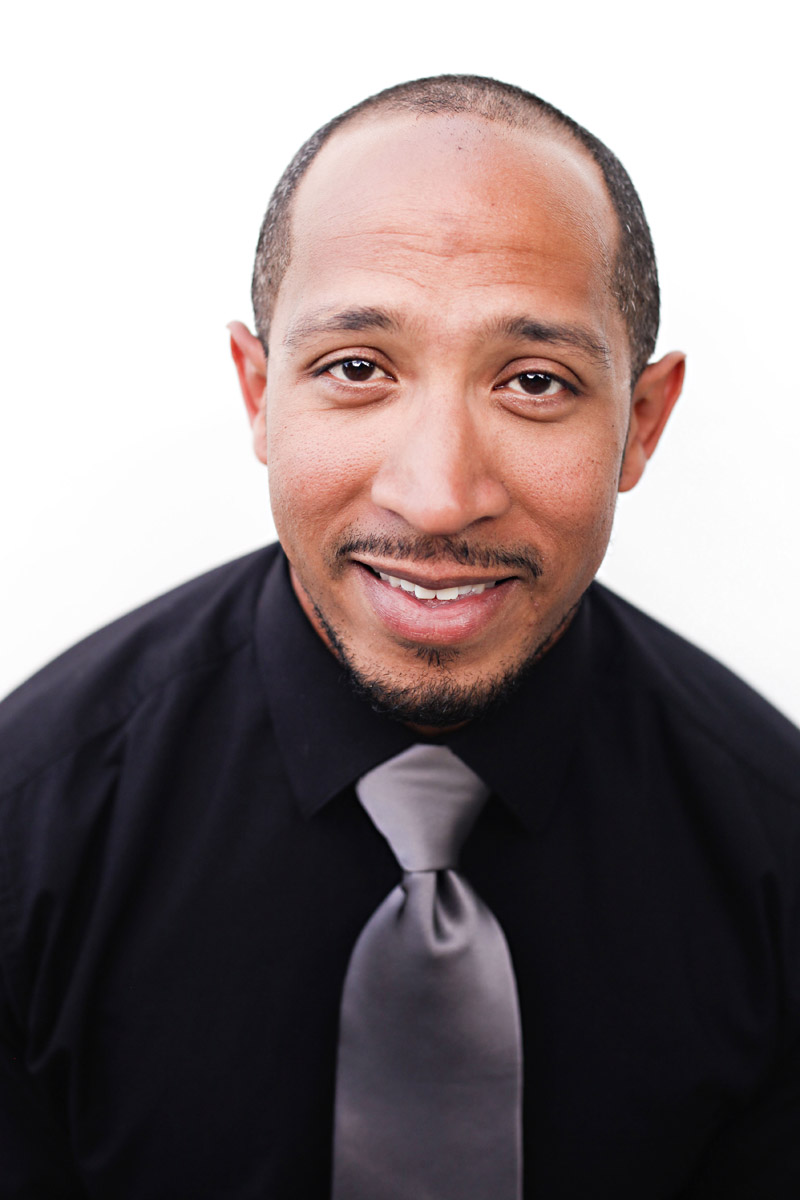
Photo Courtesy of James Jackson III, Founder of ACCEL

Photo Courtesy of James Jackson III, founder of ACCEL

The founder of ACCEL is James Jackson III, who was born and raised in Utah.

Jackson, 33, graduated from The University of Utah with a bachelor’s degree in finance and marketing.

He earned a master’s degree from the University of Phoenix in 2010.

After working on his own for a while he decided to establish ACCEL in the winter of 2009.

The main reason for the creation of this organization is the passion for business that Jackson has, especially the necessity of helping those around him in their endeavors.

Being able to offer the community more resources for education to have a better future is a main focus.

Jackson develops the idea of creating an organization from his own experience of being the  owner of a small business dealing with the sale and management of properties.

That is how he noticed how the African-American community didn’t have enough resources and support to develop their business ideas.

“Creating ACCEL took a lot of time, and help from other people who I see as an example for my project,” Jackson said.

One of those people who helped Jackson is Francisco J. Sotelo, current executive director of  the Utah Hispanic Chamber of Commerce.

Jackson and Sotelo met three years ago, during an event of the UHCC. Jackson asked him for help to create a stronger organization.

Sotelo had meetings with Jackson to help him understand how a chamber works, and share his strategies that he had used to create a successful chamber.

During the meetings they shared ideas and new projects for both organizations.

Since then Jackson and Sotelo have a very good relationship.

They meet often to talk about Jackson’s projects, and to keep each other updated about their respective organization.

“Our relationship has grown over the years and as well the chambers, we had learned from each other through the years,” Sotelo said in a phone interview.

Official Logo of ACCEL

Official Logo of ACCEL

Networking plays a big role for ACCEL. Jackson believes that a networking community is more effective than one that is not really connected. That is why he is creating a new website for ACCEL with the help of Ronda Fisher.

Fisher said in a phone interview that her goal is to design the site so people can find resources and assistance more easily.

“I’m really excited to see the results,” Fisher said.

Besides being a successful business man, Jackson is a member of one of the most established black churches in Utah, the Calvary Chapel Salt Lake and makes time to be part of the church activities to be connected with the community.

Between his activities Jackson is the coach of a kids basketball team, and reads books like “Think and Grow Rich: Your Key to Financial Wealth and Power ” from the author Napoleon Hill, for personal enrichment at the start of the year.

Community is the main focus for Jackson in his life. He knows the African-American community population is only 1.3 percent in the state of Utah but that is enough for him to keep working hard to create a successful community.

“Things have changed in Utah. I remember when I was in elementary school, there were only a couple of black kids in my classroom, but things have changed since then,” Jackson said.

Jackson has dedicated the last four years to building a stronger African-American community in Utah, and all his work is being rewarded.

“Jackson works really hard every day, and has done a lot of things for ACCEL,” Fisher said.

Diversity of cultures in Utah is becoming more noticeable, and Jackson is trying to be part of it.

Jackson’s future plans for ACCEL include having more members, hiring an executive director who would be in charge of the organization, and creating scholarships like SOMOS, the prestigious award offered by the UHCC.

ACCEL, after four years of its creation, now is offering sources for 300 African-American small business owners in Utah.

“James is a great leader and represents the black community very well,” Sotelo said.

Utah’s Black Chamber of Commerce and ACCEL helping African American businesses and the Utah economy

Beyond Beauty is a black owned salon in Murray, Utah and is owned by Angel Bumpers

Beyond Beauty is a black-owned salon in Murray, Utah, and is owned by Angel Bumpers. She is also one of the founders of the Utah Black Chamber of Commerce.

Story and photo by ALEXA WELLS

The Utah Black Chamber of Commerce and ACCEL, African-Americans Advancing in Commerce Community Education and Leadership, are both organizations located in Utah with a focus on helping black-owned businesses with networking and coming together in the community.

The Utah Black Chamber of Commerce is a nonprofit organization whose mission statement is “to economically empower and sustain African American communities through entrepreneurship and capitalistic activity within the United States and via interaction with the Black Diaspora.”

Stanley Ellington is from Fort Knox, Ky., and has lived in Utah since September 2000. Ellington’s parents are both African American. Ellington has a bachelor’s degree in administrative management from Excelsior College, a master’s degree in management from the University of Phoenix, and is pursing a doctorate degree from Grand Canyon University in organizational leadership with an emphasis in organizational development. With these credentials, Ellington started and became the executive director of the Utah Black Chamber of Commerce.

Ellington has been labeled as the African American representative of business. He is on The Board of the Governor’s Office of Economic Development, a licensed Christian minister at the New Zion Baptist Church in Ogden, Utah, is serving as a board member on the Pastor France Davis Scholarship Fund,  and is a member of the Junior Achievement of Utah organization.

“I came to Utah to be a leader,” Ellington said.

Another local leader is James Jackson III. He was born and raised in Utah, and attended Cottonwood High School in Murray. He graduated from the University of Utah with a degree in finance and marketing. Jackson took a break from school for about seven years and then went back to obtain his MBA from the University of Phoenix.

Jackson has known what he wanted to do since he was in junior high school: work in the financial industry doing strategic and market planning.

He was a member of the Utah Black Chamber of Commerce until he saw the need to build an organization where the black community can network together. Jackson started ACCEL in the winter of 2009.

ACCEL is for helping black communities with starting new businesses and brings the diverse community together and builds an environment for networking. Utah has many black-owned businesses, and with ACCEL it gives them the resources that they need to gain exposure throughout the community.

With organizations such as the Utah Black Chamber of Commerce and ACCEL, black business owners are able to obtain scholarships and attend seminars and networking events to get their business running.

Both the Utah Black Chamber of Commerce and ACCEL are committed to providing training and education to help business owners become successful. These organizations are looking for ways to teach people how to run a business and share the resources to help them when they need it.

One option Stanley Ellington is considering is offering webinars through the Utah Black Chamber of Commerce.

Job opportunities in Utah are helping to bring more diversity to the state and increase the black population. ACCEL and the Utah Black Chamber of Commerce are both working on helping bring diversity to Utah’s business owners.

Ellington says that he would like to see more ethnic diversity in Utah, since the black population is only 1.3 percent.

Jackson said, “Utah’s economy is fairly stable and the black population is growing. Most African Americans come to Utah because of the job opportunity.”

According to the ACCEL website, “The growth is due to Utah being more stable economically than the national average, as the job rate is increasing faster than the unemployment rate and has an attractive cost of living.”

Derek Miller, active executive director of the governor’s Office of Economic Development, said on the ACCEL webpage, “Utah has been ranked as the No. 1 most dynamic economy in the nation in 2009 and has seen 50% growth since 2007.”

The Utah Black Chamber of Commerce and ACCEL have made goals for improvement during 2013. Ellington is on track to relaunch the UBCC website, and Jackson hopes to offer more events each month, increase the membership base, add a member-to-member discount and improve the website. With these goals, both the Utah Black Chamber of Commerce and ACCEL will continue to be a resource for black-owned businesses in Utah.