

MY STORIES:
MY BLOG:
ABOUT ME:
Filed under: Student-Journalists | Leave a comment »
MY STORIES:
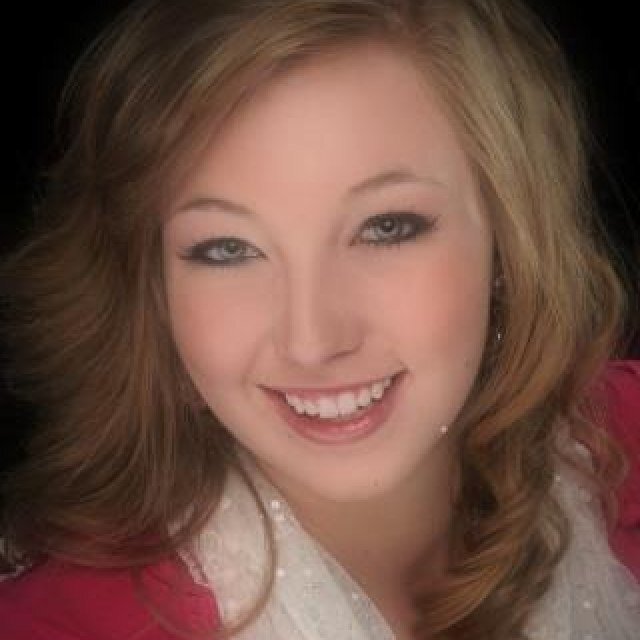 MY BLOG:
I never realized just how many aspects of a person’s life could be affected by having a disability. This course really helped me to think about how difficult it must be and how strong people with disabilities have to be to get through things that are so simple for me.
During interviews and class speakers saw so many examples of people I want to be like. For example, Carol MacNicholl who doesn’t let being dead slow her down. I realized how little help they receive from outside sources. I couldn’t believe some of the things that happen to them, like Jeremy Chatelain being ignored by a bus driver, and the way they are treated just because they have a disability.
I think it is impossible to know the extent of difficulty unless you are also living with a disability. However, through this class I learned to be more compassionate and understanding of people who are disabled. Most of the people I spoke with said they just want equality. This is something that really made me admire them for not wanting special treatment.
I came into this class thinking that I wanted to be a news anchor for a big station in a big city. Well, that isn’t really the case anymore. As much as I understand the need for written journalism, I don’t enjoy writing it. I like performing and talking but I don’t like interviewing, writing, and editing. If someone could write the stories for me and I could just talk about them, this might still be the career path I would choose.
I realize that this is wishful thinking, though. If you want a career in journalism, you have to be the whole package, writing, interviewing, reporting, and editing. That is not what I want to spend my whole life doing. When Kathy Thomson, of the Los Angeles Times, came to speak with us, my whole career plan kind of changed. I loved that she worked so closely with news but didn’t necessarily have to write stories. She worked almost more in a public relations capacity for the Times. If I could have her job at a big television news station, I think I would be very happy.
This course made me realize just how difficult it is to be a journalist. People don’t always give you what you want in interviews. Editors criticize papers that you think turned out really well all the time. Deadlines are difficult to make and add a lot of stress into your life. AP style isn’t just common sense; you have to use the stylebook. I know now that I can’t spend my life working under deadlines and being critiqued. I am glad I enrolled in this course and realized this before I got too far into a journalism major and had to live with that career.
ABOUT ME:
I am currently a junior at the University of Utah studying strategic communication. I expect to graduate in the Spring of 2015. I would like to either be an event and wedding planner or handle public relations for a large company such as Disney. In 2013 I participated in the Disney College Program in Orlando, Florida. In 2014 I will serve as the Vice President of Chapter Relations and Standards for the Beta Nu chapter of Alpha Chi Omega.
Filed under: Blogs & Bios, Student-Journalists | Leave a comment »
MY STORIES:
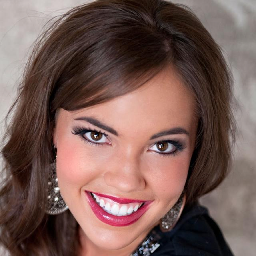 MY BLOG:
As a person who lives with a disability myself, I immediately connected with this beat. People with disabilities are so inspirational and fascinating to me and I could not think of a more appropriate topic to write about. I was nervous at first because I am so passionate about music and about disabilities in general I felt like I might not be able to be objective in my reporting. However, that was the best part of the learning experience altogether. I purposely chose stories that I knew I would struggle with, profiles that would prove to be difficult to cover and asked all of the hard questions.
Anyone who knows me knows that I am extremely extroverted and I have no boundaries. In this process I have learned that those traits I possess have actually helped me get that great quote that makes the story or get that interview that no one could get. I am extremely blunt and I want to know the harsh truth in every situation. This is one of the reasons as to why I want to pursue journalism. I have such a passion for people and as I went about interviewing and creating my stories this semester I found that I couldn’t get enough information, I couldn’t interview enough people and I believe those different aspects are what make a good journalist.
Although I have passion for journalism, passion isn’t enough to make me successful. I learned that I have the discipline, drive and social skills to create an amazing piece but I lack in the writing process area. I have had to rewrite several drafts because my organization didn’t flow and because I lack major writing skills that are necessary in news reporting. I also had a really hard time separating myself from my stories. I had a hard time not putting myself into the story. However, I also realized that there is a balance between remaining unbiased and someone with a disability reporting on the disabled community.
Once I realized this, I knew the task at hand. I was the voice of the people and an outlet for them to get their stories heard. This was such an amazing experience for me with each of the stories I wrote because I had to decide if I was going to share my situation with the people, person, or organization my story was about or if I was going to remain faceless.
I really cherish my experience with Voices of Utah because it taught me so many skills that I need in order to be a fantastic journalist. One word that comes to mind in regards to my experience this semester is passion. I learned how much passion I had for writing, the passion I possessed for the beat and the passion I have for life in general. Looking back on the stories I covered and the people I interviewed I know that my perspective on life has been changed by those people and their stories and for that, I will be forever grateful.
ABOUT ME:
Music is the universal language of life. As I have studied music and communication here at the University of Utah I have learned that I have a driving passion for both subjects. Originally a Violin Performance major, I was diagnosed with carpal tunnel syndrome and had to forfeit my scholarship. As a freshman from the rural area of St. George, Utah, I had to ask myself what the next chapter of my academic and professional career would be.
One of the reasons why I am so drawn to music is because it is a way for me to communicate my feelings toward others without having to use words. I think this is an amazing tool and as I lost my ability to play I found myself in a trance not knowing how to convey my feelings. Anytime I felt an emotion whether it is happy, mad, sad, lonely I just shut down rather than sharing my feelings. I realized that I was not happy with my lack of communication and decided that I was going to spend my time working on becoming a more confident and vibrant communicator.
In order to achieve this goal I participated in various events and became a member of almost every club on campus. For example, I attended UC Berkeley’s journalism conference where I had to constantly speak in front of people and this is where I learned that I wanted to be on camera. I participated in many pageants and was crowned Miss Saint George where I endorsed several sponsors and gave many speeches for the mayor, the city and my attendants. I also became a radio host here at the University of Utah. This was one of the first steps I took. I felt like if I didn’t have to show my face I wouldn’t get so embarrassed about speaking in front of other people and I would be able to be more myself and convey my feelings. This was such a great tool for me.
Upon this transformation I fell in love with the journalism program here at the U. My favorite class up until this semester was my public speaking class. If someone came to me two years ago and told me that was going to happen I would have told them to get out of town! Nowadays you can’t keep me off the camera. I guest host on Newsbreak, model swimsuits on KSL, radio host on K-UTE and practice my poise as Miss Davis County 1st Attendant.
I am so grateful for the many opportunities my education has given me and the opportunities I have had to transform myself into a confident outward person. Instead of being invisible I am often the center of attention and I would be lying if I said I didn’t love it.
I graduate with a Bachelor of Science in Communication and a minor in Violin Performance in Spring 2014 and I cannot wait to see what the future has in store.
Filed under: Blogs & Bios, Student-Journalists | Leave a comment »
MY STORIES:
MY BLOG:
This course was very valuable toward my career in journalism. From the assignments I have three published stories. This will enhance my portfolio. Our beat reporting taught me to keep my judgments detached. I allowed my opinion to influence a story and this mistake taught me a great deal.
The mistake came when I let a person I’d interviewed persuade my view in regard to a policy of a certain company. The policy was presented to me as being unfair. Upon hearing this I agreed and with this view in mind my first draft of the article clearly pointed to the unfairness. I turned in my first draft and my professor pointed out it might not be as unfair as I’d thought. I did more research and found this policy was enacted throughout every state in the country. I changed my attitude and corrected my story. I understand better the importance of not allowing people I interview to influence my judgments until I’ve looked into the facts. This was a worthwhile lesson. I’m grateful for the experience and for the person I interviewed.
From the beginning of this course to its completion I’ve seen my writing skills improve. For example, I’ve learned to tighten my sentences. They were too wordy prior to this course. This was one of the first of my mistakes our professor pointed out to me. It took time and practice to overcome. By my third story I had improved considerably. I neutralized this flaw from working on other of our assignments. We were given several articles throughout the course to read and reflect on. Three in particular we critically analyzed and gave feedback to the class. Having been made aware of my error these reading assignments helped me realize the tight sentences of other journalists. I incorporated the ones I felt could improve my skills.
In addition to writing we discussed other platforms of storytelling. Short videos and slideshows help impact a reader’s experience. We were given the challenge to make a slideshow for our final story. Learning to use the applications to create them adds versatility to my journalism skills. A slideshow or video gives readers a more in-depth experience and understanding. This additional learning gives me more resources to draw from in order to gain an audience.
Moreover, our course required that we involve ourselves in the community. I conversed with company directors, citizens, college students and my family members about people with disabilities. I gained a connection with individuals I’d not met before. I felt an emotional attachment which compelled me to write in the best manner possible so the public could better understand the issues I covered. I feel the overall experience this course gave me has strengthened my desire to become a journalist. I believe this attribute is essential to journalism.
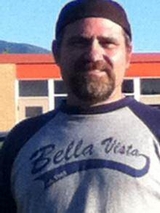
“Make things as simple as possible but no simpler.”
-Albert Einstein
ABOUT ME:
I was born and raised in Salt Lake City, Utah. I served a two-year mission in Tokyo, Japan, from 1984 to 1986 for the Church of Jesus Christ of Latter-day Saints. I also lived in Hawaii on the island of Oahu for two years, from 1987 to 1988. While attending BYU-Hawaii, I worked at the Polynesian Cultural Center as a Japanese-speaking tour guide. Later, I was promoted to assist the president of Japanese Sales & Marketing for the Center. I still speak Japanese well. I’m currently attending the University of Utah part-time as a senior majoring in communication with a minor in Japanese. I hope to begin working as a journalist after graduation. I’ve been married for 20 years with three children: Hannah, Frank and Mary. I landscape for a living on my own while attending school.
I enjoy music, mostly older stuff like Eric Clapton, Led Zeppelin, The Who, Rolling Stones, Jimi Hendrix, Pink Floyd and Cat Stevens. But, I very much enjoy contemporary stuff because of my kids. Movies I like are “Goodfellas,” “Scarface,” “Raging Bull,” “Taxi Driver,” “Harold and Maude,” “Sling Blade,” “A Storm in the Summer,” “Dumb & Dumber,” “Young Frankenstein,” “Bridesmaids” and many others. Two of my favorite books are The Grand Inquisitor by Fyodor Dostoyevsky and The Stranger by Albert Camus.
I have recently started using Twitter and WordPress because of a course assignment. My goal is to build an audience to my work in journalism.
Filed under: Blogs & Bios, Student-Journalists | Leave a comment »
MY STORIES:
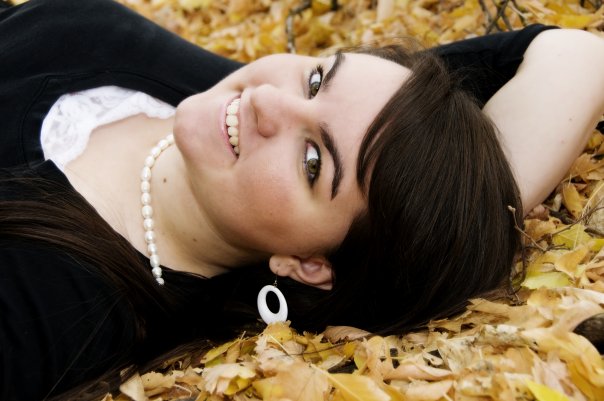
MY BLOG:
Writing for this class wasn’t easy, but I did learn a lot, not only about news writing and how to more accurately reflect my voice and write better, but also about the people with disabilities and their struggles in our community.
Having been born and raised here in Utah you get used to seeing the same things every day, being around the same people and having a good clean atmosphere. I have grown up around people with disabilities my whole life and knew of their struggles, but never had a connection with them and what they go through every day. Now that I have done stories and have gotten to know the disabled community better I see them differently, but in a good way.
When I interviewed Kirsten it hit home more for me.
I grew up with Kirsten but I never really understood her feelings and story, and being able to share that with others was very rewarding.
Writing about her life that I had some part of hit me.
I could have been more understanding and have been a better friend and could have positive part of her life if I didn’t just stand on the sidelines. I’m thankful that I was able to talk with her and better connect.
Because of this experience when I do see someone with disabilities I try to recognize if they need help, or if they even need a friend.
I learned that every one has a story, and everyone is affected with some sort of disability even if it isn’t physical. Having talked to Jeni Sewell Roper who said, “all of us have ‘stuff’ mine is just easier to see,” put my view on people in a whole new way.
We all have some sort of “disability” whether it be insecurities or attitude, but we shouldn’t let that stop us from reaching our full potential, and seeing examples of that with people with disabilities has really motivated me to not let my “disabilities” get in the way.
ABOUT ME:
I am currently attending the University of Utah as a communication student in the track of journalism. My goal is to become a sideline reporter for the NBA or NHL. I enjoy writing and talking to people, getting to know their life and what their goals are.
I was born and raised in Salt Lake City, UT surrounded by friends and family. I got into sports at an early age playing soccer and tennis. Then I also took a few years of figure skating and still enjoy hitting the ice. In later years I found my love for basketball and became part of my high school team.
Besides sports I love the arts. Having been involved in my high school theater department and music department I was able to land the lead twice in my high school musicals. My freshman, Sophomore and junior year I made it to state theater competition, and I was chosen to represent Highland High as Sterling Scholar in Speech and Drama. Musically I am naturally gifted and sing very well, even without having had voice lessons. I have played the piano since the age of four and I taught myself the guitar. I plan to minor at the University of Utah in either music or theater so I can continue to build on that talent.
My writing developed at a young age, I was able to read by the time I turned four. Writing came easy to me, especially fictional stories that I still love to write on my free time. My love for news came when I was in junior high during the Bush VS Kerry elections, when I realized what the news can do and how it affects people. I always hope to do the right thing and stand up for what I believe is morally right. I believe in sticking to your roots and never letting truth be shoved aside. My loyalty to friends and co-workers is looked upon and I’m able to maintain that loyalty by attending work on time, and putting friends and family first when they need me.
Filed under: Blogs & Bios, Student-Journalists | Leave a comment »
 MY STORIES:
MY BLOG:
The time I have spent at the University of Utah has allowed me to gather vital knowledge concerning various topics. I have studied instances within different governments that have shaped the world’s political landscape, and have learned about the noticeable disparities associated with race, class and gender.
However, after writing three stories for Voices of Utah, I have learned about an overlooked sector within our society. This sector is people with disabilities, which is also the beat our class covered for Fall 2013.
For my first story, I wanted to learn about the different types of organizations that are available for people with disabilities in Salt Lake City and in Utah. In regards to many nonprofit organizations in Utah that help Utahns with disabilities, I found that there were a lot of financial areas that were in need of improvement. Also, as I have mentioned in my first story, there are many Utahns with disabilities who are entitled to financial assistance and are not receiving any. Consequently, as I began to explore areas that hinder individuals’ capacity to live independent lives. I found that there were employment barriers and legal hurdles that have interfered with the goals of these citizens. This compelled me to write my second and third story concerning these two issues.
Unlike other social issues that I have explored, it seems that a majority of the issues associated with people with disabilities do not result from prejudices within society, but from financial allotments that do not sufficiently cover basic needs that many of us take for granted. Therefore, I have learned that the media have not focused enough attention on issues that pertain to individuals with disabilities. Although it is important for more attention to be focused on people with disabilities, I have learned that individual contributions are just as vital.
Many Utahns with disabilities who have not yet contributed to society are not often searching for handouts. And after speaking with TURN Community Services, I found that a multitude of volunteers are not contributing in a way that makes people with disabilities feel inconsequential, but in a way that helps them live as independently as possible.
After speaking with organizations that help many people with disabilities, like TURN Community Services, I can see that individual efforts collectively limit the amount of noticeable disparities within this demographic. Therefore, I think volunteering and playing a positive role within the community is the first step in limiting social issues, so I will be looking for opportunities that will allow me to volunteer in the future.
In terms of my career, I am currently interested in attending law school. Even though negative connotations exist regarding the role of a lawyer, I would like to study the law to develop positive change for wherever I may reside. And I believe studying and writing about imbalances within our communities, which I have done in this beat, is an important starting point.
ABOUT ME:
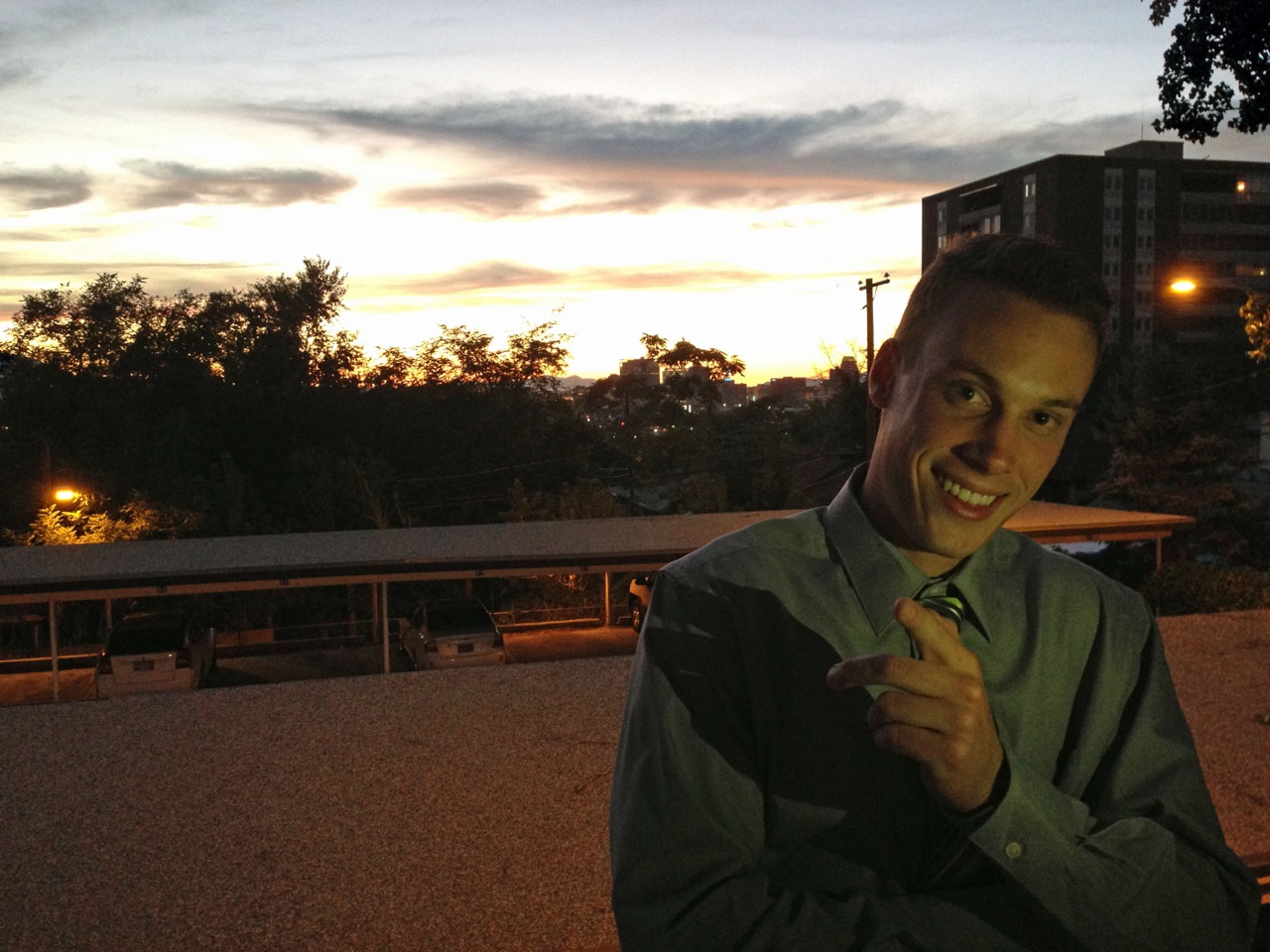
I am a 22-year-old student at the University of Utah. I am studying both Political Science with an emphasis in international studies and Communication with an emphasis in journalism.
During spring 2014, I will be interning for Senator Harry Reid in Washington, D.C., which is something that I am very excited to complete. I believe covering stories for Voices of Utah has helped me prepare for the upcoming experience.
I have enjoyed the time I have spent at the University and covering people with disabilities for Voices of Utah. I look forward to the remaining time I have at the U and for whatever the future may hold for me.
Filed under: Blogs & Bios, Student-Journalists | Leave a comment »
MY STORIES:
MY BLOG: Having the opportunity to cover people with disabilities this semester has been eye opening and humbling.
I interviewed several individuals and there was a consistent pattern of positivity and making the best of their situation.
There is an old quote that said, “you make plans, and then life happens”. I find this profound because I believe we can get too caught up in the future and making plans that we don’t live in the now and enjoy every second we have.
I will never forget when Carly Fahey said “I see the cerebral palsy as one of the brighter and more fun things about myself. There’s never a dull moment and I keep a really humorous outlook on things.”
This proves that we can either dwell on the struggles or bask in the strength it can bring.
Meeting Jeremy Chatelain and hearing his story is something I will never forget. He truly overcame adversity and has accomplished so many things in his life, including fatherhood and working on his Ph.D.
I never would have learned about the in depth struggles faced by people with disabilities, marriage being one the biggest if not given this opportunity.
I also learned the importance of “good work” and revising, revising, revising. Your first draft will never be perfect but with patience and practice you can learn what to look for and recognize your flaws.
Although I won’t be looking for a career in reporting, I think this class helped to prepare me for a career position in the non-profit sector. I will continue to use my personal journal as an outlet for my creative writing and push myself up the excellence ladder.
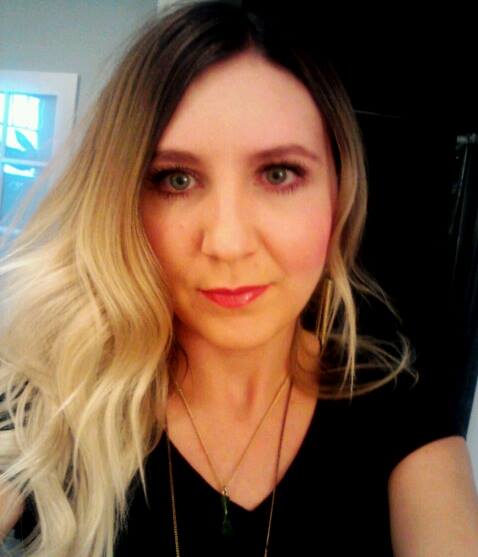
ABOUT ME: Education and a college degree is something neither of my parents, nor siblings have had the opportunity to obtain, so for me this has been a key piece in furthering myself. I crave knowledge and thrive on the opportunity to expand past my current boundaries.
Last fall I decided to quit my job and go to school full-time in order to obtain my goals of a college degree, sooner rather than later. I enrolled in 20 credit hours and enjoyed every second of it. With this leap of faith I will be able to graduate in Spring 2014 with a degree in Mass Communication.
My ultimate goal is to apply my talents gained from a well-grounded background of education and experience, in a career position in the nonprofit sector. I want to make a difference and help build the community.
This class has helped prepare me for my future career by juggling multiple deadlines and learning the art of “good work.” Most importantly I have learned the value in revision and editing my writing to provide the most complete and accurate work possible.
I will continue to “Move up the excellence ladder,” in the words of Professor Mangun.
Filed under: Blogs & Bios, Student-Journalists | Leave a comment »
 MY STORIES:
MY BLOG:
What did you learn about yourself?
What I had believed to be unyielding confidence and security in myself quickly vanished when I did my first interview with Chris Burningham at the Center for Disability Services.
I realized that although I may be comfortable talking with people in general, when it comes to interviewing, I have had very little experience. I realized I’m used to talking, and a whole lot of talking at that. Interviewing requires a lot of listening, which is a quality I didn’t realize I lacked.
This class has opened my eyes toward making a change in how I communicate. Not just in speaking, but in making an effort to become a better listener.
How did your reporting increase your understanding of this community?
My enterprise story was the biggest realization I had towards Salt Lake and how citizens who use wheelchairs get around. Para Quad is just down the street from my parents’ business, where I have spent all of my life. Although I was aware of doing business with them, I had never visited the shop or knew what it really did. To see it make a real difference regarding wheelchair mobility is eye-opening and made me realize this city has a lot to offer the varied communities that live here.
What did you learn from your beat?
People with disabilities are very under-represented. Many places help to support them but when it comes to media representation, there is hardly any. I think getting into mainstream TV and movies would help younger kids who have disabilities feel less ostracized.
ABOUT ME:
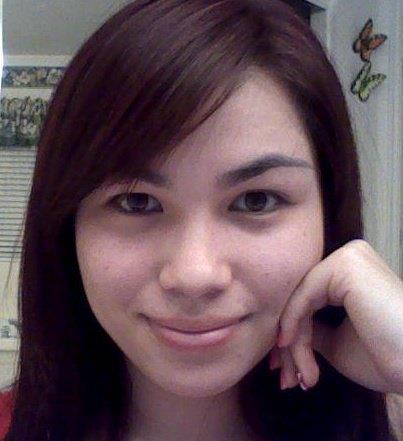
I was exposed to the professional world at a very young age. As a child, I played at my father’s business, climbing on rolls of cushion foam or letting my imagination run wild while sitting in bus seats that waited to be installed.
As a teen, I was taught some of the many trades my dad used every day to fuel his business toward success. I learned to cut leather and vinyl behind the scenes and to smile and greet customers at the front. The world got smaller as my understanding of business grew and as an adult, the work I did started to make a bigger difference.
I developed skills gained from my education and technological generation to expand our humble New Image Vans. From written invoices and casual walk-in customers, I helped maintain an expansion toward professional clientele within the car dealership and trucking industry.
I grew up watching the very best man do the very best work in the van conversion business. It was the experience gained there and studying Communication at the University of Utah that taught me to harness clarity, honesty and confidence to guide my professional self-presentation.
My personal code of ethics is always to be as transparent as possible. Be honest and open professionally and never forget the success of a business relies on the hearts and minds of the people behind the scenes.
My goal is to use my strengths in communication and understanding to serve and make a difference while staying true to my ethics and opinions.
Filed under: Blogs & Bios, Student-Journalists | Leave a comment »
Story by TREVOR RAPP
President Barrack Obama stood before the nation on Feb. 12, 2013, in his State of the Union address and showed just how much African-Americans can achieve, not necessarily by what he said, but just by being the one who said it.
While debate surrounded what he said, the fact that an African-American was standing in the office as president of the United States of America for a second term was indisputable.
His words also seemed to be directed at others who may struggle to find success because they are classified by others as a minority.
“It is — it is our unfinished task to restore the basic bargain that built this country,” Obama said, “the idea that if you work hard and meet your responsibilities, you can get ahead, no matter where you come from, no matter what you look like or who you love.”
So what does an African-American university student need to do to find success? For Ennis Henderson, a senior at the University of Utah studying business, one of the most important steps is to take control of the process himself instead of giving that control to others.
“I was brought up in the South by a family of strong and proud men and women,” Henderson said. “They raised me to be a capable, responsible and dignified man. It isn’t up to whites, blacks, Hispanics, Asians or anyone else to ‘Let Me’ enjoy anything, much less my own success. I won’t allow a person to position themselves in my life in such a way that they have that kind of power over me.”
A strong sense of self-sufficiency may be one of the reasons Henderson is experiencing success in a campus whose student demographics is only 1 percent African-American.
Defining African-Americans’ struggle for success based not upon outside limiting factors imposed upon them, but rather internal characteristics that have led to success is happening far too little, wrote Professor Shaun R. Harper, director of the Center for the Study of Race and Equity in Education at the University of Pennsylvania.
In “Black Male Student Success in Higher Education: a report from the National Black Male College Achievement Study,” Harper wrote, “For nearly a decade, I have argued that those who are interested in Black male student success have much to learn from Black men who have actually been successful. To increase their educational attainment, the popular one-sided emphasis on failure and low performing Black male undergraduates must be counterbalanced with insights gathered from those who somehow manage to navigate their way to and through higher education, despite all that is stacked against them — low teacher expectations, insufficient academic preparation for college-level work, racist and culturally unresponsive campus environments, and the debilitating consequences of severe underrepresentation, to name a few.”
The study deliberately quickly passes over “anti-deficit research,” such as the fact that in 2002 black males only represented 4.3 percent of students enrolled in higher education, a statistic that hasn’t changed since 1976. Those omissions are not because they are not important. Harper just wants to focus on what’s going right instead. This includes the stories and statistical analysis of more than 200 young, successful black males who were able to find success through the following factors:
Harper wrote there are likely many African-Americans on college campuses who “completely contradict popular narratives of Black male hopelessness. They are somehow debunking longstanding caricatures of Black undergraduate men as lazy, unmotivated, under prepared for college, intellectually incompetent, and disengaged. Find them. Ask them how they got there.”
For Henderson, a student at the U who has achieved success in multiple areas, the success has come from himself. Whether it was from retiring from the United States Marine Corps as an “E-6 Gunnery Sergeant, with an impeccable record, numerous awards, accolades and abilities,” to helping his two daughters graduate from college with graduate and post-graduate degrees.
“I look at these clowns [who try to suppress African Americans] and laugh.” Henderson said. “Therefore — ‘No!’ No one has the power to allow or deny me the opportunity to enjoy my success, unless I’m foolish enough to give it to them. That won’t happen.”
Filed under: African American, Education | Leave a comment »
Story and slideshow by ALEXA WELLS
Visit Kenya with three women who volunteered for CHOICE Humanitarian.
CHOICE Humanitarian, The Center for Humanitarian Outreach and Inter-Cultural Exchange, is an organization that helps the countries of Kenya, Nepal, Bolivia, Guatemala and Mexico. According to the website, the goal is to “end extreme poverty and improve quality of life through a bottom-up, self developing village-centered approach.”
CHOICE Humanitarian was founded in 1982 by Dr. Tom Evans and Dr. James Mayfield. It is a registered nonprofit organization and takes pride in making every dollar count with solid management and low administrative costs. The headquarters are located in Salt Lake City.
CHOICE expeditions are open to the general public and all ages and different backgrounds. Each village has different projects depending on their unique needs. There are many different tasks that volunteers may end up working on such as: classroom construction, community water systems, bio-gas digesters, health clinics, personal hygiene workshops, pit latrines, micro-enterprise training and other village needs.
CHOICE Humanitarian focuses efforts on two of Africa’s highly impoverished areas, the Kwale and Kinango districts located in the Coast Province of Kenya and East Africa. According to worldhunger.org, in the Kwale area, 32 percent of the population has been reported to be classified as “food insecure” while 40 percent of the population is in absolute poverty. This district results in one of the highest infant mortality rates in the country.
According to the International Fund for Agricultural Development, about 79 percent of Kenya’s populations lives in rural areas and relies on agriculture for most of their income. Nearly half of the country’s 40 million people are poor, or unable to meet their daily nutritional requirements. In some places the conditions have improved since the early 80s, but the poverty rate has remained the same at 48 percent. Kenya has one of the world’s fastest population growth rates and in the last 30 years the population has more that tripled. This population growth causes the country to not have enough resources, resulting in extreme poverty.
Lisa Crossley lives in Layton, Utah, and has participated in the Kenya expedition for the last three years with her neighbors, Tasia and Kimberly Jensen. Crossley and the mother-daughter team first participated in the program in summer 2009, where they helped to build a school. In summer 2010, they returned to the same village and helped to teach the children in the school. And the following summer, after saving money from the previous year, they helped improve the water catchment systems in Kenya for two weeks.
“My whole outlook on life has changed since I started volunteering in this organization,” Crossley said. “You don’t realize how good your life is until you go somewhere like Kenya. The children of the school eat a cup of grains for lunch and are lucky to have a place to sleep at night. They are so grateful for the volunteers and the help that they bring to the village. I highly encourage anyone to come and experience this, because it is life changing to be able to make a difference.”
People who volunteer for these expeditions gain hands-on experience while working on the village projects that they are assigned. According to the CHOICE Humanitarian website, “They can learn how to combat poverty with new strategies, such as important hydro-electric installations now in the planning stages. With CHOICE Humanitiarian imput, these and other humanitarian organization projects will result in better economic conditions for tens of thousands of villagers.”
Tasia Jensen said, “I highly recommend for everyone to go on a humanitarian trip sometime in their life. It really makes you appreciate what you have, and you learn so much about the African culture. I spent most of my time hanging out with the children. I did art projects with them and helped teach some of them how to read and write. One of the art projects that was created by the students of Kwa Mulungu Primary School was auctioned off by CHOICE Humanitarian, and the proceeds were to benefit the villages in poverty around the world. They were so happy that I was there to help them, I loved seeing their smiling faces.”
All of the expeditions with CHOICE Humanitarian run one week long. Those who are interested in applying need to book their expedition three to six months in advance due to medical testing and travel assignments. Those who don’t have the time or money to go on expeditions with CHOICE Humanitarian also have the option to donate money to the foundation, get involved in Women’s Equity programs, volunteer at CHOICE headquarters, or create a fundraiser. For example, people can donate money to purchase school desks for the schools in these countries that need them.
“The best part of the expedition was the first day that we got there,” Kimberly Jensen said. “The villagers had a welcome celebration in our honor, and we danced around and sang to their music. It was an amazing experience. They were all so happy to have us there, it really touched my heart.”
Details about expedition costs and country-specific needs can be found on the CHOICE Humanitarian website. The price of the expeditions range from $1,995 to $2,195 per person, not including airfare. The fees include village lodging, food, ground transportation, project costs and materials, and two nights in a hotel. While working within these communities, volunteers are treated as a welcomed guest as they help with their daily life schedules.
“I would help them with their water supply and carry the water in giant buckets on my head. It was so heavy and the temperature there was so hot, I thought I was going to pass out. Then I thought, wow … this is what they do every single day, when all we have to do is turn on the water faucet,” Tasia Jensen said.
While the expeditions are only one week long, most volunteers stay extra days and book other adventures and things to do before or after. Things like sightseeing trips, safaris and hikes are all common outside of the CHOICE Humanitarian program.
“The first year that we went to Kenya we booked a week long African safari after our humanitarian excursion. I am so glad that we did that, it was a great experience to see all of the wild zebras, lions, cheetahs, elephants and so many more amazing animals,” Lisa Crossley said.
CHOICE Humanitarian continues to lift the spirits of thousands of villagers within the five countries where volunteers work. In Kenya, the major tool to fight against poverty is education.
“I will continue to volunteer for this organization because it has changed my life,” Kimberly Jensen said. “I do not regret a minute of my time I spent helping the villagers and children in Kenya. I will make sure that my kids get to experience what I have experienced, and I hope that more people will become involved in humanitarian projects.”
Filed under: African American, Nonprofits, Organizations, Profiles, Travel | Leave a comment »
 Oxford English Dictionary: Word of the Day
 voices-of-utah.com