Breaking down a “foundation of racism” through film

Story by ZOE GOTTLIEB

In Oconee, Georgia, an old family farm is suspended in time. A ground mist blankets the fertile land. There is a graveyard here — a place where the commands of Confederate ghost soldiers are said to be volleyed across the green plain, beyond broken fence posts and aging headstones.

In Loki Mulholland’s approximations, a woman was supposed to be buried here. Her name was Aunt Mary, a name with placeholder-like quality: on the plantation, she was simply “Aunty,” on a deed, she was just a blotch of ink.

Aunt Mary, according to his family’s oral history, was one of a hundred slaves who once walked the plantation grounds.

But the number wasn’t close to 100. In fact, it was only six, and after the Civil War ended, five of them departed the plantation for good. All left, all but Aunt Mary.

Mulholland, gripped by his trepidation, returned to the grounds once owned by his fourth grandfather, Dudley Jones Chandler, hoping to find a trace of Aunt Mary.

“I knew in my heart that we weren’t going to find her,” Mulholland said in a phone interview. Scouring his family’s burial site, he turned up nothing. Her memory in death, much like her autonomy in life, had been cast into the void — that is, until Mulholland made it his mission to revive it.

“The Uncomfortable Truth,” a documentary film directed by Mulholland, remains relevant since its production in 2017 and is especially poignant now, given the widespread protests over the death of George Floyd which shaped our national discourse in Summer 2020. In his film, which has since received numerous accolades, Mulholland takes ownership of his distant relatives’ checkered pasts, reconciles them with that of his civil rights-activist mother, Joan Trumpauer Mulholland, and seeks to root out a “foundation of racism” through cinematic storytelling.

“The Uncomfortable Truth” was released four years after Mulholland’s debut film, titled “An Ordinary Hero: The True Story of Joan Trumpauer Mulholland,” which highlights the accomplishments of his mother, a white woman who wielded her privilege to champion the rights of Black Americans.

Perhaps the biggest kicker of all, Mulholland said, was that after the film’s screening at the University of Mississippi, “college kids came up to us and said, ‘We haven’t learned any of this.’”

Sensing a gap in desperate need of filling, Mulholland went on to create the Joan Trumpauer Foundation, an organization dedicated to teaching students about the blemishes of our past, as well as triumphs through civil rights-activism.

“I don’t have to sit at the lunch counters ‘cause my mom already did — right? But I have to do what I can do … because doing nothing is not an option,” Mulholland said.

Now the recipient of an Emmy, Mulholland continues to educate young people through speaking tours about the Civil Rights Movement, our nation’s foundation of racism, and the importance of using privilege for good. Mulholland’s latest film projects are available to view on his website.

As more Black voices emerge in film, our “foundation of racism” appears to be breaking down. In 2021, Sundance reported that 57% of its directors were either Black, indigenous, or people of color.

The Black Association of Documentary Filmmakers West, a Los Angeles-based Black documentary film group, strives to continue this mission of increasing Black participation in the industry.

BADWest, through its film sharing and free screenings, allows people of color to distribute their work and receive feedback, with a mission of “advocat[ing] the recognition and advancement of Black documentary filmmakers.”

“The last four years have been an eye-opener to see where we are in this country,” Joyce Guy, a member and acting treasurer of BADWest, said in a phone interview.

Calling cinema the “foundation of this country going back to ‘Birth of a Nation,’” Guy said she believes that film has the potential to break down sociopolitical barriers and allow Black filmmakers to “chip away [at] untruths about who we are.”

Some of Guy’s work includes “Dancing Like Home,” a documentary she directed on the subject of tribal dance rituals in Casamance, Senegal, and appearances in many popular TV series such as “West Wing,” “Criminal Minds,” “Brooklyn 99,” “Bones,” and the critically acclaimed film “Moneyball.”

Despite her level of professional achievements, Guy said that Black actors, directors, and producers continue to face hurdles in the industry. “We’re still breaking ground to be just called a filmmaker — we haven’t passed that threshold yet.”

The organization will hold its 11th annual Day of Black Docs in May 2021. The event, held virtually this year, celebrates some of the year’s best Black documentary films.

Salt Lake City also has its share of Black production companies, including Inglewood Films founded by director and producer JD Allen.
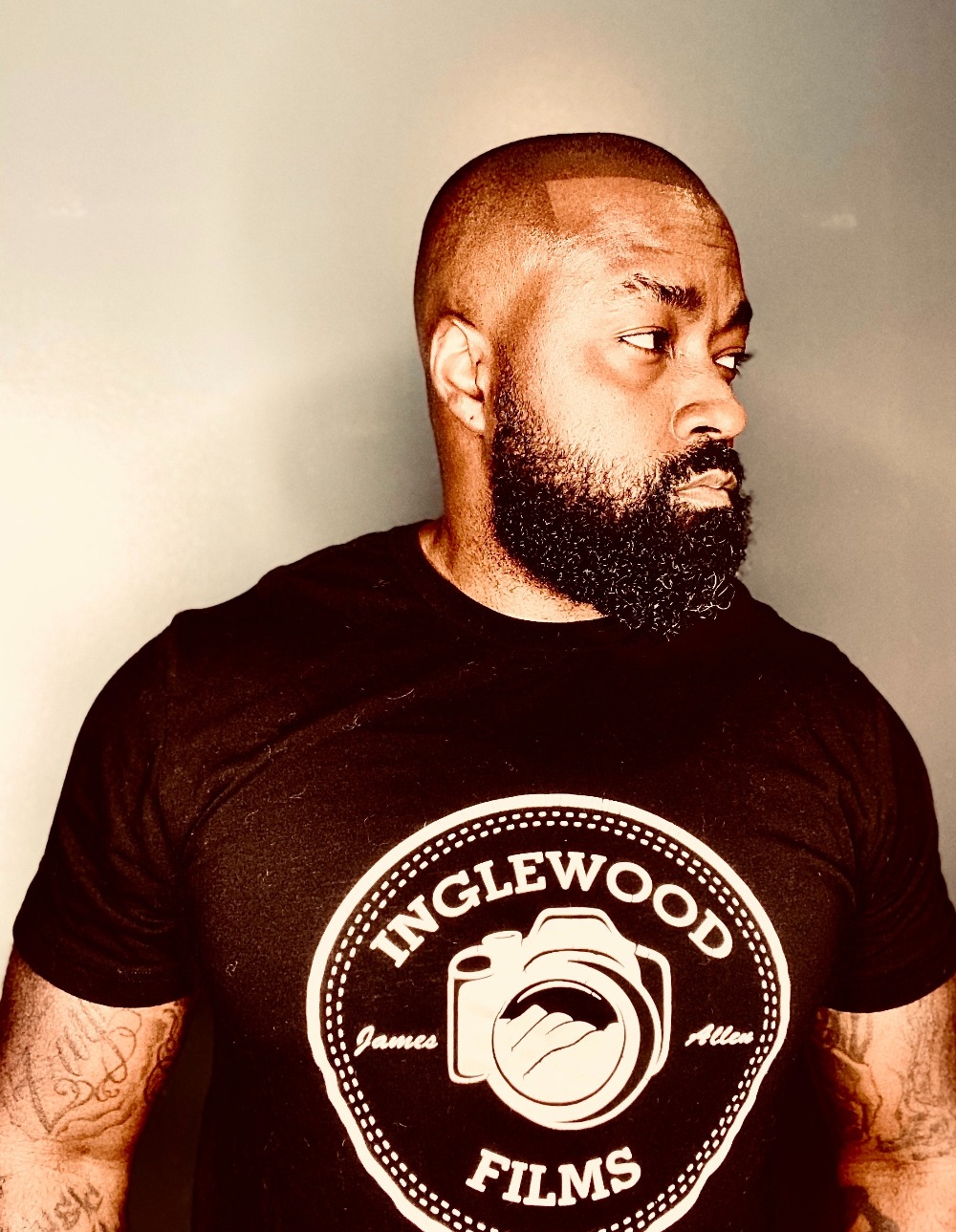
Damarr Jones is an actor featured in several of JD Allen’s films, including “The Shoebox” and “Fear Level.” Photo Courtesy of Damarr Jones.

Damarr Jones is a friend of Allen’s and an actor affiliated with Inglewood Films. Jones, a self-described “military man,” hailing from Riverside, California, was in the midst of a search for professional gigs when he first became acquainted with Allen.

The men, having grown up in different parts of California, bonded right away, and Jones went on to participate in many of Allen’s films, including “Fear Level” and “The Shoebox.”

“Fear Level” follows the lives of six as they descend into their darkest depths, or “levels” of terror. “The Shoebox,” a film based on the real-life events of veteran Micah Reel, centers on four soldiers faced with the reality of PTSD before war.

Film has always been an important part of Jones’ life, but the death of George Floyd in 2020 changed his outlook on the industry.

“As tragic as George Floyd’s [death] was, one thing it did was open a lot of people’s eyes,” Jones said in a Zoom interview.

After Floyd’s death, Jones discovered a trend which he hopes will stick: more people, especially those of the younger generation, taking to video-sharing sites like TikTok, giving Black voices an unprecedented level of influence.

“I just hope the momentum can stay going, because when you got stuff that’s kinda trendy, it tends to fade out,” Jones said.

Jones, Guy, and Mulholland are all storytellers whose lives have been irrevocably shaped by their perception of racism in this country. They are storytellers who strive each day to use their narratives for good, to break down those racial barriers which will help America grapple with its racist past.

Back in Oconee, Georgia, Mulholland found himself wanting to retrace the paths walked by his activist mother. He might not have realized it at the time, but the act itself — an act of total, willful remembrance — encapsulates the meaning of “The Uncomfortable Truth.”

“I’m walking,” he said, “trying to figure out where this path was, and it turned out that I had been walking on it the entire time.”


The Salt Lake Commission on Racial Equity in Policing outlines its latest diversity initiative

Story by ZOE GOTTLIEB

On March 2, 2021, the Salt Lake Commission on Racial Equity in Policing issued its recommendations for the city council in tackling prevalent racial disparities within the Salt Lake City Police Department.

In a memo submitted to the Salt Lake City Council, the commission proposed that the SLCPD hire more diverse officers specifically for its Field-Training Officer Program.

According to the commission, having a diverse program is essential because it sends a powerful, “unconscious message” to officer cadets that people of color are “important in the fabric of SLCPD.”

As it stands, six of 67 FTOs, or roughly 9%, identify as people of color, according to Fox 13 data.

Utah’s law enforcement body in general consists of very few Black officers. Of all the self-reported officers in Utah, the number of Black officers is around .5%, or 25 in 5,000.

Those numbers are likely to be even lower after five police officers, including two officers of color, reportedly left the SLCPD due to increased circumstantial stress, as reported by the Deseret News.

Darlene McDonald, a commission member, says part of the challenge of recruiting Black officers comes down to two things. The first is getting out-of-state recruits over the culture shock of relocating to a place with a large, predominantly white Church of Jesus Christ of Latter-day Saints population.

Darlene McDonald is a member of the Salt Lake Commission on Racial Equity in Policing. Photo courtesy of Darlene McDonald.

“A lot of people of color really struggle living here,” McDonald said, “because of that lack of diversity.”

The other reason McDonald cites for the lack of diversity in the police department is the tendency of officers to racially profile and arrest Black community members for what are considered lesser offenses, a phenomenon called overpolicing.

“Taking into account that many men of color especially are targeted and overpoliced and end up with criminal backgrounds because of that overpolicing, those are some of the things that disincentivize people of color from becoming law enforcement,” McDonald said in a Zoom interview.

McDonald said she believes that the hurdle of attracting people of color to the law enforcement profession can be overcome if departments are willing to introduce some kind of incentive, such as relocation packages or signing bonuses.

Fred Louis is a former sergeant and one of the few retired Black officers within the SLCPD. Louis dedicated 28 years of his life to law enforcement and even worked for a time as a lead trainer in the police academy. Since 2010 he has been running his own judo business, the Zenbei Martial Arts Academy.

Like McDonald, Louis is aware of Utah’s more homogenous culture and how it can affect diversity hiring initiatives. “We got so many cultures, for example like in New Orleans we can pull from — but here, it’s kind of tough,” he said, reflecting on the cultural differences between where he grew up and Salt Lake City.

Louis also said the SLCPD would benefit from drawing community policing concepts into its day-to-day practices.

Community policing, as defined by the DOJ’s Office of Community Oriented Policing Services, “support[s] the systematic use of partnerships and problem-solving techniques to proactively address the immediate conditions that give rise to public safety issues.”

What does community policing mean to Louis, one of the few retired Black officers in the state of Utah? “[It means] you just have to get out there and have police officers become part of the community fabric — not just get in their cars and go from call to call without ever making contact with people in the neighborhood,” Louis said in a phone interview.

The Ogden City Police Department serves as perhaps one of the best examples of community police work. The department has divided its city into eight districts, with each of the eight Community Police officers belonging to their own district, according to its website. The police force also consists of 230 employees, including a homeless advocate and a victims’ advocate, according to Diana Lopez, community outreach coordinator of the department.

Lopez said that in her experience with the position, it is essential to have a listening ear within the department “whether there is an outcome or not.” For her, this means getting to know the neighborhood, and having someone on hand to “hear [citizens’] concerns.”

While input from and police exchanges among community members is beneficial to citizen-police relations, the officers themselves can also receive intrinsic rewards from it.

Fred Louis’ podcast Judo Ya-Ya. Having opened up his own judo practice in 2010, Louis’ podcast is all about sharing the lessons of judo among youth. Courtesy of Fred Louis.

Louis said, reflecting on his time spent as a community resource officer at Highland High School, “I get a lot of gratification out of it, right? I mean a person, they grow up, they’re doing good in life — that makes me feel good.” In all 28 years, Louis recalls this as being the proudest accomplishment of his career.

Since retiring, Louis has spent his time re-engaging with the community in new and equally important ways: teaching young kids the art of judo. In Louis’ perspective, judo and police work are intertwined.

Concepts from judo came into play in his lessons at the academy, where he learned about a practice of something called verbal judo.

“We were taught in the class OK, go up to the person and try to lower their anxiety level,” Louis said of everyday practices police officers are expected to employ, using the classic traffic stop as an example. “Verbal judo is all about letting people have their dignity and respect.”

Steven L. Johnson, CEO of Luke, Johnson & Lewis and Utah Black Chamber Chair, speaks about activism for Utah’s Black community

Story by SUNWHEE MIKE PARK

Steven L. Johnson watched in awe, as the legendary California Congresswoman Maxine Waters commanded the attention of a crowd in Utah’s prestigious Alta Club – an institution that formerly did not allow memberships to women or Black people. He could not believe that he was seated at her table, much less that they had just discussed the growth of Utah’s Black economy together. A surreal sense of pride washed over Johnson in that moment, as it dawned on him that in this room, he stood among Congresswoman Waters’ ranks as a revered and respected activist.

But it would take nearly a decade of devotion to Utah’s Black community before such a moment could arrive.

In 2000, Johnson packed up everything he owned and moved to Utah from Denver, Colorado. A freshly divorced ex-sister-in-law who needed help getting settled was reason enough for him to make the arduous 500-mile move. This decision was the first of countless others in Johnson’s new life in Utah in which he would move mountains to help those he cared for.

Throughout his first year in the Beehive State, Johnson became increasingly aware of the stark contrast between his native Denver and Salt Lake City. Chiefly, he noticed that the Black community in Utah was not only small (comprising roughly 0.7% of the entire state’s population then), but seemed also to be stalling and struggling.

Steven L. Johnson is chair of the Utah Black Chamber, and CEO of Luke, Johnson & Lewis. He is a devoted activist who has served UT’s Black community for almost a decade. Photo courtesy of Steven L. Johnson.

At this time, Johnson was used to the thriving Black community in Denver, which he recalled was akin to those of Black meccas like Atlanta or Detroit. In Denver, Johnson reminisced, Black-owned businesses had longevity and were often core components of the city’s booming economy. In Salt Lake City, however, he had trouble finding Black businesses that branched out from the archetypal barbeques or barbershops.

After a decade of wondering who and where the state’s Black professionals were, Johnson finally found himself at the Utah Black Chamber’s annual community barbeque hosted in Sugarhouse Park.

At long last, there they were. Utah’s Black business owners, professionals and community leaders. Observing Utah’s Black community at large for the first time, Johnson finally felt at home in a land that had only been unfamiliar to him until then. “I met more Black people at that event than I had seen in the [years] that I had been here,” says Johnson over the phone in a surprisingly youthful voice. “It was really eye-opening. It made me feel comfortable.”

There he met James Jackson III, founder of the Utah Black Chamber, known then as African Americans Advancing in Commerce, Communication, Education and Leadership (ACCEL). The fateful meeting, spurred on by Johnson’s wife (then-girlfriend), sparked the flame that produced two of Utah’s most revered Black leaders today. “When I met James, it was like a new beginning,” Johnson says, “[like] I might have the chance to help make a difference or a change here in Utah.”

Inspired by Jackson’s passion and devotion to the growth of Utah’s Black community, Johnson found himself increasingly involved in activism as well. But his methods transcended attending community events or facilitating networking between Black Utahns.

In 2011, Paul Law Office – where Johnson worked as a collections manager – shut down indefinitely. Johnson, however, did not lament his new unemployment. Using his final paycheck, Johnson jumped headfirst into entrepreneurship. He founded Luke, Johnson & Lewis (with partner Preston Lewis), a debt arbitration business that specializes in third-party recovery and collecting receivables.

For Johnson, this new venture was more than a simple means to earn profit. As one of the state’s handful of Black CEOs, he wanted his business to serve as a “beta test” for other pioneering Black businesses in Utah. By watching and learning from Luke, Johnson & Lewis, he hoped, future generations of Black-owned Utah businesses would thrive like those he remembered from his years in Denver.

Meanwhile, James Jackson had plans of his own for Johnson. Seven years into the growth of the Utah Black Chamber, Jackson was eager to increase its influence on a statewide level. In order to achieve such a feat, he required the strategic expertise and interpersonal skills of a seasoned legal professional. He brought Johnson on as the Black Chamber’s board chair in 2015, and later made him the chair of its membership committee as well. “Based on [his] leadership, experience, and desires … I felt [these positions] fit him the best to help grow the [Black] Chamber,” Jackson says in an email.

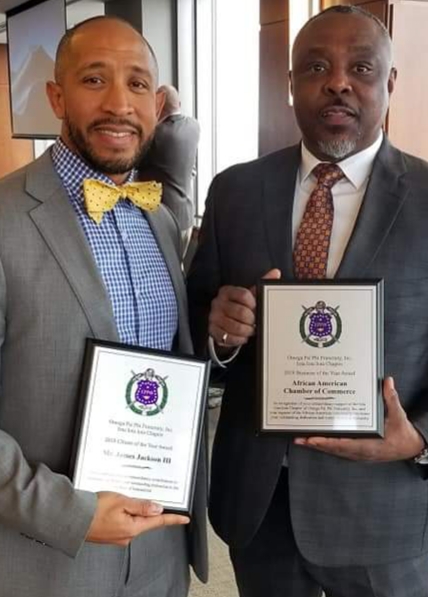
James Jackson III (left) and Steven L. Johnson receive awards from the Omega Psi Phi Fraternity Inc. for their work in the Utah Black Chamber in 2018. Photo courtesy of Steven L. Johnson.

Nicknamed the Black Chamber’s “Swiss Army knife,” Johnson took on a range of responsibilities – from strategizing the expansion of the Black Chamber’s membership, making connections with sponsors and spotlighting member businesses on a monthly basis, to furthering plans to establish the long-awaited Black Success Center.

Johnson, in addition to running his own business, was now leading the state’s largest Black-based organization. Yet his activism was still only in its fledgling stage.

Johnson explains that his personal philosophy forbids him from feeling as though he has ever done enough. “If you feel satisfied, you’ve closed the book. The chapter’s over,” he says. That’s why, in 2017, Johnson began a partnership with state lobbyist Craig Hulinsky to start the Good Deed Law Project.

Johnson explains that the Good Deed Law Project was founded with the goal of helping people in debt find alternative ways to pay off or reduce their overdue payments. Acting as the project’s Debt Initiative director, Johnson discovered methods to persuade businesses to write off debts as charitable donations, while allowing debtors to work off their sum in community service or work hours.

So far, Johnson’s debt arbitration model at the Good Deed Law Project has resolved $385,000 of debt while producing 10,000 community work hours. Johnson explains excitedly that his model has put over 500 debtors back on track to financial stability.

“He sets an example … in the Black community. His lifestyle is to be copied,” writes Rev. France A. Davis in an email interview. Davis, pastor emeritus of the Calvary Baptist Church, is another one of Utah’s highly revered Black leaders and an individual that Johnson considers his personal mentor. As part of the latest addition to Johnson’s activism, he and the reverend have recently become members of the Racial Equity in Policing Commission for Salt Lake City. There, the pair are able to review and make recommendations to the city’s police department about its policies, specifically regarding racial biases.

Twenty-one years ago, Johnson arrived in Utah without a job, without a home, with only the feeling that he was needed, that he could help. Now, as one of the state’s most active and respected Black leaders, his foundational drive to help those in need remains the same. Despite his many titles and roles – CEO, board chair, director, commissioner – Johnson’s activism is only just beginning.

“Utah’s Black community is growing … and I want to be there to witness [its] development,” Johnson says humbly about the very community that could not exist today were it not for his tireless efforts.

Black-owned businesses’ positive contributions elevate Utah’s Black community

Story by SUNWHEE MIKE PARK

Salt Lake City’s NAACP Chapter vice president Shawn Newell joined an asynchronous interview with student journalists at the University of Utah in early February. There, he said that one of the biggest issues that any Black community in America faces is its misrepresentation in mainstream media. “[They] wait until there’s a murder or … a gang fight … before [they] go into these communities, and then [they] want to engage people,” he said.

For the most part, his words ring true for the Black community in Utah as well. An internet search of the words “Utah Black” or “Utah African American” brings up stories about Black culture’s rejection in Utah, or how difficult it is to be Black in such an overwhelmingly white state.

What these stories fail to show is that Utah’s Black community is actually full of supportive, successful and ambitious individuals who are devoted to its growth and development. Despite their sheer lack of coverage from mainstream news outlets, the state’s myriad professionals, business owners and community leaders contribute daily to the continued success of Black Utahns.

To observe the effects of their positive influences in the state’s Black community firsthand, Voices of Utah spoke with three of Salt Lake City’s Black leaders as they explained the ways they make a difference in their community, and why the work they do matters.

Makaya Caters

Chef Roody Salvator moved to Utah in 2008 from Florida, hoping to find a corporate job. The last thing on his mind then was to become a professional chef. However, on casual weekend gatherings with friends, he was drawn instinctively to the kitchen. He recreated dishes from his native Haiti that he remembered from his childhood – flavors that his American friends had never tasted before.

Saying that his food was, “too good not to share,” Salvator’s friends urged him for years to consider cooking professionally. Even though he had been training for an office job for nearly a decade, Salvator finally decided to take a leap of faith and open Makaya Caters in 2017, with the humble goal of bringing a taste of Haiti to Salt Lake City. Renting out a kitchen space on 300 W. Paxton Ave., Salvator started taking appointments to cater weddings, parties and corporate meetings.

Makaya quickly rose to fame in the Salt Lake City community. Along with his business’s success, Salvator soon amassed a social media following of 10,000 people and boasted exclusively five-star rated reviews. Despite his rapid success, however, Salvator did not lose sight of his foundational ideology in cooking. 

Chef Roody Salvator is the founder and owner of Makaya Caters. Makaya is the official catering service of Black Lives Matter Utah, and is well known for its food donations across the city. Photo courtesy of Makaya Caters.

“I came from a place where I knew what hunger feels like … [and] to not know where your next meal’s going to come from,” says Salvator about his upbringing in Haiti over a phone interview. “If someone is hungry … and I have the means to feed them, I will do that.”

Turning to the community that embraced him, Salvator began making food donations with any surplus ingredients he had. He delivered meals free of charge to the Salt Lake Regional Medical Center, and to the Black Lives Matter Utah summer camps – the latter of which saw Makaya becoming BLM Utah’s official catering service.

When the pandemic arrived in 2020, however, Salvator was met with unprecedented challenges. He lost almost all of his catering clients who held in-person events, and was forced to switch his business model to a more affordable food trailer operation. He reluctantly set up a GoFundMe page, asking now for the help of the very community which he fondly cared for in the past.

Even so, Salvator’s commitment to the Salt Lake City community remained unhindered. Working odd hours out of a food trailer that is too small to be considered a kitchen space but too big to parallel park, Salvator still managed to cook and donate 50 meals to the city’s homeless population in November 2020.

Salvator says that his dream for Makaya Caters now is to establish a physical store location in the near future – to continue his work both in the kitchen and in the community. Two-thirds of his desired $10,000 goal has been reached on his GoFundMe page, which aims to keep Makaya in business in order to continue its important mission.

A ‘La Mode

In 2014, sisters Jasmine and Angelique Gordon founded an online shopping service with a mission to empower women of all shapes, sizes and social backgrounds. Their business, A ‘La Mode, caters to specific fashion needs on a budget.

Angelique (left) and Jasmine Gordon are founders and owners of A ‘La Mode. The sisters help their Salt Lake City clients network through their business, and donate frequently to various charities. Photo courtesy of A ‘La Mode.

The sisters’ successful business model – which promotes women of color who have realistic body types, and uses an accessible custom-styling system on their website – has garnered high praise from their clients over the past seven years. In fact, the sisters’ massive success inspired them in 2018 to open an offline boutique on 265 E. 900 South in downtown Salt Lake City.

That’s when they began to feel that they could branch out of their client base to serve a wider community. “When we moved to Salt Lake after [being] online for a couple of years … our No. 1 focus was being more engaged in our city,” says co-founder and owner Jasmine Gordon in a phone interview about her and her sister’s decision to contribute to their newfound community.

The sisters began by partnering with other small businesses in the area (Utah Key Real EstateImage Studios and Olympus Health & Performance, to name a few) to host monthly networking events for their clients. Soon enough, they found themselves donating to notable charities like YWCA Utah, as well as to the Rose Park Elementary School and the city’s growing homeless population. The two were even on the board to plan a women’s music festival before the pandemic began.

Despite these numerous contributions to their community, the sisters were not exempt from the challenges of being Black entrepreneurs in Utah. Jasmine Gordon recalls that at first, she was fearful that A ‘La Mode’s use of Black models in their advertisements and on their website would be considered “too Black” for Utah’s majority white audience. The phrase, she says, is one that has been used to devalue the success of Black Utahns for generations.

That’s why Gordon says that her goal now is to keep on succeeding as a Black entrepreneur in order to serve as a positive example of Black leadership to the youth. “Seeing Black adults in day-to-day leadership roles … as teachers, as coaches, as local business owners … is something that sticks in their minds,” she says.

Utah Black Chamber

James Jackson III is regarded as one of the most ambitious and devoted leaders in Utah’s Black community today. Working as the supplier diversity program manager at the Zions Bancorporation and as the principal consultant at J3 Motivation (a company he owns and runs), Jackson is also the founder and executive director of the Utah Black Chamber.

But 12 years ago, Jackson was just a young section manager at Morgan Stanley who noticed that Utah’s Black population greatly lacked a sense of community. Even though Black Utahns made up only 0.9% of the entire state’s population, Jackson realized, they rarely had opportunities to connect with one another.

That’s why, in 2009, Jackson took it upon himself to create an organization that could lay the foundations for a tightly knit Black community in Utah. He named his new project ACCEL — short for African Americans Advancing in Commerce, Communication, Education and Leadership (which he now admits was a horrendously long name) – and began efforts to facilitate networking between the state’s Black professionals.

Jackson fondly recalls one First Friday event which he absent-mindedly planned for a July 6. While he worried that the event would be overshadowed by Independence Day festivities, over 60 people showed up keen to connect with fellow Black professionals. On that day, Jackson realized that his ambitious project had turned into a true catalyst for the creation of a thriving Black community in Utah.

Since starting ACCEL, Jackson has worked tirelessly for over a decade to grow his organization (now called the Utah Black Chamber after two name changes) to what he calls an “enterprise.” With nearly 300 members, two separate chapters across the state, and plans to create a Black Success Center to offer training to Black professionals, the Utah Black Chamber has grown into the state’s most formidable Black-run organization.

Transcending the realm of networking, the Utah Black Chamber now focuses on providing financial training to Black business owners, championing Black leaders for local government positions, and even plans to open a transitional housing complex for struggling homeowners. Its goal now, says Jackson in a Zoom interview, is to elevate Utah’s Black community to a level that will garner national renown and respect.

“It’s exhausting but we know that this is the role that we play,” Jackson reflects, “to be the voice for those that just don’t have one.”

Black Faculty and Staff Awards honored University of Utah employees for social justice

Story by EMALI MACKINNON 

It was a celebration of excellence, creativity and dedication. It also was a moment to acknowledge ingenuity and perseverance. 

The second annual Black Faculty and Staff Awards honored University of Utah employees for sustained work on- and off-campus in areas including social justice. 

The event, held over Zoom on Feb. 26, 2021, was hosted by the U’s Black Cultural Center. “Tonight, we will showcase, award and promote examples of excellence,” said Director Meligha Garfield. Organizers’ goal “was to bring awareness of Black faculty and staff at the university whose teachings, research, support and innovations may go unnoticed here at the university,” he said, “especially where Black faculty in higher ed across the nation is well below average — at just a little under 5% — and the retention of Black staff at predominantly white institutions are declining year after year.”

Nona Richardson won the James McCune Smith Award of Veneration, which recognizes individuals who are “awe-inspired by dignity, wisdom, dedication, and excellence” at the U. 

Nona Richardson has worked in athletics administration for more than 30 years. Photo courtesy of Nona Richardson.

Smith was an American physician, apothecary, abolitionist, and author, who led by example.  

Richardson is an executive senior associate athletics director who oversees all student-athlete support services at the University of Utah. She plays a key role in the Ute Academy and with the student-athlete U.T.A.H. Group, United Together Against Hate.

“The transformation of the U.T.A.H. Group has been very uplifting and inspiring,” Richardson said in an email interview. “The diversity within the group, the allies, the leadership, everyone is dialed in and moving along the same path. With the foundation that has been set, we hope to grow it over the years to come.” 

She provides knowledge and leadership through academic services, strength and conditioning, sports medicine, sports nutrition, psychology and wellness, sports science, student-athlete well-being, as well as her sport programs, groups and committees.

Richardson will continue to work for our student-athletes and staff, to create the best possible environment to achieve success. 

“Unless you are in the field of play, your success is not measured by the number of awards you win, but by the number of individuals you have impacted along the way,” she said. 

Similarly, another winner of a staff award was Asma Hassan. She is a program manager at the Bennion Center who leads the Utah Reads program.

Asma Hassan has a M.Ed. in Special Education and a B.S. in Psychology from the University of Utah. Photo courtesy of Asma Hassan.

Hassan was awarded the Malcolm X Award for Social Justice, which recognizes individuals who have fought for justice in terms of distribution of equal access, opportunities, and privileges within our campus and greater community. 

Malcolm X was an African American Muslim minister and human rights activist who was a popular figure during the civil rights movement.

Hassan works with Title 1 schools in the Salt Lake City area where she provides resources and supplies for each student’s needs.

“Every year I’m working on making it better, better for tutors, better for the community and the students that we work with,” she said. 

Community engagement work and working with students individually is what Hassan is most passionate about. Being able to work closely with each student and understand their needs is what the Bennion Center is known for.

“I’m passionate about community engagement and will continue to live through my actions,” Hassan said in a Zoom interview. She will continue to always be aware of the community and contribute positive initiatives to it. “However small or large, I hope I can leave something that others can benefit from.” 

Lastly, Valerie Flattes, who is an assistant professor and nurse practitioner for the U, won the Madam C.J. Walker Resource Award. That prize is for individuals who have strengthened the community-engaged learning experiences and opportunities tied to civic engagement and fostered stronger partnerships between local and community at the University of Utah. 

Valerie Flattes has been a faculty member at the University of Utah College of Nursing since 2001. Photo courtesy of Valerie Flattes.

Walker was an entrepreneur, philanthropist and political/social-activist. She was a self-made millionaire after she created African American hair care products.

Valerie Flattes is dedicated to her work and her students. She considered herself a mentor and cheerleader for her students. She said in a Zoom interview, “It’s so important to get to know the community you are in because they are the people we are going to be asking to participate in your research. It’s a two-way street, you want them to do something for you but you also need to do something for them.” 

She started volunteer work at a young age. She quickly realized that she loved to be involved in  the community. It and community-based research is what inspires her most.

After receiving this award, Flattes told the audience, “I am very appreciative of receiving the award and looking forward to even spending more time especially at the BCC (Black Cultural Center) and being a mentor and a cheerleader again for students. I love it and I love teaching,” 

The Black Faculty and Staff Awards bring awareness to the Black Cultural Center, established in 2019, as well as entities including the Black Faculty and Staff Association, Utah Museum of Fine Arts, and the Division of Equity, and Diversity Inclusion. 

Meligha Garfield closed the awards ceremony by acknowledging all the people who helped put on the program, including the Black Faculty and Staff Association

Teacher Recruitment Scholarship: A program to combat Utah’s shortage of diverse teachers

Story by TESS ROUNDY

Sixteen years ago, a group of professors visited a student-wide assembly at Highland High School. Watching the audience, they admired the diverse group of students.

But the professors couldn’t ignore one section. A group of white individuals stood in contrast to the rest of the audience — the faculty.

This assembly put the professors face-to-face with the reality that ethnically diverse students in Utah are not represented by their educators. They knew something needed to be done to increase diverse representation in Utah K-12 schools.

This is where Dale Smith enters the picture. Smith is the associate dean of education, family, human studies, and social work at Salt Lake Community College. The professors agreed that SLCC would be the best place to start a program bringing diverse students to Utah’s teaching force. It’s Utah’s most diverse college, and as Smith explained in a Zoom interview, it’s less intimidating than the University of Utah high on a hill in Salt Lake City’s east side.

The Teacher Recruitment Scholarship for Diverse Students is a full-ride scholarship designed to bring ethnically diverse educators to Utah schools.

School districts in the Wasatch Front, SLCC and the U work in tandem to fund these future educators’ schooling. School districts identify those eligible for the scholarship, then these students spend two years at SLCC and the remaining two at the U. Working together, these institutions cover tuition and fees for a four-year education.

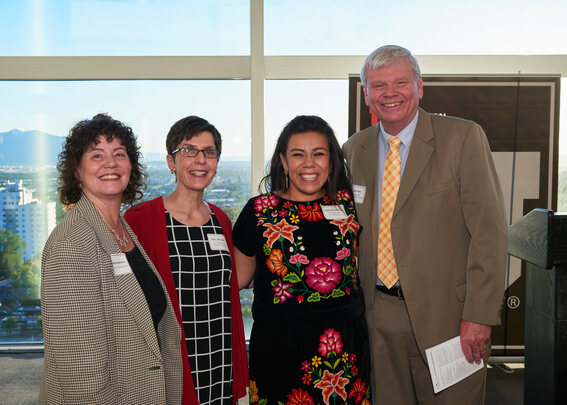
Pictured from left to right: Michelle Bachman, a West High School teacher, who helped start the program; Mary Burbank, the U’s program affiliate; Melissa Gutierrez, one of the first scholarship recipients to graduate from SLCC and the University of Utah; and Dale Smith. Photo courtesy of Dale Smith.

The Scholarship doesn’t only support students monetarily, but it also offers a support system of peers, professors and advisors who want to help recipients thrive.

And the program is doing well. Its graduation rate at SLCC is nearly 60% — over double that of the college’s graduation rate as a whole.

In fact, the program is doing so well that SLCC’s provost asked Smith to write a proposal to the state legislature that mimicked the scholarship plan. But instead of recruiting diverse teachers, it was meant to combat Utah’s teacher shortage in general. This is how the Teacher Education Initiative came about.

Smith said, “If you’re at Salt Lake Community College and going into education, we can usually help you out in some way.”

But the Teacher Recruitment Scholarship hasn’t always been a success.

“The first year was a disaster,” Smith said.

Many of the minority students who were eligible for the scholarship were getting recruited to four-year universities offering financial assistance. They didn’t see the benefit of attending a community college when they could go straight to a university.

School districts identifying students for the scholarship who weren’t ready for college courses was another early problem. Smith said this meant scholarship money was paying for low-level classes, and it took multiple semesters until some of these students could take education focused courses.

It wasn’t all disastrous at first though. From the beginning, Smith knew a support system was key to success in college, especially for diverse students. So, from the outset the program required a one-credit class that meets weekly. Its purpose is to check in with students to see how they’re doing academically. It also checks with students’ progress making friends.

Scholarship recipients graduating from SLCC in 2013. Photo courtesy of Dale Smith.

Mekenna Thomas, a scholarship recipient in her last semester at SLCC, said meeting other students is her favorite part of the program.

In a Zoom interview, Thomas said she’s never had a class that’s “all minorities.” Having this social network of future educators has been nice.

Thomas, who is Black, was adopted soon after she was born and grew up in Cottonwood Heights, Utah. As a child she loved elementary school. But, she said, she never had a teacher who was a person of color.

After elementary school, Thomas said, school wasn’t as great. In middle school kids called her “smackie blackie.” In high school, bullies called her the N-word. She thinks if she had a teacher of color, she would have felt safe and comfortable sharing these experiences with an adult.

This is one reason she wants to teach elementary school in Utah. Thomas didn’t have a Black role model in school, so she knows it will benefit her future students of color. “I think it’ll be great for them to see someone who is like them in a teaching position,” Thomas said.

Chantelle Zamora, a Latina scholarship recipient, is in her last semester at the U. Now, she’s student-teaching Spanish at her alma mater, West High School. After graduating this semester she’ll continue teaching Spanish with an English as a Second Language endorsement.

Chantelle Zamora has always wanted to work in education. Photo courtesy of Chantelle Zamora.

She always knew she wanted to be in education, but when she was younger, she dreamed of being a librarian.

In middle school she expressed this desire to a teacher, and, in front of the class, he laughed and told her she’d “end up like every other Latina,” pregnant and unwed at 15.

This humiliating experience didn’t deter Zamora. “I actually feel like it motivated me more,” she said. After this event, she wanted to prove that she would not fall into that stereotype, that she would “make it happen.”

While her lifelong dream was to become a librarian, she decided she wanted more access to students. This led her to teaching. Now, with teaching experience under her belt, she can’t imagine bringing a student down or making them feel like they can’t accomplish their dreams.

When Zamora was offered the Teacher Recruitment Scholarship, it wasn’t an obvious choice. She wanted to start at the U because she was afraid that by going to SLCC she’d be “cutting [her]self short.”

Now, less than a month from graduating, she’s happy with her decision. In fact, she said if it weren’t for the program, she doesn’t know if she’d have been able to finish college at all.

Associate Dean Smith said he knows some students may be hesitant to start their undergraduate studies at a community college. But he recommends SLCC. Between the scholarship and supportive faculty, students will get a personalized education that will begin preparing them to become teachers and mentors.

Why Black representation in elementary schools is necessary for Utah students’ success

Story by TESS ROUNDY

Black representation in elementary schools affects test scores, suspension rates and, more saliently, changes the lives of Black students. However, Utah teachers do not reflect the diversity of the state’s students.

About a quarter of Utah elementary students are minorities, but white individuals account for almost all of Utah educators. Almost 1% of Utah students are Black, but still, Black representation is indispensable for not only Utah’s Black children, but for all students.

Mary Burbank is the director of the University of Utah’s Urban Institute for Teacher Education. This program prepares future educators to teach in diverse classrooms and to serve all students well. Burbank said in a Zoom interview that although the African American community in Utah is not as big as the Latino community, teachers need to know Black history in the U.S. and how that history manifests today.

“Clearly, African American voices need to be heard and present in conversations and in the population of teachers,” Burbank said.

When Black children have at least one Black teacher in elementary school, there is improvement in their school performance. But it has other extensive benefits too.

A 2017 study found that African American students who had a same-race teacher between third and fifth grade performed better on standardized testing and were less likely to drop out of high school. Additionally, these students were more likely to pursue college. These are achievements that directly impact employment rates, civic engagement, health and crime, all of which affect quality of life. 

It’s worth noting that positive impacts of Black teachers compared to their white colleagues isn’t inherently attributed to a similarity in culture, race or ethnicity. A large aspect is the expectation Black teachers hold for their Black students that white teachers do not.

Teachers who set high standards for their students, see students perform better. Unfortunately, this study found, white teachers are less likely to expect their Black students to perform well. This can, in turn, become a self-fulfilling prophesy.

Portrait of Danielle Newell. Courtesy of Danielle Newell.

This isn’t to say ethnicity and culture have nothing to do with the discrepancy. When children have teachers who look like them, or have similar backgrounds and culture, these teachers can act as role models and offer a concrete example of goals students can achieve. With low rates of Black teachers, some students may never have this exemplar. 

Black students at Dilworth Elementary School in Salt Lake City may reap the benefits of having a same-race teacher, though. Danielle Newell teaches sixth grade here. She said in a Zoom interview, that of course Black teachers are important for young Black children, but added, “It’s also important for white kids to have someone that doesn’t look like them as a leader too.”

Newell believes that an increase in diverse teachers helps all children by breaking stereotypes, and she’s not alone in this belief.

Gloria Ladson-Billings, a renowned African American teacher-educator, wrote, “There is something that may be even more important than Black students having Black teachers and that is white students having Black teachers! It is important for white students to encounter Black people who are knowledgeable. … What opportunities do white students have to see and experience Black competence?”

While Black educators are paramount to the success of Black students and benefit all students, white teachers aren’t bootless. Culturally responsive white teachers can positively impact their Black students, break down stereotypes and properly educate all students too.

Culturally responsive teaching takes into account the different cultures and backgrounds of every student. Not only does this teaching style consider these things, but culturally responsive teaching also recognizes that these differences have a positive impact in the classroom.

This means teachers address their own biases, get to know their students’ families, learn and teach about their own culture, incorporate books and media that reflect the cultures in their classroom and convey high expectations of all their students.

Jenny Harper is a white student in the U’s Urban Institute for Teacher Education program. She student-teaches fourth grade at Stansbury Elementary School in West Valley City. Here, most students come from low-income families and the population is quite diverse. UITE has given Harper the tools for culturally responsive teaching in her classroom. 

Here are some books Harper keeps in her classroom. They show a diverse variety of stories, authors and illustrators. Photo courtesy of Jenny Harper.

She implements lessons that tell history from a variety of perspectives and reads books with characters from many races and cultures. Even still, she said she sometimes feels anxious about approaching certain topics. Harper said in a Zoom interview that it can be difficult to teach about Black history, especially about the horrible ways Black people were treated in this country, and the ways they’re treated today. As a teacher to so many students of color, however, she’s willing to tolerate the discomfort.

The more she’s talked about Black history and racism in the United States, Harper has realized that her students are eager to learn. She says her students hear stories of racism outside of the classroom and are aware of current events. They don’t just want to hear about what is happening in their communities, they want to learn and talk about it too. 

Burbank, the director of UITE, said, “All voices in our classrooms need to be present in curriculum and conversations. The contributions and the assets of any group of people who are a part of our fabric as a nation need to be present.”

Stigma of mental health creates challenges for Black community

Story by HARRISON FAUTH

Racism entails seeing people as the problem, not the practices that have created the circumstance. Facing racism, discrimination, and fear as a result of being Black in America can impact an individual’s mental health. Add the stigma surrounding mental health in the Black community and it becomes more difficult to seek help. 

According to the Health and Human Services Office of Minority Health, Black adults are more likely than white adults to report persistent symptoms of emotional distress, sadness and hopelessness. Those living below the poverty line are twice as likely to have psychological distress due to financial insecurity. 

The Black community also views mental health differently. One study by the National Alliance of Mental Illness reports that 63% of Black people feel it is a personal weakness and feel shame to admit they have a mental health issue. They feel additional discrimination may come from members of their own community. 

“There is absolutely a stigma surrounding mental health in the Black community,” said Kelli Washington, a licensed clinical therapist. In an email interview she said, “This stigma hinders people from access to resources.” She discussed that changing the narrative needs to happen. Black communities need to see that struggling with mental health is not a weakness. 

Washington lives in Los Angeles, but treats patients in Utah and California. She sees a need in both places and values the opportunity to support those who otherwise may not feel supported. “I’m passionate about breaking the stigma surrounding mental health and there are not a ton of Black therapists, especially in Utah, and I think that is partly attributed to the stigma surrounding mental health and lack of diversity in Utah as a whole.”

Melanie Davis, a licensed therapist and owner of Empath Healing and Wellness in Salt Lake City, is working to help change the narrative around mental health. She is also one of the founders of Black Clinicians, which was created to serve the mental health needs not being addressed in the Black community. Its purpose is to help bring Black providers to the Black community. “I see it as critical that people of color have access to therapists of color,” Davis said in an email interview.

The Black Clinicians group addresses the feelings of pain, fear, and trauma felt by those who have been victims of racism. Events on television such as the May 2020 murder of George Floyd  and Black Lives Matter protests have only made better access to mental health therapy more important.  The Black Clinicians group provides a safe space to address mental health issues and they can provide “a mirrored space to clients of color,” Davis said. 

Members of the Black community often reach out to spiritual leaders rather than licensed therapists. Washington and Davis said they believe there is value in partnering with Black church leaders. Trusted church leaders who encourage the use of licensed mental health providers could go a long way in reducing the stigma of mental health. Providing support and decreasing the feeling of isolation can change the narrative around mental health.

Today the need for mental health therapy is on the rise. Being Black and finding a Black therapist who understands your cultural experience is a challenge. According to the U.S. Census Bureau, in 2020 race diversity was 59.7% white and 13.4% Black. In Utah the diversity is far less with 77.8% of the population white, and only 1.5% Black.

Compare the 2020 census on population diversity to the number of licensed Black therapists in America and diversity decreases. According to the American Psychological Association, 83.6% of licensed therapists are white and only 5.3% are Black. These numbers highlight the underrepresentation of professional  Black therapists in America. The limited number of Black therapists creates limited access to a trained professional who shares one’s cultural experience.   

Cost of therapy is another obstacle. The APA reports that only 11.5% of Black adults have health insurance, and mental health therapy is expensive.

Dr. Dio Turner II said in an email interview, “While cost is an issue it is more complicated, cost is a massive issue that is much deeper than therapy. There are too many people who must decide between food, housing, tuition, and their health. People are committing suicide and dying because they can’t afford psychotherapy.” He added, “I’m not sure what the precise solution is but it needs to be addressed immediately.”

Washington, the Los Angeles-based therapist, said she believes mental health is a community problem. Mental health therapy should be accessible through schools, workplaces, and community programs. Lowering cost is not the only solution and insurance companies bear some of the responsibility to make it more accessible. 

Davis, a founder of Black Clinicians, has created an innovative way of addressing the cost obstacle. Davis has offered counseling scholarships in her private practice Empath Healing and Wellness since it was founded. She has several families who have utilized this service. Black community members who know these options are available are more likely to reach out for mental health treatment. 

There are many issues facing the mental health of the Black community with no easy solution. Having conversations, breaking down barriers is happening slowly. The bigger issue may be what is at the core of the problem. As Dr. Dio Turner II said, the biggest health issue facing Black communities is “the insidious way that racism affects mental and physical health.”

Caribbean Nightingale: Utah’s first poetry salon connecting the community through the arts

Story by KENZIE WALDON

Poetry is a language that speaks to all different kinds of souls, connecting those who are in tune with the rhythm. A space to express this creative outlet can expand one’s own view to the variety of cultures that surround them in a community. 

Caribbean Nightingale is one such place. This Provo-based poetry café and boutique creates a space for artistic diversity in Utah. Michaëlle Martial, a Haitian-born poet and the creative force behind Caribbean Nightingale, is breaking barriers by spotlighting the mixture of talent that Utah has to offer. 

“Nightingale is a bird I always liked to read about as a teen, you know, from poetry,” Martial said during a Zoom interview. “Then I found out several years ago that the Nightingale was the only bird that sang both day and night.” 

The nightingale’s significance resonates deeply with Martial, both as a working mother and as a survivor of trauma and domestic violence. She decided to name her new business Caribbean Nightingale, the same moniker Martial uses for performing. “When it was time to register the business, I just thought it was a great idea to keep my stage name as the name of the business just because it has a lot of meaning,” Martial said. 

Michaëlle Marital performing her poetry as Caribbean Nightingale during a Relaxation Through Verse event. Courtesy of the Caribbean Nightingale website. Photographed by Tania Luiza Linson.

The business of Caribbean Nightingale began in 2018 with Relaxation Through Verse. This is the poetry salon’s main event that is held in various locations around Utah offering a safe space for multicultural artists to express themselves freely. “The poetry salon is there to uplift the community as a whole but also to help promote local and emerging artists,” Martial said. “We wanted to have an uplifting experience between the community and the artists.”

These intimate events have been stationed in art galleries to coffee shops and attract developing artists from all kinds of backgrounds. Gianfranco Fernandez-Ruiz, a Dominican Republic-born artist, is one of many to connect with Martial at one of the Relaxation Through Verse poetry readings. 

Gianfranco Fernandez-Ruiz performing his boom bap-inspired poetry at a Relaxation Through Verse event. Courtesy of the Caribbean Nightingale website. Photographed by Nicole Tyana Photography.

“Ever since, we’ve been homies,” Fernandez-Ruiz said in a Zoom interview. “I’m just on the other side of that island, she’s from Haiti and I’m from the Dominican Republic. So that Caribbean business, it goes a long way.”

Fernandez-Ruiz is both a poet and a multi-disciplined creative. “I mean, I graduated in English,” he said. “So, I’m all things in the arts, I do nonfiction, I do fiction. I’m a filmmaker. I’m a screenwriter, director, and I do poetry.” With the help of an ongoing Kickstarter, he is currently in the process of creating a tongue-and-cheek horror comedy movie called, “Saborrrr!”

Another performer at the Relaxation Through Verse is local musician Mel Soul. Soul attended one of Caribbean Nightingale’s events and was so touched by Martial’s poetry that she felt inspired to share her own writing and music.

“Michaëlle has kindly had myself and my drummer band mate Everett Spencer connect through her business as one of her featured musician artists for her live stream events,” Soul said in an email interview.

“Caribbean Nightingale offers poets, artists and businesswomen a safe haven for anyone (especially any person of color) to feel safe and connected through the expression of art in all forms,” Soul said.

Mel Soul (left) and Everett Spencer performing as Mel Soul & The Messenger at a Relaxation Through Verse event. Courtesy of the Caribbean Nightingale website. Photographed by Tania Luiza Linson.

Another addition to Caribbean Nightingale’s poetry salon is the TiGla Boutique, a shop and alternative outlet of highlighting the diverse talents that reside in Utah. It’s also a way to honor Martial’s mother, who was a fashion designer and seamstress. “That’s my way of amplifying Black voices, as I was trying to create some sort of legacy for my mother’s memory who passed less than a year and a half ago,” Martial said.

TiGla Boutique retails merchandise from the artists who perform at Relaxation Through Verse along with Martial’s own poetry books and other authors of African descent. Whether it be fashion, music or literature, TiGla Boutique markets the products created by these local artists, a concept Martial absorbed from her mother who was always trying to help women in her own community. 

“I thought I would do something similar to help me not only feel closer to her, but to also help other artists in my community and in the Black community, specifically,” Martial said. 

The most recent addition to Caribbean Nightingale’s business is the blog titled, “Black Joy Is…” This blog enlightens readers on Martial’s individual perceptions throughout her life. “It’s my personal insight as a woman, a Black woman, immigrant woman, and a poet,” Martial said. “And how travel and healing are intersected when it comes to self-care and self-love.”

While Caribbean Nightingale is connecting Utah’s diversity through art, being a one-of-a-kind business in this state still has its challenges. “Well, it’s been a journey,” Martial said, chuckling.

“There are a lot of obstacles that Black artists get into, you know, that is preventing them from succeeding within a business such as Caribbean Nightingale,” Martial said. “And sometimes Black artists don’t know that there’s so many opportunities available.”

But Caribbean Nightingale’s recent spark of exposure came in 2020 when Martial, along with five other Black-owned businesses in Utah, were selected to receive the Comcast RISE Prize. Caribbean Nightingale is the first of its kind to receive this award from Comcast, which generally supplies a business with the materials and technology it needs in order to succeed. 

Since Caribbean Nightingale is a business operated from home and restructured to hosting events virtually due to COVID-19 restrictions, Comcast needed to think outside of the box for how this award would be beneficial. The prize ultimately paid for a professionally produced commercial that will air from March to June on various Utah networks and be available on the Caribbean Nightingale website.

Martial is currently in the process of releasing a downloadable poetry album as well as organizing Relaxation Through Verse events through spring and summer 2021, both virtual and in person. Martial said donations collected at these events will be distributed among the performers and be given to local shelters for individuals experiencing homelessness. 

Martial’s dream of Caribbean Nightingale is almost 10 years in the making and has cracked open the artistic diversity that bubbles under Utah’s surface. Her advice to any aspirating entrepreneur who is wanting to invest in their passion is to always be mindful of the process. Or in Martial’s words, “You know, life is short, like our slogan with the coffee station, diverse life is short. Take it one sip, one rhyme and one note at a time.”

HoneyComb Café: A taste of a rising small business that’s using one of Utah’s natural ingredients

Story by KENZIE WALDON

New Year’s resolutions always open the possibility for new opportunities. That’s how Bailey Johnson and her sister BreAnna King felt at the beginning of 2020 when they made their goal of opening a bakery/coffee shop. This was the year they were finally ready to conjure this lifelong dream into a reality.

Then the pandemic struck. COVID-19’s chaotic attack on daily life led to postponement and reconfiguration of beginning the business they always envisioned.

“We felt super bummed out,” Johnson said in an email interview, “but then ultimately decided that Utah needed another Black owned business this year.” 

By October 2020, Johnson independently opened the virtual doors to the HoneyComb Café, a “Black and women owned bake shop,” serving dairy and vegan pastries with honey harvested from local hives by the team.

The HoneyComb Café’s logo, courtesy of its Instagram profile. Designed by Victor J. Herrera.

Johnson initiated this online bakery offering local delivery or pick-up from their new Cottonwood Heights-based industrial kitchen at 1164 E. Hemmingway Drive. Since its opening, the HoneyComb Café has quickly grown in popularity with the use of social media platforms, such as Instagram, and through involvement in the local community.

“We started with a pop-up shop with two other vendors to get our names out there and get our feet off the ground,” Johnson said. She credits their fast growth to “an amazing community of fellow bakers, [but] word of mouth has been what we’re striving for at the moment,” she said.

Menu favorites at the HoneyComb Café include the “danishes and beignets,” Johnson said. These multi-layered and fritter-type pastries can be custom made with dairy or vegan ingredients. 

The HoneyComb Café’s stand-out quality is that it will substitute sugar for honey from honeybee hives that they harvest and maintain. “All of our honey in our products came from our beautiful hives that we’ve [taken care of] for [the last] three years,” Johnson said. 

Unfortunately, due to severe winter exposure, three out of four hives unexpectedly died this season. But Johnson plans to rebuild more honeybee hives this spring that will have more resilience to the ever-evolving Utah climate. “Our hives were so special and cherished,” Johnson said. “We are excited to start a few more this year and work harder to make sure they’re safe for the off season.” 

The HoneyComb Café team harvesting honey from the honeybee hives. Courtesy of the HoneyComb Café website. Photograph by Joe Johnson.

The HoneyComb Café’s delectable goodies have garnered consistent loyalty from its clientele since the beginning. From highlighting chocolate pudding pie to matcha bread on the website, the HoneyComb Café offers a dessert experience that is uniquely their own. “When every customer enjoys my pastries, I hope they are so happy and realize that 3 colonies of Honeybees, which is over 240,000 working bees, are the reason we are living, breathing, and enjoying HoneyComb Cafe’s pastry,” Johnson said.

Johnson reciprocates this loyalty back into her business by consistently considering her mantra: “Always put people over profit.” She hopes to expand enough in the upcoming years to transition HoneyComb Café into a storefront where customers are welcome to stay, relax and enjoy its high-quality pastries and coffee. 

Johnson’s entrepreneurial spirit is driven by the people she loves and supports her — including her HoneyComb Café team. 

“I am dedicated to making sure this business takes off,” said Valerie Evans in an email interview, a baker at the HoneyComb Café and Johnson’s mother. “I’m dedicated to providing goods to our customers, and I’m dedicated to learning everything about vegan eating,” she said.

Evans has been helping Johnson with HoneyComb Café since it opened in October. “It was honestly a dream come true for her to ask me to not only help bake, but to also formulate the menus and try out new recipes,” Evans said. 

The HoneyComb Café’s displayed goodies during a pop-up shop in October 2020. Courtesy of the HoneyComb Café’s Instagram. Photographed by Bailey Johnson.

With this being the first time she’s worked at a locally owned business, she noted the contrast from previous jobs. “It’s so different because I feel like I’m helping achieve a dream while also building customer connections with different kinds of people I wouldn’t have met otherwise,” Evans said.

Tyce Hawkins, the marketing director and customer relations associate at HoneyComb Café, has also been with the business since Day One. 

Similar to Evans, this is Hawkins first time working at a locally owned business — seeing it as an opportunity he didn’t want to pass up. Hawkins said he enjoys feeling viable and not like a “cog in a system.”

“Every week we improve in a new way and the work that we do helps the café grow and connects us to the community in a more meaningful way,” Hawkins said. 

This support pushes Johnson’s drive to further represent the Black-owned business community in Utah, striving to benefit the Salt Lake City area for the better.

If there’s one thing that Johnson wants her customers to take away from supporting the HoneyComb Café, rather than just an experience filled with tasty treats and a new appreciation for the Beehive State’s resources, is “how amazing Black owned businesses are, and how amazing and life-changing honeybees can be.”