The bridge between authority and leadership

by SHAANTAI LEARY

Linda Oda, director of  Asian Affairs, is a petite Japanese-American woman who feels strongly about authority. As a sign of respect she has a sense to bow every time she meets someone older than she. (Oda did not want to disclose her age, but said she is “29 and holding.”) Bowing has been instilled within her as part of her culture. Custom also dictates that one’s elders should be respected; the phrase “children should be seen and not heard,” is a sign of this.

In addition to her role in the Utah State Office of Ethnic Affairs, she served as a moderator for the “Day of Remembrance,” which was held on Ogden’s 25th Street, also known as Japantown, Feb. 16-18, 2007.

She was raised on Ogden’s 25th Street. Oda’s first job was at the age of 3. Her family lived above the grocery store they owned and operated; her job in the store was to watch for “dorobo,” or shoplifters. She recalled a man asking her if she thought he was going to steal. As she described this confrontation, she put her hands on her hips just as she did when she was a child, and looked up. In a very stern voice she said, “yes.”

When Oda was about 10, her job in the small store was to trim the lettuce and pull off outer leaves so the greens displayed well. One day, a man walked into the store, pressed a knife to her stomach and said, “I could kill you.” Oda did not flinch. She took the knife she had been using on the heads of lettuce, placed it against the man’s stomach, and said, “I could kill you, too.”

She was raised to fight for her life; every day was a battle for her and her family. In fact, her father was murdered on 25th Street for less than $100.

Despite her difficult childhood, Oda went on to become a principal at Taylor Elementary School in Ogden. There, she worked to break the cycle of bullying by attempting to instill respect within her students.

Chase Dunn, 21, is majoring in Middle Eastern studies at the University of Utah. He is well-versed in his studies of culture and religions ranging from Islam to Catholicism. “Bowing is a sign of cultural respect,” he said in a text message. “Bow back. When it comes to authority I tend to think everyone should be met with skepticism. Sure they are older, but they are humans and humans make mistakes and have their own interests [in mind].”

Dunn, who is white, is currently working in Washington, D.C., as an intern for Frances D. Cook, the former ambassador to the Sultanate of Oman. Dunn also has completed study-abroad classes in Cairo and Beirut over the past few years.

”Power and authority should be challenged and unless they can justify themselves, then they should be dismantled,” Dunn wrote. “Remember authority figures and institutions are humans and human built and therefore can be changed.”

For Oda, authority is a compicated issue. She said that one’s “authority, stature and expertise can be diminished” simply because one is “an ethnic minority.” So, people feel as if they have to prove themselves. Oda said she is assertive, not aggressive. “I win and you win, both of us win. To me, that’s an Asian way.”

Bullying, stereotyping must give way to acceptance, say Asian-American women of Utah

Story and photos by KAREN HOLT BENNION

No one realized that when she entered the room, this petite 5-foot-2-inch tall frame would pack such a powerful punch.

Linda Oda grew up in Ogden’s “Red Light District.” It was known for being the toughest and most violent section of town. At an early age, she learned how to protect herself from bullies and thieves. When she was 12 years old, she stood up to a potential thief (called a “dorobo” in the Japanese culture). He pressed a knife against her stomach and told her he could kill her. She then flashed a knife she had been using to trim heads of lettuce and said, ” I could kill you too.” She was unhurt. Even more tragic was the death of her father. One day, he came upon a “dorobo” robbing the store. The thief took $100.

Then he bludgeoned her father to death.

These experiences were some of the many that toughened Oda on a daily basis and drove her into survival mode. In elementary school, Oda soon found out that fighting back was the only way she could endure. “A lot of times I had to fight for my life,” Oda said. Name calling and being driven apart from the “white kids” was her way of life. It was yet another element that motivated her to eventually stand up and walk away from being labeled as an “other” by students with racist attitudes.

Oda said that during the 1940s and 1950s, Japanese-Americans who were not sent to internment camps were relegated to the lower-income neighborhoods. They were ignored and made to feel invisible. For her, it was all a matter of having to prove herself and to break out of the tightly-woven stereotypical mold of being a soft-spoken, passive Asian-American woman.

She admits that her hard childhood was the key motivator for her to succeed as an adult. Right after high school she headed to college and eventually earned her doctorate at Weber State University. She has been an elementary school  teacher, a middle school principal and a dominant figure in helping new refugees adjust to life in Utah and find well paying jobs.

She is now the director of Asian Affairs for the Governor’s Office of Ethnic Affairs. Although she has made a name for herself, she admits that even today she still feels that she must constantly prove herself in the “white man’s world,” as she calls it. Her optimism overflows as she speaks of communities in Utah helping the growing number of minorities and immigrants feel included, especially women. She is driven to bring positive changes to her community. For example, Oda is currently working on bringing young Asian men and women together for an Asian Youth Leadership Summit. The conference will teach teens to overcome feelings of doubt and offer them tools to be successful in education and in leadership roles after high school graduation.

Today, the number of Asian-Americans in Utah is steadily increasing. According to both the U.S. Census Bureau and The Utah Minority Bar Association, the Asian-American population is second only to the Hispanic population. Asian-Americans make up 4.1 percent of the state’s citizens.

Another advocate for the Asian-American community works at the University of Utah. Tricia Sugiyma works at the Student Center for Ethnic Affairs and is the adviser for the school’s Asian-American Student Association. At the AASA’s first meeting of the fall semester, Sugiyama’s face lit up as more and more curious students entered the room. Soon, more than 40 students filled the room. Their families had come from places such as Southern China, Japan, the Philippines, Vietnam and Korea.

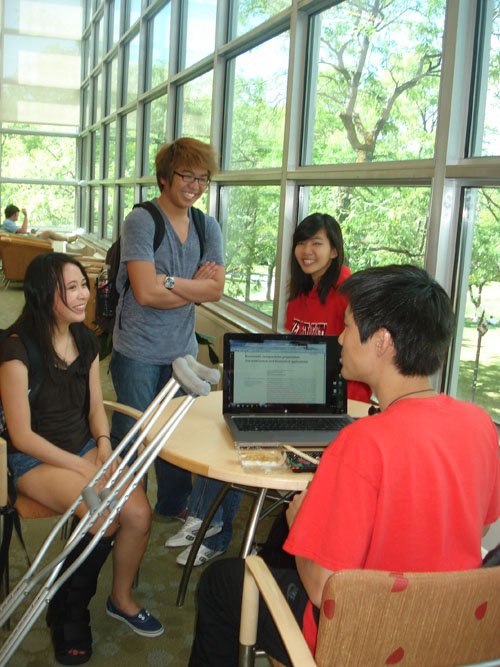
Chaw Wguyen, left, and Ming Lam attend AASA's first meeting of fall term.

After hearing the story about Oda, a small group of freshman women said they hadn’t experienced the same type of bullying that she did. They said their families and friends are supportive of them and have encouraged them to get a good education. Chaw Wguyen and Ming Lam, both 18, said the U is already pretty diverse and so far they haven’t noticed any kind of outward bullying. However, others in the group said they have noticed a more subtle type of disdain arising from various comments they hear. One student said because she is Asian, people automatically expect her to be extremely smart. “I’m really not; I have to study hard like everybody else.”

“I know,” said another student. “I get so sick of complete strangers coming up to me and telling me how silky and smooth my skin looks, like I’m some sort of a doll or something.”

Sugiyama said the definition of bullying has changed since the days of WWII. “Taunting of Asian-Americans still exists,” she said, “just in different ways.” “Cyber bullying” is a real danger, especially among young girls. Other methods of intimidation aren’t as extreme; however, the impact can be felt just the same.

“Asians-Americans are viewed by many, especially in the media as perpetual foreigners,” Sugiyama said. She believes that many movies and televisions programs portray Asian women as exotic looking seductresses, or passive subservient women who make good wives. Men don’t fare much better. They are depicted as warriors and Kung-Fu fighters.

Talking with peers is a good way to feel secure about oneself, say Linda Oda and Tricia Sugiyama.

Sugiyama’s parents were born in Japan, but she grew up in Sandy. She was raised and assimilated into the prevailing culture of that area. It was when she was in college that she realized much of her family’s culture had been forgotten. She now maintains a balance of being “Americanized” as she puts it, and still celebrates her family’s heritage while helping other young women find their own place in today’s society.

Both Oda and Sugiyama feel all young women need a support system. Becoming involved with clubs and organizations is a good way to secure and build confidence. Sharing feelings of being left out with a trusted peer or mentor can also help students realize they aren’t alone, they aren’t invisible, they don’t have to be an  “other.”

Rich Fahey

Photo courtesy of Anna Borgman.

MY BLOG:

Sitting in this class for the first time, I was less than enthusiastic. I remember reading through the syllabus and getting that sudden overwhelming feeling that this semester was going to be miserable. The amount of writing to be done was expected, but I assumed it would be on the topic of my choice. When I found the entire semester would be focused on the Asian community in Salt Lake City, all I could think of is I don’t even know someone who is Asian. After all, it is Utah, seemingly the whitest state I’ve ever been to. Like any large city, I knew there was diversity here – I just had to go find it.

After our first in-class interview with Dr. Linda Oda I came to the realization that this semester would not only be educational, but extremely rewarding. When given the opportunity to write on any topic, I almost always pick something I’m familiar with. The writing is easy, but at the end of the process I’ve learned nearly nothing.  With a new motivation to develop as a writer and a member of this community, I became excited about getting into the reporting and writing process.

The outcome is what I had expected, and a little more. I feel like I learned life lessons about the writing process, managing my time, contacting sources and putting it all into a published article. But, more importantly, I feel more knowledgeable and conscious about our community. I’ve experienced different foods, customs, languages and traditions. I am more aware of what is around me, and know now that Salt Lake City is more eclectic that I ever thought.

ABOUT ME:

I am in my final semester at the University of Utah and will be graduating with a B.S. in speech communication. It’s been four and a half years, and the finish line is so close. Like many college students, my time in school was full of ups and downs, fun classes and boring lectures and concern about whether it’ll all be worth it. It wasn’t until the end of my sophomore year that I knew what I wanted to do.

After finishing nearly all of my general courses, I took COMM 1010, Elements of Public Speaking, just to fill a gap in my schedule. Little did I know, that class would decide my academic future for me. I had never thought about the process of communication so closely. I became hungry to learn more. From there I started taking any communication class that looked interesting. My classes went from being a chore, to something I was truly excited about.

I don’t know what career I want to pursue after school, and truthfully, I’m not too worried about it. I’ll probably just ski for a few years until something comes my way and completely opens my mind, just like COMM 1010 did.

Southeast Supermarket – helping to maintain culture and diversify Utah

Story and photo by RICH FAHEY

For the majority of Utahns, eating a traditional meal means going to the grocery store for a wide selection of American foods. For the Asian community, eating traditional cuisine requires a little more effort. While most chain grocery stores offer an ethnic aisle, it lacks in authentic Asian food. But several specialty food stores that stock a wide selection of Asian cuisine can be found throughout the valley.

These Asian-specific supermarkets not only supply tasty foods, they also help the Asian community to maintain its heritage and culture.

“Just like language is part of their culture, so is their food,” said Linda Oda, director of Asian Affairs in the Utah State Office of Ethnic Affairs.

Southeast Supermarket, located at 422 E. 900 South in Salt Lake City, is one of these stores. The family-owned and operated business is the largest Asian-specific supermarket in the downtown area. It carries Chinese, Japanese, Korean, Hmong and Thai goods, including foods, drinks, teas, medicines, decorations and kitchen supplies.

Aisle

A wide range of items, both in bulk and individual portions, can be purchased at Southeast Supermarket.

Southeast Supermarket caters to a large number of Asian students from the University of Utah. According to the University of Utah Center for Ethnic Student Affairs, more than 1,300 Asian students are enrolled at the U. This creates a sizeable customer base for the store, especially while school is in session.

“We see a lot of international students, because we have products that they identify with,” said Thanh Trang, a Southeast Market employee and son of the owner.

According to Trang, items like dumplings, pot stickers and instant noodles are popular choices for students because they are quick and easy for people on the go.

These specialty food stores can also have a large impact on Asian-American children growing up in Utah. Growing up in a primarily white city, it is easy for children to become assimilated with American culture.

“You start becoming more American by being part of the community,” Oda said.

Without being exposed to traditional Asian cuisine, a portion of Asian culture can be lost in younger generations. By being part of both communities, children are able to retain some of their heritage and keep an important part of who they are.

“Although I was raised here in the States, and in Japan, I prefer to cook Japanese food for myself because it is always a nostalgic reminder of my childhood,” said Penelope Moffett, 20, a fine-arts graphic design student at the U. “Southeast Supermarket is the only way I can go to Japan, without actually flying anywhere.”

More recently, Southeast Supermarket has seen the number of white customers rise. According to Trang, over the past several years the clientele has changed from mostly Asian, to nearly half Asian and half white. This increase in white patrons shows a larger acceptance of the Asian culture. Oda said this acceptance of Asian cuisine is great for both cultures, and can be attributed to the availability of Asian restaurants and markets throughout the valley.

“It’s a substantiation that I’m OK, and you’re OK,” Oda said.

Another reason for the diversity among customers is the staff at Southeast Supermarket. The store takes pride in its customer service, and the fact that most of the staff speaks English makes it easier for American customers who are unfamiliar with the items.

“I can’t get to this place enough. The place is packed with aisle upon aisle of ingredients to bring your cooking alive,” wrote Stuart M., a Southeast Supermarket customer who posted a review on Yelp.

Chloe Nguyen

MY STORIES:

MY BLOG:

As an Asian American myself, the stories on the Asian community that were covered were especially meaningful to me. At first it almost felt awkward to be reporting on a community that’s so close to me. But I was quickly reminded that my reporting on the Asian community would be just as if a white journalist were to report on the white community – there isn’t anything awkward about it.

I’ve always been aware of my minority status, but in a good way. I don’t lower my self-esteem and goals in life because I’m a minority in a majority group. Quite the opposite. I take great pride in my ethnicity and culture; I feel honored to be representing the Asian community in all that I do. And this journalism experience is no different. I’m excited to say that I’ve learned a great amount about my own culture through this experience.

A big challenge that I faced while investigating and reporting on the Asian beat was the desire to separate myself from my stories. If readers couldn’t figure out my ethnicity from the byline, I didn’t want them to figure it out in the stories – I didn’t want to come across as biased. As an Asian American journalist, covering stories on the Asian community is still new to me. I love being able to explore my culture doing something I love, journalism, but at the same time, I certainly didn’t want to come across as an Asian journalist who took advantage of her ethnicity to find stories and track sources.

Somewhere along the way, I had to give in and realize that I was indeed an Asian American journalist reporting on the Asian American community. I guess, in a way, being Asian American helped me gather more ideas for stories. I decided to report on stories that would be interesting to both the Asian and non-Asian community.

All of the stories I reported on for this beat were amazingly interesting topics to myself, and, I think, for others as well. I believe that in order to write an interesting piece, the writer should be interested first. I’ve learned that if I show interest in a story, sources are more likely to open up to me.

My stories ranged from foods to beauty pageants, to a feature on an incredible woman, to a community project that had been put on hold due to the recession. As a journalist, I believe story ideas can be found in almost anything, anywhere, from anyone – it just takes a little digging to get to the part that matters, but it’s there.

If I had to describe in one word what I took from my experience with Voices of Utah, it would be “perseverance.” The dictionary defines it as “steady persistence in a course of action, a purpose, a state, etc., especially in spite of difficulties, obstacles, or discouragement.” It’s true. To be a great journalist takes a world’s amount of perseverance. I’m going to hit walls; I’m going to rush to make deadlines; I’m going to want to keep going; I’m going to continue to want to make a difference; I’m going to meet people who’ll put me down; I’m going to reach dead ends – but I will also find my way back to the beginning and try again.

I’m NOT going to stop doing what I love, which is writing, because I have perseverance.

ABOUT ME:

I’m currently in my third year at the University of Utah, majoring in mass communication and minoring in arts technology. Medical school used to be my life goal. But, somewhere along the way, I discovered that although the medical field still fascinates me, I couldn’t pursue a career that would keep me locked inside a clinic or hospital surrounded by germs. If I were to be contaminated by germs, I would rather get it while traveling the world, reporting and capturing my adventures.

My dream job would allow me to travel the world, exploring what I have yet to see. But rounding it up, I’m just a singer and dancer who fell in love with photography and journalism.

I believe fine arts can brighten someone’s day, and that all people have good morals and ethics – it’s up to the individual if they want to carry it out or not.

The photos I take, I hope, will make you feel something, anything. The writings I do, I hope, will educate and inspire you to be the person you want to be. Sometimes the decision to be a good person is tough, but it doesn’t mean it can’t be done.

I have many dreams and choices I have yet to discover and unlock; many doors I have yet to open. But once I do, I know things will be good. I know my path in life and I’m thankful for those who are by me every step of the way. I have goals and dreams that I’m aiming for, and I’m having the time of my life trying to make them come within reach.

Coffee Shop in Salt Lake City’s Little America Hotel strives for authenticity with Asian cuisines

Story and photos by CHLOE NGUYEN

Asian seafood salad; beef tournedos with Asian-style salmon steak; vegetable stir fry; grilled chicken breast marinated with a ginger plum sauce — all food you would typically find in an Asian restaurant, right? Not quite.

You can actually find these dishes at the Coffee Shop, located inside the Little America Hotel, a three-star hotel in downtown Salt Lake City. The Coffee Shop is ranked 7th out of the 104 restaurants in the Salt Lake area, according to Virtual Tourist. It has always been known for its traditional “comfort food,” as Ashley Bollinger, 26, the hotel’s community relations manager, calls it. Its menus have had limited changes over the years because they have been well received by customers. But this does not mean there haven’t been accommodations.

“Most of the guests are very vocal with the dishes they like and what they would like to see added,” Bollinger said. “We feel the best way to review or make changes on our menu is to listen to them firsthand.”

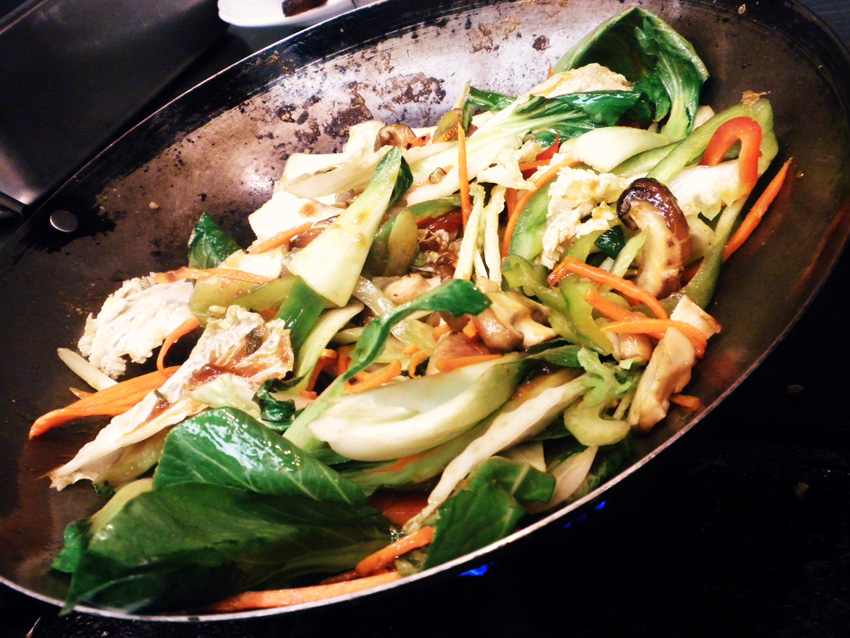
Customers want diverse dishes, including those from Asian cultures, such as seafood salad and marinated ginger plum chicken. And while these dishes are only available through the hotel’s banquet menu, the hotel’s Coffee Shop is always serving their customers Asian vegetable stir fry. And if a dish is requested often enough, the decision to include it in the regular menu is considered.

Besides the customers, the people who make the dishes also contribute to what is on the menu. The hotel’s kitchen staff consists of a diverse group of individuals, including Caucasians, Chinese, Vietnamese, Koreans and Hispanics. “[Because of this,] over the years I have incorporated many different dishes from all around the world in our daily cooking techniques and final products,” said Bernhard Götz, Little America’s executive chef.

Those final products are something to be proud of. Unlike some Americanized Asian dishes served at chain restaurants such as Panda Express or P.F. Chang’s China Bistro, the Coffee Shop is different. The chefs value the authenticity of a dish and the culture behind it.

“The traditional Asian dishes are prepared by my Asian cooks,” Götz said. “They are cooked in the traditional way with authentic ingredients.”

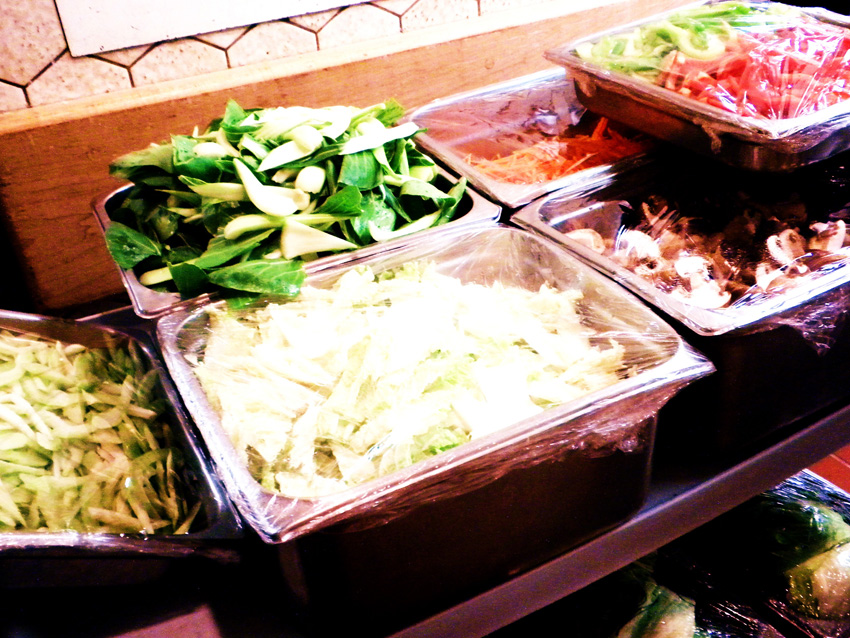
Ingredients native to Southeast Asia are included in the making of the dishes. Soy sauce, pineapple juice and ginger are some of the ingredients that go into the ginger plum sauce. Tofu, Napa cabbage, Bok Choy cabbage and Chinese mushroom are among the native vegetables of Southeastern Asian countries that are included in the vegetable stir fry. And like any authentic Asian dish, rice is always included.

If you ask people of Asian ethnicity, many will tell you that rice is a critical part of their culture. In most Asian cultures, “to eat” is often synonymous with the phrase “eat rice.” This can suggest that rice is of high importance to the people of Asia. Rice can be said to be an identification of the Asian community. “It’s important to keep the ingredients the way they would be as if in Asia,” Götz said. “You can’t get more authentic than that.”

But in America, it’s not always easy to keep the ingredients authentic. Chinese restaurant owners developed American Chinese cuisine when they modified their dishes to suit a more Western appetite. According to China Insight, these restaurants adapted by using local ingredients that were familiar to their customers, like flour. Rice was often replaced with noodles, made from flour. As a result, American Chinese cuisine is usually less pungent than authentic cuisine.

Many of these new dishes were quickly and easily prepared. According to an article by Yao-Wen Huang at Flavor & Fortune, they tend to be cooked with a lot of oil, monosodium glutamate (MSG) and sugar, which authentic cuisines do not commonly use.

It is rare to find an Asian American restaurant that serves Asian dishes with authentic ingredients and cooking methods. But the Little America Hotel recognizes and values the importance of diversity and culture in food. Just like language is a part of culture, so is food. “If we serve Asian food, we want it to be real, not fake,” Götz said. “That’s the whole point of why people come looking for authentic food.”

Utah Domestic Violence Council aims to aid members of Asian community affected by abuse

The Utah Domestic Violence Council works with many women's shelters, including the YWCA in Salt Lake City.

Story and photo by DANA IGO

Kenneth Warhola arrived at his Layton home Sept. 8 to find his wife locked in their children’s room. After several attempts to persuade her to open the door he broke it down. She was sitting next to the couple’s two children, Jean, 7, and James, 8, who were covered with a sheet and unresponsive. His wife, Sun Cha Warhola, 44, is charged with strangling them to death.

As the information came out in the Salt Lake Tribune and Deseret News, it was learned that disputes between Sun Cha Warhola and her husband had been ongoing for more than four years.

According to the Tribune, Kenneth Warhola was charged with domestic violence in 2007. In another incident both Warholas were charged after an altercation in a parking lot. One report just weeks before the murders showed that Sun Cha Warhola alleged that her husband had sexually abused their children. The Davis County Attorney’s office reviewed the case and determined the accusations were unsubstantiated, as reported by the Tribune.

The Deseret News wrote that before the murders, Sun Cha Warhola called a Korean newspaper in a desperate attempt for help. She told Inseon Cho Kim, director of the Korean Times of Utah, that she dreaded leaving her husband with their children in the event of a divorce.

While all women have difficulty coming forward to get help for domestic abuse, women in the Asian community face a particular quandary. Prevention and educational programs on domestic crime aren’t targeted to Asian women. A report published by the National Asian Women’s Health Organization suggested that this is because society tends to view the Asian population as a “model minority,” meaning that they are viewed as achieving high rates of success.

Asian women have the lowest rate of domestic violence of any of the major racial groups. A small number of Asian and Pacific Islander women, 12.8 percent, reported having experienced physical assault by a partner at least once in their lifetime, according to a study published by the Asian & Pacific Islander Institute on Domestic Violence. This was the lowest percentage among any racial class surveyed, which was cited by experts as being due to underreporting.

The unwillingness to come forward in cases of domestic violence among Asian women may also be perpetuated by culture.

Dr. Linda Oda, director of Asian Affairs at the Utah Office of Ethnic Affairs, said that abuse in Asian families isn’t often reported because their cultural values tend to stress keeping things within the family.

Unlike Western culture, traditional Eastern culture puts emphasis on the family instead of the individual, leaving Asian women feeling less inclined to report physical and domestic abuse.

The Utah Domestic Violence Council (UDVC), 205 N. 400 West, a nonprofit organization with resources throughout the state, is reaching out to the underserved communities across Utah in an effort to prevent future domestic crimes. In preparation for Domestic Violence Awareness Month in October, the council’s diversity coordinator, Hildegard Koenig, provided information to the Asian Advisory Council so its eleven members could pass it to their respective communities. She approached the council because it connects the Asian community with Oda and her office.

“By working and educating community leaders and building those strong relationships we can start a dialogue on how we can better assist victims of domestic violence in their communities,” Koenig said.

Sometimes the educational materials fall short. Salman Masud, the council’s representative of the Pakistani community, said the materials offered by the UDVC were only written in a few languages, which narrows the ability of non-English speaking Asian immigrants and refugees to know whom to contact in a domestic abuse situation. Currently the brochures are offered in seven languages, including Chinese, Tongan and Samoan. Koenig is seeking individuals to help translate the material into other languages.

Non-English speakers can call The Utah Domestic Violence Link Line, 800-897-LINK (5465). The hotline is currently available in 144 languages, making it a good resource for members of all communities who may not be able to get the printed materials in his or her language.  Many of the UDVC‘s resources can be accessed online, including special reports, training materials and a map of domestic violence programs throughout the state.

Dana Igo

Photo by Jesse Michael Nix

MY STORIES:

MY BLOG:

I was terrified to take this class. I was insecure about a lot of things: my writing abilities, my creativity, but most of all my ability to conduct an interview. The idea of sitting with someone and talking didn’t bother me until it was put into a setting where I needed something from them. I thought talking would become a job, not a natural flow of ideas. However, this class has changed my mind about interviews. After being eased into interviewing by conducting a couple as a class, I became less nervous about doing it on my own. By the time my third story came around I was comfortable calling my sources and asking them questions about their lives. I discovered that most people don’t mind talking as long as I provided a good listening ear. This small revelation has helped me profoundly. Before this class I wasn’t sure I would do well as a journalist. Without interviews I wouldn’t have anything to write about. Now I’m confident that if there’s a story, I can get it. It’s a little like finding hidden treasure. Once you have the map, all you need to do is dig.

Another thing that I figured out through this class was the importance of stretching beyond my own community. Because we explored the Asian beat, I was exposed to a part of Utah that I hadn’t connected with before. I learned about Filipino dance, Asian businesses and community leaders, domestic violence in the Asian community, and many other world expanding ideas. It’s easy to become fully immersed in one part of the world, while completely forgetting another. Through this class, I realized that there is much to learn beyond what I already know if I look for it. Now I’m more interested in minority affairs in Utah and throughout the world.

ABOUT ME:

Dana Igo is a senior at the University of Utah. She plans to graduate in December 2010 with a bachelor of science in news writing and a minor in creative writing. She has worked for various publications, both print and online, including Catalyst Magazine and the University of Utah’s Lessons Magazine. She is currently applying to graduate schools to pursue a master’s degree in journalism. Aside from writing, Dana also aspires to be a photojournalist and tries to take photos every day.

U student dreams of becoming a filmmaker

Story and photo by ANDREAS RIVERA

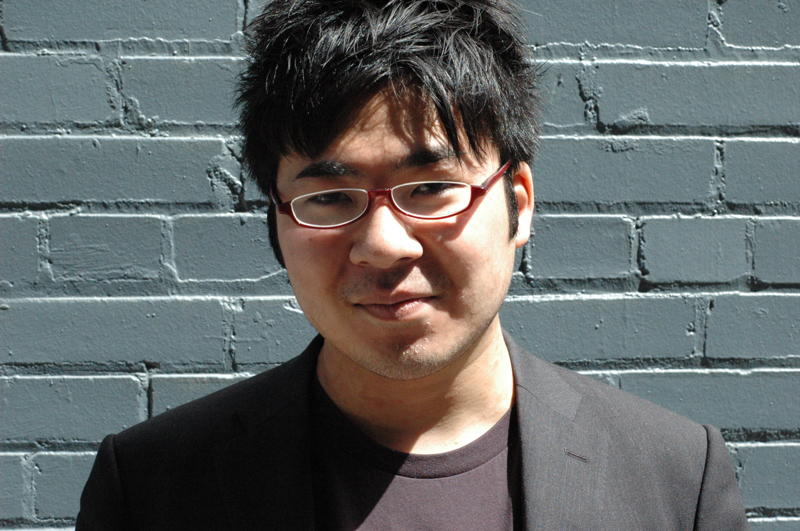
Hirotaka Yoshikawa is described by classmates in his screenwriting class as quiet and well-mannered, but one of the most interesting people they’ve ever met.

Yoshikawa was born in Tokyo, Japan, on June 26, 1987. He grew up close to an American Air Force base, which was his first introduction to American culture. The neighborhood he lived in was very conservative, and this clashed with the American ideals of the base.

He went to an international elementary school where he was taught English.

Yoshikawa wanted to leave the country for his education, so his school contacted a teacher in Utah who put him on an exchange program. In 2001 he came to Salt Lake City for high school and college.

“I wasn’t scared, I was too excited to be scared,” Yoshikawa said.

It was easy adjusting to the new culture, he said.

“People were the main things that were different, but other than that I had no complaints,” he said.

Even before coming to the U.S. he had wanted to be in the movie business, and upon attending the University of Utah, decided he wanted to go into movie production and write screenplays. He is currently a film major at the university.

“I like to try different types of writing, but I really like comedies,” he said. His favorite movies are comedies, including “Back to the Future,which is his favorite film.

“I’ve actually stopped watching films after becoming a film major,” Yoshikawa said. “I’m not huge into big budget films, so I hardly watch new ones.”

He and other students in the film department bash films, both big-budget and independent films, he said.

One of his biggest influences is Charlie Kaufman, who is famous for writing “Being John Malkovich and “Eternal Sunshine of the Spotless Mind.”

“He always leaves in something unexpected,” he said.

Yoshikawa has submitted two scripts, “Where You Wereand Run, to several contests. He hopes they will get picked up and made into movies. But if they don’t, he may make them himself. His script, “Where You Were,” has recently made it into the quarter finals of a screenwriting contest by Fernleif Productions.

Paul Larsen, a professor of film studies and instructor of Yoshikawa’s screenwriting class, said Yoshikawa produces a lot of pages.

He said Yoshikawa’s style of writing is very unique to him as well as being funny and witty.

Besides writing scripts, Yoshikawa has made a few short films, both for school and for personal experience. His favorite one is called, “A Color of Summer.”

“The film is about someone trying to find satisfaction in cultural things, but he can’t find what exactly he’s looking for,” Yoshikawa said. “However, what he is really looking for finds him.”

He said making a short film is a threeday process for him. On the first day he comes up with the plot and writes the first draft and then revises it. On the second day he films the movie. He said filming shouldn’t take any longer than a day for him. He spends the third day editing the movie, which also shouldn’t take longer than a day, he said.

Valerie Douroux, a fellow film major at the U described Yoshikawa’s filming style as very abstract and experimental, which she believes reflects from his personality.

Douroux, who met Yoshikawa in a screenwriting class they shared, said her first impression of him was that he was very quiet, studious and thoughtful.

“He has a very Buddha-like personality,” Douroux said. “Whenever I see him he is very mellow-tune.”

She said despite his low-key personality, his writing is very funny.

“As a filmmaker, I have learned from Hirotaka you have to have dedication,” Douroux said. “He has dedication and that’s exactly what you need to elaborate a story.”

Yoshikawa will graduate in May 2010. He plans to work all summer at the U’s Marriott Library to earn enough money to move. He plans to leave Utah within a year and go to California. That is where the business is, Yoshikawa said.

His family is still in Japan, and occasionally comes to visit him. His father is an editor of a golfing magazine and his mother owns an antique store. His older brother works as a graphic designer. “Two years ago was my last visit, but they are very proud of me,” Yoshikawa said.

The most important thing he has learned as a filmmaker, he said, is “just do it, don’t stop, you need to finish what you have started.”

Asian expectations

Story by EMILY RODRIGUEZ-VARGAS

The life of an immigrant or refugee means facing financial, safety and cultural challenges all along the way of the journey. This includes leaving one’s home country to adopt another country and culture as one’s own. The legacy these trials imprint on families of immigrants still has its traces throughout the education system.

Gerald Brown, director of the Utah Office of Refugee Services, said of those who have come to the U.S., “They are very smart people, and they are going to do everything they can to live a better life here.”

According to the 2006 report compiled by the Utah Office of Ethnic Affairs, 2 percent of Utahns are Asian. Of that number, 1.6 percent is in public schools, and that same percentage of students will graduate from high school. With their background and history, many of them will also have the drive to live up to their parents’ legacy.

Kathleen Villanueva, 19, is a political science and economics major at the University of Utah. She was born in the Philippines, but spent the majority of her life in the U.S. because her parents sought out a life out of the poverty at home. When still at Northridge High School in Layton, Utah, they expected her to maintain a 4.0 GPA.

“If I brought home a grade lower than that, I knew I’d be grounded,” she said. Challenging her parents and higher authorities just wasn’t an option. Villanueva carries on this high standard for herself as she maintains a nearly perfect GPA to keep her scholarship at the U.

Emily Park Grady is a doctoral candidate in the School of Music whose family moved to the U.S. when she was a toddler. In Korean culture, Grady said that knowledge itself shows sophistication and is held in very high regard. This prized experience and wisdom is no small thing.

Although she did always succeed in school, she said that she had a different experience than Villanueva even though her parents didn’t push her in academics. Growing up in New York City, Grady had a lot of friends who, like herself, were from Korea.

“The real pressure wasn’t really coming from my parents, it was just keeping up with my friends,” she said. “There was an immense peer pressure and competition among the people I hung out with.”

Wesley Sakaki-Uemura, an associate professor of history at the U whose grandparents emigrated from Japan, said the expectations set on students by family members is often significant. But there is also the unrealistic perspective for Asian Americans returning to their home country. He said there is a notion that people who look Asian automatically speak their family’s native language and know about all of the cultural norms and traditions they didn’t grow up with.

Funding for college could possibly be more accessible through wise saving by parents, or students may receive scholarships for their academic endeavors. Roger Tsai, an immigration attorney in Salt Lake City, said many Asian parents are more willing to pay for their children’s undergraduate and graduate degrees because they might not have had the chance to access higher education themselves.

Vinh Thanh Ma, 26, left Vietnam with her family at the age of 13. She received her Bachelor of Science in biology and medical laboratory science at the U on a full-ride five-year Utah Opportunity Scholarship.

Ma said when she saw this was a land of opportunity, she wanted to get the best education and life she could. “Discipline and determination were all I brought with me,” she said. “I was able to advance faster than most students that have everything coming too easy in life for them.”

Realizing her parents’ hardship in trying to support her family and provide Ma and her siblings with an education, she said she wanted to do well in school because her parents went through so much to get her there. Ma said she set herself goals like achieving excellent grades to get into a good school. “I did it for my parents without realizing it was for my own good in the future,” she said.

Alysha Franz Lagaras, 18, a Filipina student at the University of Utah, has a similar story. She was born in the U.S. after her parents left their home to start a new life. Her life wouldn’t be the same if it wasn’t for her mother.

Lagaras said her mom was an example to her for her diligence and persistence. “She worked so hard to be where she is now,” she said of her mom, who was the first in their family to leave the Philippines and to get a college education. “When we moved to Utah, my mom was raising my brother and I by herself.”

About growing up in Utah, she said, “I noticed how different I was not for just being Asian, but also being a part of the LDS church, being a different race other than being white.” She also said that society often has the wrong image of what it means to be Asian. “For being an Asian girl, they really expect you to look the part, like to be tiny and skinny.”

One of Lagaras’ pet peeves is being stereotyped for being smart and loving videogames and Hello Kitty. “Even though I do, I just hate how people think they know you because all Asians are the same.”

She said now she’s older, she regrets not learning her native language, Tagalog. When she was in elementary school, Lagaras tried to convince her peers that she was Mexican so they wouldn’t make fun of her “chinky” eyes.  “When you’re a child, you just want to fit in,” she said.

“Now I love being Asian, when you’re older and more mature, you notice that you should love being different, standing out and being exotic.”