Is this the place for me? Being Latinx at a predominantly white institution

Story and photos by IASIA BEH

With the latest photos to come out regarding placement of racist banners and posters on the “Block U,” it raises a lot of questions: Who are they? Why are they doing this? Why do they feel so emboldened that they show their faces when spreading clearly racist rhetoric?

One reason behavior like this is possible is because the University of Utah campus itself is isolated from communities of color. Tucked away on the foothills of the Wasatch Mountains in neighborhoods only few can afford, many white students are never introduced or interact with people of color on a meaningful basis.

IMG_2230

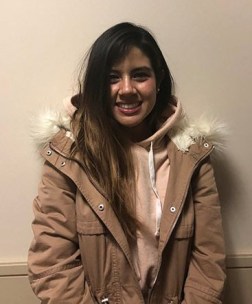
Wendy Vazquez pictured at the annual MEChA High School Conference on Feb. 27, 2019.

Wendy Vazquez is taking a criminal justice class this semester as part of her sociology and criminology degree. While the class material has proven to be interesting to her, Vazquez believes her fellow classmates have not.

Sitting on the couches with her sister in the Center for Ethnic Student Affairs in the A. Ray Olpin University Union, Vazquez talked about a white male student she has class with. Even though they have had some classes together previously, he still won’t sit next to her. This confused her until he mentioned in class that he was fearful of people of color.

“At that point, I understood why he didn’t talk to me,” Vazquez said.

She said he works in the library, which also confuses her.

“It kinda doesn’t make sense because he has to give directions to all students,” she said. “Do brown students come up and he just turns around?”

He isn’t the only classmate who has made her feel excluded. A white female student in an in-class group discussion spoke about how building the wall would stop crime.

“She basically implied that as long as the country stayed white, crime would stop because minorities are the ones who commit crimes,” Vazquez said. “She also said we need to ‘have to put these people in their place.’”

Students of color have experiences like this every day on predominantly white universities across the country. William Smith, who is the department chair of the Education, Culture and Society program at the U, describes racial battle fatigue as “the physical and psychological toll taken due to constant and unceasing discrimination, microaggressions, and stereotype threat.”

Smith’s presentation on the subject through the MUSE luncheon lecture series at the Sill Center on Feb. 7, 2019, brought the discussion to the CESA office that afternoon about times students themselves had felt drained.
n72uCtoQSBOHgIb%ZWtSjQ

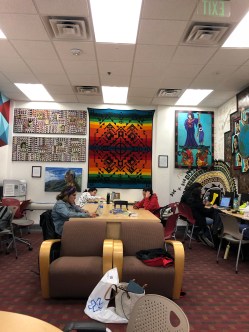
The Center for Ethnic Student Affairs is a space on campus where many students of color meet to study, socialize and meet with advisers.

One Latinx student talked about how it was hard for him to study with his study group because they were Trump supporters. He said he stopped even talking about it with them because it just “wasn’t worth it.” Multiple students mentioned how white people, mostly women in the examples they gave, would cry when confronted about  “problematic” comments. The Latinx students looked both frustrated and relieved when telling these stories, showing that they had been holding those feelings in for some time.

How are professors reacting to situations like these?

Vazquez said her professor only calls out overtly racist comments while letting ones that “aren’t as bad” slide through the cracks.

“It seems to [the students] like he’s validating their opinions when he shouldn’t be,” she said.

Karen, her sister, then spoke about her experience working at the news station at the school. She said she has been prevented from getting into events even when she had the correct credentials.

“My white male coworker even came out and said ‘she’s with me’ but they still wouldn’t let me in,” she said.

What do these stories have to do with anything? Well, everything.

If a student doesn’t feel comfortable and safe on campus, how will they ever be able to reach their full academic potential? The answer is they can’t. That is why the university has created spaces such as CESA for students of color to be able to meet and talk about their experiences in an area where they do feel safe. But is that enough? How will students be exposed to each other if they are only staying in certain places on campus? That then brings the question of whether it’s the job of students’ of color to teach white people how to be culturally sensitive.

Is it enough for the university to call out certain acts of racism but not what is happening in the classroom on a daily basis? How will it implement that? The university has begun to realize that something needs to be done, as it has added many new programs in recent years, but is it working?


Centro de la Familia de Utah, promoting healthy and engaged Latino(x) communities

Story by BRIANNA WINN

“We pursue what we see,” said Rebecca Chavez-Houck, former member of the Utah State House of Representatives. “If children do not see people that look like them representing their communities in positions of higher power, then they don’t see that as an opportunity for them.”

Chavez-Houck is also a longtime advocate of the Latinx community.

“I was in my early 30s, I’m looking at the legislature and I’m thinking about my neighborhood and amazing people I know with accomplishments. I’m wondering why we’re considered a representative democracy when none of the legislature looks like our state or our community,” she said while reminiscing.

This, she said, is what motivated her to run for office.

Chavez-Houck previously worked at Centro de la Familia de Utah.

IMG_2509

Words on the wall walking out of one of the classrooms at Centro. 

Centro de la Familia de Utah means “Utah Family Center” in English. It is a nonprofit organization dedicated to advocating for children’s educational success and fostering healthy and engaged communities.

According to the website, Centro works with Utah families, most in rural and difficult situations, to help them with resources to improve the outcomes of their children.

“Sometimes the families were Latinos, sometimes they were from other communities, sometimes they were white, but most of them were from the Latino community,” Chavez-Houck said.

Centro impacts underserved communities through services founded on parent engagement, providing standardized year-long programs in rural communities, and engaging staff in meaningful professional development, as stated on the website.

According to the website, the program originally was incorporated in April 1975 as the Institute of Human Resource Development during the Chicano movement in Utah. The agency has now taken an interest in serving youth.

During the 1980s and 1990s, programs were incorporated into the agency’s mental health services to prevent substance abuse and its associated problems. Centro initiated its Hispanic Youth Leadership Institute (HYLI) program as well as several other programs.

The HYLI program provided prevention services to more than 300 high-risk Latino youth.

In 1994, the board and staff decided the name Institute of Human Resource Development no longer exemplified the mission of the agency, and changed its name to Centro de la Familia de Utah, according to the website.

Centro operates Head Start, Early Head Start, and Migrant and Seasonal Head Start programs.

Kari Moore, program design and community impact manager, facilitates the execution of grant communications, the community assessment, self-assessment, annual reports, ongoing monitoring of the Head Start program services, and data driven-demonstration of community impact.

“Hispanic families are mostly the families we see throughout the program, but it really depends on what program and what location,” Moore said in a phone interview. “Up north and south of Provo we tend to get a higher number of Hispanic families.”

In 1991, the federal government implemented the Migrant Head Start Program for the state.

Head Start is a program dedicated to promoting school readiness among economically disadvantaged and underserved children through the provision of educational, health, nutrition, and other services,” according to the website.

“We tried to help the families learn to advocate for themselves,” Chavez-Houck said. “We wanted to give them tools to work within the Head Start program for their children.”

IMG_2510

Young students in class, image courtesy of Kari Moore

For instance, the Head Start program includes parent policy committees. The idea behind this is that there is no hierarchy of teachers and administrators. “Parents come and decide for that center what their priorities are going to be,” Chavez-Houck said.

According to the Utah State Board of Education, Hispanic/Latino students have increased significantly with their graduation rate over the past five years with increases of 9 percentage points since 2013.

Will Gonzalez, a member of the program and father of three, said through an interpreter, “This organization has had a huge impact on my family. We have learned to get along better — we have learned many things.”

He added, “The primary changes I’ve seen is in the behavior of my children. It has helped the children get along better.”

Centro has provided over 41 years of community service focused on increased individual and family self-reliance in Utah.

“I started off as a family service specialist basically going out and recruiting families to join the program,” Moore said. “I really fell in love with the work and I’m just so blessed in my own life for the different opportunities I have to help educate families and give resources to help encourage parents in their children’s education.”

Today, Centro operates five rural Head Start centers and nine Head Start childcare partnerships, according to the website, as well as a portfolio of outcome-based programs for elementary, middle and high school students.

It also offers programs for adults that provide necessary tools and skills for self-sufficiency. Centro continues to fulfill its mission by helping the neediest populations in Utah.

IMG_2511

Students and teachers at Centro. Image courtesy of Kari Moore

According to the website, Centro annually serves more than 700 Early Head Start and Head Start children throughout the state of Utah in both rural and urban areas.

Centro de la Familia is just one program that is helping Latino families all around the state of Utah. If you want to get involved, you can donate online to help provide stronger programs and broaden the impact in the community. Volunteering is another option. You can also contact Kari Moore at (801) 521-4473 or info@cdlf.org.

Centro’s corporate office is located at 525 S. 300 West in Salt Lake City. Other locations are in Providence, Honeyville, Genola, Mount Pleasant and Centerfield.

DREAMers at the U: One step to graduation

Story and photo by SHAUN AJAY

What does it feel like when you walk into a classroom? Do you fear integration? Assimilation? Deportation? Do you worry about your immigration status?

More undocumented immigrants, predominantly Latinx, enter the country and face daily challenges with their legal status, work, livelihood and education. Misconceptions have quickly spread that undocumented folks cannot pursue higher education and consequently secure a better job. Rivarola’s story tells us otherwise.

Alonso Rafael Reyna Rivarola was an undocumented immigrant himself. He moved to the United States from Peru at the age of 11 and has lived in Utah ever since. He attended the University of Utah in 2008 — a time when the Deferred Action for Children Arrivals policy, or DACA, did not exist. The DACA policy began in June 2012, right before Rivarola was finishing his final year at school. During his undergraduate years studying sociology, he worked with a group of scholars called The Mestizo Arts and Activism Collective. The group created a website that continues to serve as a center of information on the undocumented community and experience. It offers a list of scholarship resources for first-generation POC (people of color) college students and DREAMers (Development, Relief and Education for Alien Minors).

IMG_3577

Rivarola poses in front of a collage of DREAMers.

Fast forward to his master’s program in educational leadership and policy. Rivarola wrote a piece on the importance of undocumented student centers. A DREAMer himself, he became the first director of the Dream Center in the state of Utah in 2017. His personal experience allows him to provide support and services to students much like himself. “We work with everyone who enters our doors; those who are historically forgotten in higher education,” he said. Rivarola also became the first advisor at the Center for Ethnic Student Affairs (CESA). In that role, he focuses on working with other undocumented students on campus.

The Dream Center consists of a four-person team that works with undocumented students and their families to facilitate their academic success and graduation. The center helps students with their academic pathway, from individual mentorship to scholarship support. 

The Salt Lake Tribune reported in 2018 that Hispanics are now Utah’s largest minority. They comprise 14 percent of the state’s population, or 434,288 people. 

In Utah, some laws were made to help undocumented students access more affordable education, provided they have graduated from a local high school. For example, HB 144 allows these students to pay in-state tuition. But inversely, a law passed in 2009, SB 81, prevents them from receiving private funding. And now, under SB 253, passed in 2015, students can access federal benefits for their education. 

It’s a complex system that the Dream Center has to work with. And for those who are affected, the question, “Will I be able to afford college?” always lingers silently under the bills that pass in the country or state.

For the Latinx community, whether undocumented or not, higher education is a steep climb that many cannot risk to take. Jasmin Valdivia is a 21-year-old Latina, born and raised in Provo, a city just along the Wasatch Mountain Front. Her parents had both migrated from Mexico. In 2016, she graduated from high school in a majority white neighborhood in Springville. During her high school years, Valdivia involved herself with ballet, orchestra, and cheer — activities that weren’t typical for Latinas, she said.

“I knew what was expected of me as a minority,” she said. Valdivia compared her outsider-insider position of living in Utah to holding a snow globe and looking inside. In her last year of high school, her school counselor only recommended Utah Valley University — a school, she said, that most Latinx students attended. Valdivia considers herself to be an adamant person. She believed in her own abilities and didn’t subject herself to the stereotypes that people imposed on her. She applied and was accepted to the University of Utah Asia Campus, located in South Korea.

Valdivia is the first in her family to attend college. She said her mother graduated from high school and her dad from elementary school. Her grandfather can barely read or write in Spanish. Her first cousin attended a semester in college before getting pregnant and dropping out. A majority of her Latinx friends do fall into the stereotype of settling with just a high school degree. “It’s usually the cultural issue of, ‘Well, my parents didn’t go to college and they’re doing fine,’ and when you think like that, you start to limit yourself,” she said

Valdivia said a friend of hers was brought illegally to the U.S from Mexico. She was a straight-A student in school and a talented musician in her orchestra. Valdivia also said her friend, due to her legal status, was unable to get financial aid to pursue a good music program in college. Now, three years since high school, Valdivia’s friend is still unable to attend university.

What Valdivia hopes to see is a system that is more supportive of giving the Latinx population equal opportunities to pursue their ambitions. She is currently working on her bachelor’s degree in communication and aspires to work in the news field to represent her culture and ethnicity.

With representation on one hand and education on the other, Dream Center Director Rivarola said he believes these elements should work together. He wants more Latinxs pursuing education and eventually become future professors, teachers and paraprofessionals. He said a lot of Latinx students learn typically in their second language, as opposed to their native Spanish. Seeing teachers like themselves serves as an important indicator to strive for success and ultimately leads them to different fields of studies. The Dream Center at the University of Utah remains an active system for any student to reach out to and ask for help.


Economic growth: Now is the time and Utah is the place

Story and photo by SARAH SAIDYKHAN

Utah is home to thriving companies, up-and-coming businesses, an eclectic array of restaurants, nightlife, recreations and so much more. For an eager entrepreneur, Utah is the home of opportunity. Since 1991, the Utah Hispanic Chamber of Commerce (UHCC) has worked in assisting people on their quest for economic development and stronger ties to their communities.

UHCC

The sign and coat of arms on the Salt Lake City building.

For almost 30 years, what began as a small handful of people looking for a change in Utah’s economy has grown into a large network now led by Alex Guzman, president and CEO, according to the Better Business Bureau of Utah. Now the chamber assists Utahns with networking opportunities to showcase their businesses, provides access to educational workshops, offers scholarship opportunities and more. In the four years that Guzman has been president of UHCC, he has revolutionized the chamber. He said he had a vision of what leaders in the Hispanic community must be doing and he set out to make it happen. Under Guzman’s direction, the chamber has moved away from the corporate office scene and ventured out into the community where he meets with the people of Utah.

The Kem C. Gardner Policy Institute reported in 2016 that Utah had a Hispanic community with over 400,000 residents. These numbers are growing each day. Utah’s Latino residents work hard, play hard and give back to their communities to help the state flourish. As Guzman said, “We take care of each other.”

One of the goals of a chamber of commerce is to help citizens understand what it takes to start a business. Guzman said he has taken this theory and put it into action. If you’ve thought about opening your own business, there are steps you must follow. For members of Utah’s Hispanic community, one of those first steps should be joining the UHCC. The possibilities to expand the business are then at one’s fingertips.

Esmeralda Avalos works for the chamber and is one of the first points of contact at UHCC. She said the opportunities offered through the chamber are beneficial to keeping a business running smoothly and she loves seeing business owners looking for new ways to explore the vision and mission of their companies.

One opportunity is the Business Academy, a 10-week course that specializes in essential business topics through education and training. It is only offered at UHCC.

“The Business Academy opens your mind to become more business wise; look at it as a business,” Avalos said. Participants must realize there is more to entrepreneurship than simply stating, “I want to open a business.” Avalos said the course entails in-depth education and hands-on learning. “Marketing, objectives, workshops, communications, customer service, goals, how to get funding” — these are just a few of the topics that are covered during the Business Academy courses, she said.

To obtain financing, loan institutions need to know that entrepreneurs have taken classes on accounting, marketing, distribution, licenses, fees, permits, employees and even taxes.

Juan Pascua is the membership director at UHCC. He said the chamber offers the skills to “help Hispanic businesses understand what they need.” Learning about owning and operating a successful company is all part of the membership, which includes media marketing on Alpha Media Radio, representation on the UHCC website and direct links to other members’ businesses.

Helping to support the Hispanic community in Salt Lake City is important. Pascua said. “If we don’t have the information, we can get the people to another member who has it.” For example, he explained that if someone has a question about business taxes that an employee can’t answer, an expert will be called in. “It’s all part of networking,” Pascua said.

The Utah Hispanic Chamber of Commerce is growing. Right now, it has offices in Salt Lake, Ogden and St. George. These locations serve as information centers, places to hold seminars, workshops and the Business Academy courses.

With help from local sponsors like Zions Bank, Utah’s Hogle Zoo, Utah Cultural Celebration Center, Utah’s economy will continue to grow and provide for the residents for years to come.

For more information about UHCC or to become a sponsor, call Esmeralda Avalos at 801-532-3308.


Latinxs at work: stereotyping results from a lack of sympathy

Story and photo by SAYAKA KOCHI

The population of Latinx is increasing in the Western United States. The Census Bureau’s data says one in four Americans are supposed to be Latinx by 2045. Many people originating from Latin America have crossed the borders to seek high paying jobs for their own dreams to come true or for their families’ sake. On the way to get a better life, many Latinx immigrants encounter stereotypes in their workplaces.

Monica Carpentieri was born and raised in Brazil. After getting married there, she moved with her husband to the United States to pursue her master’s degree. Later on, she started working as a licensed acupuncturist. Monica and her husband have become residents in Scottsdale, Arizona.

“Stereotyping was never overt,” Monica said in an email interview. “I personally had instances though that due to having a Latin accent, people immediately did not give me the credit of being highly educated. Unlike a friend of mine who had a British accent and no formal education.”

Monica’s husband, David, also faced the issue that the employers were ignorant. While he was in the medical residency training in the U.S., one hospital refused him to be a trainee for the following reason: they did not accept medical graduates from Europe. David is from Brazil, located in South America. The hiring manager at the hospital did not know where the country is.

“I was a bit shocked,” David said in an email interview. This case might be rare. But certainly, employers’ ignorance becomes an obstacle to get a job for Latinxs.

Stereotypes that are far from the truth are caused by ignoring true facts and cultural intolerance. The absence of true facts is highly contributed to by media productions. According to research done by an Eastern Washington University student, English-language television programs have often portrayed Hispanics and Latinxs as criminals or gangsters in the past few decades.

In fact, the data provided by the FBI in 2016 proves that more than 80 percent in total arrests were non-Hispanics. True facts are not on TV in many cases.

The same thing can be said about education. The Pew Research Center published a significant report in 2016. The report showed that even though the college enrollment rate of Hispanic U.S. citizens was still low compared to other ethnic groups, the rate of increase was outstandingly high.

Believe it or not, Whites and Hispanics have only 7 percent difference in the college enrollment rate. Recalling Monica’s experience, she has been stereotyped that she was not educated well because of her accent. Like Monica, Hispanics are sometimes unreasonably labeled to be uneducated no matter what kind of higher education degrees they have.

According to a 2017 poll by the Robert Wood Johnson Foundation and the Harvard T.H. Chan School of Public Health, about one in three Latinx poll participants have ever felt discriminated against when applying for jobs because of their ethnicity. The same amount of Latinx participants have experienced that they couldn’t get promoted or a pay raise. What is the main cause of employment discrimination? One of the answers is a false portrayal that Latinx workers are lazy, violent, and uneducated.

Alex Guzman, president and CEO of the Utah Hispanic Chamber of Commerce, said, “Traditionally speaking, the Hispanic community members are very hard workers. They have one, two, or even actually three jobs. Mama works. Papa works. Grandma or grandpa works.”

Story1

The Utah Hispanic Chamber of Commerce is located at 1635 S. Redwood Road in Salt Lake City.

Guzman was born in Guatemala. He was a professional in the strategic marketing field there and also helped foreign companies reach out to the Hispanic community. While continuing his marketing career, he started a political career. However, his children were almost kidnapped twice. To escape from the threats throwing shadows over his family, he got out of his home country and moved to America in 2008. He became an advocate to support Latinx and Hispanic immigrants to become business owners, providing sources and connections.

“They become or became business owners without intent to be business owners. They are intent on surviving. For the business owners, they have to learn how to own a business. They need to know how to pay taxes,” Guzman said.

Utah is one of the states in which the Hispanic population is rapidly growing. According to the data by the Utah Hispanic Chamber of Commerce, the population in Utah now exceeds  450,000. The data also show that Hispanic Utah residents are yearly contributing $9.5 billion to the local economy. Utah’s economy is highly supported by Hispanic hard workers.

Hispanic immigrants are citizens who have civil rights, including equal employment opportunity. Guzman considered equality as “one size does not fit all.” People have different backgrounds, ages, languages, and beliefs. Everyone cannot be treated in the same way.

“There are more than 13,700 Hispanic business owners registered at Hispanic Chamber of Commerce. But actually, the number is more than that. Only 13,700 business owners had the courage to self-identify themselves as Hispanics or minority when they registered their own businesses,” Guzman said.

People tend to estimate who the person is by only looking at the group where he/she belongs in spite of their backgrounds. Stereotyping results from ignorance of who the person is. Hispanic workers and business owners can feel more comfortable with their ethnic identity in a society where they can live fully as citizens.


Community, stereotypes and culture: Three Hispanics share their stories

Story and photos by LINA SONG

Within the past few years, the Hispanic community continues to grow every day across the United States. As the population increases, many people are starting to lose their own culture as they are influenced by American culture.

Three members of the Hispanic community in Utah shared their perspectives of their embracement of culture as well as the stereotypes that they face while living in Utah.  

Alex Guzman

Alex Guzman, CEO of the Utah Hispanic Chamber of Commerce, is originally from Guatemala. He worked in the field of marketing and business research there before coming to Utah in order to represent and provide support to the Hispanic community.

After living in the United States for 11 years, Guzman has come to a realization that many Americans believe that the Hispanic community consists of just Mexicans. However, he said that each member has different preferences and likings based on their country of origin, how long they have been in the U.S., educational level, and many more factors. Furthermore, Guzman said his friends are from different cultures and backgrounds, though they are grouped under the broad label, “Hispanic.”

“They think Hispanics are Mexicans and a bunch of taco eaters,” Guzman said while remembering this with a big grin on his face. “We are [not] taco eaters, we have more segmentation.”

Guzman noticed his children were starting to adapt and assimilate into the American culture. Due to the differences in culture and language, he pointed out that his son started to embrace the American culture in order to fit in with the majority. “What is happening is, I’m losing my son,” Guzman said. He highlighted his concerns about the Hispanic community’s future generation facing the elimination of their original heritage. But, he also said the diversity within the Hispanic community also enhances its beauty.

Jasmin Valdivia

edit 1

Valdivia believes stereotypes are dangerous because they limit the ways people view each other.

Jasmin Valdivia, an undergraduate student at the University of Utah, comes from a small family of three and has been living in Utah since she was born. She grew up in Orem, a majority white town, and attended a majority white high school. As a minority, she faces many stereotypes while living in Utah. Valdivia said she feels that the Hispanic community is stereotyped based on members’ physical features and capabilities as well as their actions and the way they are presumed to think or act.

Some of the stereotypes Valdivia has personally faced are based on her academic factors. She said that by attending university, it was against the norm of how her community is viewed. Valdivia said stereotypes like these have helped her strive to be a better person because she does not want to fit people’s idea of what a Hispanic person should be like, especially if it is negative stereotypes.

“I would say that for the most part I think I embrace American culture more just because it is easier to ‘fit’ in if I am more in tune to the American culture. There are still minor aspects of my Hispanic culture in my American culture for sure,” Valdivia said. “But when I am around my Hispanic friends or my family members I definitely embrace my Hispanic culture more comfortably.”

Sahaara Pena

IMG_5645

When Pena was little, she grew up in a primarily Latino neighborhood and was never ashamed of her culture.

Sahaara Pena, an undergraduate student at the U, comes from a family of five. She has lived with her grandparents in Utah since shortly after her birth in California. She also grew up in a majority white town and faced stereotypes in the past.  She said most people assume she was born in Mexico. Another stereotype she faced is that people are very surprised that she speaks English well without an accent since they assume her English will be inadequate.

“Stereotypes can be damaging because they group individuals who have one thing in common together and so they assume that if one person acts or is a certain way, then everyone else must be the same,” Pena said. “This can mean that due to past experiences people will assume that the same characteristics will apply to you or me due to the stereotypes. … Then the person is taken less seriously or won’t be given an equal chance or opportunity due to the stereotypes.”

Pena said she began to realize that in the past she was trying to fit into the American standard until she recognized that she was never going to fit in. Pena said she is part of a rich and beautiful culture and she has no reason to hide it. She feels strongly about her culture for the history and power it possesses and is willing to teach others about her culture and correct the stereotypes people have previously believed in.

“I definitely would have to say I embrace a mixture [of] both because I have grown up with both,” Pena said. “But other than that I embrace more of my Hispanic culture with people around me because in our culture we treat everyone as if they’re family because family is very important to us and we always have to take care of each other.”

Effort equals reward for Latinx organizations in Salt Lake City

Story and photos by BRITT BROOKS

IMG_3388 (1)

“DREAMers Life III” by Ana M., 2009.

Twice a year monarch butterflies make a 2,500-mile trek between the U.S. and Mexico. The migration is what keeps them alive. When cold temperatures in the states are unlivable, the warmth of a Mexican winter is the saving grace for this entire species.

Monarchs are more than pretty to look at, though. They’re a symbol for the Latinx community of migrants traveling to the U.S. and elsewhere. Though the journey is long and difficult, the destination promises opportunity, safety and a better life for Latinx individuals and their families.

The immigration process from Central and South America to the U.S. is grueling for even the toughest and most determined, but what happens when immigrants finally cross the border? How are Latinx people — with or without papers — supposed to integrate into American cities? If a language barrier exists, where can immigrants find jobs, housing and education? These kinds of questions are being asked and answered in Salt Lake City by professionals at organizations like the Dream Center, the Utah Coalition of La Raza, and the Utah Hispanic Chamber of Commerce.

The Dream Center at the University of Utah can be found on the south side of campus in the Annex building in the middle of a long hallway dedicated to diversity. Flags and banners hang in bold color, workshops and offices are bustling, and one can’t help feeling better about the world when students of all different cultures and ethnicities are seen thriving.

But the opportunity for higher education isn’t accessible to everyone. Some states bar undocumented citizens from attending universities, even though no federal laws support these actions. Thankfully, Utah isn’t one of them.

Luis Trejo and Brenda Santoyo greet those walking into the Dream Center with smiles and a friendly “what can we do?” attitude. Complete with memorized statistics and an impromptu presentation, Trejo and Santoyo shared some serious knowledge about the college experience of Latinx students in Utah.

Trejo, 19, is a student at the U and peer mentor with Santoyo, 24, a graduate assistant. They help Latinx students with their legal status, career goals, scholarships and strategies for picking the best college. Sometimes, they even recommend that students start at Salt Lake Community College, which is more affordable than the U. The Dream Center is also a resource for community gatherings and conversations and offers a space for local Latinx artists to display their work.

IMG_3392

The Annex building at the University of Utah.

Invigorating orange walls complete with posters and artwork create an environment that is both comforting and energizing. Monarch butterflies are featured in many of the decorations, including two graduation caps made by Santoyo. One of the caps says “Todo lo que hago, lo hago por ustedes.” Everything I do, I do for you. The stories here don’t just educate — they inspire as well.

The faculty are friendly, considerate of sensitive topics and well read on current laws that affect undocumented people here and nationwide. They know about options most students aren’t aware of, such as in-state tuition for anyone during summer semesters. And though the center is located at the U, is offers services to students from any college in the state. “It’s also really important to note we’re the only Dream Center in Utah,” Santoyo said.

Diversity and higher education create a new generation of young adults to tackle inequality, stereotypes and ignorance in an otherwise white-dominated professional world. For years the Latinx community has been marginalized, and Trejo mentioned how dehumanizing it is to call another person illegal.

Civil rights are crucial for Latinxs in America, and an active resistance against prejudice and discrimination has grown considerably in the last few decades. The rapidly growing Utah Latinx populace is at nearly half a million people, as reported by the Salt Lake Tribune in 2018. They strengthen and inspire each other, as well as continue the work of past civil rights leaders, most notably César Chávez.

The Utah Coalition of La Raza was founded in 1992 as a way to ensure the community had an organization to back up Latinx people in multiple situations. UCLR honors the legacy of César Chávez — Mexican American civil rights activist — with a fundraising banquet each year.

Chris Segura, 78, was president of the organization from 1997-99 and spoke about the action and assistance UCLR provides the Latinx community. “They’re an organization that promotes advocacy through education, immigration, civil rights and justice,” he said.

Segura knows plenty about the Latinx experience in education, as he was the first ever Hispanic administrator in Granite School District. As a U alumnus himself, his eyes lit up when talking about the partnership he started with the University of Utah. His plan involved the education and engineering departments at the U with the goal of making more college-credit classes available. This got Latinx students to take university classes in high school and created a higher chance of graduating and earning scholarships for low-income or undocumented students.

One of the biggest facets of the organization as a whole is education. UCLR runs three programs for K-12. The programs include the Utah Latinx Youth Symposium, CommUNITY Club, and Latinos in Action. As written on the website, Latinx are the least likely group to enroll in early childhood education, something UCLR is trying to change with community outreach. Equity in education for all students is important to give the same opportunities no matter their background.

IMG_3391

Hashtags help connect different communities on social media.

Organizations like the Dream Center and UCLR are resources for the Latinx community to have, especially for education. But what happens after graduation? One of the best pathways to success is to become an entrepreneur. Entrepreneurship is especially popular among undocumented people who might not speak English fluently or at all. Barriers against Latinxs aren’t just legal and political but can be seen in our local communities as well, where non-English speakers are all but ignored.

Someone else advocating for Latinxs is Alex Guzman, CEO of the Utah Hispanic Chamber of Commerce and a former politician from Guatemala. He’s versed in all things business and runs the chamber to give counsel about the different strategies for Latinx people when starting their own company in Utah.

When asked about his personal journey he said, “I’m a door maker more than a door opener.” According to Guzman, this is the kind of attitude one should have in order to be part of UHCC. An annual membership fee covers free classes, community gatherings, and networking events and activities. Once members join they have the opportunity to work with other Latinx-owned businesses and be supported and educated on how to succeed in Utah’s culture.

For the historically marginalized Latinx people of America, Utah is making strides. UHCC wants people to thrive and has helped over 13,700 business owners not just with seminars and networking but also political representation in connection with the national Hispanic Chamber of Commerce in Washington, D.C.

Growing diversity is good news for Salt Lake and surrounding Utah cities. And there’s an abundance of hardworking, inspiring Latinx members in communities across the state. Different cultures and experiences not only enrich our communities, but also help with international perspectives as well.

These organizations truly have what’s best for Latinx people in mind, whether they’ve made a journey like the monarch butterfly or were born in the U.S. In a world where the odds are against you, resources, networks and services can be invaluable.


Leveling the playing field with Dual Language Immersion

Story and photo by KATHERINE ROGERS

Jess Martinez’s fifth-grade classroom looks like any other at Riverside Elementary in West Jordan.

Desks are pushed together to make small tables. There’s a row of hooks for the kids to hang their coats and backpacks on. Posters with encouraging sentiments cover the walls. Remnants of the day’s lessons are still up on the whiteboard.

This room would not stand out in a mainly English-speaking school, yet the posters and lesson are all in Spanish. Martinez is the fifth-grade Spanish teacher in Riverside’s Dual Language Immersion (DLI) program.

DSI

A reminder on Martinez’s whiteboard that translates to “kindness, listen.”

The DLI classes have two teachers: one who teaches in English and one who teaches in the target language. The amount of time the students spend with their target-language teachers gradually increases as they get into higher grades. For example, kindergarteners in the Spanish DLI only spend about 10 percent of their day in Spanish, but by the time they get to fifth grade, the languages are split 50-50.

At that point, there is a trade-off between the teachers. Martinez’s partner teacher, Rebecca Fenstermacher, will introduce math concepts in English. Later Martinez will reinforce those concepts in Spanish. The reverse is done for science. It’s introduced in Spanish by Martinez, reinforced in English by Fenstermacher.

Martinez says this is the best way to do it. Teaching people in ordinary language classes doesn’t work. After all, that’s not how we learn to speak initially.

The teacher points out that babies learn to speak by copying things their parents and those around them say. They refine it later. This is “language acquisition” rather than language learning.

That’s what the DLI programs aim to do. By immersing the students in the language throughout the day, the kids aren’t learning it, they are acquiring it.

Dual immersion is still a relatively new concept in Utah schools. It was started in 2008 and has grown over the years. The program being only 10 years old means many students didn’t get to benefit from it. The ones who felt it most were those enrolled in English as a Second Language programs (ESL).

Sinai Valero, 22, graduated high school in 2015, and so she just missed this opportunity — one that likely would have been immensely helpful to her in elementary school.

Her parents had emigrated from Venezuela to Utah in 1996, hoping for a better life for their future children. They mainly spoke Spanish at home. Valero’s parents were new to the country and the language. Spanish was just a way to have something familiar.

As a result, Valero knew very little English when she started school. The school did what was done with all the students in her situation, she was enrolled in ESL.

Children in ESL were enrolled in the same classes as all the other kids. Valero recalls that the difference was that once a day an English teacher would come and get them from the class. This would be during the times of day when the students would be working on whatever Language Arts lesson was planned for the day.

Valero pointed out that doing it during Language Arts meant that the ESL students didn’t miss anything in class, but it didn’t stop the spectacle. The ESL teachers would come to get their students, the class would usually watch the ESL students as they left.

This was not just uncomfortable for the ESL students, but watching their classmates be gathered up made it obvious to the other students that they were different. “I felt singled out,” Valero said. Other students would tease her for not speaking English and for her accent.

In DLI that sort of separation doesn’t exist. The Spanish-speakers will understand the Spanish class better than the English-speakers and vice-versa. It levels out the playing field between the English-speaking kids and the Spanish-speaking kids. No one gets to feel superior.

There’s another unexpected benefit that DLI has for native Spanish-speakers. It refines it.

Martinez says that many of his native Spanish-speaking students don’t speak fluent Spanish. They speak what he called “house Spanish.” It is a Spanish that pertains mainly to the domestic realm.

They learn vocabulary for things around the house, but not for science or social studies. Helpful at home, not so much out in the professional field. DLI teaches these kids Spanish that they may not get at home.

DLI could also encourage all students to speak their target-language. This is something that could be highly beneficial to native Spanish-speaking children.

Alex Guzman, president and CEO of the Utah Hispanic Chamber of Commerce, immigrated to the United States from Guatemala 11 years ago with his family. His son was still a child at the time and was soon enrolled in elementary school in Utah.

Guzman said his son struggled for a while. That he and his teachers couldn’t understand each other caused frustration on both ends.

Over the years, Guzman’s son has been speaking Spanish less and less. Guzman fears that his son, now in his 20s, is losing his Spanish and as a result, his culture.

Both Guzman and Valero think that DLI programs are a potential solution to this. Not only will all students in the program get to learn a new language, but the Spanish speakers also can take more pride in their language and culture.

Kyle Lanterman

MY STORY: 

Lanterman_Kyle_UUFTB1627

  •  Exemplary service through University of Utah’s Bennion Center

MY BLOG: Volunteering

ABOUT ME: Kyle Lanterman is currently a student-athlete at the University of Utah enrolled in the College of Humanities and is studying Communication. Some of his research interests include different theories of communication, interpersonal communication and issues with relationships, and journalism. Kyle hails from Long Beach, California where he earned his high school degree at Woodrow Wilson High School. In the city of Long Beach, Kyle spent time as a member of Long Beach Search & Rescue. He enjoys to reading, video games, and various outdoor activities.

Bev Uipi, Marc Roberts, Jake Fitisemanu Jr. — Pacific Islanders in Utah politics

“If we truly believe in government that is by, for, and of the people,” Jake Fitisemanu Jr. said, “then by definition our governmental bodies should represent the makeup of our communities.”

Story by DIEGO ROMO

In the current social climate of the United States, even a half-mention of the word politics sends many fleeing. The word conjures feelings of distrust, misuse and abuse. But, in Utah’s Pacific Islander community, there is a different story to be told — a story of values, community and customs.

Bev Uipi, Marc Roberts and Jake Fitisemanu Jr. are three Utahns of Pacific Islander descent who are serving their communities in various governmental and political roles across the Wasatch Front. Their backgrounds and stories are unique and diverse, but the culture of community that has always run through the veins of Pacific Islander history connects them all and drives their political outlooks. This trait seems at odds with the current culture of American politics.

For Millcreek City Councilwoman Bev Uipi, politics is no unfamiliar game. The daughter of the only Tongan, and first Pacific Islander, to be elected to the Utah State Legislature, Uipi knows what it means to be truly at the service of her community. And through this firsthand experience of her father’s tenure as a Utah state legislator, she figured she would never put her name on the ballot.

“When he ran, I thought I would never do this,” Uipi said.

But all of that changed when Uipi was studying for a master’s degree in public administration at the University of Utah. It was there that she found a new interest in city management, which sparked the idea to run for office.

Uipi found herself conflicted as she was faced with the decision to pursue a path she never thought she would be traveling.

“For all of that pushback you’d think I wouldn’t want to run, but I did,” added Uipi.

And in 2016 Bev Uipi put her name in the hat for the office of Millcreek city councilmember for District 4 and won by a landslide. Uipi credits the win to the fact that her campaign had far more resources than all of the other campaigns.

“We raised and spent more money than all other campaigns combined,” Uipi said. “I learned a lot of strategies from Dad.”

When she was a young girl, her father told her “Don’t think outside the box, live outside the box.” Phil Uipi also spent time teaching his children about their Tongan heritage and about the epic stories of transoceanic voyages that their ancestors undertook. He shared, too, their keen ability to adapt to new situations and places because they were frequently on the move.

“We were given the skills to survive this far,” Phil Uipi would say, encouraging his children to pursue their dreams.

Uipi credits these lessons with her ability to navigate the very white, very male world of Utah politics.

“Water moves, so does politics,” Uipi said, commenting on her ability to adapt fluidly in this strange environment.

Marc Roberts, state representative for Utah’s 67th district, also never saw himself running for office. But, in 2012, he found himself in a new district after the 2010 census called for redistricting within the state. This change led him to become a more active member of his community, and eventually to office.

Roberts’ fellow community members noticed his newfound passion and encouraged him to run for a leadership position within his community.

“I was looking at people like, you’re crazy, I don’t want to do that,” Roberts said in a telephone interview. “But, push came to shove.”

Roberts ran against four longtime and well respected residents in his community and beat them in the caucus.

“I still remember going to vote. Sitting there standing in line realizing that everyone there is going to vote for me,” Roberts added. “And here I am in jeans and a hoodie looking like a regular guy.”

Roberts grew up in a very large family: nine siblings to be exact. And although he was reared in a household that taught him the core values that are prevalent in many Pacific Islander families, he was not raised in a home where Polynesian culture was at the forefront.

“I’m one foot in, one foot out when it comes to the Pacific Islander community,” he said.

But to Roberts, like many Pacific Islanders, family has always come first.

“To me family is the first level of government,” Roberts said. And that is how he views his role as a political leader in his community. “The stronger the family, the stronger the community.”

Jake Fitisemanu Jr., the current West Valley City councilman for District 4, grew up in both Hawaii and Utah. He never saw himself running for office, either. But during his time in college, Fitisemanu came to find himself elected to student senate on somewhat of a whim.

“I didn’t really campaign in any formal way, I just put my name on the ballot and hoped for the best,” Fitisemanu said in an email interview. “To be completely honest, at that stage in my life, I felt that getting involved would be great for my resumé. It wasn’t really out of a sense of civic duty, but more like an experiential challenge.”

Fast forward a few years and the experience that he thought would only be a footnote on his resumé became a full-time responsibility as the new councilman for West Valley City’s District 4.

In this new position, he hoped to connect his community to policies and resources that would impact their lives in a positive way.

“I feel like local government is the closest access point for everyday people to connect with the policies that impact our daily lives. I wanted to help improve the community where I live and I knew that representing my neighbors on the city council would be an effective and meaningful way to do that,” Fitisemanu said.

Regardless of their background, it seems that for most Pacific Islanders, it all comes back to the family and to the community, which makes them great candidates for leadership positions in their communities. Unfortunately, there are not enough role models in the community.

According to a 2016 article in “@ the U,” Representative Marc Roberts was one of four Pacific Islanders who were elected and had served in some form of Utah politics. That is only four out of about 37,000 Native Hawaiians and Pacific Islanders who reside in Utah, according to 2010 census data. Millcreek City Councilwoman Bev Uipi credits these staggeringly low numbers to representative bureaucracy.

Something has to change.

“If we truly believe in government that is by, for, and of the people,” Fitisemanu said, “then by definition our governmental bodies should represent the makeup of our communities.”