Latinx business owners bringing value to Utah

Story and photos by KAELI WILTBANK

Hector Uribe stepped out from behind the restaurant kitchen, dressed in a white apron and a University of Utah cap. He sat down on a stool inside the lobby of the restaurant his father-in-law passed on to him in 2011 and began explaining his journey toward becoming a business owner.

Uribe explained that he grew up in Mexico and learned the value of hard work from a young age. He explained, “I ditched school when I was in sixth grade, so I was 11 years old when I went to work for somebody else to make money to help out the family.”

Uribe came to the United States from Mexico when he was just 17 years old and started working at his father-in-law’s restaurant weeks after his arrival in 1992. His plan was to save enough money to open up a hardware store back in Mexico. But, he said business owners in Mexico face great dangers because they are at risk of being robbed by the cartel. Uribe realized greater success was awaiting him as a business owner in Salt Lake City.

Hector’s, the chosen name of the company after Uribe took it over, has become a popular Mexican food destination for locals, with both the man and his food becoming iconic elements of the community.

A group of students from Highland High School recently came and interviewed Uribe about his journey as a business owner, he said. They were looking to speak with a successful person in the community, but Uribe explained, “I don’t see myself that way, I just think I am hard working.”

Salt Lake City was recently ranked as one of the best metropolitan areas for minority entrepreneurs to start a business. With the Latinx population becoming the second most rapidly growing demographic of the state of Utah, there has been a corresponding influx of Latinx-owned businesses. 

According to the Utah Governor’s Office of Economic Development, 10,000 businesses in the state of Utah are Latinx-owned and operated. 

Rebecca Chavez-Houck, a former Utah State House representative, is a third-generation American, with her grandfather immigrating to the United States from Mexico. While immigrants like Uribe are seen as successful business owners, Chavez-Houck is familiar with the negative connotations associated with immigrants. She said, “There is this notion of the deficit within communities of color, instead of looking at where our strengths are. Yes, notably persons of color are more within the criminal justice system. We have challenges with poverty and a variety of different things, but that’s not all who we are.” She added, “We are a much more complex community than that.”

Nera Economic Consulting found that nationally, “Latinos are responsible for 29 percent of the growth in real income since 2005.” With successful Hispanic-owned businesses dotting the Utah map, the positive impact brought by the Latinx community is significant to the local economy. The study continued, “They account for roughly 10 cents of every dollar of US national income, and that proportion is rising both due to growth in the Latino population and rising per capita earnings.” 

Uribe spoke with gratitude as he described the opportunity he has had to operate a business of his own. “When we come over here we are happy to have a job. I don’t say it’s a necessity for Hispanics to own their own business, but if there’s an opportunity you need to take it. It’s not as easy to start a business there (in Mexico).”

Alex Guzman, president and CEO of the Utah Hispanic Chamber of Commerce, explained to a group of students at the University of Utah, “The Hispanic business community, in the majority of cases, open businesses not because they want to be an entrepreneur, but because they have to provide for their families, so they become business owners with no intention of becoming business owners. But,” he said, “as business owners, they need to learn how to run a business. They need to learn how to file taxes, they need to know how to hire, how to do invoicing, how to deal with customers, how to marketing and sales, human resources, legal issues, etc.”

Offering resources and a supportive community, the UHCC provides local Latinx business owners and entrepreneurs with valuable tools they need to succeed. Guzman explained, “We created a program called The Business Academy. Every 10 weeks we start a new program where we train the Hispanic community on how to do business in the U.S.” 

The rapidly growing Latinx community in Utah has made an impact on the local economy and culture of the state. Resources offered by the Utah Hispanic Chamber of Commerce have become valuable tools for business owners and entrepreneurs like Uribe. His words of wisdom to other entrepreneurial-minded people in the community was, “You’ve got to do everything you can and do it the best you can so you don’t ever feel like you left something behind. The world is full of opportunities and you just need to feel which one you want to take.”

This slideshow requires JavaScript.

Why we need more Latinx journalists

Story and photos by BRITT BROOKS

When America sits down for breakfast what’s in front of them? The entire internet is literally at our fingertips, so reading the news is less impacted by time and place and more a matter of preference. Especially now when anyone can share their voice, journalists have the unique and exigent responsibility to create reliable, accurate and interesting publications.

Journalism is necessary to keep our communities connected, as well as educate readers with current perspectives. New voices are becoming increasingly popular in publications across the country as various marginalized groups gain platforms.

Utah’s Latinx population is at nearly half a million people, and in a perfect world that large community would be covered and represented accurately in the media. However, as reported by ReMezcla, white male voices tell the vast majority of stories in American media. In fact, throughout all the top newsrooms in the country, only 25 percent had at least one non-white editor. And minorities made up less than 17 percent of all newsroom employees combined.

Rebecca Chavez-Houck is a woman who understands why minority representation is important in all fields. Her experience as a Latina woman, and her career endeavors in journalism, public relations and politics, have given her insight as to what can be better in the world of media creators.

Starting her professional journey at the University of Utah, Chavez-Houck earned a B.A. in journalism and mass communication as well as a Master of Public Administration. After working in public relations, she said she realized she had a knack for “sleuthing” and wanted to try her hand at researching potential bills. Her career totally changed when running for public office morphed from an idea to a reality in 2008.

Chavez-Houck said she used her communication skills to ensure all possible effects of a bill were thoroughly considered and weighed, not glossed over during a long session on Capitol Hill. “You don’t say ‘no comment,’ you find a way to answer the question,” she said during a press pool interview.

Chavez-Houck explained that she decided to run for public office because she didn’t see anyone representing her community who actually reflected it.

The work Chavez-Houck accomplished during her time in the Utah State House of Representatives includes successfully passing a bill ensuring permanent Election Day voter registration as well as medical interpreter amendments that help non-English speakers of all dialects get the care they need in American medical offices.

As a Latina woman in a predominantly white, male career she’s had to navigate different ways to get her voice heard not only by constituents but her colleagues as well. Something she wants to improve is the Latinx image in the media, and that their stories are heard and respected. She’s frustrated with journalists who don’t search for new perspectives and said, “Find us, find us, find us. We’re there!”

Chavez-Houck wants more coverage that actually reflects the various personalities and ways of being for Latinx people. “We are as diverse as the greater community,” she said.

One way to ensure different demographics are covered well in a publication is to hire writers who accurately represent the community. Kiana Opre, 22, is a senior at the University of Utah studying gender studies and English. She’s also the editor-in-chief of Her Campus Utah, a branch of the international online magazine Her Campus written primarily for and by collegiate women.

Opre has worked to expand the topics covered by HCU, like trans rights and gender equality. She’s constantly reminding writers to use photos in their articles that have racial, cultural and gender variation so that the literal image of the magazine shows inclusivity. And she’s proud to say Her Campus at the U is ranked No. 1 out of more than 300 branches due to variables like the number of articles published, social media posts and chapter events.

IMG_3803

Kiana Opre

Opre and her fellow HCU council members try to recruit writers from all different majors, backgrounds, races, and genders. According to information published by College Factual, the U has fairly average numbers for diversity regarding race, gender, and age. But the U is more mixed than the national average, and ranks 314 for “Overall Diversity” when compared to nearly 2,500 other colleges nationwide.  

Opre said she advocates for a wide range of writers in all published content and aims to have all types of voices represented. However, she wants to be clear that HCU isn’t seeking out minority writers for no reason. Their voices actually need to be recognized and validated, not tokenized.

In an email interview Opre said, “Businesses, clubs and corporations are constantly seeking out ‘diversity’ but it never seems to be for the benefit for real lives or real people of color, but to fulfill a quota, to keep up with an image of what’s ideologically popular.”

But similar to other Utah-based publications, HCU was having a major gap between the representation the council wanted and the writers the branch actually had.

Stephany Cortez happened to be the first Latina member of HCU, but she said the decision to join was daunting, as going into a group of about 20 white women isn’t the easiest thing to do as a minority.

Cortez is a 23-year-old political science and criminology major at the U. Her roots are Mexican and though she said she loves the culture, community, and family that surround her, she doesn’t want to be defined by any one thing. She’s been part of the U’s Student Government (ASUU) and the Beacon Scholars program for first-generation students.

When Cortez joined the magazine, HCU’s editorial team was totally female, and totally white. On its surface the chapter reflected the stereotype of a sorority, and at one point Cortez said she didn’t know if she was at the right meeting. At the open house for the chapter, Cortez remembered seeing different genders and ethnicities, but soon found out she was the first Latina to join the magazine’s staff. “A lot of people of color don’t know about Her Campus, that it’s a community you can participate in,” she said.

While Cortez said she first felt a bit like “a fish out of water,” she also knew that sticking with Her Campus would improve her writing and possibly open the doors for more Latinx students to join. The people we see in certain positions plant the idea of what’s attainable and what isn’t depending on what you look or sound like. In other words, who we see in different industries and careers is who we believe belong there.

IMG_3588

Stephany Cortez

Cortez mentioned that Latinx families tend to stay within their smaller communities for various reasons, the most notable being fear. In a time where ICE is detaining and deporting Hispanic people every day and America’s president actively speaks against Latinxs it isn’t surprising that parents are concerned for their children on a daily basis.

Being repressed is one of the most frustrating feelings one can experience. But if something as common as getting a speeding ticket can end in deportation, fighting and speaking up can seem impossible or at the very least unsafe.

However, new territory is on the horizon for Cortez and other Latinx young adults. They find inspiration in the sacrifices that previous generations made, and use that to add to the culture and future of Latinx people in America.

Cortez is proud of her roots, but she’s also proud of herself for working hard and joining different communities and clubs no matter the preconceived notions. She said, “We need to break that mold.”

Latinos in Action member setting an example and breaking stereotypes

Story and gallery by EMMA JOHNSON

Yuritzi Huerta Campos is an 18-year-old senior at Jordan High School. Campos is the first U.S. citizen in her family. Both of her parents were born and raised in Mexico. Her parents moved to Utah before her and her two sisters were born in hopes of giving them a better life with more opportunities.

Campos joined Latinos In Action (LIA) four years ago when she was s freshman at Jordan High School. According to the Latinos in Action national webpage, there are LIA groups established in eight states, in over 200 schools, with 8,000-plus total student members.

Campos’ two older sisters participated in LIA when they attended school. She saw how their student involvement with LIA changed their high school experience. Hispanic cultures dedicate great respect to their rich heritage. Yuritzi appreciated how LIA also allowed her sisters to express and honor their culture through a public group. She says joining LIA has made them all feel like they are a part of something bigger. “Being able to give out a part of ourselves and serve other is what I love,” Campos says.

“In school, you have a place you belong,” she says when talking about why she decided to join LIA when starting high school. Latinos In Action was created in 2001 in Provo, Utah, by Jose Enrique. According to the Latinos In Action webpage when Enrique was in high school, he recognized the lack of programs created for Latinx students to participate in.

After high school, Enrique attended Brigham Young University and earned a bachelor’s degree in Education and Spanish, a master’s degree in Educational Leadership and a Ph.D. in Educational Leadership.

Enrique became an administrator himself and was again reminded of the lack of academic resources available to Latinx students. He felt Latinx youth were often disengaged at school and shunned for their cultural heritage. The disconnect was unacceptable in his eyes, so he created the Latinos In Action.

Matthew Bell, a foreign language teacher at Jordan High School, said in an email that the Latinos In Action program was first presented to Jordan High nearly 10 years ago by founder Jose Enriquez. “Through the presentation, we immediately saw this program as an opportunity to help Latino Heritage students become more involved in the school and in their community,” Bell says. “Another selling point was the strong emphasis the program placed on post-secondary study and achievement.”

Campos says she feels her LIA membership has gotten more impactful as the years have progressed. When LIA was first introduced to her school, she says it wasn’t widely known or understood. “We wanted to change that,” Campos says. Now, LIA hosts assemblies and plays a role in the Student Government program.

The Latinos In Action program emphasizes serving the community. Campos and her LIA classmates spend two days a week at a nearby special-needs school, Jordan Valley, where they help those with severe disabilities communicate through an assisted software called EagleEyes.

EagleEyes is a mouse replacement system for the computer that tracks eye movement and converts it into mouse movement. The system is primarily used to assist those who are profoundly disabled. Campos spends a few hours a week helping different students learn and communicate through the software.

She says her time spent using EagleEyes has changed her life. Debbie Inkley, Executive Director of OFOA says “The EagleEyes-LIA Program changes lives.” Inkely expresses the beauty of the two groups working together. She says it’s changing the volunteer’s lives through their service but giving the Jordan Valley students the peer experience of a lifetime.

LIA values have influenced all aspects of Campos’ life. “LIA setting self aside to help others grow, to build a stronger community.” She is planning on attending Utah Valley University for a year then she hopes to serve a mission for the Church of Jesus Christ of Latter-day Saints. The service opportunities through LIA has played into her decision to serve a mission and her decision to help people better their lives.

The Latinos In Action program was created to empower Latinx youth through their culture and prepare them for college and leadership opportunities. “We can be perceived as minority, going on a lot about drugs and criminals and all that stuff but we’re really not here to do that. We are here to show the best of ourselves,” Campos says.

LIA activity has shown Campos’ classmates what LIA is all about. She says many of her LIA peers were raised with very little. Most of their parents moved to the States to give their children a better life and a chance at an education. She says LIA helps her show her peers that you don’t have to come from much to break commonly believed stereotypes.

Campos uses her LIA membership to show everyone around her that your time and energy can be spent how you choose and that not all Hispanics fall under brutal stereotypes. She says, “We can show we aren’t that and that we can show love and give service.”

Photos courtesy of Opportunity Foundation of America.

Utah nonprofit, ONErefugee, lending a hand to refugees

Story by KATHERINE ROGERS

Starting college and going out into the workforce are intimidating feats. Most students need all the help they can get, even if it is in their hometown. Then there are some who are facing the prospects, but with challenges many of us can hardly relate to.

They are facing them as refugees — people who were forced to leave their homes for fear of their safety, and are now thrown into an unfamiliar, sometimes unwelcoming environment.

In Utah there is a nonprofit for those who are staring down that road: ONErefugee.

ONErefugee’s goal is to help refugees do the best they can in their new home. This is done through financial aid, mentorship and much more.

1R_Student _Conference1

ONErefugee students at a student conference (photo courtesy of O.C. Tanner).

It was started just over five years ago through the Boyer Foundation. Roger Boyer, chairman of the Boyer Company, wanted to do something for the community that would have obvious results. So, he started the Refugee Education Initiative, a program dedicated to helping refugees succeed educationally.

The Refugee Education Initiative did its job, but the people involved noticed something. While the refugees in the program got into college and finished their degrees, they were having problems finding good, fulfilling jobs.

“Education was not the end goal,” says Selma Mlikota, head of careers with ONErefugee. “Good jobs were the end goal.”

At that point, the Refugee Education Initiative started to reach out to O.C. Tanner and other companies, and ONErefugee was founded.

Six Utah companies are involved with ONErefugee, including O.C. Tanner and Intermountain Healthcare.

The program is not focused solely on education anymore, though it is a major part of it. Those involved in ONErefugee also work with the participants on getting jobs. This is important, Mlikota points out, because when people feel fulfilled in their work it is better for the community.

To be accepted into the program an applicant must have a refugee background (whether it’s their own or their parents’ experience), or they must be an approved asylum seeker. ONErefugee have taken refugees from 28 different countries, including Guatemala and Kenya.

They must also be college ready, with at least a 2.5 GPA and have college-level math and English skills.

The program offers no set curriculum for their participants. Instead, ONErefugee tailors a path to fit each refugee’s skills and interests.

Some are in the program for school. ONErefugee helps them with applying for college and scholarships.

Others have already started or finished their education and now just need a good job in their field. That’s where the companies involved in ONErefugee come in. They help with job placement and internships.

1R_Student_Conference.jpg

ONErefugee students at a presentation during the student conference (photo courtesy of O.C. Tanner).

This is a symbiotic relationship. These refugees get good jobs in fields they find interesting. The companies get the benefit of adding young, diverse talent to their work force.

Mlikota says the program’s process is how the organization got its name, from working with their participants one-on-one.

One of the most beneficial parts of the program is the access to volunteers.

Some volunteers, like Ken Monson, Ph.D., provide career advice for the newly or soon-to-be graduated refugees in the program.

As an associate professor in engineering at the University of Utah, ONErefugee often sends refugees with degrees in engineering to him when they need help finding a job or help with understanding the American workforce.

Monson recalls one example of a refugee who had an entry-level job at a tech company. He came to Monson concerned that he wasn’t getting the same quality of training as the other employees at his level. The professor provided him with advice on how to speak to his boss about these concerns.

Other volunteers give their time to help the students in the program academically. They will look over English papers and/or tutor them in math or science.

Then there are some who do all of the above, like retired lawyer Mike Jenkins.

Jenkins’ involvement began a year and a half ago, when some friends of his, refugees from the Democratic Republic of the Congo, were trying to find a way to get their daughter into and through college. He wanted to help and, in the process, learned about ONErefugee.

Yearly_graduation_celebration

ONErefugee’s yearly graduation celebration (photo courtesy of O.C. Tanner).

With his retirement approaching, Jenkins knew he would have more free time and ONErefugee called to him.

He helps the participants with writing, and he mentors those who are practicing law or interested in it as a career.

For Jenkins this work is all about connecting with the people he helps. When he meets a man around his age who is a refugee, he sees himself. That empathy is what drives him to keep working with ONErefugee. “I hope someone would help me,” he says.

The women and men who have taken advantage of what ONErefugee has to offer have done some great work. Things like interning in Washington, D.C., for U.S. congressmen and heading the Women of Tomorrow Club at the University of Utah. Articles and videos about their achievements are available on the ONErefugee website.

You are not crazy: Mental health stigma among Latinx community

Story and photos by SAYAKA KOCHI

One of the frequently discussed topics is that Latinx people are less likely to seek mental health treatment by themselves. Even when they are suffering from severe mental disorders, asking someone for help isn’t easy. There are several reasons why they cannot signal SOS.

“I didn’t want to admit that I was not OK,” Diana Aguilera said. Aguilera was born in Mexico and moved to Utah at age 10. She is a Peer Programs coordinator at the Latino Behavioral Health Services (LBHS) located at 3471 S. West Temple in Salt Lake City. LBHS is a nonprofit organization for unserved Latinx and Hispanic Utah citizens with mental illnesses, co-founded by Jacqueline Gomez-Arias and other contributors.

Before Aguilera became involved in LBHS, she had been suffering from depression, triggered by a harsh breakup. Because of her mental breakdown, she said she gave up school, her desire to be a social worker, and full-time work.

“I went to bed every day and like ‘please, don’t wake up anymore.’ I asked my body to give up because I couldn’t literally go on anymore,” Aguilera said. “I didn’t like to talk about it. I tried to hide it. Because I didn’t want my family to feel guilty.”

While she was ignoring her mental breakdown, she started volunteering at LBHS to help others in 2015. There, she said she met people with depression and those who have overcome their mental illnesses. Through being with them, she said she could finally acknowledge that she had to seek help.

“I met one of the founding members, Jacqueline [Gomez-Arias]. She was so open about her mental health issues. Through the conversation with her, she was like ‘you need help. You have depression. You have to seek help,’” Aguilera said. “Hearing from her, it was reassuring that it’s OK, I’ll be fine.”

With the help of Gomez-Arias and Aguilera’s sister, she was able to find a therapist and start fighting against her depression. At this point, health insurance is one of the main reasons that Latinx people cannot seek treatment. According to a report by the National Alliance on Mental Illness (NAMI), one-third of Latinx immigrants are uninsured.

“I was really lucky and privileged that I had health insurance. Not everyone has health insurance. Not everyone can afford a therapist,” Aguilera said.

After several years of taking multiple medications and attending therapy, she said her mental health slowly but steadily recovered.

“Right now, I’m doing very well,” Aguilera said. “I don’t think that is a magic thing. It’s just a huge combination of everything.”

Aguilera also explained the importance of belonging in the community. “I’ve gone through therapy but that wasn’t super enough. For my recovery, I needed my community. Latino Behavioral has been my community. That was the most important thing for me.”

Like Aguilera, Carla Astorga had also suffered from mental breakdown for a few decades. Astorga was born and raised in Lima, Peru, which was a “corrupted” place for her to live. Through a lot of traumatic events from her childhood, Astorga said that her mind was broken. To escape from such a harsh environment, she said she decided to move to Utah in 2005.

“I didn’t recognize my symptoms at first. I felt sadness for whole days. So I didn’t know that it became a depression,” Astorga said.

Ten years had passed since she escaped from her country, but she said her symptoms reached such a level that she couldn’t stand them anymore.

“Anxiety, depression, panic attack, paranoid, fear — everything was starting to growing up and growing up,” Astorga said. “I started to see things that were not there. One day, I was driving to send my kids to school. After that, I went to the police station, because I smelled a bomb in my car. Police checked my car, but there was no bomb.”

At this moment, Astorga said she realized for the first time that she had a mental illness. She then decided to take treatment. As a first step, she came to visit LBHS to pull herself out of the darkness. She said she also took psychiatric medication, therapy, and some training provided by NAMI, which is the nation’s largest mental health organization. Over a couple of years going through hard times, she could finally overcome her mental disorder.

“The most successful part of my recovery was to be able to find one place with my own culture and language that I could feel like I was at home,” Astorga said.

Ever since her symptoms improved, she has been helping people at LBHS as a peer supporter and at NAMI as a Wasatch/Summit affiliate leader.

“I didn’t see enough sources with my own language in my area. Latino people need more sources for mental health,” Astorga said. “When I was getting recovered, I started to be aware that I had confidence and trusted myself. So I started thinking that I wanted to help other people.”

Astorga said a lack of knowledge is the main issue for Latinx people when they develop mental illnesses.

“In my culture, if you go to a psychologist or a doctor to take medicines, you are crazy,” Astorga said.

As Astorga pointed out, finding a peer mentor who has the same cultural background is really hard for underrepresented minorities.

Laiyan Bawadeen, a counseling intern for international students at the University of Utah, addressed this cultural difference issue from a counselor’s perspective.

“To address cultural differences in general, it is important that a counselor uses a multicultural viewpoint where they approach counseling through the context of the student’s world and culture while their own values or bias is not more important than that of the student,” Bawadeen said in an email interview.

Bawadeen is half Taiwanese and half Sri Lankan, and she is pursuing her master’s degree in clinical and mental health counseling at the U. As a member of the minority group, Bawadeen also suggested the importance of correct knowledge about mental treatment.

“I think demystifying what mental health [is], understanding what a counseling session looks like and what to expect can help demystify the counseling process, remove the stigma around mental health and make it easier for individuals to seek help,” Bawadeen said.

Seeking help is not easy for Latinx and other minority people. This might be because of the language barrier, not having health insurance, stigma, or caring so much about families or those who are closest to them. However, at some point, they need help.

Astorga said, “Latino[x] people are very strong. They were fighters or warriors. So they say they can do this alone, but they can’t.”


This slideshow requires JavaScript.

Why Latinx representation in leadership roles is important for the success of Latinx children

Story by TYSON ALDRIDGE

The importance of role models in everyday life cannot be underestimated. Children anywhere from ages 3 to 16 look for an older role model whom they can look up to and learn from. Most people can think back to when they were younger and remember who their role models were. Sometimes these role models can even help shape a young child’s future career or passion. But oftentimes for young children of Latinx descent it can be hard to find positive role models in important positions. That is why Latinx representation in leadership roles is vital for the success of Latinx children.

According to a 2011 article, “In 2008, only 28 percent of traditional college-age Hispanics were in college, up from 17 percent two decades earlier.” The importance of roles models for young Latinx youth is stressed throughout this article, and with positive role models the author thinks this could result in more Latinx students attending college, or applying for positions they may not have otherwise.

Having legislators, teachers, coaches, or athletes to look up to can help a younger generation dream bigger and truly believe that they one day can be in a prominent leadership role.

Former Utah State House Representative Rebecca Chavez-Houck says, “The reason why it’s so important is because if we are not the anomaly anymore, if we’re seen as the norm, if we’re seen as a default, that anybody can be a legislator, anybody can be a leader, that you’re not making this image in your head, ‘a leader is x, this is what HE looks like’ more often than not.”

Chavez-Houck also explained that the reason she got into politics was because she wanted to help diversify the state government. She attended an event where she saw all of the representatives from Utah and she said she was shocked by the lack of diversity that was represented. So she took it upon herself to get involved in politics and give the Latinx community of Utah a voice in the capitol. And in doing so, little girls and boys can see a Latinx leader in the government and aspire to possibly be in a leadership role someday.

Cherise Tolbert, who works for latpro.com, said in a 2018 article that “cultural, ethnic, and gender-related barriers are too easily accepted as part of one’s identity. One could assume that without role models, Latina women cannot become nonprofit leaders. I think a young latina woman who sees an executive board member, whose contributions inspire and command respect, will want to follow the board member’s footsteps.”

Erlinda J. Martinez, the current president of Santa Ana College in Southern California,  said in an email, “It is very important that we have role models in every profession; that students see teachers like themselves, that defendants see attorneys and judges like themselves , etc.” With the number of the Latinx population growing in the United States, it is vital to have representation in leadership roles. Martinez added, “If children and students see themselves in others it becomes easier to believe that they too can become anything they want!”

Martinez explained how having positive role models can make a drastic difference in the future. She said, “Once there are role models in professional/leadership positions it leads to decision making that is in keeping with valuing diversity and inclusion.” This is essentially where a domino effect would take place. “More Latinos become educated. More Latinos are hired or promoted. The justice system changes. The education system changes. The economics changes, etc.,” Martinez said.

DavidIbarra pic #1

David Ibarra is in the process of running for mayor. Photo by Tyson Aldridge.

David Ibarra, a current candidate for Salt Lake City mayor, said in a phone interview, “It’s important for all parts of our community to participate and to be represented. The Latino community is going to be the majority community shortly in America.” Ibarra stressed the importance of Latinxs getting out and supporting their candidate to ensure that they are represented at all levels.

Being a role model can be a very tough road, but the story you get along the way can be inspiring. This held true when Ibarra said, “Anytime that a Latino breaks through it is an example that it is possible for anyone. I was brought up in foster homes, and have been a dishwasher at a restaurant. Ten years later I owned the restaurant through hard work and perseverance.”

resize for Krissi EDIT

Dave Ibarra poses in front of his “Let’s think Big” poster. Photo courtesy of the Dave Ibarra for Mayor campaign.

The biggest thing stressed through all the interviews was vision. Being able to see yourself in a leadership role because the person in that role is like you. Ibarra said, “I share my story only for the benefit of the youth that if it can happen to me, then it can happen to you. It breaks through the glass and makes them believe that it is possible. Latinx in politics is huge because not only can I think I can do it, I know I can.”

Positive Latinx role models are vital for the future. Having Latinx leadership will give kids a higher bar to aim for. It can help give them the mindset that they can be in an important position. “We pursue what we see,” Rebecca Chavez-Houck said. “And if children do not see people that look like them that have their experiences, that have their perspective that represent their communities, then they don’t see that as an opportunity for themselves.”

Pride, success and accomplishments: Three Hispanic influencers share their stories

Story and photos by LINA SONG

The Hispanic community is not only continuing to grow across the United States but also making many accomplishments that shape the community for the better. A former member of the Utah State House of Representatives and two students attending the University of Utah share their thoughts about the achievements they built for their community in Utah. The three members of the Hispanic community have contributed their talents, dedication, and success to improve and make a change.

Rebecca Chavez-Houck

Rebecca Chavez-Houck, a former member of the Utah State House of Representatives, explains her journey of breaking the stereotypes imposed on Hispanic woman. 

Chavez-Houck’s journey started after she graduated from the University of Utah in 1982 and worked for a small newspaper firm in Wyoming. After working there, she moved back to Utah and started working in public relations. As she was getting into politics, she realized that the legislature did not represent the community in Utah.

In order to represent the Hispanic community, Chavez-Houck was elected to become one of the member in the Utah State House. By being a woman in a male-dominated industry, she was able to break the public’s notion of a representative being a white male. Chavez-Houck discussed the Latin phrase “Vox Populi,” which means the “voice of the people.” She always remembered this phrase when she was working as a member of the House.

“I was the conduit to make change and to be that voice,” Chavez-Houck said proudly. “We were there to be the voices of the people.”

The influence of her parents helped her realize the importance of education and supporting one another within a community. By using her journalist side through being an observer and by understanding her views and being self-critical, Chavez-Houck accomplished to accentuate the Hispanic community’s strengths.

Neida Munguia

Neida Munguia, a sophomore at the University of Utah, was born in Salt Lake City but was raised in New Jersey. Munguia’s parents are from Michoacán in Mexico. Munguia grew up in a very diverse community. She returned to Utah for high school. During those years, she was the head of multiple Latin clubs. Munguia was most active in the club Latinos In Action and continues to participate to this day.

“Since LIA took off in Utah, I was able to help our sister programs in Florida, Texas, Idaho, and California take off as a resource appointed by LIA.” Munguia said.

picture2

Munguia believes that her community has flourished and enriched the United States which brings a sense of familiarity.

Munguia discussed the events that she started while she was in high school. The first event was the “Dia de Los Muertos” dance, which was created in order to portray the beauty of celebration for the day of the dead in Mexico. Another event was the implementation of day care for parents with young children during school events. They included providing translation services and offering tutoring to the parents. Through these achievements, Munguia wants to show and remind students within her community that they are capable of great things. By carrying out her passion, she built stronger ties and helped her organization and the community move forward for the better.

“The fact that as a community we slowly see the importance of education is a success beyond our wildest dreams,” Munguia said. “My whole purpose of starting the festivals, dances, and after-school activities was to empower my students.”

Jesus Jimenez-Vivanco

Jesus Jimenez-Vivanco, a freshman at the U, grew up in West Valley City, Utah. He is the first in his family to graduate high school and attend university.

Jimenez-Vivanco believes the biggest accomplishment his community has made is speaking up and breaking certain stereotypes. He gives the example of himself and his friends attending university and studying diverse subjects. Jimenez-Vivanco also said he feels prideful that his father works for the construction department and helped build many of the buildings at the U.

edit 2

Jimenez-Vivanco said many people view the Hispanic community negatively but in reality people work hard and are generous to others.

By realizing the importance of education, Jimenez-Vivanco always reminds his younger sisters to appreciate their education and fight for what is right. He believes that by influencing his sisters, other people within the community will pass on their moral beliefs and values. Jimenez-Vivanco said he hopes that he will be able to show the strengths of his community by being honest and hard working.

“Many Hispanics rise up in politics here (Utah), whether it’s immigration, women’s rights, LGBTQ rights and many more. They speak up and fight for what’s right,” Jimenez-Vivanco said. “I am giving a good name for my community by helping others and taking my skills to the next level — something that everyone should do, not just people in one community, but all of them to make the world a better place.” 


Kids need more Latinx role models in Utah, and here’s why

Story and photo by KRISTEN LAW

Kids pursue what they see. This is what former Utah State House Representative Rebecca Chavez-Houck said in an interview. She said that kids are inspired by the role models in their lives.

The most impactful thing from a study released in January 2018 by Education and Employers reveals that over 36 percent of kids place their career hopes based on people they know. Lack of diversity and lack of authentic and encouraging mentorships were two major issues that stunt a child’s dreams for their future, the report said.

Jennifer Mayer-Glenn, director of Family and School Collaboration in the Salt Lake City School District, creates opportunities to help build the capacity of school staff and create welcoming environments for culture in the Salt Lake schools. 

Screenshot 2019-04-03 13.55.06

East High is one of the five high schools in the Salt Lake City School District.

Mayer-Glenn says that although there are a few Latino teachers, diversity could be better in the Salt Lake City School District. “Even if a student of color has one teacher of color through their entire career, that makes a huge difference in them feeling connected to the institution,” Mayer-Glenn said. Additionally, she said it can be hard for students who don’t see themselves in their history books. “If they can’t see themselves, it is hard for them to relate.”

Mayer-Glenn said it’s important that Latino kids see other Latino doctors, lawyers, leaders, business owners, and politicians because then they see themselves and say, “I see me and I can be that person.” The hope behind this is to encourage all kinds of kids to pursue all kinds of careers to help all kinds of people.

Recently, Mayer-Glenn said she took a trip to the doctor’s office. Upon arriving she was delighted to see that the medical assistant there was Latina. “We need more Latina doctors,” Mayer-Glenn said. Excited about this, she decided to encourage the assistant by stopping to talk with her about her career goals and aspirations. 

Cecilia Rollett is a wife and mother, originally from Veracruz, Mexico. “It was hard at first to adjust to living in America because of the language.” She recalled a difficult moment with this when she was first pregnant, only a year after being in Utah and still not knowing the language. She had to work through her doctor appointments during her pregnancy sometimes without her English-speaking husband or an interpreter.

Rollett has now been in Utah for five years and speaks English fluently as her second language. Those interactions she had with doctors during a very vulnerable time in her life encouraged her to be a translator and counselor working with Spanish-speaking clients at the Pregnancy Resource Center.

Thinking of her own experiences, Rollett said, “Whether or not they know English, these women need these resources. I had [my husband] who is American, but some of these women, it’s just them.”

Mayer-Glenn said, “It’s about developing relationships with people.” Trusting in those authentic relationships and then encouraging other people to invest in those same kinds of impactful relationships. Mayer-Glenn calls this her “heart work.” “Having those individual relationships where people trust you and push you and encourage you I think is really important [in a child’s life],” she said.

Teachers and mentors play a large role. Mayer-Glenn recalls an impactful moment in her own life where a mentor, Archie Archuleta, an icon of activism in Utah, encouraged her to push herself toward her potential. “I’ll never forget Archie [telling] me ‘it’s your turn, you’ve earned it,’ like go forward and do this work because you’re ready.”

The most impact Mayer-Glenn has felt being on the other end of this was when she was an assistant principal at Glendale Middle School. This is where she felt she had more of a direct influence because she interacted with the kids every day.

“They would come to my office and sometimes they would just need a pat on the back and be told ‘you’re going to be OK.’ And also challenging them and really pushing them saying ‘you have the right and you can be who you want to be’ and show them ‘these are the things you are going to have to do in order to get there.’” It was those individual relationships that she believes really had an impact.

Is Latinx the new norm?

Navigating the landscape of inclusive speech in 2019

Story and images by JUSTIN TROMBETTI

LATIN (X_)

Culture is in a constant state of evolution, ebbing and flowing between ideas and advancements that slowly ingrain themselves into what we call the status quo. Language is very much a part of this reality.

Language develops naturally for functional purposes, but perhaps more importantly is how and why it bends to the emotional side of humanity. The term Latinx, first searched on Google in 2004 and seeing a huge trend spike in 2015, is one of the latest examples of this.

Its percolation to the surface of our cultural dialogue has been driven by the ever-loudening voices of ethnic minorities, LGBTQIA+ individuals, allies, and their opposition alike. If every generation sees its own push for civil rights and inclusivity, this development could well be a leading indicator of the next one, if not a lagging indicator of the last.

A recent poll revealed that over 20 percent of Latinx millennials identify as LGBTQIA+, and as the Latinx population as a whole continues to grow, the relevance of the conversation would seem to be self-evident.

But what do the most direct stakeholders think of the term, or how to approach inclusivity as a whole? How do allies approach the debate delicately, and how does the advent of broader opinions on political correctness influence it all?

Unpacking these paradigm shifts is a challenging undertaking in its own right, but it becomes especially difficult when there is overwhelming consistency in the discomfort of sharing these types of opinions on record.

Some sources interviewed for this story cited our fragile socio-political climate, public opinion of the media, and a rise in intolerance and hate crimes as sources for this discomfort.

A gender-fluid individual who uses the pronoun they and asked not to be identified on record for many of the reasons noted above, said about inclusivity, “Latin is just a generally more appropriate term.

“It’s a completely a gender [sic] term that does not create a notable difference when used in conjunction with words like Latina and Latino.”

They shared a strong sentiment against the use of the term Latinx, however. While many believe its adoption is a step toward more inclusive language, the source describes it as isolating.

“[It’s] as though the x itself identifies you as other,” they said.

Their dissension with other popular opinions of the term elucidates an important reality of these types of discussions. While part of a cohort of non gender-conforming Latinx individuals, that doesn’t mean that everyone feels the same about certain language.

Others see Latinx as the next step in reaching real, palpable inclusivity. Some went as far as to say they found the development to be unnecessary, or even an outright bastardization of their native tongue.

In trying to make sense of sensitive and complex issues, it’s often best to understand the history behind them. Ed Muñoz, an associate professor of ethnic studies and sociology at the University of Utah, helped to do just that.

To Muñoz, this is the latest iteration of a cyclical occurrence. He’s paid close attention over many decades to the dissection and emergence of terms like Chicano, Latin (and the o/a appendage that was eventually added), Hispanic, and the use of nationality-based language.

The ultimate goal of finding a “pan-ethnic term” for a group sharing a variety of underlying struggles may seem a straightforward idea, but it is often anything but in reality. Muñoz explained that within the Latinx community, issues of class, skin color, gender struggle, and more have fueled these debates.

He recalled that many Latinx feminists who were instrumental in the struggle for gender equality found the degendering of the language exclusive, the development of slang like “Highspanic,” and time periods where certain phrases implied privilege.

The adoption of anti-PC beliefs, though, still have yet to be unpacked. The perceived over-sensitivity of the modern generations, which has grown more and more prevalent in American culture especially, exists within the conversation still. Muñoz believes this to be a systemic issue, a combination of “the internalization of racism and ethnic self-hatred” that has been perpetuated for decades, even centuries.

As he was not unironically sitting in a coffee shop called Mestizo (a term which refers to a man of mixed race), he pondered a question posed to him that the other sources for this story had earlier tried working through: How does a non-ethnic person with no practical horse in this race go about being a decent ally?

IMG_20190403_130418 (1)-min

Mestizo Coffeehouse, where Ed Muñoz spoke to Voices of Utah, is nestled within a small apartment complex in a diversity-rich area of downtown Salt Lake City.

“I’m still learning to be a good ally,” he responded with a subtle hint of calm acceptance. He explained that while some may lack ethnic context, he lacks some context too as a cisgendered male. At face value, it seems more convoluting than it does helpful, but as the conversation continued, it’s becoming increasingly apparent that there’s no right answer here.

Rebecca Chavez-Houck made a statement during a Voices of Utah press pool that seemed to further cement this idea. The former journalist and Utah state representative stated that she thought one of the biggest issues facing the Latinx community was the monolithic narrative so many hold about them.

That is, there’s no such thing as a blanket belief, opinion, or characteristic that applies to Hispanics. Further, Chavez-Houck said she believes that all too often the Latinx community is perceived to be defined by deficits and struggle, rather than the many strengths and positive qualities unique to them.

She asserts, “We’re a much more complex community than that.”

So what does it all mean for the future of Latinx and inclusive language? It’s often easy to assume that some kind of objectively correct answer exists out there, whatever it might be. With that mentality, though, we might be asking the wrong question entirely.

No single approach or word choice would have been “most right” to a majority of the individuals who were interviewed. The common denominator among them was not a preference or philosophy, but rather an investment in the dialogue and the impact that it has on them.

Latinx could be here to stay, or it could be in today and out tomorrow, but the conversation will persist regardless. The best thing any of us can do may well be to just listen to it.


MEChA High School Conference at the University of Utah

Story and photos by IASIA BEH

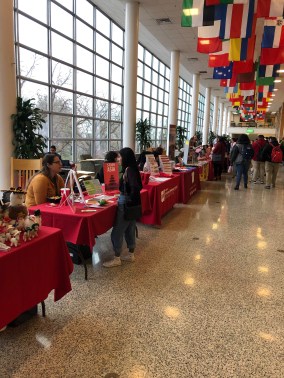
Several hundred Latinx high school students came to the University of Utah on Feb. 27, 2019, for the 24th annual Movimiento Estudiantil Chicanx de Aztlán, or M.E.Ch.A, High School Conference. The conference consisted of workshops, a keynote and lunch.

IMG_2181

A high school student receives information from university groups at the M.E.Ch.A. High School Conference.

The students all had varying reasons for attending the conference. One student came to fulfill hours for his Latinos in Action club. Others came to learn about college. Some came to learn about how undocumented students can get funding and help for school.

There was a sense of excitement all around the conference. Students were rapidly chatting each other up and approaching students from other high schools. It was often hard for the presenters to get the students’ attention as they were getting to know other students who were like them.

Conferences like this, for many students, are a break from the whiteness and racism of the schools they attend, especially for students who are undocumented. About 10 Latinx Taylorsville sophomores and juniors engaged in a group discussion after the workshop “Erasure of African Roots in México.” One sophomore named Juan said the reason some DACA students might not know their options for after high school is “because most of the time they are scared to speak up about it so they don’t know what to do when they graduate high school.”

IMG_2179

Students attend an “Erasure of African Roots in México” workshop on Feb. 27, 2019.

The students were adamant that the current political climate is the reason that many students are afraid to speak up. The president was elected when they were in junior high school.

How has that affected the students and their ability to enjoy school?

“It has affected us in, like, that we get attacked either by the teachers or the students that they make racial jokes,”  Juan said.   

Their teachers would make jokes?

“There were a lot of teachers that would like, say racial jokes in our classes that we had in ninth grade,” he clarified.

Another sophomore, Marissa, who went to Eisenhower Junior High with Juan, said that her friend had a poor experience with her science teacher. A white student had lost a paper and the teacher believed that she had completed the assignment and gave her full credit. Her friend, who is Latina, lost the same paper. However, she was not believed and was accused of not really losing her paper.

This wasn’t the only Latinx student who had this issue with this teacher. Other students commented that they felt like he would glare at them and otherwise make them feel uncomfortable.

“He was like that. He did really bad things to all of us Latinos,” another sophomore, Andrew, said.

“He would try to keep it low-key,” Marissa said.

“He would even give us dirty looks!” Juan added.

They then talked about how they went to the administration about the situation, and how they found a safe place to talk about it: Latinos in Action (LIA). They said that other students had had similar incidents with other teachers and it helped to hear about them from peers. However, they mentioned that some teachers were not supporting the existence of LIA.

“There were a lot of teachers that didn’t support that program at Eisenhower just because we were Latinos and we weren’t the [student body officers] who were white kids,” Juan said.   

While these students’ stories are anecdotal, they are far from unusual. The university has been taking strides to overcome these obstacles that students of color may face when they get to the U, including offering high school conferences that bring underrepresented students to campus.

Martha Hernandez, who gave the “Erasure of African Roots in México” workshop, said these conferences are important because students have the opportunity to see themselves reflected in college students. 

M.E.Ch.A. provides a “space where they can celebrate their cultural identities and have a space on campus where they can do that,” Hernandez said. “And also for them to know there is a community on campus for them.”