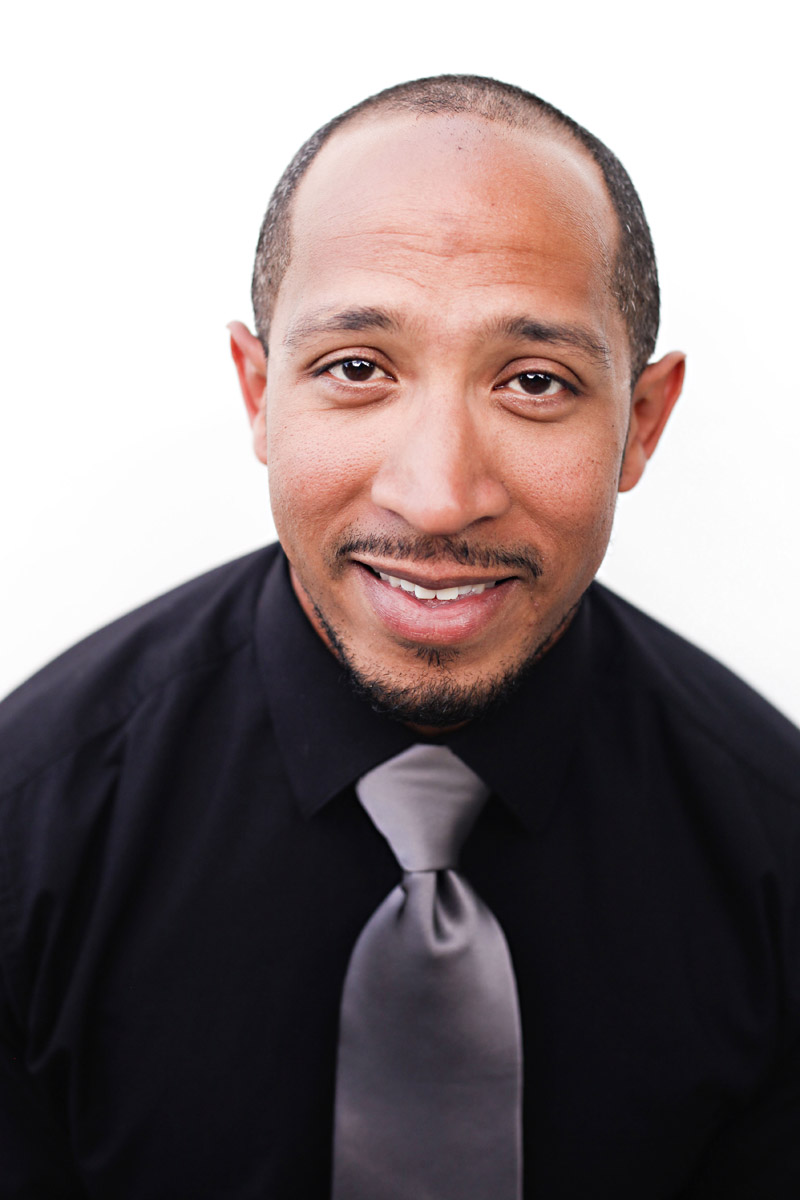
Fremont High School seminary teacher overcomes disability

Story and photo by MAKAYLA STOWELL

Jeremy Chatelain wakes up every morning and drives himself to his job at Fremont High School in Ogden, Utah, where he teaches seminary for the Church of Jesus Christ of Latter-day Saints.

Sounds like a normal day, right? Wrong. Chatelain is a quadriplegic. The simple task of going to his job every day isn’t so simple for him. But he does it anyway because it’s what he loves to do.

Fifteen years ago Chatelain dove off an Idaho bridge into shallow water and broke his neck, leaving him paralyzed from the neck down. The accident happened just six weeks after he signed his teaching contract with the LDS church.

Chatelain and his wife of less than a year had just moved to Blackfoot, Idaho, for his teaching career when the accident occurred.

Instead, the couple spent three and a half months at the University Hospital in Salt Lake City while Chatelain went through physical therapy. He said it was the “worst time of our lives.”

When Chatelain was finished with therapy, the young couple moved back to their home in Blackfoot.

Chatelain had been placed on leave from his job due to the accident. He was not quite ready to begin teaching full time so he decided to do some volunteer teaching instead.

After six years of volunteering and part-time teaching, Chatelain was ready to go back to full-time teaching at Blackfoot High School. The adjustment to teaching in a wheelchair wasn’t easy, but he persevered.

Then, Chatelain’s daughter, Sarah, was diagnosed with leukemia. The family had to travel to Primary Children’s Medical Center in Salt Lake City for her treatment. When the opportunity arose for Chatelain to transfer to a school in Utah, he took it to be closer to the hospital.

Sarah is now 11 years old and cancer free.

During her illness, Chatelain taught at several schools in the Ogden area. The LDS church assigned him to Fremont High School in 2013.

Daren Saunders, the seminary principal at Fremont, said, “I found out pretty quickly how independent he is and how helpful he is to our faculty.”

He knew Chatelain before the accident and knew about his dedication to teaching. Saunders was happy to welcome him to the Fremont seminary staff and have him teach the Gospel of the Church to teenagers.

As the seminary principal, Saunders handles all student requests to switch out of classes. “I have had very few requests to move out of his class, and the ones I have had haven’t even been related to his disability,” Saunders said in an email interview.

“Most of the kids love him and respect him. They find out from day one that his wheelchair doesn’t hold him back in any way from doing what he love to do, and he does it well,” he said.

He added that the seminary staff make sure not to do things that would automatically exclude Chatelain. They carefully plan meetings and retreats and make sure to think about his needs.

“Chatelain is so good to ask everyone for help, trying not to burden any one person,” Saunders said.

The Book of Mormon is the basic doctrine taught by the LDS church.

The Book of Mormon is the basic doctrine taught by the LDS church.

He believes that Chatelain’s disability helps him teach the doctrine of the LDS church. He offers a unique perspective and appreciation of certain beliefs of the church. He helps students to truly understand what it means to endure and persevere, despite life’s challenges and hardships.

“He really is a fantastic teacher. The kids love him and he loves them,” Saunders said.

Kat Flegal, a former student of Chatelain’s, said in an email interview, “I have always greatly admired his strength and great happiness that he has chosen since his accident.”

In addition, she said, “A typical class day with Jeremy wasn’t too much different than other teachers.”

Sometimes students would need to help put papers on the overhead projector, write on the boards or hand out papers. They also had to remember to keep backpacks and coats out of the aisle so Chatelain could wheel his chair through.

“Students were always happy and volunteering to help out,” Flegal said.

She said Chatelain would teach all of his students how to shake his hand at the beginning of the semester. It could be difficult, so he always gave them the option of bumping elbows.

“He was funny and his lessons were always well prepared. I think students like him just as much as any other teacher,” Flegal said.

Because of Chatelain’s injury, he did offer different insight into the teachings of the church.

“I think he applied the gospel to his life to a greater extent than most I know. He could have been bitter about his accident but instead he uses his story and his life to teach and uplift all of his students,” Flegal said.

Jeremy Chatelain hasn’t let quadriplegia deter him from his goals

Story and graphic by ANGIE BRADSHAW

It was a warm summer day in 1998 in the small town of Emmett, Idaho, where Jeremy Chatelain and his family enjoyed a traditional family vacation. That afternoon they floated down the Payette, a river so sluggish that Chatelain said, “The dead fish would beat them down.”

About 15 feet off the water was a bridge where they would jump off of into the water, an old childhood pastime. Connie, his wife of one year, jumped off and Chatelain dove head first shortly after. Seconds later he learned that the water was only 6 feet deep. He is 6 feet tall. He intensely hit the bottom of the gravel filled river.

On impact, one of his bones was violently shoved into his spinal cord, resulting in a vertebral burst fracture. He couldn’t lift his head, let alone get his face out of the water. Struggling to breathe, he mustered up enough energy to blow several modest bubbles and stay afloat. Moments later his family rushed in to assist and pull him to safety.

“Connie, I can’t move,” he gasped while gazing into the clear blue sky.

After waiting for what felt like forever, Chatelain was finally “life flighted” to Boise, Idaho. He didn’t know just how bad it was, until he arrived at the hospital.

After countless hours of surgery doctors informed him and his family that he would live the rest of his life as a high C5 quadriplegic. That day marked the start of some of the hardest days of Chatelain’s life.

Spinal cord injury

“Perceiving a loved one with a spinal cord injury is like distinguishing the same spirited person, alive and eager, confined and despondent, in an unconscious body,” Connie said in an email interview. “I mourned the loss of Jeremy’s body and all the things he did when it worked. We had to adjust and begin again.”

It took 3 ½ months of rehabilitation for him to learn how to live being paralyzed, as well as time and dedication to grasp the basic functions of daily living.

A year later, he was able to gain back some movement in his arms, allowing him to use a motorized wheelchair. It was no easy task, but Chatelain did not let his disability define him and instead confronted it head on. He said that he couldn’t have done it without his wonderful wife and family by his side.

“I would like to let the community know that what people do to help other people really does make a difference,” Connie said.

He slowly started getting back to what he loved, teaching. He started volunteer teaching at a school in Idaho and pursued a master’s degree at Idaho State University, despite not being able to take his own notes. With perseverance he finished up his master’s of education degree in 2005.

Chatelain and his wife eagerly wanted to start a family but struggled with getting pregnant. They eventually started the adoption process and two years later they finally received an answer to their prayers: a beautiful little baby girl. She had piercing brown eyes with a head of softly tufted brown hair. They chose the name Sarah, after Abraham’s wife in the Bible.

“Sarah gave us something else to think about,” Chatelain said.

When Sarah was about 2, the family found out that their precious daughter had been diagnosed with leukemia. The family endured a 3 ½ year emotional and physical struggle, driving from Idaho to Salt Lake City’s Primary Children’s Hospital for chemotherapy treatments.

The family reports that Sarah has been in remission for six years.

Shortly after graduating in 2005, Chatelain and his wife moved back to Utah, where they are both originally from, to be close to family. While in Utah they tried to adopt a second child. Finally, after seven years of a grueling adoption process that consisted of paperwork, home study and required classes, they finally became proud parents to a second child, a baby boy, Dallin.

Chatelain never lost sight of his goals and over the next couple of years he taught at several high schools in the Weber County area as a religious educator for the Church of Jesus Christ of Latter-day Saints. Today, you can find him teaching seminary at Fremont High School.  He also travels around as a motivational speaker.

Not only is he teaching, he is also pursuing his Ph.D. at the University of Utah with an expected graduation of 2015. His research focus is First Amendment implications in LDS Church history from 1829-1844. Chatelain is proof that overcoming adversity is possible.

“I would like to compare adjusting to a life event like this to running a marathon,” Connie said. “Starting out, you think you can imagine what it will take, you begin to train and teach yourself how to handle the long distance, but you know you haven’t truly completed the course until you reach and proceed across the finish line. It takes determination to convince ourselves to move forward and thrive through Jeremy’s injury. I must say that it has been rewarding to bring ourselves to increase, even though most every day has been difficult. We still have a long way to go, but we’ve sure come a long way.”

Salt Lake City’s CHOICE Humanitarian, helping African communities

Story and slideshow by ALEXA WELLS

Visit Kenya with three women who volunteered for CHOICE Humanitarian.

CHOICE Humanitarian, The Center for Humanitarian Outreach and Inter-Cultural Exchange, is an organization that helps the countries of Kenya, Nepal, Bolivia, Guatemala and Mexico. According to the website, the goal is to “end extreme poverty and improve quality of life through a bottom-up, self developing village-centered approach.”

CHOICE Humanitarian was founded in 1982 by Dr. Tom Evans and Dr. James Mayfield. It is a registered nonprofit organization and takes pride in making every dollar count with solid management and low administrative costs. The headquarters are located in Salt Lake City.

CHOICE expeditions are open to the general public and all ages and different backgrounds. Each village has different projects depending on their unique needs. There are many different tasks that volunteers may end up working on such as: classroom construction, community water systems, bio-gas digesters, health clinics, personal hygiene workshops, pit latrines, micro-enterprise training and other village needs.

CHOICE Humanitarian focuses efforts on two of Africa’s highly impoverished areas, the Kwale and Kinango districts located in the Coast Province of Kenya and East Africa. According to worldhunger.org, in the Kwale area, 32 percent of the population has been reported to be classified as “food insecure” while 40 percent of the population is in absolute poverty. This district results in one of the highest infant mortality rates in the country.

According to the International Fund for Agricultural Development, about 79 percent of Kenya’s populations lives in rural areas and relies on agriculture for most of their income. Nearly half of the country’s 40 million people are poor, or unable to meet their daily nutritional requirements. In some places the conditions have improved since the early 80s, but the poverty rate has remained the same at 48 percent. Kenya has one of the world’s fastest population growth rates and in the last 30 years the population has more that tripled. This population growth causes the country to not have enough resources, resulting in extreme poverty.

Lisa Crossley lives in Layton, Utah,  and has participated in the Kenya expedition for the last three years with her neighbors, Tasia and Kimberly Jensen. Crossley and the mother-daughter team  first participated in the program in summer 2009, where they helped to build a school. In summer 2010, they returned to the same village and helped to teach the children in the school. And the following summer, after saving money from the previous year, they helped improve the water catchment systems in Kenya for two weeks.

“My whole outlook on life has changed since I started volunteering in this organization,” Crossley said. “You don’t realize how good your life is until you go somewhere like Kenya. The children of the school eat a cup of grains for lunch and are lucky to have a place to sleep at night. They are so grateful for the volunteers and the help that they bring to the village. I highly encourage anyone to come and experience this, because it is life changing to be able to make a difference.”

People who volunteer for these expeditions gain hands-on experience while working on the village projects that they are assigned. According to the CHOICE Humanitarian website, “They can learn how to combat poverty with new strategies, such as important hydro-electric installations now in the planning stages. With CHOICE Humanitiarian imput, these and other humanitarian organization projects will result in better economic conditions for tens of thousands of villagers.”

Tasia Jensen said, “I highly recommend for everyone to go on a humanitarian trip sometime in their life. It really makes you appreciate what you have, and you learn so much about the African culture. I spent most of my time hanging out with the children. I did art projects with them and helped teach some of them how to read and write. One of the art projects that was created by the students of Kwa Mulungu Primary School was auctioned off by CHOICE Humanitarian, and the proceeds were to benefit the villages in poverty around the world. They were so happy that I was there to help them, I loved seeing their smiling faces.”

All of the expeditions with CHOICE Humanitarian run one week long. Those who are interested in applying need to book their expedition three to six months in advance due to medical testing and travel assignments. Those who don’t have the time or money to go on expeditions with CHOICE Humanitarian also have the option to donate money to the foundation, get involved in Women’s Equity programs, volunteer at CHOICE headquarters, or create a fundraiser. For example, people can donate money to purchase school desks for the schools in these countries that need them.

“The best part of the expedition was the first day that we got there,” Kimberly Jensen said. “The villagers had a welcome celebration in our honor, and we danced around and sang to their music. It was an amazing experience. They were all so happy to have us there, it really touched my heart.”

Details about expedition costs and country-specific needs can be found on the CHOICE Humanitarian website. The price of the expeditions range from $1,995 to $2,195 per person, not including airfare. The fees include village lodging, food, ground transportation, project costs and materials, and two nights in a hotel. While working within these communities, volunteers are treated as a welcomed guest as they help with their daily life schedules.

“I would help them with their water supply and carry the water in giant buckets on my head. It was so heavy and the temperature there was so hot, I thought I was going to pass out. Then I thought, wow … this is what they do every single day, when all we have to do is turn on the water faucet,” Tasia Jensen said.

While the expeditions are only one week long, most volunteers stay extra days and book other adventures and things to do before or after. Things like sightseeing trips, safaris and hikes are all common outside of the CHOICE Humanitarian program.

“The first year that we went to Kenya we booked a week long African safari after our humanitarian excursion. I am so glad that we did that, it was a great experience to see all of the wild zebras, lions, cheetahs, elephants and so many more amazing animals,” Lisa Crossley said.

CHOICE Humanitarian continues to lift the spirits of thousands of villagers within the five countries where volunteers work. In Kenya, the major tool to fight against poverty is education.

“I will continue to volunteer for this organization because it has changed my life,” Kimberly Jensen said. “I do not regret a minute of my time I spent helping the villagers and children in Kenya. I will make sure that my kids get to experience what I have experienced, and I hope that more people will become involved in humanitarian projects.”

Interracial marriage acceptance is on the rise in the US

Story and photo by ALEXA WELLS

Anti-miscegenation laws were laws that enforced racial segregation with marriage and intimate relationships by criminalizing interracial marriage and sometimes also sex between members of different races. According to Wikipedia, these laws were first introduced in the United States from the late 17th century by several of the 13 colonies, and also by many states that remained in effect in many U.S. states until 1967. Since this law against interracial marriages was repealed, acceptance has been on the rise.

Fewer than 1 percent of the nation’s couples were interracial in 1970. However, from 1970 to 2005, the number of interracial marriages nationwide increased from 310,000 to almost 2.3 million, or about 4 percent of the nation’s married couples, according to U.S. Census Bureau.

“Utah, like many other states, had a law at one time that prohibited interracial marriages. It was passed by territorial Legislature in 1888 and it wasn’t repealed until 1963,” said Philip Notorianni, director of the Division of State History in an article from Deseret News.

Fitzgerald Royal was born and raised in Salt Lake City and met his wife, Sandra Naybom in 2006 during a Christmas party at Sandra’s neighbors house. Royal is African American and his Naybom is white. They have a 3-year-old  daughter and moved to Los Angeles for work in September 2010.

“My family was very accepting of me marrying a white woman, but her family was not happy with it at first. They thought that I was not worthy of their daughter because of the stereotypes that follow. I think that they have warmed up to me now because of our daughter being in their lives,” Royal said over a phone interview.

With Utah being only 1.3 percent African American, 13.2 percent Hispanic, and 2.2 percent Asian, it is not as likely to have an interracial marriage than in other states with higher diversity.

test

Patricia and Peter Cho with their daughter Nicole.

Peter Cho was born in Hong Kong and moved to London on his own for high school. When he graduated, Cho came to Salt Lake City to attend Westminster college, where he graduated with a degree in computer programming. While he was at Westminster, he met his wife, Patricia Cho, and has now been married to her for twenty five years. Patricia Cho, who was born and raised in Mexico City, also moved to Salt Lake City to attend college and now works as a reservations agent for JetBlue Airlines.

“We like to make sure that our children learn about both sides of their heritage by keeping up with family traditions that we both have experienced from childhood. Traditions such as Chinese New Year and Cinco De Mayo are a big deal in our household,” Peter said. “We travel and visit family in Mexico and Hong Kong quite often because of Patricia’s flying benefits. It gives us the opportunity to show our children where we grew up and learn about their nationality.”

Patricia often feels stereotyped for being in an interracial marriage. “I think that people still have a long way to come on accepting interracial marriage. I get strange looks and judged because I am married to an Asian and I am Mexican. My friends at work ask me why I married Peter, but I don’t see him as being any different than me. I don’t care because I love him and our family that we have made together. I wouldn’t change it if I could.”

In an NBC News story, “Interracial Marriage in US hits new high: 1 in 12,” Daniel Lichter, a sociology professor at Cornell University, said, “The rise in interracial marriage indicates that race relations have improved over the past quarter century. Mixed-race children have blurred America’s color line. They often interact with others on either side of the racial divide and frequently serve as brokers between friends and family members of different racial backgrounds. But America still has a long way to go,” he said.

Fitzgerald Royal and Sandra Royal with their daughter. Photo by Sandra Royal.

Fitzgerald and Sandra Royal with their daughter. Photo courtesy of Sandra Royal.

According to Pew survey data of social and demographic trends, about 83 percent of Americans say it is “alright for black and whites to date each other” jumping up from 48 percent in 1987. With these statistics on the rise, the US society is building its acceptance. The US has come a long way since slavery and black segregation, and the statistics are improving year by year.

“When I look at someone, I don’t really notice their race nor do I care,” Sandra Royal said. “I am just concerned about what type of a person they are. Race does not matter to me at all.”

Transracial adoptions on the rise in Utah families

Story and photo by TALON CHAPPELL

The home of Jim and Connie Child in Layton is a traditional Mormon dwelling: a spotless front room with a pearly white couch, followed by a stairway with artisanal wooden handrails and family photos hanging from the adjacent wall.

But, one look at the family photos and it is clear that the Childs are different from other families who belong to the Church of Jesus Christ of Latter-day Saints.

Jim and Connie have adopted two children in their 23-year marriage, 15-year-old Ashton and 8-year-old Camilla, both of whom are of African American descent.

The Childs are just one of numerous families who have taken part in transracial adoption in Utah over the past several years. While actual numbers are rough estimates, the American Adoption Agency says that transracial adoptions are on the rise not only in Utah, but nationally as well.

After a two-year wait, Jim and Connie learned that they were going to be parents for the first time. Baby Ashton was brought to the Childs’ home in August 1997. Baby Camilla was brought home the same month in 2005. Finally, the Childs had their perfect little family, and nothing could take that away from them.

“We were ecstatic about having a child,” Jim said after officially adopting baby Ashton.

Initially, the Childs didn’t think about the difference of parenting black children in a white household. But they couldn’t ignore it forever.

“We knew white, black, green or pink that we would raise our children to be good members of the church and share our values,” Connie Child said. “But we also didn’t want to shun our children from their cultural background.”

Kayleen Vidal ran into this quandary often when she worked at A Act of Love Adoption Agency.

A Act of Love Adoption Agency has been assisting expecting adoptive parents since 1993.

A Act of Love Adoption Agency has been assisting adoptive parents since 1993.

“Lots of transracial adoptive parents wonder how they can maintain some kind of lifeline to their child’s cultural roots…. Some parents just ignore it, but we encourage them to be involved and do m

any different kinds of cultural activities that coincide with their values and beliefs,” Vidal said.

Vidal herself was adopted and after she learned that she could not bear children, she chose to adopt. After bringing home her baby girl, she decided to help other hopeful parents take in the thousands of

newborn and foster children up for adoption. She loves seeing interracial families and was so proud when she was able to help create one through adoption.

“Multiracial and multiethnic families need to be more commonplace in Utah,” Vidal said. “I believe racism will diminish when people see the happy, healthy families that transracial adoptions create.”

So, what exactly do the Childs teach and do with their children to avoid the cultural pitfalls that can occur in transracial adoptions?

Ashton Child says his parents are a big influence on him and who he surrounds himself with. “My parents are really involved in the stuff I like … the music I listen to, and the games I play, and the kids I hang around with, and the girls I hang out with.”

Ashton’s goals offer a snapshot of how his white, LDS family background merges with his fondness for black cultural icons and figures.

“Well, I haven’t thought about it much [future career] but maybe a music producer or artist … after I serve my mission, of course,” Ashton said.

Ashton’s future goals are sweet music to the ears of Shawna, Ashton’s birth mother.

Shawna still stays in touch with the Child family from time to time, making visits on holidays and special occasions. But she makes a point to not be too involved in Ashton’s life.

“I was comfortable with my decision,” Shawna said. “I gave my baby to that family with the trust t

hat they could take care of him better than I could, and I believe they have.”

Shawna says she is proud of Ashton’s aspirations and she hopes that he becomes successful in whatever he chooses.

“Although it’s not my faith, I’m glad he wants to serve a mission,” she said. “It’s good for children to have faith in their lives and the Childs have instilled real faith in him … and I don’t care if he’s a producer, doctor, teacher or whatever. I just want him to be happy and not make some of the decisions I made when I was young,” she added, with a crack of emotion in her throat.

The U.S. does not have a system to keep track of the total amount of adoptions per year, but there are several reports that offer estimates of public and private adoptions.

According to the North American Council on Adoptable Children, 6 percent of Utah’s foster-care children are African American and of that number, only 3 percent have been adopted.

Those interested in adoption can find numerous adoption websites both locally and nationally. Foster parenting is also a viable option for those who do not wish to wait the typical amount of time for an adoption to open up, or who cannot afford the costs of a traditional adoption. Utah law requires that adoptive parents be single or married, but couples living in an unmarried sexual relationship (including gay and lesbian couples) may not adopt in Utah.

Thelina Smith, Miss Black Utah USA, strives for science education

Story and photo by LORIEN HARKER

On the Miss Black USA pageant website there is a statement that reads, “It’s time to redefine what it means to be a courageous, compassionate [and] CONFIDENT black woman today. We’ve got obstacles to overcome and stereotypes to smash. Sound like your kind of revolution? Join the movement.”

Thelina Smith has got some smashing of her own to do.

524502_4026434416872_1145373459_n

Smith competing for the title of Miss Pioneer Valley in August 2012.

Smith is the current reigning Miss Black Utah USA. She also is a junior at the University of Utah who is studying biomedical engineering with an emphasis in biomaterials and leadership studies.

Smith is extremely busy with duties of the crown and sash, such as being an advocate for heart health while promoting her own platform. However, she makes sure to be involved with her studies. Smith started the first chapter of the National Society of Black Engineers at the U, reactivated the U’s Society of Women Engineers and is a biomedical engineering ambassador for the College of Engineering.

As a requirement for her title, Smith also promotes a platform, or an issue she feels needs to be addressed within the community. Smith says her platform, “Engineering the Leaders of Tomorrow, Because Tomorrow Matters Today,” is meant to “motivate minorities and underrepresented students to engage in STEM education.”

Smith says her platform has three goals. First, to reach out to the community, specifically women, through educating them on STEM (Science, Technology, Engineering and Math) education. Second is to “continue to charter diverse student organizations throughout Utah that serve to recruit and retain minority and underrepresented students in STEM fields.” And third, she wants to “establish a council” to mentor the youth she hopes to recruit into math and science education.

“I feel that this pageant allows me to take my efforts to the next level,” Smith says in an email interview. “I want to challenge young ladies to think about what it is to be beautiful and smart and to capture the attention of young men to let them know they can have a future within STEM education.”

Smith has also been working on partnering with the National Society of Black Engineers, The Society of Hispanic Professional Engineers, The American Indian Science and Engineering Society, and the Society of Women Engineers, of which she has been an active participant. Smith wants to partner with these societies to form a council called STEM-Diversity Industry Advisory Council.  This council would include “community leaders and local STEM company representatives that will [oversee] the support of these student chapters,” Smith says.

Despite her full schedule, Smith is making time to run for Miss Black USA in Washington, D.C., in August 2013.

Although there have been women of color to win larger national and international pageants, Smith doesn’t feel women of color are being represented to their full potential within these programs.

 “I wouldn’t consider myself ‘marginalized’ in pageantry but rather ‘underrepresented.’ There have been women of color to capture the crown as Miss America, Miss USA, Miss Universe, [but] this is still relatively a small number in comparison to the number of years that these organizations have existed,” Smith says.

Lana Thompkins, the public relations spokeswoman for Miss Black USA, says in an email interview that the Miss Black USA is necessary because women of color do not feel beautiful with today’s standards of beauty.

 “Self-esteem is the core of a woman’s belief in herself. Miss Black USA sets our own standards of beauty,” Thompkins says.

African-American women have been faced with many stereotypes, Thompkins says, and the purpose of the Miss Black USA pageant is to disprove these stereotypes.

“While 80% of Miss Black USA contestants are graduates or professionals and represent a new generation, we are often negatively typecast, demeaned, and portrayed in the media and in the workplace as ‘broken,’ ‘unattractive,’ ‘alone,’ ‘hard to work with,”’ and even ‘violent,’” Thompkins says.

Raychellene Talbot, the wardrobe coordinator for Miss Utah under the Miss America Organization, feels that Miss Utah has a “melting pot of pageant girls” despite the fact that there has yet to be an African-American Miss Utah.

“We have so many different contestants at the local and state level. I know Miss Utah Outstanding Teen 2011 had 6 different nationalities,” Talbot says.

The Miss Black USA pageant was founded in 1986 by Karen Arrington. The scholarship program boasts a two-year tuition scholarship to Miles College, a historically black college in Fairfield, Ala.  The scholarship also awards a fully furnished apartment close to campus. If contestants such as Smith win and choose not to attend Miles College, they do not receive the housing benefits.

Women who have competed for the title of Miss Black USA have gone on to win titles within the Miss USA organization. Chenoa Greene, Miss Black New Jersey 2007, went on to become Miss New Jersey USA in 2008.

Thelina Smith says, “The Miss Black USA pageant is a showcase of women who otherwise may have been overlooked.”

Ogden resident Stanley Ellington enjoys helping the community

Story and photos by GUSTABO RODRIGUEZ

Helping people in the community of different cultures is a job that not everybody can fulfill. Reasons for helping or not helping people can come in various answers or excuses, but not for one man who helps from his heart.

Stanley Ellington was born in Alabama and lived in Washington, D.C. for seven and a half years. Then he went to Germany for two and a half years. He returned to the U.S and lived in Kentucky in 1974.

In the U.S. Air Force, Ellington helped people solve their personal problems related with their job or family.

In 2000, he moved to Utah because of his job in the Air Force. He retired in 2002 after serving for 28 years. From there, he knew that he wanted to continue to help people. He moved to Utah where the diversity is lacking, and was further motivated to help marginalized communities.

“I’m a good bridge for helping out people in the community,” Ellington said.

He enjoys helping individuals. For example, he helps an elderly woman by taking her husband to the doctor.

Stanley Ellington

Stanley Ellington is a leader in the community.

Ellington also was the first executive director of the Utah Black Chamber of Commerce.

He is part of the National Baptist Association, which is divided in the states of the Utah, Idaho and Wyoming. He has many ways to help people not only in Utah, but other states by helping the other churches in those states.

He is a Christian minister for the New Zion Baptist Church in Ogden and now as a licensed minister he can help more people in the community. Ellington gets involved with the community in Ogden not only through his profession, but also through the church. He is the director of the Christian education of the church. By being in charge of the education department, his duties are to set classes for the Christians and prepare the four phases of the classes.

In 2006 he built his own business that provides consulting in business management. During this time he was made the first executive director of the Utah Black Chamber of Commerce. He helped small businesses in Salt Lake and the surroundings areas to thrive in the community.

People from the black community, like many other people, are always looking for a new opportunity. Ellington said that he knew a woman who went to look for a job and the first thing they asked was if she knew Stanley Ellington.

“Just because we’re black were supposed to know each other,” Ellington said.

He has experienced different cultures here and learned the customs of other individuals. Working for the State of Utah Governor’s Office of Economic Development he learned that some women don’t greet men or other people. So Ellington had to create a new way to greet a woman from a different culture.

Kathryn Crosby, a friend of Ellington, met him two years ago through their affiliation with the Utah Business Development Alliance.

Kathryn Crosby

Kathryn Crosby appreciates her friendship with Stanley Ellington.

Crosby has a great admiration for Ellington because of the way he can handle situations, and for his accomplishments with the community and his life.

“Stanley has a unique ability to see clear routes through complicated issues, and to communicate with people from all walks of life,” she said in an email interview.

Crosby also said Ellington has a contagious amount of energy and enthusiasm.

“I consider myself very fortunate to be able to call Stanley my friend and colleague,” Crosby said.

She respects Ellington because he works hard to help out people and he does not settle for reports that he is very sure do not make sense.

For example, he said that in Utah there was a report that locally-owned black business were increasing year after year, but he was not convinced.

Ellington said it is difficult for business owners to seek additional training because they can’t leave their business to go to school. If they do, they risk losing clients. He feels that the Utah Black Chamber of Commerce can help entrepreneurs by offering classes online. Webinars, or online seminars, also could be a good idea because people have become more computer savvy. He said a program on public television that would help educate business owners might be useful too. He said that it would be another way to educate not just the black community, but also people from different cultures who want to succeed in Utah.

Ellington has influenced many Utahns because of all the organizations he has been involved with.

“I’ve been labeled the African American representative,” Ellington said.

Cynthia Nielson met Ellington when she joined the Utah Business Development Alliance (UBDA). Nielson and Ellington have worked together on many projects, including managing, organizing and preparing presentations.

“Stanley has extensive training in business management and administration,” Nielson said in an email interview.

She also said that Ellington has been a big influence in the goals of UBDA, which includes assisting small businesses in finding and getting contracts that are going to help them succeed by getting their name out into the market.

“Stanley is a great teacher and donates a lot of time to our non-profit organization. Stanley is eager to improve himself through education and is dedicated to his religion. He has a kind heart and I admire him greatly,” Nielson said.

Stanley Ellington came to Utah to do what he was born to do: help people. That mission was his destiny.

“God brought me to the state of Utah,” Ellington said.”I don’t know why, but it was to fulfill my mission in Utah.”

James Jackson III: building a stronger African-American community

Story and photo by DANEALLE PLASCENCIA

How do you picture Utah when you know the majority of the population is Mormon? Do you picture only Caucasians? What about the minorities?

For almost two decades, Utah’s population continued to rise while the percentage of its people who are Mormon slowly and steadily declined, wrote Matt Canham in an article for The Salt Lake Tribune.

Newcomers have found that Utah is economically stable and offers different sources for the community to grow in comparison to the rest of the nation.

The job rate in Utah is increasing faster than the unemployment rate, and has an attractive cost of living which is making people to consider Utah as their new home.

Like any other state, Utah offers different sources to help the community, including the minorities.

One of those sources is ACCEL (African-Americans Advancing in Commerce, Community, Education and Leadership).

This organization is committed to being the premier organization in providing education, resources and visibility for the African-American small businesses owners of Utah.

Photo Courtesy of James Jackson III, Founder of ACCEL

Photo Courtesy of James Jackson III, founder of ACCEL

The founder of ACCEL is James Jackson III, who was born and raised in Utah.

Jackson, 33, graduated from The University of Utah with a bachelor’s degree in finance and marketing.

He earned a master’s degree from the University of Phoenix in 2010.

After working on his own for a while he decided to establish ACCEL in the winter of 2009.

The main reason for the creation of this organization is the passion for business that Jackson has, especially the necessity of helping those around him in their endeavors.

Being able to offer the community more resources for education to have a better future is a main focus.

Jackson develops the idea of creating an organization from his own experience of being the  owner of a small business dealing with the sale and management of properties.

That is how he noticed how the African-American community didn’t have enough resources and support to develop their business ideas.

“Creating ACCEL took a lot of time, and help from other people who I see as an example for my project,” Jackson said.

One of those people who helped Jackson is Francisco J. Sotelo, current executive director of  the Utah Hispanic Chamber of Commerce.

Jackson and Sotelo met three years ago, during an event of the UHCC. Jackson asked him for help to create a stronger organization.

Sotelo had meetings with Jackson to help him understand how a chamber works, and share his strategies that he had used to create a successful chamber.

During the meetings they shared ideas and new projects for both organizations.

Since then Jackson and Sotelo have a very good relationship.

They meet often to talk about Jackson’s projects, and to keep each other updated about their respective organization.

“Our relationship has grown over the years and as well the chambers, we had learned from each other through the years,” Sotelo said in a phone interview.

Official Logo of ACCEL

Official Logo of ACCEL

Networking plays a big role for ACCEL. Jackson believes that a networking community is more effective than one that is not really connected. That is why he is creating a new website for ACCEL with the help of Ronda Fisher.

Fisher said in a phone interview that her goal is to design the site so people can find resources and assistance more easily.

“I’m really excited to see the results,” Fisher said.

Besides being a successful business man, Jackson is a member of one of the most established black churches in Utah, the Calvary Chapel Salt Lake and makes time to be part of the church activities to be connected with the community.

Between his activities Jackson is the coach of a kids basketball team, and reads books like “Think and Grow Rich: Your Key to Financial Wealth and Power ” from the author Napoleon Hill, for personal enrichment at the start of the year.

Community is the main focus for Jackson in his life. He knows the African-American community population is only 1.3 percent in the state of Utah but that is enough for him to keep working hard to create a successful community.

“Things have changed in Utah. I remember when I was in elementary school, there were only a couple of black kids in my classroom, but things have changed since then,” Jackson said.

Jackson has dedicated the last four years to building a stronger African-American community in Utah, and all his work is being rewarded.

“Jackson works really hard every day, and has done a lot of things for ACCEL,” Fisher said.

Diversity of cultures in Utah is becoming more noticeable, and Jackson is trying to be part of it.

Jackson’s future plans for ACCEL include having more members, hiring an executive director who would be in charge of the organization, and creating scholarships like SOMOS, the prestigious award offered by the UHCC.

ACCEL, after four years of its creation, now is offering sources for 300 African-American small business owners in Utah.

“James is a great leader and represents the black community very well,” Sotelo said.

Utah’s Black Chamber of Commerce and ACCEL helping African American businesses and the Utah economy

Beyond Beauty is a black owned salon in Murray, Utah and is owned by Angel Bumpers

Beyond Beauty is a black-owned salon in Murray, Utah, and is owned by Angel Bumpers. She is also one of the founders of the Utah Black Chamber of Commerce.

Story and photo by ALEXA WELLS

The Utah Black Chamber of Commerce and ACCEL, African-Americans Advancing in Commerce Community Education and Leadership, are both organizations located in Utah with a focus on helping black-owned businesses with networking and coming together in the community.

The Utah Black Chamber of Commerce is a nonprofit organization whose mission statement is “to economically empower and sustain African American communities through entrepreneurship and capitalistic activity within the United States and via interaction with the Black Diaspora.”

Stanley Ellington is from Fort Knox, Ky., and has lived in Utah since September 2000. Ellington’s parents are both African American. Ellington has a bachelor’s degree in administrative management from Excelsior College, a master’s degree in management from the University of Phoenix, and is pursing a doctorate degree from Grand Canyon University in organizational leadership with an emphasis in organizational development. With these credentials, Ellington started and became the executive director of the Utah Black Chamber of Commerce.

Ellington has been labeled as the African American representative of business. He is on The Board of the Governor’s Office of Economic Development, a licensed Christian minister at the New Zion Baptist Church in Ogden, Utah, is serving as a board member on the Pastor France Davis Scholarship Fund,  and is a member of the Junior Achievement of Utah organization.

“I came to Utah to be a leader,” Ellington said.

Another local leader is James Jackson III. He was born and raised in Utah, and attended Cottonwood High School in Murray. He graduated from the University of Utah with a degree in finance and marketing. Jackson took a break from school for about seven years and then went back to obtain his MBA from the University of Phoenix.

Jackson has known what he wanted to do since he was in junior high school: work in the financial industry doing strategic and market planning.

He was a member of the Utah Black Chamber of Commerce until he saw the need to build an organization where the black community can network together. Jackson started ACCEL in the winter of 2009.

ACCEL is for helping black communities with starting new businesses and brings the diverse community together and builds an environment for networking. Utah has many black-owned businesses, and with ACCEL it gives them the resources that they need to gain exposure throughout the community.

With organizations such as the Utah Black Chamber of Commerce and ACCEL, black business owners are able to obtain scholarships and attend seminars and networking events to get their business running.

Both the Utah Black Chamber of Commerce and ACCEL are committed to providing training and education to help business owners become successful. These organizations are looking for ways to teach people how to run a business and share the resources to help them when they need it.

One option Stanley Ellington is considering is offering webinars through the Utah Black Chamber of Commerce.

Job opportunities in Utah are helping to bring more diversity to the state and increase the black population. ACCEL and the Utah Black Chamber of Commerce are both working on helping bring diversity to Utah’s business owners.

Ellington says that he would like to see more ethnic diversity in Utah, since the black population is only 1.3 percent.

Jackson said, “Utah’s economy is fairly stable and the black population is growing. Most African Americans come to Utah because of the job opportunity.”

According to the ACCEL website, “The growth is due to Utah being more stable economically than the national average, as the job rate is increasing faster than the unemployment rate and has an attractive cost of living.”

Derek Miller, active executive director of the governor’s Office of Economic Development, said on the ACCEL webpage, “Utah has been ranked as the No. 1 most dynamic economy in the nation in 2009 and has seen 50% growth since 2007.”

The Utah Black Chamber of Commerce and ACCEL have made goals for improvement during 2013. Ellington is on track to relaunch the UBCC website, and Jackson hopes to offer more events each month, increase the membership base, add a member-to-member discount and improve the website. With these goals, both the Utah Black Chamber of Commerce and ACCEL will continue to be a resource for black-owned businesses in Utah.

Two local organizations help black business owners in Utah

Story by ALYSHA NEMESCHY

ACCEL CARD

ACCEL business card emphasizes taking the community to the next level

Born and raised in Utah, James Jackson III was the only black person
in his school until he reached the fifth grade. When he reached high
school, Jackson was one of about a dozen black students.

Jackson said that Utah’s significant lack of diversity makes him
excited to see new black people in the community. He said there are
very few unfamiliar African American faces in the state.

Recognizing this diversity gap at a young age, he chose to make a
difference in Salt Lake City by launching a business called ACCEL,
African-Americans Advancing in Commerce, Community, Education and
Leadership.

The idea of such an organization began in late 2005. Angel Bumpers, an
African American who had recently started her own business, Beyond
Beautiful, realized that there was no black chamber of commerce to
assist her in her business journey.

After starting Beyond Beautiful, Bumpers became one of the original
founders of the Utah Black Chamber of Commerce, hoping to help other
business owners.

Bumpers was in her mid-20s when the chamber was founded. She said
many people thought she was too young to take on the responsibility.
Due to this, she said she was forced to step down from her position.
She chose to resign from the chamber altogether.

Jackson, also a co-founder of the chamber, said that by 2008, the
organization seemed to have stalled.

He established and founded ACCEL in 2009 as a place for the black
community to come together, network with each other and recognize
other black Utah business owners.

According to ACCEL’s website, the majority of Utah is unaware of
black-owned businesses in the state due to “lack of exposure and
support of the community.” If the black community came together for
this one purpose, “a powerful synergistic organization would be
created to stimulate and excite the black marketplace.”

According to the US Census Bureau, there has been a small increase of
black people in Utah over the last four years. Jackson attributes
this growth to Utah’s overall growth and the growth of the economy
itself. With ACCEL, the increased amounts of African Americans in the
state have a place to turn when they are in need of help with business
ownership.

Jackson said some of the black-owned businesses in Utah include
catering companies, barbershops, physical therapy offices, moving
companies, network marketing companies and many more.

Although there are many black-owned businesses in the state, Bumpers,
owner of one of the longest-run black-owned businesses in Utah, said
Utah is still falling far behind the rest of America in regards to
minority-owned business exposure. She believes this is due to a lack
of knowledge, lack of communication and lack of support.

Jackson hopes to overcome these obstacles by sharing details about
ACCEL and how it can help individuals who are interested in starting
businesses.

Providing these things to the community requires support from others.
ACCEL has built up a large array of supporters including Zion’s Bank,
Budweiser and PepsiCo, who all provide donations to the organization.
Jackson said these organizations are passionate about being involved
with diverse organizations.

Having the support of others gives Jackson the opportunity to do what
he loves — educate others. With ACCEL, Jackson is able to do exactly
that.

Jackson focuses on the strange paradox of Utah having a strong economy
yet a lacking educational system. Through ACCEL he hopes to improve
education for the youth of Utah by offering seminars, networking
events and scholarships.

By helping other business owners and educating the youth, an important
part of his journey through ACCEL is to “remain humble and
never be afraid to ask questions,” Jackson said. “You learn more when you’re humble
rather than prideful.”