Mestizo Coffeehouse provides spaces for community projects

Story and gallery by MEG CLASPER

Sometimes the best places are hard to find. Mestizo Coffeehouse, tucked in the Citifront Apartments at 641 W. North Temple, is one such hidden gem. It offers more than just coffee and pastries. It also supports causes.

Established 12 years ago, Mestizo filled a community need for a public meeting space. Since then over 50 organizations have met at the coffeehouse. “Someone said, ‘You do so much.’ We don’t do anything, we just provide the space for it,” said owner David Galván. 

Not everything that goes on at Mestizo is based around an issue or a cause. Many activities happen just for fun. Single people from the local congregation of the Church of Jesus Christ of Latter-day Saints hold frequent comedy nights there. Clubs and groups meet at Mestizo. Many check-ins on its Facebook page come from bible study groups. Other events such as concerts and art walks are scheduled there too.

Gallery

The gallery is the largest meeting space in the coffeehouse. Two moveable wall sections allow for the room to be opened up to the main area. A small sitting area in the center of the gallery features a couch, coffee table and two large chairs. A piano and bass sit across from the couch allowing the room to be used for meetings or music. 

The walls of the gallery are home to pieces of art by local artists. Three month-long exhibits are scheduled to start in April. Each follows an overarching theme of displacement and gentrification: “March for Our Lives,” “Youth Custody,” “Tower of Stories.” They tell the story of how the west side of Salt Lake City is impacted by the school-to-prison pipeline. 

Events such as yoga, tango, musical performances, and larger gatherings are able to use the gallery. With the advantage of moveable walls, the gallery can be used along with the other spaces at Mestizo.

Secondary Space

The secondary meeting space is filled with tall tables. Bar chairs surround the tables leaving room for an additional standing crowd. A floor to ceiling window connects to the emergency exit. The window allows natural light into the space highlighting the blue, orange and red walls.

A stage area is reserved in the front left corner of the room. Two speakers are set up to allow those conducting events or meetings to be heard over the crowd. Events such as karaoke and comedy nights are held in this room, Galván said.

A doorway to Mestizo

The outside seating area is the first thing all visitors see when approaching the business. Hand-painted metal tables and chairs surround the rust-colored awning above the door. Each chair has its own color and designs that add character. The front door is framed by two windows, one of which is decaled with the poem “Mestizo” by Francisco X. Alarcon.

This space in addition to the main seating are more casual areas. Customers can sit, chat, relax, or even work in any area that isn’t reserved at the time.  

Atmosphere of Mestizo Coffeehouse

A large chalkboard calendar sits above the condiment bar. The calendar shows upcoming and weekly meetings. For example, tango happens every Sunday, an open mic night every Wednesday and a meeting of Furries (a group that enjoys animal cosplay) every Friday. This is able to show visitors to the coffeehouse what events are coming up that they might find interesting.

In the main sitting area of the coffeehouse, next to the ordering counter, is a mural depicting several people of all types in the same space. One man is playing a guitar, a woman is painting on a canvas, a few other people are conversing over a cup of coffee. The top of the mural reads MESTIZO (MIXED). In Spanish, mestizo means “mixed” in reference to cultures and families.

“A huge number of people end up here because of diversity,” Galván said.

Mestizo is known by many different groups around Salt Lake City. Students and staff at the University of Utah know the place well.

“Mestizo is an invaluable community space. They are always willing to host activity events, and they have great art and coffee too!” said Bryn Dayton, a senior at the U who works with social justice organizations on campus.

With the coffeehouse’s support and ability to provide space for them, organizations can connect and move forward. Its location is just on the border between west and east Salt Lake City, making it a convenient spot for groups from both sides to interact, work together, or enjoy a cup of coffee or a chai latte. The idea of mestizo in the surrounding community is supported by the coffeeshop. Mestizo Coffeehouse is an inspiration and invaluable space to the community of Salt Lake City.

Santo Taco: a pillar of community in crisis 

Story by PALAK JAYSWAL

As the COVID-19 pandemic continues to shut down our world, it may be an understatement to say its effects on particular trades will be devastating. From entertainment to athletics, industries and workers alike will not be left unscathed by this pandemic. 

On a more local level, those who are most economically vulnerable are small business owners who rely on people leaving their houses to help pay their own bills. 

One local Utah business, a taqueria called Santo Taco, located in Rose Park at 910 N. 900 West, continues to serve people via takeout orders and curbside delivery in adherence to guidelines from the Centers for Disease Control and Prevention. Despite the unprecedented circumstances of the pandemic, combined with the added stress of recovery from the Magna-centered 5.7 earthquake that rocked Utah on March 18, 2020, the taqueria provides comfort to Utahns while sticking to the traditional values it is built on. 

The Story 

According to their website, the owners of Santo Taco, Claudia and Alfonso Santo, have been in Utah for decades, and their taqueria has been a work in progress for many years. When Claudia and Alfonso first got started in the food industry, they were washing dishes in the kitchen. Through years of learning skills from the culinary industry and working to build a life for their growing family, they slowly immersed themselves in the art of food. 

Originally opened in 2019, Santo Taco prides itself on its long journey through fresh food and traditional flavors. The journey is one of dedication, family and innovation. The trademark home-style cooking from Santo Taco is adapted in the owners’ way, catering to the vegetarian palates as two of the couple’s children are vegetarians. Modifying these recipes is a remarkable feature considering many Mexican plates are heavy on the meat. 

The menu of Santo Taco has something for everyone — from the tacos, of course, to quesadillas and burritos. There are several popular snack items available as well, such as nachos and asada fries. While the food is delicious, during times like these, it’s not just the food that brings customers to the doors of Santo Taco. 

Community and Crisis 

Rodolfo Rangel Jr., a realtor in Utah, is proud to dine at Santo Taco during COVID-19 lockdown. “We are together in this crisis. If we don’t support each other, everyone will be affected one way or another,” Rangel said in an interview over direct message. 

While Rangel is acquainted with Salt Lake City through his profession, he is aware of the value a support system of a community can provide. “I know the owners and I know how hard they worked to open this business. I just want to do my part. They are a hard-working family and I know they always help anyone in need,” Rangel said regarding the Santo family. 

Rangel is one of many who wants to do his part to support local businesses and families. Steve Kinyon, food blogger behind Foody Fellowship, also marveled at the quality of food from Santo Taco and the sense of stability it provides in these uncertain times. “It’s important to support local [businesses] right now because there are already thin margins,” Kinyon said in an interview over direct message. 

While Kinyon sang praises for Santo Taco on his Instagram account, he also had kind words for the people behind the food. “Santo Taco has amazing owners and operators for their business. They are genuinely great people, they care about the community,” Kinyon said. 

In times of true panic, there are certain things that provide comfort to individuals, like a good book, a warm blanket or your favorite takeout food. Self-isolating is now the norm for many people across the country, and Utah is no different. But what does this mean for local businesses? As the world continues to change on a daily basis, Santo Taco and its patrons remind us of why supporting local businesses — circumstances permitting — is important.

Even in good times: the west side struggles

Story and photos by SPENCER BUCHANAN 

In February 2020, Rep. Alexandria Ocasio-Cortez, D-N.Y., stirred up controversy when she said in part, “It’s a physical impossibility to lift yourself up by a bootstrap, by your shoelaces.”

Ocasio-Cortez and others explained further that the original meaning of the idiom “pull yourself up by your bootstraps” was meant as a joke and that the narrative has driven out good policy in helping struggling people. The narrative the idiom formed is one that disregards the barriers that the working-class and marginalized have to deal with, despite the recent economic gains and the shrinking unemployment rate. 

It can be hard to break into the job market. It can be particularly difficult for immigrants and refugees to find stable, well-paying employment. Many struggle to apply for jobs and even more face structural challenges in acquiring the skills and training necessary to qualify for positions. These problems can be found nationwide but the impact can be seen on the west side of Salt Lake City.

The west side has long been a working-class neighborhood and in recent years has become increasingly diverse. With large immigrant and refugee populations, residents of the west side often have to make huge adjustments to enter the American job market.

Organizations like the University Neighborhood Partners (UNP) Hartland Partnership Center, the Rose Park Neighborhood Center, and the Utah Department of Workforce Services work to help west-side residents deal with barriers that are commonly overlooked.

“Individuals come in seeking support in finding jobs. So that can vary in need. Sometimes we’ll make resumes. We have a lot of templates and we’ll actually help make the resumes with individuals. And often we’ll just help apply for jobs,” said Amelia Cope, an intern at Hartland and social work student at the University of Utah.

Cope explained that those who come to Hartland need help with several issues. Many clients don’t have an email account or computer access, several don’t have transportation, and many speak English as a second language. 

The Rose Park Neighborhood Center at 754 N. 800 West.

Lenn Rodriguez, a site coordinator at Hartland, stated that beyond the technology gap and language difficulties, many recent immigrants and refugees have experienced or are experiencing trauma that can be debilitating. According to Rodriguez, this is why the Hartland Partnership Center also provides counseling and therapy for many new immigrants and refugees.

“A lot of the people that are coming here have trauma from wherever they came and haven’t processed that. That affects your ability to seek out employment and other services,” Rodriguez said. 

But a major problem that Rodriguez sees is the lack of “good jobs” and training for immigrants and refugees.

 “We work with a lot of professionals, also with people that hold degrees in other countries like engineers, doctors, teachers, from Iraq, from Syria, from El Salvador. They come here and they can’t work in that field that they studied. So they become cleaners, they work at the airport, and hotels,” Rodriguez said.

The University Neighborhood Partners Hartland Partnership Center, located at 1578 W. 1700 South.

Rodriguez stated that many professionals have to start again in education and training if they want to work in their original field. Unfortunately, many job seekers in the west side are suffering from a wider issue in the market.

“The problem is: it’s very difficult to do training,” said Cihan Bilginsoy, a professor in economics at the University of Utah who specializes in labor issues.

According to Bilginsoy, the nature of training and educating would-be job seekers is a costly and lengthy process. This process keeps many employers from implementing the necessary training or education that can lead to more stable, fulfilling, and well-paying jobs.

This cost and investment draws companies away from creating large training programs. He said many employers will instead invest in a few seasoned professionals and have other positions filled with very specifically trained but generally low-skilled employees. These “task-oriented” workers are put in vulnerable positions without marketable skills.

“These semi-skilled workers can be shed very easily, they receive low wages, they’re marginal and dispensable,” Bilgonsoy said.

The Associated General Contractors of Utah is one of the few organizations in the state that provides professional training.

In his research, Bilgonsoy has found that most western nations have a skills gap issue. Nations like Germany or Australia have created social and government structures that organize stakeholders like the government, the unions, and employers to cooperate and fund training in various fields. There have been pushes by the federal and some state governments to incentivize training programs mostly in the form of tax credits and work programs, but what’s being offered is often insufficient for companies to wholly invest into programs.

“We need to provide incentives for employers to provide training, we need to solve the problem of market failure in training. International evidence shows that states, or federal governments need to take a leading role in bringing together employers and trade unions, so these stakeholders share the risk,” Bilgonsoy said.

The challenges facing west-side residents go beyond Salt Lake City. The struggles that new immigrants, refugees, and the working-class have in finding gainful employment can be linked to a lack of skills necessary for an ever-advancing economy. Organizations like the Hartland Partnership Center do well to help west-side residents meet the basic needs for job seeking, but a large market and social change is necessary to meet the needs of the residents.


Delinquents: How the Boys and Girls Clubs of Greater Salt Lake are redirecting today’s youth to constructive after-school activities

Story by Ellie Cook

With working-class parents already struggling to make ends meet, there leaves no money left for ballet classes, soccer teams, or any other after-school activities for their children. As a result, kids are responsible for finding their own ways of entertainment. Over the last few years, the western area of Salt Lake City has seen a growth in children using the time between the end of school and when their guardians return from work in a less productive way than one would hope. 

The Utah advocacy group, Choose Gang Free, stated, “Too much free time can sometimes be dangerous and trouble can often follow.” The organization encourages parents to seek constructive and safe after-school options for their children.

The Boys and Girls Clubs of America recognizes the problem and has taken steps to assist in leading kids on a path to success by providing affordable care options and collaborating with local schools. 

The mission statement is, “To inspire and empower youth to realize their full potential as productive, responsible, and caring citizens.” Fortunately, The Boys and Girls Clubs of Greater Salt Lake stays strong to their word! Certain locations, such as the Lied Center, put in extra precautions to ensure they can assist more vulnerable communities as best they can. 

The national website states, “Every day, 11.3 million youth leave school with no place to go. Clubs provide a safe place to play, grow and learn while empowering youth to excel in school, become good citizens and lead healthy, productive lives. Kids and teens who attend Boys & Girls Clubs perform better academically and are more likely to avoid risky behaviors and attend school consistently.”

Since 1860, club members have raved about their experiences.”The Boys and Girls Clubs offer a safe and accepting place for all youth to come together and participate in fun activities. Also provided is homework help and mentorship for those who don’t have access to such services,” said former Lied Club member Natalie Clark, 22.”It’s a unique program serving much at-risk youth, such as myself throughout my adolescent and teenage development.” 

The clubs serve those in grades 1-12 and have two separate programs, the junior (grades 1-6) and teen (grades 7-12).

The programs are also well received by the staff. Lied Club Director Bethany Weller said in a phone interview, “I love seeing youth realize and reach their full potential!” She added, “We provide a safe place where youth have supportive adult relationships, participate in both fun activities and targeted programs, and are provided with opportunities and recognition.” 

Employees find joy in their ability to connect with the youth, and planning activities or attending some fun field trips with the kids. Many are able to connect with children on more personal levels, whether that means they communicate with a child in their first language (many staff members are bilingual) or reminisce on the past from when they were a club member themselves. However, clubs of all locations are always searching for more hands. “We are always looking for dedicated staff or volunteers that want to come in and connect with the youth and serve them along with the staff,” Weller said.

The club itself has one flat fee of $20 a year. However, accommodations may be made if finances are an issue. The club has also teamed up with nearby schools to provide students with bus transportation and escorts to their locations. “It is difficult for parents who are working at the same time that school releases to pick up their kid and/or they don’t want their kid(s) going home alone for hours until they are home from work,” Weller explained. “By picking club members up and bringing them to the club until their parents can pick them up gives parents the peace of mind that their kid is safe and engaging in fun activities.” 

The Lied Club also offers the Kids’ Cafe, which provides dinner to club members and their families on weeknights. There are summer and fall options, all welcome to anyone. Visit the website to learn more or enroll your child in one of the many clubs located in Salt Lake City.

NOTE: Due to the COVID-19 pandemic, the after-school clubs will remain closed until further notice. The public is encouraged to visit the website for updates. 


Utah’s Youth Resource Center is a goldmine for the youths experiencing homelessness

Story by NINA YU 

It’s a pleasant afternoon as teens filter through the doors of Utah’s Youth Resource Center. The large windows allow plenty of natural light and the walls are decorated with LGBTQ+ flags and informational posters that promote inclusivity.

For the youth who are experiencing homelessness in Utah, the Volunteers of America Youth Resource Center (YRC) enters as a first-step program to help these young lives get a boost when starting anew.

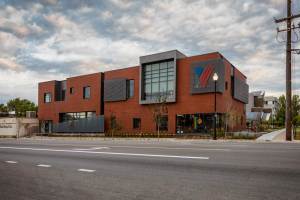
The Youth Resource Center in Salt Lake City. Photo courtesy of Volunteers of America.

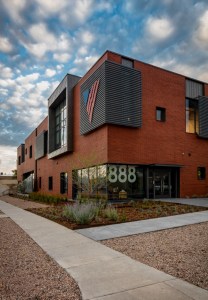
The YRC is a resource center and emergency shelter that serves youth ages 15-23 who are experiencing homelessness or are at risk. People are allowed to drop-in at any time before 7:30 p.m. to receive the help they need. It is located on 888 S. 400 West in Salt Lake City.

The center provides all the necessities for someone experiencing homelessness: essential basic need items, a food pantry, laundry, and showers.

Volunteers help serve three good meals a day. The YRC also has many divisions that help the youth with life skills, housing and employment, legal services, mental health, and access to medical care provided by Fourth Street Clinic.

Every day from 7:30 p.m. to 8:30 a.m., the YRC becomes an emergency shelter with 30 beds. Most of these are either first-come, first-serve, or they’re made available through a randomized lottery system.

“We have a three-month program called the Self-Reliance Program (SRP) that will guarantee 15 people a bed,” said Byron Paulsen, the YRC program director. “They’re required to stay in the shelter a certain amount of nights. If someone enrolls for SRP and doesn’t show up, we don’t hold that bed for them when there are other youths waiting.”

The goal of the SRP is to help the youth experiencing homelessness to learn skills and overcome barriers that will then help integrate them back into the community and live life on their own. The program is operated by a clinician who offers mental health and substance abuse services. The SRP also helps youth with their education, if they choose to take advantage of it.

“One of the youths, who’s in the program, is working on getting his GED,” Paulsen said. “He’s super excited about it and is doing extremely well.”

Since the SRP is a program that requires the individual to be proactive in making progress toward getting out of homelessness, the center has strict requirements. Youths who are in the program are required to stay at the shelter four out of the seven nights per week. They are allowed to miss three nights but must communicate this to the shelter coordinator. Youths must set goals and are expected to continually make progress. They are encouraged to attend group sessions at the center that teach things such as independence but must attend weekly sessions with the program coordinator and a youth advocate. In 2019, approximately 700 youth accessed the services provided at the YRC.

If a youth fails to maintain these standards, they can be dismissed from the program and the position will be given to someone on the waitlist. Many of the youth who are either at-risk or destitute can have issues with timing, which is why the center encourages them to reapply in the future.

Although this may sound rigorous for these youths who are already experiencing homelessness, the YRC is not a place where the youth can just come and hang out. Volunteers and program coordinators strongly recommend taking advantage of all the services the center provides such as legal help, group meetings, or programs that help with getting out of homelessness.

The Youth Resource Center, located at 888 S. 400 West in Salt Lake City. Photo courtesy of Volunteers of America.

With a huge resource space like the YRC, there are 20-35 volunteers who come in daily to assist with various tasks and activities. Volunteers learn about Volunteers of America Utah from word-of-mouth, outreach programs, social media, and donors.

“Volunteers help serve three meals a day at the YRC. They usually stay and help for two hours, but there are a few that help out 10-20 hours a week,” said Alexis Brown-Brotherton, the corporate relations & volunteer engagement director, during a phone interview.

Many volunteering positions are open to those who want to help out, but Brown-Brotherton says they only consider positions for people 16 and older. Volunteer services also provide a one-on-one program, the Amplified Mentoring Program (AMP), that connects youth with a personal mentor who can help with skill development, attain self-sufficiency, and eventually build the youth into a successful member of the community.

Volunteers who are approved to be in AMP must go through a thorough background check and be committed to meeting up with their mentee once or twice a week. Brown-Brotherton says volunteers are always needed at the YRC and other centers. Currently, the organization is seeking more volunteers to serve meals at the Women’s Resource Center and the Center for Women and Children.

A department that is housed at the YRC is the Prevention Team. Prevention does not work with the YRC directly. Instead, it is an outreach program that helps at-risk youth with substance abuse and violence prevention. The team works with schools and other state-run programs to prevent youth from having to come to the YRC.

“With our partnership with the Division of Child and Family Services, we serve youth aging out of foster care,” said Alexa Wrench, the director of prevention services. “We help connect these youths to housing options in order to prevent them from experiencing homelessness.”

The Prevention Team’s outreach program looks for youths in second grade to high school who have a low attachment to their community, high levels of family conflict, and academic failure. Prevention also collaborates with the Youth Empowered Solutions to Succeed Program (YESS). Case managers work with teens to find stable housing and employment. It’s another program youth can take advantage of, if they need mental health therapy and support.

Cory Norton, West High School’s exceptional golf coach

Story and photos by HUNTER THORNBURG

Coaches make up a significant part of an athlete’s day, their academic career, and perhaps even their professional endeavors. It is vital that athletic organizations hire individuals who value development, and understand the importance of building the relationships that matter. Student-athletes are likely to put more effort into their aspirations if they know their coaches trust and believe in them. 

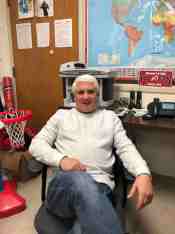
Head golf coach Cory Norton in his office.

One of the coaches who matches that description is West High School’s varsity golf coach, Cory Norton.

Norton has worked for the Salt Lake City School District for 29 years — 19 years as a behavioral specialist, and 10 years as special education teacher for West High. He is heading into his fourth year of golf coaching in Fall 2020. However, when Norton began his career at West, he wasn’t coaching golf. 

He started out as the varsity offensive coordinator with the football team at the school, located at 241 N. 300 West, and held that position for five years. During the same time, Norton was also an assistant coach for West’s varsity basketball team. He stayed with that program for seven years. Norton then took over as the head baseball coach, guiding that team for three years before becoming the head boy’s golf coach.

His extensive résumé has mostly revolved around his style and goals as a leader.

“Whether they’re competitive or whether they’re kind of an average player, that doesn’t matter. The main thing is that I want them to work hard, progress, get better, and the No. 1 thing is just to have a fun time,” he said.

Norton said golf is a sport that one can play for the rest of their life. Many of his golfers enjoy the game, and just want to learn how to play the sport in order to develop those skills and have an enjoyable experience to carry into their adult life. However, he said that teaching the student-athletes these skills is only half the job. He added that he also tries to instill positive morals and build character. 

“We’re trying to teach good values. Be kind to people, be a good citizen, stand up for what you believe in, and be a leader basically,” Norton said. He hopes to guide his student-athletes to be good advocates for their families and the school.

Student-athletes say he has significantly impacted them on and off the green. 

Tyler Skeen, a sophomore golfer at West High.

Tyler Skeen, a sophomore at West High School, said he connects with coaches best when they are flexible and kind. He said he is most efficient and successful with his training when the coaches provide consistent practices. In his opinion, Norton fits the bill.

“Five practices a week, from 3 p.m. to 5 p.m. Every day we kind of do similar things. Fundamentals is what we work mostly on, and then once or twice a week we’ll go out and just practice,” Skeen said. Alongside consistency and flexibility, he said Norton tends to be very upbeat, and he strives to help athletes with their individual game.

Skeen’s older brother, Trevor, a junior at West High, is also on the team. Trevor said he strives to build a good relationship with his coaches. He said he connects with coaches best and has a good experience if the coaches are fun, friendly and involved.

Trevor Skeen, a junior golfer at West High.

“He’s (Norton) actually just a really fun guy. He makes jokes. He always has a plan for practice. Most of the time, it’s pretty much the same things, but it’s always helpful. He’ll give advice, and sometimes he’ll bring other people in. I like Coach, and I like the way he runs practice,” Skeen said.

Another junior on the West High golf team is Anthony Smith. He said Norton often works with the athletes individually, giving them tips and being supportive. He added that Norton also makes efforts to connect with the players by interacting with them through friendly competition. “We practice every day, and he’s always there. He sometimes even plays with us by organizing some competitions while we’re practicing, and that’s pretty fun,” Smith said.

Anthony Smith

Junior Anthony Smith is also on the West High School golf team.

All of the student-athletes said Norton is good about holding them accountable for their academics. He often conducts grade checks to make sure they’re on track, though the athletes say they don’t worry much about that as they are all responsible students. Norton said, “For me, the main thing is that I want them to do well with their academics. The first value I’m teaching is that even though they are playing a sport, school should still be one of their top priorities.”

The student-athletes are not the only ones observing Norton’s approach as the golf coach. Rachel Townsend, West High’s athletic director, has also taken notice. 

She said Norton is a coach who magnetizes his players by taking ownership of the program, which causes the players to also take ownership. “Coach Norton identifies strengths within his athletes, allowing him to help them focus on what they’re doing right. He’s very positive with his athletes,” she said. “He expects them to put in the extra time to do well on the green, and encourages them to do so.”

Norton said he is looking forward to coaching his seniors who have been with him since he became the golf coach three years ago. He said he is also excited to see the talent of his athletes on display, and hopes they will get some college scholarships out of the Fall 2020 season. 

Food is as diverse as people in Salt Lake City’s west side 

Story and photos by MARTIN KUPRIANOWICZ

Rise by Good Day

Rise by Good Day is Salt Lake City’s only Polish market.

The cuisine on the west side of Salt Lake City is as diverse as its people. In a portion of a city that’s nestled between the desert and the mountains, you can find restaurants with styles of food and owners from almost all continents. Because, no matter what corner of the world you find yourself in, you will realize that food is not only a necessity — it is a way of life.

The Horn of Africa is run by a friendly Somali family. When patrons walk into the restaurant in the Glendale neighborhood they encounter intoxicating aromas of east African spices. They might also see someone praying in the corner, depending on the time of day. 

“My mother is a good cook, so it is only natural for her to open a restaurant here. Food is a big part of life in Somalia,” Kabar Gedi said.

Gedi moved to Utah from Somalia with his family 12 years ago. They have owned and operated their restaurant for six years.

The restaurant is located in an industrial-looking part of town. Halimo Omar — the chef and Gedi’s mother — recommended a traditional Somali goat dish served with rice and a spicy, green sauce. Goat has a chewier, leaner consistency than other meats Americans typically eat. 

Gedi explained to a customer that a nomadic lifestyle is still practiced by much of the population in Somalia.

horn of africa

The Horn of Africa had this painting inside the restaurant. Much of the population in Somali is still nomadic. 

“What a car is to you is like what a camel is to us over there,” he said. “And camel milk is very, very good.”

The diversity of food and people in this part of town is easy to see. Just a few blocks south from The Horn of Africa is Rise by Good Day — a Polish market and family-owned restaurant operated by Christine Mason. It is Salt Lake City’s only Polish market.

The shop is a small 600-square-foot unit on the ground floor of an office building in Poplar Grove on Salt Lake City’s west side. The market sells only authentic goods and freshly prepared dishes like pierogi, polish sausage with cabbage, and red beet soup. It recently celebrated its second anniversary in December 2019.

Mason was raised by Polish parents in the cultural hub of Chicago. She moved to Salt Lake City after marrying a Utah native. Mason worked for a catering business for seven years before fulfilling her dreams of owning a restaurant and market that sells what she said is the best kind of food.

“You can cook Polish food but if you’re using American products it turns out just slightly different,” Mason said.

That’s why Mason said all of her market’s food is shipped in weekly from Polish grocers in Chicago. This keeps the dishes she serves, the ingredients she sells, and the pastries she bakes authentically Polish.

During a recent visit, the week’s most popular item was pączki (pronounced pon-shki).

Pączki are the Polish versions of jelly-filled doughnuts, which are less greasy than traditional American doughnuts. The ones Mason makes are so popular that she sold over 2,000 that week alone.

“We had a line in here last Tuesday all day long. I was back in the kitchen frying [oączki] until about 6:00 at night until we finally had to close the doors,” Mason said.

Travel a few more blocks north to the corner of Redwood Road and North Temple and you’ll pass by an assortment of ethnic food restaurants ranging from South American-style cafes to Asian markets. One dining option is The Star of India — a colorful, family-owned Indian restaurant with a full bar, lunch buffet, and a menu of succulent tandoori and curry dishes.

The Kaur family has owned the restaurant since 1990. It was once located downtown, but due to heavy competition, the family decided to relocate their restaurant to the inside of the Ramada Inn four years ago.

Param Kaur manages the restaurant and her father — Avatar — is its chef.

“He’s back there, in the kitchen, all day, every day,” Param said. “He loves what he does, and because of that, the food here is really good. Especially the spinach — you can’t go wrong with that.”

One dish that is particularly popular is the naan bread. It’s a simple flatbread that is served as an appetizer or alongside other dishes, but the way it is made at The Star of India is unique when compared to other Indian restaurants in Salt Lake City. 

Param said their recipe calls for a softer flour and is cooked in a traditional clay oven. It’s a technique that her father has been refining since his youth in India.

So, if you venture to the west side of Salt Lake City with a hungry stomach and an open mind, you will find people who look different than you but have something that everybody has in common — we all love to eat.


Derby girl proves being Deaf won’t slow her down

IMG_6948

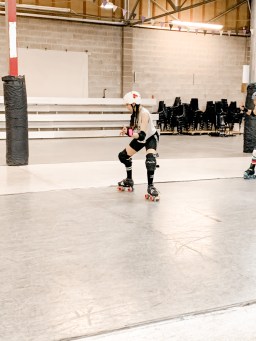
Hannah Rivas, also known by her derby name “Menstrual Psycho,” skating at practice.

Story and photos by CASSANDRA ROSENKRANTZ 

Crowds are cheering the skaters on. The referee blows his whistle. The coach is yelling to change lanes. The buzzer signifies a penalty. The clock — Tick. Tock. 

The rink is filled with so much noise, but, for one person, it’s a quiet place.

Meet 19-year-old Hannah Rivas, a talented roller derby girl who was born Deaf. 

EARLY YEARS
Growing up in Salt Lake City, Rivas was told by her parents to have fun and play sports. Having four older brothers involved in football, Rivas knew she needed to find something athletic that she could succeed in.

However, she went through many struggles with playing sports in her early years because of her inability to hear. 

As a teenager, Rivas was able to get a cochlear implant which has improved her hearing. The external implant helps by detecting sounds and sending them to the internal implant that is placed underneath the skin behind the ear.

As she got older, things in her life started to improve. Rivas started high school at the Jean Massieus School of the Deaf in Salt Lake City (JMS) where she could be together with other students who were just like her.

At JMS, Rivas only had two options for sports: volleyball and basketball. The school did not have enough kids to have full participation in all high school sports, so it offered only the two most popular activities. 

Being able to play volleyball opened Rivas’ eyes. She realized how much more potential she has and how much stronger she could become by playing sports.

After graduating from high school, she realized she had to find a different activity. Rivas looked for places near her house and stumbled across the Wasatch Roller Depot, also known as the Derby Depot, located at 1415 S. 700 West in Salt Lake City

The Wasatch Roller Derby team began in 2008. It is a sister league to Red Rockettes, a recreational league for women, and Uinta Madness Roller Derby, a co-ed league.

Previous health conditions prevented Rivas from practicing at the rink. She spent hours every day training to become stronger. Initially, she couldn’t even lift a milk jug above her head. Conditioning at home and watching videos of professional derby helped her improve even when she wasn’t at the arena.

With the help of her family, Rivas was able to grow stronger day by day in order to succeed in derby. 

Rivas preparing to stop after taking three laps.

GETTING STARTED
After a month of trying derby, she was hooked. From that moment on, she was known by her derby name — Menstrual Psycho, or Psycho for short.

The Wasatch Roller Derby has a home team that competes locally as well as a travel team that goes around the United States to compete against other leagues. 

After proving her commitment to derby, Psycho was chosen to be on the travel team and fitted with her gear.

Psycho said that not being able to wear her cochlear implant while skating was a significant obstacle. She didn’t want to risk breaking the expensive device. But it also won’t fit under her required safety helmet, which makes her unable to use the device while in action. This means that she cannot hear while skating — a huge issue when competing with her team because sound is a big part of the sport.

Psycho and her teammates discussed what to do. They knew that not having communication wouldn’t lead to success for their team.

The derby girls decided to learn some simple sign language terms that were developed in New Zealand specifically for derby. 

For example, the team holds up numbers on their hands to signify which of the four lanes they need to be in. They also have signals for laps and times. Having her team know these cues has greatly improved how Psycho responds to the team during a match, she said.

Most of the players do not know American Sign Language. So, Psycho always has an interpreter on standby at her practices and competitions.

This isn’t an easy job for interpreters. They have to be in Psycho’s line of vision. This means staying in the middle of the track and guiding her in whatever way she needs. 

“These people aren’t just my teammates, they are like my family,” said Psycho about her teammates and interpreters. “They think it is just one small word in sign language. But to me, that’s everything.”

Shelley Wooley, Psycho’s mother, wishes that there was some technology available to Psycho that could help her understand what is happening on the track without the help of an interpreter.

Most of the penalty signs and other signals in roller derby are implemented by a sound, which makes it difficult for Psycho. She could be skating and not even know that she has a penalty. 

Not getting off the track after one receives a penalty could result in being kicked out of the game. This has caused Psycho a few penalties, solely because she couldn’t hear what was going on around the track.

Wooley has begun to think of ways to fix this issue. For example, colored lights could be used to signify each signal and send a visual message to Psycho. Wooley is looking into developing some sort of face mask or goggles that would implement the light signals.

“It’s amazing how well these girls work together even with some setbacks,” Wooley said. “All of the women are so different and they happened to all find a safe spot in derby.”

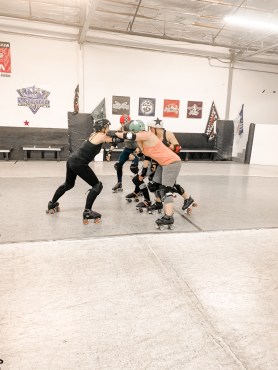
The Wasatch Roller Derby team practicing the derby technique of guarding.

GAME TIME
Psycho has become an outstanding player after three years of roller derby.

 “She is an amazing competitor,” said Wasatch Roller Derby’s Coach Ricky Khaaan. “She hasn’t slowed down the team at all. If anything, she made it better — stronger.” 

Psycho, being the youngest out of her nine teammates, provides the inner drive and fire the team needs. She has celebrated every achievement along the way of her success. 

“There are so many people that are Deaf that think they can’t do anything,” Psycho said. “I would like to tell them to never quit. Anything is possible if you put your mind and heart to it.”

The team is just getting started with the 2020 season. The Wasatch Roller Derby has competitions every month and visitors are welcome to watch or to join in on the fun of skating.

Styles upon styles

The Hip-Hop scene is bubbling with new faces experimenting with new sounds and concepts. 

Story by ROBERTO ELGUERA 

The underground Hip-Hop scene in Salt Lake City is in an exciting place right now. The hard work musical artists have been putting in for years now is finally paying off. Rappers with respected styles of their own, we get a glimpse of each one’s upbringing and influences through their music. 

A workhorse who is always representing the city is Zac Ivie. Born and raised in Utah, Ivie’s presence is undeniable in the scene. He is always working in the studio or performing. He has rubbed shoulders alongside well-known rappers like Ghostface Killa, Talib Kweli, Blueface, to name a few. He’s also a big believer in investing in yourself.  

“There is a lot that goes into this rap game, marketing, promoting, network, brand building. You gotta be your own PR, your own graphic designer, your own director in music videos, in this day and age you gotta be a jack of all trades,” Ivie says. Staying true to his words, Ivie started his own record label, Get It Write Records. The label’s purpose is to create an open environment for aspiring artists to hone their skills and continue to build creativity in Utah. 

016E13F5-6AFF-485D-9967-0CAF20F0E9DE

Zac Ivie. Photo courtesy of the artist.

Coming off of his new 2020 album WISHKID, Ivie continues to push himself musically. 

On the track “Pressure,” Ivie flows lightly on top of bright keys addressing his self-doubts and motivations for rapping. The standout R&B track, “Temptation,” featuring SayD and Breanna Marin, shows a different side of Ivie. Marin’s vocals sound amazing and SayD and Ivie have great chemistry as they share their views on love. If you’re a fan of Ivie’s Noteytapes, you’ll appreciate songs like “Red Handed,” “Joycee,” and “Luv.” Whether you’re a long-time listener or a newcomer, there is something for everyone on this album.

Another prominent character on the scene is Vinnie Cassius. Also known as Ferrari $moke, Cassius has been making noise on the scene for a while now. His shows aren’t meant for the shy listener. It’s for mosh-pits. A great entertainer, Cassius showed why he’s a veteran in the game at the Outset/Lord Sinek show on Feb. 24, 2020, show at Kilby Court. Cassius easily got the crowd jumping with him during his whole set. He even managed to get the crowd singing along to Katy Perry’s “I Kissed A Girl.” 

His crowd control comes from experience. After performing a sold-out show at the 801 Event Center, Cassius decided that he would give it his all every show no matter the stage. “It was my first time being in front of a stage like that and I was like, alright, every show got to be like this,” Cassius says.

What’s distinct about Cassius is his dark and cavernous sound. This sound made its first appearance on full display on Revenge Until Death. This tight-knit six-song EP doesn’t pull any punches. Right from the beginning with the song “NWO,” it throws the listener into a dark abyss as Cassius doesn’t let up even for a breath.

Cassius’ flow and the hard-hitting production match perfectly. He displays his own production ability on “Fiff (5th).” The standout track, “500 Degrees,” feels like a second-hand high, with the intoxicating chorus, “Treat my city like it’s Gotham how I’m riding in the night. They ain’t ever gonna stop me.” He’s got a lot of unreleased music in the vault, like the song, “Platinum Chanel,” that will be released in the near future. It will be exciting to see a new project from him as he continues to push his craft to a new level.  

IMG_2478

Vinnie Cassius performing at The Loading Dock. Photo by Roberto Elguera.

At the time of this article being written, Cassius has been invited to perform at The Hive Select Sound show on June 20, 2020, at the Utah State Fairpark. Cassius will be performing alongside big names in the current rap game with the likes of Ski Mask, The Slump God, Flatbush Zombies, Denzel Curry, and more that will be revealed soon. This will be a great opportunity for Cassius to show his talents on a bigger scale. 

Moving over to the west side of Salt Lake City, we have Rose Park’s own Bobby B Mac. What’s interesting about B Mac is his versatility and delivery. It’s a sound that is rough and gritty; reminiscent of the 1990s with a modern twist. On “Heaven or Hell,” B Mac smoothly glides on a dreamy laid back beat while he shares his introspections and sorrows. He raps about his frustration over his brother getting 15 years in prison and class inequality. Even though he is faced with these challenges, B Mac remains grounded. He continues by rapping about being mindful of his money and staying independent as an artist. 

In his music video for “95 Baby,” B Mac shows his hometown alongside his collective the Ghost Family. In this song, he addresses the school-to-prison pipeline. Even when faced with these issues B Mac remains hopeful with lines of motivation for his community. 

B Mac has always had an interest in music. Coming from a musical background, his father, Bryant Masina (also known as B. Side), was a prominent figure in the rap community. And B Mac’s uncle was a member of the Polynesian-American group, The Jets. 

“It’s always been around me. With everything growing up, I took bits and pieces of different genres. I was like damn I’m gonna make some rap music,” B Mac says. 

341E6696-89C5-43FD-BC41-B7988894B9CC

Bobby B Mac. Photo courtesy of the artist.

“As far as my style, I try to keep a West Coast feel and energy, but at the same time, East Coast, as far as my delivery and bars,” B Mac says. But it’s not just about music. He has become a voice for his community. 

“I would say we just got to be more active with the kids. We got to break that barrier. So that way the kids know that they’re not alone. They may be pressured by social media to have these certain types of things, have these certain types of lifestyles, but I mean, if we’re able to just teach them that, well, whatever you got, you’re blessed,” B Mac says. 

Seeing these artists hustling for their passion is inspiring. At times they have to be their own director, promoter, and producer to keep their art alive. If you’re a real fan of Hip-Hop music, take some time to check out your local artists.


Mental health service access is limited in Salt Lake’s west side 

Story and photos by JACOB RUEDA

Residents in Salt Lake City’s west side face a lack of access to mental health and drug rehabilitation services. The area’s poverty level could affect residents’ access to care, although the immediate causal factor is undetermined. Other issues such as cost of treatment or zoning could explain why the area has an insufficient number of resources available. 

The Salt Lake County Health Department website says the county provides substance abuse prevention services through “community-based providers” by distributing information regarding drug abuse and prevention. However, the county itself does not provide treatment.

Child and Family Empowerment Services, at 1578 W. 1700 South, Suite 200, is one of the few mental health clinics in Salt Lake City’s west side.

Humberto Franco works at Social Model Recovery Systems, a nonprofit treatment facility in Los Angeles. Franco, a licensed professional in the healing arts, previously worked for a community-based health organization helping addicts in one of the poorest areas of the city. He says the cost of rehabilitation can impact access to it, especially in lower-income areas. But even with greater access, Franco says getting and maintaining qualified staff is a challenge facing treatment centers all around.

“People need to get that background in addiction and not only in psychology” in order for facilities to properly focus on treatment and rehabilitation, Franco says. Certifying and educating staff costs money, which raises the cost of services. With mental health and substance abuse issues becoming more prevalent, government has stepped in to help facilities in their treatment and rehabilitation efforts.

In September 2019, the Substance Abuse Mental Health Services Administration awarded each state $932 million to combat the opioid crisis. It was part of a $2 billion grant from the Trump Administration. 

Aaron, who asked not to be identified because he’s in recovery, says politicians are more in tune with the needs of recovery and mental health than one might think.

“There’s a lot of people lobbying for recovery,” he says. “There’s a lot of representatives that donate their time and effort into working with the recovery community.” During the Rally for Recovery that took place Feb. 21, 2020, at the Utah State Capitol, Aaron heard politicians address the issue of access to mental health and substance abuse care.

Despite government efforts to help centers through funding and initiatives, other financial and socioeconomic factors can affect access to care in low-income areas like Salt Lake City’s west side. When government does not provide, the burden of responsibility falls on a nonprofit group or private organization. 

“A lot of these programs here in Salt Lake City in particular, most of them are privately funded,” Aaron says. Rehabilitation programs can cost $5,000 a month to start. At such prices, individuals in low-income areas may find it difficult to afford treatment. Certifying and maintaining staff aside, rents and property taxes affect the overall price as well. Since taxes are higher in commercial and industrial areas, finding where to establish a treatment facility becomes crucial.

The abandoned Raging Waters Park is a few blocks east of Child and Family Empowerment Services in Glendale. The area is one of the few residential spots in Salt Lake City’s west side.

Salt Lake City’s west side has more industrial and commercial areas than residential, particularly west of Redwood Road. Aaron says his recovery began in a wilderness rehabilitation program for substance abuse. Centers for recovery are usually established in areas that are conducive to well-being. Industrial areas do not serve that purpose. Factors that go beyond zoning can affect access to treatment on the city’s west side.

Leilani Taholo, a researcher and licensed clinical social worker with Child and Family Empowerment Services, says the problem is more complex. She has worked in the field for 37 years developing culturally sensitive programs. She initially designed a trauma intervention program called “Kaimani,” which means “divine power from the wave or the ocean.”

Child and Family Empowerment Services is located in Glendale and is one of the areas in Salt Lake City’s west side where mental health services are readily available.

Her office is located in Glendale and is one of the few centers located on the west side. It provides mental health services through the county’s OPTUM program, which accepts Medicaid and is funded at the state and federal levels.

A lack of overall funding combined with adverse socioeconomic conditions make it difficult for public or private centers to establish themselves in west-side neighborhoods like Rose Park and Glendale, Taholo says.

“I’ve spoken with many colleagues who have said, ‘I’m not sure if I want to put my clinic in Rose Park or in the Glendale area,’” she says. Taholo says her colleagues believe their clients feel safer getting treatment at their east side facilities.

Heads of families in west-side neighborhoods tend to work more than one job to make ends meet. Going to a center at night might leave them susceptible to harm or criminal activity.

Combined statistics from the Salt Lake Police Department for January 2020 show a slight increase in crime activity in District 2 compared with District 1. District 2 starts at Interstate 15 and ends at around 8000 West and goes from Interstate 80 to 2100 South. District 1 goes from I-80 to roughly 2700 North and 900 West to about 8500 West.

Taholo says that despite the perceptions of the west side as being crime ridden, the on-campus shooting deaths of two University of Utah students in 2017 and 2018 refute the idea that crime is strictly a west-side problem.

Regardless of the situation, people from around the west side come to Taholo’s center for help. She says she is amazed at the resilience not just of her clients but the people in the area. “They have taken the few resources that they have,” she says, “and they make it last in ways that you and I would never come up with.”