Versatile Image: helping artists monetize

Story by ERIC JENSEN

Finding a way to monetize art can be hard. It is especially hard for those in the Black community to do so. It can feel like there is nowhere to go to get started as a business. This is why Michelda George created her company Versatile Image.

“I’m just tired with not being able to know where to go,” George said in a Zoom interview.

Versatile Image is an artist collective. It helps artists, specifically Black artists, who want to find ways to make money for their art.

George saw how talented her friends were but also saw that they were struggling financially. So, she created a service to help deal with the back-end business side of art.

A way for artists to make money.

How those two things intersect are simple in George’s mind. The world of business cannot function without the world of creatives.

George said there are many intersections between business and art. Architects, for example, are artists. They draw and design impressive structurers and need to be able to sell them.

George also said mentions the backbone of companies are created by artists. Marketing is done largely by artists.

“You know, you don’t see a logo of a company, and where do you think they get it from? You don’t get it from the mailroom, they get it from an artist,” George said.

Michelda George presenting at a Utah Valley University economics conference. Photo courtesy of Michelda George.

It’s a cooperative ecosystem, George said, an ecosystem that needs both creatives and businesspeople functioning together. Unfortunately, the two often don’t speak the same language. So, George is the middle ground.

Offering a bridge from the corporate business world to the creative dreamlands of talented artists.

Take Chassidy Jade, for example. She is an independent film producer and the creator of Crown Me Royal Labs.

According to Jade, George helps with the business side of her film company. George also helps with the marketing for upcoming films.

“Basically, what they do is assist with the branding and marketing and helping me produce anything,” Jade said in a Zoom interview. “So, all of the paper work, the licensing, making sure everyone gets paid, coming up with different ideas of how we can promote the content. She basically builds everything from scratch on the back end.”

Jade said George handles all the things she doesn’t have time to deal with.

This gives Jade more time to focus on creating projects and developing ideas.

The business is modeled after the SCORE mentoring program. Programs like SCORE aren’t as readily geared toward Black people though, George said. Versatile Image is built to cater toward those needs.

“Black and brown people don’t have that. There’s not a place where you can go where people are really invested in your business, where they’ll kind of take you along the process and teach you as you go. So that way you can be self-sufficient one day. We don’t have anything like that in the Black and brown community,” George said.

Why did the company choose Utah though? George was raised in Ft. Lauderdale and helped her family run their store, Sun Rise Market, there. Coming to Utah was a leap out of the comfort zone.

George said she came here because of the entrepreneurial spirit she and the state share.

“Utah has one of the best economies in the country. Land is cheap here. I knew I wanted a co- working space. … And for it to be my headquarters would just make sense,” George said.

George said she was overshadowed by surface level things in Florida. The market was oversaturated and made it difficult to stand apart.

Utah provided George a place where she could grow her business. She also saw the need for diversity in the market and a lack of competition as added bonuses.

“I just wanted to start afresh, and an economy that I felt would be the best to build a business,” George said.

The advantage Versatile Image has is that it is not rooted to just helping Utah artists despite being in Utah. Salt Lake City is a central western United States city and provides a geographical advantage for businesses to branch out to other western metropolitan areas. George has clients in Florida, New York, Tennessee, the United Kingdom, and more, George said in a follow up email.

George also said she loves Utah because of its natural beauty. She can be found hiking in the mountains in the spring and fall.

George also participates in spoken word poetry in Salt Lake City. Photo courtesy of Michelda George.

She said in Utah her perspective can be different. She can focus more on herself. George said she has more doors opened for her here than in Florida. She can connect more easily with events planners and businesses that need artists.

“The entrepreneur network here is like, unmatched,” George said.

She mentions that most everyone she meets in the business world is interested in connecting with her. Salt Lake City is a tight knit market, and everyone eventually gets to know each other within the business world here. She also says the socio-economic climate is much different than Florida.

In Florida people want to look like they have money, not actually possess it, George said. A true entrepreneur, she is motivated by the bottom line.

That isn’t all she is motivated by though. George believes in the idea of service towards others.

A belief that stems from her parents and their sacrifice to come from Haiti to make a new life for their daughter. A belief built on George’s Christian values. Her heart is set on helping people.

Jade, the filmmaker, said George has always been a motivated person, and always looked for ways to help people.

“That’s what makes it successful, that other people are successful in their businesses. It’s not for us. We’re not here for like the glitz and glory, like we’re really here to serve people in a way that they need for their business,” George said.

Michelda George is selfless, and that is the type of business Versatile Image has become. One built on helping people find ways to live off their dreams.

It is more than a company. It is the idea that if you work hard, help other people, and follow what makes you happy, you can succeed.

That’s what George loves the most about her company, the way it develops people and helps build business owners.

“I love developing things, whether it’s people, whether it’s businesses, whether it’s brands, whether it’s programs or workshops to help people,” George said. “I love the development part of Versatile Image and how it changes. It changes often. It’s not always the same, because every business is different.”

Cooking with love: Sauce Boss Southern Kitchen

Story by ERIC JENSEN

Coming from very little, finding a passion for cooking and turning that passion into a successful business in his restaurant, Julius Thompson is a prime example of the American dream.

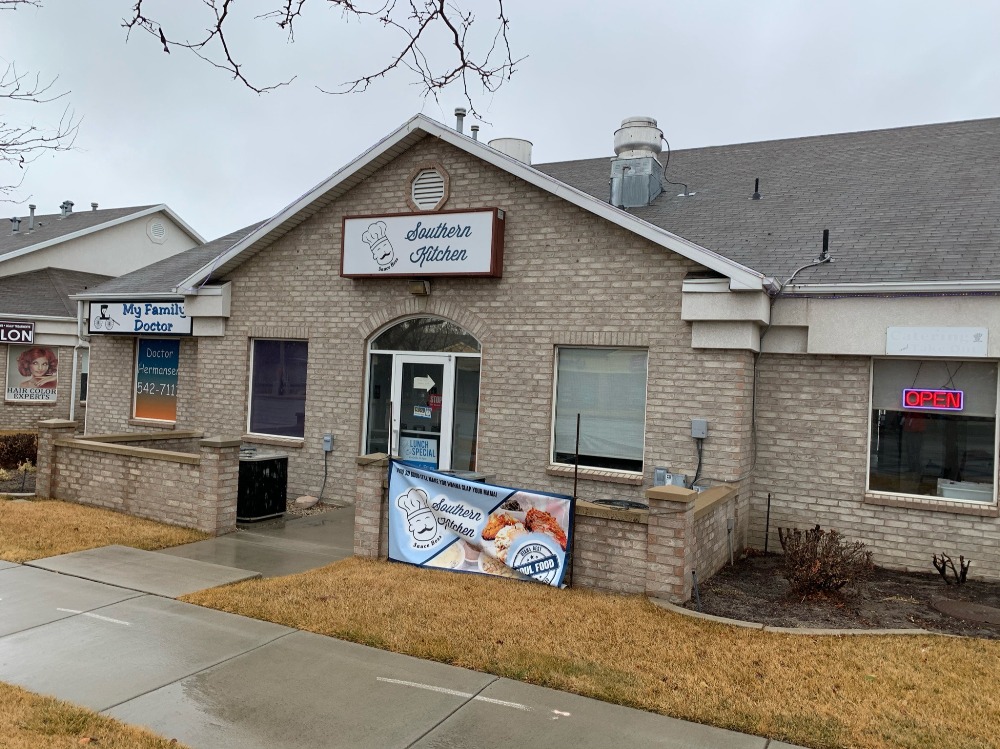
Sauce Boss Southern Kitchen located in Draper, at 877 E. 12300 South, started as a food truck in 2016. Thompson opened the restaurant three years later, according to his website.

But Thompson’s love for cooking starts even earlier than that. In between the cold of Chicago and the sizzling summers of Salt Lake City, Thompson was born in Chicago but spent most of his youth moving back and forth between the two cities.

Sauce Boss Southern Kitchen, 877 E. 12300 South. Photo by Eric Jensen.

“Unfortunately, both my parents were addicted to drugs, and I have several cousins whose parents were also addicted to drugs. And just like any decision you make, the consequences don’t just affect you and we were the unfortunate collateral damage of their addiction,” Thompson said in a Zoom interview.

Thompson said that due to his parents’ addiction money went to drugs instead of food, shelter, heat and electricity.

He learned how to survive in the cold dark garages in which he found himself living for weeks and months at a time.

“When you live like that you appreciate any food that comes your way. A lot of the times school lunch was our only meal and we learned to appreciate that,” Thompson said.

He used grit and determination to survive. Those qualities also characterize the food he now serves at his restaurant. Soul food is one of the only cultural originals in the United States. While most of the food within the U.S. was bought here by immigrants, soul food was developed by those born on American soil and based on the culinary traditions of enslaved peoples.

It was a product of being given scraps and having to find ways to make lower quality food palatable.

The food made out of struggle is now being crafted by a man who was raised in struggle.

“It’s food that came from pain and turned into something beautiful,” Thompson said.

That pain exists within Thompson.

“I was alone most of the time. I was disadvantaged and sad, and not much to go for, not much to do as far as nobody gave me time and attention and a creative outlet,” he said.

This is the inflection point in Thompson’s life, the moment that got him started on his cooking journey. He did not allow himself to be dragged down into the darkness. He fought and he looked for allies.

He found those allies in his grandmothers and some of his aunts.

“Growing up it was always a struggle of paying rent, having electricity, hot water and of course with all that food was scarce. So, whenever I stayed with my grandmother or my aunts I was always attracted to the kitchen and all the effort they put in to cooking and serving and making different types of dishes that were near and dear to our family,” Thompson said.

Being in the kitchen bought him happiness. Cooking turned a light bulb on and created Thompson’s soul philosophy on soul food, and his business model, cooking with love.

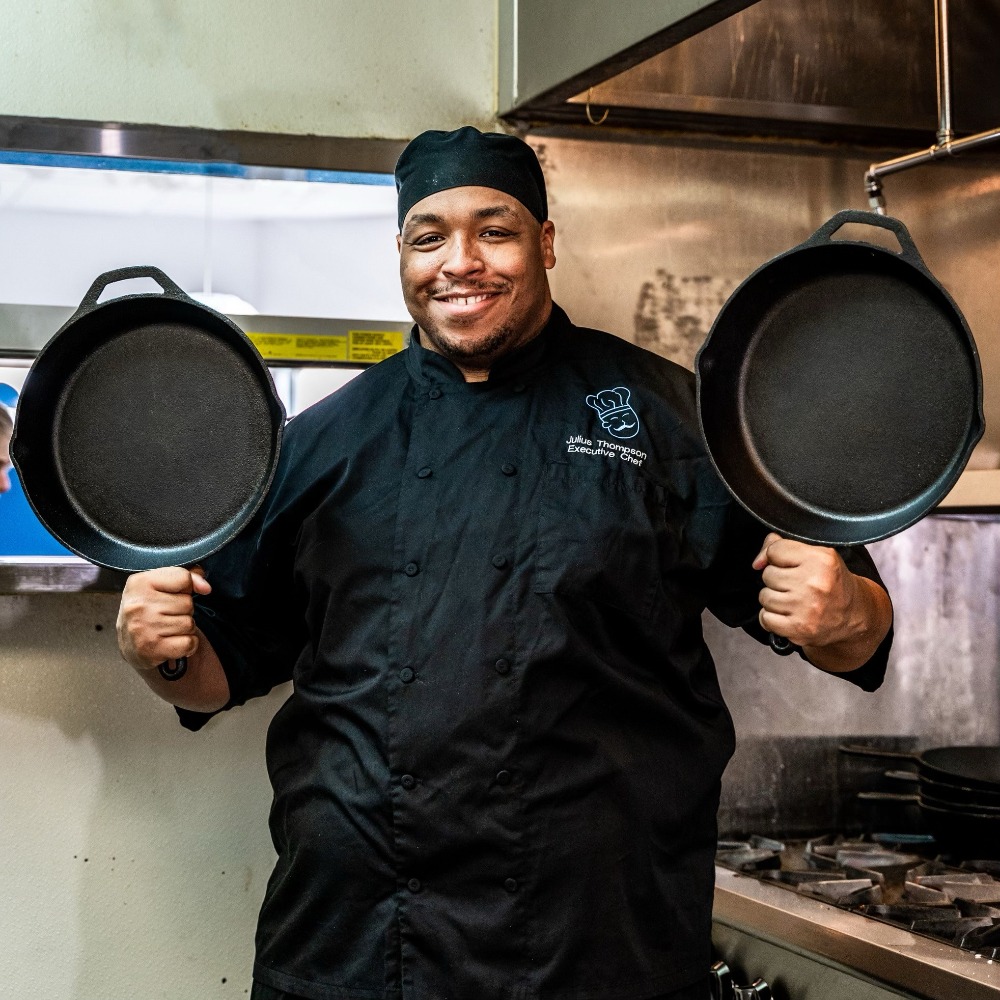
Julius Thompson, happy in the kitchen. Photo courtesy of Julius Thompson.

“I think basically you’re putting a piece of yourself, a piece of your soul, a piece of your energy, into this food. I truly believe that transfers to the person that’s eating it. They’ll be able to taste all the effort and love and passion you put into it, and in turn it fills them with a bit of happiness, and that carries on to other people they share interactions with, and people share happiness, and it spreads,” Thompson said.

It spreads. Love, happiness, acceptance. If you serve delicious fried chicken, catfish, grits, cornbread, and refreshing sweet tea, they will come and the happiness will spread.

Happiness spreading through food, communion, the warmth of a kitchen, an idea so hopeful and resilient that it cannot possibly be stopped.

Lauren Yancey, the head line cook, sees this philosophy every day, and it is part of the reason she has stayed with Thompson for four years as part of the family at Sauce Boss.

“He’s happiest when he’s serving other people,” Yancey said in a Zoom interview. “He likes going to the tables and talking to people.”

Thompson loves people. He spent hours experimenting with food because of it. At first trying to replicate his grandmother’s fried chicken.

Thompson said at first, he was naïve. He didn’t understand the process of making great food, the step-by-step preparation that can change the outcome of a dish.

From the type of pan used, to the order in which the chicken is breaded, to the fat you use to fry that chicken, every step is a process that can yield different results.

“Being naïve and younger I thought it was just the spices. But as I got older,” Thompson said, “I realized you have to season the chicken before you flour it, season the flour, make sure you fry it at the right tempature, use the right oil and fat to cook it in and all those things play a factor in the overall flavor and finished product.”

In a follow-up text Thompson said the type of oil doesn’t matter as much as the temperature, 350 degrees. He said that keeps the chicken crispy on the outside, and juicy on the inside.

Everything at Sauce Boss is made from scratch, Yancey said.

Thompson’s fried chicken, which he spent years mastering. Photo by Eric Jensen,

It took time for Thompson to create this haven of soul food. It took a painful childhood in which Thompson often went hungry. It took years in the kitchen perfecting his skills. Time experimenting trying to replicate his grandmother’s fried chicken recipe, kept a secret by the family. It took hands that were attached to an artist’s mind. It took cooking with love.

Thompson is the American dream. He is a proud father of five working hard to create a life for his children that was better than his growing up. He is a published author and spokesman about issues everyday Americans are facing and a man with endless drive who is in love with what he does.

That love propels his art, soul food, and will keep him going for as long as he possibly can in the kitchen.

The American dream lives in Draper, in the form of a soul food restaurant whose owner has a passion for cooking with love.

A monochromatic mountain

One family’s mixed feelings toward Utah’s slopes

Story by HANNAH CARLSON

A ski lift traversing a snowy slope. Photo by Simon Fitall on Unsplash.

“I grew up skiing in Utah’s Big and Little Cottonwood Canyons with my dad,” Micheal Bradshaw Jr. said in a collaborative Zoom interview with his sisters. “At the time, I didn’t realize that my dad and I were the only Black ones on the mountain. It doesn’t feel like a safe place anymore.”

In 1974, Micheal, a Millcreek, Utah, native, started skiing with his father, the late Micheal (Mike) Sr., at 3 years old. His younger twin sisters, Sierra and Kellie Bradshaw, started skiing two years later when they too turned 3 years old.

In order to hit the slopes each season, the Bradshaws were often required to make financial sacrifices to afford lift tickets and new ski gear for their growing children.

“Growing up, we never had cute ski outfits like most of the other kids did,” Sierra said. “I remember one year wearing blue camo ski pants and a pink jacket with fur. We wore whatever we could scrape up on clearance or whatever hand-me-downs the neighbors dropped off that year. It always made me sad as a little girl.”

The children’s mother, Ariel Jackson Bradshaw, didn’t share the rest of her family’s passion for skiing. Instead, she often read in the parked car while the others skied on the other side of the resort. She brought sandwiches and snacks.

“My mom loved coming with us,” Kellie said. “She’d always say, ‘I’d rather read in the mountains than on the sofa.’ She rarely missed a week.”

By their college years, the Bradshaw children were elite skiers and masters of the slopes.

In 1999, however, their father unexpectedly died from a heart attack just two months before his 66th birthday.

It was February, and Utah’s shimmering slopes were still covered with snow. “It felt right to go skiing,” Micheal said. “I guess it was both a way to cope and honor his memory.”

By this time, Ariel was too frail to wait in the car parked below the frigid slopes. Instead, she remained in her Millcreek home, reading, while her adult children skiied.

It wouldn’t be much longer until the rest of the Bradshaws would join their mother for warmer weekends indoors and skip the slopes altogether.

A skier pictured below a ski lift. Photo by David Klein on Unplash.

A year later, Micheal went skiing alone one Saturday morning. He was 26 years old.

“Everyone says to never ski alone out of fear for one’s physical safety,” Micheal said. “But I wasn’t worried about it as long as I stayed on populated runs. I didn’t realize at the time that falling off my skis wasn’t the only threat to my safety at the resort.”

After a morning of skiing, Micheal said he went to purchase lunch from the resort’s crowded lodge. He had never been to the lodge before. He had always packed sandwiches like his mother did for him and his sisters growing up.

With his lunch tray in hand, Micheal asked a bearded man seated at a table with his family if he could eat his lunch from one of the table’s three empty chairs.

Micheal recalled the interaction.

“F— no,” the man said while laughing. “Can’t you see that I’m trying to eat with my family here?”

Micheal apologized for interrupting the family’s lunch and asked if he could at least take one of the table’s extra chairs elsewhere to eat his meal.

“Are you kidding me?” the man replied to Micheal. “I just said, my family and I are trying to enjoy our meal. We don’t need a lone n—– like yourself here. F— off.”

Nobody came to Micheal’s defense, despite the room being full of snacking skiers, snowboarders, and stares of shock.

With everyone’s goggles and helmets taken off to eat, he quickly realized that he was the only Black person in the lodge of one of Utah’s most popular ski resorts.

Micheal now understood why his mom waited in the family’s car bundled in jackets and blankets rather than inside the lodge beside the fireplace.

Kellie spoke of her mom as a young mother, having had a similar experience to that of Micheal’s. She was asked to relocate to the other side of the ski lodge after making some of the resort’s regular guests “feel uncomfortable.”

“She was just reading a book,” Kellie said.

In a later attempt to purchase ski pants from a popular outdoor clothing company, Sierra also came face-to-face with the ski industry’s lacking inclusion. After trying on multiple pairs of ski pants that didn’t fit, she was eventually referred to plus-sized alternatives.

“I was 5-9 and 150 pounds at the time. I didn’t wear plus size in any other type of pant. Just in ski pants,” Sierra said. “Those ski pants were made to fit white women, not a body type like mine and my sisters who carry our weight differently.”

Kellie added, “Don’t even get us started on helmet sizing.”

After Micheal’s frightening incident in the lodge, and a few subsequent instances of microaggression later, the Bradshaws retired their skis and hung up their helmets.

“It’s not worth it anymore. The fun of skiing has become so tainted by the lack of inclusion,” Micheal said. “When my father died the bubble of ski bliss popped and we were introduced to the reality that he and my mother tried so hard to keep us from while growing up.”

While the Bradshaws’ story may air extreme, they aren’t alone in skipping out on the slopes. Many of Utah’s minority groups aren’t interested in racing to the resorts each winter either.

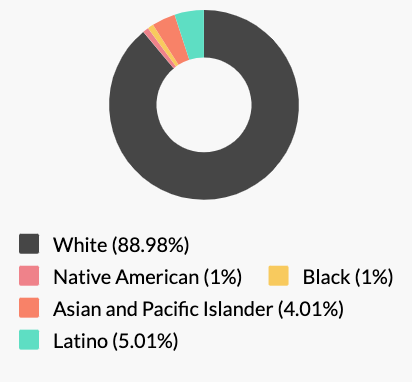
An infographic illustrating the racial distribution of Utah’s ski and snowboard population during the 2019-2020 winter season. Image by Hannah Carlson.

 In 2019-20, a Snowsports Industries America participation study reported that 88% of the season’s ski visits were made by people who identify as white or caucasian.

Native Americans and Blacks each represented only 1% of that population. Asian and Pacific Islanders made up 4% and those identifying as Latino made up 5%.

Skiing is also an extremely expensive sport to pursue. In Utah, the average price of a single-day lift ticket last year was $95. The cost of a resort season pass ranges anywhere from $300 to $1,500.

On top of a lift pass, a skier or snowboarder would also require a pair of skis or a snowboard, ski poles, boots, pants, a jacket, a coat, gloves, goggles, and a helmet.

For a median household income of $71,621 in Utah, skiing isn’t an easily approachable sport. Especially for larger families, where Utah ranks first in the country.

“I don’t have all the answers,” Micheal said. “I just wish that I could take my daughters skiing without them having to experience what many of us already have.”

Power puffs and Black hair care

A story of interracial adoption and Black hair care

Story by HANNAH CARLSON

Braids, beads, twists, puffs, and knots are some of 7-year-old Eme’s go-to hairstyles. “Lately, she’s been on a puffs kick though, now calling them her power puffs,” said Brooke Larsen, Eme’s adoptive mother. “It melts me every time.”

Eme was born to African American parents in Harrison County, Texas. At 3 months old, she was willfully and anonymously surrendered by her biological mother to a nearby fire station. Eme was soon thereafter transported to a local hospital, where she was found by medical experts to be a very healthy and bubbly baby, Brooke said in a Zoom interview.

In 2017, the state of Texas granted the Larsens foster care privileges over Eme. She was 3 years old at the time and was soon nicknamed by the Larsen family “Eme” to honor her birth name, Demetria.

Through the Children’s Service Society of Utah program, the Larsens had previously adopted three children at birth. They share a biological mother, and each has a different biological father. Claire, 17, and Daphne, 15, are both of white descent. Lucas, 12, is of Mexican American descent.

Brooke recalled seeing Eme in person for the first time. “She had a full head of hair, I was absolutely shocked by it. Her hair was styled into about a dozen or so little knots.”

Two days after meeting Eme, Brooke and her husband, Scott, flew home to Salt Lake City with the 3-year-old in their arms. The couple was elated to introduce her to their older children and Maltese Terrier, Tiny.

“After a few days of being home, I noticed her (Eme’s) hair getting a little less neat, and it looked like it could use a bit of TLC,” Brooke said. “After I sent the older kids off to school I took Eme’s knots out of her hair thinking I’d give her hair a wash and put them back in. It didn’t work out too great.”

After trying to recreate the hairstyle, Brooke described Eme’s newly knotted as a “frightening sight.”

“I learned quickly that I couldn’t treat Eme’s hair like my older girl’s [straight] hair. I didn’t have the correct education or supplies to do it,” Brooke said. “I felt like I had failed her already.”

According to the Andre Walker Hair Typing System, Eme’s hair type fits under type 4B due to her tightly coiled and dense “z” curls. When dry, type 4B hair can appear as much as 70% shorter due to the tightness of each curl. Textured hair like Eme’s is highly susceptible to dryness and breakage without proper care.

After watching countless YouTube videos and attempting a few different protective hairstyles, Brooke and Scott Larsen were still not pleased with their work on Eme’s hair. The next morning, Scott suggested they call Clara “C.C.” Campbell, a young African Caribbean woman and close family friend.

“The second C.C. heard of Eme coming home with us she offered to help however she could. She used to be our babysitter when Claire and Daphne were younger,” explained Scott in a Zoom interview. “But I don’t think she had hairdressing in mind when she originally offered her help.”

The Larsens were in a particular hurry to get Eme’s hair in better condition, as they were expecting family members from out of town to meet Eme for the first time. The family was also going to have family portraits taken during the reunion. Brooke said she feared that her daughter’s hair would be a “dry and tangled mess” for their first-ever family photo.

“I shuddered at the thought of her having to look back on those photos one day,” Brooke said.

“Honestly, the twists Eme had in when she first came over weren’t so bad,” said C.C. in a Zoom interview. “Although, I could see that her overall level of haircare was lacking and probably had been for a long time.”

Hair braids are a common protective hairstyle used on children. Photo by Gift Habeshaw on Unplash.

Within a few days of reaching out to C.C., Brooke and Eme were able to go to C.C.’s home for a short hair lesson. The first hairstyle to tackle was, of course, the bandeau twists.

Due to a significant amount of visible damage to Eme’s hair, C.C. said she was suspicious that Eme’s previous foster parents didn’t know how to properly care for Eme’s hair either.

“Not knowing how to do something at first is nothing to be ashamed of, though,” C.C. said. “It’s hard for anyone to learn something new. Hair or otherwise.”

During the next few months, Brooke and Eme often visited C.C. to learn new hairstyles and techniques for the girl’s hair. C.C. also referred Brooke and Eme to her local hairdresser who specializes in Black women’s hair.

Brooke now follows a tailored hair care routine to tackle Eme’s tight curls. The routine comprises plenty of conditioners, detangling, and a great deal of patience from both Brooke and Eme.

Eme’s hairdresser recommends that Brooke only wash and wet condition Eme’s hair once a week in order to reduce dryness. They commonly call this “wash day” or “hair day” in the Larsen household — one that Eme doesn’t seem to adore. “She despises hair day,” Scott said. “It’s usually met with tears. She’d much rather be out playing with her siblings instead of held up in the bathroom with Brooke.”

Every wash day, Eme receives a deep conditioning treatment of jojoba oil and a 30-minute wait under a warm towel. Every morning and evening, Eme’s hair is wetted with water and leave-in conditioner before her hair is brushed free of tangles. At night, Eme sleeps with a silk hair wrap to reduce hair damage caused by friction.

“Eme used to sleep with just a silk pillowcase,” Brooke said. “She didn’t understand why she had to wear one (a wrap) when Claire and Daphne didn’t. Now she loves them and looks forward to picking new ones out.”

Brooke estimates that she spends nearly 10 hours a month styling and caring for Eme’s tight curls.

“I love caring for Eme’s hair though,” Brooke said. “I’m going to be heartbroken the day she decides she doesn’t want me to help with it anymore. It’s been a meaningful way for us to bond with one another and have a bit of girl talk.”

Brooke and Scott emphasize the importance of hair education among interracial families like theirs.

“Eme’s hair is a major part of her identity and it’s something that she is extremely proud of,” Scott said. “I can see the pride in her eyes every time she shows me her freshly styled curls. She feels beautiful, and she is beautiful.”

Other than maintaining a clean appearance, the Larsens also believe that it’s important to honor Eme’s heritage any way that they can. “Her hair is a critical part of that,” Brooke said.

Eme recently joined a children’s dance class. Before her first recital, the Larsens were given a list of rules to follow when dressing and styling their daughter for the performance. “It included specifications like costume details, what color of bow to wear, and other related things,” Scott said. “One bullet on the list specified that each girl needed to be wearing a ‘single and straight high pony tail’ under the dancer’s bow.”

However, the Larsens found that the dance organization itself outlined that each athlete wear a hairstyle to each recital that looks “natural and age-appropriate” to the dancer.

After a few emails and a face-to-face conversation after a class, the Larsens were able to convince the class’s instructor to allow their daughter to wear a more natural hairstyle. The Larsens expressed no resentment toward the instructor and were instead happy to be a part of an educational discussion.

“We always want Eme to feel comfortable in her natural hair and protective styles,” Brooke said. “We’ve yet to use a curling iron or flat iron on her hair. I don’t want her to ever believe that she needs to trade in her tight curls for looser ones or straightened hair.” The Larsens clarified that Eme has, and will always have, the freedom to style her hair and express herself however she may choose.

“Taking care of Eme’s hair is important,” Brooke said. “As a parent, I have a responsibility to care for all of my children’s hair — straight, wavy, or curly. Scott helps Lucas with his hair every morning before school, and they go to the barber together every six weeks or so. I still occasionally help the older girls if they need it.”

Brooke expressed appreciation to all the Black women who jumped to her aid in caring for Eme’s hair.

“C.C. and Eme’s hairdresser have been a huge blessing to us ever since we’ve brought Eme home from Texas,” Brooke said. “I’ve even met women at the beauty supply store who have offered their advice to me.”

While Brooke can now manage Eme’s hair on her own, she still recognizes the importance of  Eme having her hair done by other Black women. “I still take Eme to C.C.’s here and there to get her hair done,” Brooke said. “They adore each other, and I am grateful for the role model that C.C. is to Eme. She’s a great role model to all of our children.”

Eme also sees her hairdresser regularly to get her hair trimmed and styled.

In late 2018, Eme was officially adopted into the Larsen family as their fourth child. During Eme’s adoption hearing, she wore what she calls her “power puffs,” a middle part and an Afro puff on each side.

A hairstyle resembling a single “power puff.” Photo by Suad Kamardeen on Unsplash.

A year later, Eme would wear a power puff to her first ever cheer competition.

“Eme’s power puffs started as a fun nickname, originally making reference to the popular children’s cartoon,” Scott said. “However, now they really are her power puffs. They give her a sense of power and fierce confidence that nobody will ever be able to shake from her.”

The Larsens urge all adoptive parents who aren’t educated in the proper care of their child’s hair type to seek guidance. They recommended consulting with a specialized hairdresser, utilizing informed friends or family members, and doing online research through online communities and YouTube channels like Sekora and Safari.

“It truly takes a village,” Brooke said. “I’m beyond grateful for ours.”

Academic success and social happiness for student-athletes: mentorship and support is just as crucial off the field as on the field

Story by LEIF THULIN

Collegiate student-athletes aspire to reach the highest level in their sport. However, the reality is that only one NCAA sanctioned sport, baseball, has a percentage above 2 percent for college athletes becoming professional athletes. 

Many students who attend universities like the University of Utah travel far from home for the first time, naively entering college with expectations of becoming a professional athlete. They may have assumed that there would be no problems adjusting to the academic and social demands of their new situation.

Though the racial demographics of colleges are less skewed than that of the city within which the campus is located, many students experience culture shock. Salt Lake City is 87.2 percent white, University of Utah students are 70 percent white, yet an average of only six starters per collegiate football team is white. 

What this means is that many minority athletes attend the University of Utah for athletics and encounter entirely new racial demographics everywhere but the field of play. School alone is an adjustment for adolescents, but especially for minority athletes. There must be a liminal space or person to create a space for minority athletes to acclimate and grow academically and socially within the new environment. 

T.J. Burnett, who worked as the U’s football learning specialist, helped create comfort and prowess in the classroom. 

T.J. Burnett was the the University of Utah’s football learning specialist. Photo courtesy of T.J. Burnett.

Burnett, a former four-time Academic All-American, and a five-time All-American track athlete, proudly aided African American student-athletes at the U in their educational and social maturation on campus for two years. 

Burnett knew firsthand from his experience as a first-generation African American student the importance of prioritizing academics and social transitions. These can be overlooked, yet adjusting to these challenges may prove more difficult than the leap to collegiate athletics, which can form a shelter from the outside world. 

Burnett recalled in a Zoom interview, “Transitioning from high school to college, I honestly had no idea what it was going to be like to go to school, to go to college. When I got letters from schools, a lot of times it would be overwhelming. I didn’t really know what it would be like for me to go to college. I didn’t know if it was even affordable or accessible.” 

Nearly five years removed from his final days as a student, Burnett reminisced about his growth as an individual. He attributed much of it to the importance of education, and his gratitude for having African American role models to show him that people who look like him can thrive in the world of academics. 

“I truly believe education is the great equalizer in terms of getting people to have the opportunity for vertical mobility but it isn’t accessible to all students from all backgrounds,” he said. 

Burnett, who hails from Grand Rapids, Michigan, spoke of Dr. Damon Arnold, the special associate to the athletic director at Grand Valley State University.  Arnold inspired Burnett to take a job that remained within the realm of athletics while influencing students in a long-lasting way through academics. 

“He was somebody that young Black athletes could look at and be like, it doesn’t matter where you start it matters where you finish,” Burnett said. 

Burnett gratefully reflected that without the mentorship of Arnold and other mentors, many student-athletes including himself would have been worse off in their college experiences. 

“When I was graduating, trying to figure out what I wanted to do, I wanted to have this impact on student-athletes as well, paying it forward, and also it is meaningful work,” Burnett said.

U offensive lineman Braeden Daniels said in text message, “He [Burnett] helped relate the school material that was being taught in our classes to our lives as student athletes, men, and real life examples … He understood life from our perspective as he was a student athlete.”

Elijah Shelton, an African American Salt Lake City native and transfer from Utah State University to the U, did not struggle with culture shock, or making friends with either team. 

Elijah Shelton practices for the Utes. Photo courtesy of Elijah Shelton.

Though his transition from high school to college was not difficult, Shelton recognized that many of his former teammates who came from other states struggled mightily adjusting to the academic workload and the 82.4 percent white population of students at USU.

In a Zoom interview, Shelton noted that at Utah State, a class called Connectionsbecame important because it explained Utah’s culture and the importance of getting to know people and appreciating the cultures of everyone.   

“We kind of made our own culture within the Logan culture,” Shelton said. 

Josh Nkoy, a collegiate rugby player at Stanford University from Salt Lake City,  acknowledged several facets in his university experience that contributed to his academic and social acclimation and success. He listed campus organizations for African Americans and members of the African diaspora, including the Black Cultural Center, where Black people can congregate and study.  

People like Burnett provide a Black athlete an excellent academic role model, and can relate to issues of culture shock inherent in attending predominantly white institutions. He understands the balance of school and athletics, and can remind students to prioritize academics because there are worthwhile jobs beyond professional athletics. 

While sports fans focus on athletic feats, Daniels, Shelton, and Nkoy have found succeeding in college relies on a confluence of mentorship, university support, communities of peers, and cultivating a culture of prioritizing academic excellence. 

Nkoy put it best when he observed, “You’ll see a Black face doing good things at all times — I guess all of that really mitigates culture shock for everyone.”

Passion for sports can traverse racial divides in Salt Lake City, some Black sports fans say 

Story by LEIF THULIN 

Former Utah Jazz star Deron Williams recently said on The Ringer’s podcast “Real Ones,” “I had been around all the best players in the world … I was trying to recruit everybody. I’m talking to everybody. Nobody’s coming to Utah.” 

Williams implied that no players wanted to join him in Utah due to Utah’s reputation of being inhospitable to African Americans. 

In interviews conducted over Zoom, three Black men involved with the Utah Jazz as journalists or fans acknowledged the reality of racism. However, when it comes to their personal experiences on the job and in the stands, they said that loyalty to the basketball team, not racial divisions, takes center stage. 

Contrary to the experience of many African Americans in America, Tony Jones, a sportswriter covering the Utah Jazz for The Athletic, said he has not experienced racism in his professional life in his many years in Utah. 

During his years covering first the Bountiful Braves, then the Utah State University Aggies and now the Utah Jazz for The Athletic, Jones’ affability and the unity he attributes to the culture of sports has helped him evade racial discrimination in his industry. Once he covered sports above the high school level, most of the athletes he covered were African American, which he said was one possible reason for his comfort. 

Jones has found his time in Salt Lake City to be seamless despite an 87 percent white population. 

He didn’t initially dream of being a sportswriter. However, with a mother he described as a “titan in the [journalism] industry,” he was introduced to Black sports journalism legends like Rob Parker and David Aldridge from a young age. 

Jones realized that many aspiring sports journalists did not have the advantages he modestly partially attributed to being Jackie Jones‘ son. Hard work paid off. 

“I worked on my craft and got good enough,” he said. 

Jones explained writing about the Jazz basketball team is especially rewarding because the entire state admires and supports the Jazz. There is no divisive viewpoint as there could be if he wrote for the University of Utah or Brigham Young University. 

When it comes to that college competition, “The rivalry can dehumanize the opponents’ fans,” Jones said. 

“The Utah Jazz speaks the universal language of the state,” he said. 

The concept of sports banding people of all races together within the context of a game is not an uncommon notion, but Jones’ personal avoidance of racial discrimination in his professional life in Utah was echoed by former Deseret News and current ESPN sportswriter, Eric Woodyard. Jones and Woodyard attribute this to their involvement with a basketball team, in which team goals and success take priority over individual goals or attributes — in this case, the color of their skin. 

Woodyard decided to take a leap of faith and moved to Salt Lake City from his hometown of Flint, Michigan, to cover the Utah Jazz in 2017. Woodyard described his move to Salt Lake City as a risk since he didn’t know what to expect, but he now calls Salt Lake City a second home. 

He said racism exists and he is extremely conscious of it, but he never experienced racism while covering the Utah Jazz. He credited the Deseret News for how it took care of him, as well as the culture and unifying aspects of sports for protecting him from racist encounters.

“People often asked me why I moved to Utah, and it was hard to find diversity in Salt Lake City.” He continued, “For example, I didn’t know who to go to as my barber or where to find good fried chicken initially, but I was treated excellently.” 

The Utah Jazz have had incidents in recent years where opposing players have received racist remarks from Jazz fans. The Jazz have even been labeled as a place that NBA players do not want to play due to these interactions and the numerical lack of African Americans in Salt Lake City. 

Woodyard released what became a viral video of a Jazz fan verbally and racially abusing then-Oklahoma City Thunder guard Russell Westbrook, and he personally felt disturbed by the racial abuse from the Jazz fan. 

Woodyard said, “I know what’s right to me and it’s there for the reader to interpret and figure out what it means to them.” 

It can be difficult to try to reconcile seemingly opposite viewpoints — that Utah Jazz fans enthusiastically support the team and people affiliated with it like Jones and Woodyard, and yet have a racist reputation that makes new players hesitant to come to Utah.

Josh Nkoy, a member of the Stanford Rugby Team, is an activist who was born and raised in Salt Lake City. Nkoy, who is the son of Congolese refugees, considers his family to be “proud, proud” Jazz fans. 

 Like Jones and Woodyard, he has successfully traversed mostly white Utah without racial discrimination, attributing it to community support and the equalizing nature of sports. 

“Sports were the only time on the field, well, the only time growing up, I would say that there are no outside expectations in terms of how far you need to go,” Nkoy said in a Zoom interview. 

Josh Nkoy is throwing in the ball. Photo courtesy of Josh Nkoy.

However, he said he felt about the racial abuse Russell Westbrook received from fellow Jazz fans: “It’s frustrating in the 21st century, people still haven’t learned.”

Nkoy elaborated and alluded to the murder of Ahmaud Arbery while Arbery was running, “This is athletics, this is what we are stereotypically good at, and regardless of even that we are still in danger.” 

Woodyard spoke of being “numb” to Black Lives Matter because it is a continual fight he and others have to wage including in Utah outside of Jazz games. He referenced assuming stares he receives in grocery stores and the specific manner in which he has to wear hoodies, as everyday examples. 

Talking about Black Lives Matter, Jones said, “The racial issues are unfortunate and what has transpired has been unfortunate for hundreds and hundreds of years on some wavelength.” He said he was happy to see more recognition of the racial issues in the Salt Lake City community both after the incident involving a racist fan and surrounding the Black Lives Matter movement. 

“I recognize what I am and what my culture is, and where I’m from, and I’m passionate about where I’m from, and I’m passionate about being Black, and passionate about being African American,” Jones said, “and I have not shied away from stating my beliefs on it, but my primary obligation is to set a good example for myself and kids and those who look like me who want to be in my industry.” 

This self-knowledge is key to Jones’ comfort and liking of Utah. He said he feels appreciated for his work by fans at The Athletic, and not judged by his skin color. 

As a player on a sports team, Nkoy reflected, “Everybody is equal in terms of how much work they put in, how much love they have for their craft, and how many wins they want to rack up with their teammates, especially among teammates.” 

As deep racial tensions have gripped our world, lessons can be gleaned from the unity exemplified in certain communities. In Salt Lake City, racial tension can be superseded by strong communal bonds created within the environment cultivated through sports. 

Taste of Louisiana food truck brings Southern cooking to Utah

Story by STEPHANIE ROSILES

“We’ve been all around the world. Utah was our last rodeo,” Helena Carter said. 

She met her future husband, Jerrell, in Germany during their service in the U.S. Army. Jerrell served 22 years and Helena served 17. In 2007, their military service led them to Hill Air Force Base in Clearfield, Utah. There, they retired from the military and set their sight on something else: giving Utahns a Taste of Louisiana. “Louisiana’s food is iconic. Utah isn’t as versed in the culture aspect as other parts in the country. We thought they needed to have a taste of Louisiana,” Carter said in a phone interview. Jerrell is from Louisiana. Helena’s grandparents and great grandparents are all from Louisiana as well. 

“While we thought it would be a good idea, there was also something about bringing this food to an underserved market. They don’t have this kind of food in those places,” Carter said in a phone interview. “The introductory period would be more painful if this was somewhere that people were more familiar with the food. There’s cultural gaps. This is a good opportunity to bridge some cultural gaps.” 

She added, “Taking into consideration that Utahns don’t like spicy food, what we’ve done is season our food well, full of flavor. But not the hot flavors. Even though Louisiana food is typically spicy, we kind of made it less spicy with Utah in mind. The only challenges are that people are sometimes intimidated because of that and won’t come and try it.” 

Jerrell and Helena decided on a food truck instead of a brick-and-mortar restaurant due to expenses. “When you start, it’s like what are the chances that you’re going to be successful? There’s a lot of start-up costs. With a food truck, if you do it right, there’s not as much as far as start-up costs. It’s an easier way to build our brand and test the waters,” Carter said.

The Taste of Louisiana truck. Photos attributed to Helena Carter from the Taste of Louisiana website.

With a bachelor’s degree in business administration and a master’s degree in human relations, Helena was skeptical of the idea. However, she gave in and the couple began working on the project in 2016. The truck would officially hit the streets in November 2017. 

Taste of Louisiana officially began as a tent pop-up at events. The couple would bring a canopy tent to different places and serve food at events and festivals. Carter said they organically transitioned from the tent to the food truck. She said the next move would be a walk-up type of drive-through. “Everything has been methodical as far as financing. We didn’t want to just come out and spend a whole bunch of money and do too much too soon,” she said. “We wanted to let things organically evolve. We wanted to build the brand so we’d have people that are following and continue to come.” 

Carter said they’re in the process of trying to see when and where they could do a brick-and-mortar establishment. “Even that, we don’t want it to be too big. We’ve grown accustomed to doing what we do in small spaces. It makes sense, even if we do a brick-and-mortar, to have it be small. We’d do a walk up type drive-through. No dine in. It takes a lot of manpower to manage a restaurant as far as the labor: cleaning, shutting down at night. It’s too big.” 

Taste of Louisiana has been incredibly successful, popping up anywhere from festivals to the University of Utah’s food truck days on campus. Over the last year, however, things changed for the Carters. “A lot of our annual events got cancelled,” Carter said. “Things that we do every year got cancelled — festivals, heritage days, various cities. We have a contract on base (Hill Air Force Base) and we started there in our tent. They’ve been instrumental in our presence.” 

Taste of Lousiana’s seafood gumbo being served in a tent. Photo attributed to Helena Carter from the Taste of Louisiana website.

Some Cajun menu items include shrimp po’ boy sandwiches, fried chicken and fish baskets, seafood gumbo, and shrimp and grits. Carter emphasized that the favorite menu items vary from person to person, saying, “It depends on who you ask. If you ask the food, the food will say ‘Hey, I’m the star of the show!’”

Carter explained the difficulties of moving away from the University of Utah’s campus, where she and her husband parked the truck any day depending on their own schedule. “We suspended service at the U because we weren’t making any money after they moved to virtual learning,” Carter said. “We shifted and now department heads are contacting us and asking if we can bring the food truck or individual plates to a luncheon. It’s ‘Our department is having a meeting at Murray Park. We want you to bring the truck there.’ People are finding different ways to serve their department. We had to switch up the way we do business.” 

Students at the University of Utah greatly enjoyed the food trucks on campus, as it was an alternative to the restaurants in the Union. Mary Cologna, a business student, said in a phone interview, “I loved the food trucks. I felt like I didn’t have to go eat inside and listen to all of the conversations. It was convenient to grab something quick before class or there were also days where I could sit outside on the grass with my friends in warmer weather.” 

Carter also talked about the blessing Taste of Louisiana has had in having the ability to keep their doors open, saying, “A lot of food trucks work seasonally. We have a presence all year round and it’s been a part of our business model from day one. What are people going to be eating? Why not eat Taste of Louisiana because it is available?” 

Lisbeth Patino, a nursing student, said of Taste of Louisiana, “I like that it’s accessible all year. Especially in the winter, if I’m in a rush, it’s convenient to grab something quick and go. It’s great service!”

Daily location information for Taste of Louisiana can be found on its Facebook and Instagram pages, @tasteoflouisiana. 

Carter said, “What we do is on a restaurant scale. The complexity of our menu is restaurant quality. People say, ‘I can’t believe you guys are doing that on the truck!’ This is what makes our operation unique. When it’s flowing, it’s a beautiful day.”

Stephanie Rosiles

MY STORIES:

Judge Shauna Graves-Robertson on sisterhood, service, and Alpha Kappa Alpha

Taste of Lousiana food truck brings Southern cooking to Utah

MY BLOG:

Coming into this semester, there were a lot of concerns on my end about how the course would go. I was worried about a multitude of things. Was I going to be good enough to interview people? Would my interview questions be compelling? Would I report on topics that were interesting to the general public? Was I going to write pieces that I was proud of? Would my writing be good enough to create portfolio pieces that were worthy of including in job applications? 

Over the course of the semester, I have found that while my writing may not be perfect, it does have a strong enough base. My writing will probably never be perfect, but it is important that I try my hardest to write well. 

Beat reporting has helped my professional development by allowing me to focus on one specific theme. I am highly interested in writing for fashion publications, namely Harper’s Bazaar, Elle, or Vogue. Although I could have focused on Black fashion designers or creatives in the Salt Lake area, I wanted to challenge myself and write about topics that I didn’t have as much experience with. 

Voices of Utah has allowed me to learn what it is like to focus on one theme while also empowering me to be creative. This course has allowed me to develop the skills necessary to find strong sources and maintain professional contact with them. Previous to this, I found it very overwhelming and scary to approach somebody for an interview. Voices of Utah has helped me become more comfortable with that. 

In addition to the interpersonal skills that this course has taught me, it has also allowed me to venture into topics that I was interested in. 

The most satisfying parts of being a professional storyteller/communicator is that I get to share the things that I am passionate about with the public. I enjoy learning more about the topics that I am interested in and sharing the things that I find.

This semester, I really enjoyed writing about and reporting on the Black community in Salt Lake City. I will say, I did feel like an outsider when reporting on this. For my first story, I chose to write about Alpha Kappa Alpha, a historically Black sorority. I thought that because I myself am in a sorority, that I would be able to relate to a lot of the information that I would learn during my interviewing process. I learned that was far from the truth. I assumed that I would be an “insider” and I was wrong. This affected my reporting by pushing me to take extremely thorough note of everything that the people I interviewed were saying. 

ABOUT ME:

Stephanie Rosiles is a journalism student at the University of Utah. Born to immigrant parents, Stephanie’s mother pushed her towards reading and writing from a young age. From a young age, she found a love for storytelling and began to author short stories with her friends, completed with illustrations. Through high school, she competed at an international level in writing competitions, where she discovered her passion for writing as a profession. 

At the University of Utah, Stephanie wrote for HerCampus, an online magazine targeted at female college students. She pitched, wrote, and produced meaningful content roundups and reviews as well as researched new ideas for weekly site content through site to site analysis and multimedia outlets. 

She also worked as a campus representative for Victoria’s Secret PINK, where she developed skills in event planning, writing copy, product development, and worked cross-functionally to plan, launch, and execute international marketing campaigns.

Stephanie also worked as a social media manager for Barstool Sports at the University of Utah. There, she identified social trends and tailored marketing campaigns to focus on demographics that showed outsized interest across channels such as Snapchat, Twitter, Instagram, and TikTok. Alongside a co-manager, she facilitated and oversaw a 65% growth in audience.

She is a member of Alpha Chi Omega, a national women’s fraternity. There, she sits on various committees. Stephanie serves as bid day chair on the recruitment committee, PACE chair on the public relations and marketing committee, and serves on the banner committee. 

Stephanie hopes to move to New York City after graduating, where she wishes to make a career in luxury fashion and beauty publications. 

Judge Shauna Graves-Robertson on sisterhood, service, and Alpha Kappa Alpha 

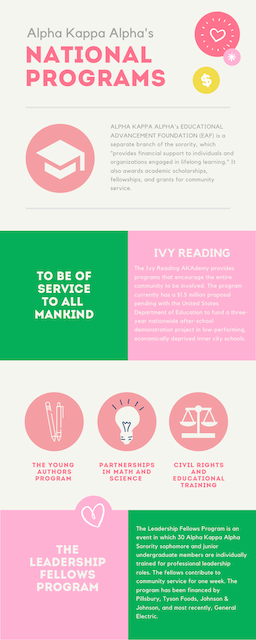
Story and infographics by STEPHANIE ROSILES 

“I serve my fellow men and women throughout my life,” Shauna Graves-Robertson said. She is the president of the Upsilon Beta Omega chapter of Alpha Kappa Alpha at the University of Utah, which focuses on sisterly relations and has an established and respected presence in the Salt Lake community. AKA, the sorority that Graves-Robertson pledged at Arizona State University, is the first intercollegiate historically African American Greek-lettered organization. “Regardless of race, creed, color, I am committed to serve as long as I can. As long as I am able. That is my primary commitment as being a part of this organization.” 

The Salt Lake chapter of Alpha Kappa Alpha consults with organizations such as the NAACP, local churches, the U, Salt Lake Community College, Utah State University, YWCA Utah, Utah Black Chamber of Commerce, Zions Bank, Fidelity Investments, KWANZAA committee, and public and private schools. 

Graves-Robertson is a graduate of West High School in Salt Lake City. She earned a Bachelor of Science in Criminal Justice from Arizona State University as well as a Master’s in Public Administration and a Juris Doctor from the University of Utah. She was appointed to the Salt Lake County Justice Court in 1999. She is a life member of Alpha Kappa Alpha and the NAACP. Additionally, she chairs the Utah Supreme Court’s community relations subcommittee and is a member of the National Bar Association, National Association of Women Judges, Women Lawyers of Utah, and the Utah Minority Bar Association. 

According to the Alpha Kappa Alpha website, the organization was created in response to the desire to break barriers for African American women in areas where they had little power or authority due to a lack of opportunities as women in the early 20th century. It was founded on Jan. 15, 1908, at Howard University in Washington, D.C. Today, the organization has a membership of more than 300,000 women in 1,204 chapters across the world, as it has gone global. 

In a phone interview, Graves-Robertson said, “Alpha Kappa Alpha was founded by African American women. To be the first, there is always a draw there. That group of women were just one generation out of slavery. To have the fortitude to want to come together, to serve the communities that they had come from was what it was all about.” 

Alpha Kappa Alpha, she said, made a significant difference in her life and career. “I chose Alpha Kappa Alpha because of the quality of women,” she said. “This sorority gave me a sisterhood. In the raising of my children, I had other women to lean on. They supported my children. I knew educators in schools. We have women in different fields, and we have mentorships. All of those areas have supported me throughout my career in Utah and throughout the United States.” 

According to the Alpha Kappa Alpha website, the sisterhood is based on five basic tenets: to cultivate and encourage high scholastic and ethical standards, to promote unity and friendship among college women, to study and help alleviate problems concerning girls and women in order to improve their social stature, to maintain a progressive interest in college life, and to be of “Service to All Mankind.” 

According to the website, the sorority participates in service that has been instrumental in establishing programs beneficial to the African American community. Most notably, the sorority participated in the 1913 Women’s Suffrage March, assisted the Travelers Aid Society during the Great Migration, has joined the American Council of Human Rights, and started the Alpha Kappa Alpha Educational Advancement Foundation that promotes lifelong learning. 

During her time in college and now as the president of the Salt Lake City chapter, Graves-Robertson reflected on the service initiatives that she has been a part of. She said, “During college, we had a member of the graduate chapter who was a vice principal at an elementary school, and so we’d go to the school and read with the students. I really liked that.” 

Alpha Kappa Alpha also rises to its tenet of lifelong friendships. Graves-Robertson said, “The difference is in a majority of sororities and fraternities, you join in college and after college, that’s it. A Divine Nine is a lifetime commitment.” Divine Nine, or the National Pan-Hellenic Council, refers to the organization composed of nine historically African American Greek-lettered fraternities and sororities.

Graves-Robertson attributed the current success of the sorority to the current international president, who has chosen to move the focus to five particular target areas: HBCU (Historically Black Colleges & Universities) for Life, women’s health, economic well being, the arts, and global awareness. Projects include collecting items for women and children experiencing homelessness, offering seminars on finances and participating in musical programs. The group also holds seminars for high school students on applying for college, including teaching them how to get letters of recommendation and even how to fill out the FAFSA form. 

During 2019 and 2020, she was the chairwoman of the judicial council of the National Bar Association. The group had planned the mid-winter meeting for January 2020 in South Africa. Her daughter —also an Alpha Kappa Alpha— had made contact with the chapter in South Africa. The members came to the reception and presented Graves-Robertson and her daughter with special pins that represented their chapter and region. Additionally, they also had a briefing by the State Department and the young woman that presented the briefing was also a member of Alpha Kappa Alpha. 

The Salt Lake City chapter is currently for students at the graduate level, but interest in pursuing an undergraduate chapter is up in the air. “We have tried to start an undergraduate chapter,” Graves-Robertson said. “We need a certain number of girls. We’ve been working on campus and looking to see how they (the university) can help establish the chapter. The university has been willing to be a partner.” 

Sophia Gener, one member of a sorority at the University of Utah, said in a phone interview, “I think the university would very much benefit from more chapters that are focused on diverse identities. I also think we need to do better for the chapters we do have that are centered around diversity. We need to make sure they’re known about.”

Another sorority woman — Samantha Motta — said in an email interview, “At the moment, I feel that it might be more challenging for more Greek chapters that focus on diversity to be recognized. I’ve noticed that the recruitment numbers and inclusion of other chapters are hardly remembered and oftentimes forgotten. Since Utah is a predominately white campus, it’s hard to work on trying to appeal to both white and BIPOC communities when it comes to more than just Greek life; and although I feel as if it is an excellent idea to incorporate new chapters surrounding diversity, I fear that it will be an uphill battle for them to gain recognition. I have observed that Greek spaces [on campus] are putting in the work to retain and recruit people of different backgrounds and I think it is a great start.” 

Graves-Robertson said of the impact that Alpha Kappa Alpha has had on her life, “Wherever you are, you can locate someone that can help you navigate where you are or what you are trying to do.”

Basketball star-turned-coach; Vanessa McClendon is paving the way for girls basketball in the Pacific Northwest

Story by BRYNNA MAXWELL

Fighter. Go getter. Resilient. Difference maker. These are the words that come to mind when describing Vanessa McClendon. 

Former college athlete-turned-coach McClendon’s life is all about basketball. She was highly recruited in high school and earned a full ride basketball scholarship to the University of Oregon. Her talent would have taken her far professionally, but a career-ending knee injury forced her to retire early. 

Now, McClendon uses her basketball knowledge and love for the game by coaching her travel team organization, Northwest Magic. With teams scattered across Western Washington, McClendon and her husband have built a program that has become a household name in the Pacific Northwest basketball community. 

Vanessa McClendon has had a successful career from playing basketball in college, to now coaching the Northwest Magic. Photo courtesy of Vanessa McClendon.

In the youth basketball world, travel organizations like the Northwest Magic play a critical role. The travel teams not only help young players develop their basketball skills, but they also provide a platform for exposure of these players to college coaches as they chase their dreams of a basketball scholarship. These teams travel the United States to compete in tournaments in the AAU circuit, which is a travel team circuit that takes players and their teams all around the country to play basketball. 

Back in 2008, McClendon had just one scrappy team of teenage girls and an outsized vision for the future. She now has 22 teams — 14 for girls and eight for boys — that compete on a weekly basis around the nation.

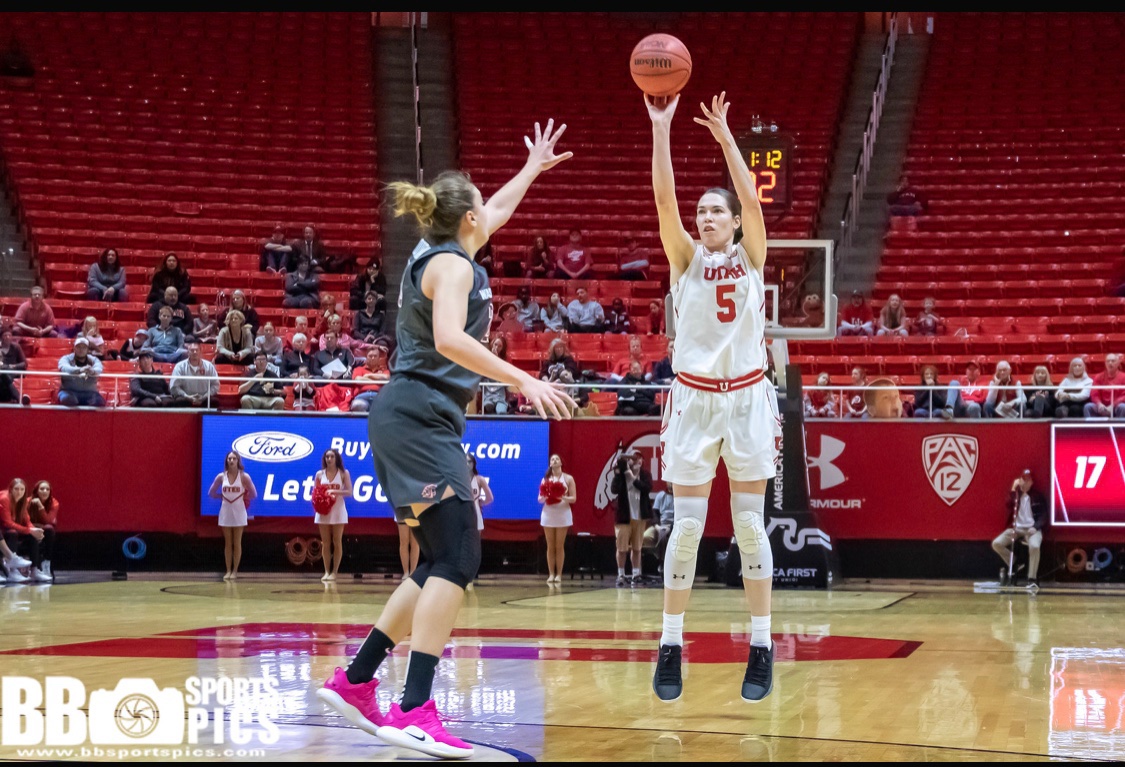
University of Utah women’s basketball alumna Megan Huff was on that first AAU team McClendon assembled in 2008. 

“Since I started playing for Magic, Coach Vanessa was always someone I looked up to,” Huff said in an email interview. “When I walked into Magic tryouts, I was shy, uncomfortable in my own body, and insecure about my height and skills. I had no knowledge about basketball or about myself. But, through the whole thing I always knew that Coach Vanessa believed in me and was someone I could always count on.”

That first team McClendon coached produced four big name, Division I college athletes. This included Huff who, after graduating from the University of Utah, got drafted by the New York Liberty in the third round of the 2019 WNBA draft

“Magic was like family to me,” Huff said. “The lessons I learned helped me in college when I was deciding to transfer (from the University of Hawaii to the University of Utah). I knew how to handle the situation with open communication and honesty.”

When asked how McClendon separated her program from other teams in the state of Washington Huff said, “I knew the way things should be when a coach really cared about the individual and not just the organization.”

McClendon’s coaching has greatly impacted many young basketball players, and the teaching does not stop when she leaves the court. Her intentionality to connect with individuals has helped players learn life lessons away from basketball.

Huff said, “My journey was not an easy one but through the whole thing I always knew that Coach Vanessa believed in me and was someone I could always count on. For advice, knowledge, a ride, or a workout I knew I could always count on her and still can even to this day.”

Megan Huff shoots a jumper over a Washington State player in a collegiate basketball game. Photo courtesy of Megan Huff.

McClendon agrees that Northwest Magic is a special and empowering team to be a part of in order to help players get ready for the next level. 

“Our players go to college, and they are impact players right away,” McClendon said. “They can play in a system they’re used to. Some of the stuff that we’ve done, like the way we run practices, they’re used to it already, so I think that differentiates us.”

Current players in the Magic program have been working hard to improve and agree that McClendon has already helped them. 

Sixteen-year-old Tala Mitchell has been a part of the program since she was in the fifth grade. 

“Coach Vanessa brought me out of my comfort zone,” Mitchell said. “In the beginning I wasn’t really a talkative person and was a little shy. She taught me how to speak up and communicate with my team on the court.”

During her interview, she was surrounded and supported by her Northwest Magic teammates, showing how close the bond is that has been formed from her unique basketball experience.

“There are other teams in Washington, but I feel like the people who have been here are very welcoming,” Mitchell said. “When new people come (to join our team), they enjoy us, so they come back and that helps us create bonds that last.”

Mitchell has built lasting memories from her time in the program and has made lifelong friends because of her experience with the Magic. The point guard has already had a strong couple years in high school and only hopes to keep improving. 

Sitting at a table next to a noisy gym for the interview, McClendon looked around at the organized chaos that surrounded her coming from several of her practicing Northwest Magic teams. 

She smiled.

“It is so great to see the full circle of Magic players come through. We have the girls just starting out, to the alumni coming back to show support and it is just so cool,” McClendon said. “I want Magic to continue to develop college-ready players, and then I’d love to see my players that have moved on, just come back and pay it forward.”

Vanessa McClendon established Northwest Magic from the ground up and continues to grow the program. However, there are challenges in this business.

Because McClendon believes every kid should have an opportunity to play, she routinely covers travel expenses for players who cannot afford it. These include hotel costs, plane tickets, food, and tournament fees.

“The biggest challenge right now is money,” McClendon said. “You know, a lot of families can’t afford to do what we do when we have to travel, and so the biggest challenge is trying to fundraise, or get sponsorships for the kids that need to get out there, because we know we have the kids but not everybody can afford to get to these exposure events.”

Setting up fundraisers and collecting donations are the most common ways to raise money, but McClendon is not fazed by the obstacles. 

“Basketball is my passion,” she said. “There is no place I would rather be than in a gym coaching these kids.”