The Green Urban Lunch Box brings creative ways to solve hunger

Story by NINA YU

What started as a school bus converted into a mobile greenhouse, The Green Urban Lunch Box (GULB) quickly has become a local source that challenges communities to look at natural resources right in their backyard. The nonprofit is based in Salt Lake City and has multiple gardens across the Valley.

According to the GULB website, the mission is to “empower people to connect to their food and community by revitalizing urban spaces and building a resilient food culture. We envision a strong network of communities centered on the cultivation of food.” The farm is located on 3188 S. 1100 West.

The nonprofit focuses on allowing people to engage in local food production, urban agriculture, or fruit gleaning by using resources that are available in their community. The GULB tries to connect neighborhoods to the resources and opportunities. At the same time, the organization revitalizes urban spaces that have been neglected by growing food and sharing the crops with the broader community.

The Back-Farms program connects seniors to volunteers, who help with gardening. Photo Courtesy of GULB.

The GULB promotes three programs on the website. One of those programs is Back-Farms, which connects senior citizens with volunteers who help build and maintain gardens in the seniors’ backyards.

“The Back-Farms program is a free gardening program that we do with senior citizens,” said Katie Nelson, the executive director at GULB, in a phone interview. “We partner with seniors who are generally lower or fixed income, who are unable to take care of their yards. We come in with our staff and volunteers and teach people how to garden while gardening those seniors’ yards.”

The GULB shares the gardened produce with the seniors and volunteers. The Green Urban Lunch Box also offers markets at senior centers where the produce is free.

“We have 40 gardens in the Back-Farms program. They’re all over the community,” Nelson said. “We have several in Rose Park, a few in Fair Park, and some in Glendale. With our community partners, the GULB is able to go to senior centers all over Salt Lake County.”

Senior citizens are given a consistent amount of produce throughout the summer so they can rely on fresh vegetables and fruit. Any seniors who have a neglected garden they want to utilize can contact the GULB.

The FruitShare program is a partnership between fruit tree owners and volunteers who help harvest and distribute fresh fruit that would otherwise go to waste. An individual wanting to participate would have to register their fruit trees, request a scout when the tree is ready, and harvest the fruit. The fruit is distributed in three ways: the homeowner, volunteers, and toward hunger relief.

The last program that the GULB runs is the Small Farm Initiative. According to the site, it is “an urban training program that teaches people how to farm in urban spaces using sustainable growing practices and make money doing so.” The initiative is for those who want to learn more about farming and gardening. Prospective students can apply to the 8.5-month Farm Apprenticeship and School that focuses on space-intensive vegetable production. Students are taught organic gardening methods, business aspects of running a farm and hands-on activities from farm instructors.

People who are looking for a less intensive schedule can pick the On-Farm Internship, which teaches participants how to grow a lot of produce in a small amount of space. Successful participants have the opportunity to continue their studies with their farmer training program.

The GULB also recruits volunteers every season. In 2019, Nelson saw hundreds of volunteers coming in to help.

“Volunteers are the foundation of our organization,” she said. “Everyone usually contributes three to five hours a season. They are the reason for how much food we can produce and get into the community. They’re building gardens. They’re harvesting gardens. They’re also learning something in the process.”

This engagement aligns with the nonprofit’s mission statement. The GULB wants volunteers to immerse themselves in connecting with their food and being able to share the knowledge with family and friends. They also hope volunteers are able to teach others how to garden or explain the types of produce to spark interest.

Photo courtesy of GULB.

The farm has a team of staff members who direct volunteers. The team includes garden leaders who have an extensive grasp on gardening and being able to grow food. They also help facilitate events and maintain a good relationship with the senior citizens in the Back-Farms program. They see the seniors twice a week and bring the community to them. This way, senior citizens feel connected even if they are homebound.

In 2011, when Shawn Peterson founded the GULB, he wanted to challenge the way people thought food was grown. He purchased a bus, took the ceiling off and converted it into a greenhouse. The bus went to community events to show people that food can be grown in anything. It was also taken to classrooms to teach children about growing food. Now that the bus is not driven around anymore, it is used to grow seedlings for the farm.

The GULB works with different organizations throughout the county, like International Rescue Committee, Intermountain Medical Center, food banks, and multiple food pantries to help bring fresh produce to them every week.

“We’re trying to help the Latina population right now,” Nelson said. “We’re getting them engaged on our farm and providing them fruits and vegetables.”

The farm starts preparing for the season in spring. In early June, the organization starts producing food so that markets are ready to be opened in mid-July. The growing season usually ends in October, when the GULB members regroup and prepare for next season.

Family-owned taxi service brings success to Salt Lake City’s west side

Story by CHEYENNE PETERSON

Passengers from an arrival flight at the Salt Lake City International Airport make their way to the outside pickup location. Cellphones are pulled out within seconds and with a simple tap on an app, ride-share drivers swarm, like busy bees picking up their pollen. 

Corporate ride sharing has dominated the field, casting taxi drivers to the curb. But not all taxi companies have lost their edge. A family-owned business stays competitive in this evolving marketplace. 

Ricardo Mendosa has been a taxi driver for the past 18 years in the Salt Lake City area. 

AAA Latino Transportation owner Ricardo Mendosa at Salt Lake City International Airport. Image from Google Photos.

Mendosa first worked seven years for a major taxi service, but decided that he could create a better transportation business of his own. He calls it AAA Latino Transportation. 

AAA Latino Transportation is located west of Salt Lake City’s Interstate 15, conveniently on 1007 S. 800 West.

According to AAA Latino Transportation’s website, the business provides an efficient and reliable taxi service, without the struggle of getting a rental car and for a good value. Owners stress the importance of helping clientele reach their destination without draining their wallet.

Mendosa generally takes most of his rides to the Salt Lake City area and to the Salt Lake City International Airport. 

“And if you want to drive to Vegas, I’ll drive you to Vegas,” Mendosa said in a phone interview.

Screen Shot 2020-04-07 at 11.11.33 AM

AAA Latino Transportation at the border of Idaho. Image from Google Photos.

The transportation service areas include Salt Lake City, Ogden, Provo, Park City, Tooele, Layton, Logan, and Heber. 

Ride Sharing has become lucrative and convenient for many. Either as a part time or transitional work. Julie Bennett moved from Georgia and as she was transitioning to her new home in Utah, she had not secured a job. While applying to potential careers, she spent two months driving for Lyft. 

According to Bennett, as a Lyft driver, she would not go any farther than a 20-minute drive. 

Drivers are unable to see a passenger’s destination, until they accept the fare.

“You can’t see where they want to go or where they need you to pick them up. Unless you have a certain amount of rides, which I had not done. Every time I would pick someone up and notice they would need to be driven more than 15 to 20 minutes. I would reject the ride. Nothing more than 20 minutes, just because I didn’t get paid to drive the 20 minutes back,” Bennett said in a phone interview. 

She said many other ride-share drivers also would not go the longer distances.

“I do know some other Lyft drivers. I bet they would not drive more than 20 minutes, because it’s a waste of their time, money, and miles on their car,” Bennett said.

Bennett said she would take Mendosa’s transportation services, since she could confirm that they have great reviews. Google reviews rates AAA Latino Transportation at a solid 4.6 stars, whereas other company reviews like Yellow Cab have 2.4 stars. 

“I would definitely take a taxi to Las Vegas, if I knew they were reliable and at a good price. If I knew what the rate of it was, before they even took me, I would trust them a lot more. I just know that if I were to request a Lyft, they would reject my ride. I don’t even know if any ride-share would even allow a ride that far. I don’t like that I won’t know who I’d be riding with either, until they accepted the ride. I wouldn’t want to be stuck with someone that I would be uncomfortable with,” Bennett said. 

Haley Meyer lives on the west side of Salt Lake City and uses ride-share companies frequently.

“I’m a big skier and sometimes I take an Uber to Solitude [Mountain Resort, a ski area near Salt Lake City]. Solitude at the beginning of the season started enforcing pay parking. Probably to get traffic off the roads. There was a lot of traffic and blockage on the roads up there, last season,” Meyer said in a phone interview. 

Although Meyer takes an Uber to go skiing, she runs into some issues getting rides. 

Screen Shot 2020-04-07 at 11.10.03 AM

AAA Latino Transportation will take you anywhere, in any weather. Image from Google Photos.

“My favorite time to go skiing is when it’s snowing, that’s when there’s fresh powder. That’s when most people go skiing anyways. It’s hard to find an Uber that will pick me up and take me to Solitude when it’s snowing,” Meyer said.

Mendosa’s company will take you to all the ski resorts. 

According to the website, “Our mission is to take you where you need to go, no matter if it’s raining, snowing, lightning, day or night. We are your best option for Taxi Service in Utah. Twenty-four hours, 7 days a week, and 365 days.” 

There is no need to take a shuttle to the ski resorts. 

“Taking a shuttle is not really that convenient. They stop at so many places and I feel like I wasted so much time,” Meyer said.

AAA Latino Transportation promises to be on time, professional, courteous, knowledgeable, and offer a safe taxi service.

Local pantries struggle to meet the demand of COVID-19 virus in Utah

Story by ELLIE COOK

The hoarding situation that arose upon the arrival of the COVID-19 virus has only increased following the 5.7 earthquake that rattled the Salt Lake Valley on March 18, 2020. While the public hunts across the state for items such as toilet paper and paper towels, pantries in the community struggle to keep their shelves stocked to ensure those in need get the supplies not only needed for quarantine but also everyday survival. The organizations in the western area of Salt Lake City are scrambling to focus on inventory, while also having to serve many more people and adjust their protocols to meet safety needs implemented by the state of Utah. 

The community consists of many working-class and/or impoverished families, many of whom have a yearly income of less than $80,000 a year, said David Wright, director and educator of the Earth Community Garden & Food Pantry, in an email interview. Organizations that provide food security already serve a great population within the area, but the need only seems to be growing. The pantries have seen a significant increase in clientele since The Road Home, the main homeless shelter in Salt Lake City, closed downtown. Now as the virus forces more businesses to close, making the unemployment rates skyrocket and the earthquake damaging some homes, these organizations are struggling to find enough supplies and volunteers to tend to the large crowds pursuing their services. 

When asked about plans regarding situations such as natural disasters or other national emergencies, Captain Rob Lawler of The Salvation Army said in an email, “The Salvation Army has always been ready to respond to disasters and crisis since 1906 in Galveston, Texas, when we first responded as a response agency. You might say it is in our DNA!” 

However, it seems with the cards stacked against the state of Utah, just being prepared isn’t enough for anybody. While toiletries and other health/cleaning items are always in demand, the panic and hoarding issue the pandemic has caused has only made them even scarcer. “We do have an increased demand at this time,” said Kate Corr, the communications coordinator at Utah Community Action, in an email. “Right now, many clients are in greatest need of emergency services, primarily food, housing, and utility assistance. … At this time we will continue to do everything we can to keep providing essential emergency services to our children, families, and clients.”

While the inventory remains an issue, the ability to serve the community promptly has become hard as well, due to safety measures being taken to protect volunteers and the public. This becomes tough as everyone is short-staffed and in need of volunteers. It’s also time-consuming to take on new help because they must be screened to be sure they do not put people’s health at risk. 

Some organizations are no longer accepting new volunteers to protect current staff from exposure. “Our protocol is much more controlled and strict,” said David Wright. “We no longer have lines and instead are having clients with cars stay in their vehicles. Those without cars stay 10 feet away from each other.” The Earth Community Garden & Food Pantry, The Salvation Army and other organizations have also taken on drive-by pickup services. 

With the COVID-19 pandemic having an unknown end, and still in recovery from the earthquake, how can the public get help? Is there any assurance that people can get necessities, and also ensure that nonprofits can attend to the growing amount of clients? “As we see the fallout from businesses closing and people either losing jobs or having reduced work hours, our organization recommends that people consider applying for SNAP (otherwise known as food stamps),” said Gina Cornia, the executive director of Utahns Against Hunger, in an email. Utahns Against Hunger also provides lists of places where people can obtain essential items if they are not receiving an income. 

For the rest of us, any donations from food, cleaning supplies, and perhaps the most coveted item of all, some good old toilet paper, will be gladly received by any local pantry (please see list below). If you require assistance concerning food or other home essentials, reach out to Utahns Against Hunger or any of the listed sources. 

Earth Community Garden & Food Pantry

“We are looking for gardeners for this season. Growing your own, locally sourced food is proving to be more and more vital. Do not harm those around you. As an organization, we extend our services with no regards to; class, race, color, national origin, religion, sex, age, disability, gender identity, immigration status, or social/political ideology, and we encourage others to extend themselves and their services (groups or individually) in the same way.”

Utahns Against Hunger 

“The benefits people get to purchase food have an immediate positive impact on the economy and that money circulates throughout every community.”

The Salvation Army

“We are making about 400 meals a day to take home, we are operating 7 days a week.”


West side versus east side: addressing the divide in Salt Lake City

Story by SPENCER BUCHANAN

In 2019, an interesting dichotomy formed in the Salt Lake City mayoral election. Salt Lake City has been divided, physically and socially, by an east-side and west-side axis. And during the race the two most competitive candidates, then Salt Lake City city councilor Erin Mendenhall and Utah state senator Luz Escamilla, fell into that axis. Escamilla lives in the Rose Park neighborhood on the west side while Mendenhall lives in the east-side neighborhood known as 9th and 9th. Mendenhall won the election and currently serves as mayor of Salt Lake City.

Even for a smaller city, Salt Lake City has numerous issues including some of the worst air pollution in the nation, homelessness, rapid growth, and urban blight. In a piece by the Salt Lake Tribune, when it came to solutions, Mendenhall and Escamilla generally agreed on most issues. But their biggest differences were their backgrounds and priorities as mayor.

On her campaign website, Escamilla said her main priority was “uniting Salt Lake City” and she touted “her ability to find effective solutions, find common ground, and build bridges among those with different interests.” With her background as an immigrant and work as the director of the State Office of Ethnic Affairs, Escamilla often addressed the issue of “representation” among minority groups.

At a debate during the election covered by the Salt Lake Tribune, Escamilla argued that Salt Lake City hasn’t had leadership that “intentionally cares about the west side.” During the same debate, Mendenhall expressed a commitment to the west side.

“People who have less economic and education resources tend to be less inclined to contact government officials and make demands of them,” said Matthew Burbank, a professor of political science at the University of Utah, in a phone interview.

According to Burbank, residents of the west side experience the same issue as many other urban working-class and minority communities when interacting with government.

“Where we see this in Salt Lake, is generally the west side. We have more people who are poorer and less educated and are less likely to contact government officials than east-side residents of Salt Lake,” Burbank said.

Escamilla’s run for mayor had a chance for historic change and representation for the west side. But Mendenhall won and for some it felt like a confirmation and continuation of the power dichotomy between the west side and east side.

But according to Turner Bitton, the chair of the Glendale Community Council, the attitude around the 2019 mayoral election was much more nuanced.

“It was very split. Believe it or not. There were a lot of residents that were supportive of Erin Mendenhall and a lot of residents that were supportive of Luz Escamilla,” Bitton said, referencing voters on the west side.

Bitton stated in a phone interview that the election wasn’t as divisive as other recent elections and that sentiment was mixed toward both candidates.

“The overall sentiment that I saw over and over again was: they’re both great and wish we could have both,” Bitton said.

And after Mendenhall won, Bitton said he’s found the first few months to be a smooth transition and added he has been impressed with her communication with west-side organizations. Bitton noted that he was especially pleased with how Mendenhall kept much of the same people who worked in previous administrations. Bitton said that keeping many of the same people is what has formed a good dialogue between the mayor, her office, and the west side.

“This speaks to Mayor Mendenhall’s experience as an organizer. She understands how those models of communication are so important and why it matters to have communication going both ways,” Bitton said.

On March 2, Mendenhall gave her State of the City address from Meadowlark Elementary, located in the Jordan Meadows neighborhood on the west side. Mendenhall spoke extensively on her ambitions making Salt Lake City more “sustainable” and “green.” But near the end of the address she focused on her desire for more diverse voices in city hall.

In the address, Mendenhall said, “Making a place for diverse perspectives in positions of influence is essential to ensuring new policies are inclusive of the needs of all populations and help to shape an equitable and inclusive city where all individuals can feel welcome, respected, supported, and safe.”

Joshua Rebello, a community liaison for the mayor’s office, said, “The mayor’s goals fall under three categories: growth, environment, and communities.”

As a community liaison, Rebello works as a bridge between the mayor’s office and neighborhoods. He works with community councils, residents, and businesses within city council districts 1 and 2, which encompass the west side.

Rebello stated that one of Mendenhall’s focuses is on “creating more inclusive communities” and harnessing the rapid growth to benefit all residents. He also outlined how Mendenhall has framed her environmental and infrastructure ambitions toward the west side.

“Residents of the west side carry a bigger burden when it comes to poor air quality,” Rebello said.

Rebello stated that Mendenhall has been particularly focused on the Utah Inland Port, and the effects that it will uniquely have on the residents of the west side.

“They’re out by the airport already, they deal with noise pollution from airplanes. They’d have to deal with more rail traffic, cargo traffic, it’s something that could negatively impact the community,” Rebello said.

Along with trying to frame her infrastructure and environmental priorities toward the west side, Mendenhall announced in February 2020 on the city’s website that she would hold “office hours” where residents could “share their ideas and priorities for their communities and neighborhoods in the city.” The office hours are scheduled to occur twice monthly, offering both scheduled and open-door formats.

“It’s an opportunity for any resident to talk to the mayor about what issue they’d like the mayor to be aware of and to address it,” Rebello said.

He stated that Mendenhall has made it a priority that her office hours are accessible to as many possible residents. The location of the office shifts between the City and County Building in downtown to the various library branches across the city.

Rebello said that Mendenhall consciously chose the Chapman Library Branch located on 577 S. 900 West on the west side in order to address the issues and tension that residents there feel.

“A lot of people have spoken up for the neighborhood and community. The mayor really wants to encourage people to do that — but not just those that have in the past — but anyone,” Rebello said. “It’s why she’s making an effort to go out to the public libraries and anywhere possible, to where the residents are.”

The 2019 Salt Lake City mayoral election put the west side and east side divide front and center. The race between Erin Mendenhall and Luz Escamilla showed some of the tension that still permeates between the neighborhoods. But Mayor Mendenhall has made efforts to relieve tensions and has reached out specifically to those who may feel the system doesn’t work for them. Mendenhall has lofty goals for Salt Lake City and time will tell how those ambitions will include the west side.

Marisa’s Fashion is a model for west-side Hispanic-owned businesses

Story and photos by JACOB RUEDA

Hispanic-owned businesses in Salt Lake City are becoming the staple in the local economic landscape. The rise of such businesses began in the early to mid-1980s and has become prevalent due to the influx of people migrating from other states and other countries. U.S. Census Bureau data from 2019 says Hispanics or Latinos are the largest non-white ethnic group in the city.

Despite their growing numbers in Salt Lake City, the presence of Hispanics is not as commonplace compared to places like Los Angeles or Houston. While Hispanic-owned businesses in those cities are typical in their local economies, their impact went unrecognized in Salt Lake City until recently.

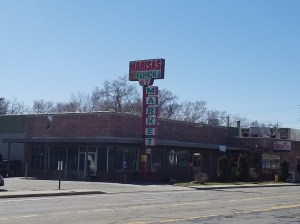
Marisa’s Fashion was one of the first Hispanic-owned businesses in Salt Lake City. The store is located at 67 W. 1700 South.

“Marisa’s Fashion is one of the first Hispanic-owned stores in Salt Lake City,” says Refugio Perez, a local business owner and entrepreneur who started the clothing and general retail store 40 years ago. After arriving from California and receiving settlement money from a work-related injury, he started Perez Enterprises and created Marisa’s Fashion from it, naming the store after one of his children.

“It is the only one that is still in business out of an initial group of five stores that were established,” Perez says in Spanish.

The store located at 67 W. 1700 South has had the support of the Hispanic community from the beginning. Although at the time the Hispanic population in Salt Lake City was small, people around the Wasatch Front and other states knew of Marisa’s Fashion and came to shop there.

“We started to grow quickly because there weren’t that many places and people were limited as to where they could shop,” Perez says. “We had people from as far as Ogden, Park City and Wendover [Nevada] coming to our store so it worked out for us and we were able to grow our business.”

Refugio Perez is the founder of Perez Enterprises. He started Marisa’s Fashion in the early to mid-1980s.

Marisa’s Fashion grew as a result of demand but also from knowing the responsibilities of running a store. One of the challenges in today’s business world is lacking that knowledge. Perez says some Hispanic entrepreneurs today go in ambitiously without being aware of basic operational skills.

“Nowadays, someone starts a business and they do it without knowing the basics of how to start or run a business,” he says. Aside from the legal and financial responsibilities, staying on top of technological advancements in the digital age is essential in today’s market.

“There have been a lot of professional Hispanic businesses of late and that’s why they are important tools for success,” Perez says.

The longevity of Hispanic-owned businesses is determined by the ability to overcome obstacles. Perez says it has not always been easy staying on track, especially in times of a national crisis.

“9/11 really affected us,” Perez says. “I felt at that time that the State of Utah was the last to get hit economically because of what happened in New York.” An analysis from online small business website The Balance says the attacks of Sept. 11, 2001, caused a recession at the time to worsen. Perez decided to hand over responsibility of Marisa’s Fashion to his brother as a result.

“I told him that if any of the businesses survived, I’d prefer it be his and that’s what happened,” Perez says. Since then, the business has carried on in Salt Lake City’s west side. Economic downturns and other setbacks aside, Hispanic-owned businesses like Marisa’s Fashion and Perez Enterprises continue to grow and establish themselves permanently in the area’s commercial landscape because of the economic and social influence they have.

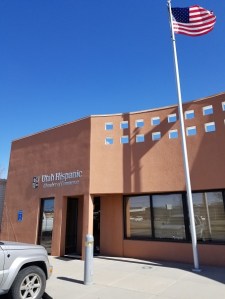
Aaron Quarnberg, chairman of the Utah Hispanic Chamber of Commerce, says “understanding the Hispanic business community” is necessary “for any company looking to grow.”

In his welcome letter to the 2019 Hispanic Small Business Summit, Aaron Quarnberg, chairman of the Utah Hispanic Chamber of Commerce, says “understanding the Hispanic business community” is necessary “for any company looking to grow.” Statistics website Statista reports the buying power of the Hispanic community in the United States is expected to reach $1.7 trillion by the end of 2020. (That figure was calculated before the impact of COVID-19 in March 2020.)

“Latinos are contributing a lot not only with their businesses but with their taxes and it’s something that I think governments should really pay attention to,” says Moises Olivares, a Realtor and author based in Los Angeles, in a Facebook chat. He also says Salt Lake City can learn from cities like Los Angeles by expanding the perception of the Hispanic community as more than just what is propagated through stereotype.

A February 2019 study from the Peterson Institution for International Economics says “Hispanics, especially the foreign born, exhibit higher levels of entrepreneurship than other ethnic groups in the United States.” Despite these findings, Perez from Perez Enterprises says the Hispanic community in Salt Lake City still lacks recognition for its overall economic contribution. 

The Utah Hispanic Chamber of Commerce helps Hispanic-owned businesses thrive in the local economy while helping them comply with city regulations.

“People like to spend cash,” Perez says. “We know that helps business, even [non-Hispanic] businesses. If they did not have the economic support from the Hispanic community, they wouldn’t be in business.”

Regardless, Salt Lake City’s west-side Hispanic-owned businesses continue in spite of setbacks, crises or perceptions from others. Weathering the ups and downs of the market, cultural shifts, and technological changes helps businesses like Perez Enterprises and Marisa’s Fashion endure for as long as they have.

“When one is patient and is secure in the knowledge that they have to keep at it and keep going,” Perez says, “it becomes important so we can keep fighting and not give up to the last breath.”

Editor’s Note: Read more stories about local entrepreneurs, the Utah Hispanic Chamber of Commerce, and the impact of the Hispanic community in Utah.


Be yourself, dance with PRIDE

Story by Kathryn A. Hackman

Prom, along with baseball and apple pie, create the red, white and blue experience. It’s a dance that nearly every American can look back on or look forward to. It’s a glamorous night of ball gowns and boutonnieres, a rite of passage for many teens across the nation that fits within society’s hetero-normative expectations.

Since the dawn of prom, it’s always been the same. A boy asks a girl to the dance. The boy wears a tuxedo, and the girl wears a dress. And that is that. However, that narrative is an exclusionary one. What about the boy who doesn’t want to ask a girl to the dance? Or the girl who doesn’t want to wear a dress? Or the person who doesn’t see their place in an event so heavily influenced by traditional gender roles?

Historically teens in the LGBTQ+ community have been left out of this quintessential high school experience. It was not uncommon for same-sex couples to be completely barred from attending the event.

“Even if schools allow students to be who they are, that still doesn’t guarantee a safe environment,” said Liesl Archbold, the youth & family program coordinator: ages 14-20 at the Utah Pride Center.

However, out of this isolation came one of Utah’s most vibrant and inclusive events to ever take place within the Salt Lake Valley — Queer Prom. For over a decade, the Utah Pride Center has put on a prom that can shine with the best of them. It’s a party where everyone is invited to be themselves.

This is a dance founded on authenticity and inclusivity. Teens from all over the west travel to Salt Lake City to experience the kind of prom that everyone who is interested in attending, should have. Members of the LGBTQ+ community and allies alike come together for a night of fun times and fond memories.

Gabe Glissmeyer attended two Queer Proms before working the event in 2014. “For allies, it’s a good way to put themselves in someone else’s shoes. It prompts them to think about why the queer community needs their own prom. And second, it’s just so fun!” Glissmeyer said.

In 2019, the dance was held at the Salt Lake City Library. And with over 1,000 people in attendance, the energy was bursting at the seams.

At Prom 2020, attendees can anticipate being whisked away by the theme, Out at Sea. The main floor of the library will be a party on the beach, complete with dancing, snacks, and mocktails. The mocktails are a fan favorite at the prom.

“I get to mix them and make them,” Liesl Archbold said. “In fact, we make the syrups right here in the center! Don’t worry, I have a food handlers license,” she said, laughing.

As attendees leave the aloha sands on the main floor and head downstairs, they should prepare themselves for an under-the-sea twist.

Here they may find the photo booth, ready to capture the evening. Or perhaps attendees will stumble upon the psychics who can offer a glimpse into the future.

“The psychics are a relatively new addition to our prom. A few years ago, we did a carnival-themed Queer Prom, and they were a huge hit! So we’ve had them back every year since,” Archbold said.

Because the party never stops, guests can step away from the lively event for some relaxing fun too. The Chill Space is something that sets Queer Prom apart from the rest. It’s a room away from the noise, dimly lit by fairy lights, and filled with blow-up furniture. Here guests can find coloring pages, sensory glitter jars, and earplugs.

It is no wonder Queer Prom has been such a success. Brianna Burton attended Queer Prom in 2013 and still looks back on it fondly. “I remember thinking how cool it was to put on a prom for kids who don’t feel comfortable getting to go to their own school’s prom.”

The only thing teens should worry about at Queer Prom is whether their favorite song made it onto the playlist, and nothing more. Safety is of high priority to the Utah Pride Center. Every adult in attendance, whether they are staff, the photographer, or the DJ, goes through a background check.

As for when the Queer Prom 2020: Out at Sea will take place? The date has yet to be determined. In response to the global spread of COVID-19 and Gov. Gary Herbert’s recommendation to limit gatherings, the dance has been postponed. As more information is gathered, the Pride Center will post updates on the event on both its Facebook and Instagram accounts.

Back to the Basics

A portfolio of three artists in Salt Lake City pushing their craft to the next level

Story by ROBERTO ELGUERA

Grabbing a quick bite from the drive-through, Chris Peterson is ready to go with his Denali and trailer full of his art equipment to take on his next job. 

With two master’s degrees in nonprofit and environmental policy and in environmental humanities, Peterson has his eyes set on getting back in the studio. He’s had plenty of years working in art programs such as the Road Home Mural Fence, the Colorado River Restoration, and THE BLOCKS.

IMG_2536

Edison & Broadway Mural by Chris Peterson. Photo by Roberto Elguera.

You never stop working as an artist. That’s because the inspiration is endless. For Peterson, he gets his inspiration from his love of wildlife. The Edison & Broadway mural is an example of that. Located in the alleyway between Broadway and 200 South in Salt Lake City, the mural displays some of Utah’s best assets — our booming city life, and our beautiful outdoors. On this piece, there are images of bears, bison, elk, and Utah’s trademark, the honeybee. In the middle, you see the heart of downtown surrounded by the famous snowy mountain ranges.

“It’s a great time to be a muralist in Utah,” Peterson said in a phone interview. Now having plenty of pieces under his belt around Salt Lake City, he believes that more art should be installed along the Wasatch Front. 

Sometimes that drive to push one’s limits to the next level can come in a number of ways. For Justin Johnson, it’s watching his son practice his lettering. He wants to go back to the essence of graffiti. “You practice your ABCs and I’ll do the same,” Johnson said. 

Painting and drawing were always a part of Johnson’s life. But when he turned 18, he was introduced to a spray can. That would take his art in a new direction. 

Early on, Johnson made pieces that were influenced by Hip-Hop and Punk culture. Themes of anti-establishment were prominent in his early pieces. Through the years his methods evolved and his art yet again took another direction. Now it’s about social justice. Johnson’s stance for a better community is visible, notably in the Road Home project. This painted mural fence was constructed to protect the children from being exposed to violent crime and drug trafficking common on the corner of 200 South and 500 West. On his side of the fence, Johnson wrote, “Hope for the future gives us strength for today.” 

IMG_2484

Road Home Mural Fence. Photo courtesy of Justin Johnson.

This need for change and art went hand in hand. Johnson’s dedication led him to be a part of the Hartland Community 4 Youth and Family board. He had a hand in setting up activities and community projects for youth in the Glendale neighborhood. In between board service he was doing graphic design and commission work. He and his crew were taking on at least five major projects a year. This work entailed planning and designing installations for Das Energi and flying across to Nevada for Elko Mural Expo. This hard work kept their skills honed, but they didn’t forget to have fun. 

For his son’s room, he installed a Pokémon-inspired mural. “It was so nice to paint from the heart, at my own pace, and with total freedom on content and style,” Johnson said. 

Humberto “Beto” Sanchez walks into the local art shop Uprok. He needs to restock caps and spray cans for a new piece he’s working on. Today he especially needs purple. Back at his house, Sanchez has set up a painting wall made out of four big panels of wood in his backyard. It’s mostly for practice, but also to build his portfolio digitally using Instagram. The usage of time-lapse and images of his work in a do-it-yourself style creates a sense of clarity and authenticity. 

“It’s like things you draw are a reflection of what you know,” Sanchez said. His pieces have influences of Chicano culture and Central American roots. In his latest painting, he portrays the quetzal, the colorful bird that represents wealth in Aztec and Mayan culture. On the right side of the backyard, there’s a depiction of a Mayan warrior. 

IMG_2739

Humberto “Beto” Sanchez. Photo by Roberto Elguera.

Sanchez wants to see more culturally diverse art in Salt Lake County. But for now, there is some sacrifice that takes place. “To get into these spaces that aren’t designed for us, you have to adapt,” Sanchez said. With professions in design, there are some compromises that need to be made when working with clients. This can be frustrating, but it’s those passion projects that keep an artist’s integrity intact. 

Sanchez wants to bridge that gap and create a space where artists can be free and push more art into the city. He wants to build his brand West Temple Workshop to where he can one day give scholarships to aspiring artists and teach workshops.

For now, it’s time to bust out the black spray can and go over the quetzal. Faced now with a blank canvas in front of him, it’s time to work. After all, practice makes perfect. 

This slideshow requires JavaScript.


A rite of passage gone: COVID-19 leaves high school seniors up in the air  

Timpview High School Senior Class of 2020. Photo courtesy of Sommer Cattani.

Story by IVANA MARTINEZ

Hundreds of schools around the nation — from K-12 to universities — have closed doors in recent weeks due to the COVID-19 global pandemic. In Utah, the “soft closure” for K-12 schools has been extended to May 1.

For many high school seniors, the uncertainty of the pandemic

means the prospect of returning to school remains up in the air. School activities such as sports, alongside the traditional senior year festivities — senior “assassination,” prom and possibly graduation — have been put on hold.

“These are unprecedented times in Utah’s and our nation’s history,” Gov. Gary Herbert said in a March 23 statement.

“I have been overwhelmed with Utahns’ outpouring of support for one another, and nowhere has this been more evident than in the way our educators are supporting Utah students and families,” Herbert said.  

The closure was extended in an effort to reduce the spread of COVID-19 in public schools and limit gatherings of 10 people or more. Several in-state universities and colleges have postponed or canceled graduation ceremonies.   

Photo courtesy of Sommer Cattani.

Sommer Cattani, a senior at Timpview High School in Provo, said she was experiencing the worst case of “senioritis” prior to the pandemic. She never had anticipated any of this happening and it was a little bit disappointing for her.  

“I hated going to school, but now that I can’t, I really want to,” Cattani said in a phone interview. 

For most seniors, spring semester is a time of transition to celebrate and prepare for secondary education. Graduation for many is considered a rite of passage to commemorate the last 12 years of education. 

“A lot of people are acting like high school is kind of done for me, like I’m probably not going to go back. Which is just weird, so it kind of feels unfinished,” Cattani said.

Cattani said her online classes have easily transitioned since her school had the “soft closure.” However, COVID-19 has affected her decision to attend universities out of state, since most have shut down for the semester. After high school, Cattani was planning to study hospitality and tourism. Now it seems uncertain.  

She had planned to tour the Brigham Young University-Hawaii campus over spring break to see if tourism was actually something she’d like to academically pursue. She said it wouldn’t be smart to go to BYU-Hawaii without touring the campus. 

“I’m in this weird limbo phase. Hawaii has a really good hospitality and tourism department and I’m not sure if I would want to study that somewhere else,” Cattani said. “So it’s just kind of like oh, I don’t really know what my future holds anymore.”   

Sean Edwards, assistant principal of Timpview High School, said the district’s focus at the moment is to effectively transition classes to a distance learning model. The district will then focus on assisting seniors through this transition to post-secondary education. 

“I think that is key for continuing the learning experiences if we were to extend the closure or the dismissal,” Edwards said in a phone interview. 

“Making sure that, you know, we have a solid and coherent plan with our school counselors, with our college and career access advisor and just making sure we are pushing communication out.  We’re doing a lot of proactive reaching out to students and parents,” he said. 

Hailey Giles, another Timpview senior, spoke about her experience during this time. She said it has been a “pretty smooth transition” for her because she is used to working on Canvas Instructure. Canvas is an educational technology company based in Salt Lake City.

Giles said in a phone call that she’d dropped one of her advanced placement classes, because it wasn’t pivotal to her graduation and she wasn’t planning on taking the test. But the real impact she’s felt is the loss of senior activities, like hanging out with her friends and specifically spring sports such as golf. 

“The fear that we’ll miss out on our senior experience, and especially I play a spring sport,” Giles said. “So this was my year, I finally made varsity and we’re set to win state. And so that was just big, like knowing that I won’t be able to play that sport for the spring season.” 

Both Giles and Cattani made it clear that they understand the seriousness of the pandemic and the measures the school administration is taking to protect them. Giles hopes that once school starts she may have a chance to play golf in the summer to make up for the spring session.  

As of March 23, assistant principal Edwards said the administration’s focus is on getting the transition right. He mentioned conversations relating to senior activities will happen later when the school has a better idea of how long the extension will be. 

The school is continuing to plan for graduation as it’s normally scheduled. For now, many students are working from home waiting to hear what may come in the following months as this pandemic continues.

Mosquito Abatement District helps prevent the West Nile Virus in Salt Lake City

Story and photos by CHEYENNE PETERSON

According to the Centers for Disease Control and Prevention (CDC), West Nile Virus is the leading cause of mosquito-borne disease in the continental United States. 

West Nile Virus was introduced to the U.S. in 1999 and to Utah in 2003, said Greg White, the assistant director at the Salt Lake City Mosquito Abatement District.

IMG_4590

Salt Lake City Mosquito Abatement District located at 2215 N. 2200 West.

Since 1924, the SLCMAD, located at 2215 N. 2200 West, has had a group of specialists working on keeping mosquitoes controlled in the Salt Lake area. The principal focus is on population control and limiting the spread of the West Nile Virus. 

The CDC states that the West Nile Virus often begins with a bite from an infected mosquito. Mosquito season begins in summer and ends in fall. 

IMG_4572

SLCMAD lab.

“We feel like we do make an impact on the West Nile Virus. We take samples of mosquitoes for [it] specifically so that we find out if they are positive for the West Nile Virus. Then we will increase control in specific areas to try to interrupt the disease transmission,” White said. 

Every year, Utah has a large amount of mosquitos and these mosquitoes tend to gravitate to areas with stagnant water. In residential areas, culex pipiens mosquitoes are very common. These mosquitoes are the specific kind that transmit the West Nile Virus and can be a nuisance at times.  

“We don’t have as much water as the midwest like Minnesota and New Jersey, but we do get all of the water runoff from the mountains that we have. That goes straight down through the Salt Lake and as it gets closer everything stops flowing so good and the water starts to get stagnant,” White said.

The Salt Lake City Mosquito Abatement District provides an Urban Field Operation. There are three different services available within it, but one is critical to managing the West Nile Virus. Greg White calls this service “the bicycle program.” 

The bicycle program was created by the SLCMAD to keep the pesky mosquitoes out of the city.

“We will drop some people off with bikes and they will do their routes down the residential areas of Salt Lake City. They will look for places with standing water, like drains that don’t drain properly and storm water inlets,” White said.

The program consists of four bicyclists. Each has a few disposable pockets of biopesticides that resemble Tide laundry detergent pods. They keep these pods in a pouch located on the back of their bike. When riding their bikes through residential areas and standing water is observed, they throw the pods in the stagnant water. Each treatment lasts for three to four weeks each time.   

According to the Salt Lake City Mosquito Abatement Center’s website, the biopesticides are “surface agents such as refined mineral oils or monomolecular films spread across the surface of the water to prevent mosquitoes from breathing. Mosquito larvae and pupae breathe through tubes called siphons that extend above the water surface.”

Cindy Oliver was diagnosed with West Nile Virus in September 2006.

“At that time there were a few cases and it was getting in the news that there was a West Nile Virus going around. In that year there were 131 cases in Utah,” said Glenn Oliver, Cindy’s husband, in a phone interview. 

According to the CDC, most people infected with West Nile Virus do not feel sick. About one in five people who are infected develop a fever and other symptoms. About one out of 150 infected people develop a serious, sometimes fatal, illness. 

Cindy said she had a headache and didn’t feel well. She thought she had a sinus infection, but it lasted for about five days.

Next, Glenn said, doctors thought she had meningitis.

Eventually they determined it was the West Nile Virus.

“She had to learn how to walk on her own again. Learn her motor skills all over again. So she couldn’t walk, talk, or do anything. She was completely wiped out of abilities,” Glenn said. 

Cindy said she spent four months recovering in hospitals. It has taken an additional 10 years of physical, occupational, and speech therapy in her home. 

“Doctors were amazed how well she has recovered, because we were expecting it to be worse,” Glenn said.

According to Cindy, “Support from family, getting better from doctors, and my faith” are the reasons why she recovered from the West Nile Virus.

IMG_4578

Greg White shows a visitor mosquitoes of different ages and sizes at the SLCMAD.

The Salt Lake City Mosquito Abatement District recommends being aware of mosquitoes in the area and to report them. Its funding is from a small portion of the Salt Lake area property taxes. After that there is no additional cost for using the services.

The CDC website suggests, “You can reduce your risk of West Nile Virus by using insect repellent and wearing long-sleeved shirts and long pants to prevent mosquito bites.”

White said, “If people have a mosquito problem in their area, we will come out, check it out and give them treatment, inspections and everything with no cost.”

Utah’s old Greek Town is about to start something new

Story by CASSANDRA ROSENKRANTZ

All photos courtesy of Greek Orthodox Church of Greater Salt Lake.


Greeks have created a community in Salt Lake City ever since the first Greek immigrant came to the United States to work in the late 1870s, according to the history of Greek Orthodox. Industrialization created a major influx of Greek immigrants into the city. 

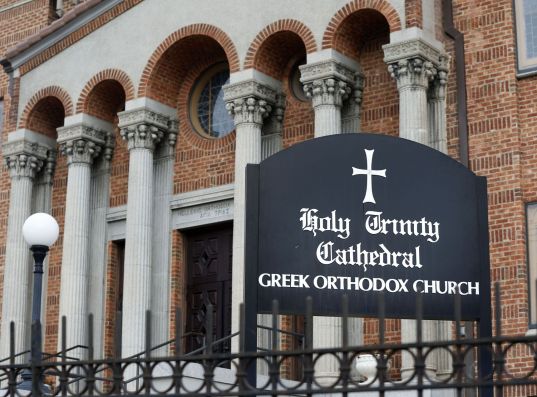
Wanting to keep the Greek culture alive, the community decided to build a Hellenic (Greek) church in 1905. Plans were made to raise money and, eventually, they built a church on the property at 439 S. 400 West in Salt Lake City.

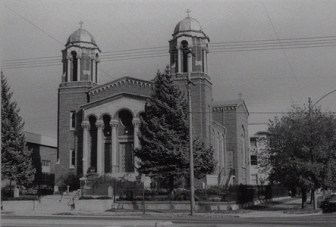
An undated image of the Holy Trinity Cathedral.

The church, now known as Holy Trinity Cathedral, is the oldest Greek Orthodox church in the U.S. and it is home to the largest Greek parish west of Chicago, according to the church’s history.

According to church leaders, the community built a school to teach the young children to speak the ancient and modern Greek languages and also implemented a language program at the University of Utah

Holy Trinity is planning a big project that could impact the Greek community for the better. Ideas of future development for the land the church occupies in Salt Lake City’s Greek Town were discussed in the weekly church bulletin. This project would be the biggest that the Greek Orthodox community has taken on since the building of the first church. 

The bulletin reported that Woodbury Corp., a local development and real estate company, plans to fill the empty lot with offices, apartments for younger Greek generations, a hotel, retail outlets, Greek restaurants, a historic museum and a large park complete with an outdoor viewing space. With this new plan, Holy Trinity will be able to provide a lot of new facilities to the area in Salt Lake City.

In the past few decades, many generations of Greek Americans have come through the church. “This new center (development) could add so much to the vibrant Greek community we have here in Salt Lake,” said Annie Nikols, a member of the church, in an email interview. “I am so excited to have a project of this magnitude that will let the future generations share their history and be proud of who they are.”

Andrew Pippas, a board member on the church’s council, said he hopes the renovation plan will expand the core program of the church and provide space where everyone can visit to learn more about the Greek culture.

“This is a chance for the Greek community to show the city what they can do. This is an opportunity that comes once in a lifetime. We should take it while we have the chance,” Pippas said

The Greek Orthodox Youth Association dancing at the Greek Festival.

George Papadakis, a leader in the Greek community, said the Greek Festival has no plans of shutting down if this project gets up and running. 

According to VisitSLC, the Greek Festival is the second largest festival in Utah after the Utah State Fair. The festival is very well known to the public and many Utahns look forward to seeing historical Greek dancing as well as getting to taste the foods of Greece. 

Many comments have been made to the church regarding the Greek Festival on the community Facebook page. Festival-goers say the current lot does not provide everything the festival needs. This was one of the primary reasons that sparked the idea of a new Greek Town.

Papadakis is joyful for the possibility of an upcoming expansion. “Not many people know what being Greek means,” he said. “This church and the new center will become such a big part of who we are, and we are hoping the public can come to visit and become a part of our family.”   

The downtown development will benefit everyone — not just the Greek community. It will be open to the public and anyone can move into the apartments, eat at the restaurants or rent a space in the offices. 

“The plans for the new building look modern,” said Nikols, the church member. “It is so fun to think of it as our future where our kids and the new generation will grow up.”

Rendering of the new buildings making up Greek Town.

According to the Salt Lake Tribune, construction costs are looking upwards of $300 million and the church is currently accepting donations. The Huntsman Foundation of Utah has donated to help the Greek community achieve its goal. Although the church has already started planning, the project has yet to take shape and it is still under consideration from the local government. If the plan passes, the project is expected to get underway as soon as possible and could take up to three years to complete.

Many members of the church, like Nikols, have shared their joy of the renovation plan on social media in hopes to spread the news and receive donations. The parishioners are hoping that Greek Town will become a popular neighborhood gathering area for locals in Salt Lake City where they can eat, relax and enjoy the Greek culture.