Kilby Court provides venue for emerging artists

Story and photos by LIAM ELKINGTON

Tucked into a corner just outside of downtown Salt Lake City, Kilby Court sits at the end of an unassuming street with hardly any indication that a music venue is there. The décor has a homemade feel, with walls covered in posters and stickers. While the venue is inconspicuous, Kilby Court’s small size combined with its active promotion of small acts has made it a staple of the local music scene.

Named after its location at 741 S. Kilby Court, Kilby Court promotes itself as “Salt Lake City’s longest running all-ages venue,” and “a springboard stage for beginning local and touring artists alike.”  

kc4

Kilby Court welcomes artists both local and touring.

Salt Lake City resident Brittany Burrahm praised Kilby Court in an email interview, saying that the venue was “professional, yet still felt personal. It’s one of the better concert venues I’ve been to.”

The types of musical acts one can expect to see at Kilby Court vary widely. Bands from nearly every genre of popular music have performed at Kilby Court, from Hip Hop to Indie to Punk Rock. Performances are booked nearly every night of the week and represent the range of musical talent present in Salt Lake City. Upcoming shows at the venue are frequently promoted on other well-known community platforms like the radio station KRCL and SLUG Magazine.

While there are many venues in Salt Lake City, they vary in their accessibility. Kilby Court’s size, location and do-it-yourself philosophy allows for an all-ages venue with ticket prices rarely exceeding $20. Kilby Court has also been known to host lesser-known bands that go on to achieve greater acclaim, such as Joyce Manor, Tigers Jaw and George Watsky

Kilby Court is owned by Sartain and Saunders, a promotional and event planning company that collaborates with venues, concert halls and restaurants within Salt Lake City to book and promote events. S&S also own Urban Lounge and Metro Music Hall, two other venues that host a variety of musical acts, including local artists.

Given the recent COVID-19 pandemic, Kilby Court has joined many other Salt Lake City venues in postponing or canceling all events through early May, providing refunds to those who had already purchased tickets. Rescheduling information is not currently available, although the venue does intend to continue with the Kilby Court Block Party event scheduled for May 2, an all-day event that is slated to feature over 20 local bands.

Offering a flexibility of function that is not as commonly seen in other Salt Lake City venues, Kilby Court can adapt its space for various conditions. The interior space is little more than a garage, and one of the walls can open up into a courtyard featuring a fire pit and seating. Kilby Court operates throughout the year, able to repurpose the relatively limited space to different crowd sizes and outdoor conditions.

The size of Kilby Court is often brought up in reviews for the venue, and is primarily cited as a positive feature of the space, allowing for a more intimate show for both performers and audience members. Reviews on Kilby Court’s Facebook page praise this aspect of its concert experience. Reviewer Tristan Marie Montano said in 2018, “I live for intimate venues like this where everyone feels like they are a part of everything going on.”

Salt Lake City resident Burrahm found it easy to recommend Kilby Court for this reason. “It’s a bit cramped but they do a good job with the space they have. It’s a cozy experience and the sound quality is great.”

Kilby Court is focused on providing a professional and memorable experience for Salt Lake City concert-goers. Venues also play a significant role in the success of a performance. “It allows the audience to get a really close-up and personal contact with the musicians, which is important, rather than them being so high up on a stage. It’s like you’re on the same level,” said Kendra Squire, a musician who has been performing in the Salt Lake and Provo areas for the past few years. She spoke about performing at other venues in Salt Lake City, stating that communication between artists and organizers is key to producing events that are successful.

Having a venue that supports local, independent artists is vital to those who rely on them as an outlet to a broader scene. “It’s community building,” Squire said. “If people that are trying to start up have nowhere to go, then that becomes the whole question: where do they go?”

Kilby Court not only provides a stage for artists that encourages local audience engagement, but also a place for notable touring artists to reach a larger number of people. Kilby Court stands alone in the Salt Lake City community as a venue dedicated to the promotion and celebration of artists who may not otherwise have an opportunity to perform for a large audience. Having these types of spaces fosters a community that supports musicians, no matter their goals for performing. “I don’t think that every musician or band necessarily wants to make it big,” Squire said. “I think a lot of people just want someone to hear.”

Read, and hear, more about Kilby Court in this piece by Palak Jayswal.


This slideshow requires JavaScript.

Family-owned taxi service brings success to Salt Lake City’s west side

Story by CHEYENNE PETERSON

Passengers from an arrival flight at the Salt Lake City International Airport make their way to the outside pickup location. Cellphones are pulled out within seconds and with a simple tap on an app, ride-share drivers swarm, like busy bees picking up their pollen. 

Corporate ride sharing has dominated the field, casting taxi drivers to the curb. But not all taxi companies have lost their edge. A family-owned business stays competitive in this evolving marketplace. 

Ricardo Mendosa has been a taxi driver for the past 18 years in the Salt Lake City area. 

AAA Latino Transportation owner Ricardo Mendosa at Salt Lake City International Airport. Image from Google Photos.

Mendosa first worked seven years for a major taxi service, but decided that he could create a better transportation business of his own. He calls it AAA Latino Transportation. 

AAA Latino Transportation is located west of Salt Lake City’s Interstate 15, conveniently on 1007 S. 800 West.

According to AAA Latino Transportation’s website, the business provides an efficient and reliable taxi service, without the struggle of getting a rental car and for a good value. Owners stress the importance of helping clientele reach their destination without draining their wallet.

Mendosa generally takes most of his rides to the Salt Lake City area and to the Salt Lake City International Airport. 

“And if you want to drive to Vegas, I’ll drive you to Vegas,” Mendosa said in a phone interview.

Screen Shot 2020-04-07 at 11.11.33 AM

AAA Latino Transportation at the border of Idaho. Image from Google Photos.

The transportation service areas include Salt Lake City, Ogden, Provo, Park City, Tooele, Layton, Logan, and Heber. 

Ride Sharing has become lucrative and convenient for many. Either as a part time or transitional work. Julie Bennett moved from Georgia and as she was transitioning to her new home in Utah, she had not secured a job. While applying to potential careers, she spent two months driving for Lyft. 

According to Bennett, as a Lyft driver, she would not go any farther than a 20-minute drive. 

Drivers are unable to see a passenger’s destination, until they accept the fare.

“You can’t see where they want to go or where they need you to pick them up. Unless you have a certain amount of rides, which I had not done. Every time I would pick someone up and notice they would need to be driven more than 15 to 20 minutes. I would reject the ride. Nothing more than 20 minutes, just because I didn’t get paid to drive the 20 minutes back,” Bennett said in a phone interview. 

She said many other ride-share drivers also would not go the longer distances.

“I do know some other Lyft drivers. I bet they would not drive more than 20 minutes, because it’s a waste of their time, money, and miles on their car,” Bennett said.

Bennett said she would take Mendosa’s transportation services, since she could confirm that they have great reviews. Google reviews rates AAA Latino Transportation at a solid 4.6 stars, whereas other company reviews like Yellow Cab have 2.4 stars. 

“I would definitely take a taxi to Las Vegas, if I knew they were reliable and at a good price. If I knew what the rate of it was, before they even took me, I would trust them a lot more. I just know that if I were to request a Lyft, they would reject my ride. I don’t even know if any ride-share would even allow a ride that far. I don’t like that I won’t know who I’d be riding with either, until they accepted the ride. I wouldn’t want to be stuck with someone that I would be uncomfortable with,” Bennett said. 

Haley Meyer lives on the west side of Salt Lake City and uses ride-share companies frequently.

“I’m a big skier and sometimes I take an Uber to Solitude [Mountain Resort, a ski area near Salt Lake City]. Solitude at the beginning of the season started enforcing pay parking. Probably to get traffic off the roads. There was a lot of traffic and blockage on the roads up there, last season,” Meyer said in a phone interview. 

Although Meyer takes an Uber to go skiing, she runs into some issues getting rides. 

Screen Shot 2020-04-07 at 11.10.03 AM

AAA Latino Transportation will take you anywhere, in any weather. Image from Google Photos.

“My favorite time to go skiing is when it’s snowing, that’s when there’s fresh powder. That’s when most people go skiing anyways. It’s hard to find an Uber that will pick me up and take me to Solitude when it’s snowing,” Meyer said.

Mendosa’s company will take you to all the ski resorts. 

According to the website, “Our mission is to take you where you need to go, no matter if it’s raining, snowing, lightning, day or night. We are your best option for Taxi Service in Utah. Twenty-four hours, 7 days a week, and 365 days.” 

There is no need to take a shuttle to the ski resorts. 

“Taking a shuttle is not really that convenient. They stop at so many places and I feel like I wasted so much time,” Meyer said.

AAA Latino Transportation promises to be on time, professional, courteous, knowledgeable, and offer a safe taxi service.

Marisa’s Fashion is a model for west-side Hispanic-owned businesses

Story and photos by JACOB RUEDA

Hispanic-owned businesses in Salt Lake City are becoming the staple in the local economic landscape. The rise of such businesses began in the early to mid-1980s and has become prevalent due to the influx of people migrating from other states and other countries. U.S. Census Bureau data from 2019 says Hispanics or Latinos are the largest non-white ethnic group in the city.

Despite their growing numbers in Salt Lake City, the presence of Hispanics is not as commonplace compared to places like Los Angeles or Houston. While Hispanic-owned businesses in those cities are typical in their local economies, their impact went unrecognized in Salt Lake City until recently.

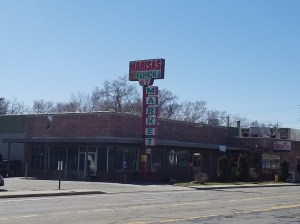
Marisa’s Fashion was one of the first Hispanic-owned businesses in Salt Lake City. The store is located at 67 W. 1700 South.

“Marisa’s Fashion is one of the first Hispanic-owned stores in Salt Lake City,” says Refugio Perez, a local business owner and entrepreneur who started the clothing and general retail store 40 years ago. After arriving from California and receiving settlement money from a work-related injury, he started Perez Enterprises and created Marisa’s Fashion from it, naming the store after one of his children.

“It is the only one that is still in business out of an initial group of five stores that were established,” Perez says in Spanish.

The store located at 67 W. 1700 South has had the support of the Hispanic community from the beginning. Although at the time the Hispanic population in Salt Lake City was small, people around the Wasatch Front and other states knew of Marisa’s Fashion and came to shop there.

“We started to grow quickly because there weren’t that many places and people were limited as to where they could shop,” Perez says. “We had people from as far as Ogden, Park City and Wendover [Nevada] coming to our store so it worked out for us and we were able to grow our business.”

Refugio Perez is the founder of Perez Enterprises. He started Marisa’s Fashion in the early to mid-1980s.

Marisa’s Fashion grew as a result of demand but also from knowing the responsibilities of running a store. One of the challenges in today’s business world is lacking that knowledge. Perez says some Hispanic entrepreneurs today go in ambitiously without being aware of basic operational skills.

“Nowadays, someone starts a business and they do it without knowing the basics of how to start or run a business,” he says. Aside from the legal and financial responsibilities, staying on top of technological advancements in the digital age is essential in today’s market.

“There have been a lot of professional Hispanic businesses of late and that’s why they are important tools for success,” Perez says.

The longevity of Hispanic-owned businesses is determined by the ability to overcome obstacles. Perez says it has not always been easy staying on track, especially in times of a national crisis.

“9/11 really affected us,” Perez says. “I felt at that time that the State of Utah was the last to get hit economically because of what happened in New York.” An analysis from online small business website The Balance says the attacks of Sept. 11, 2001, caused a recession at the time to worsen. Perez decided to hand over responsibility of Marisa’s Fashion to his brother as a result.

“I told him that if any of the businesses survived, I’d prefer it be his and that’s what happened,” Perez says. Since then, the business has carried on in Salt Lake City’s west side. Economic downturns and other setbacks aside, Hispanic-owned businesses like Marisa’s Fashion and Perez Enterprises continue to grow and establish themselves permanently in the area’s commercial landscape because of the economic and social influence they have.

Aaron Quarnberg, chairman of the Utah Hispanic Chamber of Commerce, says “understanding the Hispanic business community” is necessary “for any company looking to grow.”

In his welcome letter to the 2019 Hispanic Small Business Summit, Aaron Quarnberg, chairman of the Utah Hispanic Chamber of Commerce, says “understanding the Hispanic business community” is necessary “for any company looking to grow.” Statistics website Statista reports the buying power of the Hispanic community in the United States is expected to reach $1.7 trillion by the end of 2020. (That figure was calculated before the impact of COVID-19 in March 2020.)

“Latinos are contributing a lot not only with their businesses but with their taxes and it’s something that I think governments should really pay attention to,” says Moises Olivares, a Realtor and author based in Los Angeles, in a Facebook chat. He also says Salt Lake City can learn from cities like Los Angeles by expanding the perception of the Hispanic community as more than just what is propagated through stereotype.

A February 2019 study from the Peterson Institution for International Economics says “Hispanics, especially the foreign born, exhibit higher levels of entrepreneurship than other ethnic groups in the United States.” Despite these findings, Perez from Perez Enterprises says the Hispanic community in Salt Lake City still lacks recognition for its overall economic contribution. 

The Utah Hispanic Chamber of Commerce helps Hispanic-owned businesses thrive in the local economy while helping them comply with city regulations.

“People like to spend cash,” Perez says. “We know that helps business, even [non-Hispanic] businesses. If they did not have the economic support from the Hispanic community, they wouldn’t be in business.”

Regardless, Salt Lake City’s west-side Hispanic-owned businesses continue in spite of setbacks, crises or perceptions from others. Weathering the ups and downs of the market, cultural shifts, and technological changes helps businesses like Perez Enterprises and Marisa’s Fashion endure for as long as they have.

“When one is patient and is secure in the knowledge that they have to keep at it and keep going,” Perez says, “it becomes important so we can keep fighting and not give up to the last breath.”

Editor’s Note: Read more stories about local entrepreneurs, the Utah Hispanic Chamber of Commerce, and the impact of the Hispanic community in Utah.


Santo Taco: a pillar of community in crisis 

Story by PALAK JAYSWAL

As the COVID-19 pandemic continues to shut down our world, it may be an understatement to say its effects on particular trades will be devastating. From entertainment to athletics, industries and workers alike will not be left unscathed by this pandemic. 

On a more local level, those who are most economically vulnerable are small business owners who rely on people leaving their houses to help pay their own bills. 

One local Utah business, a taqueria called Santo Taco, located in Rose Park at 910 N. 900 West, continues to serve people via takeout orders and curbside delivery in adherence to guidelines from the Centers for Disease Control and Prevention. Despite the unprecedented circumstances of the pandemic, combined with the added stress of recovery from the Magna-centered 5.7 earthquake that rocked Utah on March 18, 2020, the taqueria provides comfort to Utahns while sticking to the traditional values it is built on. 

The Story 

According to their website, the owners of Santo Taco, Claudia and Alfonso Santo, have been in Utah for decades, and their taqueria has been a work in progress for many years. When Claudia and Alfonso first got started in the food industry, they were washing dishes in the kitchen. Through years of learning skills from the culinary industry and working to build a life for their growing family, they slowly immersed themselves in the art of food. 

Originally opened in 2019, Santo Taco prides itself on its long journey through fresh food and traditional flavors. The journey is one of dedication, family and innovation. The trademark home-style cooking from Santo Taco is adapted in the owners’ way, catering to the vegetarian palates as two of the couple’s children are vegetarians. Modifying these recipes is a remarkable feature considering many Mexican plates are heavy on the meat. 

The menu of Santo Taco has something for everyone — from the tacos, of course, to quesadillas and burritos. There are several popular snack items available as well, such as nachos and asada fries. While the food is delicious, during times like these, it’s not just the food that brings customers to the doors of Santo Taco. 

Community and Crisis 

Rodolfo Rangel Jr., a realtor in Utah, is proud to dine at Santo Taco during COVID-19 lockdown. “We are together in this crisis. If we don’t support each other, everyone will be affected one way or another,” Rangel said in an interview over direct message. 

While Rangel is acquainted with Salt Lake City through his profession, he is aware of the value a support system of a community can provide. “I know the owners and I know how hard they worked to open this business. I just want to do my part. They are a hard-working family and I know they always help anyone in need,” Rangel said regarding the Santo family. 

Rangel is one of many who wants to do his part to support local businesses and families. Steve Kinyon, food blogger behind Foody Fellowship, also marveled at the quality of food from Santo Taco and the sense of stability it provides in these uncertain times. “It’s important to support local [businesses] right now because there are already thin margins,” Kinyon said in an interview over direct message. 

While Kinyon sang praises for Santo Taco on his Instagram account, he also had kind words for the people behind the food. “Santo Taco has amazing owners and operators for their business. They are genuinely great people, they care about the community,” Kinyon said. 

In times of true panic, there are certain things that provide comfort to individuals, like a good book, a warm blanket or your favorite takeout food. Self-isolating is now the norm for many people across the country, and Utah is no different. But what does this mean for local businesses? As the world continues to change on a daily basis, Santo Taco and its patrons remind us of why supporting local businesses — circumstances permitting — is important.

Latinx businesses in the Salt Lake City area

Story and gallery by IASIA BEH

Utah’s demographics are rapidly changing.

Not only has Utah’s population grown the fastest in the country in the past 19 years, but the number of people of color who live in Utah has also ballooned in recent years. The Latinx community, in particular, has grown nearly 15 percent between 2010 and 2016, according to the U.S. Census. This coincides with Utah’s growing economy, adding 115 percent more Latinx businesses from 1997-2015.

Alex Guzman, the president and CEO of the Utah Hispanic Chamber of Commerce, located at 1635 S. Redwood Road, has a couple ideas as to what the reasoning behind the population growth could be. One, that Latinx families are more likely to have more children than white families. And second, internal immigration.

“Internal immigration is one of the reasons,” Guzman said. “When the lives turn tough for the immigrant community in Arizona, Nevada and California, they move up.” He said people are moving from nearby cities such as Phoenix and Las Vegas to West Valley City, where they can find goods and services in Spanish. 

Rancho Markets is an example of one of these services. Founded in 2006, the stores are run by Latinx individuals and the signs are displayed in Spanish.

Está cerca de donde vivo,” said a mom, Rosa, at the 140 N. 900 West location. Through a translator, she said that the store is close to where she lives and it’s convenient.

Looking at a map of Salt Lake City grocery stores, most are on the east side, leaving the mostly brown west side to go to fewer stores such as Rancho Markets. This is a positive if you are catering to only Latinx individuals as there would almost be a monopoly, but breaking into the white market has proven to be difficult.

There are many reasons why that is. One is the fact that many Latinx people haven’t been taught how to run a business in the first place. The Utah Hispanic Chamber of Commerce, however, is looking to fix this discrepancy.

“[Utah Hispanic Chamber of Commerce] created a program we call the Business Academy,” Guzman said. “In partnership with colleges and universities, every single 10 weeks we start a new program where we train the Hispanic business community on how to do business in the U.S.”

Another benefit of the program is that it helps its attendees learn English. The language barrier can be a huge hurdle when expanding markets to serve communities that don’t speak Spanish.

“Currently we are teaching these classes in Spanish,” Guzman said. “But little by little we are turning the switch from Spanish to bilingual, and bilingual to monolingual. English is the language of business. If they insist to work and serve just to serve Spanish customers, they have a roof in their businesses because we are just 17 percent of the population.”

Programs like these show that there is a cultural shift happening in the state but it still is a majority English-speaking, white area. But with the way that demographics are swinging and with the booming Latinx business economy, the Latinx community will continue to grow in Utah. Maybe, in a few years, English-centered businesses will have to learn Spanish in order to stay competitive. Until then, the Utah Hispanic Chamber of Commerce will be there to make being an entrepreneur a reality for Latinx individuals.   

Latinx business owners bringing value to Utah

Story and photos by KAELI WILTBANK

Hector Uribe stepped out from behind the restaurant kitchen, dressed in a white apron and a University of Utah cap. He sat down on a stool inside the lobby of the restaurant his father-in-law passed on to him in 2011 and began explaining his journey toward becoming a business owner.

Uribe explained that he grew up in Mexico and learned the value of hard work from a young age. He explained, “I ditched school when I was in sixth grade, so I was 11 years old when I went to work for somebody else to make money to help out the family.”

Uribe came to the United States from Mexico when he was just 17 years old and started working at his father-in-law’s restaurant weeks after his arrival in 1992. His plan was to save enough money to open up a hardware store back in Mexico. But, he said business owners in Mexico face great dangers because they are at risk of being robbed by the cartel. Uribe realized greater success was awaiting him as a business owner in Salt Lake City.

Hector’s, the chosen name of the company after Uribe took it over, has become a popular Mexican food destination for locals, with both the man and his food becoming iconic elements of the community.

A group of students from Highland High School recently came and interviewed Uribe about his journey as a business owner, he said. They were looking to speak with a successful person in the community, but Uribe explained, “I don’t see myself that way, I just think I am hard working.”

Salt Lake City was recently ranked as one of the best metropolitan areas for minority entrepreneurs to start a business. With the Latinx population becoming the second most rapidly growing demographic of the state of Utah, there has been a corresponding influx of Latinx-owned businesses. 

According to the Utah Governor’s Office of Economic Development, 10,000 businesses in the state of Utah are Latinx-owned and operated. 

Rebecca Chavez-Houck, a former Utah State House representative, is a third-generation American, with her grandfather immigrating to the United States from Mexico. While immigrants like Uribe are seen as successful business owners, Chavez-Houck is familiar with the negative connotations associated with immigrants. She said, “There is this notion of the deficit within communities of color, instead of looking at where our strengths are. Yes, notably persons of color are more within the criminal justice system. We have challenges with poverty and a variety of different things, but that’s not all who we are.” She added, “We are a much more complex community than that.”

Nera Economic Consulting found that nationally, “Latinos are responsible for 29 percent of the growth in real income since 2005.” With successful Hispanic-owned businesses dotting the Utah map, the positive impact brought by the Latinx community is significant to the local economy. The study continued, “They account for roughly 10 cents of every dollar of US national income, and that proportion is rising both due to growth in the Latino population and rising per capita earnings.” 

Uribe spoke with gratitude as he described the opportunity he has had to operate a business of his own. “When we come over here we are happy to have a job. I don’t say it’s a necessity for Hispanics to own their own business, but if there’s an opportunity you need to take it. It’s not as easy to start a business there (in Mexico).”

Alex Guzman, president and CEO of the Utah Hispanic Chamber of Commerce, explained to a group of students at the University of Utah, “The Hispanic business community, in the majority of cases, open businesses not because they want to be an entrepreneur, but because they have to provide for their families, so they become business owners with no intention of becoming business owners. But,” he said, “as business owners, they need to learn how to run a business. They need to learn how to file taxes, they need to know how to hire, how to do invoicing, how to deal with customers, how to marketing and sales, human resources, legal issues, etc.”

Offering resources and a supportive community, the UHCC provides local Latinx business owners and entrepreneurs with valuable tools they need to succeed. Guzman explained, “We created a program called The Business Academy. Every 10 weeks we start a new program where we train the Hispanic community on how to do business in the U.S.” 

The rapidly growing Latinx community in Utah has made an impact on the local economy and culture of the state. Resources offered by the Utah Hispanic Chamber of Commerce have become valuable tools for business owners and entrepreneurs like Uribe. His words of wisdom to other entrepreneurial-minded people in the community was, “You’ve got to do everything you can and do it the best you can so you don’t ever feel like you left something behind. The world is full of opportunities and you just need to feel which one you want to take.”

This slideshow requires JavaScript.

Community and inclusion in art — Latin social dancing in Utah

Story, photos and gallery by KRISTEN LAW

“There’s dance for everything. You don’t have to be a competitor, you don’t have to be a professional,” said Julio Morales, a professional Latin ballroom dancer and instructor in South Salt Lake.

Morales said that students come for many reasons: to increase health benefits, enjoy the community and socializing, or to compete and perform. “You get to meet a lot of people from different backgrounds who have different goals, so it’s a great community,” Morales said.

The purpose of Latin social dancing is to build community. Social dance is centered around socializing while engaging in different styles of dance. Morales said all of the styles have their own kind of “flavor.” Salsa is a “high-energy, happy dance,” Morales said. Merengue and bachata are Latin dances originating in the Dominican Republic but have slightly different characteristics from one another. Merengue, according to dance websites, is more of a traditional, lighthearted and festive Latin dance, whereas bachata is more of a sensual and intimate Latin dance.

DF Dance Studio located at 2978 State St. in South Salt Lake offers many Latin social dance classes that fit any level. The beginner Latin social dance classes encourage a comfortable and relaxed environment for learning the basics. DF Dance Studio provides professional performances for attendees for social dance nights to encourage beginners to come out and dance.

Some people come who have never danced before. Teachers are there for students to ask questions and make them feel comfortable.

Screenshot 2019-04-03 15.41.18

Hope Jackson (second from the right) watching the students dance during the Latin Nationals Prep Camp.

Beginner or not, even the professionals take classes. “I’m a professional, but I still take lessons from other professionals because we understand in our sport that we’re never too good to learn something,” said Hope Jackson, a professional dancer and instructor in Utah.

Kyle and Madelaine Treu grew up dancing a variety of styles of dance and now the professional dancers specialize in Latin American dancing. The couple teaches at a studio in Idaho Falls, Idaho, called Extreme Ballroom Company.

“Those who get the ‘bug’ are in it for life, whether they want to pursue it consistently socially, or consistently competitively,” Kyle Treu said.

Jackson and the Treus are professional dancers who put together a Latin Nationals Prep Camp to help students and competitors practice and hone skills for a competition in March 2018. The team flew in Pasha Stepanchuk and Gabrielle (Gabby) Sabler, Latin dance world champions, for this camp to help teach the students.

“In this particular group of people, [the students] were beginners that were adults, beginners that were kids, and then there were our competitive adults who were 19-25 that are going to be competing against [the instructors],” Jackson said.

Screenshot 2019-04-03 15.41.03

Students practicing at the Latin Nationals Prep Camp.

“I want this to be an inclusive sport,” she added. Dance itself is inclusive, but she longs to see growth in the arts in this way.

Latin and ballroom dancing in Utah is very popular and common. Salt Lake City supports the arts well and has donated money for years in support of the growth of arts and culture. 

“It’s a sport, but it’s art as well,” Jackson said. “The arts [in Utah] are really important.” She said kids in Utah are usually either in sports or in an art, and most parents want their kids to be well versed in both.

Madelaine Treu said, “I think overall, dance anywhere is very accepting. So there can be a lot of diversity and age and race and status because dance is so much about self-expression, and the beauty and happiness that dance brings to life. So when you find that community or that coach that gives that to you and you really click with them, then so much happiness and acceptance and family really revolves around that.”

Screenshot 2019-04-03 15.37.39

Gabrielle (Gabby) Sabler finishing a demonstration with Pasha Stepanchuk, behind her, for students at the Latin Nationals Prep Camp.

Jackson said she loves the art because she values being around people who inspire her. “I want to bring more of that to the community here, but I also really just love being part of it.”

Professional Latin dancer and instructor Julio Morales said when he goes out to social dance he sees a relaxed, community environment. “I like to go out there and have fun, whether it’s salsa or bachata,” Morales said. “It’s whatever you like, just to go out there and enjoy yourself and have a good time.”

This slideshow requires JavaScript.

Making a difference: The Utah Hispanic Chamber of Commerce

Story and photo by TYSON ALDRIDGE

The Utah Hispanic Chamber of Commerce (UHCC) located on 1635 S. Redwood Road can be an effective tool for businesses and business owners to achieve success. According to the UHCC website, it was founded in 1991 and serves as an advocate for the Hispanic business community in Utah. UHCC recognizes that the Hispanic community in Utah is large and that it is also a very vital part of the state. The Utah Hispanic Chamber of Commerce was formed with the idea of diversity in commerce in mind.

UHCC does everything it can to ensure that its members are being recognized by the community. According to the UHCC website, being a member of UHCC has many benefits, including free advertising, training on financing programs, and free professional development workshops. In addition, to help businesses and business owners, UHCC offers a number of networking opportunities, community involvement, and much more.

UHCC bridges the gap between government and business owners. One of the biggest advantages to being a member is receiving legislative updates from UHCC. These updates can help businesses understand new laws and legislation that may have been confusing. According to a 2017 Utah Business article, UHCC helped secure a deal with the Utah legislature that aimed to promote trade between Mexico and the state of Utah. The chamber got this deal done with the Hispanic business community of Utah in mind and to reaffirm the strong relationship between the United States and Mexico.

By being an advocate for businesses and entrepreneurs, business owners can focus on their work, rather than dealing with legislation themselves. Alex Guzman, president and CEO of UHCC, says, “Hispanic businesses and business owners need to learn how to pay taxes and file taxes. Our Business Academy that is every 10 weeks, is a great tool to teach the Hispanic community on how to run a business.” The Business Academy, which is free to members, teaches planning, marketing, communication, hiring, customer service, and more.

After completion of the course, one should be able to manage their business more efficiently. The Business Academy isn’t the only class offered by UHCC. It offers several other professional development workshops throughout the year. These are an effective tool to learn the essentials of business and to improve one’s overall savviness as a business person.

UHCC is very important to the Hispanic community. Guzman told KSL in 2019, “In Utah, Latinos make up the largest immigration population at 17 percent. In the state of Utah, it’s very easy, simple and friendly to be a business owner.” Guzman added, “There are a little bit more than 15,000 business owners that label themselves as Hispanic at the Utah Department of Commerce.”

Businesses that are members of the UHCC see many benefits after joining. Ana Bullard, senior loan officer for Rock Mortgage Lending on 596 W. 750 South, said in an email that “the Utah Hispanic Chamber of Commerce has benefited a number of my clients. Their resources supporting businesses are vast. In addition to providing networking opportunities, the UHCC encourages community engagement and conducts professional development workshops. They educate business owners with information that can help them obtain grants and support growing their businesses. UHCC helps expand members’ talents, experience and opportunities.”

UHCC not only helps businesses achieve financial success, according to the UHCC website, but also helps businesses reach a larger audience by giving them advertising and marketing opportunities through its site and radio. By handling advertising, UHCC enables owners to focus on growing their business. Advertising can be very expensive and hard to navigate.

Socials are another tool that UHCC offers its members. According to the website, these socials are a way for businesses to network and meet other professionals who have the same goals in mind for their business.

There are many opportunities to expand your reach and the popularity of your business. When asked about why companies would want to join UHCC, Nicole Garcia of Madmarli Realty said through email, “I joined because of their multitude of networking opportunities and they also advertise their members on the site and radio.”

Bullard says, “The Utah Hispanic Chamber of Commerce is a valuable resource to anyone in the Hispanic community looking for business training/assistance, information and networking opportunities. The training UHCC conducts assists attendees through sales and business coaching, marketing, networking opportunities and more. No matter what type of business you have, UHCC can provide useful and relevant skills training and resources.”

IMG_4616

The benefits of joining UHCC are endless, and all members truly feel wanted. The UHCC’s mission statement is, “To provide leadership, opportunities for economic growth, professional development and community involvement for our members.”

Why the Latinx community is migrating to Utah

Story and photo by KILEE THOMAS

For five years in the 1990s, Alex Guzman provided the voice-over for Tony the Tiger in Latin America. That was just one of the jobs Guzman held during a long career in Guatemala working in marketing for the international advertising agency Leo Burnett and La Prensa Libre newspaper.

He was a recently elected senator in Latin America. But, he still couldn’t escape the threat of violence in his home country, regardless of his success. Guzman’s wife and children were nearly kidnapped. For the sake of their safety, they had to leave. The family immigrated to Utah 11 years ago because his daughter was already going to college in the state and it made sense to keep the family together.

Like Guzman, many immigrants choose to migrate to Utah because one or more family members already resides here. According to the American Immigration Council, one in 12 Utah residents is a native-born U.S. citizen with at least one immigrant parent.

In 2017, the Migration Policy Institute, reported that Utah’s population was composed of 8.7 percent of immigrants and 57.5 percent of those foreign-born residents were of the Latinx community.  

Similarly to most Utah immigrants, Guzman had to start all over from the bottom up in a new country, new culture and new language. Today he is president and CEO of the Utah Hispanic Chamber of Commerce. Despite the obstacles he faced, Guzman said he never forgot his passion and drive. “If the second door is closed, I want to make doors,” he said.

Guzman isn’t the only one who fled to Utah to escape the violence of their home country in an effort save their family.

Bryan Misael Vivas Rosas, a 25-year-old from Venezuela, had to leave everything behind to support his family. “The dictatorship of Maduro has the country almost in a civil war. People are starving, being shot, robbed. It’s not safe to walk down the street in the middle of the day, let alone at night,” Rosas said.

He left at the end of 2016 and moved to Utah to stay with a family friend until he got on his feet. “I had to leave my parents, my sister, good work opportunities and almost all of my possessions,” Rosas said.

Now as a self-made audio sound engineer in West Jordan, he has the opportunity and resources to financially aid his family back home, as well as his sister who has recently migrated from Venezuela to Utah in order to be closer to him.

IMG_2225

Bryan Misael Vivas Rosas working at an event as a DJ. Photo courtesy of Bryan Misael Vivas Rosas.

According to the American Migration Council, Utah’s largest Hispanic immigrant population comes from Mexico, which makes up more than 43.2 percent of all immigrants residing in Utah. Like the 105,998 Mexican-born immigrants living in Utah, Clara Miramontes’s family immigrated to Utah from Mexico because of an already established family member living here.

Miramontes was only 5 years old when her family left Mexico to live with her mother’s sister in Magna, Utah, and although she said she doesn’t remember much of the immigration process, she remembers the expectations going in. “When moving to a new country, you have high hopes or else, you would feel like you’d never make it,’ she said.

At 17, she’s a soon-to-be graduate of Cyprus High School with a full-time scholarship in hand to attend Westminster College in fall 2019 to pursue her dream of becoming a doctor. She also works along with her mother as a peer mentor at Matheson Junior High.

IMG_0338

Clara Miramontes assisting a student at Matheson Junior High. 

Miramontes said she believes she puts in the effort to make full use of her opportunities now because she doesn’t want her family’s sacrifices to go to waste. “My parents gave up more than me. They gave up their career, their family, their livelihood just to give me and my siblings a better life,” she said.

Although many immigrants come to the United States to pursue better opportunities, the immigration process and politics surrounding it have caused issues. Miramontes said she believes the topic of immigration would be less controversial if it was seen from a more understanding approach and perspective.

She said she hopes for more compassion from people. “I wish people knew that we are not here to take everyone’s jobs or do illegal things. Some of us want to live a better life and have a prosperous future. I think all of the sacrifices people make to come here should be appreciated and taken into account,” Miramontes said.

During the government shutdown that lasted from Dec. 22, 2018, until Jan. 25, 2019, Alex Guzman said some 35,000 applications for immigration were placed to the side. Consequently, he said, it will take 10 years to solve and reprocess those applications.

And although it will take time to fix, Guzman doesn’t think there is anything that will stop immigration from happening in Utah or the United States.“There will always be a ladder taller than that wall,” Guzman said about the structure that President Trump seeks to have built along the U.S.-Mexico border.


What you think about when you think about Latin Food

Story and photos by SHAUN AJAY

Latin American cuisine is sometimes seen as synonymous with your neighborhood taco or burrito stand. A restaurant in Virginia discusses in an article how most of our perceptions of Mexican food are inaccurate. Dishes we typically think about aren’t really Mexican, but a fusion between American and Mexican food. Not all Latin food is fried. Not all Latin food is tortillas with beans and rice. Yes, Mexico is on the list, but it isn’t the sole contributor to this rich and diverse culture of Latin food. In every South American country, there is a specific regional taste.

MEXICO

Taqueria Los Lee is a small family business at 700 E. 2646 South in Salt Lake City. The restaurant is a building in the corner of the street, beside a Sinclair gas station. The menu is drawn in primary colors on a blackboard. The daughter of the owner suggested a plate of tacos and gorditas with rice and beans (frijoles) and un medio litro de Cola (half liter). A fitting size meal for an ordinary customer.

The restaurant has little paper cutouts of cacti, sombreros and chilis colorfully hung up on the ceiling. The walls are covered with little lotería cards: a red sun, a scorpion, some palm trees. The whole thing feels like a summer’s breeze in mid-July in the chilly month of February.

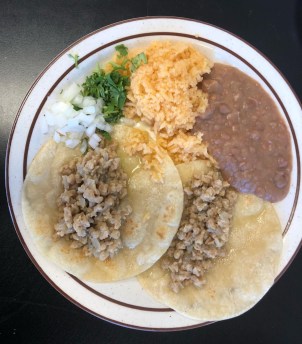
A plate of gorditas with rice and frijoles.

The order arrives in 15 minutes, steaming and carrying a strong aroma of fried garlic and cilantro. Frijoles is a doughy sauce made from pinto beans boiled for six hours on low-fire. The gordita (meaning chubby in Spanish) drips some rich oil like liquid gold on a ceramic plate.

Oscar Lee, the patriarch of the restaurant, has his lunch break before his interview. He is from Victoria City in Tamaulipas, Mexico, a state historically known for its agricultural and livestock prosperity. He used to live by the border near Texas and immigrated to the United States. He has lived in Utah for nearly 17 years and has been running his restaurant since July 2018.

Lee wanted to cater to his area and provide what he believes is authentic Mexican food. The demographic of his customers is true to this fact, during lunch hour, the restaurant is occupied by Spanish speakers. But after an article written by the Salt Lake Tribune, he has had more gringos (an American who is not Latinx) visit his restaurant and even become regular customers.

He turns and faces the menu on the blackboard and, like a school teacher, starts to explain his menu. He said their las gorditas is their most popular dish, with either homemade asada (roasted pork or chicken) or potatoes stuffed inside. But he prefers to snack on something a little more sweet called esquites. This is a dish made with corn, freshly cut from the grain, that is mixed with margarine and fresh cheese in a cup.

Lee said that red enchiladas are his most special dish. He makes them with corn tortillas, fresh cheese, ground beef and a red chili sauce. He prefers to not make this too spicy. Another special dish is chicken mole. It mixes chicken breasts with some chocolate and peanuts. Genuine chicken mole takes days to make with additional ingredients. He said that ready-made mole is available, but he prefers making everything from scratch.

Shortly after the restaurant opened, Lee said he was approached by Sysco, a food distribution company, to provide him with menu ingredients. He refused to take the offer, as they were all ready-made and only involved putting them in the oven. “It takes the authenticity from cooking, and from the food,” he said. Lee believes in making his ingredients daily to preserve the authenticity of his cuisine that reminds him and many others of home.

EL SALVADOR

Juanita Restaurant is a small family-owned business at 271 W. 900 South in Salt Lake City. The restaurant specializes in classic Salvadorian food. Carolina Vides, the daughter of the owners, was born in Cabañas, Sensuntepeque. Her family moved to the U.S. in the 1990s and opened this restaurant only four years ago. The restaurant business has always been a part of the Vides family, having run another in Salvador, cooking and making the same pupusas that they love.

IMG_3517

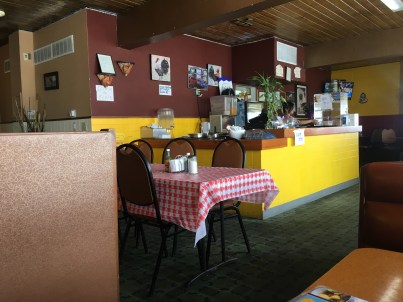
A look inside Juanita’s restaurant

Juanita’s is designed with dark maroon and bright yellow wall paint. Diners can take a seat by the television screen in the corner that broadcasts the Premier League with Spanish commentary. Vides then sits down to talk about the menu — a wide selection of main dishes, appetizers and finger snacks to try.

Pupusas, you should go for the pupusas,” she said. They are a typical Salvadorian snack made from either rice or corn flour. Her favorite is the corn flour. Vides said the pupusas are a staple diet in El Salvador, having been passed down from generation to generation. The fillings are versatile and can be made with anything from chicharron (pork skin) to frijol con queso (beans with cheese). She offered an assorted plate of mini pupusas.

Vides said most people confuse this with Mexican gorditas. Most of her customers are either Mexican or Guatemalan. She places the pupusas on the table beside a tub of curtido, or coleslaw, and a bottle of spicy tomato sauce that complements the meaty pupusas.

For the main dish, she presented a plate of mojarra frita (fried fish) with green salad, rice, and tortillas. The fish is a fresh-water tilapia, cooked till a dark brown like charred wood, but the inside remained a creamy white texture. The restaurant also sells bottles of Kola Champagne by Cuzcatlan, a classic soft drink with a sweet mix of orange syrup and carbonated soda. It leaves a refreshing taste in the mouth.

While patrons feast on the tenderness of their tilapia or pupusas, Vides is usually tending to other customers, flipping tortillas on a hot pan, or taking orders on the phone. One can leave the restaurant feeling very satisfied.

PERU

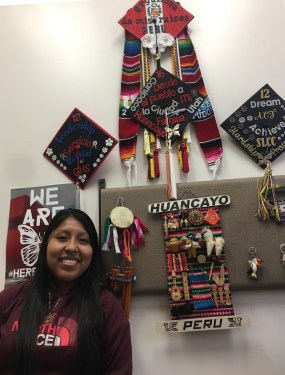
Giulia Soto is a second-year program coordinator and advisor at the Center for Ethnic Student Affairs (CESA) at the University of Utah. She comes from an indigenous family from Huancayo, in the central highlands of Peru. Soto immigrated to West Valley City at age 5, during the sendero luminoso era, a Communist party during the 1990s that wanted to overrun the government. Her father was able to come to the U.S. and was given a work visa to live in the mountains as a shepherd.

“Since my family is indigenous, it affects . . . how I was brought up, and the foods that I eat,” Soto said. Her diet is completely Peruvian. That was all she knew of during her younger years. The most common dishes for her are arroz chaufa, lomo saltado, and pollo a la brasa.

Arroz chaufa (Chinese rice) and lomo saltado are a mixed style of Chinese fried rice and vegetables with typical meats like pork, chicken or beef. Soto said that most of their dishes use white rice, potatoes and chicken. “We laugh about this sometimes, because a lot of people connect this to the Asian community,” she said. Her favorite dish to make is aji de gallina (chicken stew) that combines rice, potatoes and aji de gallina (yellow capsicum). Soto said this dish is usually considered to be Peruvian comfort food. 

Soto in front of her Huancayo displays

A common ingredient across the board is pimiento y comino (black pepper). Another is aji panca, a hot red capsicum that’s not too spicy, and is used as a paste when making food like tallarin rojo (Peruvian red spaghetti). All of these spices are indigenous to Peru and are the trademark for its dishes.

La Pequeñita International market at 2740 State St. is owned by a Peruvian in Salt Lake City. It provides imported ingredients from Latin America to the locals in Utah. Soto said she sometimes sees people driving down from Idaho and buying these ingredients in bulk. “You have to be savvy at cooking, cuz it’s just aisles and aisles of herbs and spices, and you should know what to use it for,” she said.

Pachamanca peruana is a popular dish from the mountainous regions of Peru. Pacha means earth and manka means pot in Quechua, the indigenous language of Soto’s family, spoken in the highlands. The dish is made for special occasions like family gatherings or fundraisers, as it requires extreme preparation.

Soto said that the pachamanca is usually comprised of marinated sheep meat, camote (sweet potato) and humitas (fresh corn with dough). She also noted that humitas is usually mistaken for tamal, a Mesoamerican dish, that tastes savory and usually has stuffings like chicken inside. The pachamanca begins with heating stones over a fire, and then placing everything into a natural oven dug from the ground, cooking the meat for about two hours.

Soto said that the pachamanca is not something you would see at a restaurant in Lima, let alone in a Peruvian restaurant in Salt Lake City. The pachamanca is only maintained as a tradition through teaching the next generation how it’s done. However, one way to grab a taste, without buying your next ticket to Peru is to attend fundraisers.

In Utah, Peruvian families come together and do fundraisers for the community where they make and sell food and sometimes host soccer tournaments. “It’s a way for us to help each other out, someone who’s had a car accident or immigration issues,” Soto said. There are at least 15-20 fundraisers in the summer between the months of June and August that she attends. 

The Peruvian community in Utah typically hosts its fundraisers at what it calls “parque canipaco,” or Parkway Park, in West Valley City. These fundraisers not only help the community at large for Peruvians, but also is a way of keeping their tradition alive through food and celebration. For more information about these fundraisers, contact Soto at giulia.soto@utah.edu.