Our CASA brings academic opportunity to the west side of Salt Lake City

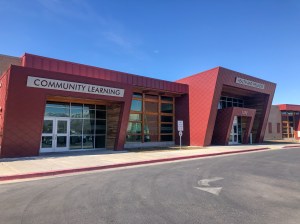
Glendale-Mountain View Community Learning Center, located at 1388 Navajo St. in Salt Lake City.

Story and photos by CHEYENNE PETERSON

As the school bell sounds with a shrill “brrring,” out walks 17-year-old Anwar with 10 of his classmates from Our CASA, an after-school program offered within the Glendale-Mountain View Community Learning Center. Anwar has a smile from ear to ear as he says goodbye to his classmates and teachers. He then makes his way to the front office, where he waits patiently for his little sister to join him so that they may catch the bus home to their family.

Students with smiles are something you see often in the west-side communities of Salt Lake City, due to the Our CASA organization.
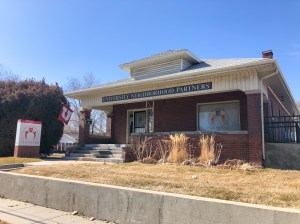
University Neighborhood Partners, located at 1060 S. 900 West in Salt Lake City.

Our CASA (Communities, Aspiring, Succeeding and Achieving) is a program that has collaborated since 2016 with the University Neighborhood Partners (UNP), the Salt Lake City District, Google Fiber, and schools on the west side. The organization consists of students, parents, teachers, and community members who all want to support families living in west-side neighborhoods as they set their sights on higher education and rewarding careers.

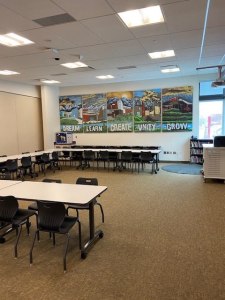
Our CASA does this by creating college-themed “lounges” located in classrooms of schools and community centers. The goal of the room is to make it comfortable and home-like for students with couches, desks, computers, and other necessities. Hence, the room is known as a lounge.

According to Sol Jimenez, the education pathways coordinator at the Glendale-Mountain View Community Learning Center, the lounge not only creates a room and place where people can come and get together, but it also serves as a hub for access to college resources and information on continuing education. 

“It is also a place that would hold programing that would involve students, parents, families, and various different people to get more information in whatever that they need, in terms of building an education pathway,” Jimenez said.

UNP Associate Director Paul Kuttner said the first Our CASA lounge was created in 2013 in a combined effort of the Salt Lake Center for Science Education (SLCSE) and a University of Utah social services student.

SLCSE housed the sole lounge until 2016 when Google Fiber chose to give a charitable donation of $50,000 to Our CASA. The funds were distributed equally to the six current Our CASA lounges located in Backman Elementary School, Glendale-Mountain View Community Learning Campus, Northwest Middle School, Salt Lake Center for Science Education, UNP Hartland Partnership Center and West High School.

Kuttner joined the UNP staff in 2016. He said that at each school and community center, a team was brought together of students, parents, teachers, and administrators in order to decide what they planned to do with the money and what activities they wanted brought to the table.

The partners allowed the kids involved at the West High School location to name the program.
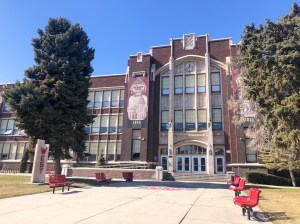
West High School in Salt Lake City, 241 N. 300 West.

“The name Our CASA was submitted by a student at West High School and from there we decided on it being the acronym for Communities, Aspiring, Succeeding and Achieving. Students wanted it to be something that bridges cultures, so they liked having one word in English and one word in Spanish. They wanted it to feel more home-like than school-like,” Kuttner said.

Each school and community center was given the creative freedom to use the Our CASA lounges differently. “We support that, because we figured people on the ground at the school know what’s best. We try to support them in using the space as best as they can,” Kuttner said.

He added that the focus is on community engagement and leadership of families and students. They all offer support for people as they pursue higher education and careers.

The organizers wanted the lounge to create a sense of belonging for students and families. “The feeling you belong and having a safe place to connect in your school is proven to be key for students’ success and family engagement,” Kuttner said.

Helping students apply to and get accepted into college is a focus of Our CASA. This directly impacts the students’ level of confidence and helps them to achieve their educational goals.

“It is wonderful and it’s helpful. It helped me maintain my grades. I get helped with homework and stuff that I don’t understand,” Anwar said. 

Jimenez was initially involved with the basic establishment at the community center. She has seen the number of students who attend Our CASA at Glendale-Mountain View Community Learning Center grow annually. “I think it’s a positive sign that we are doing what we are aiming to do,” she said.


Alison Tanner

MY STORIES: 

MY BLOG:

Beat reporting has helped my professional development in a number of ways. In order to successfully write about a beat, you have to be continuously engaged with your interactions. It was important for me to learn and re-learn not only how to communicate during interviews but also to be aware of my communication via email and over the phone. I feel like beat reporting has made me an overall better communicator and it’s become really satisfying to feel connected to those I interview, even if I’m different or may not fully understand the depth of what they are trying to explain to me. I found it somewhat difficult to express some of the strong messages shared from those I came in contact with. This allowed me to explore showing my readers more than just simply telling the audience.

Of course, this semester had its disappointments. COVID-19 put a strain on connecting and communicating with contacts that I had. It’s been hard for me to have more meaningful experiences. Some phone interviews have been great, but I know that had I met with these people in person, I would be able to show and express feelings a little more. It’s also been difficult because while I know that amplifying voices that are often unheard is important, my major concern is that the people around me are safe and healthy from this powerful virus.

In contrast, a major success for me was my first story. I felt so connected to the students and supervisors of the Mestizo Arts & Activism Collective. I was able to write a succinct piece about how the collective originated and one of the founders just happened to be visiting from New York City. It felt like the stars aligned and I was supposed to focus on these wonderful people for the piece.

In other courses, I’ve dabbled into a little bit of investigative journalism and hard news, but it never felt like that was where I needed to focus my skills. I definitely feel like this semester solidified my love for soft news and amplifying voices to create incredible stories. I don’t know what my future holds, especially with the uncertainty of the job market with COVID-19, but I do know that no matter what field of communications I am a part of, I’ll always love to write.

ABOUT ME:

Alison Tanner headshotAlison Tanner graduated from the University of Utah in Spring 2020, with a degree in communication and an emphasis in journalism. Throughout her undergraduate career, she completed several communications-focused internships with the Natural History Museum of Utah, JDRF International, SelectHealth, Virtualities/Facebook and Universal Media. She also volunteered as a Refugee Programs photographer for Utah Department of Workforce Services in Fall 2019. During her time at the U, she served on the Student Media Council, participated in Her Campus Utah chapter and the Crimson Transfer Honor Society. In her free time, she loves listening/dancing to music, trying new foods, and traveling to new places — preferably, all at once.
Mestizo Arts and Activism Collective — 13 years later

Story and photo by ALISON TANNER

What began as a safe space for youth to discuss different topics and concerns, has become an engaging and creative platform for young students to take action in their community. In over a decade, the continuously blossoming program is impacting many in the Salt Lake Valley.

Mestizo Arts & Activism Collective (MAA) was co-founded in 2007 by Caitlin Cahill, David Quijada and the late Matt Bradley, remembered as a powerful force in the community for change. These activist researchers were working on several different documentary projects relating to race in schools, immigration issues, and in-state tuition for undocumented citizens.

Along the way, they met with various youth who were passionate about social issues and wanted to get more involved. With a little bit of funding and a big commitment to addressing these topics in a safe space, the MAA was born.

Over a decade later, Caitlin Cahill reflects on the collective’s progress. “It’s so beautiful to see the way it’s developed. I feel humbled and inspired.” Although Cahill has since moved from Utah, she often comes back to visit. “It’s a space of activism, which is a key part of healing in this crazy world we live in.”

So how does it work? Each year, a diverse and intergenerational collective of young activists, artists and researchers work together to address urgent issues in the community. Nearing the end of the school year they work on a final project, created by a specific student or students, showcasing what they’ve learned throughout the year. Students have created everything from documentaries to murals.

MAA is a community partner with University of Utah Neighborhood Partners. UNP’s mission brings the community together by connecting the university and people in west-side neighborhoods with resources in reciprocal learning, action and benefit. As UNP proactively helps historically unheard voices, it acts as a convener, contributing to the decrease of barriers to higher education.

Various MAA mentors mentioned that the collective also provides the opportunity to connect with others and discuss topics that aren’t necessarily taught at school or in their homes.

Artwork serves as a key focus of the collective. Painting. Filming. Drawing. Speaking. Dancing. These young people are allowing others to see that activism is powerful and necessary, displaying it through words, colors and sounds.

Over the last decade there have been significant losses in art education, due to the No Child Left Behind Act of 2002. UNP Director Jennifer Mayer-Glenn mentioned that when the focus shifted to helping students achieve higher skills at math and science, arts education fell to the wayside.

“Many communities relate so much to music, visual art and dance. It is hugely important,” Mayer-Glenn said. “Art is a way to express oppression and repression.”

Although it begins with high school-aged students, the MAA has created an impact with far-reaching effects. With an initiative to help youth find opportunities and remove barriers to higher education, many who began in MAA are giving back, sustaining a successful cycle of change.

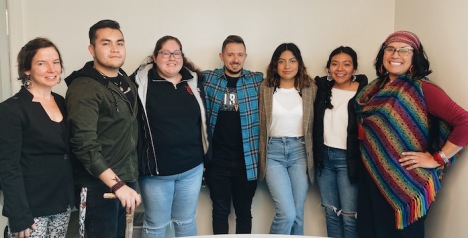
MAA members pose for a photo at the Marmalade Branch of the Salt Lake City Library. Pictured from left to right is Caitlin Cahill, Yair Marin, Elizabeth Estrada-Murrillo, Jarred Martínez, Sharay Juarez, Itzél Nava, and Leticia Alvarez Guitérrez.

“MAA is a space where it’s developed and centered around high school-aged youth, but it’s where our leadership has come from. They have a different role, like myself, but we’re all still involved,” said Jarred Martínez, who serves as the MAA advisor with UNP in conjunction with the U. Martínez said that much of where he is today is due to his connection with MAA.

Itzél Nava is a student at the U and a former member of MAA. At a young age, she thought she’d never attend college. She now serves as an MAA mentor, regularly meeting with the students and providing her leadership to the collective.

“Whenever someone asks me to tell them about MAA, I tell them it’s a program that caters to west-side students.” Nava added, “You always hear about the east-side schools and their resources, but now we’re showing everybody what’s happening and what amazing things our students are doing here.”

Amazing things is right. In 2008 to 2010, an ethnically diverse group of student researchers began the “We Live Here” project. Calling attention to the complexity of multi-ethnic/cultural neighborhoods that are often overlooked, students engaged in oral history and research to document the value and contributions of their community. They wanted to challenge assumptions about the west side, creating a multi-layered interactive community history map.

Another student mentor, Yair Marin, has been involved with the program since his sophomore year of high school in Salt Lake City. Of MAA, he said, “It’s especially rewarding because it’s intergenerational. You could call it a second family.”

Marin also said that there have been various instances where students came to the leaders for personal help. Being a mentor allows them to create meaningful bonds that continue long after students have graduated from the program.

Leticia Alvarez Gutiérrez, MAA faculty advisor, said students who participate in MAA while in high school receive university credit for attending 85% of the program. This serves as yet another way that Mestizo Arts & Activism removes barriers for students of minority backgrounds to receive higher education.

“I think for me the most important thing is getting to know who these young people are. It’s a sacred space. We all hold very strong relationships,” Gutiérrez said.

The collective meets every Monday and Wednesday at Mary W. Jackson Elementary school. A full archive of its projects is included on the website. Though MAA is a small organization, the colorful tapestry of its impact is larger than life, as it reaches many in Salt Lake City and beyond.

“Activism is more than protesting. We all want to live in a better world,” said Cahill, MAA co-founder. “This space is creating the world that we all want to live in.”

Martin Kuprianowicz

Profile picture

MY STORIES:

MY BLOG:

A few things that I can really take away from my community involvement this semester is the level of passion that I’ve discovered that members of the west-side community hold in regards for others, as well as my own developing passion for reporting. One of the people I interviewed and probably my favorite person I’ve ever interviewed was Juan Gilberto Rejon, also known as “Coach Juan.”

Coach Juan has a level of passion for children of the community like none I’ve ever seen. The man spends every waking minute of his life working to better the lives of the underserved on the west side of Salt Lake City. His programs aimed at getting children involved in the outdoors and ultimately graduating from high school and moving on to college are his life’s work. He’s even bankrupted himself several times giving resources to people who needed it most, always putting others before himself. I had a really fun time interviewing him and learned a lot about what he does. I also learned much about myself as a reporter.

I realized that I’m often better at talking to people than I give myself credit for, and I really enjoy doing so. I was also pleasantly surprised by how willing most people were to talk when I asked them for an interview. They loved to tell their story, like when I interviewed families who owned ethnic food restaurants. People often want to share with you their thoughts, experiences, and projects, and are very helpful especially when it comes to finding more people to interview. “Oh, you have to talk to so-and-so,” or “Oh, please go here and talk to this person,” are phrases I heard often when interviewing my sources because a lot of them really care about their community and want people’s voices to be heard. It was inspiring.

Sometimes, it is in fact hard to remain objective, like when you are reporting about something you are genuinely excited about. This often results in you starting to write or report in an overly enthusiastic way that can sometimes over-hype the truth in certain ways.

This occurred, for instance, when I was writing about delicious, family-owned ethnic food places on the west side. Of course, when I went to the restaurants I tried the food. Some of it I thought tasted so good (because it did) that I started writing my original draft of the piece with a biased tone of admiration. I had to take a step back and put my taste buds aside and revise with a little more heightened sense of objectivity!

ABOUT ME:

I’m Martin Kuprianowicz. I’m an editor for SnowBrains as well as its Alta Ski Area reporter for the 2019-20 ski season. I’m an undergraduate at the University of Utah pursuing a degree in communication with an emphasis in journalism. I’m from Midland, Texas, and grew up skiing at a humble hill called Ski Apache in Ruidoso, New Mexico.

Ski programs molding better lives for those living in Salt Lake City’s west-side communities

Story by MARTIN KUPRIANOWICZ

Voices of Utah 1

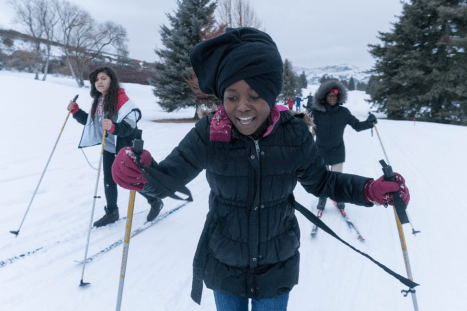
Children living on the west side of Salt Lake City enjoying the snow and cross-country skiing. Photo by Peter Vordenberg

It’s Saturday. The sun is shining and snow is on the ground. Parents are dropping their children off at Mountainview Elementary in Salt Lake City and the kids are already exploding with excitement — they are going on a field trip. Juan Gilberto Rejón — or “Coach Juan,” as those in west-side communities refer to him — is patiently waiting outside of the school to take roughly 50 elementary students to the Bear River Migratory Bird Refuge to view a population of wild eagles on this day.

Coach Juan is the founder, executive director, and coach for the Hartland Community 4 Youth & Families, which is a program that aims to create pathways to college for the underserved by getting students involved in the outdoors. Coach Juan started this program because he believes the experiences earned in the outdoors are valuable ones that can set children up to better handle adversity throughout their lives.

On weekends throughout the school year, Coach Juan often takes students on excursions to participate in a wide variety of outdoor activities, from bird watching to skiing. Recently, cross-country skiing has been a big emphasis of the program.

“It’s a blessing for our underserved and our underprivileged because they wouldn’t be able to do it otherwise. It’s too expensive,” Coach Juan said. “For a family of five or six to go skiing at $200 a pop, that’s already over $1,000 being spent for just a day of skiing. There’s just no way these families living in poverty could afford that.”

His ski program is partnered with the Utah Nordic Alliance that takes students cross-country skiing on weekends in the winter. Another partner is She Jumps, an organization that motivates women and girls of all backgrounds to step out of their comfort zone in a fun, non-threatening, inclusive environment to learn outdoor skills.

Coach Juan’s program has been operating for three years, but his inspiration to get students involved with the outdoors goes back almost two decades to the birth of his son.

Voices of Utah 2

Coach Juan pictured outside of Mountainview Elementary, the meeting place for students going to the Bear River Migratory Bird Refuge. Photo by Martin Kuprianowicz

“When I first moved into a 300-bedroom apartment complex here (on the west side) there were a lot of things happening that were not safe for kids. We had a lot of robberies, carjackings, prostitution, drugs, alcohol, so as a community advocate I had to do something for my child,” Coach Juan said.

What began as a mission to improve the quality of life for his child then translated as improving the lives of everyone in his community, especially vulnerable children on the west side of Salt Lake City. Coach Juan started a community soccer program that would eventually grow into a multifaceted, multi-partnered community outdoor program for youth.

The program focuses on helping students to pursue higher education. Coach Juan’s son went through it. Now, his grandchildren are enrolled. Hartland Community 4 Youth & Families has since grown and is now partnered with the Utah Nordic Alliance, headed by former two-time Olympic ski racer Peter Vordenberg.

Vordenberg coaches ski racers who have won gold medals in the Winter Olympics and World Cup championships. In addition, he helps Coach Juan organize the single-day cross-country ski trips by providing students with everything they need to go skiing.

But he didn’t always plan to be a community advocate. It all started by chance one day when he was invited by a friend to tag along with the kids on one of these ski programs.

“I was out there hanging out with all the kids and with Coach Juan and I was like, ‘Oh man, I got to be more involved, not just take pictures but I got to see what I can do to help out.’ So, I joined the board,” Vordenberg said.

Vordenberg has been on the Hartland Community 4 Youth & Families board for three years. He says that his favorite thing about being involved with the program is watching the kids develop a love for skiing and the outdoors. “It really builds their confidence and helps them dream bigger,” Vordenberg said.

Another opportunity for the west-side youth is the Parks and Recreation program that is affiliated with world-class ski areas Brighton and Snowbird. The Northwest Recreation Center is one of many centers throughout the Salt Lake Valley  that shuttle elementary and middle school students to those ski areas and provide them with gear, lift passes, and instructor training.

Snowbird Mountain School Director Maggie Loring has run this program on Fridays in the winter for 18 seasons. She said programmatic goals include developing new skiers and riders who may be interested in one day working as staff at the resorts, and providing a community service to children who may not otherwise get the opportunity to enjoy winter sports.

“One anecdote I can share is that the current manager of our programs was initially in our 4th-grade program, became a junior instructor, and kept going. It’s really an opportunity for resorts to capture both new guests and new staff,” Loring said in an email interview.

However, the impact of these programs is also a lot simpler than getting kids involved with the outdoors and setting them up for potential life paths in the ski industry.

“One of my favorite things about this program is the opportunity to see the kids pour out of the buses so excited to get onto the mountain,” Loring said. “Many of them may not be able to sleep the night before because of how excited they are for this new adventure. I remember from my own childhood how excited I was to get out of school to go skiing!”

Voices of Utah 3

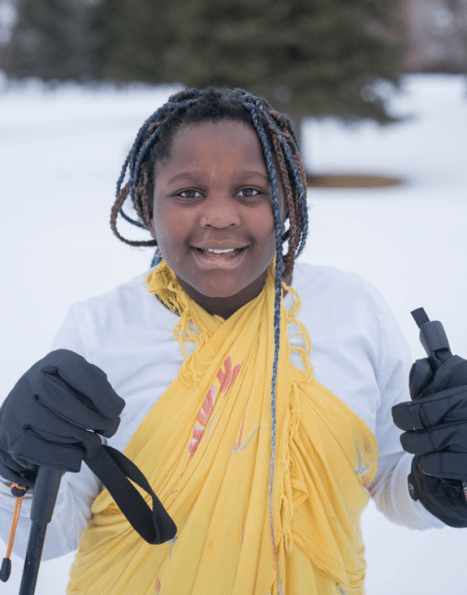
It’s nothing but smiles when the kids get off the bus and go skiing. Photo by Peter Vordenberg

Meg Clasper

MY STORIES:

MY BLOG:

I definitely felt like an outsider during this whole process. Normally I feel like an outsider to Salt Lake City as a whole because I live farther north and don’t have much time to explore. Not knowing the culture of the city as well as the places viewed as important. I can see the slight rift between east and west Salt Lake City, and not even being part of the city, I feel even more of an outsider. Despite this I kept going and working to understand life and motivations of those I was talking to.

This feeling didn’t affect my reporting at all because I was already accustomed to the feeling and was able to find ways to overcome it.

During one of my interviews I had a source ask me to keep things “off the record” though the information I was being told was a history of the business. I didn’t agree to keep anything off the record but did comply with his wish for me to not write anything down. The whole situation after he asked about things off the record made me nervous. I expected something a lot more serious than just the history. In the end, I didn’t end up using any of the major information given to me then in my story. I did use a few general facts that would appear to be common knowledge.

I did find it a little hard to remain objective when writing the Mestizo piece. The coffeehouse had so much character to it all I wanted to do was describe every inch of the place and how it made me feel. Especially the chai lattes, which I was not lied to when Prof. Mangun told me they were the best. Being there was an experience all on its own. It’s hard to effectively get across to readers and I encourage anyone who has the opportunity to visit Mestizo Coffeehouse for themselves.

ABOUT ME:

I will admit, I am a nerd. While I love anything to do with video games, I also enjoy Marvel superheroes and transformers. I believe my love for these things comes from the deep universes their originators have created. Creating these deep vast universes is why I started to write. When I found journalism in high school, I realized there was a universe around me ready to be explored and documented. After becoming a journalism major at the University of Utah, I needed to find a beat. I wanted to cover something positive and fascinating, and gaming was the perfect fit.

Connecting people with education: the Glendale Community Learning Center is driven by community

Story and photo by MEG CLASPER

From kindergarten to 12th grade students trudge down the halls of public schools. From class to class, teacher to teacher, students rely on those halls as pathways and safe spaces. Where those halls end, the halls of the Glendale Community Learning Center begin.

Nestled between Mountain View Elementary and Glendale Junior High, the Community Learning Center (CLC), at 138 Navajo St. in Salt Lake City, serves as a community and learning hub for the surrounding neighborhoods and schools. With four classrooms and six kitchens, the CLC creates programming driven by community needs.

Out of these programs, many are focused on helping parents of the community interact with the school system. English as a Second Language classes, also known as ESL classes, help non-English speaking parents communicate with school faculty and staff who may not speak the same language. Other courses provide parents with skills to better engage with teachers and administrators. A weekly meeting, held on Friday mornings, has also been set up for parents to meet directly with faculty and teachers of the schools.

In January 2020, the CLC hosted one session of the “Late Start Listening Tour” put on by the Salt Lake City School District. It allowed the Board of Education to hear community members’ thoughts and concerns about the current school system and a possible late start for high schools.

In addition to encouraging these meetings, the CLC offers classes to community members that are life-skill based. One class, Food Justice, focused on the sharing of cultural and family recipes. Each session emphasised a few common ingredients such as rice and noodles and encouraged attendees to pick recipes using those ingredients.

With collaboration from different community members and students at the University of Utah, these recipes have been compiled in a cookbook titled “Savor: Stories of Community, Culture, and Food.” The book shares the stories of how communities are built around food. This cookbook is sold online and at the CLC.

The CLC’s six kitchens are also open for community use. “You can go in [the kitchens] in the morning and see moms talking over coffee or making smoothies for teachers,” said Jennifer Mayer-Glenn, a previous administrator at the CLC.

Other than skills classes, the center offers courses to help adults prepare for applications and tests. For example, one tutors community members for the citizenship test. And the “Know Your Rights” course was started in 2016 in the middle of a spike in fear about immigration issues. It teaches adults what rights they may not know they have.

With its proximity to the elementary and junior high schools, the CLC is a big part of how both operate. “We consider it as part of our school,” said, Kenneth Limb, principal of Mountain View Elementary, in a phone interview. He works directly with the CLC on a daily basis and said appreciates the programs it offers.

Working

Students receive help with all types of homework in the Learning Lab.

After school, students from the elementary and junior high are able to cross the fields to the doors of the CLC. There they are able to take part in the after-school Learning Lab. Here 60 students connect with volunteers from the University of Utah to receive help with homework. Enriching activities are offered too. Science experiments and other subject-related visuals are planned to help students better grasp the concepts. The Learning Lab also serves as a safe place for students to remain until adult family members are able to pick them up.

In addition to the Learning Lab, the CLC offers courses to help students fill out Free Application for Federal Student Aid (FAFSA) forms, apply for scholarships, and fill out college applications. With this help students are able to feel more comfortable when it comes to approaching college. For those who want to move toward the workforce, courses are available to help individuals create resumes and cover letters.

Limb said activities not directly connected to the schools are available to students. While they are able to take sewing and cooking classes, social-skills courses are built to guide students through real-life situations. What youth get out of these courses are knowledge and skills to be able to deal with strangers, ability to work with adults and formally introduce themselves. By helping students interact with the outside world they are better prepared to enter it.

Many events are also planned by the CLC to help connect the community to the schools. According to many posts on the center’s Facebook page, it holds meetings between parents and the Salt Lake City School District, holds back-to-school celebrations for students, and promotes events at East High School.

With both schools and the CLC working together students are made to feel welcome and important when it comes to education. The connection enforces opportunities and the importance of education, no matter what hall students may be in.


Glendale-Mountainview’s Community Learning Center is a tool for academic success

Story and photo by NINA YU

After a six-hour day of absorbing math, language arts, and social studies, most students are ready to head home to catch a break. However, as soon as the bell rings, the Glendale-Mountainview Community Learning Center starts seeing kids filing in for another round of learning.

The Glendale-Mountainview Community Learning Center (CLC) is a place for students to go after school for tutoring, and includes a wide range of other educational and artistic activities. According to a brief description on the Salt Lake City School District website, a CLC, “is a philosophy, a place, and a set of partnerships between a school and other community resources. The CLC model builds on the core instructional program of a school by adding educational and life skill enrichment for the entire family and [removes] barriers to learning by providing necessary social services.”

Essentially, this center is a safe space for kids to catch up on school and learn life skills with the home economic programs. It can even be an early-preventative method against turning to negative influences.

The CLC works with a long list of community partners that all have a commitment to enhance the services in five areas: quality education, personal development, community development, family and community engagement, and family support.

“We get a lot of value supporting students. Their worth is important especially since a lot of them don’t have a support system at home,” said Keri Taddie, the CLC coordinator. “Even if it’s at someone’s home, there can be language barriers or parents have late work schedules, so what we do at the center is help these kids and build a long-term relationship. Students that participate in this program tend to be with us long-term. We watch them grow up.”

The CLC has multiple community partners that help kids with tutoring and homework. One of them is the University of Utah’s Utah Reads (originally America Reads). Utah Reads is a program within the Bennion Center that tutors elementary school children with learning how to read. Utah Reads’ mission is to provide quality, one-on-one tutoring for elementary students at Title 1 schools in the Salt Lake district. Utah Reads’ tutors are trained college students who are placed at any of the sites that the program partners with — Glendale-Mountainview CLC being one.

“Each site is student-run. We do one-on-ones every week and the student leaders take care of scheduling, assessments, placements, and tutor management,” said Asma Hassan, the program manager for Utah Reads. “At each of our sites, we try to work with whatever makes the child unique. The CLC is one of the sites that is more unique, because of the Learning Lab. It’s more helping with homework and for those who need it, we even offer later hours.”

There are about eight to 10 tutors assigned to each site. Since the CLC is both a space for Glendale and Mountainview students, 16 tutors are assigned to the site. Utah Reads works on building a mentor relationship with the students who are struggling in school. The tutors’ goal is to catch those who are struggling at an earlier age so they can proceed with their peers accordingly.

Along with Utah Reads, the CLC also has partnerships with programs such as Big Brother Big Sister, Bad Dog Arts, and Discovery Gateway.

The Learning Lab at the CLC.

On average, the CLC sees about 55 to 65 kids participating in the Learning Lab daily. There are about 90 kids weekly. According to CLC coordinator, Taddie, most of the kids who come to the CLC are elementary school children, ranging from first to the fourth grade. Not only does the center provide literary tutoring and homework help, it also has many after-school programs such as music, math club, home economics, and sports.

Most of these programs and partnerships are free for the students, except for the Mountainview After-School Program and the Glendale Community Education Program. The After-School Program is held five days a week for three hours and 15 minutes a day until 6 p.m. and it helps parents know that their child is in a safe environment while they’re at work. The program charges $40 a month, but families are eligible for reduced fees and beyond that, there are also fee waivers.

The Community Education Program is the biggest one in the district and oversees the after-school programs. The program is for parents and students who need a consistent space. The fee is $50 a year, but the reduced and waived fees still apply.

“Fees are a barrier,” Taddie said. “What you see happen is that kids will see that there’s a fee and they immediately put the flyer away. They don’t ask questions. They don’t ask if there are options for them.”

For some students, the educational and art programs are so memorable they come back and volunteer when they’re in high school or college.

“I definitely recommend that students take advantage of the Learning Lab and any other programming at the CLC,” said Kenneth Limb, the principal at Mountainview Elementary, in an email interview. “All CLC programs are enriching and support academic and social/emotional learning.”

The teachers, counselors and administrators all support and promote students’ attendance of the Learning Lab and the other programs. The CLC is located at 1388 Navajo St. and wedged in between Mountainview Elementary School and Glendale Middle School.

Ivana Martinez

MY STORIES:

MY BLOG:

During my reporting for Voices of Utah, I spent most of my time covering the Glendale Community Learning Center. From one room to the next there was always something happening, whether English classes, cooking, learning lab or sewing. I was incredibly fortunate to cover this community, as it serves so many members within Glendale. It is a place for people to come to gather and learn. As I got further into my beat, I realized that the Glendale community functions like an ecosystem, every element steadily relies on one another to function.

Ivana MartinezWhen I attended International Women’s Day at Glendale Middle School, standing in the middle of the cafeteria I was reminded of why I chose journalism as my career path. At that moment, with women from all different walks of life circling, dancing and cheering around me — I remembered what a privilege it is to help tell someone’s story. To showcase the victories and the setbacks each individual faces in their lives and communities. To be granted access to write about individuals who aren’t typically seen in our local news media. As journalists, we have a responsibility to accurately represent our communities and that often includes showcasing the underrepresented, the people who don’t have voices.

I like to think that journalism and I chose each other. It wasn’t one-sided, it was a calling that I was always meant to be doing this work. As someone who once lived within the Glendale community as a child, returning to report on it as an adult it felt full circle. I always knew I was a storyteller. I’ve always been drawn to stories, people and voice. One of the most satisfying things about being a journalist is breaking barriers, talking to individuals I normally wouldn’t and understanding them on a deeper level. I had the honor of interviewing members within the Glendale community who work to help facilitate activities and events for the community. These women are the fabric of these institutions.

One of the disappointments that I had during the semester was having to change my final story because of the COVID-19 global pandemic. Due to public school shutting down, I wasn’t able to complete my final story on the implications busing has on students and families. However, it did allow me to talk to high school senior students about their experience during this time, which was refreshing.

I hope to continue to highlight and write about institutions, events, and issues that are as important as the Glendale community in the future. Service journalism has opened my eyes to all the different stories the news media are often missing out on. It is critical to listen for the stories with the quiet beginnings, the stories that are overlooked or are woven into issues surrounding underrepresented communities. It is important to keep writing.

ABOUT ME:

My first introduction to journalism came at a young age when my father worked at the Fort Worth Star-Telegram. Each day he’d come home with a paper fresh off the press. My eager fingers would reach out and skim the black and white pages until the ink stained my fingers. Looking back, I think I always knew that I would end up in a career involving storytelling. It’s in my blood, my roots, my ancestors. Story is who I am, it’s who I’ve always been. When I realized how powerful the work I did as a high school journalist was, I knew this was the career for me. It invited all elements I loved — writing, photography, and voice.

At the University of Utah, I am a communication major with an emphasis in journalism. I am heading into my senior year. After I graduate in Spring 2021, I plan on continuing my journey in the journalism field and looking to tell hidden, relevant and important stories around my community.

Planting a seed: how to grow your own educators in Salt Lake City

Elizabeth Montoya, left, writing a note about an event to Maricela Garcia, who is pictured with her daughter Karen Sanchez Garcia at the Glendale Mountain View Community Learning Center at 1388 Navajo St., Salt Lake City.

Story and photo by IVANA MARTINEZ

The concerto at the Glendale-Mountain View Community is ongoing. It begins with a chorus of students shuffling to class, kissing their parents goodbye at the early morning drop-offs and continues several hours after school finishes. And it wouldn’t be possible without the orchestra of people who ensure the children get the resources they need. 

With severe teacher shortages in Salt Lake City, the University of Utah’s Neighborhood Partners has teamed up with schools around the west side in Salt Lake City to address this issue through the program Grow Your Own Educators (GYOE). 

According to the Grow Your Own Educators 2018-19 annual report, the program provides a framework for parents and community members to teach at Title 1 schools. Title 1 schools are defined by Salt Lake City School District as schools that have a high concentration of low-income students who receive federal funds to assist in meeting students’ academic needs. 

According to the report, GYOE has been working closely with a cohort of 12 paraeducators from Salt Lake City School District during the 2018-19 school year.

The program has paraeducators participate in eight training sessions once a month where they sit down and study topics that correlate with Utah state standards. 

Paraeducators can be found in the halls of Mountain View Elementary School reading with students. They can be found in the Glendale Middle School helping teachers in their classrooms. Or, they can be found at the Community Learning Center (CLC) in the kindergarten rooms. 

Ruth Wells has been a paraeducator for the last five years. Wells’ pathway into education began with a desire to be involved in her children’s lives. “I wanted a way of being home when they were home,” she said. 

“I decided that helping a teacher in a classroom would be the perfect way of still being a part of education,” Wells said, “while still being able to take care of my kids the way I wanted to take care of them.” 

For other paraeducators, like Myrna Jeffries, a teacher who migrated from the Philippines, becoming a paraeducator was a way to continue her career here in the United States. Jeffries was recruited one day while walking around the neighborhood by Elizabeth Montoya.

Jeffries began working for only a few hours a week until she asked to take on more responsibilities at the school. JShe began going to the CLC and into the elementary school to assist teachers and help students. 

The most challenging aspect of the work, Jeffries said, is communicating with the students. According to the Utah Department of Health, one in seven Utah residents speak another language, and one-third speak English less than well. Communication barriers are often present for community members at the CLC, but Jeffries said she works around that by using body language to overcome the barrier. 

The Beehive 

Most people in the community know family-school collaboration specialist Elizabeth Montoya, who has worked at Mountain View Elementary for the last 16 years. On most days, students and parents will see Montoya riding on her large blue tricycle around the Glendale area carrying food or binders in her rear storage basket for a program. Montoya recruits parents or members around the community to come in and help out with activities occurring at the Glendale-Mountain View Community. 

Montoya’s specialty is acting as the community’s megaphone. She ensures families know about opportunities and programs that are offered. Her job is connecting parents to resources that help them partake in their children’s education, or advance  their personal and career ambitions. Montoya creates connections with parents and informs them about programs such as GYOE. 

“That’s what we want,” Montoya said. “We want to educate people in the community.”

If Glendale were a hive, Montoya would be the queen, said CLC Program Director Keri Taddie. Montoya has worn many hats throughout the years and created educational opportunities for parents, such as Padres Comprometidos. The program connects Latino parents to these schools by providing a pathway to invest in their child’s academic success and continue their own as well. 

“They’re our children and we should invest in their school too,” Maricela Garcia said in Spanish. She began volunteering at the CLC when her oldest daughter started preschool years ago. 

“I would go help the teacher check homework or have the kids read with me,” Garcia said. 

Although she isn’t currently a paraeducator, she actively engages and participates in the Glendale-Mountain View Community. 

Language barriers haven’t stopped her from volunteering either. Despite the fact that she didn’t speak English at the time, she had students read to her in English. Garcia then began coming to the community meetings at Mountain View Elementary even before her daughters began attending the school. 

Garcia, who is currently taking a leadership class at the CLC, wants parents to know about resources available for their children. She wants them to feel empowered to learn about their options — whether they have legal status in the United States or not. 

A leading obstacle, Garcia told Voices of Utah, is that Latino parents don’t have adequate information about post-secondary education. She said many of them don’t believe it’s possible for their children to go to university because they don’t have scholarships. 

With programs such as GYOE, there are pathways for parents, young adults and community members to have access to new professional development in their lives. Because many paraeducators come from various backgrounds with education, the initiative grants access to paraeducators to work toward teacher licensure.  

“Many students can keep studying. And there are many opportunities for everyone,” Garcia said. 

The importance of the community background is pivotal to the Glendale community, which has a high concentration of students from diverse backgrounds. An understanding of a student’s culture provides context to support and foster their educational pathways. Because many of the paraeducators come from within the community, it establishes a unique understanding of how the community works. 

“I think that we’re always trying to pull back from that part of the community,” CLC Program Director Keri Taddie said, “and bring those strengths into the school because they have relationships and cultural knowledge and community knowledge that we don’t always have.”  

The Glendale community doesn’t run by itself. It’s an entire ecosystem composed of volunteers, parents, educators and paraeducators who prioritize education and make sure that students are benefitting from the educational system.  

“Sometimes people say, ‘Oh thank you for all you do,’” Montoya said as she shook her head. “No. We do it together. I don’t do it myself.” Montoya recalled a saying from her mother about a community of bees and how it takes a whole beehive to make a lot of honey.