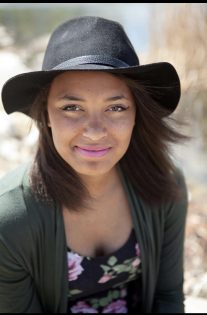
Community, stereotypes and culture: Three Hispanics share their stories

Story and photos by LINA SONG

Within the past few years, the Hispanic community continues to grow every day across the United States. As the population increases, many people are starting to lose their own culture as they are influenced by American culture.

Three members of the Hispanic community in Utah shared their perspectives of their embracement of culture as well as the stereotypes that they face while living in Utah.  

Alex Guzman

Alex Guzman, CEO of the Utah Hispanic Chamber of Commerce, is originally from Guatemala. He worked in the field of marketing and business research there before coming to Utah in order to represent and provide support to the Hispanic community.

After living in the United States for 11 years, Guzman has come to a realization that many Americans believe that the Hispanic community consists of just Mexicans. However, he said that each member has different preferences and likings based on their country of origin, how long they have been in the U.S., educational level, and many more factors. Furthermore, Guzman said his friends are from different cultures and backgrounds, though they are grouped under the broad label, “Hispanic.”

“They think Hispanics are Mexicans and a bunch of taco eaters,” Guzman said while remembering this with a big grin on his face. “We are [not] taco eaters, we have more segmentation.”

Guzman noticed his children were starting to adapt and assimilate into the American culture. Due to the differences in culture and language, he pointed out that his son started to embrace the American culture in order to fit in with the majority. “What is happening is, I’m losing my son,” Guzman said. He highlighted his concerns about the Hispanic community’s future generation facing the elimination of their original heritage. But, he also said the diversity within the Hispanic community also enhances its beauty.

Jasmin Valdivia
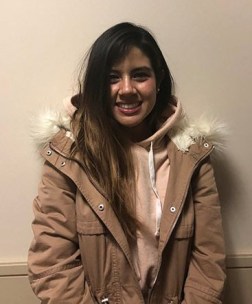
edit 1

Valdivia believes stereotypes are dangerous because they limit the ways people view each other.

Jasmin Valdivia, an undergraduate student at the University of Utah, comes from a small family of three and has been living in Utah since she was born. She grew up in Orem, a majority white town, and attended a majority white high school. As a minority, she faces many stereotypes while living in Utah. Valdivia said she feels that the Hispanic community is stereotyped based on members’ physical features and capabilities as well as their actions and the way they are presumed to think or act.

Some of the stereotypes Valdivia has personally faced are based on her academic factors. She said that by attending university, it was against the norm of how her community is viewed. Valdivia said stereotypes like these have helped her strive to be a better person because she does not want to fit people’s idea of what a Hispanic person should be like, especially if it is negative stereotypes.

“I would say that for the most part I think I embrace American culture more just because it is easier to ‘fit’ in if I am more in tune to the American culture. There are still minor aspects of my Hispanic culture in my American culture for sure,” Valdivia said. “But when I am around my Hispanic friends or my family members I definitely embrace my Hispanic culture more comfortably.”

Sahaara Pena
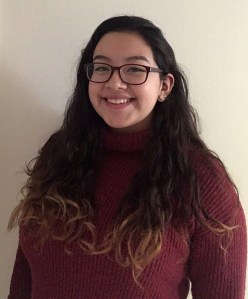
IMG_5645

When Pena was little, she grew up in a primarily Latino neighborhood and was never ashamed of her culture.

Sahaara Pena, an undergraduate student at the U, comes from a family of five. She has lived with her grandparents in Utah since shortly after her birth in California. She also grew up in a majority white town and faced stereotypes in the past.  She said most people assume she was born in Mexico. Another stereotype she faced is that people are very surprised that she speaks English well without an accent since they assume her English will be inadequate.

“Stereotypes can be damaging because they group individuals who have one thing in common together and so they assume that if one person acts or is a certain way, then everyone else must be the same,” Pena said. “This can mean that due to past experiences people will assume that the same characteristics will apply to you or me due to the stereotypes. … Then the person is taken less seriously or won’t be given an equal chance or opportunity due to the stereotypes.”

Pena said she began to realize that in the past she was trying to fit into the American standard until she recognized that she was never going to fit in. Pena said she is part of a rich and beautiful culture and she has no reason to hide it. She feels strongly about her culture for the history and power it possesses and is willing to teach others about her culture and correct the stereotypes people have previously believed in.

“I definitely would have to say I embrace a mixture [of] both because I have grown up with both,” Pena said. “But other than that I embrace more of my Hispanic culture with people around me because in our culture we treat everyone as if they’re family because family is very important to us and we always have to take care of each other.”

Effort equals reward for Latinx organizations in Salt Lake City

Story and photos by BRITT BROOKS

IMG_3388 (1)

“DREAMers Life III” by Ana M., 2009.

Twice a year monarch butterflies make a 2,500-mile trek between the U.S. and Mexico. The migration is what keeps them alive. When cold temperatures in the states are unlivable, the warmth of a Mexican winter is the saving grace for this entire species.

Monarchs are more than pretty to look at, though. They’re a symbol for the Latinx community of migrants traveling to the U.S. and elsewhere. Though the journey is long and difficult, the destination promises opportunity, safety and a better life for Latinx individuals and their families.

The immigration process from Central and South America to the U.S. is grueling for even the toughest and most determined, but what happens when immigrants finally cross the border? How are Latinx people — with or without papers — supposed to integrate into American cities? If a language barrier exists, where can immigrants find jobs, housing and education? These kinds of questions are being asked and answered in Salt Lake City by professionals at organizations like the Dream Center, the Utah Coalition of La Raza, and the Utah Hispanic Chamber of Commerce.

The Dream Center at the University of Utah can be found on the south side of campus in the Annex building in the middle of a long hallway dedicated to diversity. Flags and banners hang in bold color, workshops and offices are bustling, and one can’t help feeling better about the world when students of all different cultures and ethnicities are seen thriving.

But the opportunity for higher education isn’t accessible to everyone. Some states bar undocumented citizens from attending universities, even though no federal laws support these actions. Thankfully, Utah isn’t one of them.

Luis Trejo and Brenda Santoyo greet those walking into the Dream Center with smiles and a friendly “what can we do?” attitude. Complete with memorized statistics and an impromptu presentation, Trejo and Santoyo shared some serious knowledge about the college experience of Latinx students in Utah.

Trejo, 19, is a student at the U and peer mentor with Santoyo, 24, a graduate assistant. They help Latinx students with their legal status, career goals, scholarships and strategies for picking the best college. Sometimes, they even recommend that students start at Salt Lake Community College, which is more affordable than the U. The Dream Center is also a resource for community gatherings and conversations and offers a space for local Latinx artists to display their work.

IMG_3392

The Annex building at the University of Utah.

Invigorating orange walls complete with posters and artwork create an environment that is both comforting and energizing. Monarch butterflies are featured in many of the decorations, including two graduation caps made by Santoyo. One of the caps says “Todo lo que hago, lo hago por ustedes.” Everything I do, I do for you. The stories here don’t just educate — they inspire as well.

The faculty are friendly, considerate of sensitive topics and well read on current laws that affect undocumented people here and nationwide. They know about options most students aren’t aware of, such as in-state tuition for anyone during summer semesters. And though the center is located at the U, is offers services to students from any college in the state. “It’s also really important to note we’re the only Dream Center in Utah,” Santoyo said.

Diversity and higher education create a new generation of young adults to tackle inequality, stereotypes and ignorance in an otherwise white-dominated professional world. For years the Latinx community has been marginalized, and Trejo mentioned how dehumanizing it is to call another person illegal.

Civil rights are crucial for Latinxs in America, and an active resistance against prejudice and discrimination has grown considerably in the last few decades. The rapidly growing Utah Latinx populace is at nearly half a million people, as reported by the Salt Lake Tribune in 2018. They strengthen and inspire each other, as well as continue the work of past civil rights leaders, most notably César Chávez.

The Utah Coalition of La Raza was founded in 1992 as a way to ensure the community had an organization to back up Latinx people in multiple situations. UCLR honors the legacy of César Chávez — Mexican American civil rights activist — with a fundraising banquet each year.

Chris Segura, 78, was president of the organization from 1997-99 and spoke about the action and assistance UCLR provides the Latinx community. “They’re an organization that promotes advocacy through education, immigration, civil rights and justice,” he said.

Segura knows plenty about the Latinx experience in education, as he was the first ever Hispanic administrator in Granite School District. As a U alumnus himself, his eyes lit up when talking about the partnership he started with the University of Utah. His plan involved the education and engineering departments at the U with the goal of making more college-credit classes available. This got Latinx students to take university classes in high school and created a higher chance of graduating and earning scholarships for low-income or undocumented students.

One of the biggest facets of the organization as a whole is education. UCLR runs three programs for K-12. The programs include the Utah Latinx Youth Symposium, CommUNITY Club, and Latinos in Action. As written on the website, Latinx are the least likely group to enroll in early childhood education, something UCLR is trying to change with community outreach. Equity in education for all students is important to give the same opportunities no matter their background.

IMG_3391

Hashtags help connect different communities on social media.

Organizations like the Dream Center and UCLR are resources for the Latinx community to have, especially for education. But what happens after graduation? One of the best pathways to success is to become an entrepreneur. Entrepreneurship is especially popular among undocumented people who might not speak English fluently or at all. Barriers against Latinxs aren’t just legal and political but can be seen in our local communities as well, where non-English speakers are all but ignored.

Someone else advocating for Latinxs is Alex Guzman, CEO of the Utah Hispanic Chamber of Commerce and a former politician from Guatemala. He’s versed in all things business and runs the chamber to give counsel about the different strategies for Latinx people when starting their own company in Utah.

When asked about his personal journey he said, “I’m a door maker more than a door opener.” According to Guzman, this is the kind of attitude one should have in order to be part of UHCC. An annual membership fee covers free classes, community gatherings, and networking events and activities. Once members join they have the opportunity to work with other Latinx-owned businesses and be supported and educated on how to succeed in Utah’s culture.

For the historically marginalized Latinx people of America, Utah is making strides. UHCC wants people to thrive and has helped over 13,700 business owners not just with seminars and networking but also political representation in connection with the national Hispanic Chamber of Commerce in Washington, D.C.

Growing diversity is good news for Salt Lake and surrounding Utah cities. And there’s an abundance of hardworking, inspiring Latinx members in communities across the state. Different cultures and experiences not only enrich our communities, but also help with international perspectives as well.

These organizations truly have what’s best for Latinx people in mind, whether they’ve made a journey like the monarch butterfly or were born in the U.S. In a world where the odds are against you, resources, networks and services can be invaluable.


Leveling the playing field with Dual Language Immersion

Story and photo by KATHERINE ROGERS

Jess Martinez’s fifth-grade classroom looks like any other at Riverside Elementary in West Jordan.

Desks are pushed together to make small tables. There’s a row of hooks for the kids to hang their coats and backpacks on. Posters with encouraging sentiments cover the walls. Remnants of the day’s lessons are still up on the whiteboard.

This room would not stand out in a mainly English-speaking school, yet the posters and lesson are all in Spanish. Martinez is the fifth-grade Spanish teacher in Riverside’s Dual Language Immersion (DLI) program.

DSI

A reminder on Martinez’s whiteboard that translates to “kindness, listen.”

The DLI classes have two teachers: one who teaches in English and one who teaches in the target language. The amount of time the students spend with their target-language teachers gradually increases as they get into higher grades. For example, kindergarteners in the Spanish DLI only spend about 10 percent of their day in Spanish, but by the time they get to fifth grade, the languages are split 50-50.

At that point, there is a trade-off between the teachers. Martinez’s partner teacher, Rebecca Fenstermacher, will introduce math concepts in English. Later Martinez will reinforce those concepts in Spanish. The reverse is done for science. It’s introduced in Spanish by Martinez, reinforced in English by Fenstermacher.

Martinez says this is the best way to do it. Teaching people in ordinary language classes doesn’t work. After all, that’s not how we learn to speak initially.

The teacher points out that babies learn to speak by copying things their parents and those around them say. They refine it later. This is “language acquisition” rather than language learning.

That’s what the DLI programs aim to do. By immersing the students in the language throughout the day, the kids aren’t learning it, they are acquiring it.

Dual immersion is still a relatively new concept in Utah schools. It was started in 2008 and has grown over the years. The program being only 10 years old means many students didn’t get to benefit from it. The ones who felt it most were those enrolled in English as a Second Language programs (ESL).

Sinai Valero, 22, graduated high school in 2015, and so she just missed this opportunity — one that likely would have been immensely helpful to her in elementary school.

Her parents had emigrated from Venezuela to Utah in 1996, hoping for a better life for their future children. They mainly spoke Spanish at home. Valero’s parents were new to the country and the language. Spanish was just a way to have something familiar.

As a result, Valero knew very little English when she started school. The school did what was done with all the students in her situation, she was enrolled in ESL.

Children in ESL were enrolled in the same classes as all the other kids. Valero recalls that the difference was that once a day an English teacher would come and get them from the class. This would be during the times of day when the students would be working on whatever Language Arts lesson was planned for the day.

Valero pointed out that doing it during Language Arts meant that the ESL students didn’t miss anything in class, but it didn’t stop the spectacle. The ESL teachers would come to get their students, the class would usually watch the ESL students as they left.

This was not just uncomfortable for the ESL students, but watching their classmates be gathered up made it obvious to the other students that they were different. “I felt singled out,” Valero said. Other students would tease her for not speaking English and for her accent.

In DLI that sort of separation doesn’t exist. The Spanish-speakers will understand the Spanish class better than the English-speakers and vice-versa. It levels out the playing field between the English-speaking kids and the Spanish-speaking kids. No one gets to feel superior.

There’s another unexpected benefit that DLI has for native Spanish-speakers. It refines it.

Martinez says that many of his native Spanish-speaking students don’t speak fluent Spanish. They speak what he called “house Spanish.” It is a Spanish that pertains mainly to the domestic realm.

They learn vocabulary for things around the house, but not for science or social studies. Helpful at home, not so much out in the professional field. DLI teaches these kids Spanish that they may not get at home.

DLI could also encourage all students to speak their target-language. This is something that could be highly beneficial to native Spanish-speaking children.

Alex Guzman, president and CEO of the Utah Hispanic Chamber of Commerce, immigrated to the United States from Guatemala 11 years ago with his family. His son was still a child at the time and was soon enrolled in elementary school in Utah.

Guzman said his son struggled for a while. That he and his teachers couldn’t understand each other caused frustration on both ends.

Over the years, Guzman’s son has been speaking Spanish less and less. Guzman fears that his son, now in his 20s, is losing his Spanish and as a result, his culture.

Both Guzman and Valero think that DLI programs are a potential solution to this. Not only will all students in the program get to learn a new language, but the Spanish speakers also can take more pride in their language and culture.

Including the Hispanic culture into a tight-knit Utah community

Story and photo by KAELI WILTBANK

It is estimated that by mid-century, the United States population will be a minority-majority nation. According to the U.S. census, the Utah minority population has grown 24 percent since 2010, resulting in one in five Utahns being a minority.  

Noemi Morales Clark, whose parents immigrated to the United States from Mexico shortly after she was born, has chosen to spend the last few years living in West Valley City, Utah, where it is estimated that 37.9 percent of its population is made up of Hispanics. Commenting on her experience as a Latina, she said in a phone interview, “A number for diversity isn’t going to change anything, it’s just going to make people aware of what’s already happening, but talking about inclusivity would make a bigger difference. Inclusivity is very different because it is based more on a feeling.”

Alex Guzman, president and CEO of the Utah Hispanic Chamber of Commerce, said of his time spent in Utah, “We live in a very nice and beautiful state. It’s very open and very friendly. I am faced, on a daily basis with, I don’t want to say racism, but yes, I suffer some consequences not being white and Mormon.”

The Church of Jesus Christ of Latter-day Saints has a large presence in the state of Utah, with 49 percent of the population belonging to the religion. Although that number is declining, the church has traditionally played a considerable role in the culture of the community.

Clark, the woman who lives in West Valley City, is an active member of the church. She said about inclusivity, “I think the church is just so big here that you get accustomed to knowing the people living around you that are in your ward.” She added, “If they aren’t in the ward or not LDS it’s like I don’t know how to interact with this person living next to me.”

A ward refers to a small congregation of your neighbors who meet together each week for church services. The local ward congregations often create a very close-knit community, prioritizing service and fellowship. The church has made extreme efforts to offer equal resources for those who don’t speak English. One way they are striving for more inclusivity is by creating Spanish wards.    

IMG_8200

Ruben Gomez pictured above in front of a local building for The Church of Jesus Christ of Latter-day Saints.

It’s common for communities to experience growing pains as adjustments are made to be more diverse and inclusive. Ruben Gomez was raised by immigrant parents in San Diego. He explained how he and many other Hispanics face fear when immersing themselves into a new culture, “You have to roll with the punches, you have to include yourself. A lot of people will think, oh, I have nothing to contribute, but you have a lot to contribute, as an individual and with your culture.”

The Utah community has much to benefit from the Hispanic culture. When asked how Utahns can engage more with the Latinx population, UHCC President Guzman said, “How do [you] engage a community? It’s not about the language, it’s about the culture.” He described how the culture of the Hispanic community in Utah is powerful enough to break down the language barriers and suggested visiting West Valley City.

West Valley City, with its many Hispanic restaurants, grocery stores, and businesses, give native Utahns the perfect opportunity to engage with the Hispanic culture. Although there may be a language barrier, there is a unifying power that comes from striving to better understand and include your neighbors.

Gomez said how uncomfortable it can be for someone living in the United Staes who doesn’t speak English as their native language. “It’s an ingrown thing in Hispanics where they feel less than and looked down on if they speak with an accent.” Gomez said “it comes down to being humble and seeing everyone, all creeds, nationalities, genders, and colors as equals. You need to see that in yourself and you have to value it in others.”

Immigration, business and community: Organizations in Utah assist Hispanic entrepreneurs overcome challenges and find success

Story and photo by MEGAN CHRISTINE

Gladys Gonzalez was forced to leave her home in Colombia due to the unrest in the region in 1991. She was also forced to start her career over when she arrived in the United States.

Many immigrants who come to the U.S. are unable to pursue their previous vocation because barriers exist between foreign academic and professional worlds. They often are obligated to start at the bottom. This is a phenomenon known as brain waste.

Gonzalez, a former bank executive, knew she did not want to start over cleaning banks. She decided to start her own business.

Gonzalez noticed that there was a need for Spanish speakers in Utah to have a sense of community. She decided to create one of the first Spanish newspapers in Utah, Mundo Hispano. Through this process, Gonzalez was required to write a business plan. But, she had no idea where to start.

Pete Suazo, the first Hispanic Utah state senator, assisted Gonzalez with writing that business plan and finding funding. Gonzalez was inspired by his help and thought that everyone should have their own Pete Suazo to help them launch their business.

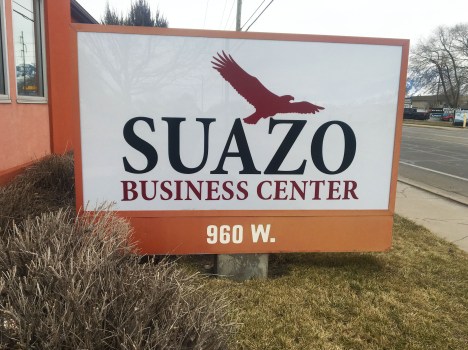
Suazo died in 2001, but Gonzalez never forgot the kindness he offered her. She wanted to honor his memory by creating similar opportunities for her community. This is where the idea for the Suazo Business Center was born.

The Suazo Business Center launched operations in 2003. It is a nonprofit organization that assists entrepreneurs from underserved, low- to moderate-income communities start and sustain their businesses. These communities include Hispanic, female, and refugee populations.

Story1Asset

Silvia Castro, executive director of the center, noted the uniqueness of the center. “We’re focused on economic development, which isn’t a typical role for a nonprofit,” she said. The reason the organization is a nonprofit is because its clients can’t typically afford a consulting business.

The center offers tools to communities who don’t usually get them, which can in turn end cycles of poverty. “We don’t do it for them, but we teach them how to do it,” Castro said. “To me, that’s our community impact. It goes beyond economics, job creation, sales dollars. I think that when you have a stable family, you have a stable community, and then you look to give back to that community.”

Castro added, “As a nonprofit, we serve the client. We’re looking for the best way to impact the community to grow. It also gives us more credibility within the Hispanic community, that we’re actually out there to help them instead of taking advantage of them.”

There are a variety of reasons these populations may require the center’s help when conducting their business. It is difficult for them to access capital. Regulations are troublesome to understand and almost always changing.

Compliance is one of the main challenges these entrepreneurs face because there are regulations that the Utah Department of Commerce asks business owners to follow that may not be in other states, and that definitely aren’t in other countries.

Business regulations in Utah can change without notification, and it is necessary to keep up with them in order to be compliant and to stay in business. Antonella Packard, the lead business advisor and teacher at the center, said business regulations can be complex. “It’s always going to feel like a stink bomb being dropped in the middle of a room because it’s like ‘Oh, really? I didn’t know that I wasn’t complying, what do I do now?’ Don’t worry, we can help.”

The Suazo Business Center offers a variety of services. It offers six-month-long trainings with either a startup or growth track and one-time workshops that focus on specific topics. The center’s business financing will assist those looking for loans or grants.

The center also does one-on-one business advising where clients are able to have their specific concerns reviewed. These sessions help immigrants and refugees understand how entrepreneurship works in this country. Castro said, “Navigating this government regulation can already be rough. Imagine English is your second language.”

The Suazo Business Center is not the only organization in Utah that is dedicated to helping Hispanic entrepreneurs. The Utah Hispanic Chamber of Commerce is a network of entrepreneurs who seek to increase their business opportunities by providing trainings, scholarships, and market research.

UHCC provides networking avenues, while the center works more on business development. “Our focus is different,” Castro said. “We want to make sure that they (entrepreneurs) have an up and running business first, so our priorities are a little different.”

Alex Guzman, president and CEO of the chamber, said about the center, “We have a very nice and good relationship. We should collaborate and make it a bit better, but in reality, we kind of compete. So rather than help my colleague grow, I’m a little bit selfish. But in business, it helps to be selfish. I’d rather keep that customer for the chamber.”

No matter what organization provides these entrepreneurs with resources to help their businesses grow, it is crucial that it is happening at all. Castro said, “When we talk about the Latino community, it’s always in a negative light. Yet what we see here day in and day out, it’s the things that really should be more out in the public.”

Multilingual churches of Utah, Spanish-language growth in LDS community

Story and photos By BRIANNA WINN

It’s a snowy, dreary mid-January Sunday in Springville, Utah. A group of Hispanics is gathering outside the Kolob Stake just off of 1230 South and 500 East, with their families dressed in their suit and ties, fancy dresses, and normal church attire. They are holding copies of the Book of Mormon, translated into Spanish.

They enter a welcoming, snug room full of other members of their faith whilst “Holas” and “Cómo Estás” are instantly spread around the room. The hymns start and everyone can sing along.

IMG_2376

Imagine living in a world where there is a mass amount of viewpoints, and no place to find truth, express your faith or worship your God because of a language barrier.

The Book of Mormon Alma 29 says, “For behold, the Lord doth grant unto all nations, of their own nation and tongue, to teach his word, yea, in wisdom, all that he seeth fit that they should have…”

The Mormon religion was founded in 1830 by Joseph Smith. The Book of Mormon, sacred and holy text of the church, was originally said to be written in Egyptian, according to the church’s official website. Today, it offers scriptures in over 90 different languages and plans on translating scriptures in 34 more languages.

The LDS church has grown immensely in Spanish-speaking countries and the Spanish-speaking LDS community is growing substantially in the state of Utah.

Church officials say the presence of Mormonism began to first grow in Mexico in 1875. Brigham Young, president of the church at the time, called on six missionaries from Salt Lake to bring Spanish-language materials about the church to Mexico according to LDS.org.

Salvador Gonzalez is a bishop for the LDS church at Kolob 14th Ward in Springville, Utah. Gonzalez moved to the United States from Spain where he joined the church in 1982.

“There are 58 Spanish-speaking wards and branches in the state of Utah,” Gonzalez said in an interview via email.

A ward is a single congregation, containing 300 or more members. A branch is smaller, typically having 200 or more members, according to Mormon.org.

Pew Research Center says the Church has more than 15 million members worldwide. Seven percent of those members belong to the Latino(x) community and the number is only growing.

“The Latino(x) community have a connection with the Book of Mormon and the history,” says Gonzalez. “Hispanics in other countries are connected with the history written in the text. When missionaries go and teach in these countries, the people recognize the history and are drawn towards the church. They have a connection within the church.”

Bret Ellsworth, manager of Immigrant Services Welfare Department of the Church, said in a telephone interview “The Hispanic community has been coming to the church, and to Utah in particular, in record numbers. The Hispanic growth rate is growing quite rapidly, he said for example, in West Valley the Latino population is up to 28%.”

According to LDS.org, Spanish is the second largest language group in the church. By the year 2020, it is presumed that Spanish will be the largest language group.

Ellsworth works with immigrants every day, especially Latinos. “The Immigrant Services program reaches out to Hispanics and helps them by giving them free and reliable resources and information he says, and by ensuring they’re not taken advantage of in any way.”

Missionary work has had a great impact on the increase in the Hispanic community. The Mormon News Room says missionaries serve in pairs, teaching the gospel and baptizing believers in the name of Jesus Christ. They travel to many different Spanish-speaking countries.

Gonzalez says, “Missionaries travel to over 21 different Spanish-speaking countries.”

The Missionary Training Center, or MTC, is a training center to prepare missionaries before they go on their mission. This is where they learn Spanish language if needed or required.

After serving a Spanish-speaking mission in the country of Ecuador in 1994, Bryon Buchmiller didn’t want to give up his association with the Spanish-speaking community. “Serving my mission in Ecuador was an incredible experience, he says. “Everything about it was great, from the language to the people, to baptizing new members. I would love to go back.”

IMG_2383

Buchmiller says he tries to keep up with his Spanish language, although it is hard. He tries to attend a Spanish-speaking ward every once in a while, to keep up on his Spanish and speak with the other members.

He said being immersed into the culture and being around the natives was really the easiest way to pick up the language and continually improve at it.

“Sometimes when I drive, I try to speak Spanish to rekindle my memory, Buchmiller says, “since it’s been so long since my mission, I don’t get to speak it every day.”

The article on LDS.org, How Can I Better My Mission Language, is a useful resource for returned missionaries looking to improve on their language skills or keep up with their learned language.

“There are more Spanish-speaking people being converted than English-speaking people in the church,” Gonzalez says.

Today, all LDS scriptures are available in Spanish.

Spanish-language is becoming one of the prominent languages in the church next to English. There is a staggering amount of Latinos(x) being baptized causing Spanish-speakers to take up a huge chunk of the church’s worldwide membership, according to Mormon.org.

Cultural diversity has long been a part of the American experience. The way the church is growing, Mormonism continues to lean heavily towards diversity, specifically in the Latino(x) community.

IMG_2330 (2)

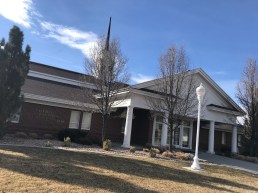
The Church of Jesus Christ of Latter-Day Saints located on 1230 South and 500 East in Springville Utah.

Kolob Stake in Springville is just one of the many Stakes in Utah that offer a welcoming religious place to the Hispanic community. Find a Meeting House or Ward is a helpful resource that shows where different wards/branches are, including Spanish-speaking wards and branches.

Now, Hispanic families all over the state of Utah can worship and read scriptures in their own native language.

Kilee Thomas

MY STORIES:

Processed with VSCO with m5 preset

MY BLOG:

Throughout the semester, this course has challenged and broadened my perspectives, not simply on the Latinx community, but on my role as a professional reporter. It would be bold of me to say that I was completely comfortable covering this beat. To put it bluntly, I was terrified. And for one reason only: I felt that I didn’t have the right authority or background to poke around and write these stories. Thankfully, as time went on and as I began interviewing my sources, I gained the confidence I needed to present myself and my work the way a true journalist would.

My confidence came from realizing that all beats need to be covered and not just simply from a journalist perspective with similar upbringings, but covered by all journalists. What makes a compelling story, a great story, is telling it from a different perspective, a different pair of eyes. Journalists come in all different shapes and sizes and our approach to a story or beat is what’s going to challenge and engage our readers.

As a student trying to further and expand my professional development, this experience pushed me to become a better writer, a better interviewer, a better researcher and all-in-all, a better journalist.

At first, I was a little taken aback at how timid I was asking sources for a potential interview. As a journalism student, I have interviewed dozens of people throughout the span of my college career, but these interviews were always lined up for me. Having to ask a stranger for permission to interview them caused more anxiety than I had initially anticipated going in. This class gave me the opportunity to practice seeking out interviews and feeling secure in doing so.

As for the interview itself, I am very comfortable. I have no problem posing questions and leading the interview in the direction I want it to go. There’s no better feeling than asking a question and getting an answer that lights a spark within your interviewee and uncovers some hidden truth or fascinating story. The instant gratification of question and answer is the most satisfying part of being a storyteller. I feel like Indiana Jones unearthing this great revelation.

The biggest truth I’ve dug up throughout the semester is that I’m still learning how and what it means to be a journalist. I have a long way to go and there’s no end in sight because a great journalist is a lifelong learner.

Covering this beat gave me the chance to further my development as a broadcast journalist by helping me create diverse story ideas, angles and locate non-white sources to interview. I’m excited to see what I will learn and what I will teach others from utilizing my voice as a journalist.

ABOUT ME:

Kilee Thomas ’19 is from West Jordan, Utah. Kilee graduated from University of Utah with a B.S. in Communications with an emphasis in journalism. She currently holds an internship at ABC4 news and previously held an internship for Good Things Utah. She has written published articles as a writer for HerCampus, an online magazine publication, as well as for Voices of Utah. After graduating, Kilee is hoping to become a news reporter/multi-media journalist.

Kimberley Mangun

MY STORIES:

  • My headline goes here

MY BLOG:

ABOUT ME:

Kara D. Rhodes

MY STORIES: 

MY BLOG:

This beat was not a far cry from topics I usually choose to write about. I will be graduating Spring 2019 with a B.S. in Gender Studies as well as Journalism. You could say that I major in social justice – if you wanted to. I tend to write about the LGBTQ+ community therefore I chose to incorporate that with the chosen beat.

While my first story is not about the LGBTQ+ community I wanted to learn more about the idea of culture within the Latinx community. I am not one who has such a rich culture and it has always fascinated me. Throughout the semester I was thrilled at the response I got from members of the LGBTQ+ and Latinx communities. Everyone was so willing to tell me their stories and it was very inspiring.

While I was reporting on this beat there were often times I felt like an “outsider.” There is this whole other beautiful community that I got to see that I hadn’t before. I prefer to be an outsider when reporting because it forces you to get the facts out. I’ve got my fair share of opinions when something is associated with the LGBTQ+ community so it’s difficult to be non-biased. When writing these stories that connected the two it was completely different. I enjoyed seeing my perspective of something with slight twist on it. It showed how similar we all are but how different our journeys are.

Over all, this semester and this beat have been a success. I furthered my education in journalism, which is ever growing. I learned so much about the Latinx community and I attained more published pieces for my resume.

ABOUT ME: 

Kara is a University of Utah student graduating in Spring 2019 with two B.S. degrees — in Communication and Gender Studies. Kara has a passion for making a positive change in the ever changing world today. Journalism assists her by making her Gender Studies degree applicable to the world.

Kara began her love for writing by reading all the Junie B. Jones novels and creating a blog in her adolescent years that dramatically explained why boys didn’t like her.

Processed with VSCO with c1 preset

When Kara is not studying at the university she is participating in every yoga opportunity that she can. Licensed with a 200-hour YTT (Yoga Teacher Training), Kara is passionate about yoga. Music, fashion, and pop culture are other hobbies that Kara enjoys talking, writing, and speaking about. She dreams of changing the world, looks at dog videos on Instagram, and reads books she wishes to understand.


Iasia Beh

MY STORIES: 

MY BLOG: 

The biggest challenge for me was time. My car broke down at the beginning of this school year so I wasn’t able to drive anywhere, but I didn’t realize how far everything in this valley truly was. I tried to keep my stories on campus as much as possible, but it was hard as the semester progressed because students got busy with midterms and such so they didn’t have time to sit and chat with me anymore.  

Other than that major inconvenience, I enjoyed working with the beat. I am pretty active in the Latinx community so it wasn’t hard for me to find things to write about, just hard for me to get to them. I love that I was able to use the resources that I already had and put them to use.

I never felt like an “outsider” because this is a community I interact with on a daily basis. The biggest thing for me was staying unbiased and to interview new people. To be honest, I was kind of jealous of the people who aren’t part of the community as it would be easier for them to not have a conflict of interest and to meet new people. I was often racing to find people I didn’t know.

It was often hard for me to figure out what was a story because I am so engrossed in the community that everything that happens just feels like every day. It was nice, however, to be in a more comfortable space. As a woman of color, it’s hard sometimes to go into super white spaces and have them take me seriously.   

Working in this beat solidified my career goals for me. I have always loved working with communities of color and have become even more sure that it is what I want to do. I hope to use my legal degree to help people like the ones I interviewed live the lives they are entitled to.

ABOUT ME: 

Iasia Beh is a current law student at Pepperdine University in Malibu, California.

A Murray, Utah, native, she graduated from the University of Utah with a BS in Communication in 2019.

Beh credits her skills in writing to not having television as a child and her interest in journalism to her father, who forced her to listen to NPR on car rides.

Beh hopes to become a public defender in the future and to one day meet Michelle Obama. She can be found on Twitter (@IasiaBeh) and on Instagram (@iasiabeh).