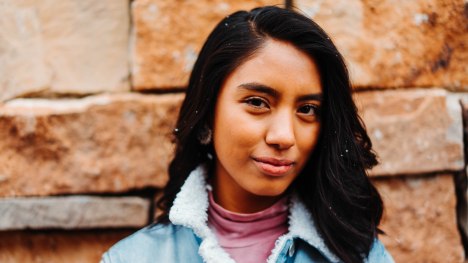
Suicide isn’t a “one-size-fits-all”

Story and gallery by KOTRYNA LIEPINYTE

“When I was 13 years old, I tried to commit suicide.”

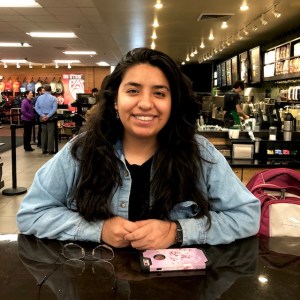
Illiana Gonzalez Pagan, a member of the U.S. military, struggles to discuss her teen years. She thinks back on the time where she could have been one of the 628 people who commit suicide every year in Utah. Pagan was, however, a part of another scary statistic.

Pagan was part of the 3,280 kids who were taken to the hospital for self-inflicted injuries. “I found myself cutting skin to feel decent,” she says. “And now, I cover those scars with tattoos.” Pagan traces her red-lined tattoos on what used to be her scars. She smiles sadly.

Her red tattoos match the colors of her scars. Pagan’s story is a lucky one. In 2017, over the course of 12 months, the Youth Risk Behavior Survey reported that 9.6% of Utah high school students attempted suicide one or more times. Unfortunately, 5 percent of these students were not so lucky and succeeded in their attempts.

Chelsea Manzanares, a graduate assistant working in the Center for Ethnic Student Affairs (CESA) at the University of Utah, analyzes the Utah struggle via a conversation through email. “Unfortunately, conversations surrounding mental health are still heavily influenced by the presence of stigmas,” she says. “Mental health was not previously understood the way it is now, and these stigmas are the remnants of a history of violence and discrimination. Many people choose not to talk openly about mental may still hold onto these beliefs, which can ultimately become a barrier in seeking care.”

Pagan agrees, reminiscing on a conversation with her mother. “I just remember, as a child, telling my mama that I was really sad. And I remember her saying I have nothing to be sad about and that was that,” Pagan states. The misunderstanding and lack of communication surrounding mental health is what builds the barrier Manzanares discusses.

Especially in West Valley City, where the Hispanic culture is strong. “Culturally,” Pagan begins, “it’s not really OK to be sad. My mama used to compare sadness to a mosquito and always told me that I can just swat it away and forget about it.” Pagan laughs before saying, “Well, that mosquito kept coming back, mama.”

Manzanares also touches on the rising rates of suicide in minority populations. “It’s important to have a conversation on intersectionality, and what that means in a mental health context,” Manzanares begins. “When we are studying these rates, we have to take into account these conditions and interactions that can impact one’s well-being. Grasping this concept helps us better understand what changes (systematically, individually, etc.) need to be made in order to help the mental health status of these communities.”

In an article for The Conversation by Kimya N. Dennis, she writes that African-American, Hispanic and American Indian suicides have historically been “more misclassified than white suicide.”  This means that when deaths are reported, often times, Hispanic deaths are rarely classified as suicides. This inaccurately represents data that shifts societal attitudes toward suicide.

The barrier between cultures also creates an obstacle difficult to overcome. Kim Valeika, a mother, sheds light on the situation. “I grew up hiding things like this from my mom,” she says. “And I am working super hard to make sure my daughters don’t feel the same way. I want them to be able to talk to me about it, openly.”

Manzanares agrees. “Peer support can be so much more than just providing communities with those tools for education and awareness,” she says. “The sense of comfort, acceptance and support that can be found within a community itself is huge in buffering against adverse mental health outcomes.”

All three women said one thing in common: depressive thoughts and suicidal tendencies must be taken seriously in order for there to be any change.

Although mental health is certainly a public health concern in Utah, it remains a taboo subject. The culture in the state is typically conservative, and upholds many stigmas. Relevant mental health resources also tend to be limited and inaccessible to those who are most in need, creating additional barriers. In order for mental health to be at the forefront, more resources need to be invested in educating the public and supporting the validity of this field.

Manzanares’ work in CESA tries hard to build upon this concept. It offers a free Stress Support Group for underrepresented students on campus. The environment is friendly, welcoming, and confidential, in hopes of offering students a safe space to go and open up about inner battles they might have.

Although Utah struggles with the scary suicide statistics, the discussion about mental health has increased. Resources are slowly becoming more and more available as well as tips for recognizing a struggling person. If a person needs help, health.utah.gov reports to listen without judgement and guide them to talk about their past.

Manzanares encourages students to visit CESA, or the University of Utah Health Center.

“Just talk to someone,” Pagan says. “Anyone is better than no one. Just getting it out there allows people to give advice that maybe you never thought of. Just get it out.”


Latinx business owners bringing value to Utah

Story and photos by KAELI WILTBANK

Hector Uribe stepped out from behind the restaurant kitchen, dressed in a white apron and a University of Utah cap. He sat down on a stool inside the lobby of the restaurant his father-in-law passed on to him in 2011 and began explaining his journey toward becoming a business owner.

Uribe explained that he grew up in Mexico and learned the value of hard work from a young age. He explained, “I ditched school when I was in sixth grade, so I was 11 years old when I went to work for somebody else to make money to help out the family.”

Uribe came to the United States from Mexico when he was just 17 years old and started working at his father-in-law’s restaurant weeks after his arrival in 1992. His plan was to save enough money to open up a hardware store back in Mexico. But, he said business owners in Mexico face great dangers because they are at risk of being robbed by the cartel. Uribe realized greater success was awaiting him as a business owner in Salt Lake City.

Hector’s, the chosen name of the company after Uribe took it over, has become a popular Mexican food destination for locals, with both the man and his food becoming iconic elements of the community.

A group of students from Highland High School recently came and interviewed Uribe about his journey as a business owner, he said. They were looking to speak with a successful person in the community, but Uribe explained, “I don’t see myself that way, I just think I am hard working.”

Salt Lake City was recently ranked as one of the best metropolitan areas for minority entrepreneurs to start a business. With the Latinx population becoming the second most rapidly growing demographic of the state of Utah, there has been a corresponding influx of Latinx-owned businesses. 

According to the Utah Governor’s Office of Economic Development, 10,000 businesses in the state of Utah are Latinx-owned and operated. 

Rebecca Chavez-Houck, a former Utah State House representative, is a third-generation American, with her grandfather immigrating to the United States from Mexico. While immigrants like Uribe are seen as successful business owners, Chavez-Houck is familiar with the negative connotations associated with immigrants. She said, “There is this notion of the deficit within communities of color, instead of looking at where our strengths are. Yes, notably persons of color are more within the criminal justice system. We have challenges with poverty and a variety of different things, but that’s not all who we are.” She added, “We are a much more complex community than that.”

Nera Economic Consulting found that nationally, “Latinos are responsible for 29 percent of the growth in real income since 2005.” With successful Hispanic-owned businesses dotting the Utah map, the positive impact brought by the Latinx community is significant to the local economy. The study continued, “They account for roughly 10 cents of every dollar of US national income, and that proportion is rising both due to growth in the Latino population and rising per capita earnings.” 

Uribe spoke with gratitude as he described the opportunity he has had to operate a business of his own. “When we come over here we are happy to have a job. I don’t say it’s a necessity for Hispanics to own their own business, but if there’s an opportunity you need to take it. It’s not as easy to start a business there (in Mexico).”

Alex Guzman, president and CEO of the Utah Hispanic Chamber of Commerce, explained to a group of students at the University of Utah, “The Hispanic business community, in the majority of cases, open businesses not because they want to be an entrepreneur, but because they have to provide for their families, so they become business owners with no intention of becoming business owners. But,” he said, “as business owners, they need to learn how to run a business. They need to learn how to file taxes, they need to know how to hire, how to do invoicing, how to deal with customers, how to marketing and sales, human resources, legal issues, etc.”

Offering resources and a supportive community, the UHCC provides local Latinx business owners and entrepreneurs with valuable tools they need to succeed. Guzman explained, “We created a program called The Business Academy. Every 10 weeks we start a new program where we train the Hispanic community on how to do business in the U.S.” 

The rapidly growing Latinx community in Utah has made an impact on the local economy and culture of the state. Resources offered by the Utah Hispanic Chamber of Commerce have become valuable tools for business owners and entrepreneurs like Uribe. His words of wisdom to other entrepreneurial-minded people in the community was, “You’ve got to do everything you can and do it the best you can so you don’t ever feel like you left something behind. The world is full of opportunities and you just need to feel which one you want to take.”

This slideshow requires JavaScript.

Why we need more Latinx journalists

Story and photos by BRITT BROOKS

When America sits down for breakfast what’s in front of them? The entire internet is literally at our fingertips, so reading the news is less impacted by time and place and more a matter of preference. Especially now when anyone can share their voice, journalists have the unique and exigent responsibility to create reliable, accurate and interesting publications.

Journalism is necessary to keep our communities connected, as well as educate readers with current perspectives. New voices are becoming increasingly popular in publications across the country as various marginalized groups gain platforms.

Utah’s Latinx population is at nearly half a million people, and in a perfect world that large community would be covered and represented accurately in the media. However, as reported by ReMezcla, white male voices tell the vast majority of stories in American media. In fact, throughout all the top newsrooms in the country, only 25 percent had at least one non-white editor. And minorities made up less than 17 percent of all newsroom employees combined.

Rebecca Chavez-Houck is a woman who understands why minority representation is important in all fields. Her experience as a Latina woman, and her career endeavors in journalism, public relations and politics, have given her insight as to what can be better in the world of media creators.

Starting her professional journey at the University of Utah, Chavez-Houck earned a B.A. in journalism and mass communication as well as a Master of Public Administration. After working in public relations, she said she realized she had a knack for “sleuthing” and wanted to try her hand at researching potential bills. Her career totally changed when running for public office morphed from an idea to a reality in 2008.

Chavez-Houck said she used her communication skills to ensure all possible effects of a bill were thoroughly considered and weighed, not glossed over during a long session on Capitol Hill. “You don’t say ‘no comment,’ you find a way to answer the question,” she said during a press pool interview.

Chavez-Houck explained that she decided to run for public office because she didn’t see anyone representing her community who actually reflected it.

The work Chavez-Houck accomplished during her time in the Utah State House of Representatives includes successfully passing a bill ensuring permanent Election Day voter registration as well as medical interpreter amendments that help non-English speakers of all dialects get the care they need in American medical offices.

As a Latina woman in a predominantly white, male career she’s had to navigate different ways to get her voice heard not only by constituents but her colleagues as well. Something she wants to improve is the Latinx image in the media, and that their stories are heard and respected. She’s frustrated with journalists who don’t search for new perspectives and said, “Find us, find us, find us. We’re there!”

Chavez-Houck wants more coverage that actually reflects the various personalities and ways of being for Latinx people. “We are as diverse as the greater community,” she said.

One way to ensure different demographics are covered well in a publication is to hire writers who accurately represent the community. Kiana Opre, 22, is a senior at the University of Utah studying gender studies and English. She’s also the editor-in-chief of Her Campus Utah, a branch of the international online magazine Her Campus written primarily for and by collegiate women.

Opre has worked to expand the topics covered by HCU, like trans rights and gender equality. She’s constantly reminding writers to use photos in their articles that have racial, cultural and gender variation so that the literal image of the magazine shows inclusivity. And she’s proud to say Her Campus at the U is ranked No. 1 out of more than 300 branches due to variables like the number of articles published, social media posts and chapter events.

IMG_3803

Kiana Opre

Opre and her fellow HCU council members try to recruit writers from all different majors, backgrounds, races, and genders. According to information published by College Factual, the U has fairly average numbers for diversity regarding race, gender, and age. But the U is more mixed than the national average, and ranks 314 for “Overall Diversity” when compared to nearly 2,500 other colleges nationwide.  

Opre said she advocates for a wide range of writers in all published content and aims to have all types of voices represented. However, she wants to be clear that HCU isn’t seeking out minority writers for no reason. Their voices actually need to be recognized and validated, not tokenized.

In an email interview Opre said, “Businesses, clubs and corporations are constantly seeking out ‘diversity’ but it never seems to be for the benefit for real lives or real people of color, but to fulfill a quota, to keep up with an image of what’s ideologically popular.”

But similar to other Utah-based publications, HCU was having a major gap between the representation the council wanted and the writers the branch actually had.

Stephany Cortez happened to be the first Latina member of HCU, but she said the decision to join was daunting, as going into a group of about 20 white women isn’t the easiest thing to do as a minority.

Cortez is a 23-year-old political science and criminology major at the U. Her roots are Mexican and though she said she loves the culture, community, and family that surround her, she doesn’t want to be defined by any one thing. She’s been part of the U’s Student Government (ASUU) and the Beacon Scholars program for first-generation students.

When Cortez joined the magazine, HCU’s editorial team was totally female, and totally white. On its surface the chapter reflected the stereotype of a sorority, and at one point Cortez said she didn’t know if she was at the right meeting. At the open house for the chapter, Cortez remembered seeing different genders and ethnicities, but soon found out she was the first Latina to join the magazine’s staff. “A lot of people of color don’t know about Her Campus, that it’s a community you can participate in,” she said.

While Cortez said she first felt a bit like “a fish out of water,” she also knew that sticking with Her Campus would improve her writing and possibly open the doors for more Latinx students to join. The people we see in certain positions plant the idea of what’s attainable and what isn’t depending on what you look or sound like. In other words, who we see in different industries and careers is who we believe belong there.

IMG_3588

Stephany Cortez

Cortez mentioned that Latinx families tend to stay within their smaller communities for various reasons, the most notable being fear. In a time where ICE is detaining and deporting Hispanic people every day and America’s president actively speaks against Latinxs it isn’t surprising that parents are concerned for their children on a daily basis.

Being repressed is one of the most frustrating feelings one can experience. But if something as common as getting a speeding ticket can end in deportation, fighting and speaking up can seem impossible or at the very least unsafe.

However, new territory is on the horizon for Cortez and other Latinx young adults. They find inspiration in the sacrifices that previous generations made, and use that to add to the culture and future of Latinx people in America.

Cortez is proud of her roots, but she’s also proud of herself for working hard and joining different communities and clubs no matter the preconceived notions. She said, “We need to break that mold.”

Latinos in Action member setting an example and breaking stereotypes

Story and gallery by EMMA JOHNSON

Yuritzi Huerta Campos is an 18-year-old senior at Jordan High School. Campos is the first U.S. citizen in her family. Both of her parents were born and raised in Mexico. Her parents moved to Utah before her and her two sisters were born in hopes of giving them a better life with more opportunities.

Campos joined Latinos In Action (LIA) four years ago when she was s freshman at Jordan High School. According to the Latinos in Action national webpage, there are LIA groups established in eight states, in over 200 schools, with 8,000-plus total student members.

Campos’ two older sisters participated in LIA when they attended school. She saw how their student involvement with LIA changed their high school experience. Hispanic cultures dedicate great respect to their rich heritage. Yuritzi appreciated how LIA also allowed her sisters to express and honor their culture through a public group. She says joining LIA has made them all feel like they are a part of something bigger. “Being able to give out a part of ourselves and serve other is what I love,” Campos says.

“In school, you have a place you belong,” she says when talking about why she decided to join LIA when starting high school. Latinos In Action was created in 2001 in Provo, Utah, by Jose Enrique. According to the Latinos In Action webpage when Enrique was in high school, he recognized the lack of programs created for Latinx students to participate in.

After high school, Enrique attended Brigham Young University and earned a bachelor’s degree in Education and Spanish, a master’s degree in Educational Leadership and a Ph.D. in Educational Leadership.

Enrique became an administrator himself and was again reminded of the lack of academic resources available to Latinx students. He felt Latinx youth were often disengaged at school and shunned for their cultural heritage. The disconnect was unacceptable in his eyes, so he created the Latinos In Action.

Matthew Bell, a foreign language teacher at Jordan High School, said in an email that the Latinos In Action program was first presented to Jordan High nearly 10 years ago by founder Jose Enriquez. “Through the presentation, we immediately saw this program as an opportunity to help Latino Heritage students become more involved in the school and in their community,” Bell says. “Another selling point was the strong emphasis the program placed on post-secondary study and achievement.”

Campos says she feels her LIA membership has gotten more impactful as the years have progressed. When LIA was first introduced to her school, she says it wasn’t widely known or understood. “We wanted to change that,” Campos says. Now, LIA hosts assemblies and plays a role in the Student Government program.

The Latinos In Action program emphasizes serving the community. Campos and her LIA classmates spend two days a week at a nearby special-needs school, Jordan Valley, where they help those with severe disabilities communicate through an assisted software called EagleEyes.

EagleEyes is a mouse replacement system for the computer that tracks eye movement and converts it into mouse movement. The system is primarily used to assist those who are profoundly disabled. Campos spends a few hours a week helping different students learn and communicate through the software.

She says her time spent using EagleEyes has changed her life. Debbie Inkley, Executive Director of OFOA says “The EagleEyes-LIA Program changes lives.” Inkely expresses the beauty of the two groups working together. She says it’s changing the volunteer’s lives through their service but giving the Jordan Valley students the peer experience of a lifetime.

LIA values have influenced all aspects of Campos’ life. “LIA setting self aside to help others grow, to build a stronger community.” She is planning on attending Utah Valley University for a year then she hopes to serve a mission for the Church of Jesus Christ of Latter-day Saints. The service opportunities through LIA has played into her decision to serve a mission and her decision to help people better their lives.

The Latinos In Action program was created to empower Latinx youth through their culture and prepare them for college and leadership opportunities. “We can be perceived as minority, going on a lot about drugs and criminals and all that stuff but we’re really not here to do that. We are here to show the best of ourselves,” Campos says.

LIA activity has shown Campos’ classmates what LIA is all about. She says many of her LIA peers were raised with very little. Most of their parents moved to the States to give their children a better life and a chance at an education. She says LIA helps her show her peers that you don’t have to come from much to break commonly believed stereotypes.

Campos uses her LIA membership to show everyone around her that your time and energy can be spent how you choose and that not all Hispanics fall under brutal stereotypes. She says, “We can show we aren’t that and that we can show love and give service.”

Photos courtesy of Opportunity Foundation of America.

Utah nonprofit, ONErefugee, lending a hand to refugees

Story by KATHERINE ROGERS

Starting college and going out into the workforce are intimidating feats. Most students need all the help they can get, even if it is in their hometown. Then there are some who are facing the prospects, but with challenges many of us can hardly relate to.

They are facing them as refugees — people who were forced to leave their homes for fear of their safety, and are now thrown into an unfamiliar, sometimes unwelcoming environment.

In Utah there is a nonprofit for those who are staring down that road: ONErefugee.

ONErefugee’s goal is to help refugees do the best they can in their new home. This is done through financial aid, mentorship and much more.

1R_Student _Conference1

ONErefugee students at a student conference (photo courtesy of O.C. Tanner).

It was started just over five years ago through the Boyer Foundation. Roger Boyer, chairman of the Boyer Company, wanted to do something for the community that would have obvious results. So, he started the Refugee Education Initiative, a program dedicated to helping refugees succeed educationally.

The Refugee Education Initiative did its job, but the people involved noticed something. While the refugees in the program got into college and finished their degrees, they were having problems finding good, fulfilling jobs.

“Education was not the end goal,” says Selma Mlikota, head of careers with ONErefugee. “Good jobs were the end goal.”

At that point, the Refugee Education Initiative started to reach out to O.C. Tanner and other companies, and ONErefugee was founded.

Six Utah companies are involved with ONErefugee, including O.C. Tanner and Intermountain Healthcare.

The program is not focused solely on education anymore, though it is a major part of it. Those involved in ONErefugee also work with the participants on getting jobs. This is important, Mlikota points out, because when people feel fulfilled in their work it is better for the community.

To be accepted into the program an applicant must have a refugee background (whether it’s their own or their parents’ experience), or they must be an approved asylum seeker. ONErefugee have taken refugees from 28 different countries, including Guatemala and Kenya.

They must also be college ready, with at least a 2.5 GPA and have college-level math and English skills.

The program offers no set curriculum for their participants. Instead, ONErefugee tailors a path to fit each refugee’s skills and interests.

Some are in the program for school. ONErefugee helps them with applying for college and scholarships.

Others have already started or finished their education and now just need a good job in their field. That’s where the companies involved in ONErefugee come in. They help with job placement and internships.

1R_Student_Conference.jpg

ONErefugee students at a presentation during the student conference (photo courtesy of O.C. Tanner).

This is a symbiotic relationship. These refugees get good jobs in fields they find interesting. The companies get the benefit of adding young, diverse talent to their work force.

Mlikota says the program’s process is how the organization got its name, from working with their participants one-on-one.

One of the most beneficial parts of the program is the access to volunteers.

Some volunteers, like Ken Monson, Ph.D., provide career advice for the newly or soon-to-be graduated refugees in the program.

As an associate professor in engineering at the University of Utah, ONErefugee often sends refugees with degrees in engineering to him when they need help finding a job or help with understanding the American workforce.

Monson recalls one example of a refugee who had an entry-level job at a tech company. He came to Monson concerned that he wasn’t getting the same quality of training as the other employees at his level. The professor provided him with advice on how to speak to his boss about these concerns.

Other volunteers give their time to help the students in the program academically. They will look over English papers and/or tutor them in math or science.

Then there are some who do all of the above, like retired lawyer Mike Jenkins.

Jenkins’ involvement began a year and a half ago, when some friends of his, refugees from the Democratic Republic of the Congo, were trying to find a way to get their daughter into and through college. He wanted to help and, in the process, learned about ONErefugee.

Yearly_graduation_celebration

ONErefugee’s yearly graduation celebration (photo courtesy of O.C. Tanner).

With his retirement approaching, Jenkins knew he would have more free time and ONErefugee called to him.

He helps the participants with writing, and he mentors those who are practicing law or interested in it as a career.

For Jenkins this work is all about connecting with the people he helps. When he meets a man around his age who is a refugee, he sees himself. That empathy is what drives him to keep working with ONErefugee. “I hope someone would help me,” he says.

The women and men who have taken advantage of what ONErefugee has to offer have done some great work. Things like interning in Washington, D.C., for U.S. congressmen and heading the Women of Tomorrow Club at the University of Utah. Articles and videos about their achievements are available on the ONErefugee website.

Utah may be next to experience a physician crisis

Story and photos by Justin Trombetti

The concept of representation in modern society can often be a fickle thing. It’s also becoming a hard conversation to avoid; it was a massive focal point of the most recent midterm elections, it’s garnered both highly positive and staunchly negative critiques of our modern media landscape, and for better or worse, the political climate of 2019 America has thrust an unending array of opinions to the front of our social commentary.

Emotions aside, the reality is that minorities and historically marginalized groups are not represented visibly in proportion to the population percentages they make up.

While this issue is far from exclusive to them, it is especially relevant to Hispanic populations. In fact, it’s a large part of the reason why California is currently facing what has been termed a physician crisis. That is, while Hispanics make up over 40 percent of the state’s population, they account for only 12 percent of graduating physicians.

It’s been posited that this has resulted in disproportionately poor health and community-wide vulnerability that, at its current rate, would take over 500 years to equalize.

It would seem that, upon a deeper dive into the matter, the issue is far from specific to California. Further, while healthcare is an immediate concern, it may well be a problem that extends beyond just a single sector of the service economy.

Utah is experiencing its own tension in the local health sector, as its rapidly growing population has begun to feel the strain of underrepresentation. Yehemy Zavala Orozco, preventive health manager of Comunidades Unidas, has been on the front lines of this reality for eight years.

The West Valley City-based organization’s primary mission is to “keep families healthy and together,” and Zavala Orozco (whose preferred pronoun is they) believes that the odds are stacked against the communities it serves.

They believe the underlying issues of representation are just the beginning of a multifaceted dilemma facing the Hispanic community. “No one gives you a guide,” they said of first-generation immigrants who often struggle to find resources that not only speak their language, but also understand them on a cultural level.

Zavala Orozco recalled a story of a first-generation mother from Guatemala with whom they recently worked. “The doctors found a lump in her breast and she needed surgery. They thought she might have cancer.”

On top of the woman dealing with the gravity of her diagnosis, Zavala Orozco said she found little help with the hospitals and offices she dealt with. Language barriers alone created a back and forth with her care professionals that made treatment more stressful and time consuming. Instances where miscommunications led to hospitals completely missing information along the way were also prevalent.

Zavala Orozco believes that there’s an extreme lack of investment and effort from the government to shift these paradigms. They cited the backpedaling on the 2018 initiative Proposition 3, which dealt with Medicaid expansion that would have had a strong impact on the Hispanic population, as a primary example of this.

They strongly suggest that Utahns must begin bolstering the opportunities available to Hispanics that allow them to ultimately join the professional sectors where their communities are underrepresented.

“We need to ensure they know college is an option, they just don’t see options other than places like [Salt Lake Community College] or trade schools,” Zavala Orozco said. They also believes that access to higher education is often too expensive for minority groups, and helping to remove the financial barriers of access is essential to reversing these trends.

In Utah, physical health is not the only concern Hispanic populations are faced with. In a state where suicide rates among this group are close to double the national average, mental health treatment is just as important.

Brad Drown, a licensed clinical social worker in Murray, has seen some of the same problems in his field that Yehemy Zavala Orozco discussed. He stated that it’s common for Hispanics in Utah to go without mental healthcare. Drown added in his multiple decades as a social worker, he’d only ever treated a small handful of Hispanic patients, and that while this could be a geo-demographic reality, independent research and data from his colleagues show similar trends.

According to Drown, this is very much a cultural issue, and less so a linguistic one. He noted that Utah boasts a higher number of multilingual resources available in his line of work due to the growing population of Latinos and the large number of return missionaries who lived abroad in Spanish-speaking nations.

The issues lie partially in a pattern of cultural stigmas he’s noticed, but more prevalent is the problem of a shared cultural experience that can often make therapy more effective. While he believes it isn’t always a necessity for everyone, many people feel more comfortable seeking treatment when they believe there are providers who understand them on a deeper level.

Perhaps most important to note, however, is that a common experience does not always mean a common result. While it’s crucial to recognize the hardships that many Hispanics face, assigning victimhood to an entire population, especially one with so many positive victories, can be short-sighted.

Andres Rivera, who runs Myo Tensegrity Massage in Draper, provided some context on this. He said he’s been lucky to experience a different side of the matter.

“We moved to California when I was 8, and everyone spoke Spanish [where we lived],” he said. Even in Utah, he lived in areas with a dense Hispanic population, and he believes this made integration easier.

“My mom spoke OK English, but mostly Spanish. It made it a little difficult but going to certain places that were recommended [by other Spanish speakers] was a big thing,” he continued. “It helped to have connections where she felt comfortable as far as speaking Spanish, especially with finding places of employment, things like that.”

However, Rivera felt it important to acknowledge that he does not think that’s how it is for every immigrant family. “Older people that came here is where it’s more of a thing where it makes sense to befriend someone with a shared cultural experience. I can see why someone [that didn’t immigrate as a child] would really want people who understand where they’re coming from.”

The idea of representation is important to minorities and oft-marginalized groups, especially when it comes to health. While it doesn’t necessarily affect everyone equally, it’s a pressing concern that currently has no end in sight for a significant population of Hispanics in Utah and nationally.

Zavala Orozco said that beyond empowerment, investment in local organizations like Comunidades Unidas can have an enormous impact on the day-to-day lives of Utahns. It may not be a problem that can solve itself overnight, but awareness and grassroots effort can go a long way.


Salt Lake City hopes to erase the school-to-prison pipeline

Story, pictures, and infographic by ZANE LAW

The United States of America, according to a Prison Policy article, imprisons more people per capita than any other country, with approximately 2.3 million imprisoned individuals. Of this captive population, the article also says there is a large number of juvenile and young adult offenders. The school-to-prison pipeline has been used to describe this odd trend and what might be behind it.

The ACLU, or American Civil Liberties Union, talks of “zero tolerance” policies and police officers on campuses as being issues. The organization’s website says these policies criminalize behaviors that should easily be handled by the school or teachers. Forcing students to negatively interact with law enforcement at such a young age leaves them with a bad taste for both school and law enforcement officers.

In an article by the  Utah Public Policy Clinic, part of the S.J. Quinney College of Law, researchers state that the criminalizing of behaviors is also detrimental to the dropout rate of students. Students who are suspended once are twice as likely to drop out, while students with three or more suspensions are five times more likely. The clinic notes that by the end of suspensions, school disconnectedness, a feeling of exclusion, and lagging behind in school work are common.

Jeremy Robbins, a half-Colombian man, speaks to how detrimental suspension and expulsion are to learning experiences and young lives. In a phone interview, he spoke about an instance in which he and his friends played a prank on their California classmates. They tossed stink bombs inside the lockers of five people as they ran through their high school halls. While Robbins agrees that his behavior was childish and deviant, he is still upset by the punishments given. His white friends were given detentions and community service requirements, but Robbins was expelled for the exact same actions.

Robbins remembers feeling worthless and without hope. He never went back to school, but instead went to work in the construction industry. Once he was kicked out of his home at age 18, as his parents had experienced before him, he had no diploma and not enough money to live.

The California native wished to find a better job to support himself, but no one wanted a high school dropout among their ranks. Robbins says he fell back on crime and spent his days robbing stores. He was caught and charged with felony grand theft, leaving him with a criminal record and an even slimmer chance of landing a good job.

Emphasizing Jeremy Robbins’ experience and touching upon local issues, the article by the Utah Public Policy Clinic notes that 29 percent of the Utah Latinx population drops out of school. This is 16 percent more than white students. These disproportionate dropout rates lead to higher incarceration rates, as the clinic also states that one-third of Utah State Prison inmates are dropouts.


Screen Shot 2019-04-10 at 2.50.03 PM.png

Information gathered from Utah Public Policy Clinic and the Federal Bureau of Prisons.

The Public Policy Clinic says that dropouts are three and a half times more likely to be arrested. With Latinxs dropping out at higher rates and with a far higher probability of being arrested after leaving school, the Federal Bureau of Prisons reports that the prison system holds a 32.3 percent Hispanic demographic.

Shawn Clay, a pastor for New Beginnings Ministry, an occasional preacher at Salt Lake City Mission, and an ex-convict, said in an interview that we need to start tackling this inequality issue immediately. Clay says the first step is to “admit that it (racism) exists. Racism out here is done with a smile.” He believes that while authoritative people in Utah act kindly, they are still treating people of color unfairly.

Clay explains that because of the color of his own skin, he was treated differently. He was hit with harsher charges and given more time in jail than a white counterpart would have received. While Clay hated his time in jail, it is the lasting effects on his life that he despises most. Clay is not currently allowed to drive, he has a much harder time finding jobs, and he missed out on memories with loved ones. Clay says he is a far better person than the justice system gives him credit for, and is proud of his coined phrase, “#morethanmyrapsheet.”

The first parole officer to Clay and a cop of 20 years, Shannon Cox, even speaks of the racist ways of her troop and the criminal justice system. She tells of officers referring to people of color as the “bad guys” and knows she wants to change something about that narrative. 

Both Clay and Cox attended a “Week Against Prisons” event in April, hosted by ACLU and the U’s College of Social Work, to discuss racial inequality, police injustice, and the school-to-prison pipeline.

While Cox says that helping mistreated adults transition from jail into normal life is rewarding, she also realizes that underrepresented kids need attention. Cox says she wants to “help harmed kids to not become harmful adults” because she knows just how detrimental the pipeline is. If troubled kids are not cared for early on, she says the system simply amplifies their negative situations. 

To help with her plan of guiding others, Shannon Cox founded Journey of Hope in 2014. The organization’s mission statement explains that it seeks “to improve the lives of harmed and justice-involved women and girls by empowering them through gender-responsive case-management and mentorship.” Cox and her organization have helped more than 1,500 women and girls, with 250 of those having recently left prison. The website notes that the recidivism, or tendency to re-offend after leaving prison, is 17 percent while the state rate is 67 percent. 

People of color are still mistreated nationwide, but there are also plenty of folks like Clay and Cox looking to do their part. Salt Lake City, in particular, has been doing a lot to raise its voice. In addition to places like Journey of Hope and Salt Lake City Mission, Undocuweek and Week Against Prisons are both recent events held at the University of Utah.


This slideshow requires JavaScript.

The cultural significance of soccer in the Latinx community

Story and photo gallery by TYSON ALDRIDGE

Soccer, or futbol as it is called in Latin America, is the most popular sport in the Latinx community. Children from the time they are born are given a soccer ball to play with, or share a couch with a loved one to watch a game. That is why the love of soccer is so deep, it is firmly implanted in their day-to-day family lives.

Carlos Deschapelles of Univision Communications INC. explained in a 2016 article that Latinx communities have a love for soccer. “Look at the numbers: a whopping 84% of Hispanics follow the sport, compared to 47% of non-hispanics.” Deschapelles also said that 76 percent of kids and teens who watched the Copa America Centenario on Univision did so with an adult.

Grant Barnes, sports editor for the Tulane Hullabaloo, said in his 2018 article, “In 2017, Latinx people accounted for 68 percent of soccer viewership in the U.S. alone. Univision has estimated that approximately 84 percent of Latinx people follow the sport, and that they watch approximately three times as much soccer as non-Latinxs.”

It is no surprise that Latinx people in the U.S. are responsible for most of the soccer viewership in the U.S. because as Deschapelles said, “Based on U.S. census data, approximately 75% of U.S. Hispanics will find their country of origin represented by one of the teams at the Gold Cup in the Summer.” This gives the Latinx community here in the U.S. a sense of pride and excitement when their team is represented at the Gold Cup.

The U.S. does a great job of trying to keep the Latinx culture involved by hosting foreign tournaments in the U.S. Deschapelles explained, “By keeping Hispanics connected to their culture and their home country through tournaments that take place in the U.S. — like the 2016 Copa America Centenario and 2017 Gold Cup — soccer allows them to acknowledge and thrive in their duality.”

Dominic Militello is the head coach of the Cottonwood High School soccer team. Just watching the practice, it is easy to tell that these players absolutely have a burning passion for the game. Senior defender Josue Calderon said, “We were born with it, we basically grew up with our parents playing it and showing us the ways and their love for it.”

The great thing about this connection to the sport that the Latinx community has is that it brings them closer together as family and as friends. Whether it is through their local school team or club, or even recreational leagues that they play in on the weekends, they love the sense of family and community the sport brings them.

Christian Alfero, a sophomore midfielder, said that soccer has been a huge component for him and his family his whole life. He said, “I grew up watching the game and seeing the professionals on TV, and once the games were over my family would go outside and have 5 vs. 5 games.”

Brandon Morales, a sophomore defender, said, “I think it’s more like a family. It makes you act like you are actually a part of a family. You can relate to each other better because we are all Hispanic, and having that similarity with our culture makes us like each other more.”

Each of the players stressed family as the main component of their love for soccer. Sophomore forward Kody Flores said, “Ever since I was little my first toy was a ball. When you’re playing soccer it makes you feel at home.”

The Cottonwood High players’ faces lit up when talking about the competitiveness that soccer brings them within their community. Senior defender Calderon said, “We have a lot of Mexican league teams that we have friends and family playing on, and you look forward to playing against your friends.”

Soccer also brings this community a sense of pride. Morales, the sophomore defender,  said, “Mexico has always been good at soccer. It is one of the things that they are really good at and have a ton of talent when it comes to soccer. Just showing it off and displaying it feels good.”

The Cottonwood High School soccer team puts a tremendous effort toward getting better daily. They practice from 3 in the afternoon until 4:30 Monday through Friday, with games mixed in on Tuesdays and Thursdays. The team has Latinx representation, and as result, spectators can see the passion go from them to the rest of the team. Coach Militello pushes his team to succeed. And that is shown through constant instruction and coaching to ensure each player is doing their best. Sophomore defender Alejandro Barahona, said, “Being on this team and playing soccer makes us more like a family, and brings us closer together as a team.”

This slideshow requires JavaScript.


You are not crazy: Mental health stigma among Latinx community

Story and photos by SAYAKA KOCHI

One of the frequently discussed topics is that Latinx people are less likely to seek mental health treatment by themselves. Even when they are suffering from severe mental disorders, asking someone for help isn’t easy. There are several reasons why they cannot signal SOS.

“I didn’t want to admit that I was not OK,” Diana Aguilera said. Aguilera was born in Mexico and moved to Utah at age 10. She is a Peer Programs coordinator at the Latino Behavioral Health Services (LBHS) located at 3471 S. West Temple in Salt Lake City. LBHS is a nonprofit organization for unserved Latinx and Hispanic Utah citizens with mental illnesses, co-founded by Jacqueline Gomez-Arias and other contributors.

Before Aguilera became involved in LBHS, she had been suffering from depression, triggered by a harsh breakup. Because of her mental breakdown, she said she gave up school, her desire to be a social worker, and full-time work.

“I went to bed every day and like ‘please, don’t wake up anymore.’ I asked my body to give up because I couldn’t literally go on anymore,” Aguilera said. “I didn’t like to talk about it. I tried to hide it. Because I didn’t want my family to feel guilty.”

While she was ignoring her mental breakdown, she started volunteering at LBHS to help others in 2015. There, she said she met people with depression and those who have overcome their mental illnesses. Through being with them, she said she could finally acknowledge that she had to seek help.

“I met one of the founding members, Jacqueline [Gomez-Arias]. She was so open about her mental health issues. Through the conversation with her, she was like ‘you need help. You have depression. You have to seek help,’” Aguilera said. “Hearing from her, it was reassuring that it’s OK, I’ll be fine.”

With the help of Gomez-Arias and Aguilera’s sister, she was able to find a therapist and start fighting against her depression. At this point, health insurance is one of the main reasons that Latinx people cannot seek treatment. According to a report by the National Alliance on Mental Illness (NAMI), one-third of Latinx immigrants are uninsured.

“I was really lucky and privileged that I had health insurance. Not everyone has health insurance. Not everyone can afford a therapist,” Aguilera said.

After several years of taking multiple medications and attending therapy, she said her mental health slowly but steadily recovered.

“Right now, I’m doing very well,” Aguilera said. “I don’t think that is a magic thing. It’s just a huge combination of everything.”

Aguilera also explained the importance of belonging in the community. “I’ve gone through therapy but that wasn’t super enough. For my recovery, I needed my community. Latino Behavioral has been my community. That was the most important thing for me.”

Like Aguilera, Carla Astorga had also suffered from mental breakdown for a few decades. Astorga was born and raised in Lima, Peru, which was a “corrupted” place for her to live. Through a lot of traumatic events from her childhood, Astorga said that her mind was broken. To escape from such a harsh environment, she said she decided to move to Utah in 2005.

“I didn’t recognize my symptoms at first. I felt sadness for whole days. So I didn’t know that it became a depression,” Astorga said.

Ten years had passed since she escaped from her country, but she said her symptoms reached such a level that she couldn’t stand them anymore.

“Anxiety, depression, panic attack, paranoid, fear — everything was starting to growing up and growing up,” Astorga said. “I started to see things that were not there. One day, I was driving to send my kids to school. After that, I went to the police station, because I smelled a bomb in my car. Police checked my car, but there was no bomb.”

At this moment, Astorga said she realized for the first time that she had a mental illness. She then decided to take treatment. As a first step, she came to visit LBHS to pull herself out of the darkness. She said she also took psychiatric medication, therapy, and some training provided by NAMI, which is the nation’s largest mental health organization. Over a couple of years going through hard times, she could finally overcome her mental disorder.

“The most successful part of my recovery was to be able to find one place with my own culture and language that I could feel like I was at home,” Astorga said.

Ever since her symptoms improved, she has been helping people at LBHS as a peer supporter and at NAMI as a Wasatch/Summit affiliate leader.

“I didn’t see enough sources with my own language in my area. Latino people need more sources for mental health,” Astorga said. “When I was getting recovered, I started to be aware that I had confidence and trusted myself. So I started thinking that I wanted to help other people.”

Astorga said a lack of knowledge is the main issue for Latinx people when they develop mental illnesses.

“In my culture, if you go to a psychologist or a doctor to take medicines, you are crazy,” Astorga said.

As Astorga pointed out, finding a peer mentor who has the same cultural background is really hard for underrepresented minorities.

Laiyan Bawadeen, a counseling intern for international students at the University of Utah, addressed this cultural difference issue from a counselor’s perspective.

“To address cultural differences in general, it is important that a counselor uses a multicultural viewpoint where they approach counseling through the context of the student’s world and culture while their own values or bias is not more important than that of the student,” Bawadeen said in an email interview.

Bawadeen is half Taiwanese and half Sri Lankan, and she is pursuing her master’s degree in clinical and mental health counseling at the U. As a member of the minority group, Bawadeen also suggested the importance of correct knowledge about mental treatment.

“I think demystifying what mental health [is], understanding what a counseling session looks like and what to expect can help demystify the counseling process, remove the stigma around mental health and make it easier for individuals to seek help,” Bawadeen said.

Seeking help is not easy for Latinx and other minority people. This might be because of the language barrier, not having health insurance, stigma, or caring so much about families or those who are closest to them. However, at some point, they need help.

Astorga said, “Latino[x] people are very strong. They were fighters or warriors. So they say they can do this alone, but they can’t.”


This slideshow requires JavaScript.

Dual oppression living Latinx and LGBTQ+

Story by Kara D. Rhodes

There are communities people join and there are communities people are born into. In some instances, people are born into two communities that do give strength but attached is oppression. Dual minority has a lot of weight to it but there is courage in numbers. According to the Human Rights Campaign, “Data analysis by the Williams Institute reveals there are approximately 1.4 million LGBT Latinx adults currently living in the United States.” This is a mass of people who are living with, as far as we are aware, dual oppression and this can be a difficult road to navigate.

Maren Simmons, 22, has had challenges of her own. Coming from a strict religious background within the Church of Jesus Christ of Latter-day Saints, she says, “When I’m out in public or on a date I get stared at or even given dirty looks.”

Both of these communities, LGBTQ+ and Latinx, have a history of being shamed publicly for things they cannot control. Simmons advised younger LGBTQ and Latinx folks, “Don’t ever change yourself because someone else thinks it is wrong. I found that opening up to friends and family about how I felt made me feel better.”

The Human Rights Campaign lists the most important issues these folks face: immigration, language and access barriers, economic insecurity, violence and harassment, and HIV and health inequity. According to the HRC, 72 percent of LGBTQ+ Latinx youth have heard their family say something negative about LGBTQ people.

Asset_Story2

Eva Lopez creator of Orgullo Utah.

Eva Lopez, a 22-year-old student at the University of Utah, was missing the representation and diversity among the LGBTQ community so she created a space for it. Orgullo Utah is a queer space led and formed by Latinx folk. Lopez has always been proud of her Mexican heritage but she said she also faced challenges because of it. “The identity of being Mexican has its layers of racial challenges from micro-aggression to policy exclusion. Culturally and ethnically, I am Mexican and very proud it!”

Acknowledging and embracing her intersecting identities eventually brought peace to Lopez. “I came out to myself and was able to work through the challenges of acceptance and celebration. Coming from a conservative, Catholic, Latino background, I struggled immensely finding the peace I desperately craved,” Lopez said. After acceptance, she discovered a state of authenticity and happiness.

Her aspirations don’t stop at Orgullo Utah. There are many things she believes the U could to to support Latinx and LGBTQ folks. Lopez suggests, “We need more trained individuals to help navigate healthy conversations around identity. We also need to make sure that faculty and students are not closeting queer students with dress-codes … and enabling healthy dialogue within classrooms.” There is an LGBTQ Resource Center on campus that Lopez is forever grateful for, but she said there is always room for improvement. Asset_Story2


Like Lopez, Cristobal Villegas experiences challenges as a Latinx and LGBTQ person. “My experience as a gay, latinx man is complex and multi-faceted. I grew up LDS (Latter-day Saint) and served a church mission. My family has had a strong tie to machismo and traditional gender roles,” Villegas said.

Villegas’ coming-out story isn’t very positive because of the conservative household he grew up in. “Coming out to a socially conservative household was met with anger and confusion,” he said. Villegas suggests that Utah could better serve their community by recognizing that people like Villegas exist and providing access to better healthcare.   

“It is important to understand oneself as that will lead to more justice for more people. My struggle is connected to everyone else’s, and as such I must be knowledgeable of how I fit in to oppressive systems and institutions and receive oppression from systems and institutions,” says Villegas on advice he’d give to Latinx LGBTQ+ youth.