Pride, success and accomplishments: Three Hispanic influencers share their stories

Story and photos by LINA SONG

The Hispanic community is not only continuing to grow across the United States but also making many accomplishments that shape the community for the better. A former member of the Utah State House of Representatives and two students attending the University of Utah share their thoughts about the achievements they built for their community in Utah. The three members of the Hispanic community have contributed their talents, dedication, and success to improve and make a change.

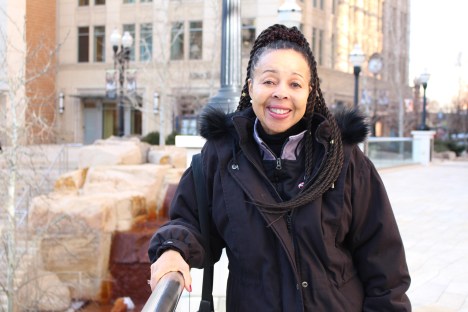
Rebecca Chavez-Houck

Rebecca Chavez-Houck, a former member of the Utah State House of Representatives, explains her journey of breaking the stereotypes imposed on Hispanic woman. 

Chavez-Houck’s journey started after she graduated from the University of Utah in 1982 and worked for a small newspaper firm in Wyoming. After working there, she moved back to Utah and started working in public relations. As she was getting into politics, she realized that the legislature did not represent the community in Utah.

In order to represent the Hispanic community, Chavez-Houck was elected to become one of the member in the Utah State House. By being a woman in a male-dominated industry, she was able to break the public’s notion of a representative being a white male. Chavez-Houck discussed the Latin phrase “Vox Populi,” which means the “voice of the people.” She always remembered this phrase when she was working as a member of the House.

“I was the conduit to make change and to be that voice,” Chavez-Houck said proudly. “We were there to be the voices of the people.”

The influence of her parents helped her realize the importance of education and supporting one another within a community. By using her journalist side through being an observer and by understanding her views and being self-critical, Chavez-Houck accomplished to accentuate the Hispanic community’s strengths.

Neida Munguia

Neida Munguia, a sophomore at the University of Utah, was born in Salt Lake City but was raised in New Jersey. Munguia’s parents are from Michoacán in Mexico. Munguia grew up in a very diverse community. She returned to Utah for high school. During those years, she was the head of multiple Latin clubs. Munguia was most active in the club Latinos In Action and continues to participate to this day.

“Since LIA took off in Utah, I was able to help our sister programs in Florida, Texas, Idaho, and California take off as a resource appointed by LIA.” Munguia said.

picture2

Munguia believes that her community has flourished and enriched the United States which brings a sense of familiarity.

Munguia discussed the events that she started while she was in high school. The first event was the “Dia de Los Muertos” dance, which was created in order to portray the beauty of celebration for the day of the dead in Mexico. Another event was the implementation of day care for parents with young children during school events. They included providing translation services and offering tutoring to the parents. Through these achievements, Munguia wants to show and remind students within her community that they are capable of great things. By carrying out her passion, she built stronger ties and helped her organization and the community move forward for the better.

“The fact that as a community we slowly see the importance of education is a success beyond our wildest dreams,” Munguia said. “My whole purpose of starting the festivals, dances, and after-school activities was to empower my students.”

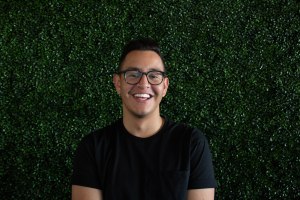
Jesus Jimenez-Vivanco

Jesus Jimenez-Vivanco, a freshman at the U, grew up in West Valley City, Utah. He is the first in his family to graduate high school and attend university.

Jimenez-Vivanco believes the biggest accomplishment his community has made is speaking up and breaking certain stereotypes. He gives the example of himself and his friends attending university and studying diverse subjects. Jimenez-Vivanco also said he feels prideful that his father works for the construction department and helped build many of the buildings at the U.

edit 2

Jimenez-Vivanco said many people view the Hispanic community negatively but in reality people work hard and are generous to others.

By realizing the importance of education, Jimenez-Vivanco always reminds his younger sisters to appreciate their education and fight for what is right. He believes that by influencing his sisters, other people within the community will pass on their moral beliefs and values. Jimenez-Vivanco said he hopes that he will be able to show the strengths of his community by being honest and hard working.

“Many Hispanics rise up in politics here (Utah), whether it’s immigration, women’s rights, LGBTQ rights and many more. They speak up and fight for what’s right,” Jimenez-Vivanco said. “I am giving a good name for my community by helping others and taking my skills to the next level — something that everyone should do, not just people in one community, but all of them to make the world a better place.” 


Making a difference: The Utah Hispanic Chamber of Commerce

Story and photo by TYSON ALDRIDGE

The Utah Hispanic Chamber of Commerce (UHCC) located on 1635 S. Redwood Road can be an effective tool for businesses and business owners to achieve success. According to the UHCC website, it was founded in 1991 and serves as an advocate for the Hispanic business community in Utah. UHCC recognizes that the Hispanic community in Utah is large and that it is also a very vital part of the state. The Utah Hispanic Chamber of Commerce was formed with the idea of diversity in commerce in mind.

UHCC does everything it can to ensure that its members are being recognized by the community. According to the UHCC website, being a member of UHCC has many benefits, including free advertising, training on financing programs, and free professional development workshops. In addition, to help businesses and business owners, UHCC offers a number of networking opportunities, community involvement, and much more.

UHCC bridges the gap between government and business owners. One of the biggest advantages to being a member is receiving legislative updates from UHCC. These updates can help businesses understand new laws and legislation that may have been confusing. According to a 2017 Utah Business article, UHCC helped secure a deal with the Utah legislature that aimed to promote trade between Mexico and the state of Utah. The chamber got this deal done with the Hispanic business community of Utah in mind and to reaffirm the strong relationship between the United States and Mexico.

By being an advocate for businesses and entrepreneurs, business owners can focus on their work, rather than dealing with legislation themselves. Alex Guzman, president and CEO of UHCC, says, “Hispanic businesses and business owners need to learn how to pay taxes and file taxes. Our Business Academy that is every 10 weeks, is a great tool to teach the Hispanic community on how to run a business.” The Business Academy, which is free to members, teaches planning, marketing, communication, hiring, customer service, and more.

After completion of the course, one should be able to manage their business more efficiently. The Business Academy isn’t the only class offered by UHCC. It offers several other professional development workshops throughout the year. These are an effective tool to learn the essentials of business and to improve one’s overall savviness as a business person.

UHCC is very important to the Hispanic community. Guzman told KSL in 2019, “In Utah, Latinos make up the largest immigration population at 17 percent. In the state of Utah, it’s very easy, simple and friendly to be a business owner.” Guzman added, “There are a little bit more than 15,000 business owners that label themselves as Hispanic at the Utah Department of Commerce.”

Businesses that are members of the UHCC see many benefits after joining. Ana Bullard, senior loan officer for Rock Mortgage Lending on 596 W. 750 South, said in an email that “the Utah Hispanic Chamber of Commerce has benefited a number of my clients. Their resources supporting businesses are vast. In addition to providing networking opportunities, the UHCC encourages community engagement and conducts professional development workshops. They educate business owners with information that can help them obtain grants and support growing their businesses. UHCC helps expand members’ talents, experience and opportunities.”

UHCC not only helps businesses achieve financial success, according to the UHCC website, but also helps businesses reach a larger audience by giving them advertising and marketing opportunities through its site and radio. By handling advertising, UHCC enables owners to focus on growing their business. Advertising can be very expensive and hard to navigate.

Socials are another tool that UHCC offers its members. According to the website, these socials are a way for businesses to network and meet other professionals who have the same goals in mind for their business.

There are many opportunities to expand your reach and the popularity of your business. When asked about why companies would want to join UHCC, Nicole Garcia of Madmarli Realty said through email, “I joined because of their multitude of networking opportunities and they also advertise their members on the site and radio.”

Bullard says, “The Utah Hispanic Chamber of Commerce is a valuable resource to anyone in the Hispanic community looking for business training/assistance, information and networking opportunities. The training UHCC conducts assists attendees through sales and business coaching, marketing, networking opportunities and more. No matter what type of business you have, UHCC can provide useful and relevant skills training and resources.”

IMG_4616

The benefits of joining UHCC are endless, and all members truly feel wanted. The UHCC’s mission statement is, “To provide leadership, opportunities for economic growth, professional development and community involvement for our members.”

MEChA High School Conference at the University of Utah

Story and photos by IASIA BEH

Several hundred Latinx high school students came to the University of Utah on Feb. 27, 2019, for the 24th annual Movimiento Estudiantil Chicanx de Aztlán, or M.E.Ch.A, High School Conference. The conference consisted of workshops, a keynote and lunch.

IMG_2181

A high school student receives information from university groups at the M.E.Ch.A. High School Conference.

The students all had varying reasons for attending the conference. One student came to fulfill hours for his Latinos in Action club. Others came to learn about college. Some came to learn about how undocumented students can get funding and help for school.

There was a sense of excitement all around the conference. Students were rapidly chatting each other up and approaching students from other high schools. It was often hard for the presenters to get the students’ attention as they were getting to know other students who were like them.

Conferences like this, for many students, are a break from the whiteness and racism of the schools they attend, especially for students who are undocumented. About 10 Latinx Taylorsville sophomores and juniors engaged in a group discussion after the workshop “Erasure of African Roots in México.” One sophomore named Juan said the reason some DACA students might not know their options for after high school is “because most of the time they are scared to speak up about it so they don’t know what to do when they graduate high school.”

IMG_2179

Students attend an “Erasure of African Roots in México” workshop on Feb. 27, 2019.

The students were adamant that the current political climate is the reason that many students are afraid to speak up. The president was elected when they were in junior high school.

How has that affected the students and their ability to enjoy school?

“It has affected us in, like, that we get attacked either by the teachers or the students that they make racial jokes,”  Juan said.   

Their teachers would make jokes?

“There were a lot of teachers that would like, say racial jokes in our classes that we had in ninth grade,” he clarified.

Another sophomore, Marissa, who went to Eisenhower Junior High with Juan, said that her friend had a poor experience with her science teacher. A white student had lost a paper and the teacher believed that she had completed the assignment and gave her full credit. Her friend, who is Latina, lost the same paper. However, she was not believed and was accused of not really losing her paper.

This wasn’t the only Latinx student who had this issue with this teacher. Other students commented that they felt like he would glare at them and otherwise make them feel uncomfortable.

“He was like that. He did really bad things to all of us Latinos,” another sophomore, Andrew, said.

“He would try to keep it low-key,” Marissa said.

“He would even give us dirty looks!” Juan added.

They then talked about how they went to the administration about the situation, and how they found a safe place to talk about it: Latinos in Action (LIA). They said that other students had had similar incidents with other teachers and it helped to hear about them from peers. However, they mentioned that some teachers were not supporting the existence of LIA.

“There were a lot of teachers that didn’t support that program at Eisenhower just because we were Latinos and we weren’t the [student body officers] who were white kids,” Juan said.   

While these students’ stories are anecdotal, they are far from unusual. The university has been taking strides to overcome these obstacles that students of color may face when they get to the U, including offering high school conferences that bring underrepresented students to campus.

Martha Hernandez, who gave the “Erasure of African Roots in México” workshop, said these conferences are important because students have the opportunity to see themselves reflected in college students. 

M.E.Ch.A. provides a “space where they can celebrate their cultural identities and have a space on campus where they can do that,” Hernandez said. “And also for them to know there is a community on campus for them.”


Why the Latinx community is migrating to Utah

Story and photo by KILEE THOMAS

For five years in the 1990s, Alex Guzman provided the voice-over for Tony the Tiger in Latin America. That was just one of the jobs Guzman held during a long career in Guatemala working in marketing for the international advertising agency Leo Burnett and La Prensa Libre newspaper.

He was a recently elected senator in Latin America. But, he still couldn’t escape the threat of violence in his home country, regardless of his success. Guzman’s wife and children were nearly kidnapped. For the sake of their safety, they had to leave. The family immigrated to Utah 11 years ago because his daughter was already going to college in the state and it made sense to keep the family together.

Like Guzman, many immigrants choose to migrate to Utah because one or more family members already resides here. According to the American Immigration Council, one in 12 Utah residents is a native-born U.S. citizen with at least one immigrant parent.

In 2017, the Migration Policy Institute, reported that Utah’s population was composed of 8.7 percent of immigrants and 57.5 percent of those foreign-born residents were of the Latinx community.  

Similarly to most Utah immigrants, Guzman had to start all over from the bottom up in a new country, new culture and new language. Today he is president and CEO of the Utah Hispanic Chamber of Commerce. Despite the obstacles he faced, Guzman said he never forgot his passion and drive. “If the second door is closed, I want to make doors,” he said.

Guzman isn’t the only one who fled to Utah to escape the violence of their home country in an effort save their family.

Bryan Misael Vivas Rosas, a 25-year-old from Venezuela, had to leave everything behind to support his family. “The dictatorship of Maduro has the country almost in a civil war. People are starving, being shot, robbed. It’s not safe to walk down the street in the middle of the day, let alone at night,” Rosas said.

He left at the end of 2016 and moved to Utah to stay with a family friend until he got on his feet. “I had to leave my parents, my sister, good work opportunities and almost all of my possessions,” Rosas said.

Now as a self-made audio sound engineer in West Jordan, he has the opportunity and resources to financially aid his family back home, as well as his sister who has recently migrated from Venezuela to Utah in order to be closer to him.

IMG_2225

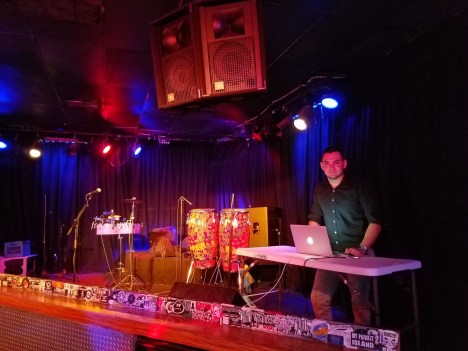
Bryan Misael Vivas Rosas working at an event as a DJ. Photo courtesy of Bryan Misael Vivas Rosas.

According to the American Migration Council, Utah’s largest Hispanic immigrant population comes from Mexico, which makes up more than 43.2 percent of all immigrants residing in Utah. Like the 105,998 Mexican-born immigrants living in Utah, Clara Miramontes’s family immigrated to Utah from Mexico because of an already established family member living here.

Miramontes was only 5 years old when her family left Mexico to live with her mother’s sister in Magna, Utah, and although she said she doesn’t remember much of the immigration process, she remembers the expectations going in. “When moving to a new country, you have high hopes or else, you would feel like you’d never make it,’ she said.

At 17, she’s a soon-to-be graduate of Cyprus High School with a full-time scholarship in hand to attend Westminster College in fall 2019 to pursue her dream of becoming a doctor. She also works along with her mother as a peer mentor at Matheson Junior High.

IMG_0338

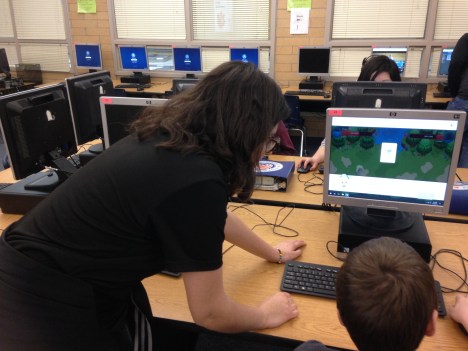
Clara Miramontes assisting a student at Matheson Junior High. 

Miramontes said she believes she puts in the effort to make full use of her opportunities now because she doesn’t want her family’s sacrifices to go to waste. “My parents gave up more than me. They gave up their career, their family, their livelihood just to give me and my siblings a better life,” she said.

Although many immigrants come to the United States to pursue better opportunities, the immigration process and politics surrounding it have caused issues. Miramontes said she believes the topic of immigration would be less controversial if it was seen from a more understanding approach and perspective.

She said she hopes for more compassion from people. “I wish people knew that we are not here to take everyone’s jobs or do illegal things. Some of us want to live a better life and have a prosperous future. I think all of the sacrifices people make to come here should be appreciated and taken into account,” Miramontes said.

During the government shutdown that lasted from Dec. 22, 2018, until Jan. 25, 2019, Alex Guzman said some 35,000 applications for immigration were placed to the side. Consequently, he said, it will take 10 years to solve and reprocess those applications.

And although it will take time to fix, Guzman doesn’t think there is anything that will stop immigration from happening in Utah or the United States.“There will always be a ladder taller than that wall,” Guzman said about the structure that President Trump seeks to have built along the U.S.-Mexico border.


Is this the place for me? Being Latinx at a predominantly white institution

Story and photos by IASIA BEH

With the latest photos to come out regarding placement of racist banners and posters on the “Block U,” it raises a lot of questions: Who are they? Why are they doing this? Why do they feel so emboldened that they show their faces when spreading clearly racist rhetoric?

One reason behavior like this is possible is because the University of Utah campus itself is isolated from communities of color. Tucked away on the foothills of the Wasatch Mountains in neighborhoods only few can afford, many white students are never introduced or interact with people of color on a meaningful basis.

IMG_2230

Wendy Vazquez pictured at the annual MEChA High School Conference on Feb. 27, 2019.

Wendy Vazquez is taking a criminal justice class this semester as part of her sociology and criminology degree. While the class material has proven to be interesting to her, Vazquez believes her fellow classmates have not.

Sitting on the couches with her sister in the Center for Ethnic Student Affairs in the A. Ray Olpin University Union, Vazquez talked about a white male student she has class with. Even though they have had some classes together previously, he still won’t sit next to her. This confused her until he mentioned in class that he was fearful of people of color.

“At that point, I understood why he didn’t talk to me,” Vazquez said.

She said he works in the library, which also confuses her.

“It kinda doesn’t make sense because he has to give directions to all students,” she said. “Do brown students come up and he just turns around?”

He isn’t the only classmate who has made her feel excluded. A white female student in an in-class group discussion spoke about how building the wall would stop crime.

“She basically implied that as long as the country stayed white, crime would stop because minorities are the ones who commit crimes,” Vazquez said. “She also said we need to ‘have to put these people in their place.’”

Students of color have experiences like this every day on predominantly white universities across the country. William Smith, who is the department chair of the Education, Culture and Society program at the U, describes racial battle fatigue as “the physical and psychological toll taken due to constant and unceasing discrimination, microaggressions, and stereotype threat.”

Smith’s presentation on the subject through the MUSE luncheon lecture series at the Sill Center on Feb. 7, 2019, brought the discussion to the CESA office that afternoon about times students themselves had felt drained.

n72uCtoQSBOHgIb%ZWtSjQ

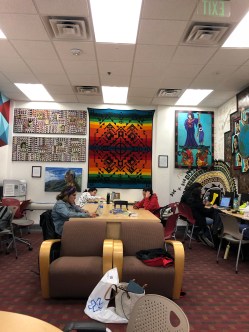
The Center for Ethnic Student Affairs is a space on campus where many students of color meet to study, socialize and meet with advisers.

One Latinx student talked about how it was hard for him to study with his study group because they were Trump supporters. He said he stopped even talking about it with them because it just “wasn’t worth it.” Multiple students mentioned how white people, mostly women in the examples they gave, would cry when confronted about  “problematic” comments. The Latinx students looked both frustrated and relieved when telling these stories, showing that they had been holding those feelings in for some time.

How are professors reacting to situations like these?

Vazquez said her professor only calls out overtly racist comments while letting ones that “aren’t as bad” slide through the cracks.

“It seems to [the students] like he’s validating their opinions when he shouldn’t be,” she said.

Karen, her sister, then spoke about her experience working at the news station at the school. She said she has been prevented from getting into events even when she had the correct credentials.

“My white male coworker even came out and said ‘she’s with me’ but they still wouldn’t let me in,” she said.

What do these stories have to do with anything? Well, everything.

If a student doesn’t feel comfortable and safe on campus, how will they ever be able to reach their full academic potential? The answer is they can’t. That is why the university has created spaces such as CESA for students of color to be able to meet and talk about their experiences in an area where they do feel safe. But is that enough? How will students be exposed to each other if they are only staying in certain places on campus? That then brings the question of whether it’s the job of students’ of color to teach white people how to be culturally sensitive.

Is it enough for the university to call out certain acts of racism but not what is happening in the classroom on a daily basis? How will it implement that? The university has begun to realize that something needs to be done, as it has added many new programs in recent years, but is it working?


Salt Lake County’s inland port: Helpful or harmful for the Latinx community?

Story and photos by KATHERINE ROGERS

Elitzer stood in the doorway of Franklin Elementary School’s gym on Feb. 28.
That evening, the gym hosted a panel about the proposed inland port that is to be built in Salt Lake County. She was watching the proceedings, but not participating in the questioning.

“I wish they would do something in Spanish,” says Elitzer, who asked that her last name not be used. She speaks English well, but it’s not her first language. Spanish is much more comfortable for her.

She is just one of many Latinx people who live near where the inland port is proposed to be built but know very little about it — even though this port could affect them the most, for better or for worse.

The proposed site heavily overlaps with Utah House District 23. This district belongs to Rep. Sandra Hollins, D-Salt Lake City. It also has the highest Latinx population in the state, with 47 percent of the district identifying as Hispanic or Latino, according to the demographic profile of the district.

An inland port is essentially a dry port. It is a place for trucks, planes and trains to meet to exchange and deliver cargo. In the age of online shopping and one-day shipping, a junction like this is helpful.

In the 2018 legislative session, the state passed a bill that would provide funding for an inland port to be built in northern Utah. This inland port is to be built in the northwest quadrant of Salt Lake County, west of Interstate 215 and on both sides of Interstate 80. The area is just north of 2700 South and creeps toward the Great Salt Lake. This would put the port near Salt Lake International Airport and the Union Pacific Rail line, according to the boundary map.

IP 1

Trucks driving down 5600 West, just south of Interstate 80, where the Inland Port is proposed to go.

In the most recent development in this story, Salt Lake City Mayor Jackie Biskupski just filed a lawsuit against the Inland Port Authority (IPA).

Hollins has concerns about the port. She worries that increased truck, plane and train traffic could mean worse air quality.

Questions about how transparent the IPA has been in this process have come up. It has held many meetings that are closed to the public. Hollins says she doesn’t feel like the IPA has been listening to the public like it should.

The state representative does recognize there is good that could come from the port.

A provision has been provided in the Inland Port Bill that requires part of the funding for the project to go toward affordable housing.

The inland port also, of course, could provide potential job growth for the nearby communities, including House District 23.

According to the demographic profile, Hollins’ district has many people who work in construction and the service industry. This port could create more jobs in those areas.

Thomas Wadsworth, director of corporate growth and business development for the governor’s office, reported at the meeting on Feb. 28, that there are incentives in place that would encourage businesses to provide wages at least 110 percent of the average wage in that industry in Salt Lake County.


IP 2.JPG

R.C. Willey and Dematic warehouses along 5300 West, near the proposed location.


However, Hollins expresses that she is concerned about how good those jobs will be. An incentive is not a guarantee. And even if these jobs provide livable wages, there is no promise that there will be room for the employees to grow and move up in the company.

The question that Hollins asks for the good of her constituents is, “Do the economic benefits outweigh the ecological problems?”

The IPA is aware that not everyone supports the port. Envision Utah, a group dedicated to helping Utah grow in a healthy way, has been hired to run public meetings and report back how people are feeling.

These meetings have been well attended. But most of the attendees at the Feb. 28 meeting were white. Even though the neighborhoods closest to the port are heavily Latinx, few of those residents are seen at this meeting.

Elitzer, the Latina woman who was there that night, said this was the first meeting about the inland port that she had attended.

She had heard about it through Hollins when Elitzer had taken a trip to the capitol with her West Side Leadership Institute class. Before that, she didn’t know about the port. Hearing about it now alarmed her.

She has a daughter who is asthmatic. She said she wants her daughter to be able to play outside and run around with the other kids. Utah already struggles with poor air quality. Increased air pollution could keep Elitzer’s little girl from being able to do that.

The potential for worse air quality near their home makes Elitzer worry, not just for her daughter, but for other children as well.

She had recently been to Primary Children’s Hospital and seeing all those children who have similar afflictions as her daughter broke her heart. “They shouldn’t have to live like that,” she said.

It was pointed out during the meeting that the inland port could provide job growth for the community. Elizter just shook her head. “We can get other jobs, in a healthy way,” she said.

Elitzer wants to make a difference in her community. Learning about this port is part of that. She plans to share this information with her friends, family and neighbors. She thinks that they need to know.

She believes that this inland port project is just focused on money. She said she also feels that the IPA does not care about what the people nearest the project think. If it did, Elitzer points out, wouldn’t it have provided some information in Spanish?

Latinx populations help the US economy to thrive

Story and photo by ZANE LAW

In recent years, with the presidency change and promises of a wall between bordering lands, southern immigrants have been the hot point of numerous conversations. While some argue that immigrants hurt the United States economy by stealing jobs and not paying taxes, other credible folks think just the opposite of the situation.

In regard to stealing jobs from American-born individuals, Alex Guzman says the community members create their own jobs and support each other as a collective Latinx whole. Being the CEO of the Utah Hispanic Chamber of Commerce, Guzman knows the working-class population and estimates that as many as 35,000 Hispanic individuals own businesses in Utah.

Whether documented or not, Guzman says they open businesses “not to be entrepreneurs, but to survive.” Those who cannot find jobs due to the lack of a social security number, discrimination, little education, and other reasons are able to open businesses and provide for their expanding families. These business owners are then able to pay it back to fellow immigrants by offering new jobs and opportunities to thousands of other people in similar situations.

While the community creates jobs for themselves and others by having a high number of business owners, another overlooked aspect of immigrant workers is the fact that they are willing to do whatever it takes to provide.

According to a talk at the Center for Latin American Studies at UC Berkeley, immigrants are more willing to move for work than native folk. Giovanni Peri explains that “immigrants’ willingness to move helps slow wage decline in stagnant regions and contributes to economic growth in booming ones.” They move away from regions that do not have enough jobs, allowing the locals to take the few available spots. Immigrants then move to bustling areas, with high demands for work, and are able to fill the positions that owners want to be filled, Peri says.

Alejandro Gutierrez, a Mexican-born man of 45, did just that. He originally moved to a town in California, but as the job market began to fill up, he found his way to Salt Lake City. Gutierrez now works as a dishwasher at the University of Utah’s Peterson Heritage Center, pays his taxes, and adds money to the economy.

While Guzman, Gutierrez, and others within the Latinx community create jobs and work hard for their money, Guzman says that the community also contributes plenty of money to the churning economic machine.

“We live la vida loca and we put our money in the market right away,” explains the enthusiastic business owner, marketing professional, and former Guatemalan senator. “La vida loca” translates to “the crazy life” and Guzman says this is the case for many Latinx individuals. They buy the foods they want, upgrade their cars, party and vacation frequently, and live carefree lives.

Guzman says the community finds it difficult to save, but he sees this as a learning experience for youth. He further backs up his lifestyle choices by saying the “spending helps to inspire a sense of generating income.” The philosophy is that when their kids see what money can bring and how much it costs to live well, they are more driven to earn for themselves.

These spending habits stretch further than the immigrants who Guzman has come to know in Utah, however. Anna Chavarria, a student in Colombia, explains that she and her family have difficulties with saving as well. The family of six lives in a three-bedroom home in Medellin, Colombia, but they enjoy things like motorcycles, fine dining, and huge block parties.

fullsizeoutput_1a9d

Anna Chavarria enjoys “la vida loca” in the sand dunes of Huacachina, Peru.

Chavarria says in a phone interview they would not cut the extravagance out for a more spacious house, explaining that they “live a fast-paced and fun life, and a squished home simply adds to the closeness of our family.” Both her mom and brother work seven days a week to provide such a life and she says she and her family would work just as hard if they lived in America. Chavarria has been in the Visa application process for approximately two years and says she has much to offer to the U.S.

Because Latinx community members often spend as fast as they earn, Guzman says the Latinx community is a major target for marketing as well. With his 25 years of experience in the field, he has found that the return on investment for this group is large.

Spanish-speaking outlets like Telemundo are greatly cheaper to advertise on than English-speaking sources. Then once the advertisements have done their job, Guzman also says Latinx people are very loyal to the brands they buy from. Companies are able to advertise their brands for less money, keep their customers for longer periods of time, and have peace of mind knowing the community will spend for as long as a paycheck is coming in.

The state of Utah and the country as a whole are filled with people similar to the likes of Alex Guzman, Alejandro Gutierrez, and the Chavarria family. According to a June 2018 article in the Salt Lake Tribune, the Latinx population even makes up at least 14 percent of the state’s residents. They are not an anomaly and are a community that will, no matter what, contribute to and affect the economy.

Mass incarceration, health disparities, the achievement gap: Is the Utah governor’s Multicultural Commission helping?

Story and photos by MEGAN CHRISTINE

“What is the concern, what is being done about it, and what can we do?”

Jacqueline Thompson, a member of the governor’s Multicultural Commission, said this was the commission’s approach to issues facing minorities in Utah.

The commission’s goals are to promote inclusiveness, cultivate trust between state government and ethnic communities, and improve educational resources regarding equity for the state.

The Utah Office of Multicultural Affairs and the commission was created in 2012 when Gov. Gary R. Herbert signed an executive order.

Rebecca Chavez-Houck, a former member of the Utah State House of Representatives and current commissioner, said the commission “continues in some ways to be a little bit of a controversial existence because the development of it is grounded in some controversy.”

Before 2012, there was the Department of Community and Culture, which employed a director of ethnic affairs. This department had oversight of the African American, Hispanic, Asian, and Pacific Islander affair offices. Each office had employees who were responsible for listening and responding to the needs of its respective community.

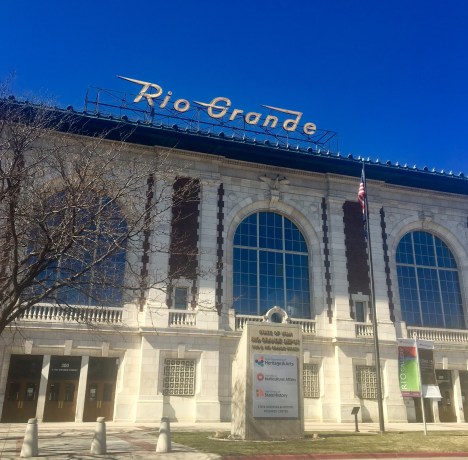
When the commission was created, this department and its individual offices were disbanded. The Department of Heritage and Arts now oversees the Utah Office of Multicultural Affairs and the Multicultural Commission.

Rio Grande

The Rio Grande building in Salt Lake City, home of the Utah Department of Heritage & Arts.

Chavez-Houck noted that the commission was developed in the middle of an economic recession when the executive branch was looking for places to cut. Some members of the community were against the elimination of the department and individual offices.

The commission is expected to listen to the needs of the community while also fulfilling the expectations of the governor. Chavez-Houck said that “sometimes it feels overwhelming that we’re trying to bring the voice of communities upward to the executive branch at the same time we’re trying to carry forward the executive branch’s priorities to the communities we represent.”

Thompson said the individual offices were able to work directly with communities one-on-one and could therefore have a more widespread impact.

Thompson also noted that though the staff at the office is small and consists of only three employees, they are “phenomenal.” She said that “if they (Utah Office of Multicultural Affairs) didn’t have the personnel they had, things wouldn’t get done because the staff is so outstanding and efficient.”

Jacqueline Thompson

Jacqueline Thompson, a current member of the governor’s Multicultural Commission.

Lt. Gov. Spencer Cox serves as co-chair of the commission as appointed in the executive order by the governor. Thompson said Cox is “always thinking outside of the box” and is conscious of being inclusive of all voices.

The 25 commissioners represent a wide variety of voices, and the large majority of them are community leaders in their respective industries, whether that be government, nonprofit, or business. Chavez-Houck is a former Utah legislator. Maria Garciaz is the CEO of Neighborworks, a nonprofit organization. Thompson is a state employee with years of experience in educational equity.

Chavez-Houck said, “I still sincerely believe that there is value in consolidating issues because communities of color share a lot of common concerns.” These are things like health disparities, mass incarceration and the school-to-prison pipeline, economic opportunity and development, and education and the achievement gap. “These things hit communities of color the same,” she said.

Garciaz said the commission structure is beneficial because “there’s good reciprocity. There are people on the commission who are community representatives and then you have the state department heads. There’s this exchange of information.”

Though the commission is able to have a wide impact because of the community leaders who serve on it, Garciaz noted that she would like to spread the work they do geographically. “When people hear commission, they assume they’re up on the hill (the Utah Capitol) and inaccessible,” she said. “I think we need to be able to visit other counties so that they’re aware that we’re here.”

The commission meets every two months, and the meetings are open the public. The agendas for previous meetings are available online. Recent topics of discussion include the hiring of an executive director for the Utah Office of Multicultural Affairs, the role of the commission in partnership with Intermountain Healthcare regarding work on the social determinants of health, and the Multicultural Youth Leadership Day.

Commissioners listen to the issues that are presented and then respond with feedback. They work collaboratively to come up with solutions to complex issues that face our community.

Those who want to join the commission must apply and be appointed by the governor. A term can be one, two, or three years long but commissioners serve at the pleasure of the governor and are subject to be removed at any time.

The commissioners assisted in the development of the Senior Leader Toolkit and Participant Course Journal, programs that are currently in their pilot phase among state agencies and community organizations. The goal of these trainings is to improve cross-cultural communication and to “sensitize people more than anything,” Garciaz said.

The Utah Office of Multicultural Affairs oversees the Multicultural Youth Leadership Day at the Capitol and the Multicultural Youth Leadership Summit. The commissioners offer input, consultation, guidance, and are invited to attend. About 1,000 kids of color come to listen to role models of color, but also to present on what they think is or is not working in their schools.

“When these students come to the conferences, they are already born leaders. They are acting in leadership capacities. We call them future leaders, but they really are present leaders, too,” Thompson said.

The commission is attempting to tackle problems communities of color face with help from community leaders and government officials. Its purpose is to ensure that these voices are heard and that minorities are being represented at a state level, because some believe that is not always done effectively through the Utah legislature.

Chavez-Houck said, “I’m looking at the legislature, and I’m looking at who’s up there, and I’m looking at my neighborhood, and I’m looking at the amazing people I know who are very diverse and I’m thinking, ‘If we’re truly a representative democracy, that does not look like our state. That body, the institution, they don’t look like the community.’”

Tomsik helping West Valley community one taco at a time

Story and photo by KOTRYNA LIEPINYTE

Patricia Tomsik starts her Monday mornings by boiling some water on the stove. The smell of coffee engulfs the cozy kitchen as she sits down and scribbles notes in her notebook, the news playing on a TV in the background. Tomsik lives in West Valley City, the largest Hispanic city in Utah with 37.7 percent of the Hispanic population residing here. The news continues to flash on her TV, showing updates on President Trump’s plan of building a wall. Tomsik watches intently.

“There’s more problems we have to deal with than this wall,” Tomsik says scoffingly, going back to writing in her notebook. She’s referring to the 13.8 percent poverty rate and the 5.4 percent unemployment rate West Valley City is notable for, as well as the high rate of suicide the state of Utah is facing.

Tomsik originally came from Ciudad Juárez, Chihuahua, and is used to the massive number of homicides that country faces, but “nothing like this” she says, referring to the suicide rates Utah is infamous for.

Tomsik’s son has struggled with depression and suicidal tendencies since he was a boy. She says that this is normal in a Hispanic community, especially with bullying in schools. “It’s just one of those things that you unfortunately have to deal with, and that’s just the reality,” Tomsik says, shaking her head. “I know other mothers are dealing with it too. It’s just sad.”

Miguel Alonso, a friend of Tomsik’s son, agrees. “We’ve been friends since junior high,” Alonso says, “and it’s kind of just an unspoken agreement that we all have to be there for each other.” Alonso is originally from Mexico City, and was forced to cross the border with his family to live a better life in the United States.

Alonso often spends his dinners at the Tomsik household. Tomsik hosts regular weekly meals at her home, inviting Alonso and his high school and college friends for a classic Mexican meal, complete with music and dancing. “It’s nice to get together,” she says. “We’re all just trying our best.”

While the community feels uneasy with news regarding President Trump’s wall, Tomsik tries to focus on the bigger issues at hand that the Hispanic community in Utah must face. Tomsik pays particular attention to the overall well-being of her community. While she hopes to help the community with depression, she knows it’s not an overnight project.

IMG_6033

Gabriel Moreno, a University of Utah student currently holding an internship in Washington, D.C., grew up with the Tomsik family.

Gabriel Moreno, a University of Utah student, is also attempting to find ways to cope with the issues the Hispanic community is facing. “I’m seeing everything first-hand here,” Moreno discusses over the phone while working out in Washington, D.C. “It’s just scary.”

Moreno originally emigrated from Columbia and grew up in Sandy, Utah. His passion lies in “Project Be Yourself,” a nonprofit organization focusing on mental illness in the state of Utah. “One of the most sickening things about this all,” he says, “is how easy it is to prevent these things. We just need to show the kids that there’s no bad culture, there’s no bad race. We’re all the same.”

By providing her neighborhood with fresh food and a listening ear, Tomsik hopes someone will begin to pay it forward so the good acts can spread. Alonso and Moreno assist as much as they can while also focusing on the online problem of cyber-bullying.

The trio works together in an attempt to help the Hispanic community thrive, but rarely see results. “It’s tough,” Moreno says. “I mean, we can’t just make jobs or say ‘stop bullying’ and expect it to stop. It’s a work-in-progress, but I don’t think any of us are planning on quitting any time soon.”

As Utah sits as the fifth highest in teen and young adult suicide rates, the trio is scrambling to find something to help counter this. Often times, the food and advice are not enough. Tomsik believes that communication and openness about mental health will be a step forward in the right direction. “We’re not talking enough about it,” she says, “and it needs to be talked about.”

As President Trump’s plan to build the wall continues to occupy the screen on the TV, Tomsik simply hums to herself as she resumes scribbling in her notebook, making a grocery list of ingredients for this week’s dinner. She sips her coffee while planning what meal she will prepare next.

Tomsik lives by a “we’ll cross that bridge when we get there” attitude, tackling a single problem at a time in the West Valley City community. “It’s hard to measure progress with something so intangible,” she says. “But we’re just going to assume it’s working and go from there.”


DREAMers at the U: One step to graduation

Story and photo by SHAUN AJAY

What does it feel like when you walk into a classroom? Do you fear integration? Assimilation? Deportation? Do you worry about your immigration status?

More undocumented immigrants, predominantly Latinx, enter the country and face daily challenges with their legal status, work, livelihood and education. Misconceptions have quickly spread that undocumented folks cannot pursue higher education and consequently secure a better job. Rivarola’s story tells us otherwise.

Alonso Rafael Reyna Rivarola was an undocumented immigrant himself. He moved to the United States from Peru at the age of 11 and has lived in Utah ever since. He attended the University of Utah in 2008 — a time when the Deferred Action for Children Arrivals policy, or DACA, did not exist. The DACA policy began in June 2012, right before Rivarola was finishing his final year at school. During his undergraduate years studying sociology, he worked with a group of scholars called The Mestizo Arts and Activism Collective. The group created a website that continues to serve as a center of information on the undocumented community and experience. It offers a list of scholarship resources for first-generation POC (people of color) college students and DREAMers (Development, Relief and Education for Alien Minors).

IMG_3577

Rivarola poses in front of a collage of DREAMers.

Fast forward to his master’s program in educational leadership and policy. Rivarola wrote a piece on the importance of undocumented student centers. A DREAMer himself, he became the first director of the Dream Center in the state of Utah in 2017. His personal experience allows him to provide support and services to students much like himself. “We work with everyone who enters our doors; those who are historically forgotten in higher education,” he said. Rivarola also became the first advisor at the Center for Ethnic Student Affairs (CESA). In that role, he focuses on working with other undocumented students on campus.

The Dream Center consists of a four-person team that works with undocumented students and their families to facilitate their academic success and graduation. The center helps students with their academic pathway, from individual mentorship to scholarship support. 

The Salt Lake Tribune reported in 2018 that Hispanics are now Utah’s largest minority. They comprise 14 percent of the state’s population, or 434,288 people. 

In Utah, some laws were made to help undocumented students access more affordable education, provided they have graduated from a local high school. For example, HB 144 allows these students to pay in-state tuition. But inversely, a law passed in 2009, SB 81, prevents them from receiving private funding. And now, under SB 253, passed in 2015, students can access federal benefits for their education. 

It’s a complex system that the Dream Center has to work with. And for those who are affected, the question, “Will I be able to afford college?” always lingers silently under the bills that pass in the country or state.

For the Latinx community, whether undocumented or not, higher education is a steep climb that many cannot risk to take. Jasmin Valdivia is a 21-year-old Latina, born and raised in Provo, a city just along the Wasatch Mountain Front. Her parents had both migrated from Mexico. In 2016, she graduated from high school in a majority white neighborhood in Springville. During her high school years, Valdivia involved herself with ballet, orchestra, and cheer — activities that weren’t typical for Latinas, she said.

“I knew what was expected of me as a minority,” she said. Valdivia compared her outsider-insider position of living in Utah to holding a snow globe and looking inside. In her last year of high school, her school counselor only recommended Utah Valley University — a school, she said, that most Latinx students attended. Valdivia considers herself to be an adamant person. She believed in her own abilities and didn’t subject herself to the stereotypes that people imposed on her. She applied and was accepted to the University of Utah Asia Campus, located in South Korea.

Valdivia is the first in her family to attend college. She said her mother graduated from high school and her dad from elementary school. Her grandfather can barely read or write in Spanish. Her first cousin attended a semester in college before getting pregnant and dropping out. A majority of her Latinx friends do fall into the stereotype of settling with just a high school degree. “It’s usually the cultural issue of, ‘Well, my parents didn’t go to college and they’re doing fine,’ and when you think like that, you start to limit yourself,” she said

Valdivia said a friend of hers was brought illegally to the U.S from Mexico. She was a straight-A student in school and a talented musician in her orchestra. Valdivia also said her friend, due to her legal status, was unable to get financial aid to pursue a good music program in college. Now, three years since high school, Valdivia’s friend is still unable to attend university.

What Valdivia hopes to see is a system that is more supportive of giving the Latinx population equal opportunities to pursue their ambitions. She is currently working on her bachelor’s degree in communication and aspires to work in the news field to represent her culture and ethnicity.

With representation on one hand and education on the other, Dream Center Director Rivarola said he believes these elements should work together. He wants more Latinxs pursuing education and eventually become future professors, teachers and paraprofessionals. He said a lot of Latinx students learn typically in their second language, as opposed to their native Spanish. Seeing teachers like themselves serves as an important indicator to strive for success and ultimately leads them to different fields of studies. The Dream Center at the University of Utah remains an active system for any student to reach out to and ask for help.