Salt Lake City hopes to erase the school-to-prison pipeline

Story, pictures, and infographic by ZANE LAW

The United States of America, according to a Prison Policy article, imprisons more people per capita than any other country, with approximately 2.3 million imprisoned individuals. Of this captive population, the article also says there is a large number of juvenile and young adult offenders. The school-to-prison pipeline has been used to describe this odd trend and what might be behind it.

The ACLU, or American Civil Liberties Union, talks of “zero tolerance” policies and police officers on campuses as being issues. The organization’s website says these policies criminalize behaviors that should easily be handled by the school or teachers. Forcing students to negatively interact with law enforcement at such a young age leaves them with a bad taste for both school and law enforcement officers.

In an article by the  Utah Public Policy Clinic, part of the S.J. Quinney College of Law, researchers state that the criminalizing of behaviors is also detrimental to the dropout rate of students. Students who are suspended once are twice as likely to drop out, while students with three or more suspensions are five times more likely. The clinic notes that by the end of suspensions, school disconnectedness, a feeling of exclusion, and lagging behind in school work are common.

Jeremy Robbins, a half-Colombian man, speaks to how detrimental suspension and expulsion are to learning experiences and young lives. In a phone interview, he spoke about an instance in which he and his friends played a prank on their California classmates. They tossed stink bombs inside the lockers of five people as they ran through their high school halls. While Robbins agrees that his behavior was childish and deviant, he is still upset by the punishments given. His white friends were given detentions and community service requirements, but Robbins was expelled for the exact same actions.

Robbins remembers feeling worthless and without hope. He never went back to school, but instead went to work in the construction industry. Once he was kicked out of his home at age 18, as his parents had experienced before him, he had no diploma and not enough money to live.

The California native wished to find a better job to support himself, but no one wanted a high school dropout among their ranks. Robbins says he fell back on crime and spent his days robbing stores. He was caught and charged with felony grand theft, leaving him with a criminal record and an even slimmer chance of landing a good job.

Emphasizing Jeremy Robbins’ experience and touching upon local issues, the article by the Utah Public Policy Clinic notes that 29 percent of the Utah Latinx population drops out of school. This is 16 percent more than white students. These disproportionate dropout rates lead to higher incarceration rates, as the clinic also states that one-third of Utah State Prison inmates are dropouts.


Screen Shot 2019-04-10 at 2.50.03 PM.png

Information gathered from Utah Public Policy Clinic and the Federal Bureau of Prisons.

The Public Policy Clinic says that dropouts are three and a half times more likely to be arrested. With Latinxs dropping out at higher rates and with a far higher probability of being arrested after leaving school, the Federal Bureau of Prisons reports that the prison system holds a 32.3 percent Hispanic demographic.

Shawn Clay, a pastor for New Beginnings Ministry, an occasional preacher at Salt Lake City Mission, and an ex-convict, said in an interview that we need to start tackling this inequality issue immediately. Clay says the first step is to “admit that it (racism) exists. Racism out here is done with a smile.” He believes that while authoritative people in Utah act kindly, they are still treating people of color unfairly.

Clay explains that because of the color of his own skin, he was treated differently. He was hit with harsher charges and given more time in jail than a white counterpart would have received. While Clay hated his time in jail, it is the lasting effects on his life that he despises most. Clay is not currently allowed to drive, he has a much harder time finding jobs, and he missed out on memories with loved ones. Clay says he is a far better person than the justice system gives him credit for, and is proud of his coined phrase, “#morethanmyrapsheet.”

The first parole officer to Clay and a cop of 20 years, Shannon Cox, even speaks of the racist ways of her troop and the criminal justice system. She tells of officers referring to people of color as the “bad guys” and knows she wants to change something about that narrative. 

Both Clay and Cox attended a “Week Against Prisons” event in April, hosted by ACLU and the U’s College of Social Work, to discuss racial inequality, police injustice, and the school-to-prison pipeline.

While Cox says that helping mistreated adults transition from jail into normal life is rewarding, she also realizes that underrepresented kids need attention. Cox says she wants to “help harmed kids to not become harmful adults” because she knows just how detrimental the pipeline is. If troubled kids are not cared for early on, she says the system simply amplifies their negative situations. 

To help with her plan of guiding others, Shannon Cox founded Journey of Hope in 2014. The organization’s mission statement explains that it seeks “to improve the lives of harmed and justice-involved women and girls by empowering them through gender-responsive case-management and mentorship.” Cox and her organization have helped more than 1,500 women and girls, with 250 of those having recently left prison. The website notes that the recidivism, or tendency to re-offend after leaving prison, is 17 percent while the state rate is 67 percent. 

People of color are still mistreated nationwide, but there are also plenty of folks like Clay and Cox looking to do their part. Salt Lake City, in particular, has been doing a lot to raise its voice. In addition to places like Journey of Hope and Salt Lake City Mission, Undocuweek and Week Against Prisons are both recent events held at the University of Utah.


This slideshow requires JavaScript.

The cultural significance of soccer in the Latinx community

Story and photo gallery by TYSON ALDRIDGE

Soccer, or futbol as it is called in Latin America, is the most popular sport in the Latinx community. Children from the time they are born are given a soccer ball to play with, or share a couch with a loved one to watch a game. That is why the love of soccer is so deep, it is firmly implanted in their day-to-day family lives.

Carlos Deschapelles of Univision Communications INC. explained in a 2016 article that Latinx communities have a love for soccer. “Look at the numbers: a whopping 84% of Hispanics follow the sport, compared to 47% of non-hispanics.” Deschapelles also said that 76 percent of kids and teens who watched the Copa America Centenario on Univision did so with an adult.

Grant Barnes, sports editor for the Tulane Hullabaloo, said in his 2018 article, “In 2017, Latinx people accounted for 68 percent of soccer viewership in the U.S. alone. Univision has estimated that approximately 84 percent of Latinx people follow the sport, and that they watch approximately three times as much soccer as non-Latinxs.”

It is no surprise that Latinx people in the U.S. are responsible for most of the soccer viewership in the U.S. because as Deschapelles said, “Based on U.S. census data, approximately 75% of U.S. Hispanics will find their country of origin represented by one of the teams at the Gold Cup in the Summer.” This gives the Latinx community here in the U.S. a sense of pride and excitement when their team is represented at the Gold Cup.

The U.S. does a great job of trying to keep the Latinx culture involved by hosting foreign tournaments in the U.S. Deschapelles explained, “By keeping Hispanics connected to their culture and their home country through tournaments that take place in the U.S. — like the 2016 Copa America Centenario and 2017 Gold Cup — soccer allows them to acknowledge and thrive in their duality.”

Dominic Militello is the head coach of the Cottonwood High School soccer team. Just watching the practice, it is easy to tell that these players absolutely have a burning passion for the game. Senior defender Josue Calderon said, “We were born with it, we basically grew up with our parents playing it and showing us the ways and their love for it.”

The great thing about this connection to the sport that the Latinx community has is that it brings them closer together as family and as friends. Whether it is through their local school team or club, or even recreational leagues that they play in on the weekends, they love the sense of family and community the sport brings them.

Christian Alfero, a sophomore midfielder, said that soccer has been a huge component for him and his family his whole life. He said, “I grew up watching the game and seeing the professionals on TV, and once the games were over my family would go outside and have 5 vs. 5 games.”

Brandon Morales, a sophomore defender, said, “I think it’s more like a family. It makes you act like you are actually a part of a family. You can relate to each other better because we are all Hispanic, and having that similarity with our culture makes us like each other more.”

Each of the players stressed family as the main component of their love for soccer. Sophomore forward Kody Flores said, “Ever since I was little my first toy was a ball. When you’re playing soccer it makes you feel at home.”

The Cottonwood High players’ faces lit up when talking about the competitiveness that soccer brings them within their community. Senior defender Calderon said, “We have a lot of Mexican league teams that we have friends and family playing on, and you look forward to playing against your friends.”

Soccer also brings this community a sense of pride. Morales, the sophomore defender,  said, “Mexico has always been good at soccer. It is one of the things that they are really good at and have a ton of talent when it comes to soccer. Just showing it off and displaying it feels good.”

The Cottonwood High School soccer team puts a tremendous effort toward getting better daily. They practice from 3 in the afternoon until 4:30 Monday through Friday, with games mixed in on Tuesdays and Thursdays. The team has Latinx representation, and as result, spectators can see the passion go from them to the rest of the team. Coach Militello pushes his team to succeed. And that is shown through constant instruction and coaching to ensure each player is doing their best. Sophomore defender Alejandro Barahona, said, “Being on this team and playing soccer makes us more like a family, and brings us closer together as a team.”

This slideshow requires JavaScript.


You are not crazy: Mental health stigma among Latinx community

Story and photos by SAYAKA KOCHI

One of the frequently discussed topics is that Latinx people are less likely to seek mental health treatment by themselves. Even when they are suffering from severe mental disorders, asking someone for help isn’t easy. There are several reasons why they cannot signal SOS.

“I didn’t want to admit that I was not OK,” Diana Aguilera said. Aguilera was born in Mexico and moved to Utah at age 10. She is a Peer Programs coordinator at the Latino Behavioral Health Services (LBHS) located at 3471 S. West Temple in Salt Lake City. LBHS is a nonprofit organization for unserved Latinx and Hispanic Utah citizens with mental illnesses, co-founded by Jacqueline Gomez-Arias and other contributors.

Before Aguilera became involved in LBHS, she had been suffering from depression, triggered by a harsh breakup. Because of her mental breakdown, she said she gave up school, her desire to be a social worker, and full-time work.

“I went to bed every day and like ‘please, don’t wake up anymore.’ I asked my body to give up because I couldn’t literally go on anymore,” Aguilera said. “I didn’t like to talk about it. I tried to hide it. Because I didn’t want my family to feel guilty.”

While she was ignoring her mental breakdown, she started volunteering at LBHS to help others in 2015. There, she said she met people with depression and those who have overcome their mental illnesses. Through being with them, she said she could finally acknowledge that she had to seek help.

“I met one of the founding members, Jacqueline [Gomez-Arias]. She was so open about her mental health issues. Through the conversation with her, she was like ‘you need help. You have depression. You have to seek help,’” Aguilera said. “Hearing from her, it was reassuring that it’s OK, I’ll be fine.”

With the help of Gomez-Arias and Aguilera’s sister, she was able to find a therapist and start fighting against her depression. At this point, health insurance is one of the main reasons that Latinx people cannot seek treatment. According to a report by the National Alliance on Mental Illness (NAMI), one-third of Latinx immigrants are uninsured.

“I was really lucky and privileged that I had health insurance. Not everyone has health insurance. Not everyone can afford a therapist,” Aguilera said.

After several years of taking multiple medications and attending therapy, she said her mental health slowly but steadily recovered.

“Right now, I’m doing very well,” Aguilera said. “I don’t think that is a magic thing. It’s just a huge combination of everything.”

Aguilera also explained the importance of belonging in the community. “I’ve gone through therapy but that wasn’t super enough. For my recovery, I needed my community. Latino Behavioral has been my community. That was the most important thing for me.”

Like Aguilera, Carla Astorga had also suffered from mental breakdown for a few decades. Astorga was born and raised in Lima, Peru, which was a “corrupted” place for her to live. Through a lot of traumatic events from her childhood, Astorga said that her mind was broken. To escape from such a harsh environment, she said she decided to move to Utah in 2005.

“I didn’t recognize my symptoms at first. I felt sadness for whole days. So I didn’t know that it became a depression,” Astorga said.

Ten years had passed since she escaped from her country, but she said her symptoms reached such a level that she couldn’t stand them anymore.

“Anxiety, depression, panic attack, paranoid, fear — everything was starting to growing up and growing up,” Astorga said. “I started to see things that were not there. One day, I was driving to send my kids to school. After that, I went to the police station, because I smelled a bomb in my car. Police checked my car, but there was no bomb.”

At this moment, Astorga said she realized for the first time that she had a mental illness. She then decided to take treatment. As a first step, she came to visit LBHS to pull herself out of the darkness. She said she also took psychiatric medication, therapy, and some training provided by NAMI, which is the nation’s largest mental health organization. Over a couple of years going through hard times, she could finally overcome her mental disorder.

“The most successful part of my recovery was to be able to find one place with my own culture and language that I could feel like I was at home,” Astorga said.

Ever since her symptoms improved, she has been helping people at LBHS as a peer supporter and at NAMI as a Wasatch/Summit affiliate leader.

“I didn’t see enough sources with my own language in my area. Latino people need more sources for mental health,” Astorga said. “When I was getting recovered, I started to be aware that I had confidence and trusted myself. So I started thinking that I wanted to help other people.”

Astorga said a lack of knowledge is the main issue for Latinx people when they develop mental illnesses.

“In my culture, if you go to a psychologist or a doctor to take medicines, you are crazy,” Astorga said.

As Astorga pointed out, finding a peer mentor who has the same cultural background is really hard for underrepresented minorities.

Laiyan Bawadeen, a counseling intern for international students at the University of Utah, addressed this cultural difference issue from a counselor’s perspective.

“To address cultural differences in general, it is important that a counselor uses a multicultural viewpoint where they approach counseling through the context of the student’s world and culture while their own values or bias is not more important than that of the student,” Bawadeen said in an email interview.

Bawadeen is half Taiwanese and half Sri Lankan, and she is pursuing her master’s degree in clinical and mental health counseling at the U. As a member of the minority group, Bawadeen also suggested the importance of correct knowledge about mental treatment.

“I think demystifying what mental health [is], understanding what a counseling session looks like and what to expect can help demystify the counseling process, remove the stigma around mental health and make it easier for individuals to seek help,” Bawadeen said.

Seeking help is not easy for Latinx and other minority people. This might be because of the language barrier, not having health insurance, stigma, or caring so much about families or those who are closest to them. However, at some point, they need help.

Astorga said, “Latino[x] people are very strong. They were fighters or warriors. So they say they can do this alone, but they can’t.”


This slideshow requires JavaScript.

Dual oppression living Latinx and LGBTQ+

Story by Kara D. Rhodes

There are communities people join and there are communities people are born into. In some instances, people are born into two communities that do give strength but attached is oppression. Dual minority has a lot of weight to it but there is courage in numbers. According to the Human Rights Campaign, “Data analysis by the Williams Institute reveals there are approximately 1.4 million LGBT Latinx adults currently living in the United States.” This is a mass of people who are living with, as far as we are aware, dual oppression and this can be a difficult road to navigate.

Maren Simmons, 22, has had challenges of her own. Coming from a strict religious background within the Church of Jesus Christ of Latter-day Saints, she says, “When I’m out in public or on a date I get stared at or even given dirty looks.”

Both of these communities, LGBTQ+ and Latinx, have a history of being shamed publicly for things they cannot control. Simmons advised younger LGBTQ and Latinx folks, “Don’t ever change yourself because someone else thinks it is wrong. I found that opening up to friends and family about how I felt made me feel better.”

The Human Rights Campaign lists the most important issues these folks face: immigration, language and access barriers, economic insecurity, violence and harassment, and HIV and health inequity. According to the HRC, 72 percent of LGBTQ+ Latinx youth have heard their family say something negative about LGBTQ people.

Asset_Story2

Eva Lopez creator of Orgullo Utah.

Eva Lopez, a 22-year-old student at the University of Utah, was missing the representation and diversity among the LGBTQ community so she created a space for it. Orgullo Utah is a queer space led and formed by Latinx folk. Lopez has always been proud of her Mexican heritage but she said she also faced challenges because of it. “The identity of being Mexican has its layers of racial challenges from micro-aggression to policy exclusion. Culturally and ethnically, I am Mexican and very proud it!”

Acknowledging and embracing her intersecting identities eventually brought peace to Lopez. “I came out to myself and was able to work through the challenges of acceptance and celebration. Coming from a conservative, Catholic, Latino background, I struggled immensely finding the peace I desperately craved,” Lopez said. After acceptance, she discovered a state of authenticity and happiness.

Her aspirations don’t stop at Orgullo Utah. There are many things she believes the U could to to support Latinx and LGBTQ folks. Lopez suggests, “We need more trained individuals to help navigate healthy conversations around identity. We also need to make sure that faculty and students are not closeting queer students with dress-codes … and enabling healthy dialogue within classrooms.” There is an LGBTQ Resource Center on campus that Lopez is forever grateful for, but she said there is always room for improvement. Asset_Story2


Like Lopez, Cristobal Villegas experiences challenges as a Latinx and LGBTQ person. “My experience as a gay, latinx man is complex and multi-faceted. I grew up LDS (Latter-day Saint) and served a church mission. My family has had a strong tie to machismo and traditional gender roles,” Villegas said.

Villegas’ coming-out story isn’t very positive because of the conservative household he grew up in. “Coming out to a socially conservative household was met with anger and confusion,” he said. Villegas suggests that Utah could better serve their community by recognizing that people like Villegas exist and providing access to better healthcare.   

“It is important to understand oneself as that will lead to more justice for more people. My struggle is connected to everyone else’s, and as such I must be knowledgeable of how I fit in to oppressive systems and institutions and receive oppression from systems and institutions,” says Villegas on advice he’d give to Latinx LGBTQ+ youth. 


The can of beans in your pantry could save a family

Story and photo by KOTRYNA LIEPINYTE

More than 21,833.

That’s the number of people who reported their income levels as below the poverty line from the 133,656 people who live in West Valley City.

West Valley City has a rate of poverty that is higher than in other Utah cities. “I have seen families with little kids go to bed hungry,” says resident Omar Reyes, shaking his head, “It’s wild.”

Although Reyes himself doesn’t face the issue firsthand, others do. Reyes lived next to a struggling community and researched the issues. Poverty does not necessarily connote starvation, however. Often times, poverty in the United States leads to malnutrition that  leads to higher risk of disease.

The diseases tend to be foreign to us, which then require doctor’s assistance. However, the families who deal with these illnesses don’t have the financial aid for healthcare, either. Unfortunately, these families choose to suffer in silence, compromising their life instead of facing debt they may be unable to repay.

Poverty also does not have one face. It can be seen in the most inconspicuous places, even right in front of your eyes. Poverty is overlooked in the United States because of the set stereotypes placed upon it. It’s a common misconception that a person living under the poverty line must look homeless and starving.

ed for story 2

Edwardo Hurtado, a student at the University of Utah, stocking up on some Otter Pops to distribute to the food banks.

Edwardo Hurtado, a student at the University of Utah, debunks this stereotype. “It’s incredibly frustrating when people think you have to look poor,” he says. “These people don’t look poor. These people just can’t afford good groceries. They can’t afford their bills and they can’t afford their healthcare.”

Hurtado stresses the importance of food drives in the community. “It’s the easiest way to help out,” he states. “Just bring cans of food.” The Utah Food Bank accepts donations year-round at most Harmon’s locations. You can also donate money directly to the food bank on the website.

Having done food drives in areas of South America, Hurtado hopes to bring the same success from the South American drives to the local communities here. “We helped a lot of families down there,” Hurtado says, “and we’re just hoping to bring the same gusto here.”

Hurtado works closely with the food drives in West Valley City, including Utah Community Action and the Community Action Program food pantry. He volunteers his time serving the residents and helps prepare emergency packets. For information on how to volunteer, call (801) 972-6661.

Gabriel Alfaro, a resident in West Valley City, thinks back on the time his family was below the poverty line. “You adapt,” he begins in his response email, “but it’s terrifying. The worst part is not knowing how long you’ll be in that grey area.”

Alfaro also helps with food drives when he can. Alfaro and his family often make care packages for their neighbors who are still living in poverty. “We know what it’s like to go to bed without food,” he writes. “And now that we don’t, we want to help our friends who still do.”

The care packages typically consist of nonperishable food items along with blankets and socks. Alfaro’s family makes and distributes about five care packages a week, first to families whom they know and then to strangers. They knock on doors and leave the packages in mailboxes or on front porches.

The Salt Lake Tribune reported in 2015 that the racial segregation around the poverty line was huge. White people below the poverty line live on the east side of the city, while minorities below the poverty line live on the west side. On the east side, 16.2 percent of those residents live below the poverty line and 32.5 percent of that poor population are minorities.

On the west side, 17.1 percent of the population is poor and 68.8 percent of that population are minorities. While the poverty rate has gone down over the years, the minority rate has increased.

“Minority is the majority in West Valley, and it’s just going to keep growing,” Alfaro says. “A big chunk of those guys live off of food stamps.”

RoadSnacks compiled a list of the top-10 poorest places in Utah for 2019, and while West Valley City dodged the list, the feeling of fear still hovers. “I couldn’t imagine living in this place of limbo where you don’t know if you’re going to get dinner or not,” Reyes says.

Hurtado’s call to action is simply looking at your pantry. “Chances are, you probably have food in there that you haven’t eaten, and don’t plan to,” he says. “When you look at that food, imagine how stoked a starving family would be to have it? Put it in your car and next time you’re at Harmons, drop it off. And hey, you just fed a family.”

Why Latinx representation in leadership roles is important for the success of Latinx children

Story by TYSON ALDRIDGE

The importance of role models in everyday life cannot be underestimated. Children anywhere from ages 3 to 16 look for an older role model whom they can look up to and learn from. Most people can think back to when they were younger and remember who their role models were. Sometimes these role models can even help shape a young child’s future career or passion. But oftentimes for young children of Latinx descent it can be hard to find positive role models in important positions. That is why Latinx representation in leadership roles is vital for the success of Latinx children.

According to a 2011 article, “In 2008, only 28 percent of traditional college-age Hispanics were in college, up from 17 percent two decades earlier.” The importance of roles models for young Latinx youth is stressed throughout this article, and with positive role models the author thinks this could result in more Latinx students attending college, or applying for positions they may not have otherwise.

Having legislators, teachers, coaches, or athletes to look up to can help a younger generation dream bigger and truly believe that they one day can be in a prominent leadership role.

Former Utah State House Representative Rebecca Chavez-Houck says, “The reason why it’s so important is because if we are not the anomaly anymore, if we’re seen as the norm, if we’re seen as a default, that anybody can be a legislator, anybody can be a leader, that you’re not making this image in your head, ‘a leader is x, this is what HE looks like’ more often than not.”

Chavez-Houck also explained that the reason she got into politics was because she wanted to help diversify the state government. She attended an event where she saw all of the representatives from Utah and she said she was shocked by the lack of diversity that was represented. So she took it upon herself to get involved in politics and give the Latinx community of Utah a voice in the capitol. And in doing so, little girls and boys can see a Latinx leader in the government and aspire to possibly be in a leadership role someday.

Cherise Tolbert, who works for latpro.com, said in a 2018 article that “cultural, ethnic, and gender-related barriers are too easily accepted as part of one’s identity. One could assume that without role models, Latina women cannot become nonprofit leaders. I think a young latina woman who sees an executive board member, whose contributions inspire and command respect, will want to follow the board member’s footsteps.”

Erlinda J. Martinez, the current president of Santa Ana College in Southern California,  said in an email, “It is very important that we have role models in every profession; that students see teachers like themselves, that defendants see attorneys and judges like themselves , etc.” With the number of the Latinx population growing in the United States, it is vital to have representation in leadership roles. Martinez added, “If children and students see themselves in others it becomes easier to believe that they too can become anything they want!”

Martinez explained how having positive role models can make a drastic difference in the future. She said, “Once there are role models in professional/leadership positions it leads to decision making that is in keeping with valuing diversity and inclusion.” This is essentially where a domino effect would take place. “More Latinos become educated. More Latinos are hired or promoted. The justice system changes. The education system changes. The economics changes, etc.,” Martinez said.

DavidIbarra pic #1

David Ibarra is in the process of running for mayor. Photo by Tyson Aldridge.

David Ibarra, a current candidate for Salt Lake City mayor, said in a phone interview, “It’s important for all parts of our community to participate and to be represented. The Latino community is going to be the majority community shortly in America.” Ibarra stressed the importance of Latinxs getting out and supporting their candidate to ensure that they are represented at all levels.

Being a role model can be a very tough road, but the story you get along the way can be inspiring. This held true when Ibarra said, “Anytime that a Latino breaks through it is an example that it is possible for anyone. I was brought up in foster homes, and have been a dishwasher at a restaurant. Ten years later I owned the restaurant through hard work and perseverance.”

resize for Krissi EDIT

Dave Ibarra poses in front of his “Let’s think Big” poster. Photo courtesy of the Dave Ibarra for Mayor campaign.

The biggest thing stressed through all the interviews was vision. Being able to see yourself in a leadership role because the person in that role is like you. Ibarra said, “I share my story only for the benefit of the youth that if it can happen to me, then it can happen to you. It breaks through the glass and makes them believe that it is possible. Latinx in politics is huge because not only can I think I can do it, I know I can.”

Positive Latinx role models are vital for the future. Having Latinx leadership will give kids a higher bar to aim for. It can help give them the mindset that they can be in an important position. “We pursue what we see,” Rebecca Chavez-Houck said. “And if children do not see people that look like them that have their experiences, that have their perspective that represent their communities, then they don’t see that as an opportunity for themselves.”

Enhancing Utah’s mental health awareness among Latino(x) community

Story and photos by BRIANNA WINN

According to MentalHealth.gov, mental health is our emotional, psychological and social well-being. From childhood to adolescence, mental health affects how we think, feel and act. It affects every single human being.

Some factors that contribute to mental health are biological factors, life experiences and whether there is family history of mental health problems.

When people have positive mental health, they are able to realize their full potential, cope with the stresses of life, work productively and be a contributing member to society or their community, according to MentalHealth.gov.

The Latino Behavioral Health Services program is a nonprofit organization located at 3471 S. West Temple in Salt Lake City. This program is working to minimize the disparities Latinos are facing with regards to mental health in Utah.

According to the website, LBHS is a peer-run organization. It is used to enhance mental health awareness and the well-being of people with mental illness, their caregivers and loved ones through support, education, empowerment and facilitation of resources and services.

The National Alliance on Mental Illness (NAMI) says common mental health disorders among Latinos are generalized anxiety disorder, major depression, post traumatic stress disorder and alcoholism.

Latinos are less likely to seek mental health treatment, according to NAMI. It cites many reasons for this, including lack of information and a misunderstanding about mental health, privacy concerns, language barriers, lack of health insurance, misdiagnosis, legal status, natural medicine and home remedies, and faith and spirituality

According to the Census Bureau, one of Utah’s most underserved populations is the Latino population. Between 2007 to 2011, 22.5 percent of Hispanics living in Utah were below the poverty line compared to the overall population.

Margarita Geraldo, a parent at LBHS teaching families about mental illness, said, “Depression is a mental illness. This illuminated my relationship with my daughter and taught me how to treat me daughter.” Geraldo’s daughter suffers from depression.

Unfortunately, Latinos face disparities that make it difficult for them to receive quality treatment.

Poverty and wage gaps are also contributing factors to mental health problems.

The Utah Department of Health, and Center for Multicultural Health report found that major depression in Hispanics is almost twice that of all Utahns.

According to the Centers for Disease Control and Prevention, Latino youths attempt suicide at rates that are 8.2 percent higher than their white non-Hispanic peers.

Leticia Frias, cofounder of LBHS, said, “I have a child, a son, who is 22 years old. He is one of the things that motivated me the most to be here.”

She added, “The first thing I learned is how to be a better leader, how to have sympathy and understanding for people in the community.”

LBHS was created to change these statistics mentioned above, and the lives of the Latinos they represent.

While raising awareness about mental illness, staff strive to increase the number of Latinos in Utah who are maintaining recovery from mental illness.

LBHS also strives to empower Latinos in recovery to give back to their community and impact the mental health system in Utah to be more culturally and linguistically responsive.

Teresa Molina, a co-ounder of LBHS, has been in peer recovery since 1989. She became a clinician and researcher as part of her recovery process. She volunteers as an instructor at LBHS.

“When people have the opportunity to contribute, to be looked at as the solution rather than the problem, people will flourish and find solutions,” Molina said.

LBHS began in 2011 by community residents and was later founded in 2013 and given nonprofit status shortly after. It has grown with the support of their strong partners, one of the being the University of Utah. They currently serve over 600 Latinos annually, according to their website.

“Latino behavioral health services is an effort from the community to build its own structure and organization base so people can take turns, creating a body that exists and survives all the waves that people have in their lives,” Molina said.

The staff and all people involved in the program including teachers, therapists, and administrators, have been affected by both mental illness and minority status.

“The solutions are within the people. It’s almost like throwing a rock in the lake, you can’t stop the ripples,” Molina said.

LBHS states on the website, “We provide them with training, new skills, and opportunities to teach or engage in outreach. In this way our programs are sustainable and build capacity into families and communities. Through this process, we seek to increase knowledge about mental illness in the community, reduce stigma, and empower people to create change.”

By partnering with existing agencies, this organization hopes to bring diagnosis, treatment, information, and intervention for substance abuse, domestic violence, and mental illness to everyone in the community.

If you or someone you know is dealing with mental health issues, you can find contact information by calling the National Treatment Referral Helpline at 800-662-HELP (4357).


This slideshow requires JavaScript.


Pride, success and accomplishments: Three Hispanic influencers share their stories

Story and photos by LINA SONG

The Hispanic community is not only continuing to grow across the United States but also making many accomplishments that shape the community for the better. A former member of the Utah State House of Representatives and two students attending the University of Utah share their thoughts about the achievements they built for their community in Utah. The three members of the Hispanic community have contributed their talents, dedication, and success to improve and make a change.

Rebecca Chavez-Houck

Rebecca Chavez-Houck, a former member of the Utah State House of Representatives, explains her journey of breaking the stereotypes imposed on Hispanic woman. 

Chavez-Houck’s journey started after she graduated from the University of Utah in 1982 and worked for a small newspaper firm in Wyoming. After working there, she moved back to Utah and started working in public relations. As she was getting into politics, she realized that the legislature did not represent the community in Utah.

In order to represent the Hispanic community, Chavez-Houck was elected to become one of the member in the Utah State House. By being a woman in a male-dominated industry, she was able to break the public’s notion of a representative being a white male. Chavez-Houck discussed the Latin phrase “Vox Populi,” which means the “voice of the people.” She always remembered this phrase when she was working as a member of the House.

“I was the conduit to make change and to be that voice,” Chavez-Houck said proudly. “We were there to be the voices of the people.”

The influence of her parents helped her realize the importance of education and supporting one another within a community. By using her journalist side through being an observer and by understanding her views and being self-critical, Chavez-Houck accomplished to accentuate the Hispanic community’s strengths.

Neida Munguia

Neida Munguia, a sophomore at the University of Utah, was born in Salt Lake City but was raised in New Jersey. Munguia’s parents are from Michoacán in Mexico. Munguia grew up in a very diverse community. She returned to Utah for high school. During those years, she was the head of multiple Latin clubs. Munguia was most active in the club Latinos In Action and continues to participate to this day.

“Since LIA took off in Utah, I was able to help our sister programs in Florida, Texas, Idaho, and California take off as a resource appointed by LIA.” Munguia said.

picture2

Munguia believes that her community has flourished and enriched the United States which brings a sense of familiarity.

Munguia discussed the events that she started while she was in high school. The first event was the “Dia de Los Muertos” dance, which was created in order to portray the beauty of celebration for the day of the dead in Mexico. Another event was the implementation of day care for parents with young children during school events. They included providing translation services and offering tutoring to the parents. Through these achievements, Munguia wants to show and remind students within her community that they are capable of great things. By carrying out her passion, she built stronger ties and helped her organization and the community move forward for the better.

“The fact that as a community we slowly see the importance of education is a success beyond our wildest dreams,” Munguia said. “My whole purpose of starting the festivals, dances, and after-school activities was to empower my students.”

Jesus Jimenez-Vivanco

Jesus Jimenez-Vivanco, a freshman at the U, grew up in West Valley City, Utah. He is the first in his family to graduate high school and attend university.

Jimenez-Vivanco believes the biggest accomplishment his community has made is speaking up and breaking certain stereotypes. He gives the example of himself and his friends attending university and studying diverse subjects. Jimenez-Vivanco also said he feels prideful that his father works for the construction department and helped build many of the buildings at the U.

edit 2

Jimenez-Vivanco said many people view the Hispanic community negatively but in reality people work hard and are generous to others.

By realizing the importance of education, Jimenez-Vivanco always reminds his younger sisters to appreciate their education and fight for what is right. He believes that by influencing his sisters, other people within the community will pass on their moral beliefs and values. Jimenez-Vivanco said he hopes that he will be able to show the strengths of his community by being honest and hard working.

“Many Hispanics rise up in politics here (Utah), whether it’s immigration, women’s rights, LGBTQ rights and many more. They speak up and fight for what’s right,” Jimenez-Vivanco said. “I am giving a good name for my community by helping others and taking my skills to the next level — something that everyone should do, not just people in one community, but all of them to make the world a better place.” 


Making a difference: The Utah Hispanic Chamber of Commerce

Story and photo by TYSON ALDRIDGE

The Utah Hispanic Chamber of Commerce (UHCC) located on 1635 S. Redwood Road can be an effective tool for businesses and business owners to achieve success. According to the UHCC website, it was founded in 1991 and serves as an advocate for the Hispanic business community in Utah. UHCC recognizes that the Hispanic community in Utah is large and that it is also a very vital part of the state. The Utah Hispanic Chamber of Commerce was formed with the idea of diversity in commerce in mind.

UHCC does everything it can to ensure that its members are being recognized by the community. According to the UHCC website, being a member of UHCC has many benefits, including free advertising, training on financing programs, and free professional development workshops. In addition, to help businesses and business owners, UHCC offers a number of networking opportunities, community involvement, and much more.

UHCC bridges the gap between government and business owners. One of the biggest advantages to being a member is receiving legislative updates from UHCC. These updates can help businesses understand new laws and legislation that may have been confusing. According to a 2017 Utah Business article, UHCC helped secure a deal with the Utah legislature that aimed to promote trade between Mexico and the state of Utah. The chamber got this deal done with the Hispanic business community of Utah in mind and to reaffirm the strong relationship between the United States and Mexico.

By being an advocate for businesses and entrepreneurs, business owners can focus on their work, rather than dealing with legislation themselves. Alex Guzman, president and CEO of UHCC, says, “Hispanic businesses and business owners need to learn how to pay taxes and file taxes. Our Business Academy that is every 10 weeks, is a great tool to teach the Hispanic community on how to run a business.” The Business Academy, which is free to members, teaches planning, marketing, communication, hiring, customer service, and more.

After completion of the course, one should be able to manage their business more efficiently. The Business Academy isn’t the only class offered by UHCC. It offers several other professional development workshops throughout the year. These are an effective tool to learn the essentials of business and to improve one’s overall savviness as a business person.

UHCC is very important to the Hispanic community. Guzman told KSL in 2019, “In Utah, Latinos make up the largest immigration population at 17 percent. In the state of Utah, it’s very easy, simple and friendly to be a business owner.” Guzman added, “There are a little bit more than 15,000 business owners that label themselves as Hispanic at the Utah Department of Commerce.”

Businesses that are members of the UHCC see many benefits after joining. Ana Bullard, senior loan officer for Rock Mortgage Lending on 596 W. 750 South, said in an email that “the Utah Hispanic Chamber of Commerce has benefited a number of my clients. Their resources supporting businesses are vast. In addition to providing networking opportunities, the UHCC encourages community engagement and conducts professional development workshops. They educate business owners with information that can help them obtain grants and support growing their businesses. UHCC helps expand members’ talents, experience and opportunities.”

UHCC not only helps businesses achieve financial success, according to the UHCC website, but also helps businesses reach a larger audience by giving them advertising and marketing opportunities through its site and radio. By handling advertising, UHCC enables owners to focus on growing their business. Advertising can be very expensive and hard to navigate.

Socials are another tool that UHCC offers its members. According to the website, these socials are a way for businesses to network and meet other professionals who have the same goals in mind for their business.

There are many opportunities to expand your reach and the popularity of your business. When asked about why companies would want to join UHCC, Nicole Garcia of Madmarli Realty said through email, “I joined because of their multitude of networking opportunities and they also advertise their members on the site and radio.”

Bullard says, “The Utah Hispanic Chamber of Commerce is a valuable resource to anyone in the Hispanic community looking for business training/assistance, information and networking opportunities. The training UHCC conducts assists attendees through sales and business coaching, marketing, networking opportunities and more. No matter what type of business you have, UHCC can provide useful and relevant skills training and resources.”

IMG_4616

The benefits of joining UHCC are endless, and all members truly feel wanted. The UHCC’s mission statement is, “To provide leadership, opportunities for economic growth, professional development and community involvement for our members.”

How Latinos in Action is inspiring youth who are Latinx to find success and overcome challenges like high dropout rates, youth suicide, and more

Story, photo, and graphics by MEGAN CHRISTINE

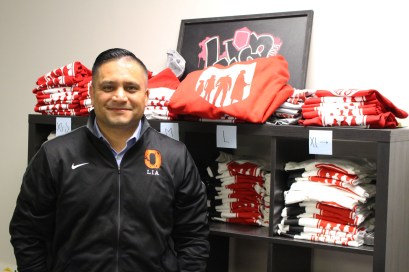
“Our work is transformative. It allows kids to see that they don’t need a diploma to make a difference today or to be a leader today,” said Jose Enriquez, founder and CEO of Latinos in Action.

Enriquez

Jose Enriquez, founder and CEO of Latinos in Action.

Latinos in Action, or LIA, offers an asset-based approach to assist students who are Latinx graduate and succeed after they leave high school. It is offered as a class that students can take throughout middle school, junior high, and high school. Its end goal is to “empower Latino youth to lead and strengthen their communities through college and career readiness.”

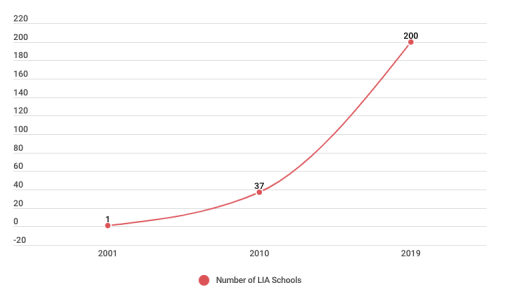
# of LIA schools

The number of schools with LIA classes has increased from one in 2001 to 200 in 2019. 

Enriquez founded LIA in 2001. He began the first LIA class at Timpview High School in Provo, Utah. Since then, it has grown significantly and there are LIA classes offered in eight different states.

Enriquez said he created LIA because there is a “glaring need for it.” According to an article by NBC News, the Hispanic high school graduation rate is at an all-time high, but Latinxs still have the highest dropout rate of any group in the U.S. LIA students have a graduation rate of 98 percent.

The four pillars of LIA, the things the curriculum focuses on, are personal assets, excellence in education, service, and leadership. Enriquez created these pillars based off of things that helped him through high school.

“They were the little things that made a big difference. I want the same thing for Latino youth. A place where they can shine, develop, and lead without fear,” Enriquez said.

30:40:30

The LIA classes have a 30/40/30 makeup.

The LIA classes have a 30/40/30 makeup. This means that 30 percent are students who are doing well in school, students who take AP and honors classes and have a high GPA, and 40 percent are students who are “going through the motions” and have about a 2.0 GPA. The remaining 30 percent are the students who are learning English as their second language.

“When you put them together it’s magical. They begin to learn from each other and understand that they can do more together,” Enriquez said.

One of the four pillars of LIA is personal assets. The reason he included this is because Enriquez says that a lot of youth are increasingly worried about finding employment and housing. He also said that young people are being “sucked into a social media pit” where they are constantly comparing themselves to others.

“Youth are trying to find themselves in this world of heightened social media, heightened instant gratification, heightened pressure. You see this in the number of those with anxiety, depression, and suicides that are occurring in the younger group rather than the older,” Enriquez said.

Utah has the sixth-highest suicide rate in the U.S. with 22.7 per 100,000, according to a report released by the Centers for Disease Control and Prevention in 2017. Suicide is the leading cause of death for Utah youth ages 10 to 17.

Suicide rates in the U.S.

The highest suicide rates in the U.S., according to the Centers for Disease Control and Prevention report in 2017.

“Even those who are affluent are going through these things, because depression doesn’t have a ZIP code,” Enriquez said. The personal assets pillar focuses on giving youth their confidence back. “This is why it’s important to have that social-emotional component, we’re going to give them the skillsets to be ready.”

Another one of the four pillars of LIA is service. One class will spend about 100 hours at a local elementary school tutoring young children who are learning how to read.

Ivan Cardenas, current regional program manager at LIA, used to be a teacher for the LIA class. He said his personal favorite part of the program is the tutoring piece.

“It creates this bond between the tutor and the student. He or she is seen as a role model, as an example for this child,” Cardenas said.

This act of service can be a pivotal moment for some LIA students, because some did not grow up with the culture of reading. “It’s a discovering moment for them. Many of them decide then that they want to teach. They discover a passion for it,” Cardenas said.

Tutoring these children can help LIA students foster a sense of a belonging in their community. Children have accessible role models to look up. Also, the teachers and administrators at the elementary schools get to see the LIA students in a different light. Cardenas said “they see these Hispanic kids as productive members of society. They’re doing something, they’re contributing, they’re translating. It’s just an amazing time of discovery for all.”

Students who are Latinx can face unique challenges while in school. Cardenas said there are “stereotypes these kids get in the hallways at school. That’s very real, and lately has been more evident unfortunately, due to the negative comments we hear in the media from our top leaders.”

Ashley Castaneda, 20, is a second-year student at the University of Utah. She took the LIA class while she was a student at Granger High School in West Valley City. She credits her experience with the program to her success now.

Castaneda noted that it is important to have a space where you feel comfortable and connected to your peers. She said that in her class, her teacher helped her and her peers embrace and take pride in their culture. They did activities related to Hispanic culture, like performing dances in front of the school. They were taught about role models in their community.

“That was my favorite part,” she said. “Even though it was helping us towards college, it also helped us embrace our culture.”

Castaneda takes pride in where she came from. She received more money than she needed in scholarships when she began college, so every year she goes back to the LIA class at Granger High to offer her excess money to them in the form of a scholarship.

“The whole point is to show people that sometimes we need to go back to our own communities,” Castaneda said. “A lot of students who are Latinx go to college and just forget where they came from, and that’s not what I want to happen. I want people to go back, remember where they came from, and use that to empower others.”


Resources are available, including the 24-Hour National Suicide Prevention Hotline: 1-800-273-TALK (8255). The SafeUT app is a “statewide service that provides real-time crisis intervention to youth through texting and a confidential tip program – right from your smartphone.”